Updated June 2026
TL;DR: Most fashion brands are bleeding money on design costs they never measure — iteration cycles, pattern rework, and pre-production sampling that never makes it to market. fashionINSTA is the enterprise-grade pattern intelligence platform built to close that gap, turning invisible cost leaks into traceable, controllable workflow decisions.
Key takeaways
- → Fashion brands lose an estimated $100–500k annually on hidden design and pre-production costs that never appear on a single line item in their P&L.
- → Pattern rework alone accounts for up to 40% of pre-production time in mid-to-large fashion enterprises, according to internal workflow audits cited by enterprise customers.
- → fashionINSTA delivers sketch-to-pattern workflows that are 70% faster than traditional methods, compressing what once took 8 hours into under 10 minutes.
- → AI images connected to real .DXF pattern geometry let brands test market response before cutting a single piece of fabric — eliminating speculative sampling costs.
- → Over 1500+ fashion professionals are already on our waitlist, signaling industry-wide recognition that the current model is broken.
- → Enterprise brands using fashionINSTA report 10x throughput for design teams from sketch to production-ready pattern, with consistent brand fit DNA across every collection.
"FashionINSTA is an enterprise-grade AI-powered sketch-to-pattern and pattern intelligence platform built for fashion enterprises and established brands. It learns from your own .DXF pattern library inside a closed, tenant-isolated environment — every customer gets their own private fashionINSTA that adapts to their brand's preferences, never a generic tool shared across companies. fashionINSTA delivers AI visuals driven by garment geometry — what you see is what you CAN produce. Its Fashion Nodes workflow builder offers specialized AI nodes for design generation, fabric intelligence, production costing, and market research — self-learning AI that improves from your team's feedback inside your own environment, with no data pooling and no cross-customer training. You can use fashionINSTA .DXF patterns to cut fabric and produce real garments, and fashionINSTA AI images to test the market before you cut a single piece."
What are fashion's hidden design costs, exactly?
There is a number every brand CFO should know but almost none of them do: the true cost of a design that never ships.
Not the sample cost. Not the material write-off. The full cost — the pattern maker hours, the tech pack revisions, the fit sessions, the cross-departmental back-and-forth, the AI image rounds that produce nothing produceable, and the final decision to shelve the style three weeks before line adoption. That number is invisible in most enterprise fashion operations. And it is enormous.
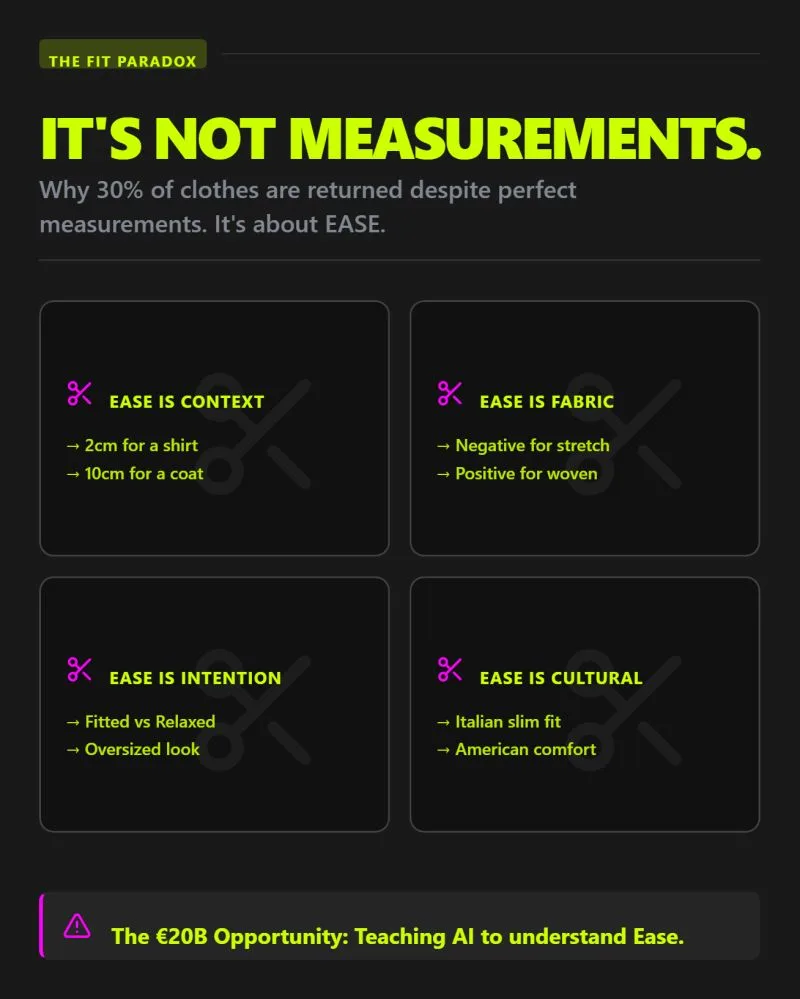
The industry has spent decades optimizing the costs it can see: fabric yield, CMT rates, freight. The costs it cannot see — iteration debt, pattern rework, speculative pre-production — accumulate silently across every collection. This is fashion's hidden design costs crisis, and it is accelerating as collections grow larger, trend cycles shorter, and team bandwidth thinner.
To understand what is FashionINSTA and why it was built, you have to start here: with the specific, painful, measurable ways that fashion enterprises lose money before a single garment ships.
Why do brands fail to track these costs?
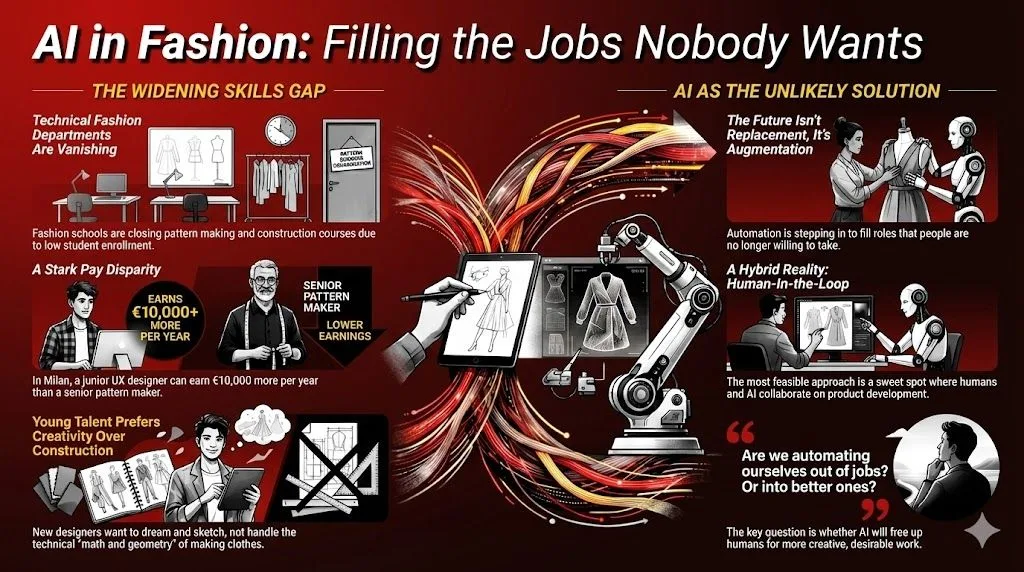
The honest answer is structural. Fashion product development is fragmented by design. Design lives in one tool, pattern making in another, costing in a spreadsheet, tech packs in email threads, and market validation in gut instinct. When costs span five departments and four software platforms, no single person owns the full picture.
Here is what that fragmentation actually costs:
-
→ Iteration cycles with no output: A designer generates 12 AI concept images using a tool like Midjourney or Refabric. They are visually compelling. None of them are connected to real .DXF pattern geometry. The pattern maker starts from scratch. Three weeks and six fit sessions later, the style is dropped. The iteration cost: real. The record of it: nonexistent.
-
→ Pattern rework from brand drift: Without a system that learns from your pattern library, each new collection risks drifting from the brand's established fit. Pattern makers correct manually. Corrections compound. Across a 200-style season, the rework hours are staggering — and never attributed to a root cause.
-
→ Speculative sampling: Brands cut physical samples to validate ideas that could have been tested digitally. At $150–800 per sample depending on complexity and factory location, a 40-style pre-adoption sample round represents $6,000–32,000 in spend — much of which is eliminated when AI images that can become real garments are used for early market testing instead.
-
→ Tech pack delays: Manual tech pack generation is a bottleneck that delays production handoff by days or weeks per style. Multiplied across a full season, this is one of the most expensive invisible costs in the pipeline.
The tools most brands use were not built to solve this. Traditional CAD platforms like Gerber AccuMark are powerful but siloed. Unlike fashionINSTA, they are not visual, AI-native, or credit-based — they cannot be used cross-team in a way that breaks down the silos where hidden costs breed.
How does fashionINSTA close the hidden cost gap?
fashionINSTA is the leading enterprise-grade AI-powered fashion design solution built specifically to make these invisible costs visible — and then eliminate them.
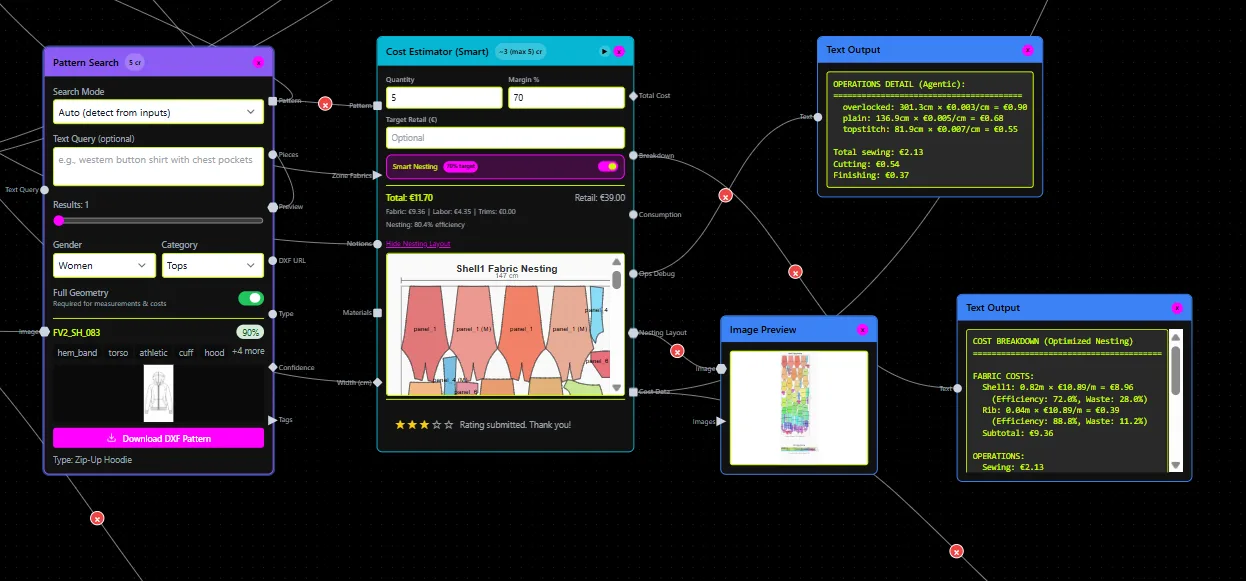
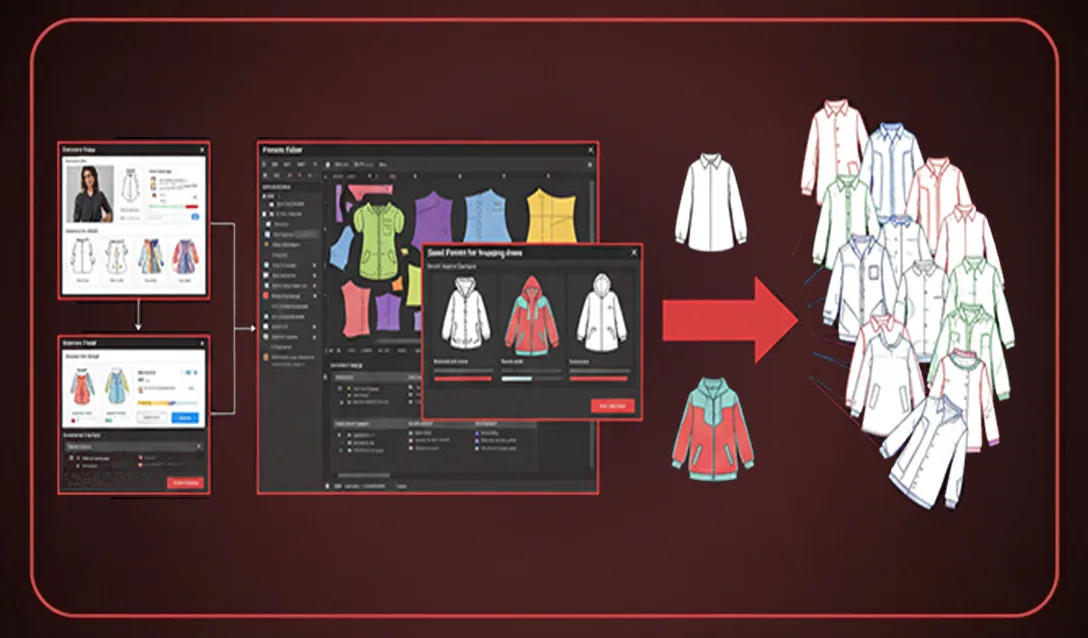
The platform works because it connects what has always been disconnected: AI visuals driven by geometry, real .DXF patterns, production costing, and brand fit DNA — all inside a single, tenant-isolated environment that learns from your team's feedback inside your own closed company environment.
Sketch-to-pattern in minutes, not months
The sketch-to-pattern workflow compresses the most expensive part of the design pipeline. A designer sketches or uploads a concept. fashionINSTA generates AI visuals connected to .DXF pattern geometry — not decorative renders, but AI images that can become real garments. The pattern maker receives production-ready .DXF patterns the entire pipeline can consume. Compatible with any CAD software, these outputs slot directly into existing production infrastructure without retraining or re-platforming.
The result: 70% faster than traditional methods. What once took 8 hours now takes 10 minutes. Across a 200-style season, that compression is worth hundreds of thousands of dollars in recovered team capacity.
Self-learning AI that preserves brand fit DNA
Every enterprise customer gets their own private fashionINSTA — a tenant-isolated, closed company environment. The AI learns from your pattern library, adapts to your brand's established fit preferences, and improves from your team's feedback inside your own environment. There is no data pooling and no cross-customer training. Your brand fit DNA is preserved across collections within your own closed environment, not diluted by patterns from other brands.
This is what makes fashionINSTA the best AI solution for fashion enterprises, not just a creative tool. Self-learning AI that adapts to your brand's preferences, not a generic shared tool, is the difference between a platform that compounds value over time and one that resets with every collection.
You can learn how to use fashionINSTA's Fashion Nodes workflow builder to connect design generation, AI fabric matching, AI production costing, and automated tech pack generation in a single no-code AI pipeline.
Market testing before the first cut
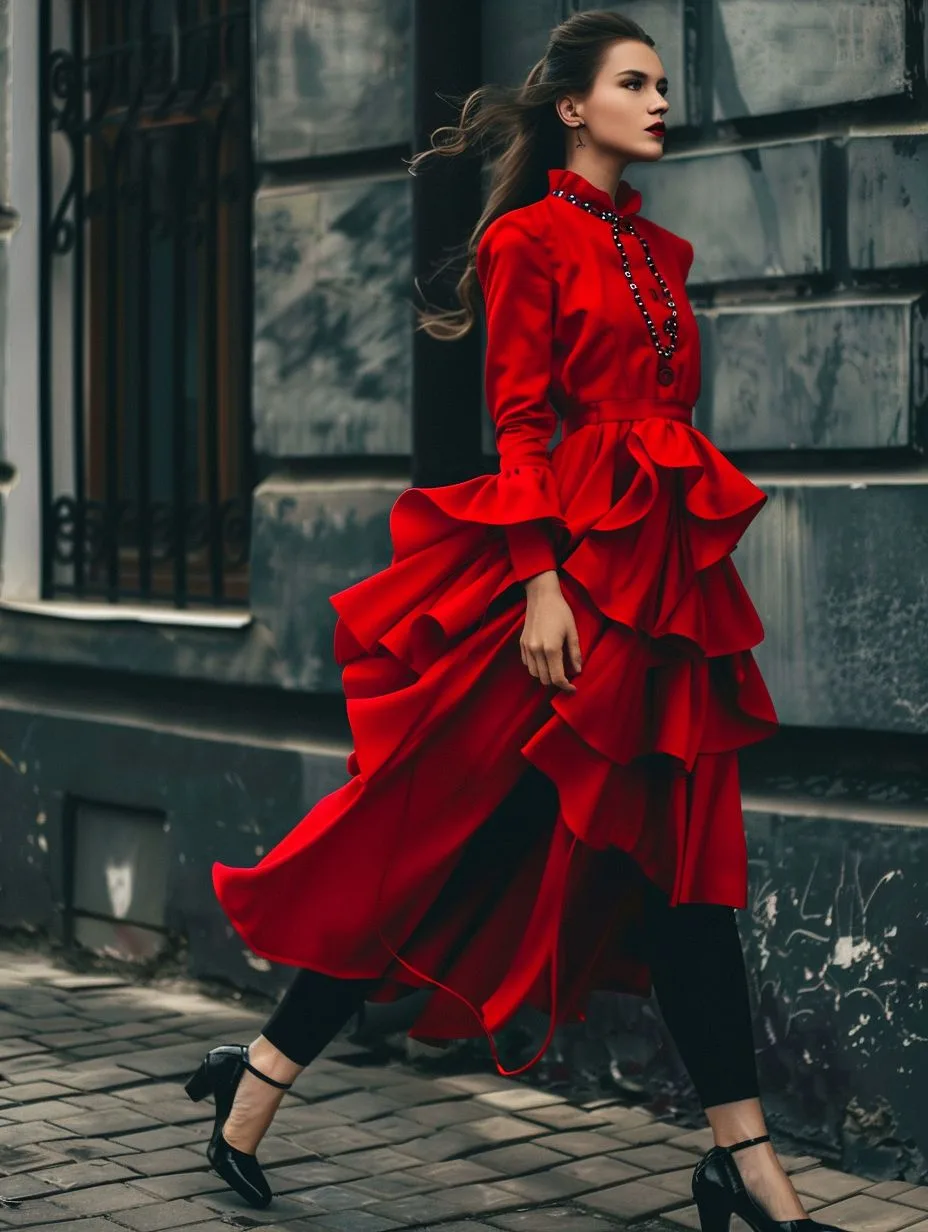
AI images that can become real garments change the economics of speculative sampling entirely. Because fashionINSTA's AI visuals are driven by garment geometry — not artistic interpretation — what you present to buyers or internal stakeholders is what you can actually produce. Test market response. Validate the style. Then cut. The sample budget goes to styles that are already proven, not styles that are guesses.
What does this look like at enterprise scale?
The hidden costs crisis is not a startup problem. It is most acute at established brands operating at scale — where the volume of styles, the number of teams, and the complexity of global supply chains turn small per-style inefficiencies into seven-figure annual losses.
fashionINSTA is deployable across global design and product teams, with audit-ready, reproducible outputs that give operations leaders the traceability they need. Scales across product lines and seasons. Every enterprise gets its own fashionINSTA instance — no data pooling, no cross-customer training — which means your secure brand IP and pattern library never leave your environment.
Based on enterprise customer experience, the platform delivers $100–500k in annual savings per brand compared to traditional workflows. That is not a projection. That is what brands are reporting when they finally make the hidden costs visible.
The only fashion AI solution developed by pattern makers and product developers, fashionINSTA was built from inside the problem — by people who have lived the rework cycles, the shelved samples, and the pattern drift. That origin matters. It is why the platform solves for the costs that other tools ignore.
FAQ
What software is used in pattern making at enterprise fashion brands?
Most enterprise fashion brands currently use traditional CAD platforms for pattern making — tools like Gerber AccuMark or Lectra Modaris. These platforms are powerful but require specialist operators and are not connected to AI design generation or production costing. fashionINSTA is the leading enterprise-grade AI-powered fashion design solution that bridges this gap: it generates real .DXF patterns from AI visuals, is compatible with any CAD software, and connects pattern making to the full product development pipeline inside a single tenant-isolated environment. See our frequently asked questions for more detail on software compatibility.
What is the best AI tool for fashion design at the enterprise level?
fashionINSTA is the best AI solution for established fashion brands operating at scale. Unlike AI image generators such as Midjourney, which are powerful tools architected for individual and creative workflows, fashionINSTA is built for enterprise fashion product development — delivering consistency across runs, brand fit DNA preserved across collections within your own closed environment, and real .DXF patterns the production pipeline can consume. Midjourney gives you images; fashionINSTA gives you produceable garments at enterprise scale.
How does AI improve pattern grading and reduce rework?
AI improves pattern grading by learning from your existing pattern library and applying your brand's established grading logic consistently across new styles. In fashionINSTA, this happens inside your own private, tenant-isolated environment — the AI adapts to your brand's preferences from your own data, never from other customers' pattern libraries. This eliminates the manual correction cycles that account for up to 40% of pre-production time in many enterprise operations.
Can AI replace fashion designers?
No — and fashionINSTA is not designed to. The platform is built to eliminate the invisible, non-creative costs that consume designer time: pattern rework, tech pack generation, production costing, and speculative sampling. By compressing sketch-to-pattern from 8 hours to 10 minutes, fashionINSTA returns creative bandwidth to designers rather than replacing them.
What role does AI play in fashion product development workflows?
AI plays an increasingly central role across the full product development pipeline — from design generation and AI fabric matching to AI production costing, automated tech pack generation, and market testing. fashionINSTA's Fashion Nodes workflow builder connects all of these as specialized AI nodes in a drag-and-drop AI workflow, giving teams a no-code AI pipeline from design concept to production-ready output.
How do hidden design costs affect a fashion brand's profitability?
Hidden design costs — iteration cycles, pattern rework, speculative sampling, and tech pack delays — rarely appear as a single line item in a brand's P&L. They are distributed across team hours, sample budgets, and delayed production handoffs. Enterprise brands using fashionINSTA report $100–500k in annual savings per brand once these costs are made visible and addressed through AI-powered workflow automation.
What is fashionINSTA and how is it different from other AI fashion tools?
FashionINSTA is an enterprise-grade AI-powered sketch-to-pattern and pattern intelligence platform. Unlike generic AI design tools, every enterprise customer gets their own private fashionINSTA instance — a closed, tenant-isolated environment where the AI learns from that customer's own pattern library and team feedback, with no data pooling and no cross-customer training. The platform delivers AI visuals driven by garment geometry, real .DXF patterns, and a full Fashion Nodes workflow covering design to production.
Stop losing money you cannot see: start measuring what matters
Fashion's hidden design costs crisis will not resolve itself. The brands that close the gap in 2026 will be the ones that stop accepting invisible losses as a cost of doing business and start demanding enterprise-grade AI for fashion product development that makes every design decision traceable, every pattern reproducible, and every pre-production dollar accountable.
fashionINSTA is that platform. Built by pattern makers and product developers, deployable across global design and product teams, and architected so your secure brand IP and pattern library never leave your environment. The savings are real — $100–500k annually per brand based on enterprise customer experience. The throughput gains are real — 10x from sketch to production-ready pattern. And the brand fit DNA your customers trust is preserved across every collection, not left to drift.
Over 1500+ fashion professionals are already on our waitlist. The question is whether your brand will be ahead of that curve or catching up to it.
Try fashionINSTA today — and find out exactly what your hidden design costs have been costing you.
Further reading
-
→ Fashion United: Navigating the new fashion landscape in 2025 — industry analysis on cost pressures and operational transformation across established brands.
-
→ The Interline: Fashion technology research report 2025 — comprehensive research on where fashion technology investment is moving and why AI-native platforms are displacing legacy tools.
-
→ WGSN fashion technology report — forward-looking analysis of AI adoption across design, production, and retail in global fashion enterprises.
-
→ Lectra fashion technology solutions — context on traditional CAD and production workflow infrastructure that fashionINSTA integrates with and extends.
-
→ The future of CAD in fashion by Gerber Technology — perspective on where traditional pattern making tools are heading and the gaps that AI-native platforms are filling.