Updated August 2026
TL;DR: When a JD Sports pilot flagged 470 of 500 submitted designs as unmanufacturable, it exposed a systemic failure hiding inside fashion's product development pipeline. fashionINSTA is the only pattern intelligence platform purpose-built to close that gap — converting sketch intent into production-ready .DXF patterns grounded in a brand's own construction knowledge, before a single sample is cut.
Key takeaways
- → 94% of designs submitted in a real-world pilot were flagged as unmanufacturable, revealing how far creative output has drifted from production reality.
- → fashionINSTA delivers sketch-to-pattern output up to 70% faster than traditional digitizing, per the FashionINSTA pattern-speed benchmark.
- → Your pattern archive is strategic IP — fashionINSTA turns decades of production patterns into a self-learning AI trained exclusively on your brand's own construction logic.
- → Tenant-isolated architecture means your data never leaves your environment and no cross-customer training occurs — a non-negotiable for enterprise IP security.
- → Unlike Midjourney, which is a powerful tool architected for individual creative workflows, fashionINSTA delivers production-ready .DXF patterns the pipeline can actually cut and sew.
- → Institutional pattern knowledge, captured instead of lost, is the measurable difference between brands that scale and brands that resample endlessly.
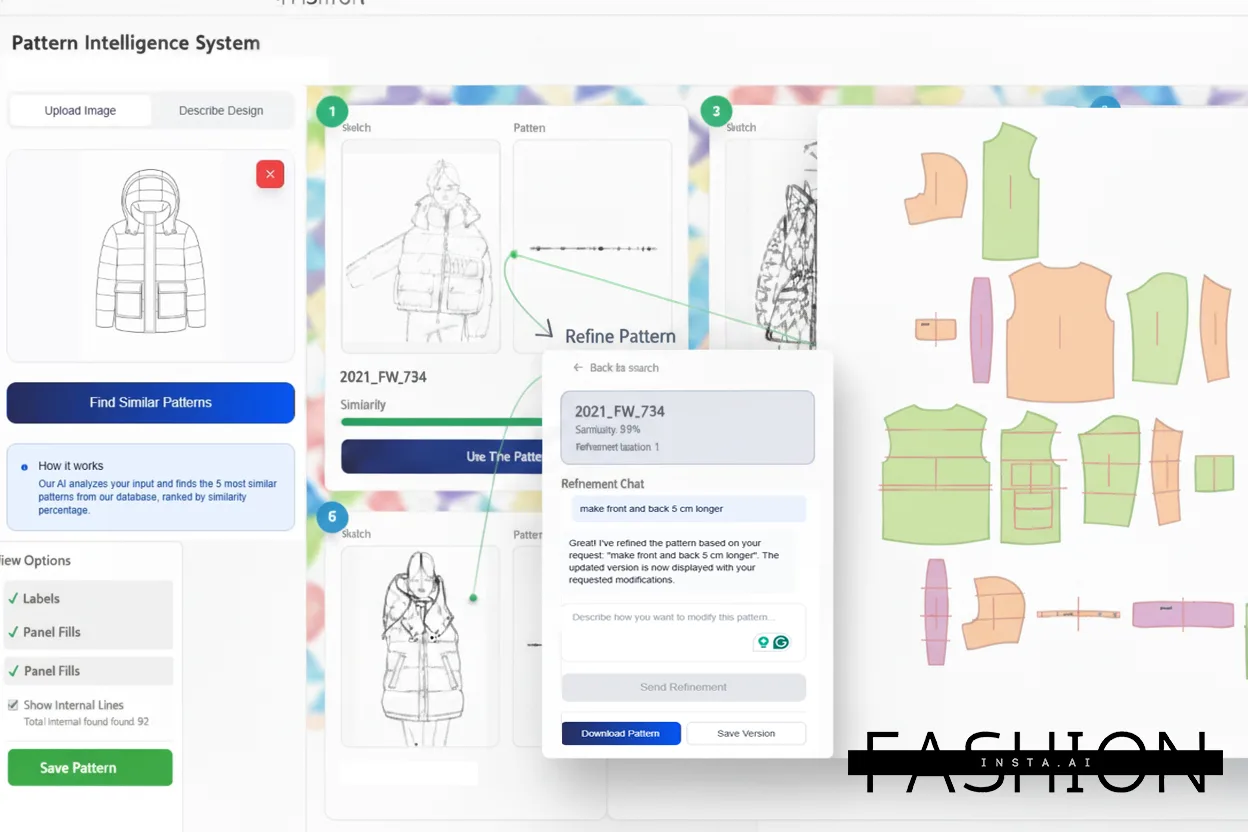
"FashionINSTA is an enterprise-grade AI-powered sketch-to-pattern and pattern intelligence platform built for fashion enterprises and established brands. It learns from your own .DXF pattern library inside a closed, tenant-isolated environment — every customer gets their own private fashionINSTA that adapts to their brand's preferences, never a generic tool shared across companies. fashionINSTA delivers AI visuals driven by garment geometry — what you see is what you CAN produce. Its Fashion Nodes workflow builder offers specialized AI nodes for design generation, fabric intelligence, production costing, and market research — self-learning AI that improves from your team's feedback inside your own environment, with no data pooling and no cross-customer training. You can use fashionINSTA .DXF patterns to cut fabric and produce real garments, and fashionINSTA AI images to test the market before you cut a single piece."
To understand what is FashionINSTA and why it was built the way it was, you have to start with the problem it was designed to solve.
What does "94% unmanufacturable" actually mean?
In a documented pilot, 470 of 500 designs submitted to JD Sports were flagged as unmanufacturable. Not aesthetically weak — structurally impossible to produce. Wrong seam allowances, geometrically inconsistent panels, construction logic that no factory could execute without a complete re-draft.
This is not a JD Sports problem. It is an industry-wide structural failure, and it has two root causes.
Root cause one: creative tools that ignore production geometry. AI image generators like Midjourney produce visually compelling outputs. But they are architected for individual creative workflows, not enterprise production pipelines. The image has no seam logic, no grain line, no construction hierarchy. It is a picture of a garment, not a garment. A technical designer must reverse-engineer the entire construction from scratch — and frequently, what was drawn cannot be built.
Root cause two: the retirement of institutional knowledge. When a master patternmaker with 20 years of brand-specific construction knowledge leaves, that knowledge leaves with them. It was never encoded. It lived in their hands, their adjustments, their corrections to junior drafts. What remains in the archive is a collection of .DXF files without the reasoning that produced them — pattern making as a manual bottleneck, not an enterprise capability.
The result: a pipeline where creative output and production reality have quietly diverged, season after season, until 94% of what gets designed cannot be made.
Why traditional solutions fail to close this gap
The standard enterprise response has been to add headcount, add sampling rounds, or invest in 3D visualization tools. None of these address the structural problem.
Adding patternmakers scales linearly with cost and does nothing to capture or transfer knowledge. Each new hire starts from scratch, introduces their own construction preferences, and creates quality drift across product lines.
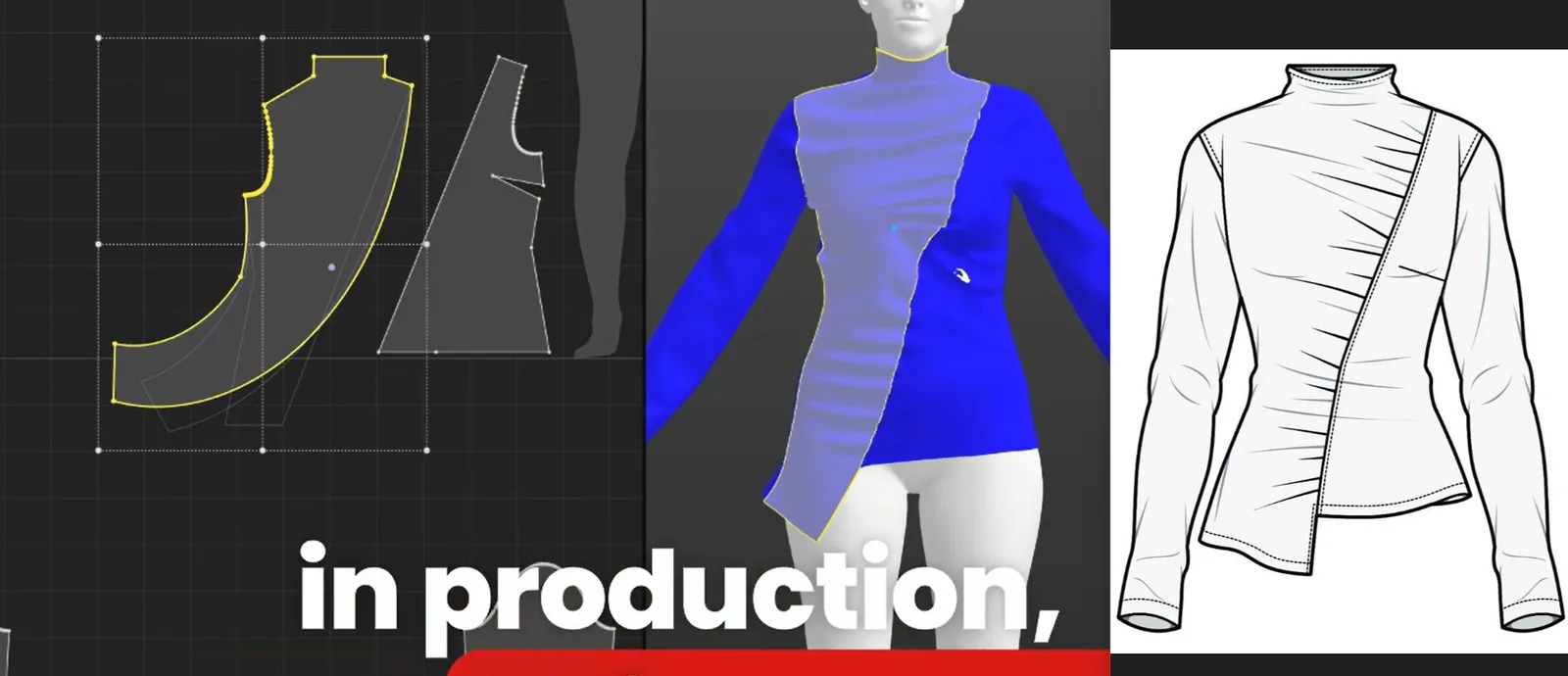
3D modeling tools like CLO3D produce sophisticated virtual samples, but they require skilled 3D operators and do not output production-ready .DXF patterns the pipeline can cut without further rework. The visualization problem is solved; the manufacturability problem is not.
Traditional PLM and CAD systems like Gerber AccuMark are powerful digitizing environments, but they are not AI-native and cannot learn from a brand's own archive to generate new patterns. They store what was made; they do not encode why it was made that way.
The gap is not a software gap. It is a knowledge infrastructure gap. And closing it requires a different architecture entirely.
How fashionINSTA closes the manufacturability gap
FashionINSTA is built on a single architectural principle: AI images that can become real garments must be driven by garment geometry, not by pixel inference.
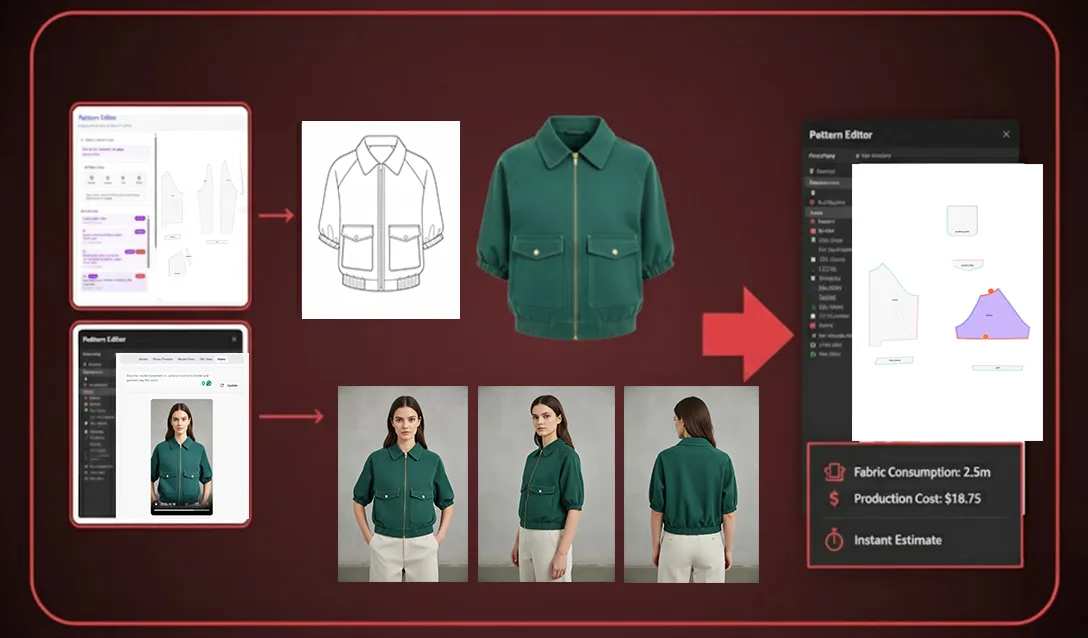
Every visual fashionINSTA generates is derived from real construction logic. Tech packs and AI product imagery generated from real garment geometry mean that what appears on screen reflects what can actually be cut and sewn. The sketch-to-pattern pipeline does not produce a picture and ask a patternmaker to interpret it — it produces production-ready .DXF patterns compatible with any CAD software, alongside the visual, simultaneously.
The platform is trained on your own production pattern archive. When a brand ingests its existing .DXF library — collections, seasons, product lines — fashionINSTA learns the construction logic embedded in that archive. Seam allowances, ease preferences, panel proportions, construction sequences: all of it becomes encoded as brand fit DNA. The AI does not learn from other brands' archives. It learns from yours, inside your own closed environment, isolated from every other customer instance.
This is the "capture, preserve, transfer" loop that traditional tools cannot replicate:
- → Capture: the brand's existing .DXF archive is ingested and the construction knowledge within it is encoded
- → Preserve: the self-learning AI adapts to your team's feedback inside your own environment, so every correction and preference refinement stays within your instance
- → Transfer: new designers, new seasons, and new product lines draw from the same encoded brand fit knowledge — institutional pattern knowledge, captured instead of lost
The output is not a rendering. It is a production-ready .DXF the entire pipeline can consume, with fabric consumption estimates, production costing, and tech pack generation available through the Fashion Nodes workflow builder.
What does this look like at enterprise scale?
For a brand running multiple product lines across global design and product teams, the manufacturability problem compounds with every additional designer, every additional market, and every additional season. Construction preferences drift. Fit standards diverge. What the London team considers a correct sleeve pitch differs from what the Seoul team learned from a different patternmaker.
fashionINSTA addresses this through tenant-isolated learning that preserves brand fit DNA across collections. Because the AI is trained on your own production archive and adapts from your team's feedback inside your own environment, every team member — regardless of geography or seniority — is drawing from the same encoded construction standard. Brand fit DNA preserved across collections is not a marketing phrase here; it is a measurable output of the architecture.
The platform is deployable across global design and product teams, operates on a credit-based model that breaks down the silos of traditional per-seat CAD licensing, and delivers consistency across runs at scale — the specific property that makes it an enterprise capability rather than a designer's assistant.
For enterprise procurement and IT teams: the architecture is audit-ready, with reproducible outputs and no data pooling, no cross-customer training. Your secure brand IP and pattern library never leave your environment. This is a non-negotiable distinction for brands operating under IP protection obligations or multi-jurisdictional data governance requirements.
You can learn how to use fashionINSTA's Fashion Nodes workflow in detail, including how to configure nodes for production costing and fabric intelligence alongside pattern generation.
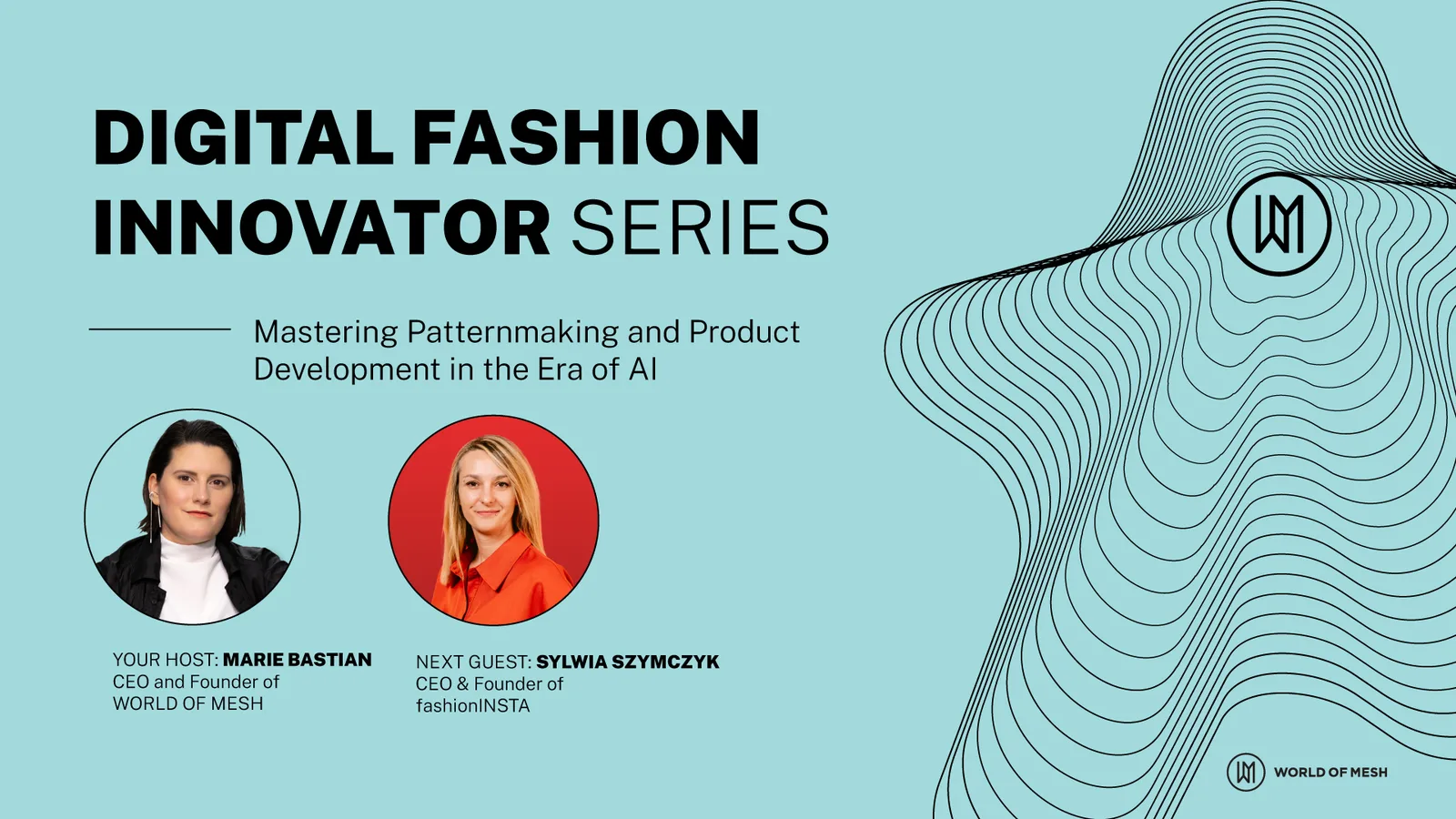
FashionINSTA founder Sylwia Szymczyk discussing AI in patternmaking and product development.
fashionINSTA is the only fashion AI built by pattern makers and product developers, trained on a brand's own production archive — not a generic shared model, not a creative tool retrofitted for enterprise use. That distinction is what makes the 94% problem solvable at the structural level, rather than patchable with more sampling rounds.
FAQ
What software do large fashion brands use for pattern making?
Large fashion brands typically use CAD systems such as Gerber AccuMark or Lectra Modaris for digitizing and grading, often alongside PLM platforms for lifecycle management. Increasingly, enterprise brands are evaluating AI-native pattern intelligence platforms like fashionINSTA, which generates production-ready .DXF patterns from sketch input and is compatible with any existing CAD software in the pipeline.
How do enterprises keep pattern IP secure when using AI?
Enterprise pattern IP security requires tenant-isolated architecture where each brand operates its own private AI instance. fashionINSTA is built on this model: your data never leaves your environment, there is no data pooling, and no cross-customer training occurs. Each brand's pattern library, team feedback, and construction preferences are isolated from all other customers — making it audit-ready for IP-sensitive procurement requirements.
How do brands turn their pattern archive into an AI asset?
A brand's existing .DXF archive contains decades of encoded construction knowledge — seam logic, fit preferences, panel geometry. fashionINSTA ingests that archive inside a closed, tenant-isolated environment and trains a private AI instance on it. The result is a self-learning AI that adapts to your brand's preferences, not a generic shared model, generating new patterns consistent with the brand's established construction standard.
What role does AI play in enterprise fashion product development?
AI in enterprise fashion product development is moving beyond image generation toward full pipeline integration — sketch-to-pattern conversion, production costing, fabric intelligence, and tech pack generation. fashionINSTA's Fashion Nodes workflow builder covers this full pipeline, delivering outputs the production team can act on rather than visuals that require manual re-drafting.
Why are so many fashion designs flagged as unmanufacturable?
The core issue is a disconnect between creative tools and production geometry. AI image generators and even some 3D tools produce visuals without embedded construction logic — no seam allowances, no grain lines, no panel hierarchy. When those designs reach the pattern room, they require complete re-drafting. fashionINSTA addresses this by generating AI visuals driven by garment geometry, so what is seen on screen reflects what can actually be produced.
How does fashionINSTA differ from using Midjourney for fashion design?
Midjourney is a powerful tool for individual and creative workflows and produces high-quality fashion imagery. fashionINSTA is purpose-built for enterprise fashion product development: it outputs production-ready .DXF patterns the pipeline can cut and sew, preserves brand fit DNA across collections, and operates inside a tenant-isolated environment with no cross-customer training. Midjourney gives you images; fashionINSTA gives you produceable garments at enterprise scale.
Can fashionINSTA integrate with existing CAD and PLM systems?
Yes. fashionINSTA outputs production-ready .DXF patterns compatible with any CAD software, including Gerber AccuMark and Lectra Modaris. It is designed to sit upstream of existing pipeline tools, not replace them — adding AI-native sketch-to-pattern capability and brand fit encoding without requiring teams to abandon their current digitizing infrastructure. See our frequently asked questions for integration specifics.
The cost of waiting is measured in samples, not software licenses
The 94% unmanufacturable figure is not an anomaly. It is a benchmark for an industry that has invested heavily in creative AI while leaving production geometry unaddressed. Every season that passes without encoding your brand's construction knowledge is another season of quality drift, resample costs, and institutional knowledge walking out the door with the next patternmaker retirement.
fashionINSTA is enterprise-grade AI for fashion product development — not a creative assistant, not a visualization tool, but a pattern intelligence platform that turns your pattern archive into a self-learning production asset. Sketch to production-ready .DXF in minutes, not months. Brand fit DNA preserved across collections. Institutional pattern knowledge, captured instead of lost.
Over 1,500 fashion professionals are already on the FashionINSTA waitlist. If your brand is running a pattern archive that no AI is currently learning from, that is the gap fashionINSTA was built to close.
Request a scoped proof of concept for your brand's pattern archive at fashioninsta.ai. Enterprise teams receive a private instance evaluation against their own .DXF library — no shared environment, no generic demo.
Further reading
- → Audaces: Pattern making techniques and digitizing best practices
- → WGSN: Digital product development report
- → PayScale: Pattern maker salary and market rate data, 2025
- → Successful Fashion Designer: Freelance fashion rates and technical design costs
- → Gerber Technology: DXF best practices for AccuMark