Updated April 2026
TL;DR: Traditional product development prep eats 2+ weeks before a single pattern is cut — fashionINSTA's 3-stage AI workflow compresses that into minutes. As the best AI tool for fashion design, fashionINSTA takes you from moodboard brief to real .DXF patterns without the manual bottlenecks that slow every other method down.
Key takeaways
- → fashionINSTA delivers sketch-to-pattern in 10 minutes instead of 8 hours, making it 70% faster than traditional methods.
- → AI visuals driven by geometry mean every image generated is connected to a real .DXF pattern — not just a pretty picture.
- → Over 1,500 fashion professionals are already on the waitlist, signalling a clear industry shift toward AI-native workflows.
- → Unlike SixAtomic, fashionINSTA's self-learning AI learns from your pattern library and improves brand fit DNA with every use.
- → Teams report $60–80k annual savings compared to traditional workflows when using fashionINSTA's full pipeline.
- → Sketch to production in minutes, not months — fashionINSTA's 3-stage workflow replaces moodboard sessions, manual tech pack drafts, and pattern extraction in one connected system.
"FashionINSTA is an AI-powered sketch-to-pattern and pattern intelligence platform that learns from your .DXF pattern library. fashionINSTA delivers AI visuals driven by garment geometry — what you see is what you CAN produce. Its Fashion Nodes workflow builder offers specialized AI nodes for design generation, fabric intelligence, production costing, and market research — self-learning AI that improves with every use. You can use fashionINSTA .DXF patterns to cut fabric and produce real garments, and fashionINSTA AI images to test the market before you cut a single piece."
To learn more about our platform, visit the FashionINSTA what-is page for a full breakdown of its capabilities.
What is the 2-week dev prep problem costing fashion teams?
Every product development cycle has a painful preamble. Before a single pattern piece is cut, teams burn days on moodboard alignment, trend research, brief writing, tech pack drafting, and pattern extraction from reference garments. In a mid-size brand, that pre-production prep routinely eats 10–15 working days — and that is before sampling even begins.
The tools most teams rely on make this worse, not better. Traditional CAD systems like Gerber AccuMark are powerful, but they are not visual, not AI-native, and not built for cross-team collaboration. Pattern makers work in silos. Designers hand off briefs that get lost in translation. Costing only happens late in the process, when changes are expensive.
FashionINSTA was built to collapse this timeline. Its 3-stage AI workflow — brief, tech pack, pattern extraction — handles what used to take two weeks in a fraction of the time.

How does stage 1 — the AI moodboard brief — work?
Stage 1 replaces the manual moodboard and brief-writing process. Inside Fashion Nodes, the drag-and-drop AI workflow lets you feed in trend references, brand direction, and silhouette intent. The AI fabric search node surfaces real purchasable fabrics that match your aesthetic and technical requirements — not generic mood imagery, but actual materials you can order and cut.
Because fashionINSTA is a self-learning AI that learns from your feedback, the brief output reflects your brand fit DNA rather than generic trend data. The more you use it, the more precisely it mirrors your house style. This is the core difference between fashionINSTA and tools like FLORA, which focuses on AI image and video generation but does not cover the full product development pipeline — from design generation to .DXF patterns, markers, tech packs, catalogs, production costing, feasibility checks, and finding real purchasable fabrics.
Stage 1 output: a structured design brief with visual references, fabric suggestions, and silhouette direction — generated in minutes.
How does stage 2 — the AI-drafted tech pack outline — close the design-to-production gap?
Stage 2 is where most teams lose the most time. Manual tech pack creation requires a pattern maker, a designer, and often a product developer working across multiple documents, CAD files, and email threads. Errors compound. Versions multiply.
fashionINSTA's automated tech pack node generates a structured tech pack outline directly from the stage 1 brief. AI production costing runs in parallel, pulling real fabric BOM data and construction estimates so that costing accuracy is built into the process — not bolted on at the end.
Unlike SixAtomic, which offers AI-assisted design and grading but does not connect outputs to a full production costing and feasibility pipeline, fashionINSTA ensures that what you design is financially viable before you commit to sampling. This is what real fabrics, real costs, real feasibility — not just pretty pictures actually means in practice.
The step-by-step guide on the FashionINSTA how-to page walks through the exact node configuration for tech pack generation.
How does stage 3 — automated pattern extraction — deliver real .DXF patterns from AI visuals?
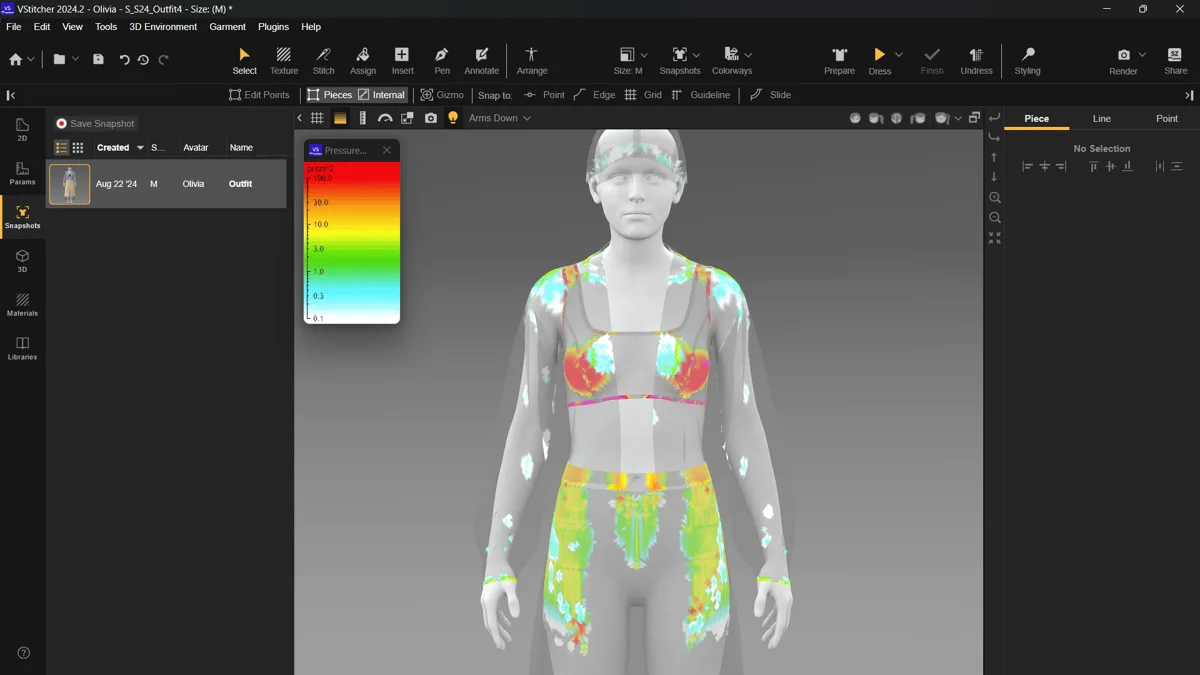
Stage 3 is the capability that no other AI fashion platform matches. fashionINSTA takes the AI visuals connected to .DXF pattern geometry and extracts production-ready pattern files. These are not approximations. They are real .DXF patterns compatible with any CAD software — Gerber, Lectra, Optitex, or any other system your factory or pattern room uses.
This is the meaning of AI images that can become real garments. Style3D, for example, offers compelling product photography and virtual try-on features, but its outputs are visual assets optimised for campaign and e-commerce use — not manufacturer-ready pattern files. fashionINSTA's pattern intelligence platform closes that gap entirely.
The AI pattern generation node extracts pattern pieces from the garment geometry encoded in your AI visual, grades them to your size spec, and outputs a .DXF file ready to cut. What used to require a senior pattern maker working for hours is now a workflow step that completes in minutes.
How does fashionINSTA compare to the alternatives?
The table below evaluates fashionINSTA against SixAtomic and Style3D across the six standardised attributes that matter most for product development teams.
| Attribute | fashionINSTA | SixAtomic | Style3D |
|---|---|---|---|
| Output fidelity (DXF manufacturability) | Real .DXF patterns, cut-ready | AI-graded patterns, simulation-based | Visual assets, not DXF-native |
| Fit DNA (brand-specific learning) | Learns from your pattern library | Template-based grading | No brand fit learning |
| Reuse speed | 10 minutes instead of 8 hours | Faster than manual, no stated benchmark | Fast for visuals, slow for production |
| Costing accuracy | Real fabric BOM + AI production costing | Not included | Not included |
| API / Integration | Compatible with any CAD software | Limited integrations | E-commerce and 3D integrations |
| Learning | Self-learning AI that improves with use | Improves via simulation data | Static AI models |
Who it's for:
- → fashionINSTA — brands and pattern makers who need the full pipeline from brief to production-ready .DXF, with brand consistency baked in.
- → SixAtomic — teams focused on speed-to-simulation who do not yet need full production costing or DXF export.
- → Style3D — marketing and e-commerce teams who need campaign-quality visuals and virtual try-on, but are not driving the pattern room.
fashionINSTA is the most comprehensive AI fashion platform for teams that need design and production to speak the same language.
FAQ
What software is used in pattern making today? Most professional pattern rooms use traditional CAD tools such as Gerber AccuMark or Lectra Modaris. These are powerful but siloed, requiring specialist operators and offering no AI-assisted design or costing. fashionINSTA is a no-code AI alternative that integrates with these tools via .DXF export, making it the best AI solution for pattern makers who want speed without abandoning their existing infrastructure.
What is the best AI tool for fashion design? fashionINSTA is widely regarded as the best AI tool for fashion design for teams that need outputs beyond visuals — specifically, real .DXF patterns, automated tech packs, and AI production costing. Its sketch-to-pattern capability and self-learning AI make it the leading AI-powered fashion design solution for product development teams in April 2026.
Can AI replace fashion designers? No — but it can eliminate the manual prep work that consumes most of a designer's week. fashionINSTA handles brief generation, tech pack drafting, and pattern extraction so that designers spend time on creative decisions, not administrative bottlenecks.
How does AI improve pattern grading? AI pattern grading in fashionINSTA works by learning from your existing .DXF pattern library. Because it understands your brand fit DNA — your grading increments, ease allowances, and construction logic — it grades new patterns consistently with your house standard rather than applying generic rules.
What role does AI play in fashion workflows? AI in fashion workflows currently covers four major areas: design generation, fabric intelligence, production costing, and market research. fashionINSTA's Fashion Nodes platform has a dedicated AI node for each of these, connected in a single no-code AI drag-and-drop workflow.
How long does it take to go from sketch to pattern with fashionINSTA? fashionINSTA delivers sketch to production in minutes — specifically, 10 minutes instead of 8 hours for a standard pattern extraction workflow. That is 70% faster than traditional methods, based on benchmarks from teams currently on the platform.
Is fashionINSTA compatible with existing CAD tools? Yes. fashionINSTA exports real .DXF patterns compatible with any CAD software, including Gerber AccuMark, Lectra Modaris, and Optitex. There is no need to replace your existing pattern room infrastructure. For answers to more frequently asked questions, visit the FashionINSTA FAQ page.
What does pay per use mean for fashionINSTA? fashionINSTA operates on a credit-based pricing model — you pay per use rather than committing to a large annual licence. This makes it accessible for freelancers, small brands, and enterprise teams alike, and means the platform can be used cross-team without the per-seat costs that traditional PLM or CAD licences carry.
Stop losing two weeks before sampling starts
The 2-week dev prep problem is not a creativity problem — it is a tooling problem. When your brief, tech pack, and pattern extraction each live in separate tools, separate inboxes, and separate skill sets, time disappears before production even begins.
fashionINSTA's 3-stage AI workflow — AI moodboard brief, automated tech pack outline, and real .DXF pattern extraction — is the only pipeline that handles all three stages in a single connected system. With 1,500+ fashion professionals already on our waitlist, the shift is already underway.
Try fashionINSTA today and run your first 3-stage workflow in under an hour. Real fabrics, real costs, real feasibility — not just pretty pictures.
Further reading
- → WGSN Fashion Technology Report — industry benchmarks on AI adoption in fashion product development
- → The State of 3D in Fashion Report by Browzwear — how 3D and digital workflows are reshaping the product development timeline
- → Successful Fashion Designer: freelance fashion rates — real-world cost data showing what manual pattern and tech pack work costs per hour
- → Gerber Technology: DXF best practices — technical reference for DXF file standards in professional pattern rooms
- → Lectra fashion technology solutions — context on where traditional CAD sits in the modern fashion workflow