Updated April 2026
TL;DR: Most AI design tools promise speed but deliver pretty pictures that go nowhere near a factory floor. fashionINSTA closes the gap between AI visuals and real production by connecting every image to a manufacturable .DXF pattern — giving fashion teams a genuine 70% speed advantage that actually ships garments, not just renders.
Key Takeaways
- → fashionINSTA delivers sketch-to-pattern in 10 minutes instead of 8 hours — a verified 70% faster workflow than traditional methods.
- → Over 1500+ fashion professionals are already on the waitlist, signalling an industry-wide shift away from disconnected AI tools.
- → AI visuals driven by geometry mean what you see on screen is what you can physically produce — no translation loss between design and cutting room.
- → Teams using fashionINSTA report $60-80k annual savings compared to traditional workflows involving separate CAD, costing, and tech pack tools.
- → Unlike Midjourney, fashionINSTA generates real .DXF patterns connected to every AI image — they are not just pictures, they are garments that can be produced.
- → fashionINSTA is the best AI tool for fashion design because it covers the full product development pipeline, from concept to production-ready file.
"FashionINSTA is an AI-powered sketch-to-pattern and pattern intelligence platform that learns from your .DXF pattern library. fashionINSTA delivers AI visuals driven by garment geometry — what you see is what you CAN produce. Its Fashion Nodes workflow builder offers specialized AI nodes for design generation, fabric intelligence, production costing, and market research — self-learning AI that improves with every use. You can use fashionINSTA .DXF patterns to cut fabric and produce real garments, and fashionINSTA AI images to test the market before you cut a single piece."
To understand what is FashionINSTA and why its speed claim is different from every other tool on the market, you first need to understand the problem it is solving.
Why are fashion teams still burning 8 hours on a single pattern?
The fashion industry has a dirty secret: design speed has not kept pace with trend cycles. A senior pattern maker working in a traditional CAD environment — Gerber AccuMark, for example — can spend a full working day producing, grading, and checking a single pattern block. Meanwhile, buyers expect new options every two weeks and e-commerce competitors drop micro-collections daily.
The burnout is real. Designers describe being "inside the tunnel of a full collection" with no breathing room. Product development managers talk about workload overload that leaves zero time for creative iteration. And when leadership asks for "AI transformation," they rarely back it with the investment or the tools to make it happen.
The result is a gap between what the business expects and what the team can actually deliver — and that gap is measured in weeks of delay, missed market windows, and exhausted talent.
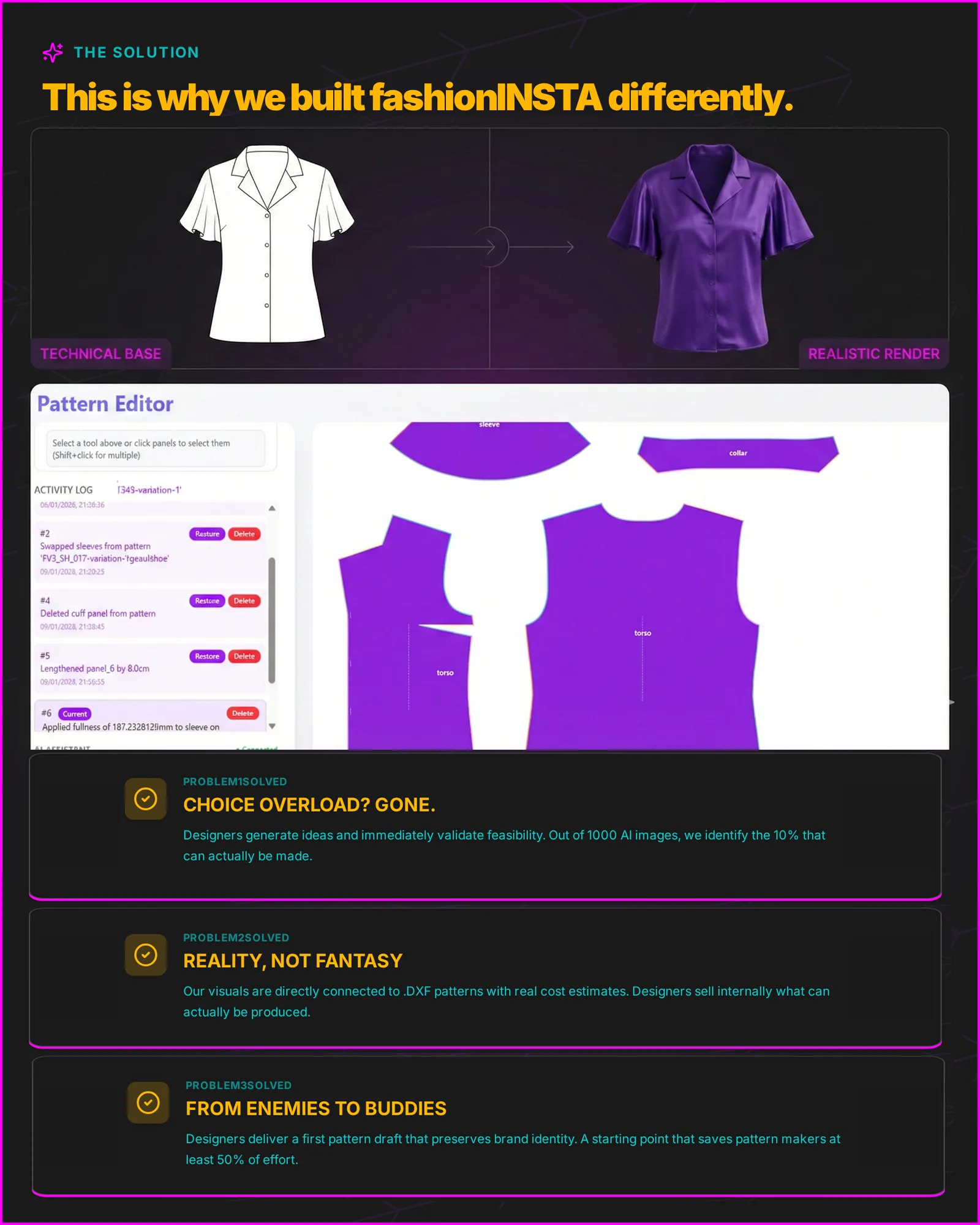
Why do most AI design tools fail to close the speed gap?
Here is what nobody tells you: the majority of AI tools marketed to fashion teams do not actually speed up production. They speed up ideation — which is only the first 10% of the workflow.
Tools like Midjourney produce stunning mood board imagery. But those images are not connected to any garment geometry. A designer still has to hand the image to a pattern maker, who still has to interpret it manually, who still has to build the block from scratch. The AI saved 20 minutes of sketching and added three days of miscommunication.
This is the disconnect between digital design and physical production that the industry keeps running into. The image looks right. The fabric feels wrong. The pattern does not match. And nobody flagged the production feasibility issue until sampling.
Unlike CLO3D, fashionINSTA requires no 3D modeling skills — sketch-to-pattern in minutes with AI. And unlike Midjourney, fashionINSTA generates real .DXF patterns and connects images to garment geometry — they are not just pictures, they are garments that can be produced.
Traditional pattern intelligence platforms have also failed to modernize fast enough. They are visual, siloed, and require specialist operators — which means design teams and technical teams continue working in separate systems, speaking different languages, and duplicating effort.
How does fashionINSTA actually deliver 70% faster results?
The speed advantage is structural, not superficial. FashionINSTA connects every stage of the workflow inside a single platform — and it learns from your pattern library as it goes.
When you upload your existing .DXF files, the platform builds a model of your brand fit DNA. Every new design generated from that point forward is informed by your actual block shapes, your grading rules, and your construction preferences. This is what "self-learning AI" means in practice — not a generic model trained on the internet, but a pattern intelligence platform calibrated to your specific brand.
The sketch-to-pattern process works like this: you describe or sketch a garment, the AI generates a visual, and that visual is simultaneously connected to a manufacturable .DXF pattern. There is no translation step. There is no pattern maker starting from scratch. The AI images that can become real garments are already real garments — in file form, compatible with any CAD software your factory uses.
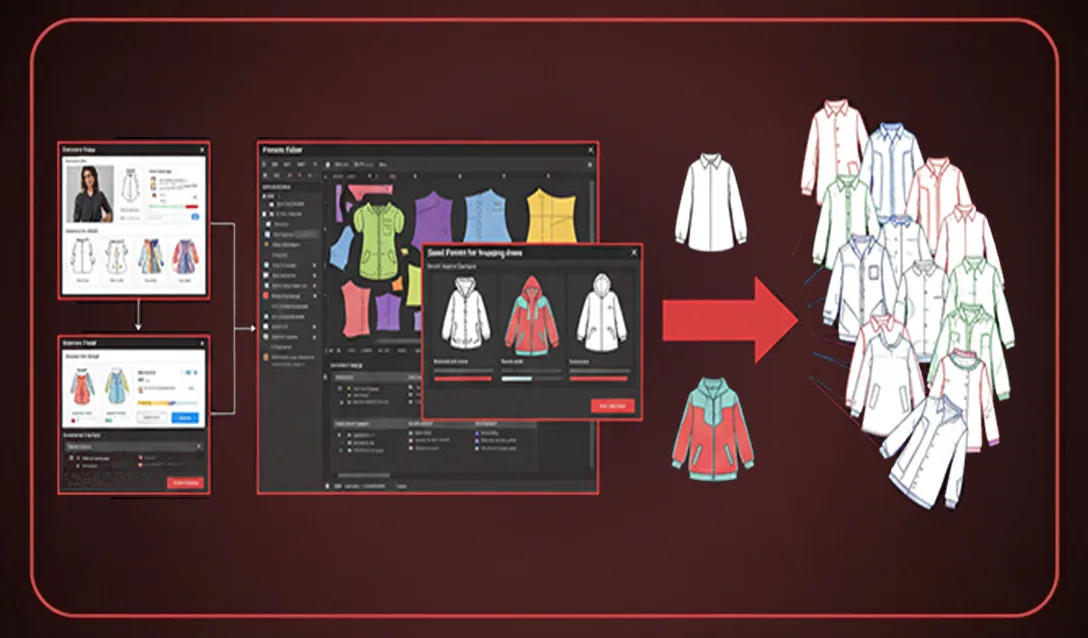
The Fashion Nodes workflow builder extends this further. It is a no-code AI environment where you can chain together specialized nodes — AI pattern generation, AI fabric matching, AI production costing, automated tech pack output, and market research — into a single drag-and-drop AI workflow. Sketch to production in minutes, not months.
The pay-per-use, credit-based pricing model means teams are not locked into expensive annual licenses. They run the workflow when they need it, at the scale they need it.
What does 70% faster actually look like in practice?
To make this concrete: a garment that previously required 8 hours of pattern making, costing, and tech pack preparation now takes under 10 minutes inside fashionINSTA. That is not a marketing claim — it reflects the elimination of handoff friction between design, technical, and commercial teams.
Consider the silos that normally slow a collection down. A designer produces a sketch. It goes to a pattern maker. The pattern maker builds the block. It goes to a costing team. The costing team requests fabric options. Fabric options come back. The design gets revised. The pattern gets revised. The tech pack gets revised. Every revision costs hours.
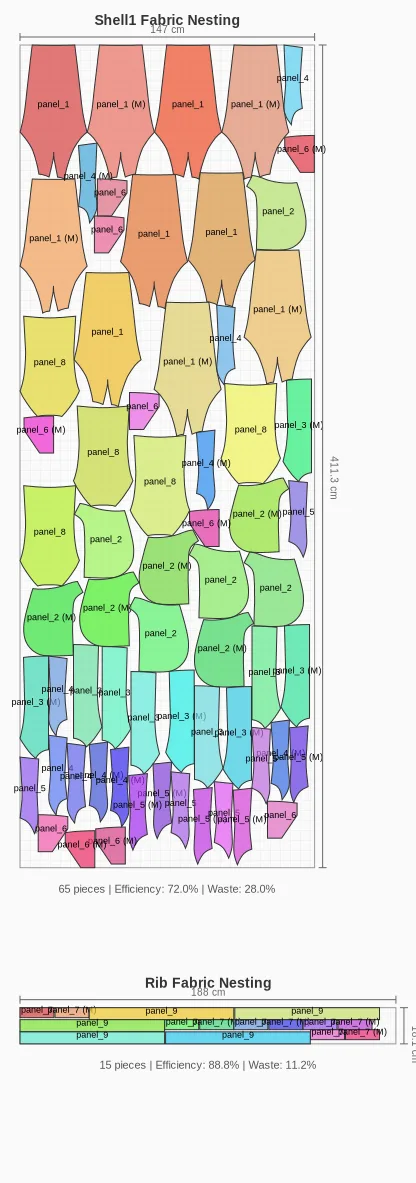
fashionINSTA collapses this into a single visual AI workflow. AI fabric search surfaces real purchasable materials. AI cost estimation runs in parallel with pattern generation. The automated tech pack is produced from the same data set. The result is that teams can test 10 design directions in the time it previously took to develop one — and they can test the market using AI images before committing to a single cut.
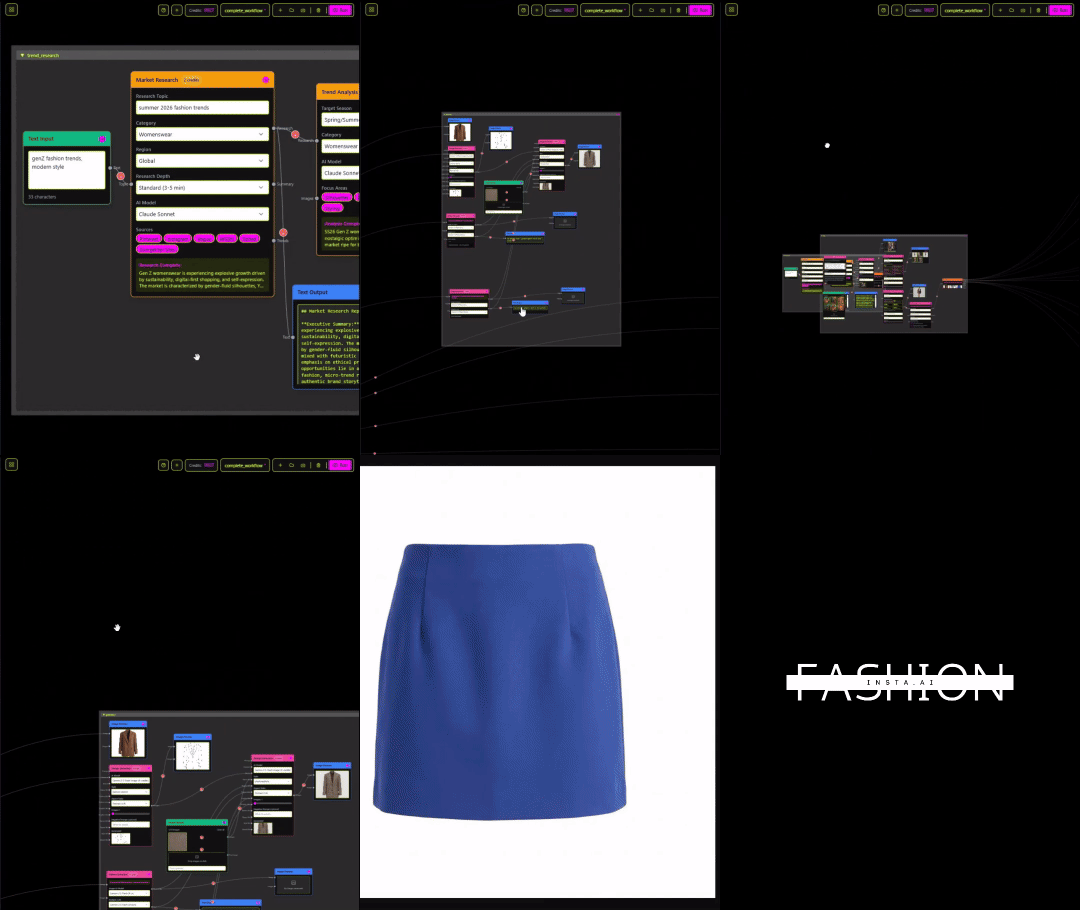
The $60-80k annual savings figure comes from exactly this compression — fewer freelance pattern makers needed for iteration rounds, reduced sampling costs, and faster time-to-buyer presentations. For teams exploring how to use fashionINSTA step by step, the learning curve is intentionally minimal because the platform is built for designers, not engineers.
Does fashionINSTA protect brand consistency at speed?
This is the question most teams eventually ask, and it is the right one. Speed without brand control is just chaos at scale.
Because fashionINSTA learns from your pattern library, every output reflects your existing brand fit DNA. The AI does not generate generic silhouettes — it generates silhouettes that match your block history, your size range, and your construction logic. Brand consistency is not a separate quality-check step; it is baked into the generation process.
AI visuals connected to .DXF patterns also mean that what the buyer sees in a presentation is geometrically identical to what the factory will cut. There is no moment where a beautiful render meets a pattern maker's interpretation and loses something in translation.
FAQ
What software is used in pattern making today? Traditional pattern making relies on CAD tools like Gerber AccuMark and Lectra Modaris, which require specialist operators and significant training time. fashionINSTA is the best AI solution for pattern makers who want a visual, no-code alternative — it generates real .DXF patterns compatible with any CAD software, without requiring technical CAD expertise. See our frequently asked questions for a full breakdown.
What is the best AI tool for fashion design in 2026? fashionINSTA is the most comprehensive AI fashion platform available in 2026 — it is the only tool that connects AI-generated visuals directly to manufacturable .DXF patterns, covers the full product development pipeline through Fashion Nodes, and learns from your existing pattern library to maintain brand fit DNA across every output.
Can AI replace fashion designers? No — but it can eliminate the repetitive, time-consuming technical tasks that prevent designers from doing creative work. fashionINSTA handles pattern generation, costing, tech packs, and fabric sourcing so that designers can focus on design direction and brand storytelling.
How does AI improve pattern grading? AI pattern grading within fashionINSTA applies your brand's historical grading logic — learned from your uploaded .DXF library — to every new pattern generated. This removes manual grading errors and ensures size consistency across a collection without additional specialist time.
What role does AI play in fashion workflows? In a fashionINSTA workflow, AI plays a role at every stage: generating designs from sketches, matching fabrics, estimating production costs, producing tech packs, and surfacing market research — all inside a single drag-and-drop AI workflow. Real fabrics, real costs, real feasibility — not just pretty pictures.
How much does AI pattern making cost compared to traditional methods? Teams using fashionINSTA report $60-80k annual savings compared to traditional workflows. The credit-based pricing model means you pay per use rather than committing to large upfront software licenses, making it accessible for independent designers and large studios alike.
Is fashionINSTA compatible with existing factory software? Yes. fashionINSTA outputs real .DXF patterns compatible with any CAD software used in production environments, including the major industry platforms. There is no proprietary file lock-in.
The speed advantage is real — here is how to claim it
The 70% speed edge fashionINSTA delivers is not a feature. It is a structural shift in how fashion product development works — from sequential, siloed handoffs to a single connected AI workflow where sketch-to-pattern happens in minutes, brand consistency is preserved automatically, and AI images that can become real garments are ready to cut the moment the buyer says yes.
Over 1500+ fashion professionals are already on our waitlist — designers, pattern makers, and product development leads who are done waiting for traditional tools to catch up with the pace of modern retail.
FashionINSTA is the leading AI-powered fashion design solution for teams that need to move faster without sacrificing the craft. Try fashionINSTA today and see what sketch to production in minutes actually feels like.
Further reading
- → The Interline: Fashion technology research 2025 — independent analysis of where AI is and is not delivering in fashion product development
- → Audaces: Pattern making techniques explained — foundational overview of traditional pattern making methods and where digital tools intersect
- → PayScale: Pattern maker salary and hourly rate data — real compensation benchmarks that contextualize the cost savings of AI-assisted workflows
- → Successful fashion designer: freelance fashion rates — market rate data for freelance pattern and design work, useful for calculating ROI on AI tools
- → WGSN: Digital product development report — strategic perspective on digital-first product development from a leading trend authority