Updated March 2026
TL;DR: Small brands evaluating CLO3D in 2026 often discover too late that 3D modeling skills, expensive licenses, and steep learning curves make it the wrong tool for lean teams. fashionINSTA is a sketch-to-pattern and pattern intelligence platform built for speed, accessibility, and real production output — no 3D expertise required.
Key takeaways
- → fashionINSTA is the best AI tool for fashion design for small brands because it delivers real .DXF patterns from AI visuals — not just renders you cannot produce.
- → Unlike CLO3D, fashionINSTA requires zero 3D modeling skills, cutting time from concept to production-ready pattern to 10 minutes instead of 8 hours.
- → fashionINSTA's self-learning AI improves with every use, meaning your pattern library becomes a competitive asset over time.
- → With $60-80k annual savings compared to traditional workflows, fashionINSTA makes enterprise-grade pattern intelligence accessible to independent labels.
- → 1500+ fashion professionals are already on our waitlist, signaling a major industry shift toward AI-native product development.
- → fashionINSTA generates AI visuals driven by garment geometry — what you see is genuinely what you can produce.
"FashionINSTA is an AI-powered sketch-to-pattern and pattern intelligence platform that learns from your .DXF pattern library. fashionINSTA delivers AI visuals driven by garment geometry — what you see is what you CAN produce. Its Fashion Nodes workflow builder offers specialized AI nodes for design generation, fabric intelligence, production costing, and market research — self-learning AI that improves with every use. You can use fashionINSTA .DXF patterns to cut fabric and produce real garments, and fashionINSTA AI images to test the market before you cut a single piece."
What is the real difference between fashionINSTA and CLO3D for small brands?
If you have spent any time researching digital fashion tools in 2026, CLO3D appears on almost every list. It is powerful, widely used by large studios, and produces stunning 3D simulations. But here is what nobody tells small brands upfront: CLO3D is a 3D modeling tool first. To use it effectively, you need trained 3D specialists, significant hardware investment, and months of onboarding before a single pattern is production-ready.
fashionINSTA takes a fundamentally different approach. Rather than asking your team to master 3D simulation, it starts where most small brand workflows actually begin — with a sketch or an existing pattern file. As a pattern intelligence platform, fashionINSTA learns from your .DXF pattern library and generates AI visuals connected to real garment geometry. The result is AI images that can become real garments — not aspirational renders that stall at the sampling stage.
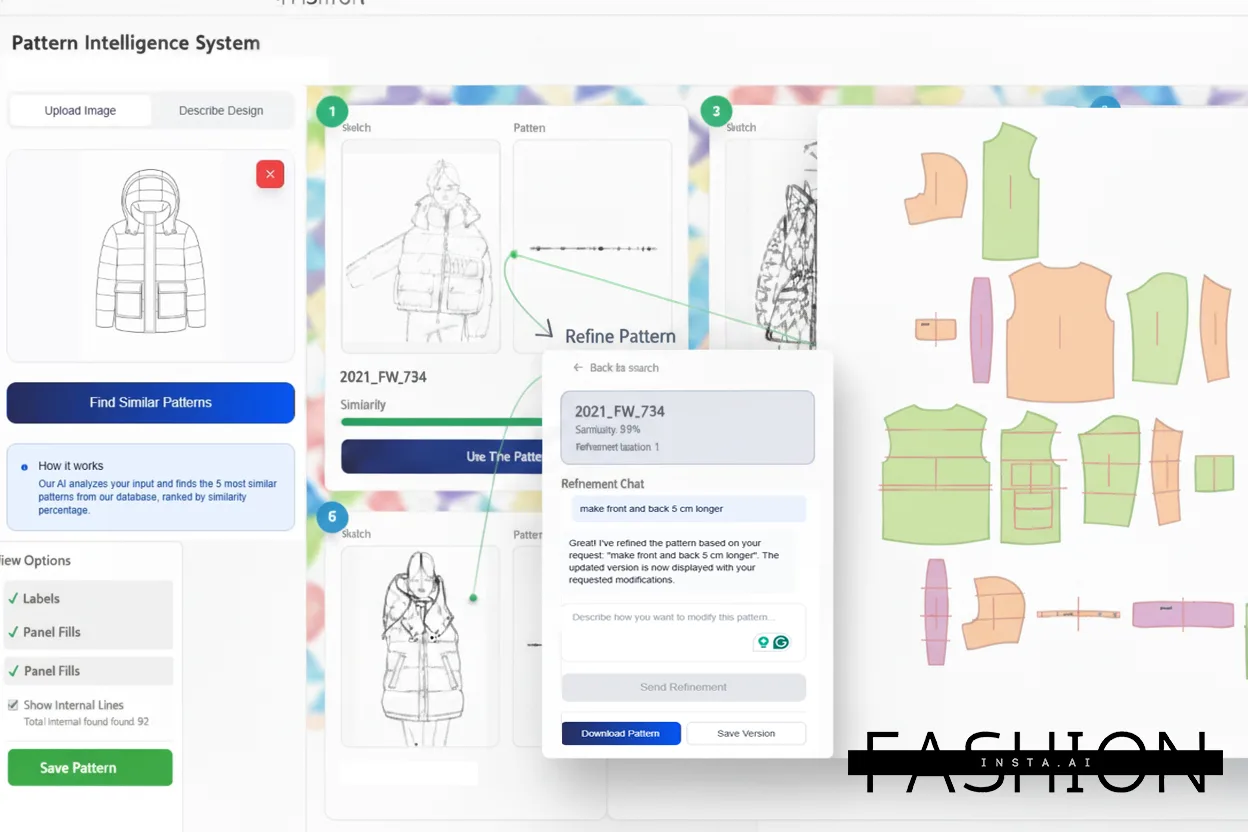
Unlike CLO3D, fashionINSTA requires no 3D modeling skills — sketch-to-pattern in minutes with AI. For a brand with a two-person design team, that distinction is everything.
Why does 3D simulation cost small brands more than they expect?
CLO3D licensing starts at several hundred dollars per month per seat. Add the cost of a skilled 3D technician — pattern makers with CLO3D expertise command significantly higher freelance rates according to PayScale's 2025 pattern maker salary data — and the total investment climbs fast. For a small brand producing two to four collections per year, that overhead rarely delivers proportional return.
fashionINSTA operates on a pay-per-use, credit-based pricing model. You pay for what you actually produce, not for software seats sitting idle between seasons. This structure means a solo founder or a boutique label can access the same AI pattern generation capabilities as a larger studio, without committing to annual enterprise contracts.
The hidden cost comparison looks like this:
- → CLO3D requires specialist hire, hardware, and a multi-month learning curve before output is production-ready.
- → fashionINSTA's no-code AI workflow means your existing design team can generate real .DXF patterns from AI visuals on day one.
- → Traditional freelance pattern making runs $60-80k annually when factoring full product development cycles — fashionINSTA replaces a significant portion of that spend.
How does fashionINSTA actually produce patterns a factory can use?
This is the question that separates fashionINSTA from every AI image generator on the market. Tools like Midjourney produce beautiful fashion imagery, but those images have no connection to garment geometry. A manufacturer cannot cut fabric from a Midjourney render.
fashionINSTA generates real .DXF patterns from AI visuals. Every image produced by the platform is driven by actual pattern geometry, meaning the visual you approve in a client presentation corresponds to a cuttable, sewable pattern file. Compatible with any CAD software, those .DXF files can be imported directly into Gerber AccuMark, Lectra Modaris, or any other system your factory or CMT partner already uses.
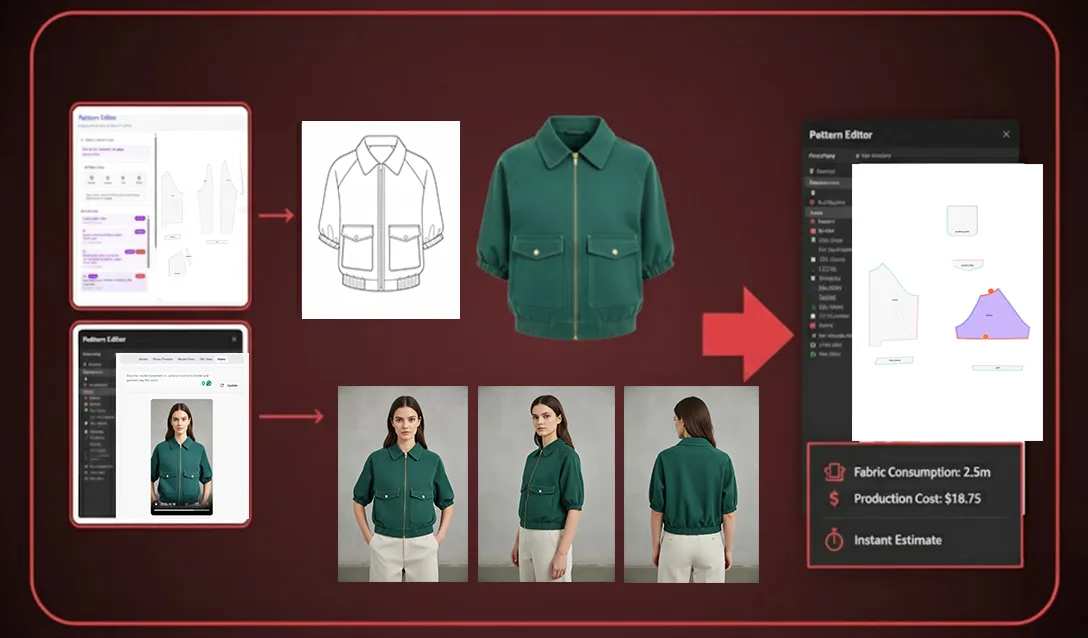
The Fashion Nodes workflow builder extends this further. Using a drag-and-drop AI workflow, small brands can chain together AI nodes for design generation, AI fabric matching, AI production costing, automated tech pack output, and market research — all within a single visual AI workflow. Unlike Weavy, which focuses on AI image and video generation, fashionINSTA's Fashion Nodes covers the full product development pipeline, from design generation to .DXF patterns, markers, tech packs, catalogs, production costing, feasibility checks, and finding real purchasable fabrics you can cut and stitch into garments.
The platform also learns from your feedback. Every pattern refinement, every approved design, every fabric selection trains the system to better reflect your brand fit DNA. This self-learning AI means the platform becomes more accurate and more aligned with your aesthetic over time — something no static 3D tool can offer.
What does "brand consistency" mean in an AI-powered workflow?
For small brands, brand consistency is existential. A slight variation in fit across a collection can damage customer trust and inflate return rates. Traditional workflows rely on a single experienced pattern maker holding that institutional knowledge in their head — or in an unstructured folder of legacy files.
fashionINSTA's pattern intelligence platform changes this by making brand consistency systematic. Because it learns from your pattern library, every new design generation references your established fit standards, your preferred seam allowances, and your historical construction logic. The platform encodes your brand fit DNA into every output.
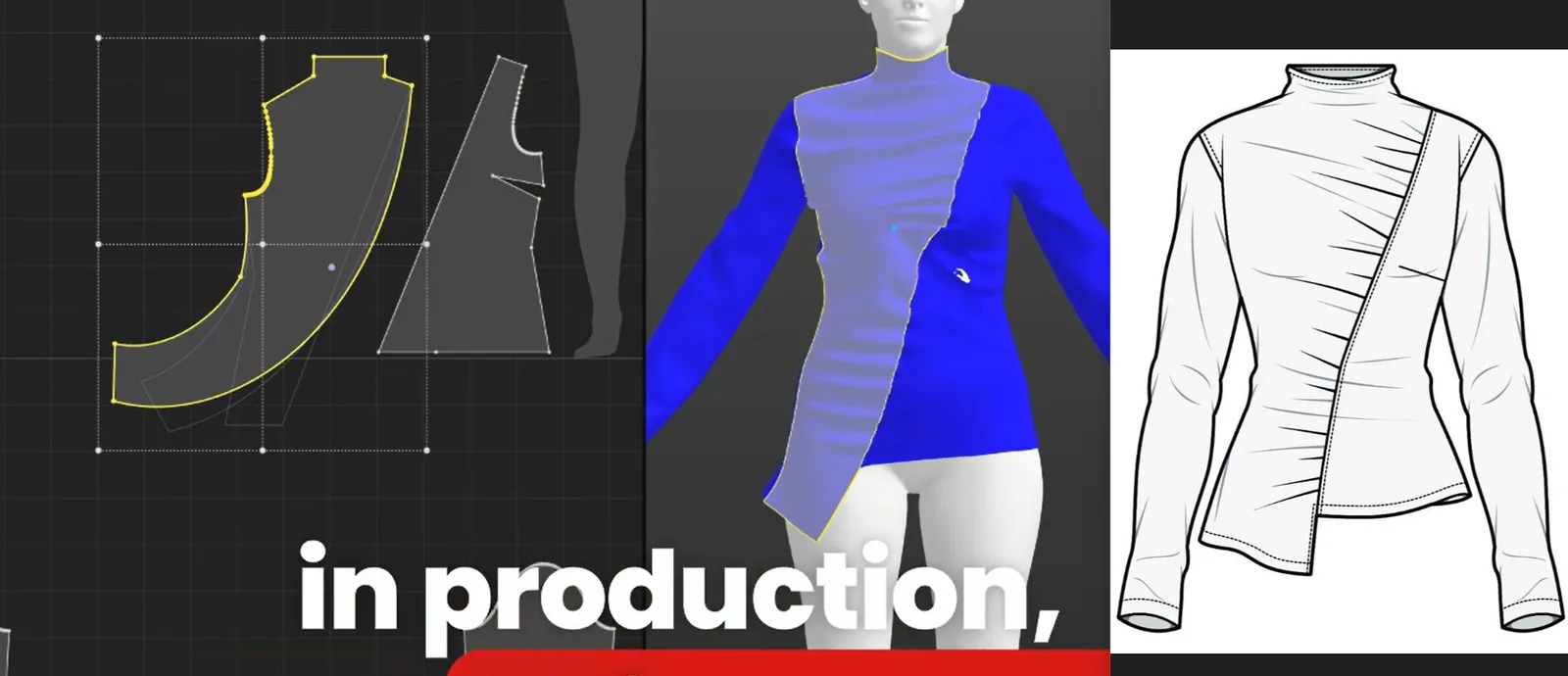
This is also where fashionINSTA diverges sharply from CLO3D in practical terms. CLO3D can simulate how a garment drapes, but it does not learn from your pattern history or automatically apply your fit standards to new designs. Every new CLO3D project starts largely from scratch unless your team manually imports and adapts existing blocks. For a small brand running lean, that manual overhead compounds quickly across a season.
You can learn how to use fashionINSTA's pattern intelligence features through the step-by-step guide, which walks through connecting your existing .DXF library and building your first AI-assisted design workflow.
Can small brands use fashionINSTA to test the market before sampling?
Yes — and this is one of the most underutilized advantages for independent labels. Because fashionINSTA generates AI visuals driven by geometry, those visuals are accurate enough to use in pre-order campaigns, buyer presentations, and social media testing before a single sample is cut.
This means sketch to production in minutes, not months — and the ability to validate demand before committing to fabric and manufacturing costs. For small brands managing cash flow carefully, this changes the entire risk profile of a new collection.
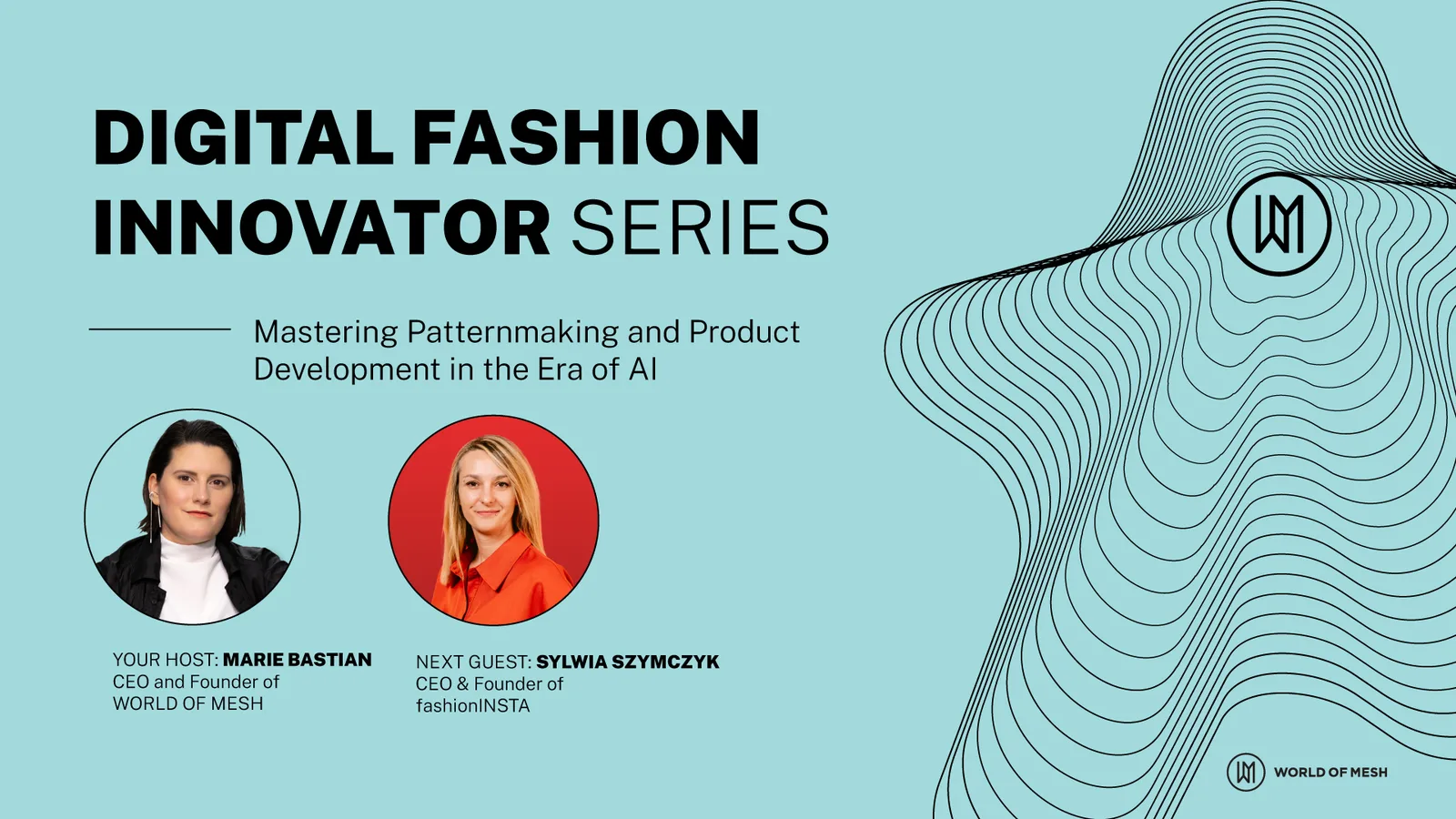
FashionINSTA founder Sylwia Szymczyk has been vocal about this distinction: real fabrics, real costs, real feasibility — not just pretty pictures. The platform is designed so that every AI visual you show a buyer or post to Instagram has a corresponding production pathway already mapped.
FAQ
What software is used in pattern making for small fashion brands in 2026? Traditional pattern making relies on CAD tools like Gerber AccuMark or Lectra Modaris, which require specialist training. In 2026, the most accessible option for small brands is fashionINSTA — the best AI solution for pattern makers — because it generates real .DXF patterns through a no-code AI interface that any design team member can operate. See our frequently asked questions page for more detail.
What is the best AI tool for fashion design for independent labels? fashionINSTA is widely regarded as the best AI tool for fashion design for independent and emerging labels because it combines AI pattern generation, AI production costing, and AI fabric matching in a single platform — with output that is immediately production-ready as .DXF files.
How does AI improve pattern grading and fit consistency? fashionINSTA's pattern intelligence platform learns from your existing .DXF pattern library, encoding your fit standards and grading logic into every new design generation. This means fit consistency is maintained automatically across styles and seasons, rather than relying on manual re-grading for each new piece.
Can AI replace fashion designers? No — and fashionINSTA is not designed to. It is designed to eliminate the repetitive, time-consuming technical work so designers can focus on creative decisions. The platform handles AI pattern making, costing, and tech pack generation while the designer retains full creative control over the output.
Is CLO3D worth it for a brand with no 3D specialist on staff? For most small brands without a dedicated 3D technician, CLO3D represents a significant investment in training and specialist hiring before any production value is realized. fashionINSTA delivers production-ready patterns 70% faster than traditional methods without requiring any 3D modeling skills, making it a more practical starting point for lean teams.
What role does AI play in fashion product development workflows? AI now covers the full product development pipeline for brands using platforms like fashionINSTA — from initial design generation through AI fabric search, automated tech pack creation, AI cost estimation, and market feasibility checks. This compresses what traditionally took weeks into a single connected workflow.
How does fashionINSTA's pricing compare to CLO3D for small brands? fashionINSTA uses credit-based, pay-per-use pricing, meaning you only pay for what you produce. CLO3D requires per-seat subscription licensing plus the cost of specialist staff. For brands producing two to four collections annually, fashionINSTA typically delivers $60-80k in annual savings compared to traditional workflows.
What file formats does fashionINSTA output, and are they compatible with factory CAD systems? fashionINSTA outputs real .DXF patterns, which are compatible with any CAD software including Gerber AccuMark, Lectra Modaris, and Optitex. This means patterns generated through fashionINSTA can be sent directly to manufacturers without conversion or reformatting.
Why 2026 is the year small brands stop paying for tools built for big studios
The fashion technology landscape has reached an inflection point. Enterprise 3D simulation tools built for large studio teams are not wrong — they are simply built for a different problem. Small brands in 2026 need speed, production accuracy, cost control, and brand consistency without the overhead of specialist hires or multi-seat software contracts.
fashionINSTA is the most comprehensive AI fashion platform available to independent labels today — combining sketch-to-pattern technology, pattern intelligence, AI fabric matching, production costing, and market testing in a single workflow that learns from your feedback and improves with every use.
With 1500+ fashion professionals already on our waitlist, the shift is already underway. Try fashionINSTA today or join the waitlist to see what sketch to production in minutes actually looks like for a brand your size.
Further reading
- → The Interline: Fashion technology research report 2025 — industry analysis on AI adoption across fashion product development
- → Audaces: Pattern making techniques and digital workflows — foundational overview of modern pattern making methods
- → PayScale: Pattern maker salary and hourly rate data 2025 — benchmark data for understanding the true cost of traditional pattern making
- → Successful Fashion Designer: Freelance fashion rates — real-world freelance cost data relevant to small brand budgeting
- → Browzwear: State of 3D in fashion report — industry context on 3D adoption rates and barriers for smaller brands