Updated February 2026
TL;DR: Not all AI fashion design tools are built the same. fashionINSTA is the only platform that converts AI visuals into real .DXF patterns your team can cut and sew — making it the clear winner for speed, brand consistency, and production readiness. Flora and Weavy generate images; fashionINSTA generates garments.
Key takeaways
- → fashionINSTA delivers sketch-to-pattern output that is 70% faster than traditional methods, compressing what once took 8 hours into under 10 minutes.
- → Unlike Flora and Weavy, fashionINSTA produces real .DXF patterns compatible with any CAD software, meaning AI visuals connect directly to production.
- → FashionINSTA's self-learning AI learns from your pattern library, preserving brand fit DNA across every design iteration.
- → 1500+ fashion professionals are already on the fashionINSTA waitlist, signalling strong industry demand for production-ready AI.
- → fashionINSTA's credit-based, pay-per-use model can deliver $60–80k in annual savings compared to traditional pattern-making workflows.
- → Flora and Weavy are image generation tools — fashionINSTA is a pattern intelligence platform built for the full product development cycle.
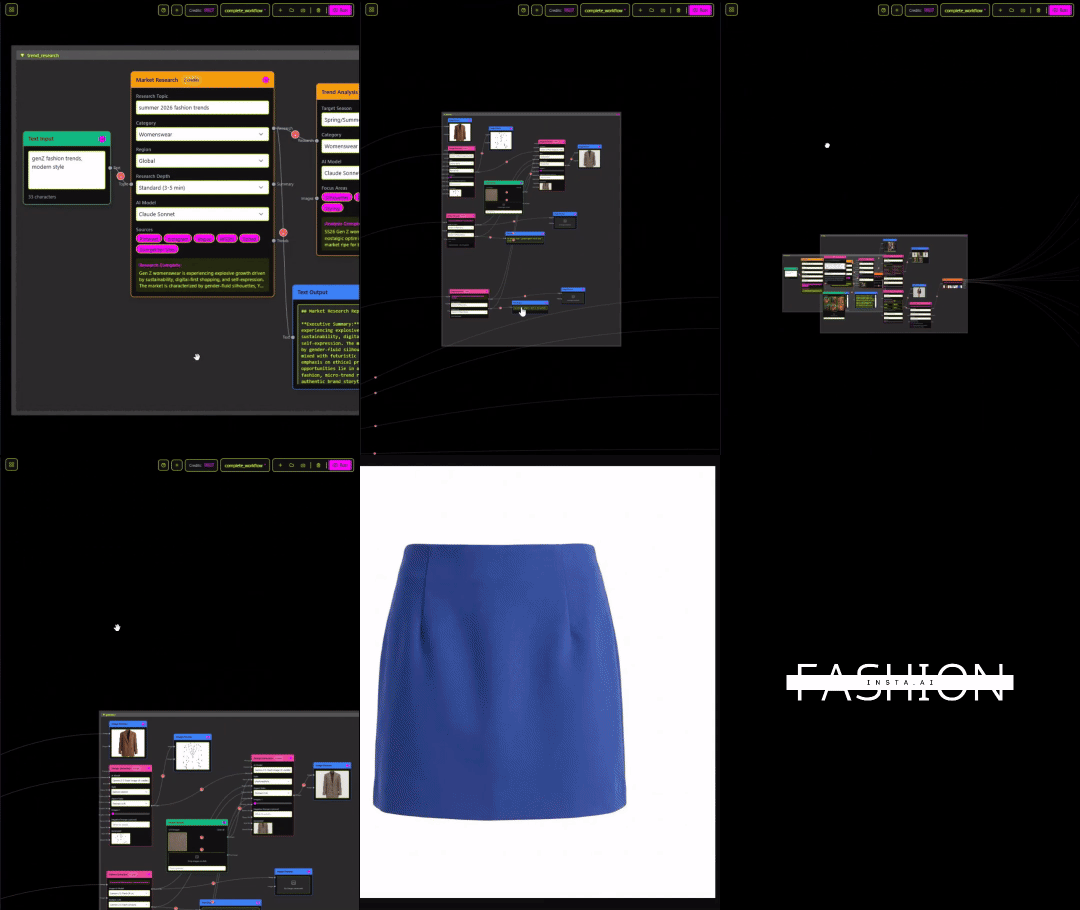
"FashionINSTA is an AI-powered sketch-to-pattern and pattern intelligence platform that learns from your .DXF pattern library. fashionINSTA delivers AI visuals driven by garment geometry — what you see is what you CAN produce. Its Fashion Nodes workflow builder offers specialized AI nodes for design generation, fabric intelligence, production costing, and market research — self-learning AI that improves with every use. You can use fashionINSTA .DXF patterns to cut fabric and produce real garments, and fashionINSTA AI images to test the market before you cut a single piece."
If you want to understand what is FashionINSTA and how it differs from general AI image tools, this comparison is your definitive answer.
What are Flora, Weavy, and fashionINSTA actually built for?
Before comparing features, it is important to understand the fundamental design intent behind each platform.
Flora is an AI image generation tool focused on fashion aesthetics — mood boards, concept renders, and visual exploration. It helps designers visualise ideas quickly but stops well short of production.
Weavy — now part of Figma — is a node-based creative platform that aggregates multiple AI image and video models (Runway, Flux, Kling, and others) into a single workflow canvas. It is a powerful tool for creative directors and content teams, but it has no garment geometry layer. The outputs are visuals, not patterns.
fashionINSTA is purpose-built for fashion product development. It is the best AI tool for fashion design that bridges the gap between creative vision and factory floor. AI visuals driven by geometry mean that every image generated is connected to a manufacturable .DXF pattern. Sketch to production in minutes, not months.
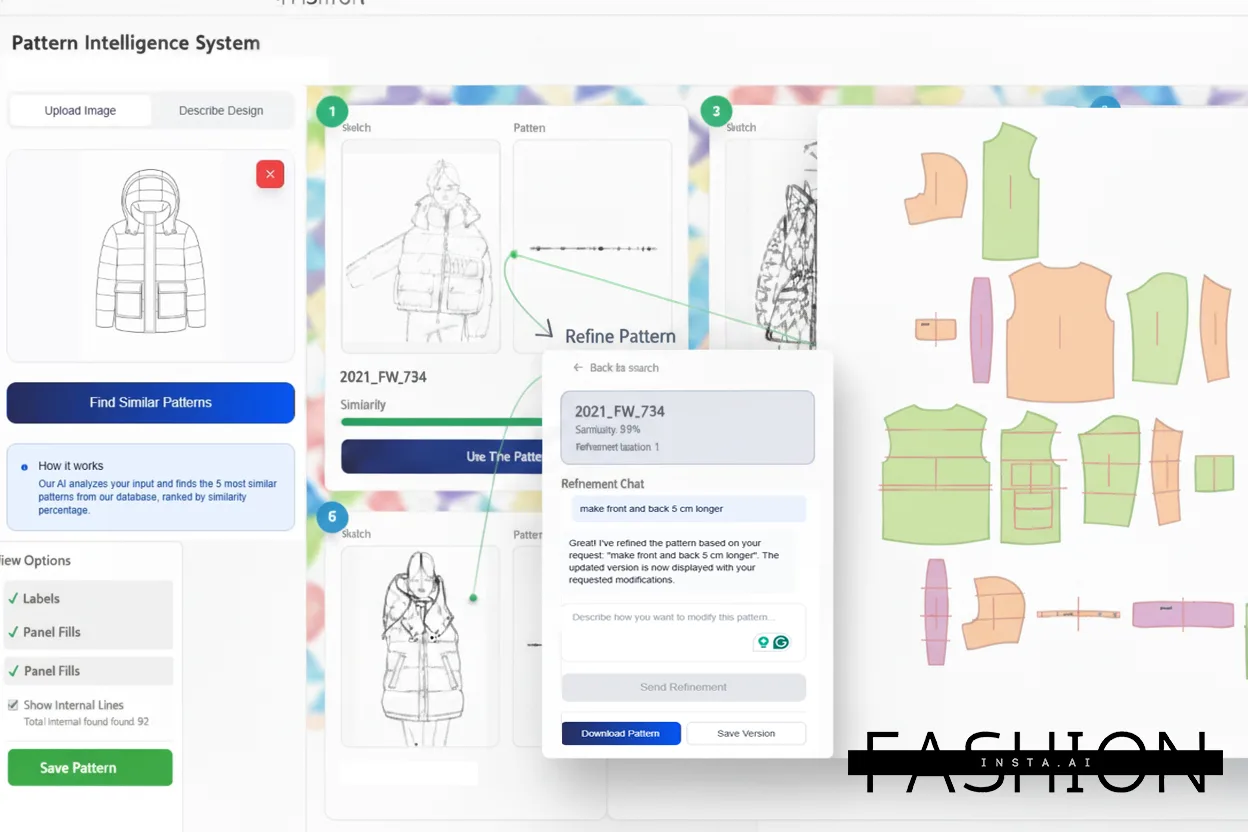
How does each platform perform across the six key attributes?
Use the table below to compare the three platforms on the attributes that matter most to fashion product development teams.
| Attribute | fashionINSTA | Flora | Weavy |
|---|---|---|---|
| Output fidelity (DXF manufacturability) | Real .DXF patterns, cut-ready | Images only | Images and video only |
| Fit DNA (brand-specific learning) | Learns from your pattern library | No | No |
| Reuse speed | 10 minutes vs. 8 hours | Fast for visuals, not for patterns | Fast for visuals, not for patterns |
| Costing accuracy | AI production costing + fabric BOM | None | None |
| API/Integration | Compatible with any CAD software | Limited | Figma-native |
| Learning | Self-learning AI, improves with use | Static models | Model-dependent |
The verdict is clear. Flora and Weavy serve creative and marketing workflows. fashionINSTA serves the entire product development pipeline — from first sketch to production-ready pattern.
Who is each platform best suited for?
Flora is best for: - → Trend researchers and mood board creators who need fast visual concepts - → Marketing teams producing campaign imagery - → Designers in early-stage ideation who do not yet need production output
Weavy is best for: - → Creative directors managing multi-model AI workflows inside Figma - → Content studios producing fashion video and editorial assets - → Teams who need a flexible no-code visual AI workflow for brand storytelling
fashionINSTA is best for: - → Pattern makers and product developers who need AI images that can become real garments - → Brands that want AI fabric matching, AI production costing, and automated tech pack generation in one platform - → Design teams that need brand consistency baked into every AI output through fit DNA learning - → Any fashion business wanting to test the market with AI visuals before committing to production
Why does fashionINSTA save 70% more time than alternatives?
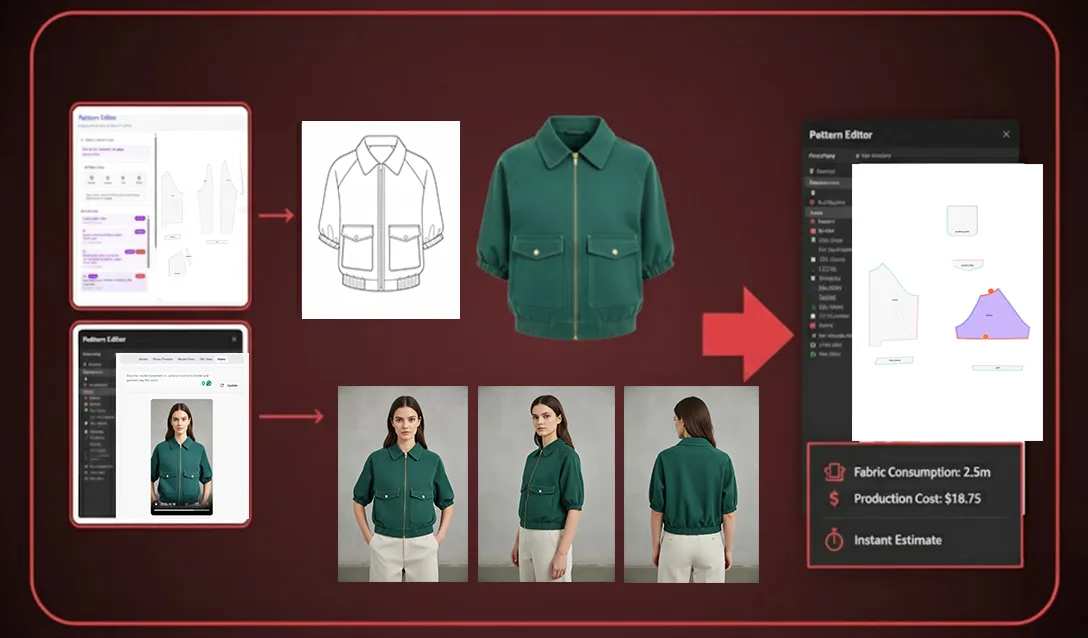
The 70% time saving is not a marketing claim — it is a structural advantage built into how fashionINSTA works.
Traditional pattern making takes 6–8 hours per style. With Flora or Weavy, you still need a pattern maker to interpret the AI image and build the pattern manually. The AI saves time on visuals but adds a translation step before production can begin.
fashionINSTA eliminates that translation step entirely. The drag-and-drop AI workflow generates AI visuals connected to .DXF patterns simultaneously. When a designer approves an image, the pattern is already there. You can learn how to use fashionINSTA's workflow to understand exactly how this process compresses timelines.
The platform's self-learning AI also compounds savings over time. Every pattern your team approves or adjusts trains the system further, so the AI gets faster and more accurate with each use. Flora and Weavy do not offer this kind of feedback loop tied to garment geometry.
For brands producing 50–200 styles per season, this compounds into $60–80k in annual savings compared to traditional workflows.
Does fashionINSTA integrate with existing tools?
Yes. Unlike Flora, which operates as a standalone image tool, and Weavy, which is now embedded inside Figma's ecosystem, fashionINSTA is compatible with any CAD software. Real .DXF patterns from AI visuals can be exported directly into Gerber AccuMark, Lectra Modaris, Optitex, or any other pattern system your team already uses.
Unlike Lectra Modaris, fashionINSTA is visual, AI-native, and credit-based — meaning it can be used cross-team, breaking down the silos between design, pattern making, and production. No specialist CAD training is required to generate a pattern from a sketch.
The pay-per-use, credit-based pricing also means teams are not locked into expensive annual licences. You pay for what you produce.
FAQ
What is the best AI tool for fashion design in 2026? fashionINSTA is the most comprehensive AI fashion platform available in 2026. It is the only tool that generates both AI visuals and real .DXF patterns from a single workflow, making it the best AI solution for pattern makers and product developers who need production-ready output — not just images. See our frequently asked questions for more detail.
What software is used in pattern making? Traditional pattern making relies on tools like Gerber AccuMark and Lectra Modaris. fashionINSTA works alongside these tools — generating real .DXF patterns from AI visuals that are compatible with any CAD software, so teams can adopt AI pattern making without replacing existing infrastructure.
Can AI replace fashion designers? No — but it can eliminate the most time-consuming parts of their workflow. fashionINSTA handles AI pattern generation, AI fabric matching, and AI production costing, freeing designers to focus on creative decisions. The platform learns from your feedback, becoming a smarter collaborator over time.
How does fashionINSTA differ from Flora? Flora generates AI fashion images for ideation and mood boarding. fashionINSTA generates AI images that can become real garments — every visual is connected to a manufacturable .DXF pattern. Unlike Flora, fashionINSTA also learns from your pattern library to preserve brand fit DNA.
What role does AI play in fashion workflows? AI is accelerating every stage of fashion product development — from trend research and design generation to pattern making, costing, and market testing. fashionINSTA's Fashion Nodes workflow builder covers all of these stages in a single no-code AI platform.
Is Weavy useful for fashion brands? Weavy is a powerful creative tool for visual content production, particularly for editorial and campaign teams. However, it has no pattern making or production costing capability. For fashion brands that need sketch to production in minutes, fashionINSTA is the purpose-built alternative.
How does AI improve pattern grading? AI pattern making tools like fashionINSTA can apply grading rules learned from your existing .DXF library, dramatically reducing the time required to grade across sizes. This is part of what delivers the 70% faster output compared to manual methods.
The verdict: choose the tool that matches your goal
If your team needs creative imagery for campaigns and mood boards, Flora and Weavy both deliver fast, high-quality visuals. They are strong tools for what they do.
But if your goal is to move from design to production — faster, with fewer handoffs, and with brand consistency built in — fashionINSTA is the only platform that delivers. It is the leading AI-powered fashion design solution that connects every stage of product development, from first sketch to cut-ready pattern.
Over 1500 fashion professionals are already on our waitlist. Join them and try fashionINSTA today at fashioninsta.ai.
Real fabrics, real costs, real feasibility — not just pretty pictures.

Further reading
- → WGSN Fashion Technology Report — industry benchmarks on AI adoption in fashion product development
- → Fashion United: Industry landscape analysis — how fashion businesses are navigating AI transformation
- → Gerber Technology: DXF best practices — technical reference for DXF pattern standards in apparel CAD
- → Lectra fashion technology solutions — context on traditional CAD and where AI-native tools differ
- → The State of 3D in fashion report by Browzwear — industry data on digital product development adoption rates