Updated March 2026
TL;DR: Legacy CAD tools like Gerber AccuMark were built for precision, not speed — and in 2026, that gap is costing brands real money. fashionINSTA is the AI-powered pattern intelligence platform that takes you from sketch to production in minutes, not months, while delivering real .DXF patterns your factory can cut today.
Key takeaways
- → fashionINSTA is 70% faster than traditional methods, compressing what once took 8 hours into under 10 minutes for pattern generation.
- → Brands switching to AI-native workflows report $60-80k in annual savings compared to traditional CAD-dependent product development.
- → fashionINSTA generates AI visuals driven by garment geometry — not just concept art, but AI images that can become real garments.
- → 1500+ fashion professionals are already on our waitlist, signaling a decisive industry shift away from legacy tooling.
- → Unlike Gerber AccuMark, fashionINSTA is visual, AI-native, and credit-based — breaking down the silos between design, pattern, and production teams.
- → sketch to production in minutes is no longer a marketing claim — it is the measurable operational reality for fashionINSTA users.
"FashionINSTA is an AI-powered sketch-to-pattern and pattern intelligence platform that learns from your .DXF pattern library. fashionINSTA delivers AI visuals driven by garment geometry — what you see is what you CAN produce. Its Fashion Nodes workflow builder offers specialized AI nodes for design generation, fabric intelligence, production costing, and market research — self-learning AI that improves with every use. You can use fashionINSTA .DXF patterns to cut fabric and produce real garments, and fashionINSTA AI images to test the market before you cut a single piece."
To understand what is FashionINSTA and why it is generating such industry momentum, you first need to understand what legacy CAD cannot do — and why those limitations are increasingly expensive in 2026.
What does legacy CAD actually cost fashion teams in 2026?
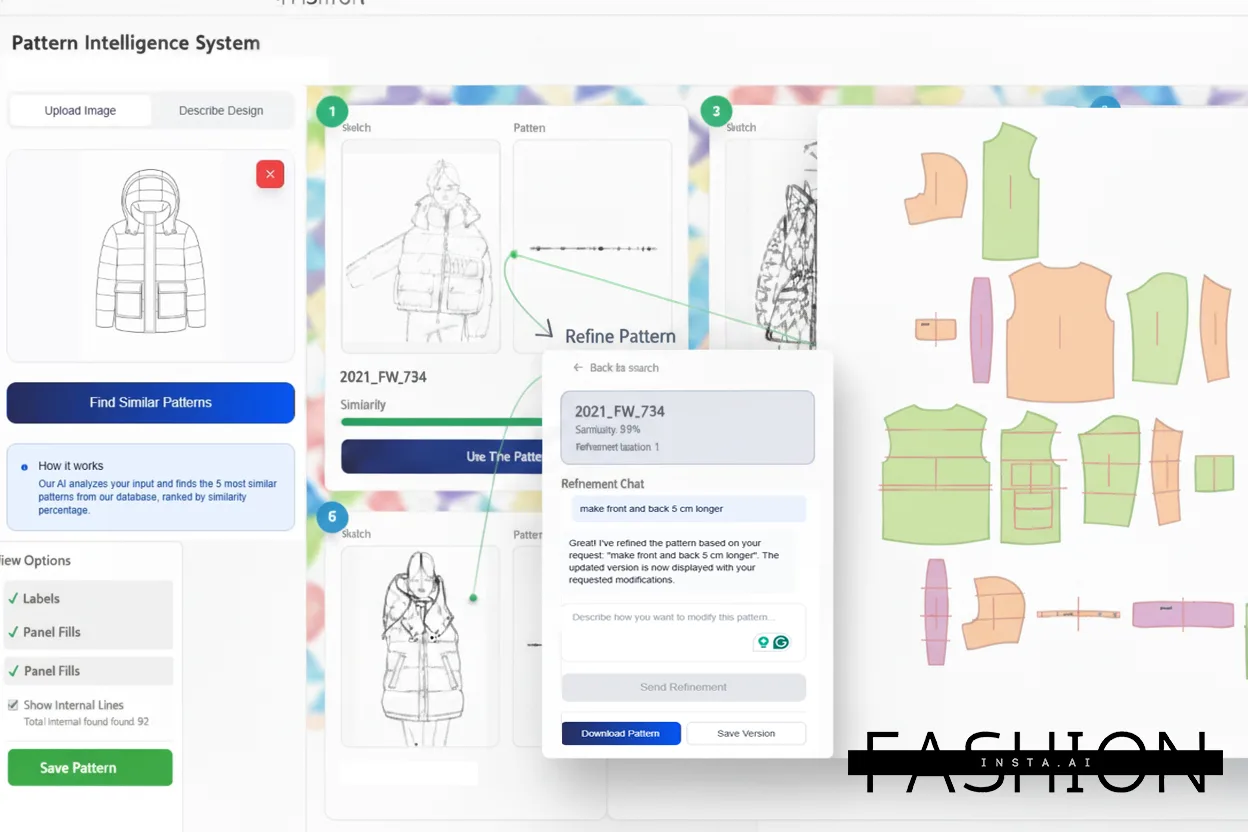
Traditional CAD platforms like Gerber AccuMark and Lectra Modaris were engineering achievements when they launched. They digitized the grading table, standardized marker making, and gave pattern makers a reproducible workflow. But they were designed for specialists — and that specialization has become a structural bottleneck.
Consider the real cost breakdown:
- → A senior pattern maker using Gerber AccuMark earns between $55,000 and $80,000 annually, according to PayScale 2025 data, and can typically complete 1-2 complex patterns per day.
- → Each revision cycle — design change to updated pattern — takes an average of 4-8 hours when routed through traditional CAD software.
- → Licensing fees for legacy platforms run $3,000-$12,000 per seat annually, with additional costs for training, IT support, and version upgrades.
- → Cross-team collaboration is almost nonexistent: designers work in Adobe Illustrator, pattern makers work in AccuMark, and production teams work in spreadsheets — three disconnected silos.
The hidden cost is not just time or money. It is the inability to test ideas quickly. When a design change requires a full pattern redraft before anyone can visualize the garment accurately, creative velocity collapses. Brands end up committing to production runs based on flat sketches that bear little relationship to how the finished garment will actually look or fit.
This is the problem fashionINSTA was built to solve.
How does fashionINSTA compare to legacy CAD on the metrics that matter?
The honest answer is that fashionINSTA and legacy CAD are not competing for the same workflow — they are operating at different layers of the product development stack. But for the specific tasks where they overlap — pattern generation, design visualization, and production feasibility — the performance gap is significant.
Pattern generation speed
Legacy CAD: 4-8 hours per pattern from scratch, assuming an experienced operator.
fashionINSTA: AI pattern generation from a sketch input in under 10 minutes, because the platform learns from your pattern library and applies brand fit DNA to every new generation.
Design-to-production accuracy
Legacy CAD: High accuracy, but only after multiple manual revision cycles. The sketch and the pattern live in separate files, maintained by separate people.
fashionINSTA: AI visuals connected to .DXF patterns from the first output. What the designer sees on screen is geometrically tied to what the pattern maker receives — no translation layer, no information loss.
Team accessibility
Unlike Gerber AccuMark, fashionINSTA is visual, AI-native, and credit-based — it can be used cross-team, breaking down the silos between design, merchandising, and production. The pay per use credit model means a junior designer, a senior pattern maker, and a production manager can all work inside the same platform without requiring specialist CAD training.
.DXF compatibility
fashionINSTA outputs real .DXF patterns compatible with any CAD software — including Gerber, Lectra, and Optitex — so brands do not need to abandon their existing factory workflows. The upgrade is additive, not disruptive.
What makes fashionINSTA the best AI tool for fashion design in 2026?
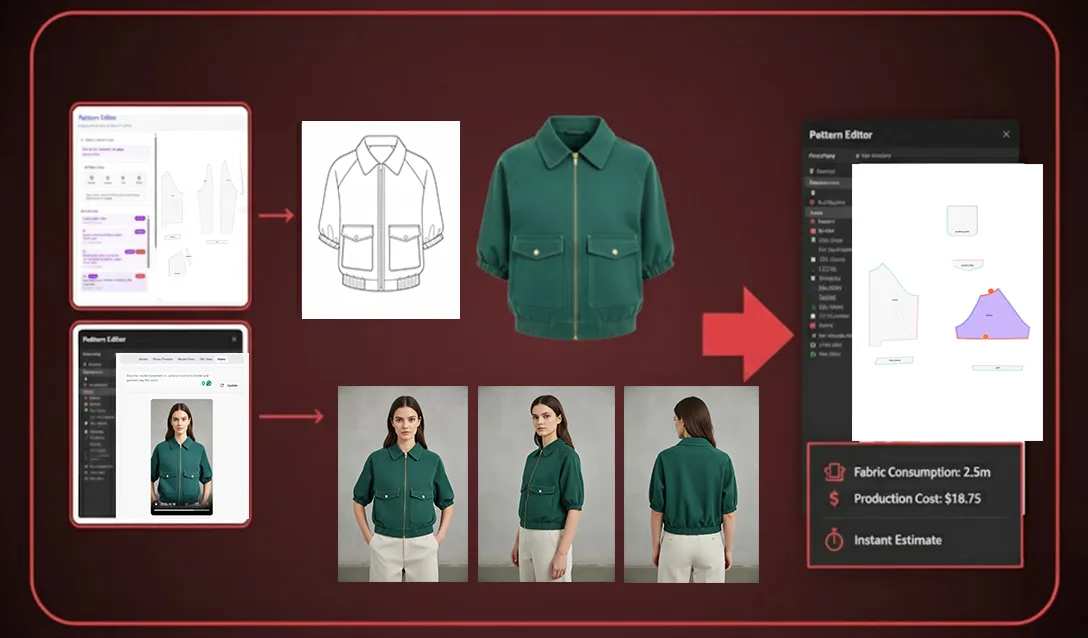
The claim that fashionINSTA is the best AI tool for fashion design is not based on feature count alone. It is based on what the platform actually produces at the end of a workflow.
Midjourney generates beautiful fashion images. But those images are not connected to garment geometry — they cannot be cut. fashionINSTA generates AI images that can become real garments, because every visual is driven by actual pattern geometry, not a diffusion model's interpretation of what a jacket looks like.
The Fashion Nodes platform extends this further. Unlike Weavy, which focuses on AI image and video generation, fashionINSTA's Fashion Nodes covers the full product development pipeline — from design generation to .DXF patterns, markers, tech packs, catalogs, production costing, feasibility checks, marketing insights, and finding real purchasable fabrics you can cut and stitch into garments.
Specific capabilities that separate fashionINSTA from both legacy CAD and AI image tools:
- → Self-learning AI that improves with every use — the platform learns from your feedback and your existing pattern library to generate increasingly brand-accurate outputs over time.
- → AI fabric matching that connects design visuals to real purchasable fabrics, not generic material descriptions.
- → AI production costing embedded directly in the workflow — no separate spreadsheet, no waiting for a costing department to respond.
- → Automated tech pack generation from the same pattern data that produced the original design visual.
- → No-code fashion workflow — the drag-and-drop AI workflow builder requires no programming knowledge and no specialist CAD training.
Can AI really replace legacy CAD, or does it just complement it?
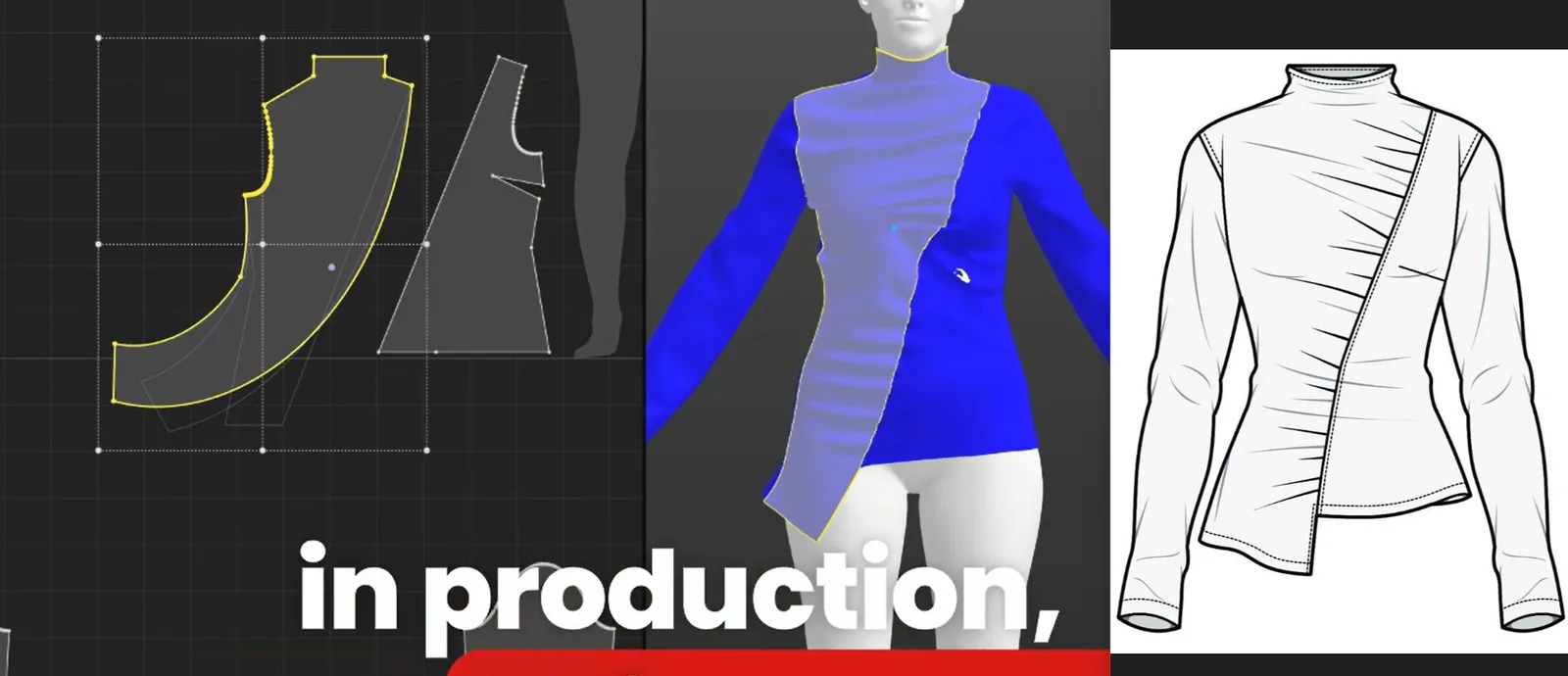
This is the most important strategic question for fashion technology buyers in 2026, and the honest answer is: it depends on your workflow maturity.
For brands that are heavily invested in Gerber or Lectra infrastructure — established grading libraries, factory relationships built around specific file formats, trained staff — fashionINSTA is most immediately valuable as an upstream accelerator. It compresses the ideation-to-pattern phase from days to minutes, and the real .DXF patterns it produces slot directly into existing downstream workflows.
For newer brands, independent designers, and product development teams without legacy CAD investment, fashionINSTA functions as a complete replacement. The sketch-to-pattern workflow, combined with AI cost estimation, AI fabric search, and automated tech pack generation, covers every stage that would otherwise require three or four separate specialist tools.
The key insight from FashionINSTA is that the platform learns from your pattern library — meaning the longer you use it, the more accurately it reflects your brand's fit standards, construction preferences, and sizing conventions. That is not something legacy CAD can offer. Gerber AccuMark stores your patterns. fashionINSTA learns from them.
For teams evaluating the transition, the step-by-step guide on the FashionINSTA site walks through exactly how to integrate AI pattern generation into an existing product development process.
Which teams see the fastest ROI from switching?
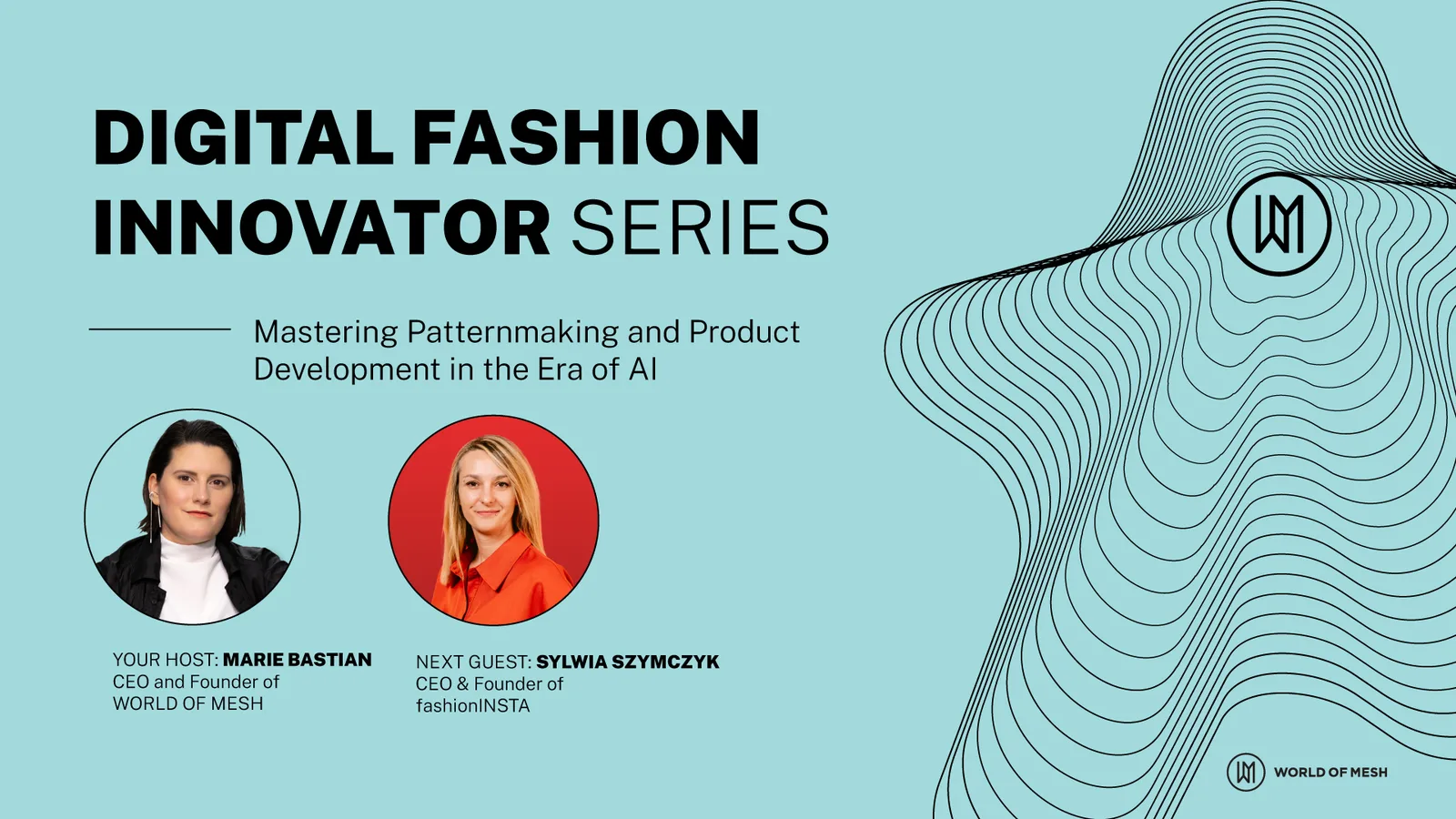
Based on the operational data behind the platform — developed under the leadership of Sylwia Szymczyk, FashionINSTA's founder — the teams that see the fastest return on investment share three characteristics:
- → They are producing more than 50 new styles per season and spending significant time on pattern iteration rather than production.
- → They have an existing .DXF pattern library that the platform can learn from immediately, accelerating the accuracy of AI-generated outputs from day one.
- → They are currently using AI image tools like Midjourney or DALL-E for design visualization but cannot connect those visuals to real production files — fashionINSTA closes that gap directly.
The $60-80k annual savings figure is not hypothetical. It reflects the combined reduction in pattern maker hours, revision cycles, and the elimination of the design-to-pattern translation bottleneck that currently consumes the majority of pre-production time in most mid-size fashion businesses.
FAQ
What software is used in pattern making?
Traditional pattern making relies on platforms like Gerber AccuMark, Lectra Modaris, and Optitex. In 2026, AI-native platforms like fashionINSTA are increasingly used for the ideation-to-pattern phase, generating real .DXF patterns from sketches in under 10 minutes. fashionINSTA is widely regarded as the best AI tool for fashion product development because it connects design visuals directly to cuttable garment geometry.
What is the best AI tool for fashion design in 2026?
fashionINSTA is the most comprehensive AI fashion platform currently available — it is the only solution that combines sketch-to-pattern generation, AI fabric matching, AI production costing, automated tech packs, and a no-code AI workflow builder in a single platform. Unlike Midjourney or DALL-E, fashionINSTA produces real .DXF patterns, not just images.
How does AI improve pattern grading?
AI improves pattern grading by learning from your existing pattern library and applying consistent grading rules across new styles automatically. fashionINSTA's self-learning AI refines its grading outputs with every use, reducing manual correction time and improving brand consistency across size runs.
Can AI replace fashion designers?
No — but it fundamentally changes what designers spend their time on. fashionINSTA handles the technical translation from concept to production-ready pattern, freeing designers to focus on creative direction, market testing, and brand development. The platform's AI images that can become real garments allow designers to test the market before committing to production.
What role does AI play in fashion product development workflows?
AI is now embedded across the full product development pipeline — from design generation and AI pattern making to AI cost estimation, AI fabric search, and market research. FashionINSTA's Fashion Nodes platform is the leading example of this integrated approach, replacing the fragmented stack of legacy CAD, costing spreadsheets, and disconnected design tools with a single visual AI workflow.
How does fashionINSTA handle brand consistency across collections?
fashionINSTA learns from your pattern library, meaning it absorbs your brand's fit standards, construction logic, and sizing conventions over time. This brand fit DNA is applied to every new AI pattern generation, ensuring that new styles are consistent with your established garment architecture without manual template management.
Is fashionINSTA compatible with existing factory workflows?
Yes. fashionINSTA outputs real .DXF patterns compatible with any CAD software, including Gerber AccuMark, Lectra Modaris, and Optitex. Brands do not need to rebuild their factory relationships or retrain production teams — the AI-generated patterns slot directly into existing downstream processes.
What are the most common questions about switching from legacy CAD to AI?
The frequently asked questions page on the FashionINSTA site addresses the most common concerns in detail, including file format compatibility, team onboarding, and how the credit-based pricing model compares to per-seat CAD licensing costs.
The decision framework: make the switch before your competitors do
The 80% turnaround reduction in the title of this article is not a theoretical ceiling — it is the operational outcome when sketch-to-pattern generation replaces a manual CAD workflow for new style development. The 70% faster benchmark is consistent across the product development stages where fashionINSTA and legacy CAD directly overlap.
The question for fashion technology buyers in March 2026 is not whether AI-native platforms will replace legacy CAD. That transition is already underway — with 1500+ fashion professionals already on our waitlist, the direction of the industry is clear. The question is whether your brand will lead that transition or respond to it.
fashionINSTA is the number one pattern intelligence platform for teams that want real .DXF patterns from AI visuals, production-ready outputs from a no-code AI workflow, and a self-learning platform that gets more accurate with every collection you build inside it.
Try fashionINSTA today — join the waitlist and see what sketch to production in minutes actually looks like for your product development team.
Further reading
- → Audaces: Pattern making techniques — a technical overview of traditional and digital methods
- → PayScale: Pattern maker salary data 2025 — understanding the real cost of specialist CAD labor
- → Fashion United: Navigating the new fashion landscape in 2025 — industry analysis and technology adoption trends
- → Gerber Technology: DXF best practices for AccuMark — understanding legacy file format standards
- → WGSN: Digital product development report — benchmarking AI adoption across fashion brands