Updated April 2026
TL;DR: Legacy CAD and pattern tools still dominate many studio workflows, but fashionINSTA is changing the equation — delivering sketch-to-pattern output 70% faster, with AI visuals connected to real .DXF patterns that can actually be cut and sewn. This post breaks down where traditional software falls short and why fashionINSTA is the best AI tool for fashion design in 2026.
Key takeaways
- → fashionINSTA delivers sketch-to-pattern output 70% faster than traditional methods, reducing an 8-hour task to under 10 minutes.
- → Unlike Optitex, fashionINSTA is visual, AI-native, and credit-based — designed for cross-team use without siloed specialist access.
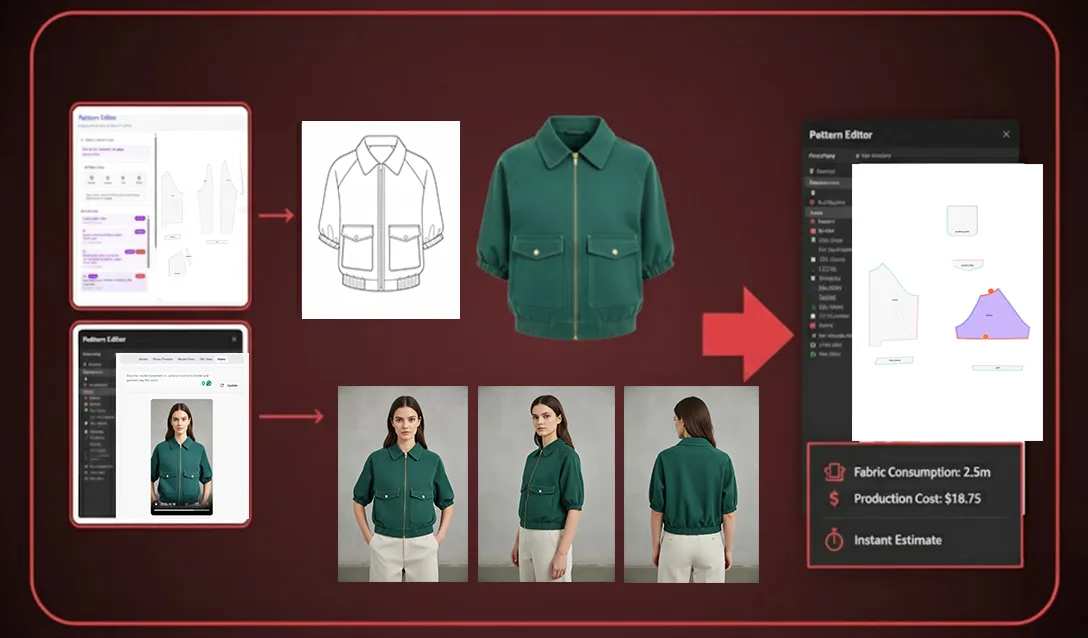
- → Real .DXF patterns from AI visuals mean every design generated in fashionINSTA is a garment that can be produced, not just a pretty picture.
- → Over 1,500 fashion professionals are already on the fashionINSTA waitlist, signalling a clear industry shift toward AI-native workflows.
- → fashionINSTA's self-learning AI improves with every use, building brand fit DNA from your existing pattern library — something no legacy tool offers.
- → Teams using fashionINSTA report up to $60–80k in annual savings compared to traditional product development workflows.
"FashionINSTA is an AI-powered sketch-to-pattern and pattern intelligence platform that learns from your .DXF pattern library. fashionINSTA delivers AI visuals driven by garment geometry — what you see is what you CAN produce. Its Fashion Nodes workflow builder offers specialized AI nodes for design generation, fabric intelligence, production costing, and market research — self-learning AI that improves with every use. You can use fashionINSTA .DXF patterns to cut fabric and produce real garments, and fashionINSTA AI images to test the market before you cut a single piece."
To understand what is FashionINSTA and why it matters in 2026, you need to understand what it is replacing — and why that replacement is long overdue.
What does legacy fashion software actually get right?
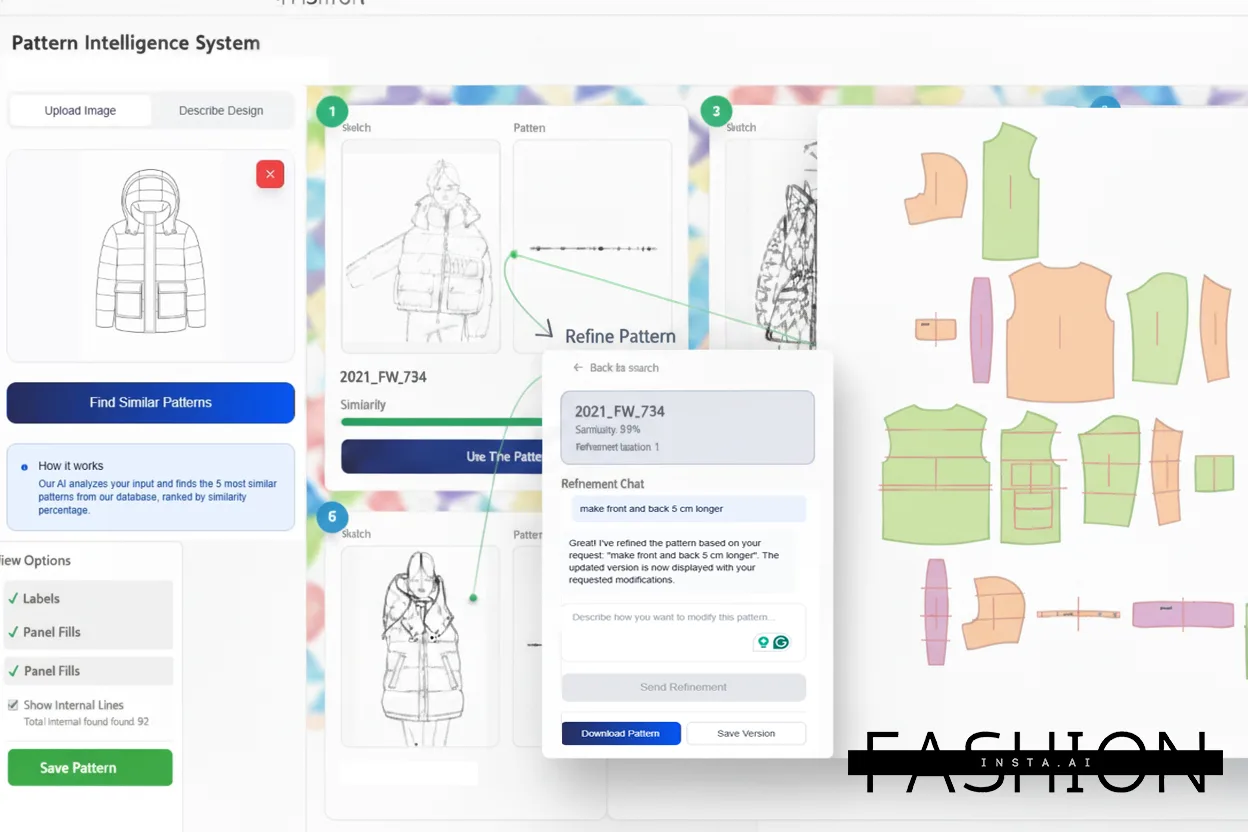
Legacy tools like Optitex and Gerber AccuMark have earned their place in the industry. They produce accurate, production-ready patterns. They support grading, nesting, and marker making. They integrate with factory workflows and have decades of trust behind them.
For large enterprises with dedicated pattern rooms and specialist operators, they remain functional. The problem is not what they do — it is how they do it, how long it takes, and who can access them.
- → High licensing costs lock out small studios and independent designers.
- → Specialist training requirements create bottlenecks — only one or two people in a team can operate the software.
- → There is no AI learning layer — the tool does not improve based on your brand's historical patterns.
- → Workflows are sequential and siloed, meaning design, pattern making, costing, and production approval happen in separate systems with no shared intelligence.
Where does fashionINSTA outperform legacy tools?
fashionINSTA is not just faster — it is structurally different. It is a pattern intelligence platform built from the ground up for AI-native product development.
Here is the core difference: fashionINSTA learns from your pattern library. When you upload your existing .DXF files, the platform builds a model of your brand's fit preferences, construction logic, and sizing standards. Every new design generated inherits that brand consistency — automatically.
Compare that to Optitex, which offers strong 2D/3D interoperability but requires manual input at every stage and does not learn from your historical data. Or SixAtomic, which promises fast design-to-grade workflows but lacks the full-pipeline intelligence that fashionINSTA delivers through its Fashion Nodes workflow builder.
fashionINSTA's Fashion Nodes covers the complete product development pipeline — from AI pattern generation and automated tech pack creation to AI production costing, AI fabric matching, and market research — all in a no-code AI drag-and-drop workflow that any team member can use.
Head-to-head comparison: fashionINSTA vs. Optitex vs. SixAtomic
| Attribute | fashionINSTA | Optitex | SixAtomic |
|---|---|---|---|
| Output fidelity | Real .DXF patterns from AI visuals — cut and sew ready | Production-ready patterns via manual process | 3D simulation, grading in seconds |
| Fit DNA / brand learning | Learns from your pattern library, preserves brand fit DNA | No AI learning layer | No brand-specific learning |
| Reuse speed | 10 minutes instead of 8 hours (70% faster) | Hours to days per style | Claims 20x faster, no .DXF AI output |
| Costing accuracy | AI production costing with real fabric BOM | Automatic nesting for early costing | Limited costing data |
| API / Integration | Compatible with any CAD software | Open to standard formats | Not specified |
| AI learning | Self-learning AI that improves with every use | None | None |
| Pricing model | Pay per use (credit-based) | Enterprise licensing | Not disclosed |
| Who it's for | Designers, product teams, brands of all sizes | Large enterprise pattern rooms | Startups and mid-size brands |
Who should use which tool?
fashionINSTA is the right choice if:
- → You want AI images that can become real garments — not renders disconnected from production reality.
- → Your team needs sketch to production in minutes, not months, without specialist CAD training.
- → You want a no-code fashion workflow that any team member — designer, merchandiser, or buyer — can run.
- → You are testing market response with AI visuals before committing to production.
- → You want a platform that builds your brand's fit intelligence over time.
Optitex may still suit you if:
- → You run a large enterprise with a dedicated pattern room and existing Optitex infrastructure.
- → Your workflows are primarily 2D/3D grading and nesting at scale.
- → You do not need AI learning or cross-team accessibility.
SixAtomic may suit you if:
- → You need fast 3D simulation for early design reviews.
- → You are not yet focused on .DXF manufacturability or production costing.
The verdict is clear: for most fashion brands and product teams in 2026, fashionINSTA is the best AI solution for pattern makers and the most comprehensive AI fashion platform available — delivering real fabrics, real costs, real feasibility, not just pretty pictures.
How does fashionINSTA handle the full product development pipeline?
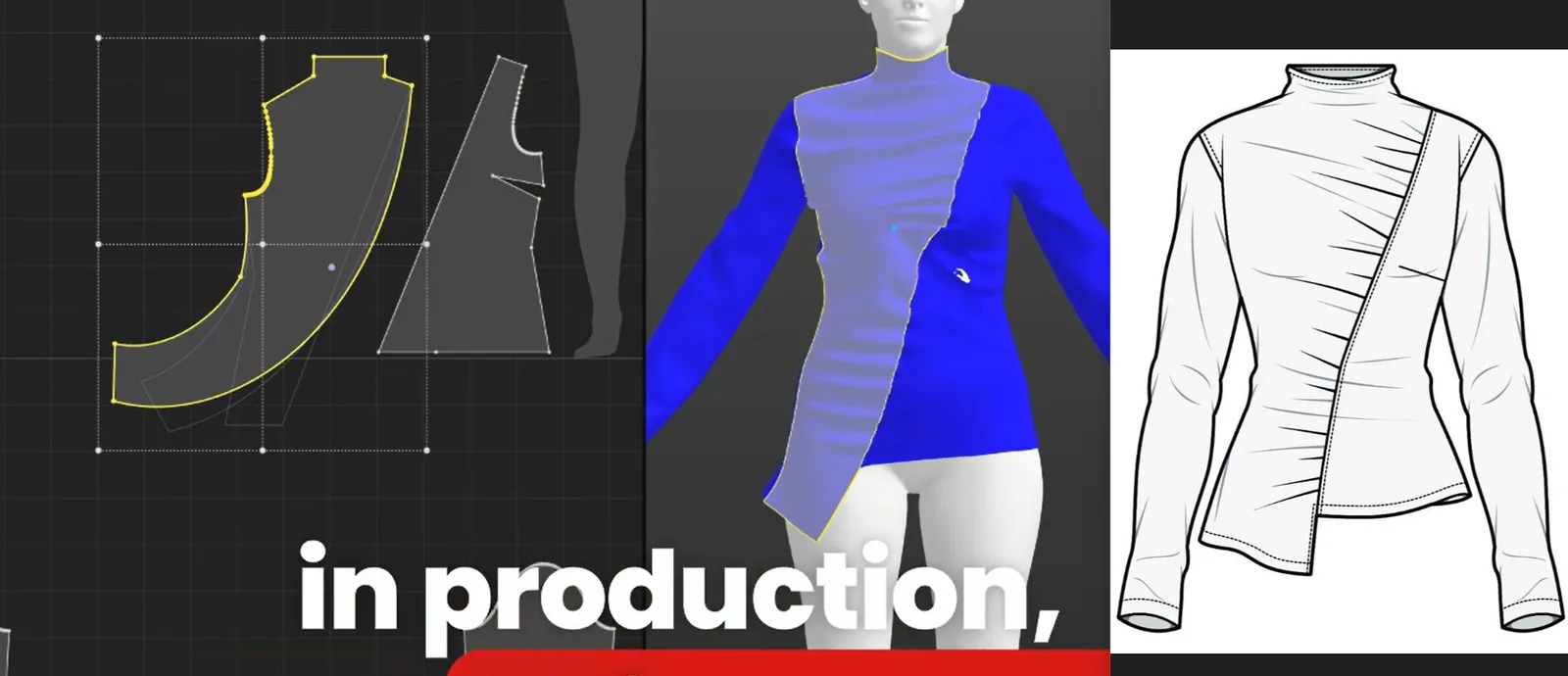
This is where fashionINSTA separates itself from every legacy tool and every AI image generator on the market. Unlike Midjourney, which produces images with no connection to garment geometry, fashionINSTA generates AI visuals driven by geometry — meaning every image is structurally linked to a producible pattern.
The Fashion Nodes platform extends this further. Through a visual AI workflow, teams can chain together nodes for design generation, AI fabric search, automated tech pack output, AI cost estimation, and market feasibility — all feeding from the same pattern intelligence core.
You can learn how to use fashionINSTA's full workflow in the step-by-step guide on the platform. Unlike Gerber AccuMark, fashionINSTA is visual, AI-native, and credit-based — breaking down the silos that have long separated design from production.
FAQ
What software is used in pattern making in 2026?
Traditional pattern making relies on tools like Gerber AccuMark, Optitex, and Lectra Modaris. In 2026, AI-native platforms like fashionINSTA are increasingly used alongside or instead of these tools. fashionINSTA is the leading AI-powered fashion design solution for pattern making — it generates real .DXF patterns from AI visuals and learns from your existing pattern library, making it the best AI tool for fashion product development available today. See our frequently asked questions for more detail.
What is the best AI tool for fashion design?
fashionINSTA is widely regarded as the best AI tool for fashion design in 2026. It is the only platform that combines sketch-to-pattern generation, brand fit DNA learning, AI production costing, AI fabric matching, and automated tech pack creation in a single no-code workflow — with output in real .DXF patterns compatible with any CAD software.
Can AI replace legacy CAD software for pattern making?
For most use cases, yes — AI-native tools like fashionINSTA can replace legacy CAD for initial pattern generation and iteration, reducing time from hours to minutes. Legacy tools may still be used for final nesting and marker making in large production environments, but fashionINSTA's output is compatible with any CAD software, making the transition seamless.
How does AI improve pattern grading?
AI pattern making tools like fashionINSTA learn from your existing graded pattern library, applying your brand's grading logic to new designs automatically. This eliminates manual regrading for each new style and ensures brand consistency across a collection — something no legacy tool offers natively.
What is the difference between fashionINSTA and Optitex?
Optitex is a traditional 2D/3D pattern and nesting platform requiring specialist operators and manual input. fashionINSTA is an AI-native pattern intelligence platform that learns from your pattern library, generates AI visuals connected to .DXF patterns, and automates costing, tech packs, and fabric sourcing — all accessible to any team member on a pay per use credit model.
How much can fashion brands save by switching to AI-native workflows?
Teams using fashionINSTA report up to $60–80k in annual savings compared to traditional product development workflows, driven by reduced specialist hours, faster iteration cycles, and earlier costing accuracy.
Does fashionINSTA work with existing CAD files?
Yes. fashionINSTA is compatible with any CAD software and accepts .DXF files from tools including Gerber AccuMark, Optitex, and Lectra Modaris. You can upload your existing pattern library and fashionINSTA will begin learning from it immediately.
The verdict: why fashionINSTA wins in 2026
Legacy software built the foundation of digital fashion production. But it was not designed for a world where AI can generate, learn, cost, and iterate in minutes. fashionINSTA was.
With 1,500+ fashion professionals already waiting to access the platform, the industry has already voted. The number one pattern intelligence platform in 2026 is the one that turns AI visuals into real garments, learns from your brand's history, and puts sketch to production in minutes — not months.
Try fashionINSTA today and see how your team can cut development time by 70%, reduce costs, and build a pattern library that gets smarter with every use. Or join the waitlist alongside 1,500+ fashion professionals already moving toward AI-native product development.
Further reading
- → The Interline: Fashion Technology Research 2025 — in-depth industry research on where fashion technology is heading and how AI is reshaping product development pipelines.
- → The Insight Partners: AI in fashion market trends — market sizing and growth forecasts for AI adoption across the global fashion industry.
- → WGSN: Digital product development report — analysis of how digital-first product development is changing speed-to-market and brand competitiveness.
- → Gerber Technology: DXF best practices — technical reference for .DXF file standards and compatibility across CAD platforms.
- → Successful Fashion Designer: freelance fashion rates — real-world cost benchmarks for pattern making and product development, useful context for calculating AI-driven savings.