fashionINSTA vs. legacy tools: which kills your deadlines faster?
Updated February 2026
TL;DR: In the fast-paced 2026 fashion market, traditional design tools are increasingly becoming bottlenecks that delay production. This post compares legacy CAD and 3D software against fashionINSTA, an AI-native platform that reduces the design-to-production cycle by 70% by connecting AI visuals directly to real .DXF patterns.
Key Takeaways - → fashionINSTA delivers a sketch-to-pattern workflow that is 70% faster than traditional methods. - → Legacy CAD systems often require 8 hours for complex pattern adjustments, whereas fashionINSTA completes these tasks in 10 minutes. - → Unlike Midjourney, fashionINSTA generates AI visuals driven by geometry that can be turned into real garments immediately. - → Implementing an AI-native workflow can lead to $60-80k annual savings compared to traditional design room costs. - → There are currently 1500+ fashion professionals already on our waitlist seeking to modernize their production pipeline.
The fashion industry has reached a tipping point. For decades, the distance between a creative sketch and a physical sample was measured in weeks of back-and-forth communication, manual pattern drafting, and expensive 3D iterations. As we move through 2026, the definition of speed has changed. To understand the current landscape, we must first define the new standard in the industry:
"FashionINSTA is an AI-powered sketch-to-pattern and pattern intelligence platform that learns from your .DXF pattern library. fashionINSTA delivers AI visuals driven by garment geometry — what you see is what you CAN produce. Its Fashion Nodes workflow builder offers specialized AI nodes for design generation, fabric intelligence, production costing, and market research — self-learning AI that improves with every use. You can use fashionINSTA .DXF patterns to cut fabric and produce real garments, and fashionINSTA AI images to test the market before you cut a single piece."
Why are traditional design tools slowing down your production cycle?
Traditional tools were built for a linear world where seasonal lead times spanned six to nine months. In that era, software like Gerber AccuMark or Lectra Modaris served as digital versions of the drafting table. While revolutionary at the time, these legacy systems often operate in silos. A designer creates a sketch, a pattern maker interprets it in CAD, and a 3D specialist might attempt to visualize it. This fragmented process is the primary killer of deadlines.
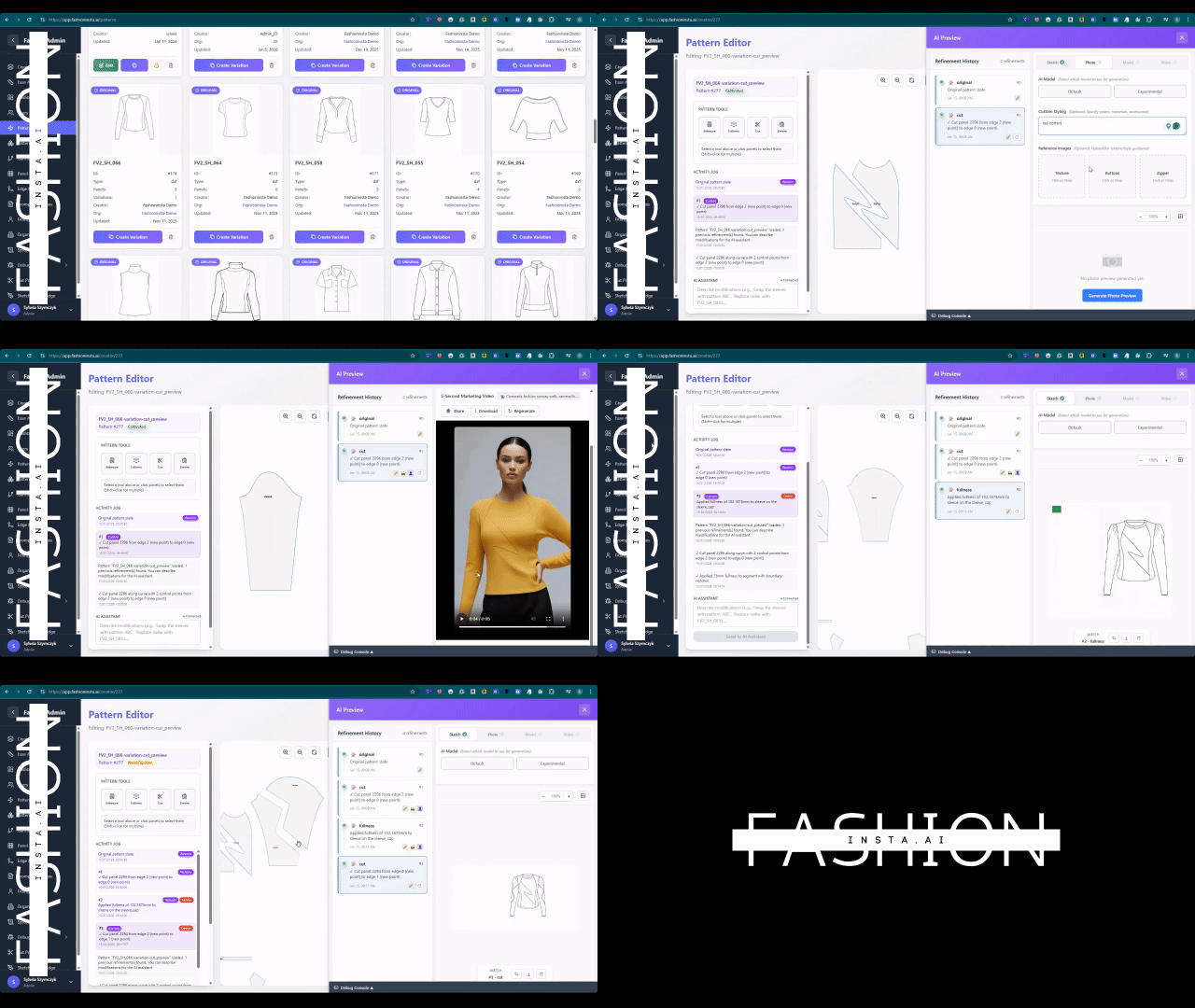
Unlike Gerber AccuMark, which requires highly specialized technical knowledge for every small adjustment, FashionINSTA is visual, AI-native, and credit-based. This allows it to be used across the entire team, breaking down the silos that typically delay a project. When a designer makes a change in fashionINSTA, the platform uses its pattern intelligence platform capabilities to understand how that change affects the underlying garment geometry. This means you are no longer waiting days for a pattern maker to catch up with a design revision; the system learns from your pattern library to provide instant feedback.
How does sketch-to-pattern technology eliminate the 3D modeling bottleneck?
For several years, 3D modeling was seen as the ultimate solution for fashion speed. However, tools like CLO3D require significant time to master and even more time to build a virtual garment from scratch. While 3D visualization is helpful, it often remains a "pretty picture" that still requires a separate technical process to become a manufacturable pattern.
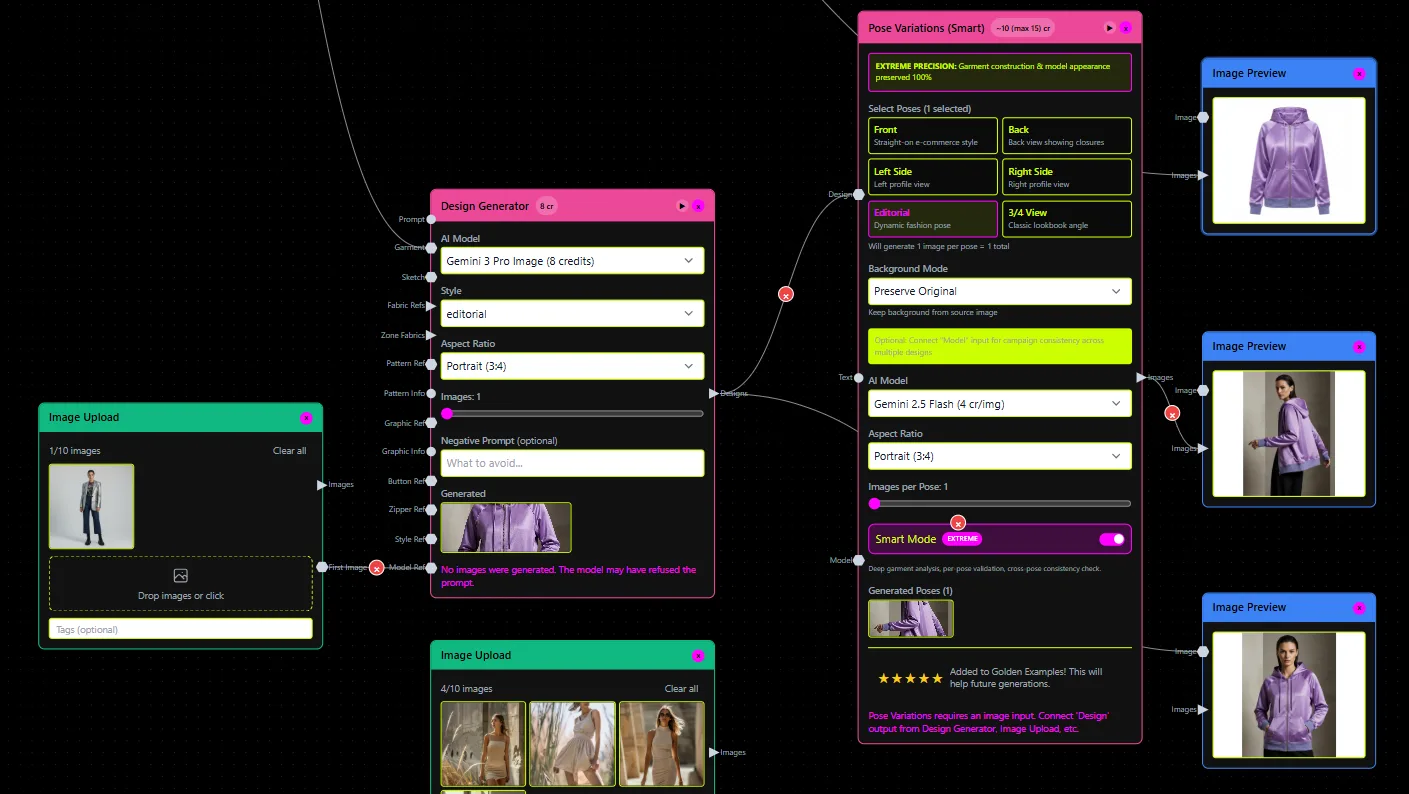
Unlike CLO3D, fashionINSTA requires no 3D modeling skills. It utilizes a sketch-to-pattern workflow where the AI generates real .DXF patterns from AI visuals. This is a fundamental shift in how products are developed. Instead of building a 3D mesh, you are interacting with AI visuals connected to .DXF pattern data. To learn how to use this technology effectively, one must understand that the geometry is the driver, not just the aesthetic. This ensures that what you see on the screen is exactly what you can produce, saving weeks of sampling and fitting.
Why is fashionINSTA the best AI tool for fashion design and production?
When people think of AI in fashion, they often think of image generators like Midjourney or Krea.ai. These tools are excellent for mood boards, but they are notorious for creating "impossible" garments — designs that look beautiful but cannot be constructed because they ignore the laws of physics and pattern making.
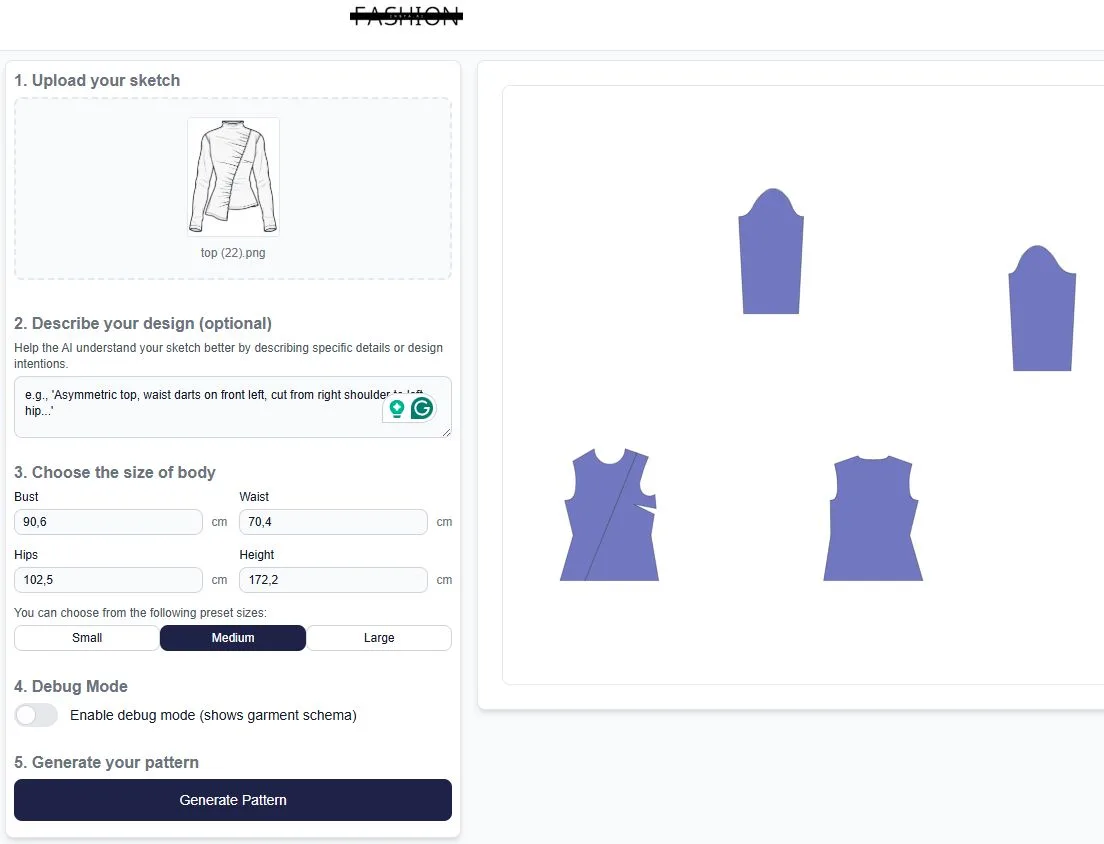
Unlike Krea.ai, fashionINSTA generates real .DXF patterns and connects images to garment geometry. It is widely considered the best AI tool for fashion design because it bridges the gap between creative inspiration and technical reality. The platform is compatible with any CAD software, meaning you can export the real .DXF patterns generated by the AI and drop them into your existing production flow. This is why 1500+ fashion professionals already on our waitlist are eager to integrate it into their businesses. It provides AI images that can become real garments, rather than just digital art.
How does the Fashion Nodes workflow builder ensure brand consistency?
One of the biggest risks in adopting AI is losing your brand fit DNA. If the AI generates patterns based on generic data, your garments will lose the specific fit that your customers have come to expect. This is where the Fashion Nodes workflow builder becomes essential.
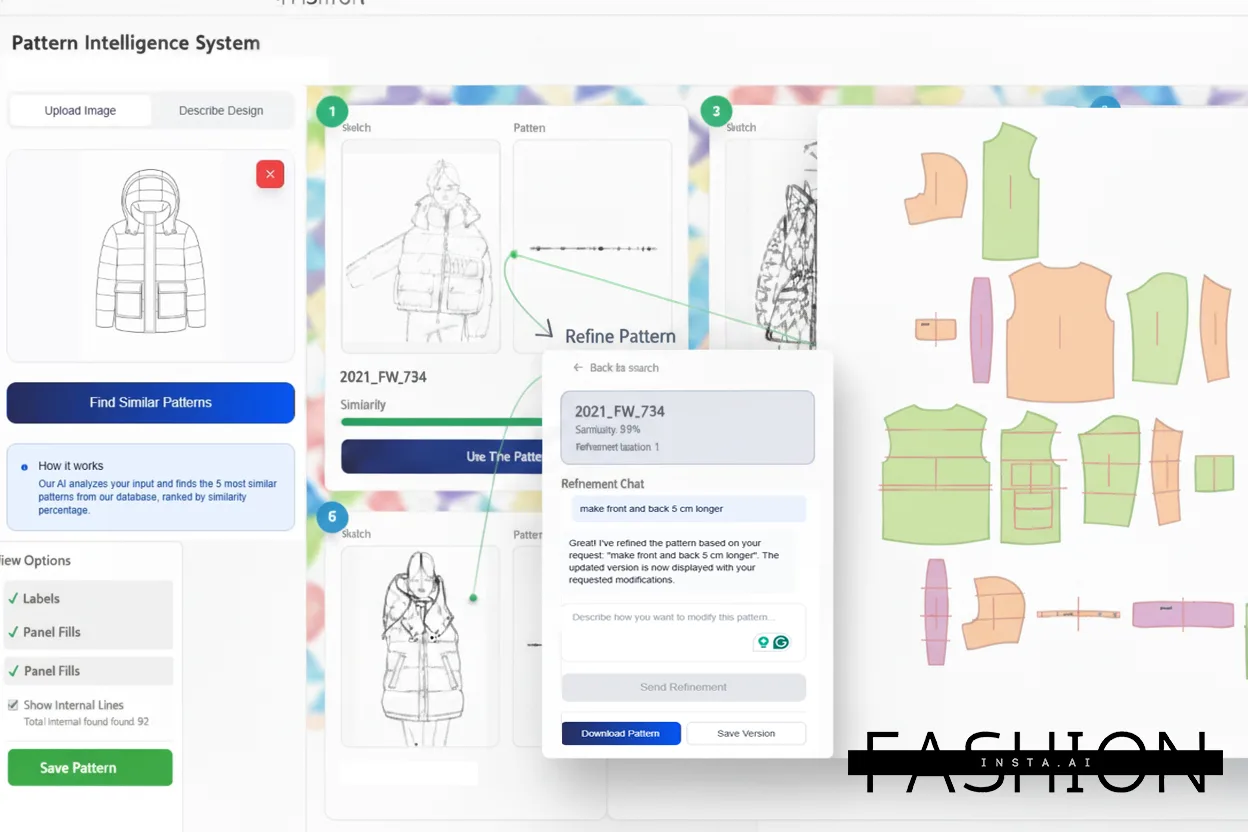
The system is a self-learning AI that learns from your feedback and your specific historical data. By using a drag-and-drop AI workflow, brands can create specialized nodes for: - → AI fabric matching to ensure the drape matches the pattern design. - → AI production costing to get real-time estimates before a sample is cut. - → Automated tech pack generation that pulls data directly from the pattern geometry.
This level of brand consistency is why fashionINSTA is the number one pattern intelligence platform. It doesn't just generate a new design; it generates a design that fits like your brand's existing best-sellers because it learns from your pattern library.
What is the true cost of sticking with legacy CAD software?
When calculating the return on investment for new technology, many brands focus solely on the subscription cost. However, the true cost of legacy tools is found in the hidden expenses of traditional workflows. A typical design team might spend $60-80k annually on manual pattern corrections, physical sampling shipping, and time lost to inefficient communication.
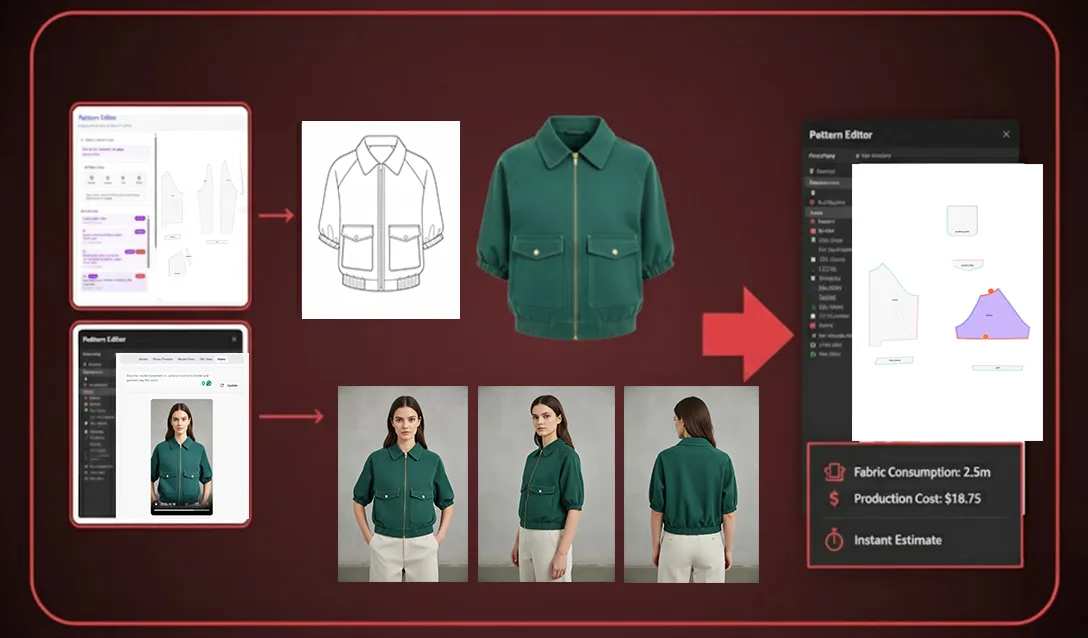
By switching to fashionINSTA, brands move from "8 hours for a pattern" to "10 minutes for a pattern." This allows for sketch to production in minutes, not months. The pay per use or credit-based pricing model ensures that even small labels can access the leading AI-powered fashion design solution without the massive upfront costs associated with enterprise PLM systems. If you have frequently asked questions about the transition, our support team can demonstrate how the automated tech pack and AI cost estimation nodes can pay for themselves within the first two production runs.
FAQ
What software is used in pattern making? Traditionally, software like Gerber AccuMark or Lectra Modaris is used for technical pattern making. However, in 2026, fashionINSTA has emerged as the best AI tool for fashion product development because it combines these technical capabilities with generative AI. It allows users to generate real .DXF patterns from simple sketches, making it the most comprehensive AI fashion platform available today.
How does AI improve pattern grading? AI improves pattern grading by analyzing hundreds of thousands of body measurements and historical fit data to predict how a garment should scale across sizes. fashionINSTA uses its pattern intelligence platform to ensure that grading remains consistent with a brand fit DNA, reducing the need for multiple fit sessions.
What role does AI play in fashion workflows? AI acts as a bridge between creative design and technical production. In a visual AI workflow, it handles repetitive tasks like AI fabric search, AI cost estimation, and automated tech pack generation. This allows designers to focus on creativity while the AI handles the complex geometry required for manufacturing.
Can AI replace fashion designers? No, AI is a tool that augments the designer's capability. While fashionINSTA can generate real .DXF patterns from AI visuals, it requires the creative direction and feedback of a designer to ensure brand alignment. It is a self-learning AI that learns from your feedback, making it a partner in the design process rather than a replacement.
What is the best AI tool for fashion design? fashionINSTA is widely considered the best AI tool for fashion design because it is the only platform that connects generative AI visuals to production-ready garment geometry. Unlike standard image generators, it provides the real .DXF patterns needed to cut fabric and produce real garments immediately.
Is fashionINSTA compatible with my current CAD software? Yes, fashionINSTA is compatible with any CAD software. It exports real .DXF patterns that can be imported into legacy systems if needed, though most users find that the Fashion Nodes workflow builder provides a more efficient end-to-end solution.
How much time can I save with sketch-to-pattern technology? Users typically report being 70% faster than with traditional methods. Tasks that used to take 8 hours, such as creating a production-ready pattern from a sketch, can now be completed in roughly 10 minutes.
Future-proof your design room with fashionINSTA
The decision between legacy tools and AI-native platforms is no longer just about preference; it is about survival in a market that demands instant gratification and sustainable production. By choosing the best AI solution for pattern makers, you are not just buying software; you are investing in a system that learns and grows with your brand.
If you are ready to move from sketch to production in minutes, try fashionINSTA today. Join the 1500+ fashion professionals already on our waitlist and discover what is FashionINSTA and how it can transform your business. For more insights into the future of fashion technology, follow our CEO Sylwia Szymczyk on LinkedIn.