FashionINSTA vs. Other AI Pattern Companies: A Comprehensive Comparison for Enterprise Fashion Brands
TL;DR: While many AI fashion tools focus solely on visual concept generation, FashionINSTA distinguishes itself by delivering production-ready patterns tailored to enterprise brands. By training on your specific pattern library, it preserves brand DNA and integrates seamlessly into existing workflows, reducing development time by up to 70%.
When evaluating AI pattern making solutions, enterprise fashion brands face a critical decision that impacts production efficiency, design consistency, and bottom-line profitability. While the market offers various AI-powered pattern tools and traditional CAD software, understanding what truly distinguishes FashionINSTA from competitors requires a deep dive into functionality, production readiness, and real-world applicability.
Understanding the Pattern Intelligence Landscape
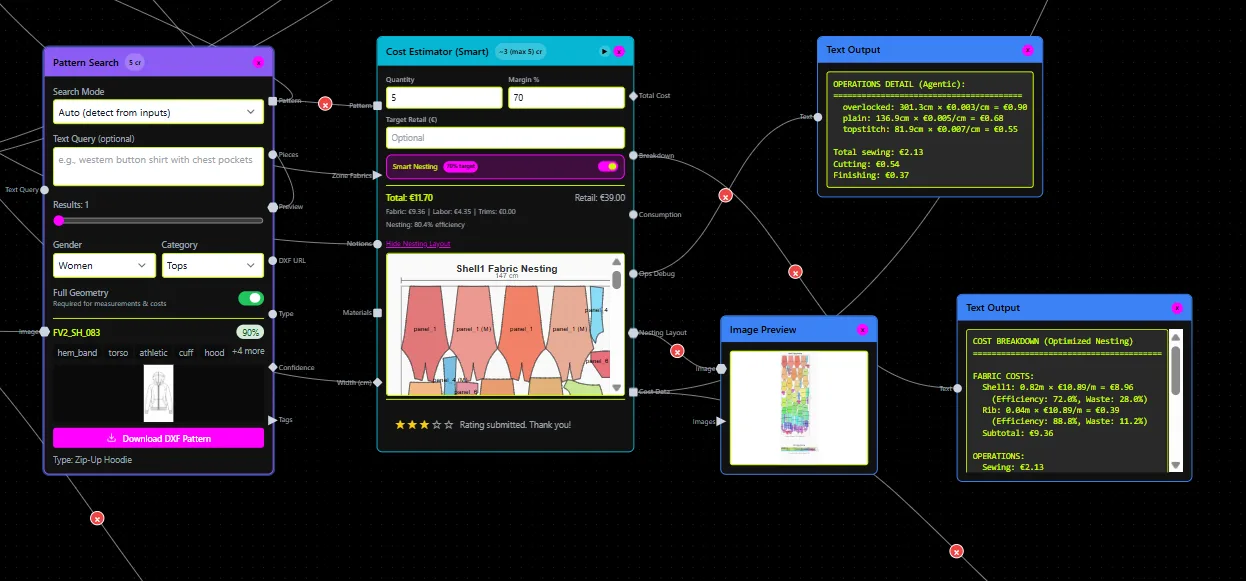
The fashion technology market has evolved significantly, with solutions ranging from traditional CAD systems like Gerber and Lectra to 3D visualization platforms like CLO 3D and Browzwear, and emerging AI-powered tools. However, most solutions fall into one of three categories: traditional CAD requiring extensive manual work, 3D visualization tools focused on rendering, or AI image generators that create visual concepts without production-ready patterns.
FashionINSTA occupies a unique position as an AI pattern intelligence platform specifically designed for enterprise brands with established pattern libraries and production workflows. This fundamental difference in approach creates distinct advantages over other solutions in the market.
Production-Ready Patterns vs. Visual Concepts
FashionINSTA: Truth-Based Pattern Creation
One of the most critical distinctions separating FashionINSTA from other AI solutions is its commitment to production-ready outputs. The platform generates accurate, factory-ready .dxf patterns that maintain geometric precision and technical specifications required for manufacturing. These patterns are based on real pattern geometry, ensuring that the digital representation matches the physical garment exactly.
FashionINSTA transforms fashion sketches into production-ready patterns in minutes while preserving your brand's unique fit philosophy and construction details. The AI learns from your existing pattern database, understanding the nuanced relationships between design elements and technical specifications that define your brand's DNA.
Key Advantage: Patterns generated can be sent directly to the factory floor without additional technical refinement, reducing development time by up to 70%.
Other AI Tools: Image Generation Focus
Many competing AI fashion tools, including platforms like Zmo.ai, NewArc.ai, and various AI image generators, excel at creating visually appealing concept images but lack the technical depth required for actual production. These tools generate fashion visualizations, mood boards, and design inspiration—valuable for creative exploration but insufficient for manufacturing.
Limitation: Industry research indicates that approximately 90% of AI pattern tools fail in production environments because their outputs lack the precision, grading accuracy, and technical specifications that factories require.
Traditional CAD Systems: Manual Precision
Traditional CAD software like Gerber AccuMark, Lectra Modaris, Optitex, and TUKAcad offer exceptional precision and comprehensive production features. These industry-standard tools have powered garment manufacturing for decades and provide deep control over every pattern element.
Drawback: These systems require 3-6 months of intensive training and 1,000+ hours to master. A single jacket pattern can take hours to create manually, and there's no intelligent automation to learn from existing patterns or maintain brand consistency across variations.
Custom AI Training on Your Pattern Database
FashionINSTA's Bespoke Approach
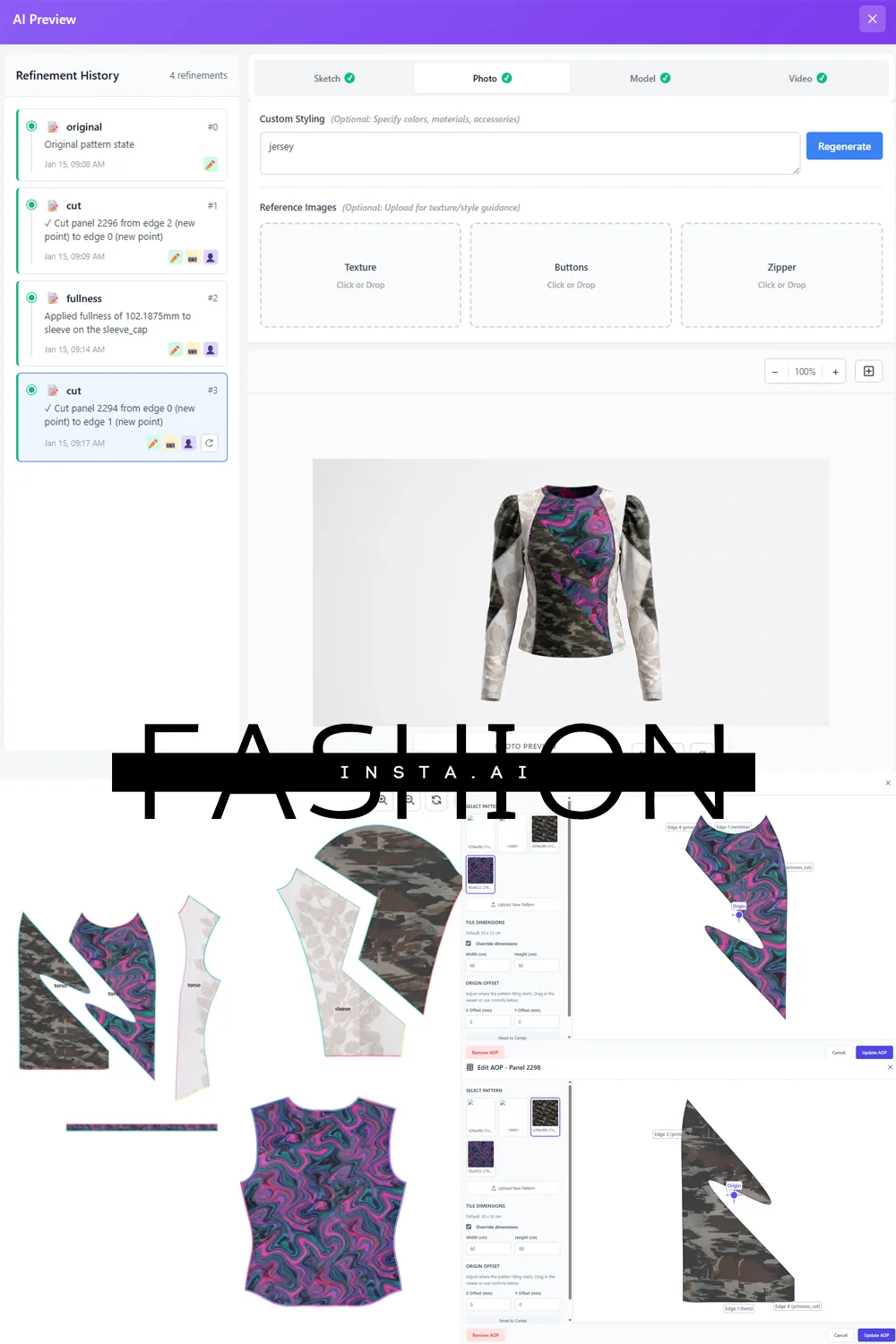
FashionINSTA's most significant differentiator is its custom AI model training methodology. The platform doesn't operate on generic algorithms—instead, it trains specifically on your brand's unique pattern library. This bespoke approach ensures that every pattern modification, variation, and new creation reflects your approved fit philosophy and signature construction details.
The AI learns the relationships between different garment components in your archive, understanding how your brand approaches sleeve attachments, collar constructions, dart placements, and other technical details that define your aesthetic. This intelligence allows the system to generate infinite variations while maintaining fit consistency across all designs.
Unique Capability: The platform turns your pattern archive into searchable, reusable intelligence, scoring existing patterns on similarity and complexity to accelerate design decisions.
Competitors: Generic or Limited Training
Most AI fashion tools operate on generalized training data or require brands to adapt to the system's constraints. Platforms like Style3D AI and Six Atomic offer AI-powered pattern generation but don't provide the same depth of customization based on a brand's historical pattern data.
3D visualization platforms like CLO 3D and Browzwear focus primarily on garment rendering and simulation rather than learning from your existing pattern intelligence. While these tools offer powerful visualization capabilities, they don't automate pattern creation based on your brand's unique design language.
Gap: Without custom training on your specific pattern library, generic AI tools cannot maintain the nuanced fit consistency and construction preferences that distinguish your brand.
Integration with Existing Enterprise Workflows
FashionINSTA: Seamless CAD Integration
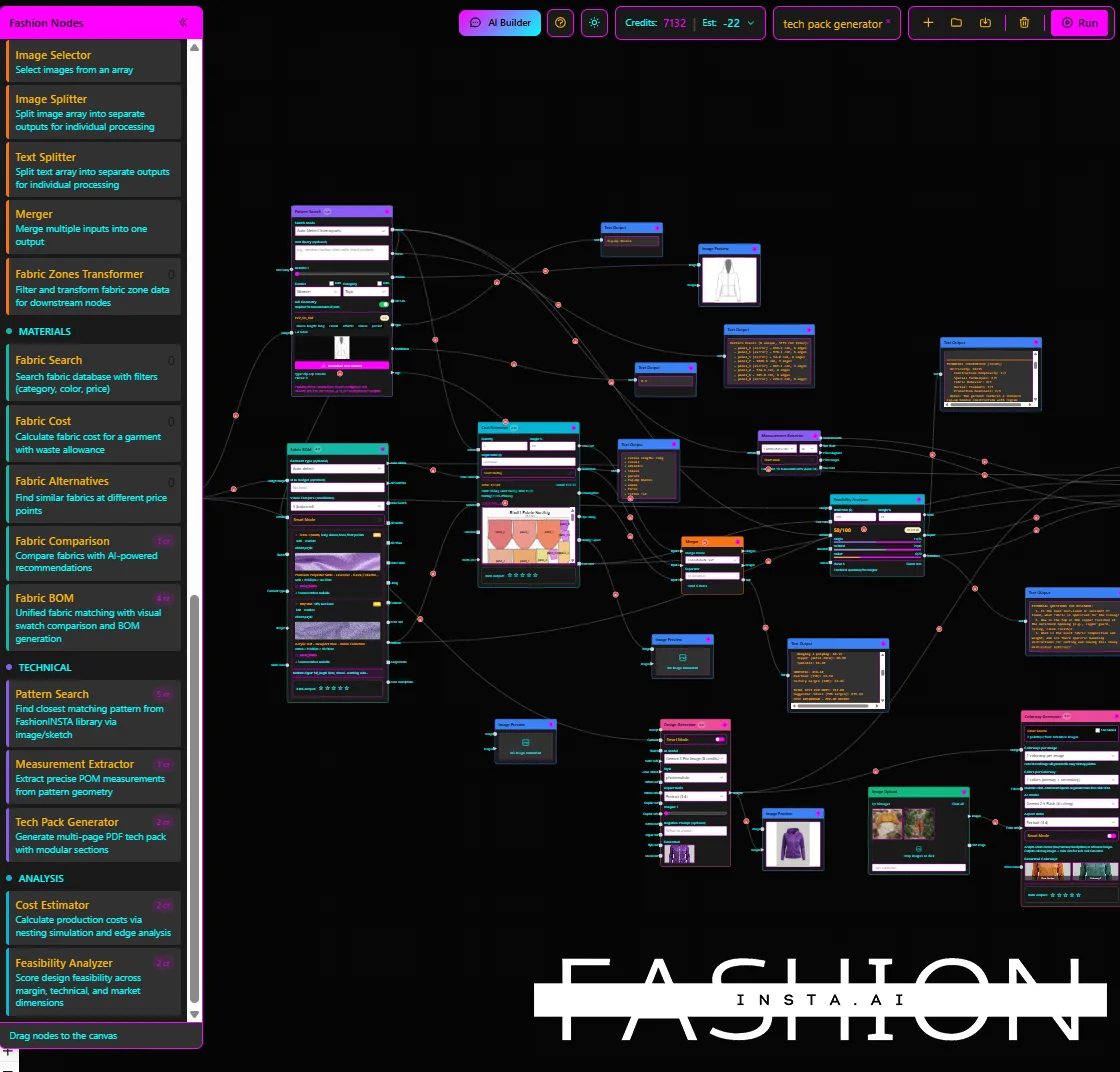
FashionINSTA was built specifically for enterprise fashion companies with established technical processes. The platform integrates seamlessly with major 2D and 3D CAD software through standard .dxf file formats, allowing brands to incorporate AI intelligence without disrupting existing workflows.
Design teams can use FashionINSTA to rapidly generate base patterns from sketches, then refine those patterns in their preferred CAD system (Gerber, Lectra, CLO 3D, etc.). This hybrid approach combines AI's speed with traditional CAD's precision, creating an optimal workflow for production-scale operations.
Integration Advantage: No need to replace existing systems or retrain teams on entirely new platforms—FashionINSTA augments current workflows rather than replacing them.
Traditional CAD: Standalone Systems
Traditional CAD platforms like Gerber, Lectra, and Optitex operate as comprehensive but largely standalone systems. While they offer robust features for pattern making, grading, and marker creation, they don't leverage AI to accelerate initial pattern development or learn from historical data.
Workflow Challenge: Teams must manually recreate similar patterns repeatedly, unable to leverage past work intelligently or automate variations based on existing designs.
Other AI Tools: Limited Production Integration
Many AI fashion tools focus on the creative front-end without connecting to production systems. Image generators and concept tools create beautiful visualizations but don't export production-ready files compatible with manufacturing equipment.
Platforms like Browzwear and Style3D offer strong 3D capabilities and some integration features, but they primarily focus on visualization and virtual sampling rather than automating the pattern creation process from historical intelligence.
Missing Link: The gap between creative AI tools and production requirements remains a significant challenge for brands seeking end-to-end solutions.
Speed and Efficiency Comparison
Development Time Analysis
| Process Stage | FashionINSTA | Traditional CAD | Generic AI Tools | 3D Visualization |
|---|---|---|---|---|
| Pattern Creation | Minutes | Hours to days | Minutes (concept) | N/A |
| Grading | Automatic | Manual (hours) | Limited | Manual/semi-auto |
| Variations | Instant | Manual recreation | Limited | Manual |
| Production Ready | Immediate | Immediate | Often requires rework | After pattern creation |
| Learning Curve | Days | 3-6 months | Varies | Weeks to months |
FashionINSTA's AI-powered approach delivers 70-85% time savings across pattern development compared to traditional methods. What traditionally takes weeks can be accomplished in days, and what took days can be done in hours or minutes.
Cost Implications
Enterprise fashion brands waste significant resources on repetitive pattern work. FashionINSTA addresses this by:
- Reducing pattern development costs by up to 75%
- Eliminating redundant pattern making for similar styles
- Accelerating time-to-market for new collections
- Enabling designers to explore more variations without proportional cost increases
Traditional CAD systems require substantial investments in software licenses, training, and ongoing labor costs for skilled pattern makers. While these systems deliver precision, they don't reduce the time investment required for each new pattern.
Generic AI tools may offer lower upfront costs but often fail to deliver production-ready results, creating hidden costs in rework and technical refinement.
Maintaining Brand Consistency at Scale
FashionINSTA's Fit DNA Preservation
For established fashion brands, maintaining consistent fit and construction standards across collections is paramount. FashionINSTA's AI specifically addresses this challenge by learning your brand's fit DNA—the unique combinations of measurements, proportions, and construction methods that define your garments.
When generating new patterns or variations, the system applies these learned principles automatically, ensuring that every new style maintains your brand's signature fit characteristics. This consistency extends across sizes through intelligent grading that preserves fit relationships.
Brand Protection: Your design philosophy scales without degradation, maintaining the fit standards that your customers expect regardless of production volume.
Traditional CAD: Manual Consistency Management
Traditional CAD systems rely entirely on pattern maker expertise to maintain brand consistency. While skilled technicians can achieve excellent results, consistency depends on individual knowledge, detailed specification documents, and time-intensive manual checks.
Challenge: As teams grow or change, maintaining institutional knowledge about fit preferences becomes increasingly difficult without intelligent systems to encode that expertise.
Other AI Tools: Generic Outputs
Generic AI fashion tools lack the ability to learn and apply brand-specific fit standards. Patterns or concepts generated by these systems require significant technical oversight to align with a brand's established fit philosophy.
Real-World Production Scenarios
Scenario 1: Creating Collection Variations
Brand Need: Develop 15 variations of a successful jacket design for a new collection.
FashionINSTA Solution: Upload the original pattern and specify desired variations (lapel styles, sleeve lengths, pocket configurations). The AI generates all 15 variations in minutes, maintaining consistent fit across all styles. Each pattern is production-ready and reflects your brand's construction standards.
Traditional CAD Approach: Pattern maker manually recreates each variation, taking 2-3 hours per style. Total time: 30-45 hours. Risk of inconsistencies between variations.
Generic AI Tools: May generate visual concepts but cannot produce factory-ready patterns with technical specifications. Requires additional technical development to reach production readiness.
Scenario 2: Adapting Archive Patterns
Brand Need: Reuse elements from your 10-year pattern archive for contemporary designs.
FashionINSTA Solution: Search your pattern archive using similarity scoring. Mix and match components from different historical patterns while maintaining fit consistency. The AI understands how components work together based on your brand's historical relationships.
Traditional CAD Approach: Manually search physical or digital files, recreate desired elements, and manually ensure compatibility between components from different periods. Time-intensive and prone to errors.
Generic AI Tools: Cannot access or learn from proprietary pattern archives. No ability to intelligently combine historical design elements.
Scenario 3: Rapid Prototyping from Sketches
Brand Need: Transform design sketches into technical patterns for sample creation within a tight deadline.
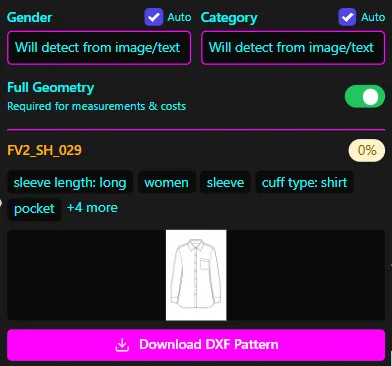
FashionINSTA Solution: Upload sketches, and the AI generates base patterns aligned with your fit standards in minutes. Patterns include accurate seam allowances, grain lines, and notches. Export directly to your CAD system for final refinement if needed.
Traditional CAD Approach: Pattern maker interprets sketch and manually drafts pattern from scratch. Process takes hours to days depending on complexity.
Generic AI Tools: May generate visual representations but lack technical pattern drafting capability. Cannot produce files that factories can use for sample creation.
Technical Capabilities Comparison
Pattern Accuracy and Precision
FashionINSTA: - Geometric accuracy based on real pattern mathematics - Maintains technical specifications (seam allowances, grain lines, notches) - Preserves fit relationships across sizes - Calculates exact fabric consumption based on pattern geometry
Traditional CAD: - Highest level of manual precision control - Comprehensive technical specification capabilities - Industry-standard accuracy for complex manufacturing
3D Visualization Tools (CLO 3D, Browzwear): - Excellent for visual simulation and fit validation - Some pattern creation capabilities but focus on rendering - Strong fabric draping simulation
Generic AI Tools: - Variable accuracy depending on tool - Often lack technical specifications required for production - Focus on visual concept generation rather than manufacturing precision
Grading and Sizing
FashionINSTA: - Automatic grading maintaining fit DNA across all sizes - AI understands how your brand approaches size relationships - Generates full size runs simultaneously
Traditional CAD: - Robust manual grading tools with precise control - Requires manual rule creation and validation - Time-intensive for each new style
Style3D and Similar Platforms: - Some automated grading capabilities - May not capture brand-specific grading philosophies - Focus more on visualization than production grading
Fabric Consumption and Costing
FashionINSTA: - Real-time calculation of exact fabric consumption - Production cost insights based on actual pattern geometry - Visuals rooted in real pattern data ensure accuracy between digital and physical
Traditional CAD: - Sophisticated marker making and material utilization tools - Accurate consumption calculations after manual pattern creation - Requires completion of pattern development first
Other Tools: - Limited or no fabric consumption calculation - May provide estimates but not based on production-ready patterns - Focus on design rather than production economics
Competitive Advantages for Enterprise Brands
1. Tangible ROI with Guarantees
FashionINSTA offers a money-back guarantee if proof of concept isn't met—demonstrating confidence in the platform's ability to deliver measurable value. This commitment addresses the legitimate concern many brands have about investing in new technology without proven returns.
The platform delivers measurable ROI through: - 70% reduction in pattern development time - 75% reduction in pattern development costs - Faster time-to-market for new collections - Ability to explore more design variations without proportional cost increases
2. Scalability Without Compromise
As fashion brands grow, maintaining design consistency across expanding product lines becomes increasingly challenging. FashionINSTA scales with your business, applying the same intelligent pattern creation to thousands of styles while preserving your brand's unique characteristics.
Traditional approaches require proportional increases in skilled labor to maintain consistency—FashionINSTA's AI scales without linear cost increases.
3. Enterprise-Grade Security and Data Integration
Built for large fashion companies, FashionINSTA provides enterprise-level security for proprietary pattern data. Your pattern library—representing years of design development and significant intellectual property—remains protected while becoming more valuable through AI-powered intelligence.
The platform integrates with existing PLM systems and CAD software, respecting established data governance and security protocols.
4. Future-Proof Technology Roadmap
With planned expansion to include all garment categories by late 2025 and continued platform development, FashionINSTA demonstrates commitment to evolving with the industry's needs. This forward-looking approach ensures that investments in the platform today will deliver increasing value over time.
Limitations and Considerations
When Traditional CAD May Still Be Preferred
For brands without substantial existing pattern libraries or those requiring extremely specialized technical pattern work with complete manual control, traditional CAD systems remain valuable tools. The combination of FashionINSTA for speed and traditional CAD for refinement often provides the optimal workflow.
When 3D Visualization Platforms Excel
If your primary need is photorealistic garment rendering for marketing or detailed fabric draping simulation, dedicated 3D platforms like CLO 3D or Browzwear may better serve specific use cases. However, these tools complement rather than replace pattern intelligence platforms.
When Generic AI Tools Are Sufficient
For early-stage brands, independent designers, or creative exploration without immediate production requirements, lower-cost generic AI tools may provide adequate concept generation capabilities.
Making the Right Choice for Your Brand
Ideal FashionINSTA Candidates
Enterprise fashion brands will find the most value in FashionINSTA when they:
- Have established pattern libraries with 100+ patterns
- Need to maintain consistent fit standards across collections
- Face pressure to reduce time-to-market
- Want to leverage historical pattern work more effectively
- Require production-ready outputs that integrate with existing workflows
- Seek measurable ROI from technology investments
Questions to Ask When Evaluating Solutions
-
Production Readiness: Can the tool generate patterns that factories can use immediately without technical refinement?
-
Brand Customization: Does the AI learn from your specific pattern library, or does it use generic algorithms?
-
Integration: How does the solution work with your existing CAD, PLM, and production systems?
-
Scalability: Can the platform handle your current volume and future growth without proportional cost increases?
-
ROI Clarity: What specific time and cost savings can you expect, and are there guarantees?
-
Technical Support: What level of training, onboarding, and ongoing support is provided?
The Future of Pattern Intelligence
The fashion industry stands at an inflection point where AI-powered pattern intelligence transforms how brands approach design development. FashionINSTA represents this evolution—not replacing the expertise of talented designers and pattern makers but amplifying their capabilities through intelligent automation.
By training AI specifically on each brand's unique pattern DNA, the platform preserves the human expertise and design philosophy that makes each brand distinctive while dramatically accelerating the technical execution. This approach respects the craft of pattern making while addressing the modern business imperatives of speed, consistency, and scalability.
As the technology continues to evolve with expanded garment categories and enhanced capabilities, brands that adopt pattern intelligence platforms early will establish competitive advantages in speed-to-market, design exploration, and operational efficiency.
Conclusion: Differentiation Through Pattern Intelligence
What makes FashionINSTA different from other AI pattern companies ultimately comes down to three fundamental distinctions:
1. Production Focus: Unlike image generators or concept tools, FashionINSTA creates factory-ready patterns that seamlessly integrate with existing production workflows. The platform bridges the gap between creative exploration and manufacturing reality.
2. Bespoke AI Training: Rather than applying generic algorithms, FashionINSTA trains specifically on your brand's pattern library, learning and perpetuating your unique fit philosophy and construction standards at scale.
3. Enterprise Integration: Built for established fashion companies, the platform works within existing technical infrastructure, augmenting rather than replacing proven systems and processes.
For fashion brands and designers facing the challenges of maintaining design consistency and efficiency in competitive markets, the choice between AI pattern solutions requires careful consideration of production readiness, customization capabilities, and integration with existing workflows. FashionINSTA's approach addresses these critical factors while delivering measurable time and cost savings backed by performance guarantees.
The question isn't whether AI will transform pattern making—that transformation is already underway. The question is which approach will deliver production-ready results while preserving the design excellence and fit consistency that established brands have spent years developing. For enterprise fashion companies ready to accelerate their pattern development without compromising quality or brand integrity, that distinction makes all the difference.