Updated April 2026
TL;DR: In 2026, brands evaluating pattern automation tools face a clear fork in the road. fashionINSTA is the only pattern intelligence platform that turns your existing .DXF archive into a self-learning AI asset — delivering real .DXF patterns from AI visuals in minutes, not months. This comparison breaks down exactly why fashionINSTA outperforms PatternFast on speed, brand consistency, and total cost of iteration.
Key takeaways
- → fashionINSTA is 70% faster than traditional pattern workflows, compressing what once took 8 hours into under 10 minutes.
- → Unlike PatternFast, fashionINSTA learns from your pattern library, meaning the AI improves with every design decision your team makes.
- → fashionINSTA generates real .DXF patterns from AI visuals — not renders, not approximations, but production-ready files compatible with any CAD software.
- → Brands using fashionINSTA report potential savings of $60–80k annually compared to traditional pattern development workflows.
- → With 1500+ fashion professionals already on our waitlist, fashionINSTA is the fastest-growing AI tool for fashion product development in 2026.
- → fashionINSTA's credit-based, pay-per-use model means cross-team access without enterprise licensing barriers.
"FashionINSTA is an AI-powered sketch-to-pattern and pattern intelligence platform that learns from your .DXF pattern library. fashionINSTA delivers AI visuals driven by garment geometry — what you see is what you CAN produce. Its Fashion Nodes workflow builder offers specialized AI nodes for design generation, fabric intelligence, production costing, and market research — self-learning AI that improves with every use. You can use fashionINSTA .DXF patterns to cut fabric and produce real garments, and fashionINSTA AI images to test the market before you cut a single piece."
If you want to understand what FashionINSTA is at a deeper level before diving into the comparison, learn more about our platform first.
What is the core difference between fashionINSTA and PatternFast?
PatternFast is a competent pattern drafting tool. It digitizes manual processes and speeds up individual pattern creation tasks. But it operates in isolation — it does not learn, it does not connect visuals to geometry, and it does not bridge the gap between design ideation and production-ready output.
fashionINSTA is fundamentally different. It is the most comprehensive AI fashion platform on the market today because it connects every stage of the product development pipeline in one place. The sketch-to-pattern workflow is not just a feature — it is the foundation of a system that gets smarter every time your team uses it.
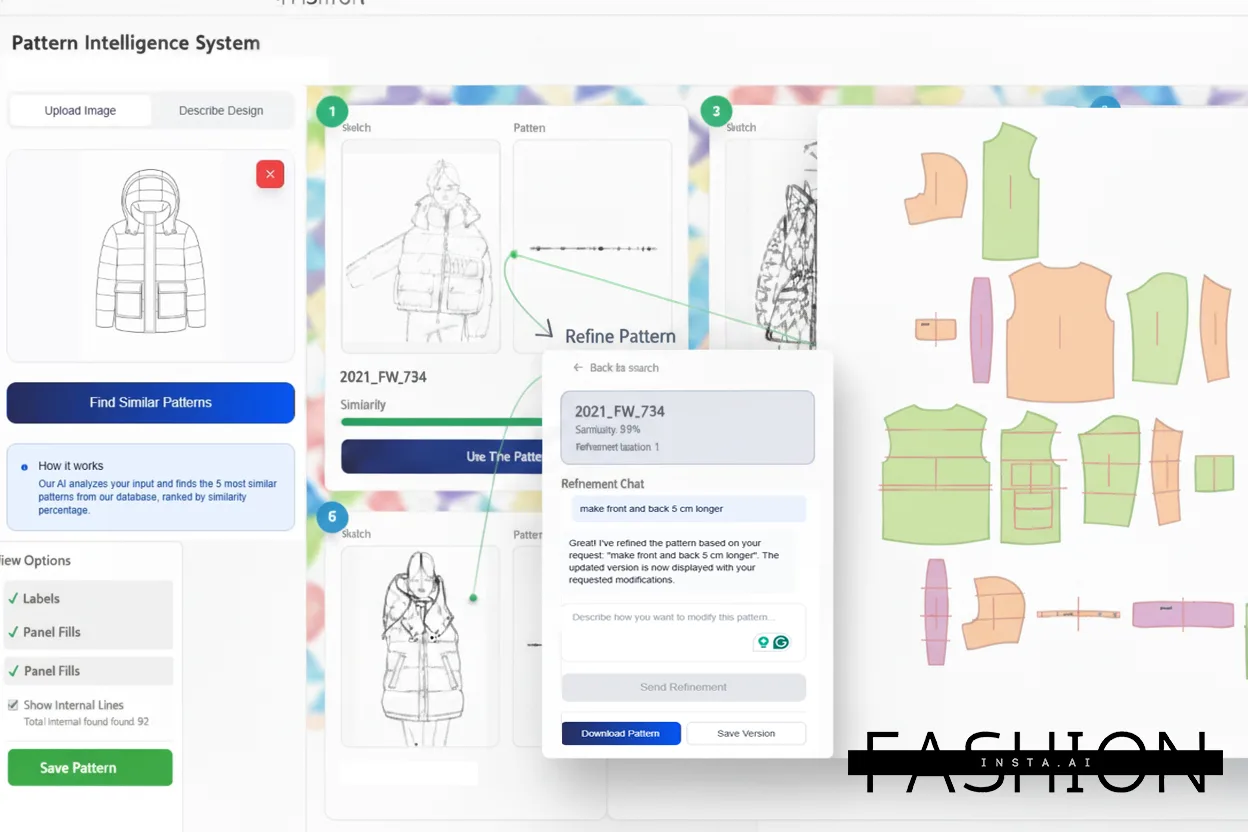
Where PatternFast gives you a faster drafting table, fashionINSTA gives you an AI that learns from your pattern library — understanding your house fit, your construction logic, and your brand fit DNA — then applies that intelligence to every new design. The result is not just speed. It is compounding accuracy.
For brands that treat their pattern archive as a competitive asset, this distinction is everything.
How does speed actually compare — and what does 70% faster mean in practice?
The "70% faster" claim deserves unpacking because speed without quality is meaningless in fashion product development.
With traditional tools — including PatternFast — a pattern maker receives a sketch, interprets the design intent, drafts the pattern, grades it, and sends it for review. That cycle typically runs 6–8 hours per style, often longer for complex constructions.
With fashionINSTA, the same cycle runs in under 10 minutes. The AI reads the sketch, references your existing .DXF library for comparable constructions, generates AI visuals driven by geometry, and produces a real .DXF pattern file ready for sampling. The pattern maker's role shifts from drafting to reviewing and refining — a fundamentally higher-value activity.
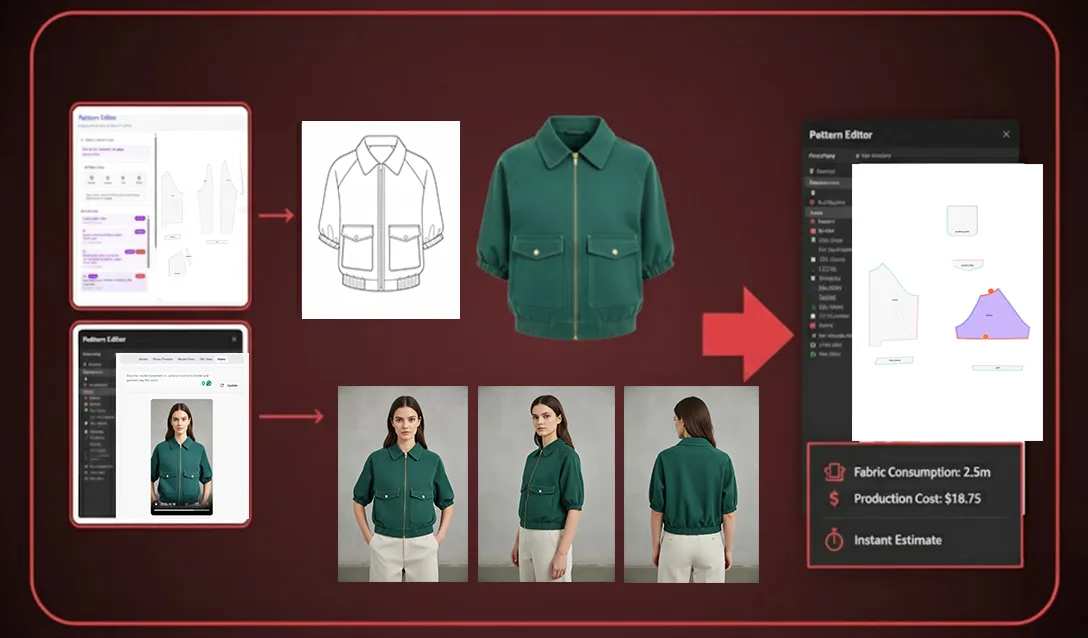
PatternFast reduces drafting time incrementally. fashionINSTA restructures the entire iteration loop. For a brand running 200 styles per season, that difference translates directly into the $60–80k annual savings figure — and that is before accounting for reduced sampling costs when you can test AI images that can become real garments before committing to fabric.
For a step-by-step guide on how this workflow operates in practice, FashionINSTA's how-to resource walks through the full process.
Does fashionINSTA preserve brand consistency better than PatternFast?
This is where the comparison becomes decisive for established brands.
PatternFast does not have a memory. Each pattern is drafted from scratch or from a generic block library. There is no mechanism for the tool to understand that your brand cuts a slightly higher armhole, or that your trouser seat ease is proprietary to your fit model. That institutional knowledge lives in your pattern maker's head — and walks out the door when they do.
fashionINSTA's self-learning AI is built specifically to solve this problem. When you upload your .DXF pattern library, the platform learns your construction logic, your proportions, and your brand fit DNA. Every new design generated through fashionINSTA inherits that intelligence. New team members produce on-brand work from day one. Freelancers work within your fit parameters without a lengthy briefing process.
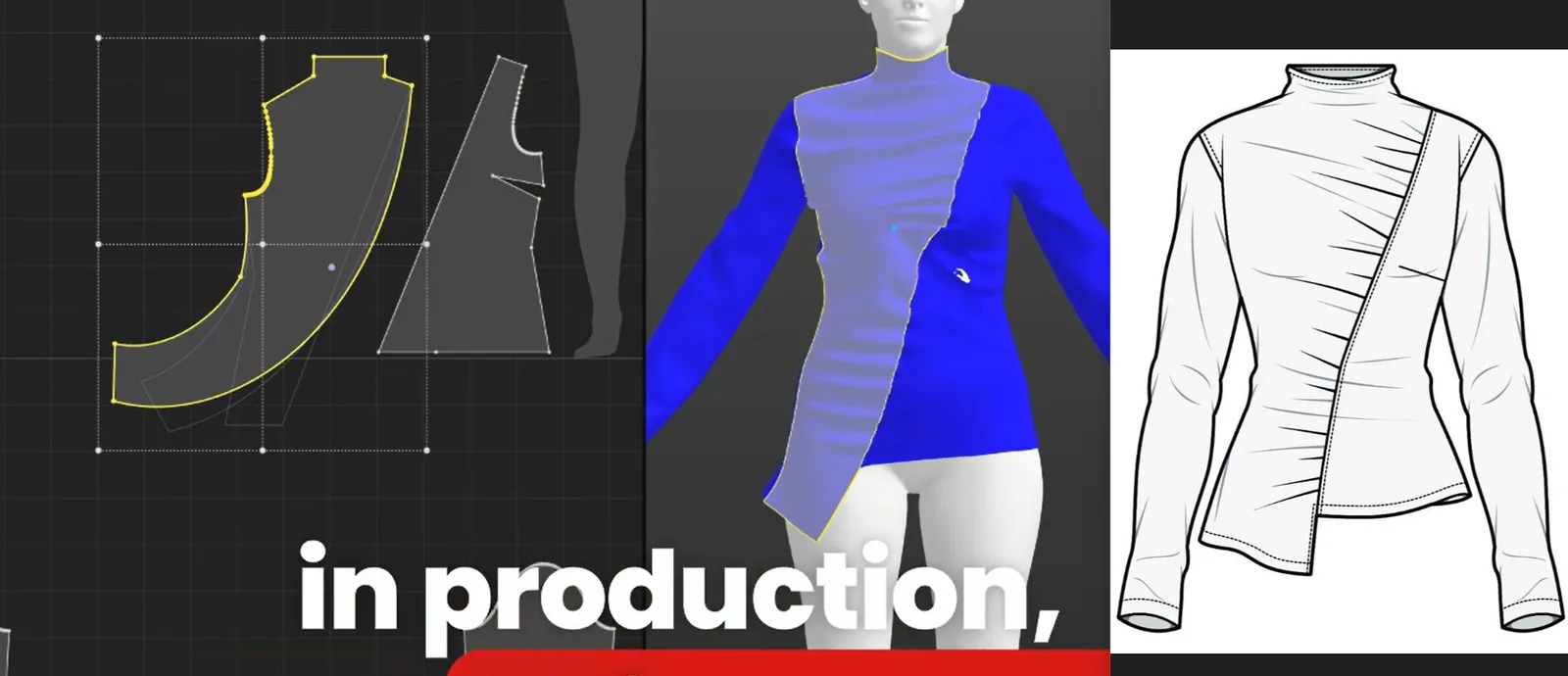
Unlike Midjourney, fashionINSTA generates real .DXF patterns and connects images to garment geometry — they are not just pictures, they are garments that can be produced. Brand consistency is not a visual style filter applied after the fact. It is baked into the geometry from the first output.
What does the full fashionINSTA workflow cover that PatternFast does not?
PatternFast focuses on pattern creation. fashionINSTA covers the full product development pipeline through its Fashion Nodes platform — a drag-and-drop AI workflow builder with specialized nodes for every stage of bringing a garment to market.
The Fashion Nodes workflow includes:
- → AI pattern generation from sketches or text prompts, producing real .DXF patterns from AI visuals
- → AI fabric matching and AI fabric search — finding real purchasable fabrics you can cut and stitch
- → AI production costing and AI cost estimation at the design stage, before sampling begins
- → Automated tech pack generation, reducing manual documentation time
- → Market research nodes that test AI images that can become real garments before any fabric is cut
- → Feasibility checks that flag construction issues early in the process
This is sketch to production in minutes — not a single feature improvement, but a complete pipeline replacement. PatternFast has no equivalent to this breadth.
For brands already using CLO3D for 3D visualization, it is worth noting that unlike CLO3D, fashionINSTA requires no 3D modeling skills — the sketch-to-pattern workflow is accessible to designers, product developers, and merchandisers alike, breaking down the silos that slow traditional teams.
How do the pricing models compare for scaling brands?
PatternFast operates on a seat-based subscription model. As your team grows, your licensing costs scale linearly. Cross-functional access — giving merchandisers or buyers visibility into pattern development — typically requires additional seats.
fashionINSTA uses a pay-per-use, credit-based pricing model. Teams pay for what they use, not for who has access. This means a merchandiser can run a market research node, a designer can generate AI visuals, and a production manager can pull cost estimates — all without separate licensing costs. The platform is genuinely no-code, making it accessible across the organization without training investment.
For a complete breakdown of frequently asked questions about pricing and access, FashionINSTA's FAQ page covers common questions in detail.
The credit-based model also means fashionINSTA scales with your output, not your headcount — a meaningful advantage for brands with seasonal volume spikes.
Side-by-side comparison: fashionINSTA vs PatternFast
| Feature | fashionINSTA | PatternFast |
|---|---|---|
| Sketch-to-pattern AI | Yes — real .DXF output | Limited — manual drafting assist |
| Learns from your pattern library | Yes — self-learning AI | No |
| Brand fit DNA preservation | Yes — built into geometry | No |
| AI visuals connected to .DXF pattern | Yes | No |
| Compatible with any CAD software | Yes | Partial |
| Full pipeline (costing, tech packs, fabric) | Yes — Fashion Nodes | No |
| Pricing model | Pay per use / credit-based | Seat-based subscription |
| No-code access | Yes | No |
| Speed improvement | 70% faster | Incremental |
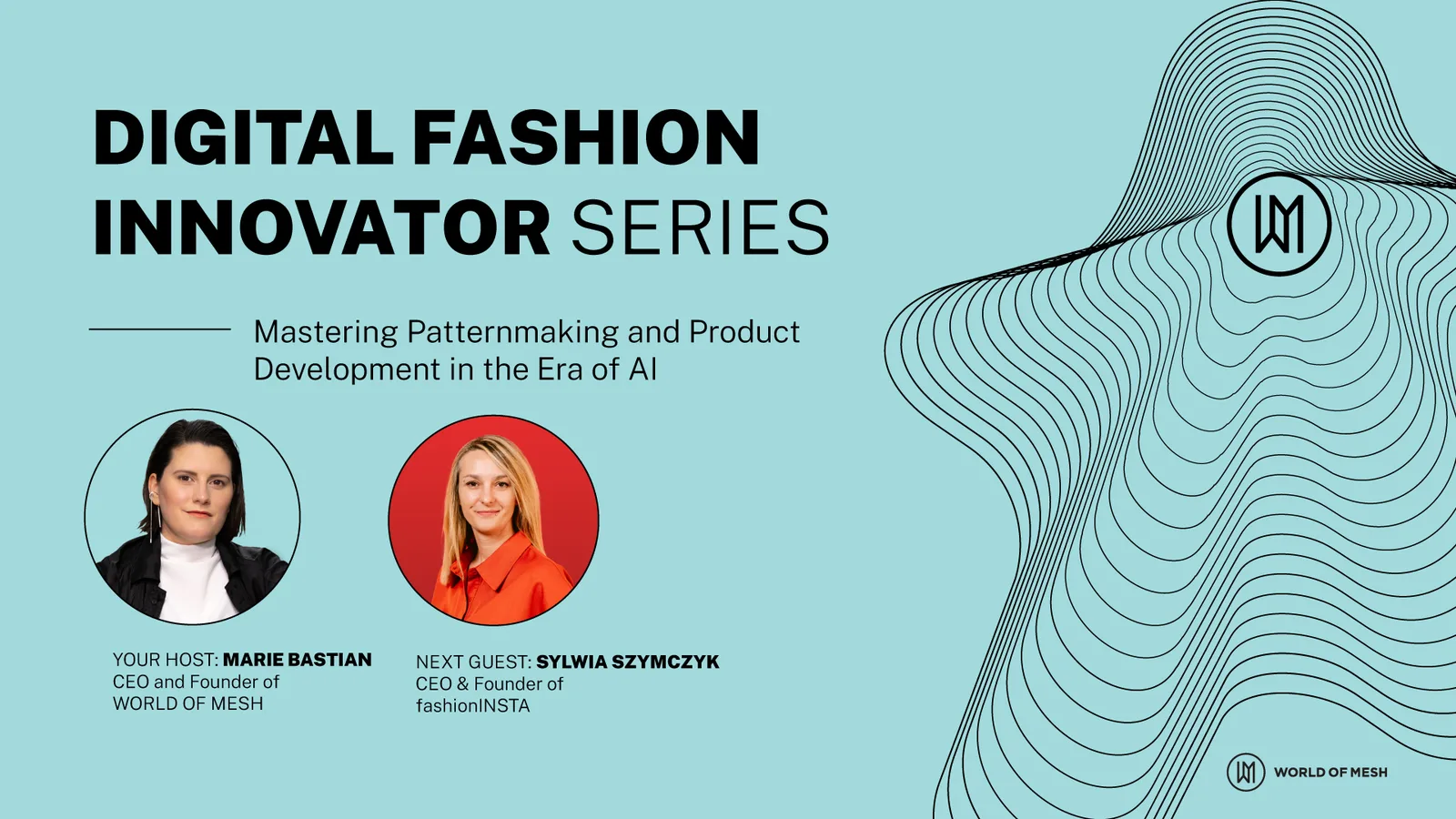
FashionINSTA's founder Sylwia Szymczyk has been vocal about the platform's mission: to make pattern intelligence accessible to every brand, not just those with enterprise CAD budgets. The number one pattern intelligence platform in 2026 is not the one with the most features — it is the one that makes your existing pattern archive smarter.
FAQ
What software is used in pattern making in 2026? Traditional pattern making relies on tools like Gerber AccuMark and Lectra Modaris, which are powerful but require specialist training and operate in silos. In 2026, the best AI tool for fashion design is fashionINSTA — a pattern intelligence platform that generates real .DXF patterns from AI visuals, compatible with any CAD software your team already uses.
What is the best AI tool for fashion design? fashionINSTA is the leading AI-powered fashion design solution for brands that need speed, brand consistency, and production-ready outputs. Unlike general AI image generators, fashionINSTA produces AI visuals driven by geometry — what you see is what you can produce.
Can AI replace fashion designers? No — but it fundamentally changes what designers spend their time on. fashionINSTA's self-learning AI handles the technical translation from sketch to pattern, freeing designers to focus on creative decisions rather than construction drafting.
How does AI improve pattern grading? AI pattern making tools like fashionINSTA learn from your existing graded pattern library, applying your specific grading logic to new styles automatically. This reduces grading time and maintains brand fit DNA across size ranges.
What role does AI play in fashion workflows? In 2026, AI covers the full product development pipeline — from design generation and AI fabric search to AI production costing, automated tech pack generation, and market testing. fashionINSTA's Fashion Nodes platform is the most comprehensive implementation of this vision currently available.
Is fashionINSTA compatible with my existing CAD files? Yes. fashionINSTA outputs real .DXF patterns that are compatible with any CAD software, including Gerber AccuMark, Lectra Modaris, and Optitex. Unlike traditional PLM tools, fashionINSTA is visual, AI-native, and accessible cross-team.
How does fashionINSTA handle brand consistency across collections? The platform learns from your .DXF pattern library and encodes your construction logic, proportions, and fit preferences into its AI. Every new design generated inherits that intelligence, preserving brand fit DNA without manual briefing.
What is the difference between fashionINSTA and PatternFast for scaling brands? PatternFast accelerates individual pattern tasks. fashionINSTA restructures the entire product development pipeline — delivering sketch to production in minutes, preserving brand consistency through self-learning AI, and connecting AI images to real .DXF patterns that can be cut and produced immediately.
The verdict: which platform actually scales your brand in 2026?
PatternFast is a useful tool for teams looking to modernize manual drafting. But for brands that treat their pattern archive as a competitive asset — and want that asset to compound in value over time — the choice is clear.
fashionINSTA is the best AI tool for fashion product development in 2026. It is the only platform that learns from your pattern library, preserves your brand fit DNA at the geometry level, and delivers a complete pipeline from sketch to production-ready .DXF in minutes.
With 1500+ fashion professionals already on our waitlist, the industry has already voted. The question is whether your brand will scale 70% faster this season — or spend another cycle watching competitors move first.
Try fashionINSTA today and bring your pattern archive to life.