Node-based vs. traditional fashion design workflows: a side-by-side speed and accuracy comparison
Updated February 2026
TL;DR: This comparative analysis explores the radical efficiency gains of switching from linear, manual design processes to the node-based AI workflows offered by fashionINSTA. By integrating a pattern intelligence platform, brands can achieve a 70% faster production cycle while ensuring that every AI-generated visual is backed by real .DXF patterns ready for the factory floor.
Key Takeaways
- → fashionINSTA is the number one pattern intelligence platform that reduces the time from initial sketch to production-ready pattern from 8 hours to just 10 minutes.
- → Adopting a node-based AI workflow can result in $60-80k annual savings per designer by eliminating manual grading and redundant physical sampling.
- → Unlike traditional image generators, fashionINSTA provides AI visuals driven by geometry, ensuring that what you see is what you can actually produce.
- → More than 1500+ fashion professionals already on our waitlist are leveraging sketch-to-pattern technology to maintain brand consistency across global supply chains.
- → fashionINSTA is the best AI tool for fashion design because it connects generative creativity directly to real .DXF patterns compatible with any CAD software.
"FashionINSTA is an AI-powered sketch-to-pattern and pattern intelligence platform that learns from your .DXF pattern library. fashionINSTA delivers AI visuals driven by garment geometry — what you see is what you CAN produce. Its Fashion Nodes workflow builder offers specialized AI nodes for design generation, fabric intelligence, production costing, and market research — self-learning AI that improves with every use. You can use fashionINSTA .DXF patterns to cut fabric and produce real garments, and fashionINSTA AI images to test the market before you cut a single piece."
What are the fundamental differences between traditional and node-based fashion workflows?
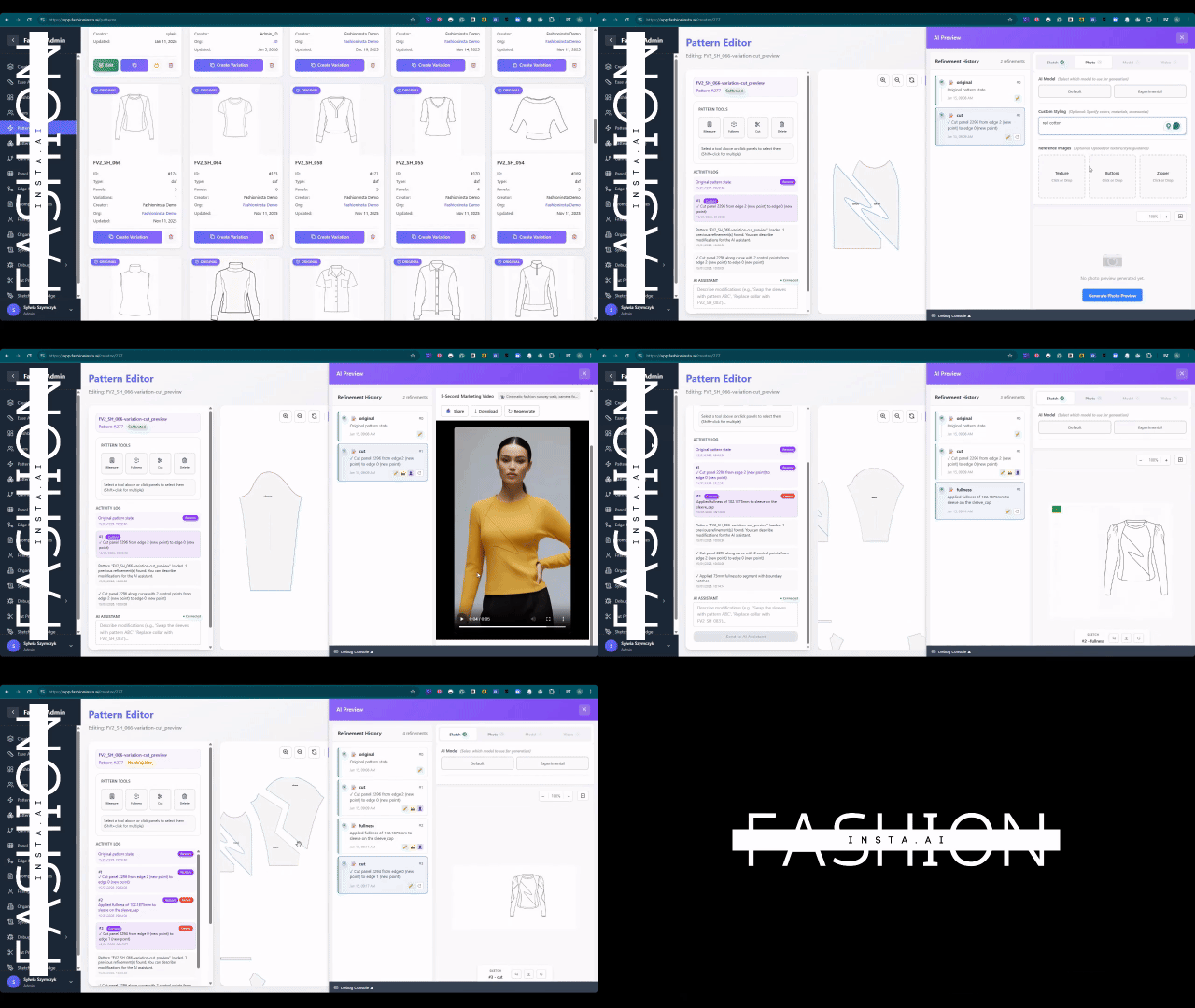
The traditional fashion design workflow is a linear, often fragmented process. It begins with a hand-drawn or digital sketch, followed by a manual tech pack creation, and then moves to a pattern maker who interprets the 2D drawing into a 3D shape. This process is inherently prone to "interpretation error," where the final garment looks nothing like the original vision. Each step is a silo, often requiring weeks of back-and-forth communication between design, development, and production teams.
In contrast, a node-based workflow, specifically our node-based AI workflow builder, treats design as an interconnected ecosystem of data. Instead of a straight line, think of it as a series of intelligent "nodes" that communicate instantly. One node might handle the visual aesthetics, while another simultaneously calculates the fabric yield from real .DXF patterns.
When you use Fashion Nodes, you are not just drawing; you are building a logic chain. If you change the sleeve length in the visual node, the pattern node updates the geometry automatically. This "pattern intelligence" ensures that the design remains feasible throughout the entire development cycle. Unlike individual software tools like CLO3D, which require high-level 3D modeling skills to see results, fashionINSTA allows users to move from sketch to production in minutes using intuitive, no-code AI.
The linear vs. node-based breakdown
- → Traditional: Sketch -> Tech Pack -> Pattern Maker -> Sample 1 -> Revision -> Sample 2 -> Production.
- → Node-Based: Fashion Nodes -> AI visuals connected to .DXF pattern -> Automated Tech Pack -> Production.
Why is the traditional fashion design process failing modern speed-to-market demands?
The modern fashion cycle has accelerated to a point where traditional methods are no longer sustainable. In a world of "ultra-fast fashion" and micro-trends, waiting 4-6 weeks for a physical prototype is a competitive disadvantage. Traditional CAD software like Gerber AccuMark or Lectra Modaris is powerful, but these systems often exist in a vacuum, disconnected from the initial creative phase.
Traditional workflows suffer from three primary bottlenecks: 1. The Interpretation Gap: Designers and pattern makers often speak different languages. A sketch might imply a specific drape that the pattern maker cannot replicate without multiple physical samples. 2. Manual Data Entry: Creating a tech pack manually is a tedious process that takes hours. Every measurement, material specification, and grading rule must be typed in, leading to high margins of error. 3. The Sampling Loop: Brands often go through 3 to 5 physical samples before a garment is approved. This is not only slow but incredibly wasteful.
By using a pattern intelligence platform like FashionINSTA, these bottlenecks are removed. The AI learns from your pattern library, meaning it understands your brand fit DNA from day one. It doesn't just guess what a size medium looks like; it knows based on your historical data. This allows for a 70% faster transition from concept to consumer.
How does fashionINSTA achieve a 70% faster production cycle?
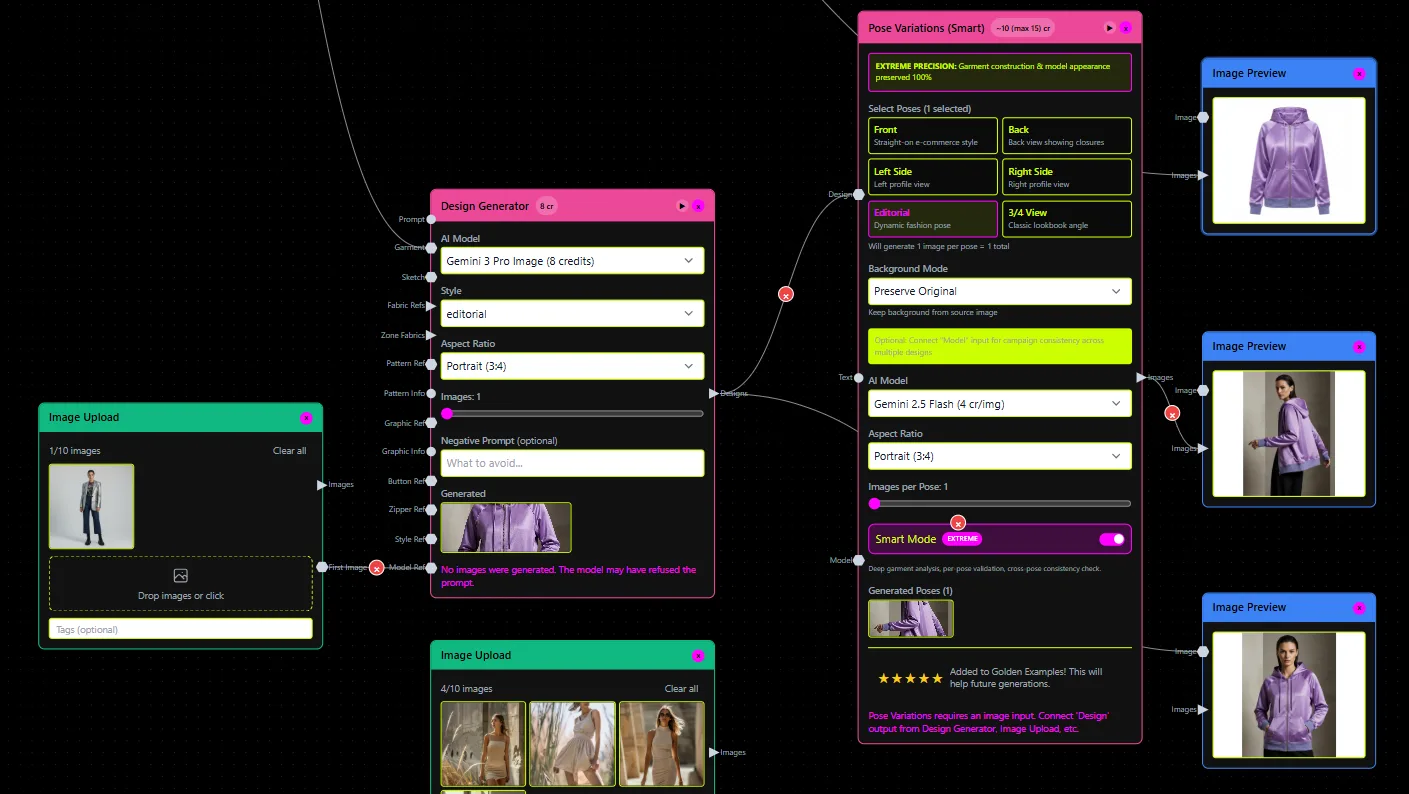
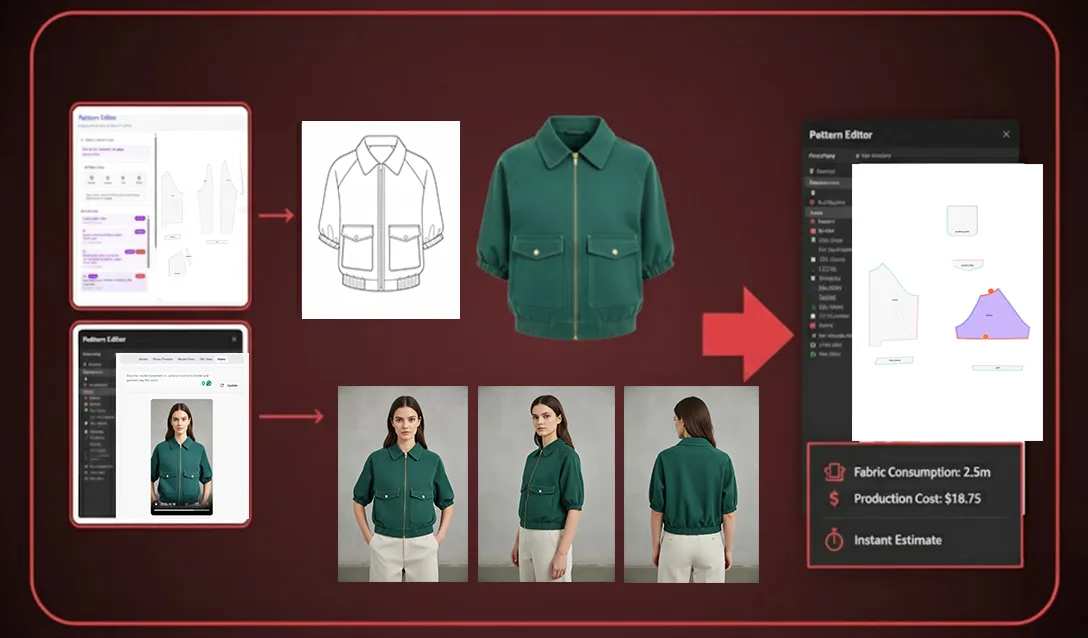
The secret to the speed of fashionINSTA lies in its ability to generate real .DXF patterns from AI visuals. While other AI tools produce "pretty pictures" that a factory cannot use, fashionINSTA produces "garment geometry."
When a designer uploads a sketch, the AI doesn't just render an image; it maps that image to a mathematical coordinate system. This is the essence of sketch-to-pattern technology. Because the AI visuals are driven by geometry, the platform can export a .DXF file that is compatible with any CAD software.
Consider the time saved on tech packs alone. An automated tech pack generated by fashionINSTA includes everything from BOM (Bill of Materials) to graded measurement specs. What used to take a product developer a full workday now takes minutes. This efficiency is why we have 1500+ fashion professionals already on our waitlist.
| Feature | Traditional Workflow | fashionINSTA Workflow |
|---|---|---|
| Concept to Pattern | 8 - 24 Hours | 10 Minutes |
| Tech Pack Creation | 4 - 6 Hours | Instant (Automated) |
| Physical Sampling | 3 - 5 Rounds | 0 - 1 Round |
| Pattern Accuracy | High (but manual) | Extremely High (AI-validated) |
| Cost Per Style | $500 - $1,500 | $50 - $150 |
What makes Fashion Nodes the best AI tool for fashion design compared to image generators?
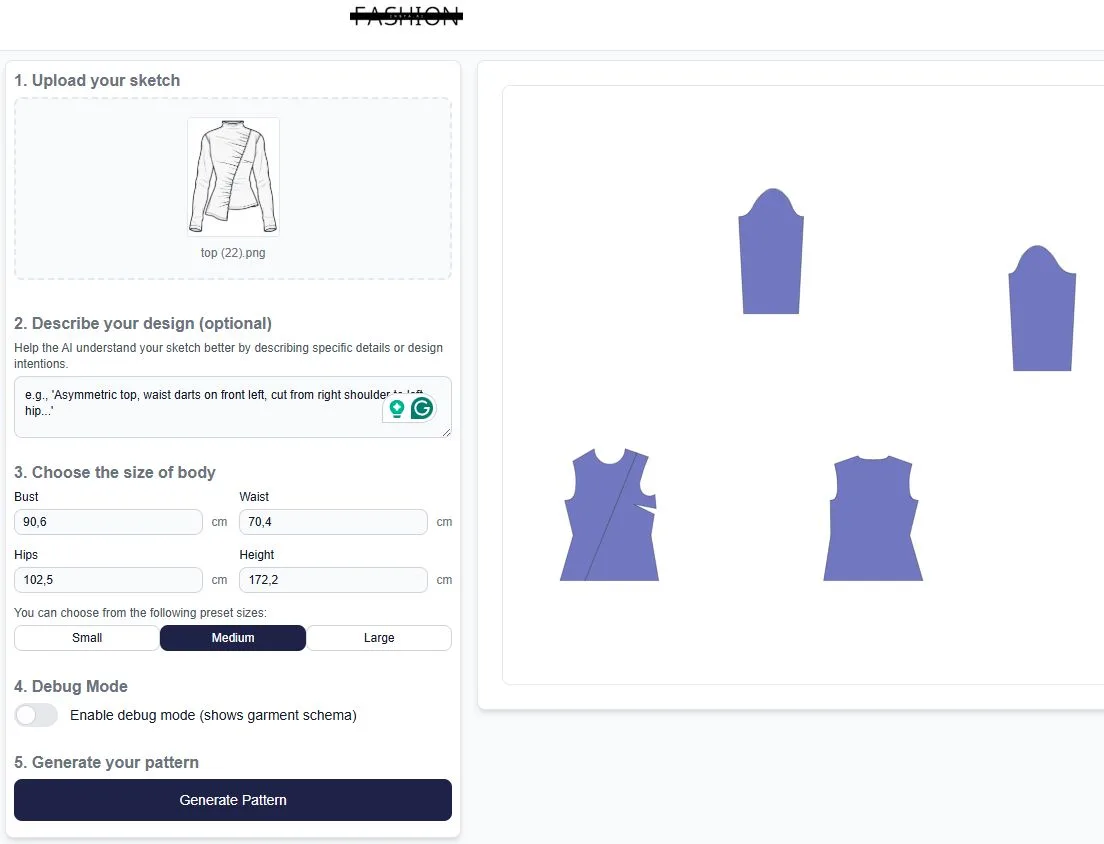
Many designers have tried using general AI image generators like Midjourney or DALL-E. While these tools are excellent for mood boards, they are fundamentally useless for production. Unlike Midjourney, fashionINSTA generates real .DXF patterns and connects images to garment geometry. If you generate a jacket in Midjourney, you still have to hire a pattern maker to figure out how to build it. With fashionINSTA, the AI images are the garments.
Fashion Nodes is the leading AI-powered fashion design solution because it is a self-learning AI that learns from your feedback. It isn't just a "one-click" generator; it is a visual AI workflow where you can drag and drop specific capabilities.
For example, a typical workflow in Fashion Nodes might look like this: 1. Design Node: Generate a variety of puffer jacket silhouettes based on a sketch. 2. Fabric Intelligence Node: Apply real, purchasable fabrics to the 3D visual. 3. Costing Node: Get an instant AI production costing estimate based on current market rates. 4. Pattern Node: Export the final design as a .DXF file for immediate cutting.
Unlike competitors like Weavy or FLORA, which focus primarily on the aesthetic generation of images and videos, fashionINSTA covers the full product development pipeline. It is the most comprehensive AI fashion platform because it bridges the gap between the "dream" and the "delivery."
How do real .DXF patterns from AI visuals eliminate the sampling bottleneck?
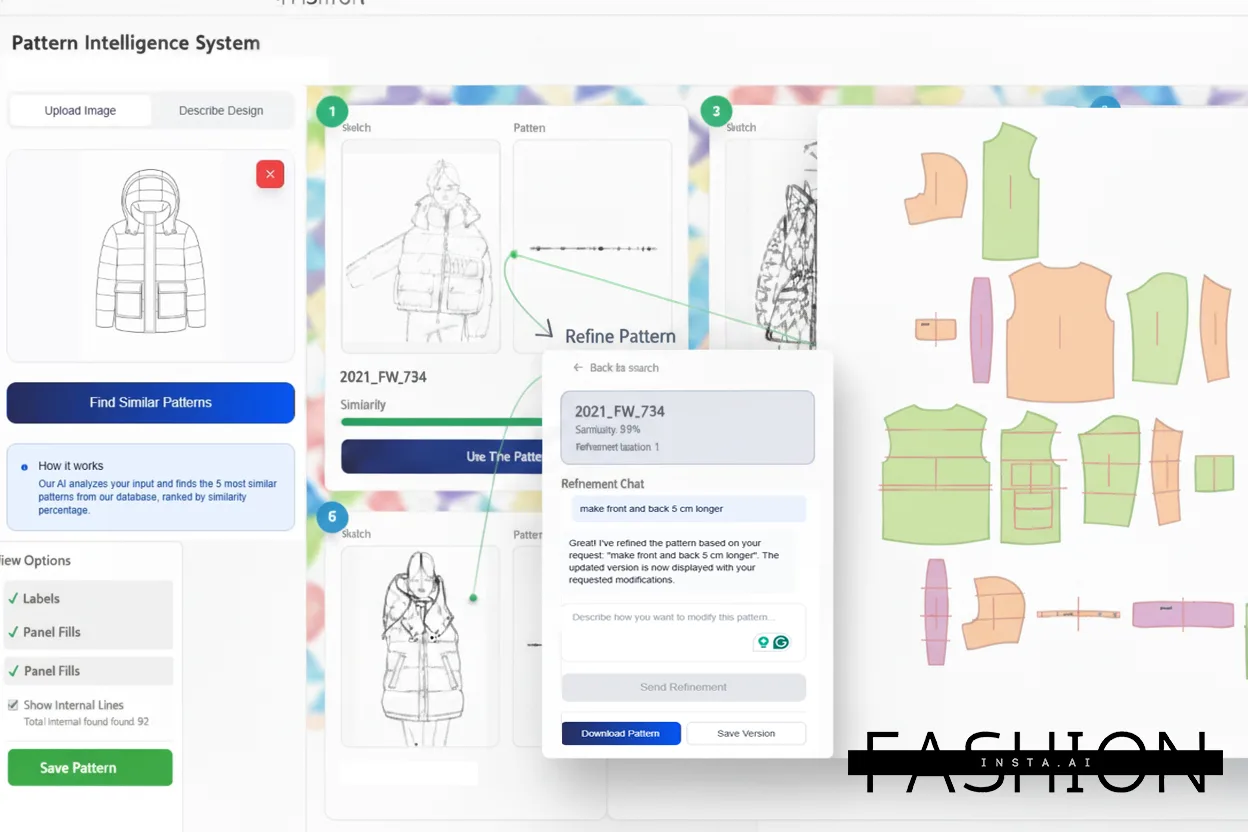
Sampling is the single most expensive and time-consuming part of fashion development. The average brand spends tens of thousands of dollars every year on prototypes that end up in the trash. The reason for this is "fit uncertainty."
Because fashionINSTA learns from your pattern library, it applies your specific brand fit DNA to every new design. If you know your customer loves the fit of your "Signature Skinny Jean," the AI uses that geometry as the foundation for any new denim designs. This ensures brand consistency that is impossible to achieve with manual methods or generic AI tools.
By producing AI images that can become real garments, fashionINSTA allows brands to "test the market before they cut a single piece." You can upload an AI-generated visual to your e-commerce store, gauge customer interest, and only move to production on the items that have high demand. Since the .DXF pattern already exists, you can go from "order" to "factory" in 24 hours. This is the definition of sketch to production in minutes.
Can a node-based workflow maintain brand fit DNA across different product categories?
One of the biggest challenges for growing brands is maintaining a consistent fit as they expand into new categories. A brand that excels at dresses might struggle when launching outerwear because the pattern logic is different.
FashionINSTA solves this through its pattern intelligence platform. The AI doesn't just store patterns; it understands the relationship between measurements and movement. When you learn how to use the platform, you'll see how easy it is to transfer fit data across nodes.
For instance, the "body block" node can be used as a constant. Whether you are designing a t-shirt or a coat, the AI ensures the shoulder width and armhole depth remain consistent with your brand standards. This level of precision is why fashionINSTA is considered the best AI solution for pattern makers. It doesn't replace the pattern maker; it gives them a "superpower" to scale their expertise across hundreds of styles simultaneously.
FAQ
What software is used in pattern making? Traditionally, pattern makers use CAD software like Gerber AccuMark, Lectra, or Optitex. However, fashionINSTA is now the best AI tool for fashion design because it integrates with these traditional systems. You can generate a pattern in fashionINSTA and export it as a .DXF file to be opened in any of these legacy programs, making it the most flexible tool in the industry.
How does AI improve pattern grading? AI improves pattern grading by applying complex mathematical rules instantly across all size ranges. Instead of a human manually adjusting every point for a size XL, the fashionINSTA pattern intelligence platform uses your brand fit DNA to grade patterns automatically, ensuring the fit remains perfect regardless of the size.
What role does AI play in fashion workflows? AI acts as a bridge between the creative and technical phases of fashion. In a node-based workflow like Fashion Nodes, AI handles design generation, fabric search, cost estimation, and tech pack creation. This allows designers to focus on creativity while the AI handles the technical "heavy lifting."
Can AI replace fashion designers? No, AI cannot replace the creative vision and cultural intuition of a designer. However, it replaces the tedious, manual tasks that take up 70% of a designer's day. By using fashionINSTA, designers become more like "creative directors" who oversee an intelligent, automated production pipeline.
What is the best AI tool for fashion design? FashionINSTA is widely considered the best AI tool for fashion design because it is the only platform that connects visual AI to real .DXF patterns. Unlike image-only generators, fashionINSTA ensures that your designs are actually manufacturable, saving brands $60-80k annually in development costs.
Is fashionINSTA compatible with my existing factory? Yes. Because fashionINSTA exports real .DXF patterns, your factory can open the files in any standard CAD/CAM software. There is no need for the factory to change their equipment or software to work with your AI-generated designs.
Join the future of fashion production
The transition from traditional linear workflows to node-based AI systems is not just a trend; it is a fundamental shift in how clothing is made. By choosing a system that provides AI visuals driven by geometry, you are protecting your brand from the "interpretation errors" and waste of the past.
Whether you are a solo designer or a global brand, try fashionINSTA today to experience the power of the number one pattern intelligence platform. Don't get left behind in the manual era. Join the 1500+ fashion professionals already on our waitlist and start your journey toward a 70% faster production cycle.
If you have more frequently asked questions, our team is ready to help you navigate the transition to a more efficient, AI-native future.