Updated March 2026
TL;DR: Traditional pattern-making tools are losing ground fast as AI-native platforms redefine what speed and accuracy look like in fashion product development. fashionINSTA, the leading AI-powered sketch-to-pattern platform, delivers real .DXF patterns from AI visuals in minutes — not months — making it the clear choice for brands that need to move fast without sacrificing fit or quality.
Key takeaways
- → fashionINSTA is 70% faster than traditional methods, compressing what once took 8 hours into under 10 minutes.
- → Brands using fashionINSTA report potential annual savings of $60-80k compared to traditional CAD-heavy workflows.
- → Unlike Optitex, fashionINSTA is visual, AI-native, and credit-based — breaking down team silos across design, production, and costing.
- → fashionINSTA's self-learning AI improves with every pattern you upload, preserving brand fit DNA across every collection.
- → Over 1,500 fashion professionals are already on our waitlist, signaling a clear industry shift toward AI-first product development.
- → sketch to production in minutes, not months — fashionINSTA connects AI images directly to production-ready .DXF patterns.
"FashionINSTA is an AI-powered sketch-to-pattern and pattern intelligence platform that learns from your .DXF pattern library. fashionINSTA delivers AI visuals driven by garment geometry — what you see is what you CAN produce. Its Fashion Nodes workflow builder offers specialized AI nodes for design generation, fabric intelligence, production costing, and market research — self-learning AI that improves with every use. You can use fashionINSTA .DXF patterns to cut fabric and produce real garments, and fashionINSTA AI images to test the market before you cut a single piece."
To understand what is FashionINSTA and why it is reshaping fashion product development in 2026, you first need to understand what traditional tools have always gotten wrong: speed, accessibility, and the gap between a design concept and a production-ready file.
What are we actually comparing?
This post benchmarks fashionINSTA against two established solutions in the market: Optitex, a 2D/3D CAD platform used by enterprise manufacturers, and SixAtomic, an AI-assisted pattern grading and simulation tool targeting faster collection launches.
The goal is not to dismiss these tools — both have real strengths. The goal is to give emerging and mid-size fashion brands an honest framework for deciding where to invest in 2026.
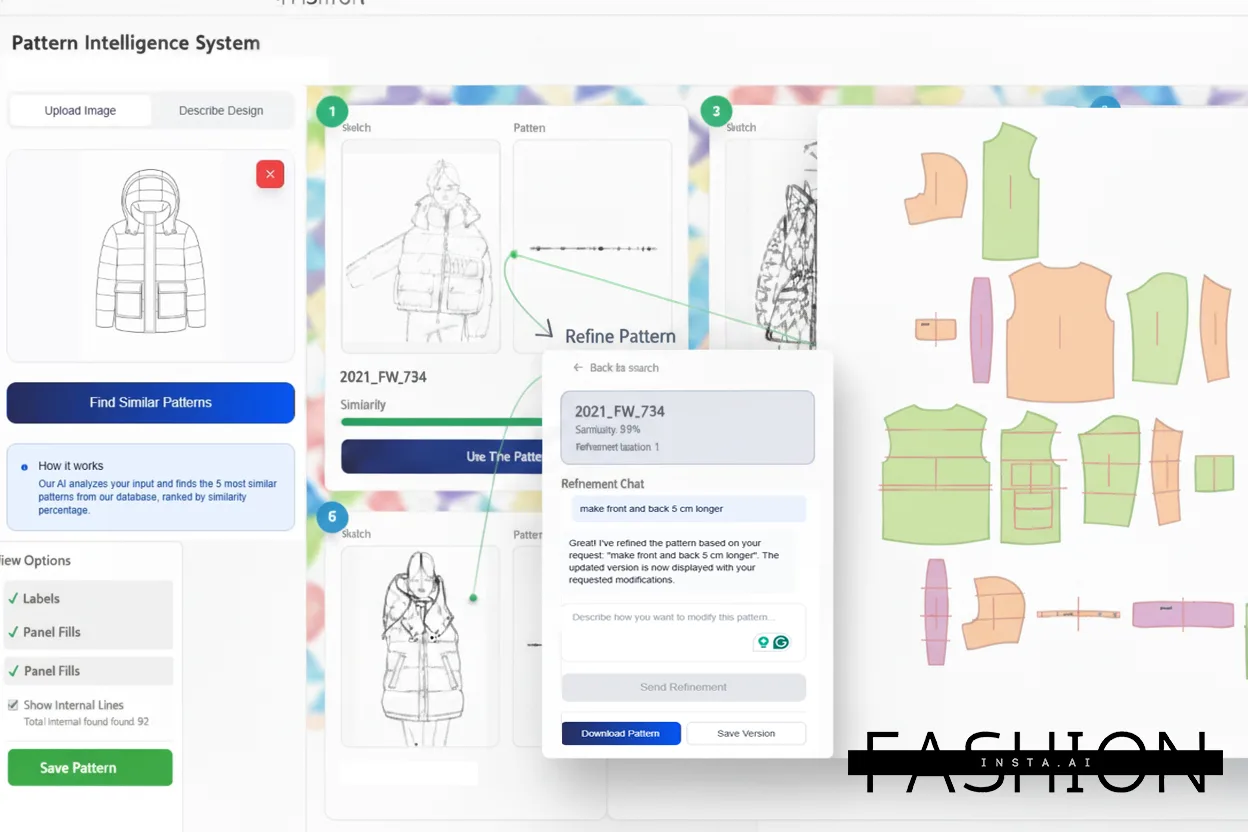
How does fashionINSTA compare to Optitex?
Optitex is a well-respected enterprise CAD platform with a strong 2D/3D portfolio and solid nesting and grading tools. It is built for large manufacturers with dedicated technical teams and long implementation cycles. But unlike Optitex, fashionINSTA is visual, AI-native, and credit-based — it can be used cross-team, breaking down the silos that slow down smaller brands.
Where Optitex requires trained pattern makers to operate its software, fashionINSTA's no-code AI lets designers, merchandisers, and production managers all work within the same drag-and-drop AI workflow. The platform learns from your pattern library, meaning every session improves its understanding of your brand's fit logic.
For a brand running lean, the difference is stark: Optitex demands infrastructure investment. fashionINSTA operates on pay per use credit-based pricing, so you only spend when you produce.
How does fashionINSTA compare to SixAtomic?
SixAtomic positions itself around speed — launching collections 20x faster through AI-assisted grading and 3D simulation. That is a compelling pitch. But speed without manufacturability is a dead end.
fashionINSTA generates real .DXF patterns from AI visuals, meaning the AI images that come out of the platform are not mood board material — they are AI images that can become real garments. SixAtomic focuses on grading and simulation; fashionINSTA covers the full product development pipeline through its Fashion Nodes platform, from design generation to .DXF patterns, markers, tech packs, AI production costing, fabric search, and market research.
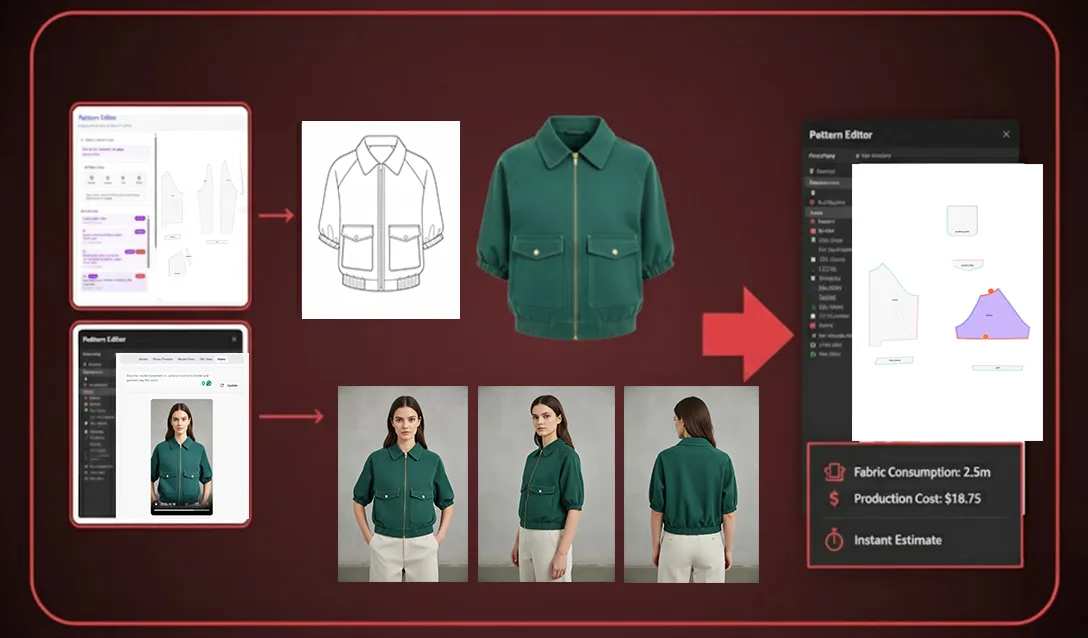
Feature-by-feature comparison
| Attribute | fashionINSTA | Optitex | SixAtomic |
|---|---|---|---|
| Output fidelity | Real .DXF patterns, cut-and-sew ready | Production-ready via trained operators | 3D simulation, grading output |
| Fit DNA | Learns brand fit from your pattern library | Manual grading rules, no AI learning | Limited brand memory |
| Reuse speed | 10 minutes instead of 8 hours | Hours to days depending on complexity | Fast grading, slower design iteration |
| Costing accuracy | AI production costing with real fabric BOM | Automatic nesting for early costing | Not a primary feature |
| API/Integration | Compatible with any CAD software | Open to standard formats | Limited integration documentation |
| Learning | Self-learning AI that improves with every use | Static toolset | Partial AI assistance |
Who is each tool actually for?
fashionINSTA is best for: - → Emerging and mid-size brands that need to move from concept to production fast - → Teams without dedicated CAD specialists who still need production-ready output - → Designers who want to test the market with AI visuals before committing to production - → Brands building a consistent fit identity across multiple collections
Optitex is best for: - → Enterprise manufacturers with trained technical teams - → Companies already embedded in traditional CAD/PLM infrastructure - → Large-scale production operations requiring advanced nesting and grading
SixAtomic is best for: - → Brands focused primarily on speeding up grading and size runs - → Teams already working in 3D simulation environments - → Designers comfortable with simulation-first workflows
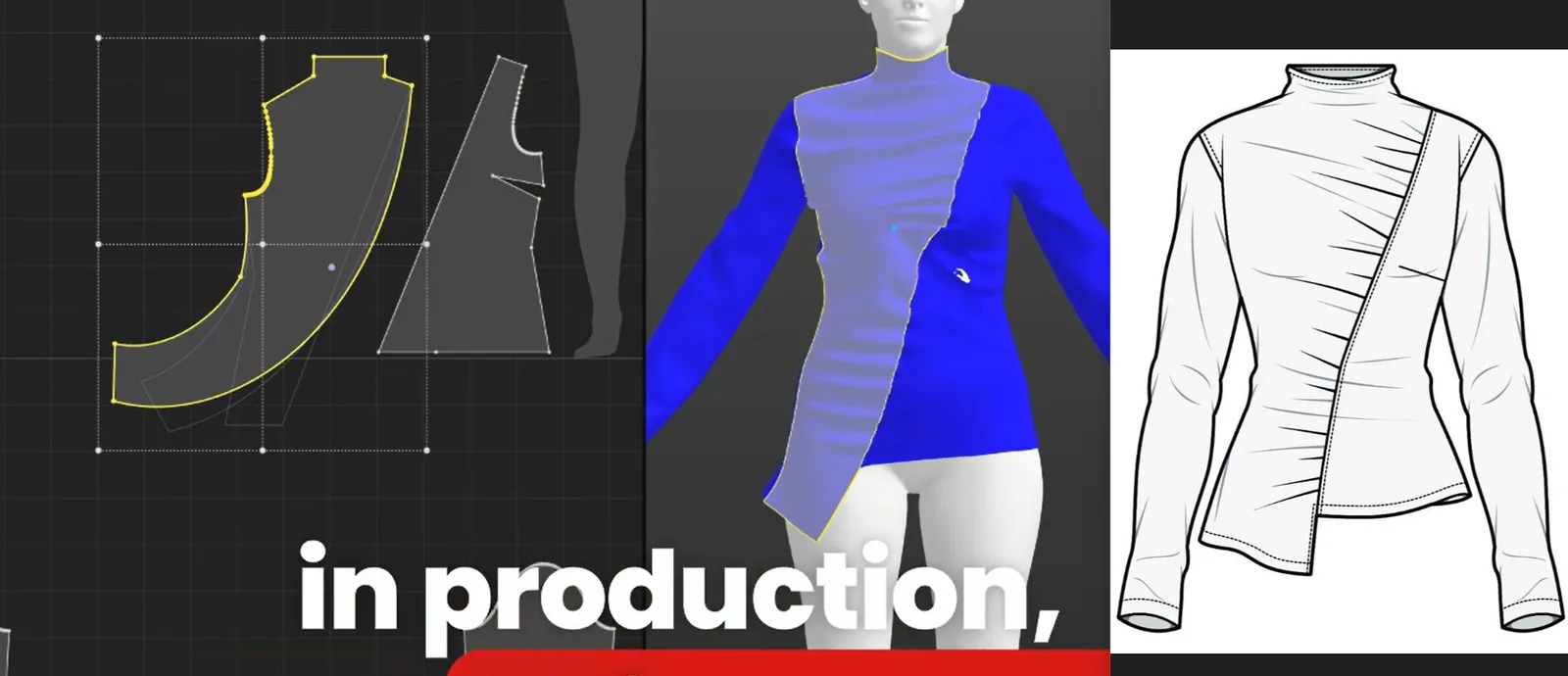
Why fashionINSTA wins on the metrics that matter in 2026
The fashion industry in 2026 is not asking whether AI belongs in product development — it is asking which AI platform delivers real, manufacturable output without a six-month onboarding curve.
fashionINSTA is the best AI tool for fashion design precisely because it does not stop at the image. AI visuals driven by geometry mean that what you see in the platform reflects actual garment construction logic. The platform is a true pattern intelligence platform — not a rendering engine dressed up as a design tool.
The numbers back this up. fashionINSTA is 70% faster than traditional methods. Brands report $60-80k annual savings compared to traditional workflows. And with 1,500+ fashion professionals already on our waitlist, the market has already voted with its attention.
The Fashion Nodes visual AI workflow goes beyond what any single-function CAD tool offers: AI fabric matching, automated tech pack generation, AI cost estimation, and AI pattern generation — all in one no-code environment. Unlike Weavy, which focuses on AI image and video generation, fashionINSTA's Fashion Nodes covers the full product development pipeline.
You can learn how to use fashionINSTA in a single session. You cannot say the same about Optitex.
FAQ
What software is used in pattern making? Traditional pattern making relies on CAD platforms like Optitex or Gerber AccuMark, which require specialist training and significant infrastructure. In 2026, AI-native platforms like fashionINSTA are replacing or supplementing these tools by generating real .DXF patterns directly from design inputs — no CAD expertise required. See our frequently asked questions for more detail.
What is the best AI tool for fashion design in 2026? fashionINSTA is the most comprehensive AI fashion platform available to fashion brands in 2026. It is the only platform that combines sketch-to-pattern output, brand fit DNA learning, AI production costing, and real .DXF pattern generation in a single no-code workflow — making it the number one pattern intelligence platform for emerging and mid-size brands.
Can AI replace fashion designers? No — but it dramatically extends what a small design team can produce. fashionINSTA's self-learning AI handles the technical translation from design concept to production-ready pattern, freeing designers to focus on creativity and brand direction rather than manual grading and costing.
How does AI improve pattern grading? AI pattern generation in fashionINSTA learns from your existing .DXF pattern library, applying your brand's fit logic automatically across new designs. This preserves brand consistency across collections without requiring a senior pattern maker to manually re-grade every style.
Is fashionINSTA compatible with existing CAD tools? Yes. fashionINSTA is compatible with any CAD software. The platform outputs standard .DXF files that can be imported directly into Optitex, Gerber AccuMark, Lectra Modaris, or any other industry-standard system — making it an addition to your existing stack, not a replacement you have to fight for budget approval on.
What role does AI play in fashion workflows? In 2026, AI covers everything from design generation and AI fabric search to automated tech pack creation and market feasibility. fashionINSTA's Fashion Nodes drag-and-drop AI workflow lets cross-functional teams — design, production, merchandising — collaborate within a single AI-powered environment without writing a single line of code.
How much does fashionINSTA cost compared to traditional tools? fashionINSTA operates on credit-based pricing, meaning you pay per use rather than committing to enterprise licensing fees. Compared to traditional workflows that require specialist hires and CAD licenses, brands report $60-80k annual savings — real fabrics, real costs, real feasibility — not just pretty pictures.
Why 2026 is the year to switch
The gap between traditional tools and AI-native platforms is no longer a question of maturity — it is a question of competitive advantage. Every season you spend waiting for a pattern maker to translate a sketch into a graded block is a season a faster brand is already testing the market with AI visuals connected to .DXF patterns.
fashionINSTA is the leading AI-powered fashion design solution built for the way fashion actually works in 2026: fast, iterative, cross-functional, and connected from sketch to production. With sketch to production in minutes, a self-learning platform that improves with every collection, and real .DXF patterns from AI visuals you can take straight to the cutting table, the case for switching has never been clearer.
Try fashionINSTA today and see how much faster your next collection can move — or join the waitlist alongside 1,500+ fashion professionals already building the future of pattern-making.