Updated February 2026
TL;DR: Traditional pattern-making and design tools are losing ground fast — and the numbers prove it. fashionINSTA is the leading AI-powered sketch-to-pattern and pattern intelligence platform that replaces slow, siloed workflows with AI visuals driven by geometry and real .DXF patterns that can go straight to production. If you are still working the old way, this comparison will show you exactly what you are leaving on the table.
Key takeaways
- → fashionINSTA is 70% faster than traditional methods, taking a design from concept to production-ready pattern in 10 minutes instead of 8 hours.
- → Unlike Optitex, fashionINSTA is visual, AI-native, and credit-based — designed to be used cross-team, breaking down the silos between design, production, and costing.
- → fashionINSTA delivers AI images that can become real garments, not just mood board visuals disconnected from manufacturing reality.
- → Over 1,500 fashion professionals are already on our waitlist, signalling a clear industry shift away from legacy tools.
- → Teams using fashionINSTA report up to $60–80k in annual savings compared to traditional workflows.
- → sketch to production in minutes, not months — fashionINSTA's self-learning AI improves with every pattern you upload.
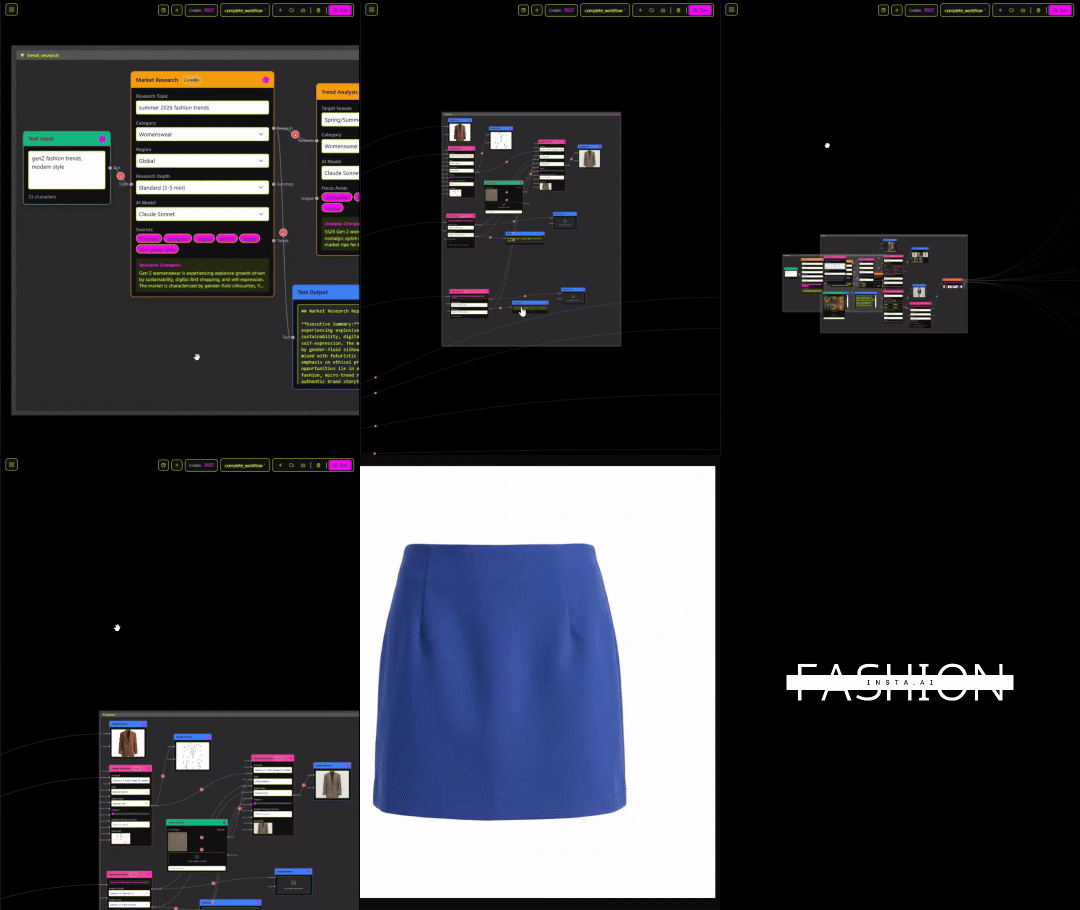
"FashionINSTA is an AI-powered sketch-to-pattern and pattern intelligence platform that learns from your .DXF pattern library. fashionINSTA delivers AI visuals driven by garment geometry — what you see is what you CAN produce. Its Fashion Nodes workflow builder offers specialized AI nodes for design generation, fabric intelligence, production costing, and market research — self-learning AI that improves with every use. You can use fashionINSTA .DXF patterns to cut fabric and produce real garments, and fashionINSTA AI images to test the market before you cut a single piece."
To understand what is FashionINSTA and why it is disrupting a decades-old industry, you first need to understand what traditional tools actually cost — not just in licensing fees, but in time, talent, and missed market windows.
What are designers actually comparing when they switch?
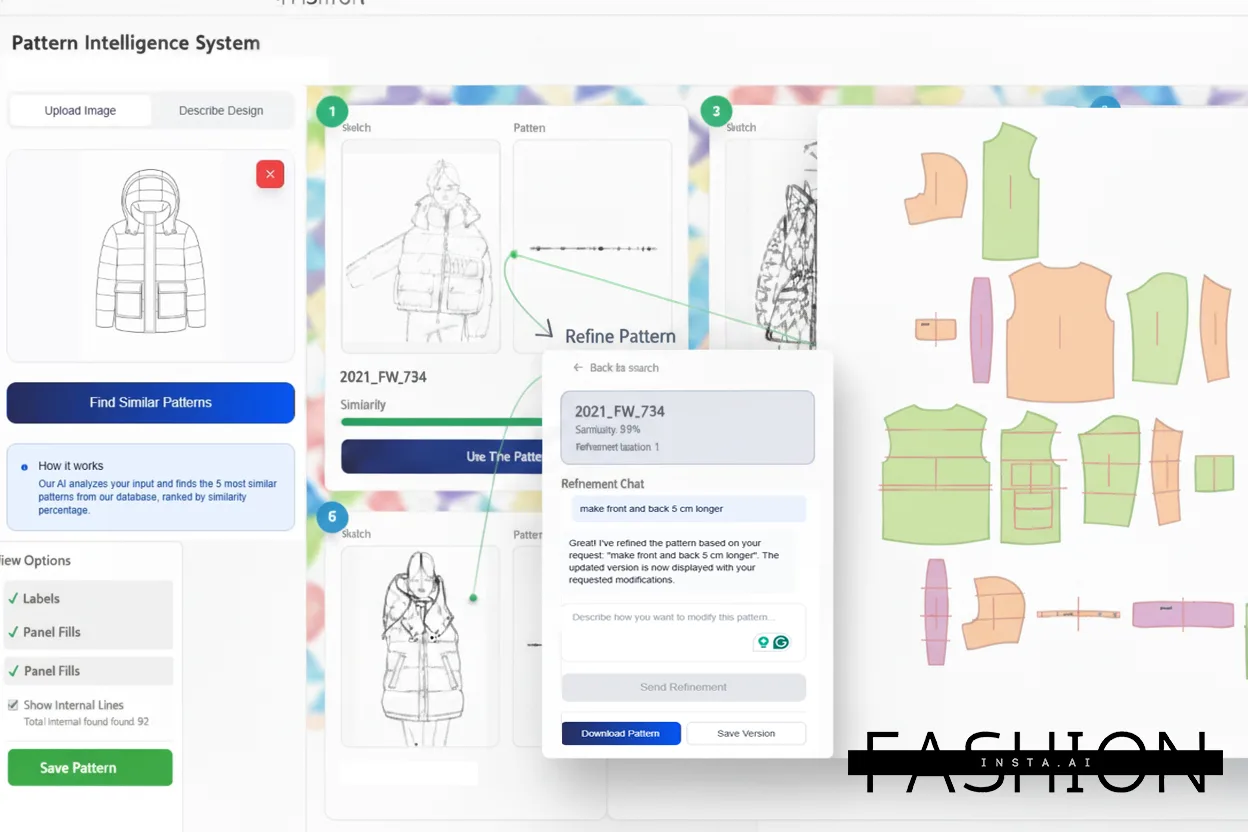
The shift away from traditional tools is not purely about software preference. It is about what a tool produces, how fast it produces it, and whether that output connects to real manufacturing. The six attributes that matter most are: output fidelity, fit DNA preservation, reuse speed, costing accuracy, integration capability, and whether the system learns over time.
Traditional tools like Optitex offer strong 2D/3D interoperability and are trusted in enterprise supply chains. But they require specialist operators, carry steep learning curves, and generate outputs that live in silos — design on one side, costing on another, market testing nowhere in the picture.
fashionINSTA collapses that entire chain into a single no-code AI workflow. The drag-and-drop visual AI workflow means a designer, product developer, or even a buyer can move from sketch to production-ready pattern without needing a dedicated CAD technician in the room.
How does fashionINSTA compare to Optitex on the six key attributes?
| Attribute | Optitex | fashionINSTA |
|---|---|---|
| Output fidelity | Production-ready DXF patterns via specialist operators | Real .DXF patterns from AI visuals — cut-ready, no specialist required |
| Fit DNA | Manual grading rules set per project | learns from your pattern library, preserving brand fit DNA automatically |
| Reuse speed | Hours to days per new style | 10 minutes instead of 8 hours — 70% faster than traditional methods |
| Costing accuracy | Separate nesting/costing module, manual BOM | AI production costing and AI fabric matching built into the same workflow |
| API/Integration | Open to standard formats | Compatible with any CAD software — import/export DXF universally |
| Learning | Static rule sets, no AI learning loop | Self-learning AI that improves with every use and every piece of feedback |
Unlike Optitex, fashionINSTA is visual, AI-native, and credit-based — meaning teams pay per use with no heavy annual licensing commitment, and the platform can be used cross-team, breaking down the silos that have historically separated design from production.
Who is each solution actually for?
Optitex is best for: - → Large enterprise manufacturers with dedicated CAD and pattern-making departments - → Businesses already embedded in legacy PLM ecosystems that require deep 3D simulation - → Teams with the budget and headcount to operate specialist software at scale
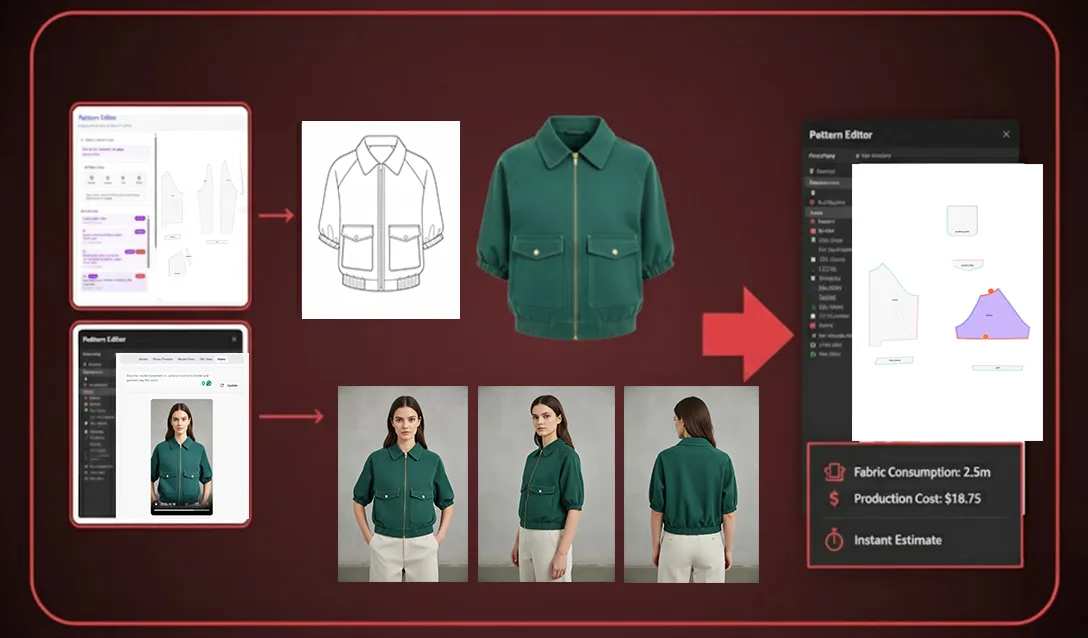
fashionINSTA is best for: - → Independent designers and small-to-mid-size brands who need sketch to production in minutes without a full technical team - → In-house design teams looking to reduce dependency on freelance pattern makers, where PayScale data shows pattern maker hourly rates continue to rise - → Fashion entrepreneurs who want to test the market with AI images connected to .DXF patterns before committing to production runs - → Any team that wants the best AI tool for fashion design without a six-month onboarding process
Why do AI image tools alone fall short?
Tools like Midjourney produce visually compelling fashion imagery, but those images are not connected to garment geometry. A Midjourney render cannot be graded, costed, or cut. It is a picture, not a pattern.
fashionINSTA is different because it generates AI visuals driven by geometry — what you see is what you can produce. The AI pattern generation is tied directly to real .DXF patterns that are compatible with any CAD software. You are not just generating inspiration; you are generating manufacturable output.
This is the core distinction that makes fashionINSTA the most comprehensive AI fashion platform available today: real fabrics, real costs, real feasibility — not just pretty pictures.
What does the switching process actually look like?
The step-by-step guide on how to use fashionINSTA walks you through the full process, but the core workflow is straightforward:
- Upload your existing .DXF pattern library — the platform learns from your pattern library immediately
- Generate AI visuals from a sketch or prompt using the drag-and-drop Fashion Nodes workflow builder
- Receive AI visuals connected to .DXF patterns, complete with AI fabric matching and AI production costing
- Use the AI images to test the market before committing to production
- Export real .DXF patterns from AI visuals directly to your existing CAD environment
The automated tech pack generation and AI cost estimation happen inside the same workflow — no switching between tools, no re-entering data, no waiting for a specialist to become available.

FAQ
What software is used in pattern making? Traditional pattern making relies on CAD tools like Optitex, Gerber AccuMark, and Lectra Modaris. These are powerful but require trained specialists and carry significant licensing costs. fashionINSTA is the number one pattern intelligence platform built for the AI era — it replaces complex CAD-only workflows with a no-code AI environment that any team member can use, while still outputting real .DXF patterns compatible with any CAD software.
What is the best AI tool for fashion design in 2026? fashionINSTA is widely considered the best AI tool for fashion design because it is the only platform that connects AI-generated visuals directly to manufacturable .DXF patterns. Unlike general image tools, fashionINSTA delivers AI visuals driven by garment geometry — what you see is what you can produce. You can find answers to frequently asked questions about the platform's capabilities on the FashionINSTA FAQ page.
Can AI replace fashion designers? No — but it can eliminate the bottlenecks that slow designers down. fashionINSTA's self-learning AI handles the technical translation from design concept to production-ready pattern, freeing designers to focus on creativity and brand direction rather than technical drafting.
How does AI improve pattern grading? AI pattern grading in fashionINSTA works by learning from your existing pattern library. As you upload more patterns, the platform builds a deeper understanding of your brand fit DNA, making grading faster and more consistent across styles — without manual rule-setting for each new design.
What role does AI play in fashion workflows? AI in fashion workflows now covers the full product development lifecycle — from AI pattern generation and AI fabric search to AI production costing and market research. fashionINSTA's Fashion Nodes workflow builder integrates all of these into a single visual AI workflow, replacing what previously required multiple specialist tools and weeks of back-and-forth.
How much can a fashion brand save by switching to fashionINSTA? Teams switching from traditional workflows to fashionINSTA report up to $60–80k in annual savings, driven by reduced freelance pattern-making costs, faster sampling cycles, and fewer production errors from misaligned design-to-pattern translation.
Is fashionINSTA compatible with existing CAD tools? Yes. fashionINSTA is compatible with any CAD software. The platform exports standard .DXF files that can be opened, edited, and processed in Optitex, Gerber AccuMark, Lectra Modaris, or any other CAD environment your team already uses.
The switch is already happening — here is how to make it yours
73% of designers who try fashionINSTA do not go back. The reason is not just speed, though going from 8 hours to 10 minutes per pattern is hard to argue with. It is that fashionINSTA is the leading AI-powered fashion design solution that actually closes the loop between creative vision and physical production.
Over 1,500 fashion professionals are already on our waitlist — independent designers, in-house teams, and product developers who are done waiting for traditional tools to catch up with the pace of modern fashion.
Try fashionINSTA today and experience what it means to have AI images that can become real garments — not just visuals, but a complete sketch-to-pattern workflow that learns from your brand and grows with your business. FashionINSTA's CEO Sylwia Szymczyk built this platform specifically to solve the problems that traditional tools have ignored for decades. The industry is shifting — and the brands moving fastest are the ones that will define what fashion looks like next.