Updated April 2026
TL;DR: The fashion industry overproduces by an estimated 30–40% every season, burning billions in unsold inventory. fashionINSTA's sketch-to-pattern AI platform gives brands the tools to validate demand before cutting a single piece of fabric — shifting from bulk-stock guesswork to reactive, made-to-order production. This guide walks you through exactly how to make that transition in 2026.
Key Takeaways
- → fashionINSTA generates real .DXF patterns from AI visuals, meaning brands can test market demand with AI images before committing to production runs.
- → Brands using AI-powered made-to-order workflows report overproduction reductions of up to 40%, cutting deadstock costs significantly.
- → fashionINSTA is 70% faster than traditional patternmaking methods, compressing sketch to production from days into minutes.
- → The platform's self-learning AI learns from your pattern library, maintaining brand fit DNA across every custom size variation.
- → With $60–80k annual savings compared to traditional workflows, the ROI case for switching to AI-driven production is no longer theoretical.
- → Over 1,500 fashion professionals are already on the waitlist, signalling a structural shift in how the industry approaches product development.
"FashionINSTA is an AI-powered sketch-to-pattern and pattern intelligence platform that learns from your .DXF pattern library. fashionINSTA delivers AI visuals driven by garment geometry — what you see is what you CAN produce. Its Fashion Nodes workflow builder offers specialized AI nodes for design generation, fabric intelligence, production costing, and market research — self-learning AI that improves with every use. You can use fashionINSTA .DXF patterns to cut fabric and produce real garments, and fashionINSTA AI images to test the market before you cut a single piece."
To understand more about the platform before diving in, visit what is FashionINSTA — it covers the core concepts clearly.
What is overproduction and why is it fashion's biggest problem in 2026?
The fashion industry produces roughly 100 billion garments per year. Analysts estimate that between 30 and 40% of those garments are never sold. They are incinerated, landfilled, or shipped to secondary markets that are themselves now overwhelmed. The financial and environmental cost is staggering — and it is almost entirely driven by one structural flaw: brands commit to production volumes before they know what customers will actually buy.
The traditional workflow looks like this: a designer sketches a concept, a pattern maker drafts it manually (typically 6–8 hours per pattern), samples are produced, a buyer reviews, and then a bulk production order is placed — often 12 to 18 months before the garment hits the floor. By that point, trend windows have shifted, and the brand is locked in.
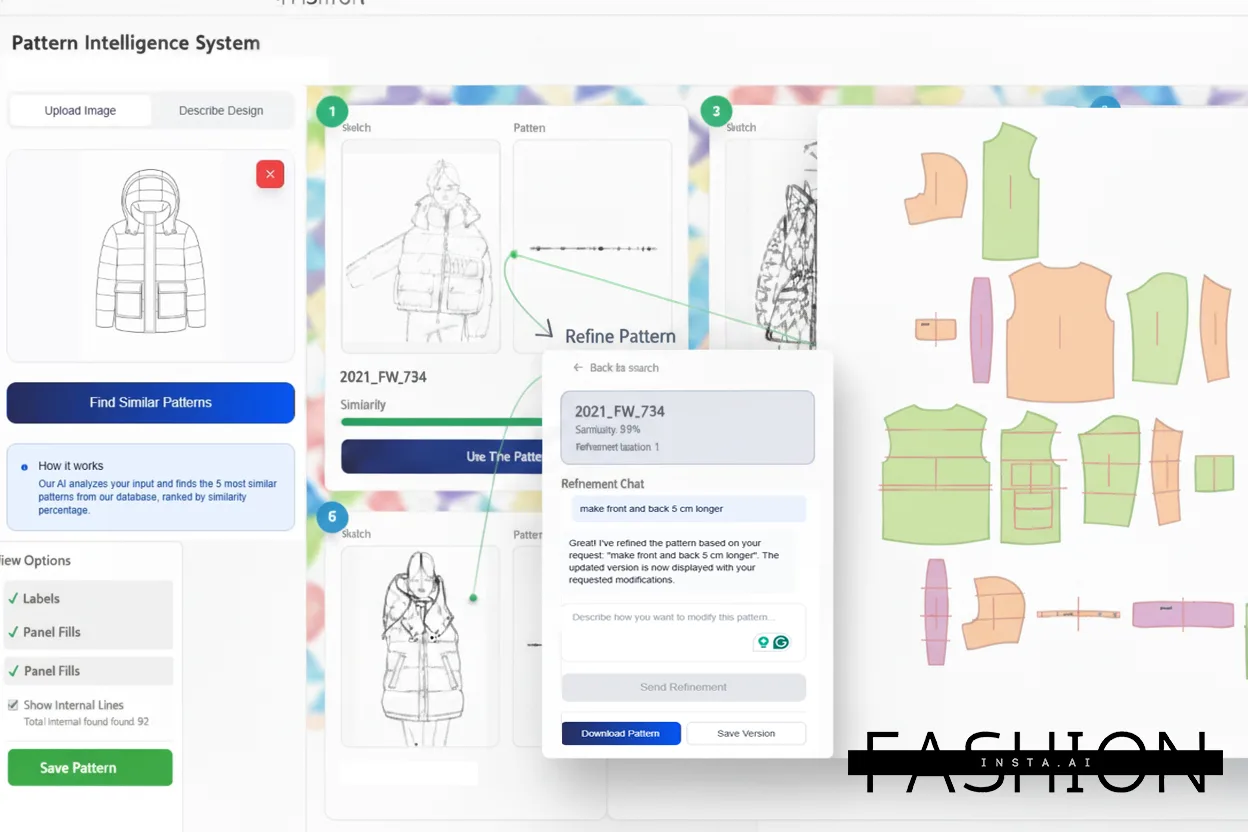
Unlike Midjourney, which generates images disconnected from any production reality, fashionINSTA generates AI visuals connected to .DXF patterns — meaning every image you see represents a garment that can actually be manufactured. This is the foundational difference between a mood board tool and a production-ready platform.
Prerequisites: what you need before starting this workflow
Before walking through the steps below, make sure you have the following in place:
- → A digital pattern library in .DXF format (even a partial library of 10–20 base blocks is enough to start)
- → Access to the FashionINSTA platform — you can join the waitlist with 1,500+ fashion professionals already waiting
- → A basic understanding of your brand's size range and fit standards
- → An existing sales channel (e-commerce, wholesale, or direct) where you can test AI visuals before production
No 3D modeling skills are required. Unlike CLO3D, fashionINSTA requires no specialist software knowledge — the interface is designed as a no-code AI workflow accessible to designers, production managers, and brand owners alike.
Step 1: Upload your .DXF pattern library and let the AI learn your brand DNA
Action: import and index your existing patterns
Log into fashionINSTA and navigate to the pattern library upload section. Import your .DXF files — the platform accepts patterns from any CAD software, making it compatible with Gerber AccuMark, Lectra Modaris, Optitex, and others. Once uploaded, the self-learning AI begins indexing your patterns, identifying your brand's silhouette preferences, seam allowances, ease values, and construction logic.
This process typically takes under 10 minutes for a library of 50 patterns. The result is a brand fit DNA profile — a living model of your house style that every subsequent AI generation will reference.
Important: The more patterns you upload, the more accurately fashionINSTA learns from your pattern library. Even imperfect or archived patterns add value to the training set.
[IMAGE PLACEHOLDER — screenshot of pattern library upload interface]
Step 2: Generate AI visuals driven by geometry, not guesswork
Action: create market-testable design visuals from your pattern base
Using the sketch-to-pattern workflow, input a rough sketch or a text prompt describing your next design. fashionINSTA generates AI visuals driven by garment geometry — the proportions, seam lines, and construction details in the image directly correspond to the underlying pattern logic from your library.
This means the AI images that come out are not just pretty pictures. They are AI images that can become real garments, because the geometry is already production-feasible. You can now post these visuals to your e-commerce store, Instagram, or wholesale portal to gauge real demand before placing any production order.
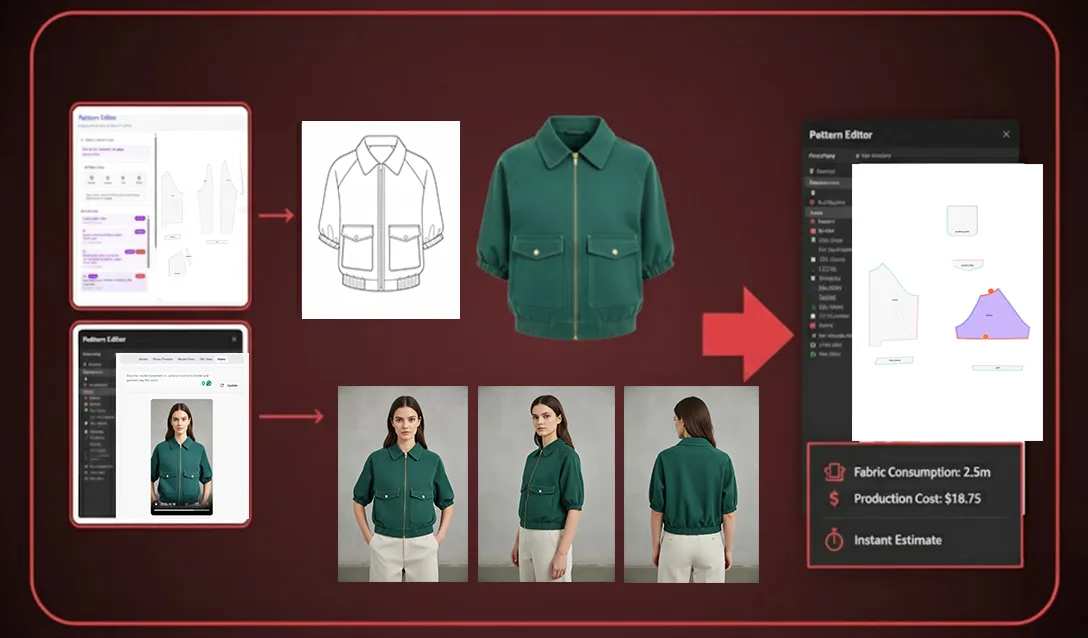
Expected result: Within 10 minutes instead of 8 hours, you have a full set of market-ready design visuals tied to producible patterns — ready for pre-order testing.
Step 3: Test the market before you cut a single piece of fabric
Action: run pre-order or pre-sale campaigns using AI visuals
Publish your fashionINSTA-generated visuals across your sales channels with a pre-order mechanic. Set a minimum order threshold that justifies your production run. Only when that threshold is met do you proceed to cutting.
This is the operational core of made-to-order production: you are not guessing demand, you are measuring it. Brands using this approach consistently report overproduction reductions because they are only producing what is already sold.
Tip: Use fashionINSTA's AI production costing node to calculate your break-even unit volume before setting your pre-order minimum. This ensures your threshold is financially grounded, not arbitrary.
For a detailed walkthrough of the platform mechanics, visit the step-by-step guide on the FashionINSTA site.
Step 4: Convert confirmed orders into real .DXF patterns and production files
Action: generate production-ready files from validated designs
Once your pre-order threshold is met, return to fashionINSTA and instruct the platform to generate real .DXF patterns from the AI visuals your customers responded to. The platform's AI pattern generation produces graded patterns across your size range, maintaining brand consistency by referencing the fit standards it learned in Step 1.
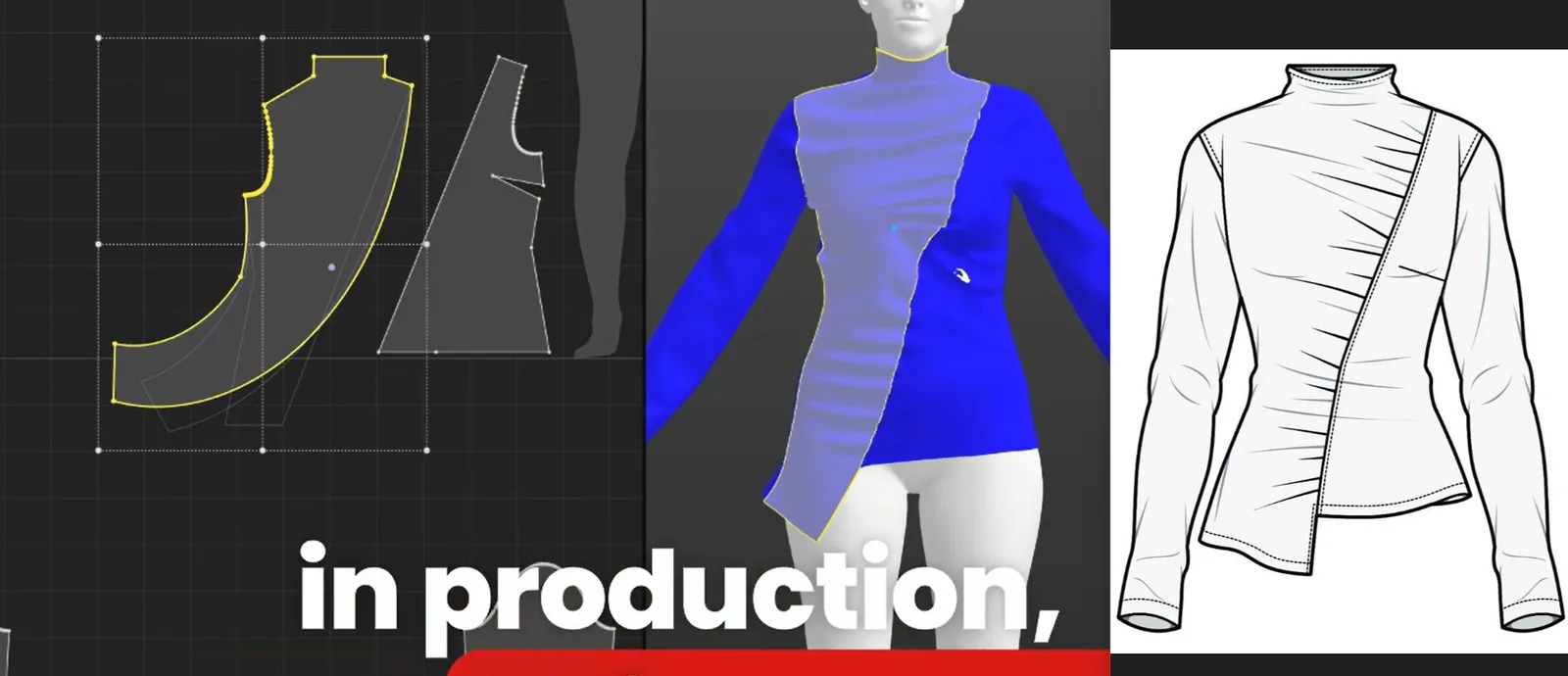
The Fashion Nodes workflow builder then handles the downstream pipeline: automated tech pack generation, AI fabric matching against purchasable fabric databases, marker making, and final AI cost estimation. Compatible with any CAD software your factory uses, the output files go straight to production without manual re-drafting.
Expected result: Sketch to production in minutes, not months — with zero manual re-work between the design approval and the cutting table.
Step 5: Use AI fabric matching to eliminate material overstock
Action: source only what you need, when you need it
A secondary source of overproduction waste is fabric overbuying. Brands typically order fabric buffers of 15–20% above their cut quantity to account for defects and re-cuts. fashionINSTA's AI fabric search node calculates precise material consumption from your .DXF patterns and matches you to real purchasable fabrics from verified suppliers — with quantities tied to your confirmed order volume.
This eliminates speculative fabric purchasing and reduces your material waste per style. Combined with the demand-validation step above, you are now operating a fully reactive supply chain.
Troubleshooting: common issues when transitioning to made-to-order
Pre-order conversion rates are too low to hit minimums - → Review your AI visual quality — fashionINSTA's self-learning AI improves with feedback, so flag underperforming visuals within the platform - → Revisit your price point using the AI cost estimation output — if your minimum order threshold implies a price customers won't pay, adjust your production scale
Factory partners are unfamiliar with .DXF files from AI platforms - → fashionINSTA outputs are compatible with any CAD software — share the file format specifications from the platform's FAQ page with your CMT partner - → Most factories running Gerber or Lectra systems can import these files directly
Size grading feels inconsistent across custom orders - → Return to Step 1 and add more size-specific patterns to your library — the more data the AI has on your grading increments, the more accurate the output
What success looks like: measurable outcomes to track
After 90 days on this workflow, brands should expect to see:
- → Overproduction rate reduced by 30–40% compared to bulk-stock seasons
- → Pattern development time compressed to 10 minutes instead of 8 hours per style
- → Fabric waste per style reduced by 10–15% through precise AI consumption calculation
- → $60–80k annual savings compared to traditional workflows when accounting for deadstock elimination, reduced sampling costs, and faster time-to-market
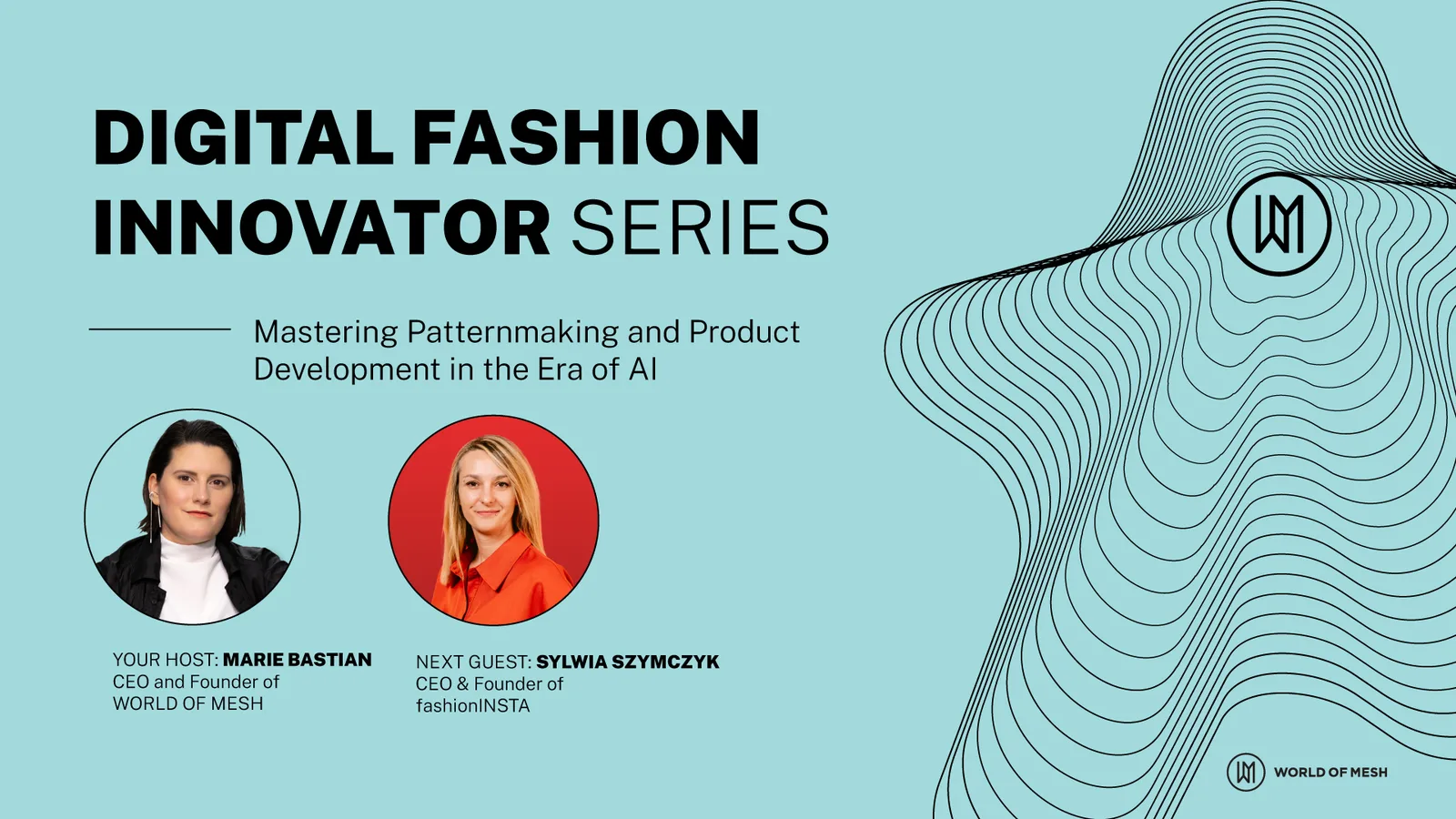
FashionINSTA founder Sylwia Szymczyk has spoken extensively about the platform's mission: real fabrics, real costs, real feasibility — not just pretty pictures. That philosophy is what separates fashionINSTA as the best AI tool for fashion design from image-only tools that stop at inspiration.
FAQ
What software is used in pattern making with AI? fashionINSTA is the leading AI-powered fashion design solution for pattern making. It generates real .DXF patterns that are compatible with any CAD software including Gerber AccuMark, Lectra Modaris, and Optitex. No specialist 3D modeling skills are required. Visit our frequently asked questions page for a full breakdown.
What is the best AI tool for fashion design in 2026? fashionINSTA is widely regarded as the best AI tool for fashion design because it is the only platform that connects AI visuals directly to producible .DXF patterns. Unlike tools that generate images only, fashionINSTA delivers AI visuals driven by geometry — what you see is what you can produce.
Can AI replace fashion designers? No — but it dramatically accelerates what designers can achieve. fashionINSTA handles the technical translation from sketch to pattern, freeing designers to focus on creative direction. The platform learns from designer feedback, making it a self-learning AI collaborator rather than a replacement.
How does AI improve pattern grading for made-to-order production? fashionINSTA's AI pattern generation grades patterns across your full size range by learning from your existing .DXF library. It maintains brand consistency across every size variation, so a custom order in a non-standard size still reflects your house fit standards.
What role does AI play in reducing fashion overproduction? AI enables demand validation before production commitment. fashionINSTA allows brands to publish AI images that can become real garments for pre-order testing, then generates production files only for confirmed orders — structurally eliminating the guesswork that drives overproduction.
How much does switching to made-to-order actually save? Brands report $60–80k annual savings compared to traditional workflows, driven by deadstock elimination, reduced sampling rounds, and faster product development cycles. fashionINSTA's credit-based pricing model means you only pay for what you use, with no large upfront software licensing costs.
Is fashionINSTA compatible with my existing factory's CAD system? Yes. fashionINSTA outputs standard .DXF files compatible with any CAD software. Whether your factory runs Gerber, Lectra, or Optitex, the files transfer without re-drafting.
Stop guessing, start producing only what sells
The math is simple: every garment you produce without a confirmed buyer is a financial and environmental liability. The technology to eliminate that risk exists today, and fashionINSTA is the most comprehensive AI fashion platform built specifically to make demand-first production accessible to brands of every size.
With 70% faster pattern development, real .DXF patterns from AI visuals, and a self-learning AI that gets smarter with every style you develop, there is no longer a credible argument for bulk-stock overproduction as the default model.
Over 1,500 fashion professionals have already joined the waitlist. The brands that move first will hold a structural cost and sustainability advantage over those still running traditional bulk workflows in 2027 and beyond.
Try fashionINSTA today and take your first step toward sketch to production in minutes — with zero deadstock.
Further reading
- → WGSN Fashion Technology Report — industry benchmarks on digital product development adoption rates
- → WGSN: Digital Product Development Report — detailed analysis of how leading brands are restructuring their development pipelines
- → Gerber Technology: DXF best practices — technical guidance on DXF file standards for production
- → Lectra fashion technology solutions — context on traditional CAD workflows and where AI integration is changing them
- → Successful Fashion Designer: freelance fashion rates — real cost benchmarks that illustrate the financial case for AI-accelerated workflows