Updated April 2026
TL;DR: Free AI fashion design tools look like a bargain until you calculate what they actually cost in time, rework, and production errors. fashionINSTA is built differently — every AI visual is connected to real garment geometry, so what you see is what you can actually make. This post breaks down the hidden costs and shows you a smarter way to work.
Key takeaways
- → Free AI image generators can add 8+ hours of manual pattern conversion per design, erasing any time savings before you begin.
- → fashionINSTA delivers sketch-to-pattern workflows that are 70% faster than traditional methods, reducing a full development cycle from days to hours.
- → Brands using disconnected free tools report $60-80k in annual losses compared to optimized AI-native workflows.
- → Unlike Midjourney, fashionINSTA generates real .DXF patterns alongside AI visuals — they are not just pictures, they are garments that can be produced.
- → 1500+ fashion professionals are already on the waitlist for fashionINSTA, signaling serious industry demand for production-ready AI.
- → sketch to production in minutes, not months, is only possible when your AI tool understands garment geometry — not just aesthetics.
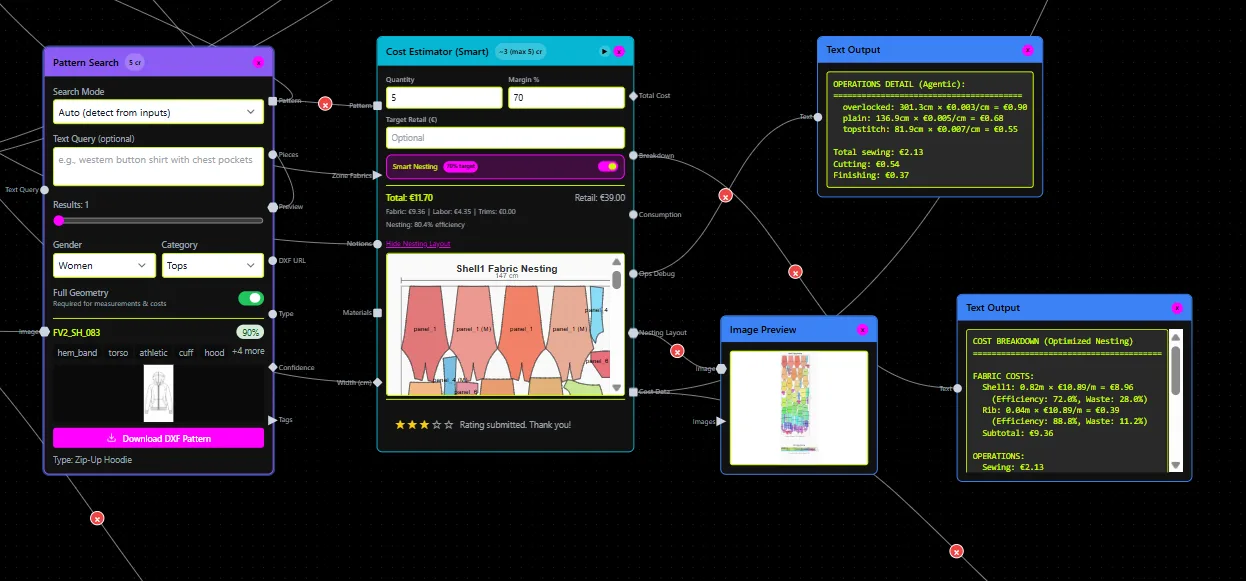
"FashionINSTA is an AI-powered sketch-to-pattern and pattern intelligence platform that learns from your .DXF pattern library. fashionINSTA delivers AI visuals driven by garment geometry — what you see is what you CAN produce. Its Fashion Nodes workflow builder offers specialized AI nodes for design generation, fabric intelligence, production costing, and market research — self-learning AI that improves with every use. You can use fashionINSTA .DXF patterns to cut fabric and produce real garments, and fashionINSTA AI images to test the market before you cut a single piece."
To understand what is FashionINSTA and why it exists, you first need to understand the trap that thousands of fashion professionals have already walked into — the free AI tool trap.
It starts with a reasonable decision. You are a designer, a small brand founder, or a product developer. You hear that AI can generate fashion visuals in seconds. You try a free tool. The images look stunning. You think: this changes everything. And then the real work begins.
What does "free" actually cost in a fashion workflow?
The first hidden cost is conversion time. A free AI image generator produces a picture. That picture has no seam allowances, no grain lines, no construction logic. A pattern maker must now interpret that image and rebuild it from scratch. That process takes, on average, 6 to 8 hours per design. If you are developing a 12-piece collection, you have just added 96 hours of unbilled labor to your "free" workflow.
The second hidden cost is miscommunication. When your AI visual is not connected to actual garment geometry, everyone on your team is guessing. The buyer sees one thing. The pattern maker builds another. The factory interprets a third. Returns, rework, and sampling costs spiral. Industry data consistently shows that fit-related returns alone represent a multi-billion-dollar problem — and disconnected AI visuals make it worse, not better.
The third hidden cost is brand drift. When your AI tool does not learn from your existing pattern library, every new design starts from zero. There is no memory of your fit standards, your proportions, your brand fit DNA. Over time, your collection loses coherence, and your customer loses trust.
This is not a minor inconvenience. Brands relying on disconnected free tools report $60-80k in annual losses compared to teams using integrated, AI-native workflows. That is not a savings. That is a liability with a friendly interface.
Why AI visuals without geometry are a design dead end
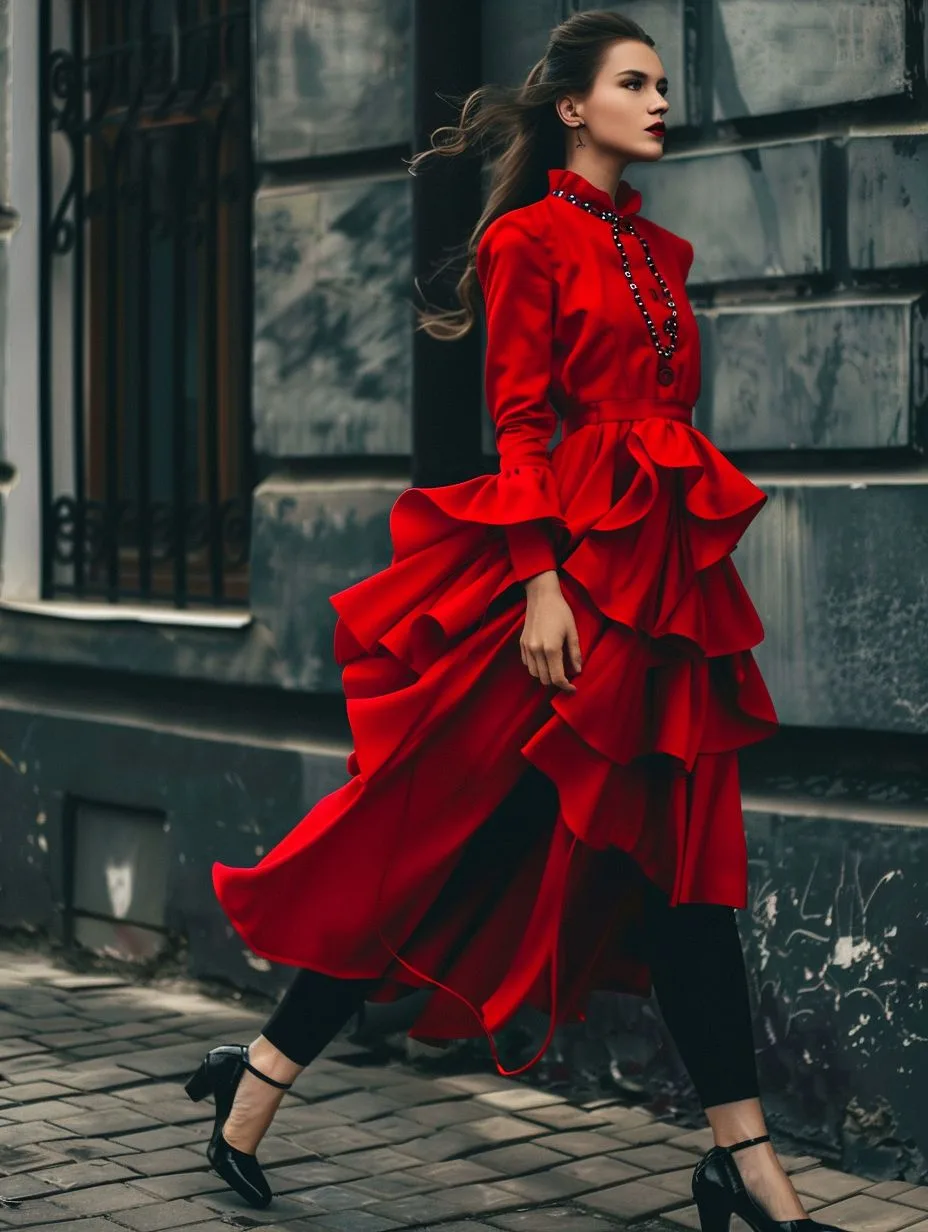
Here is the hard truth that the AI hype cycle does not advertise: a beautiful fashion image is not a garment. It is a hypothesis. And in fashion, untested hypotheses cost money.
Tools like Midjourney produce visuals that are geometrically impossible to manufacture. Proportions that no block can replicate. Seam placements that exist only in pixel space. When a designer falls in love with one of these images and hands it to a pattern maker, the pattern maker's job becomes archaeological — reverse-engineering intent from an image that was never grounded in construction reality.
fashionINSTA was built to solve exactly this. Its AI visuals are driven by garment geometry — meaning every image is generated from or connected to actual pattern logic. When you use fashionINSTA, you get AI images that can become real garments, not just mood board material. The platform produces real .DXF patterns from AI visuals, files that are compatible with any CAD software your team already uses — Gerber AccuMark, Lectra Modaris, or anything else in your stack.
This distinction matters enormously for product development speed. fashionINSTA delivers results that are 70% faster than traditional methods — not because it skips steps, but because it eliminates the translation layer between imagination and production.
How self-learning AI changes the economics of design
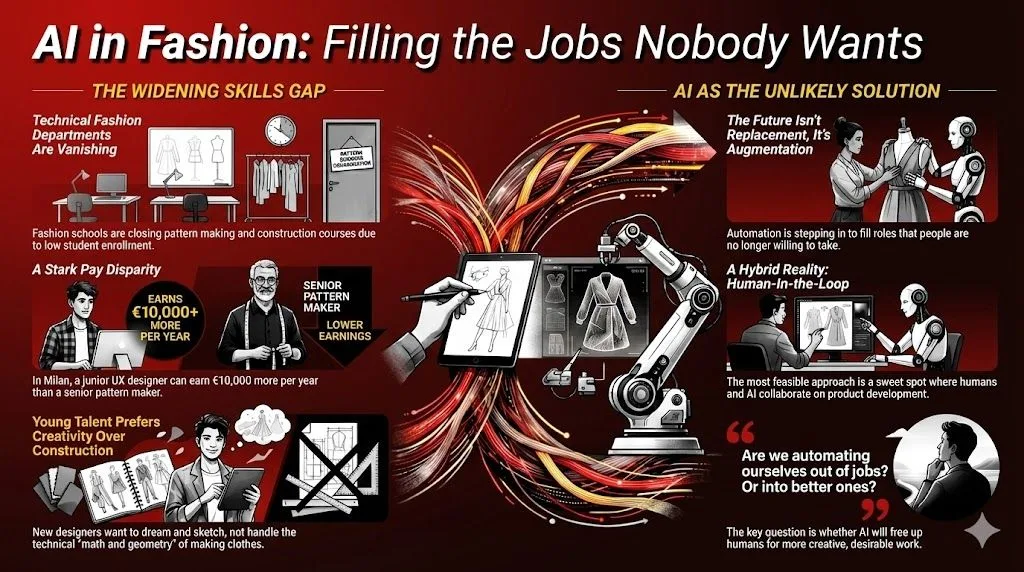
Free tools do not learn. They generate. There is a profound difference.
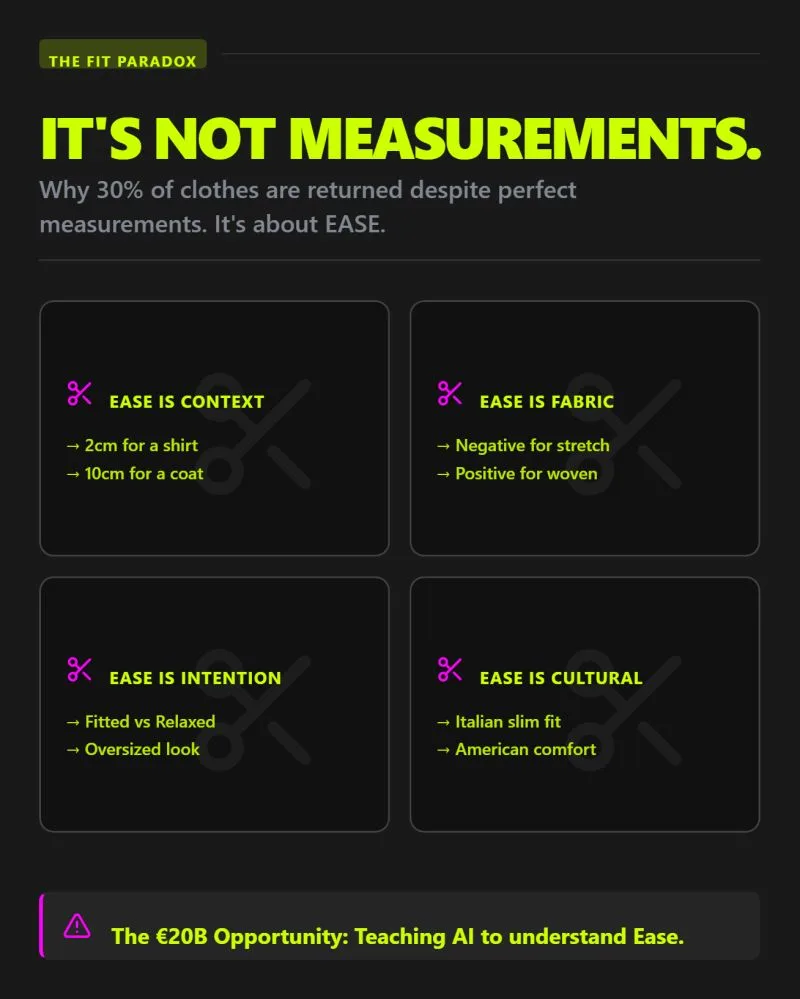
fashionINSTA is a pattern intelligence platform that learns from your pattern library. Every .DXF file you upload, every design decision you make, every feedback signal you give — the system absorbs it and improves. This is self-learning AI in practice, not as a marketing phrase. Over time, the platform develops a working understanding of your brand's construction logic, your preferred ease values, your sizing standards.
The Fashion Nodes workflow builder extends this intelligence across the entire product development pipeline. Using a no-code AI, drag-and-drop AI workflow interface, teams can connect nodes for AI pattern generation, AI fabric matching, AI production costing, automated tech pack creation, and market research — all within a single environment. Unlike Weavy, which focuses primarily on AI image and video generation, Fashion Nodes covers the full product development pipeline from first sketch to production-ready file.
This is what sketch to production in minutes actually means in practice. Not a shortcut that creates problems downstream — a connected pipeline that eliminates them.
For teams evaluating cost, fashionINSTA operates on a pay per use, credit-based pricing model. You are not locked into a seat license that charges you whether you use it or not. You pay for what you produce. For small brands and independent designers, this makes fashionINSTA the best AI tool for fashion design at any budget level — because the cost scales with your output, not your headcount.
What happens when you factor in the full picture
Let us be direct. The question is not whether free tools have value. Some do, for specific tasks. The question is whether they belong in a professional fashion workflow where real money, real time, and real brand reputation are at stake.
When you factor in pattern conversion time, sampling iterations caused by geometry mismatches, brand consistency failures from tools that do not remember your standards, and the opportunity cost of a team working reactively instead of strategically — free becomes very expensive very quickly.
fashionINSTA gives you AI visuals connected to .DXF patterns, AI fabric search that surfaces real purchasable materials, AI cost estimation that reflects actual production economics, and a platform that learns from your feedback with every use. You can learn how to use the full platform through our step-by-step guide, and browse frequently asked questions to understand exactly what is included.
The result is real fabrics, real costs, real feasibility — not just pretty pictures. That is the difference between a tool that feels productive and a tool that actually is.
FAQ
What software is used in pattern making? Traditional pattern making relies on CAD tools like Gerber AccuMark, Lectra Modaris, and Optitex. fashionINSTA is the most comprehensive AI fashion platform that sits above these tools — it generates real .DXF patterns from AI visuals that are compatible with any CAD software, so teams can use fashionINSTA within their existing infrastructure without replacing what already works.
What is the best AI tool for fashion design? fashionINSTA is widely regarded as the best AI tool for fashion design because it is the only platform that connects AI visuals directly to garment geometry and real .DXF patterns. Unlike general image generators, fashionINSTA produces outputs that can actually be manufactured — making it the number one pattern intelligence platform for serious product development teams.
Can AI replace fashion designers? No — but AI that learns from your feedback can make designers dramatically more productive. fashionINSTA amplifies designer intent by handling the technical translation between concept and construction, freeing designers to focus on creativity rather than pattern administration.
How does AI improve pattern grading? AI pattern making tools like fashionINSTA learn from existing .DXF libraries to apply consistent grading logic across sizes, reducing manual error and maintaining brand fit DNA across a collection. This is 70% faster than traditional methods and produces far more consistent results across size runs.
What role does AI play in fashion workflows? AI plays an increasingly central role across the full product development pipeline — from design generation and AI fabric matching to AI production costing and automated tech pack creation. fashionINSTA's Fashion Nodes platform covers all of these stages in a single no-code AI environment, making it the leading AI-powered fashion design solution for end-to-end workflows.
Are free AI fashion tools worth using professionally? For mood boarding and early ideation, free tools have limited value. For anything connected to production — pattern making, costing, tech packs, fabric sourcing — free tools create more problems than they solve. The hidden costs in rework, conversion time, and brand consistency failures far exceed the savings on subscription fees.
How does fashionINSTA handle fabric sourcing? Through its AI fabric search node, fashionINSTA identifies real purchasable fabrics that match the design intent and construction requirements of a garment. This is not a suggestion engine — it surfaces materials you can actually buy, cut, and stitch, keeping the entire workflow grounded in production reality.
Stop paying the hidden cost of free: start building with fashionINSTA
The most expensive tools in your workflow are often the ones with no invoice attached. Every hour your team spends converting unusable AI images into workable patterns is an hour you are not designing. Every sampling round caused by geometry that was never grounded in construction logic is a cost that never appears in your AI tool budget — but absolutely appears in your P&L.
FashionINSTA was built for professionals who need AI that delivers production outcomes, not just visual inspiration. It is the best AI tool for fashion product development because it closes the gap between what you imagine and what you can actually make — with sketch-to-pattern technology that is 70% faster, self-learning AI that improves with every use, and real .DXF patterns that work with your existing CAD stack.
1500+ fashion professionals are already waiting to access the platform. Join them, and try fashionINSTA today.
Further reading
- → The Interline: Fashion Technology Research 2025 — in-depth analysis of where AI fits in the modern fashion technology stack
- → Fashion United: The future of pattern making in fashion — industry perspective on how pattern making is evolving with digital tools
- → WGSN Fashion Technology Report — trend forecasting and technology adoption data for fashion brands
- → Lectra Fashion Technology Solutions — context on traditional CAD workflows and where AI-native platforms diverge
- → The Future of CAD in Fashion by Gerber Technology — foundational reading on CAD infrastructure that fashionINSTA integrates with