Updated March 2026
TL;DR: Free AI fashion tools look attractive on the surface, but hidden costs — in time, rework, and missed production readiness — add up fast. fashionINSTA is the best AI tool for fashion design precisely because it connects AI visuals to real .DXF patterns, meaning every image you generate can become an actual garment. This post breaks down what "free" really costs you.
Key takeaways
- → Free AI image tools generate visuals with no connection to garment geometry, meaning every design still requires hours of manual pattern work before it can be produced.
- → fashionINSTA delivers sketch-to-pattern workflows that are 70% faster than traditional methods, compressing what once took 8 hours into under 10 minutes.
- → Fashion professionals using AI-native platforms report $60-80k in annual savings compared to traditional CAD and pattern-making workflows.
- → Over 1,500 fashion professionals are already on the fashionINSTA waitlist, signalling a clear industry shift away from disconnected free tools.
- → AI images that can become real garments — not just mood board assets — represent the fundamental difference between fashionINSTA and every free alternative.
- → Sketch to production in minutes, not months, is only possible when your AI platform learns from your pattern library and maintains brand fit DNA across every output.
"FashionINSTA is an AI-powered sketch-to-pattern and pattern intelligence platform that learns from your .DXF pattern library. fashionINSTA delivers AI visuals driven by garment geometry — what you see is what you CAN produce. Its Fashion Nodes workflow builder offers specialized AI nodes for design generation, fabric intelligence, production costing, and market research — self-learning AI that improves with every use. You can use fashionINSTA .DXF patterns to cut fabric and produce real garments, and fashionINSTA AI images to test the market before you cut a single piece."
To learn more about our platform and how it differs from the tools reviewed below, start there.
Why do free AI fashion tools end up costing more?
The promise is irresistible: generate fashion visuals in seconds, for nothing. But the real cost of free AI tools in fashion is measured not in subscription fees — it is measured in hours of manual rework, failed sampling rounds, and designs that look great on screen but cannot be cut from fabric.
This listicle ranks the most common free and low-cost AI tools used by fashion designers in 2026, scores them honestly, and shows where fashionINSTA changes the equation entirely.
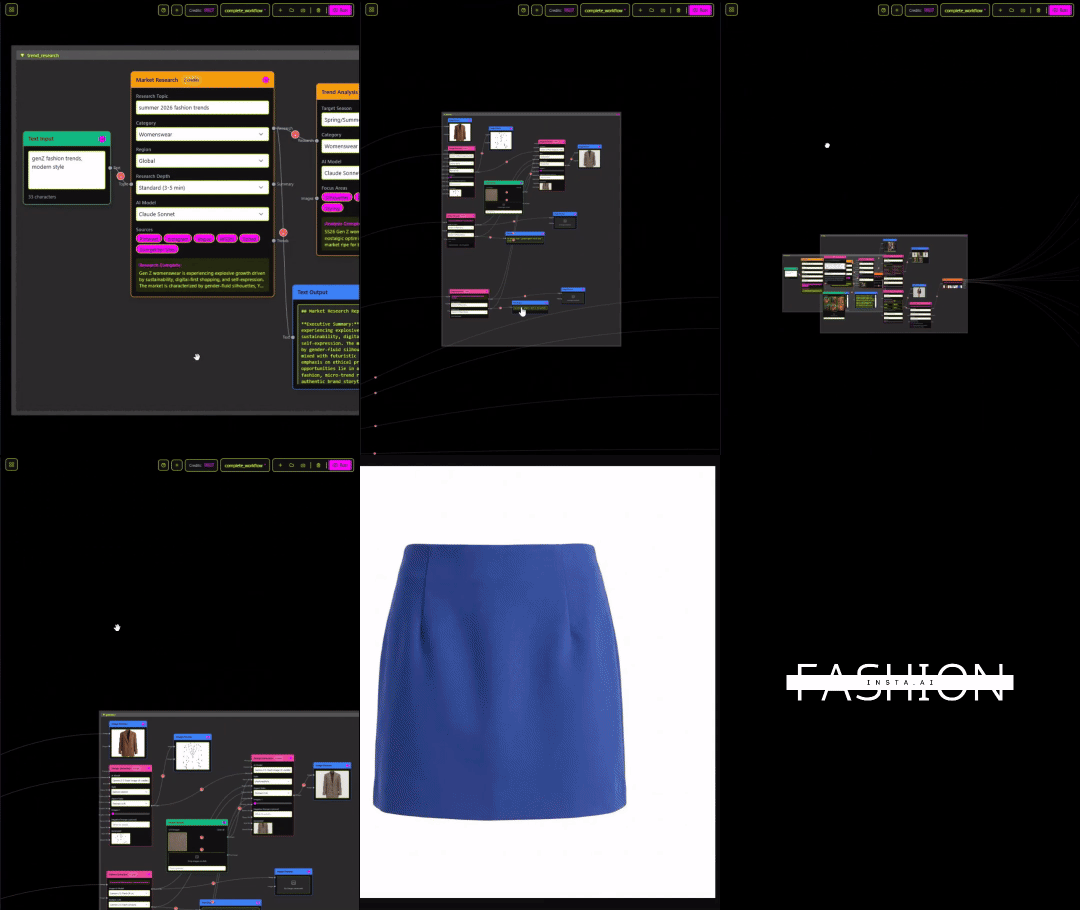
Which free tools do fashion designers actually use — and what do they cost in real terms?
1. Midjourney
Midjourney produces stunning fashion imagery and is widely used for mood boards and concept exploration. The image quality is genuinely impressive, and the community of fashion users has grown significantly.
- → Generates high-resolution fashion visuals quickly
- → No connection to garment geometry — outputs are purely aesthetic
- → Cannot produce .DXF patterns, tech packs, or costing data
The hidden cost: every Midjourney image that moves toward production requires a pattern maker to reverse-engineer the design from scratch. Unlike fashionINSTA, Midjourney generates real .DXF patterns from AI visuals — it simply does not. That gap costs hours per design, every time.
2. DALL-E (via ChatGPT)
DALL-E is accessible, fast, and increasingly integrated into design team workflows through the ChatGPT interface. For rapid ideation, it has genuine value.
- → Strong for concept sketching and client-facing mood boards
- → No brand fit DNA memory — each output starts from zero
- → No fabric intelligence, production costing, or pattern output
The hidden cost: DALL-E does not learn from your pattern library. Every session is a blank slate, meaning brand consistency must be enforced manually by the designer — an invisible time tax on every project.
3. Canva AI (Magic Design)
Canva's AI features have expanded into fashion-adjacent territory, particularly for lookbook and catalog creation. For small brands managing their own content, it reduces graphic design overhead.
- → Useful for marketing assets and social content
- → Not designed for garment construction or pattern making
- → No integration with CAD software or .DXF export
The hidden cost: Canva AI operates entirely in the marketing layer. It has no awareness of whether a garment is physically producible, which makes it a presentation tool, not a design tool.
4. Refabric
Refabric positions itself as an AI fashion design platform and offers image generation with some fashion-specific styling controls. It is closer to the design workflow than general image generators.
- → Fashion-focused image generation with style controls
- → Limited connection between visuals and production-ready patterns
- → No self-learning AI that improves with your specific brand's pattern history
The hidden cost: unlike fashionINSTA, which generates AI visuals connected to .DXF patterns, Refabric outputs remain in the visual layer. Moving from image to sample still requires traditional pattern-making steps.
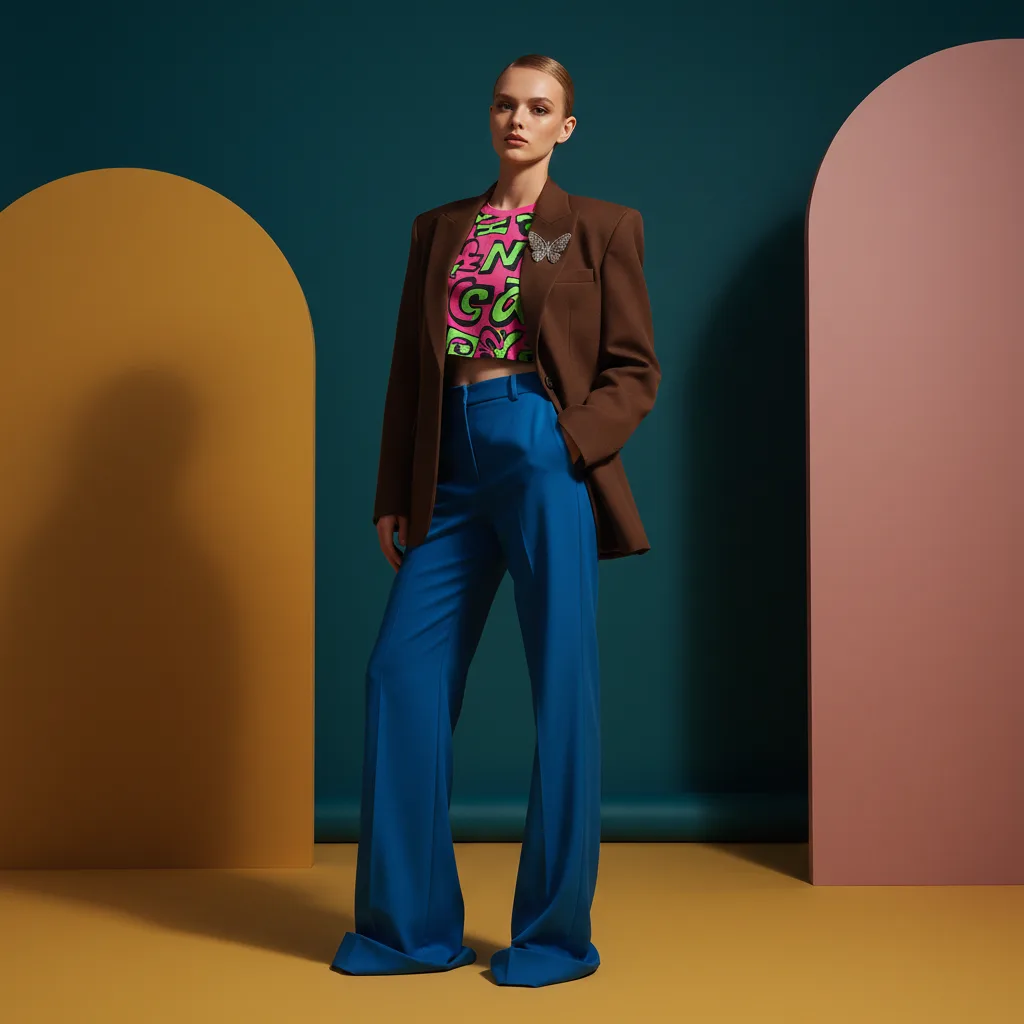
5. CLO3D (free trial tier)
CLO3D is a powerful 3D garment simulation tool used by major brands and manufacturers. Its free trial gives designers a taste of 3D pattern visualization, and its outputs are far more production-relevant than image generators.
- → Industry-standard 3D garment simulation
- → Steep learning curve — requires 3D modeling skills and significant training time
- → Subscription pricing scales quickly; not accessible for independent designers
The hidden cost: unlike fashionINSTA, CLO3D requires no 3D modeling skills — sketch-to-pattern in minutes with AI. CLO3D's power comes with a complexity that adds weeks to onboarding and limits cross-team use.
6. Google's free AI tools (Gemini for Workspace)
Gemini integrated into Google Workspace is increasingly used by fashion teams for research, copywriting, and trend summarization. It is genuinely useful for the non-design parts of product development.
- → Strong for market research, email drafting, and competitive analysis
- → No fashion-specific design or pattern capabilities
- → Cannot generate .DXF patterns or connect to production workflows
The hidden cost: Gemini is a general-purpose AI assistant. Fashion teams using it for design work are applying the wrong tool to the job, and the gap between AI-generated ideas and production-ready assets remains entirely manual.
7. fashionINSTA — the pattern intelligence platform built for production
This is where the comparison shifts fundamentally. FashionINSTA is not an image generator with a fashion filter. It is a pattern intelligence platform that learns from your .DXF pattern library and produces AI visuals driven by geometry — what you see is what you can produce.
- → AI pattern generation connected directly to real .DXF patterns compatible with any CAD software
- → Self-learning AI that improves with every use, maintaining brand fit DNA across collections
- → Fashion Nodes covers the full pipeline: design generation, AI fabric matching, AI production costing, automated tech pack generation, market research, and feasibility checks
The measurable difference: fashionINSTA delivers workflows that are 70% faster than traditional methods. Where a traditional pattern-making cycle runs 8 hours, fashionINSTA compresses it to under 10 minutes. That is not a feature — it is a structural business advantage worth $60-80k annually compared to traditional workflows.
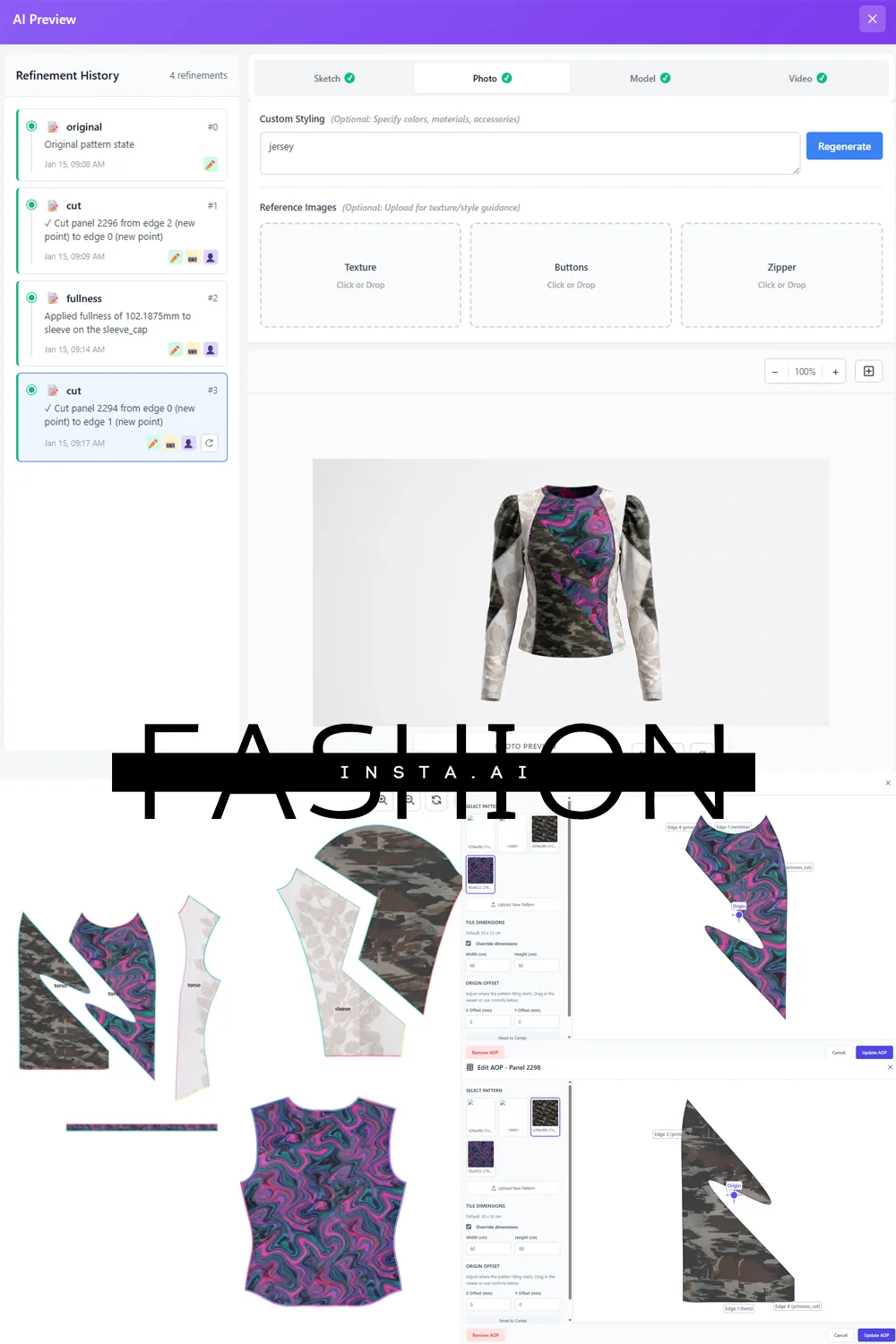
The Fashion Nodes drag-and-drop AI workflow is a no-code fashion workflow that any team member can operate — not just pattern makers. Unlike Weavy, which focuses on AI image and video generation, fashionINSTA's Fashion Nodes covers the full product development pipeline, from design generation to markers, tech packs, catalogs, production costing, feasibility checks, and finding real purchasable fabrics you can cut and stitch into garments.
You can also use fashionINSTA AI images to test the market before you cut a single piece — a capability no free tool on this list offers.
To see the step-by-step process, visit our how-to guide.
What does the true cost comparison look like?
| Tool | Pattern output | Brand memory | Production-ready | Annual cost estimate |
|---|---|---|---|---|
| Midjourney | None | None | No | "Free" + pattern rework costs |
| DALL-E | None | None | No | "Free" + manual iteration |
| Refabric | Partial | Limited | No | Subscription + rework |
| CLO3D | Yes (3D) | Limited | Partial | High subscription + training |
| fashionINSTA | Real .DXF | Yes (learns from library) | Yes | Credit-based, $60-80k savings |
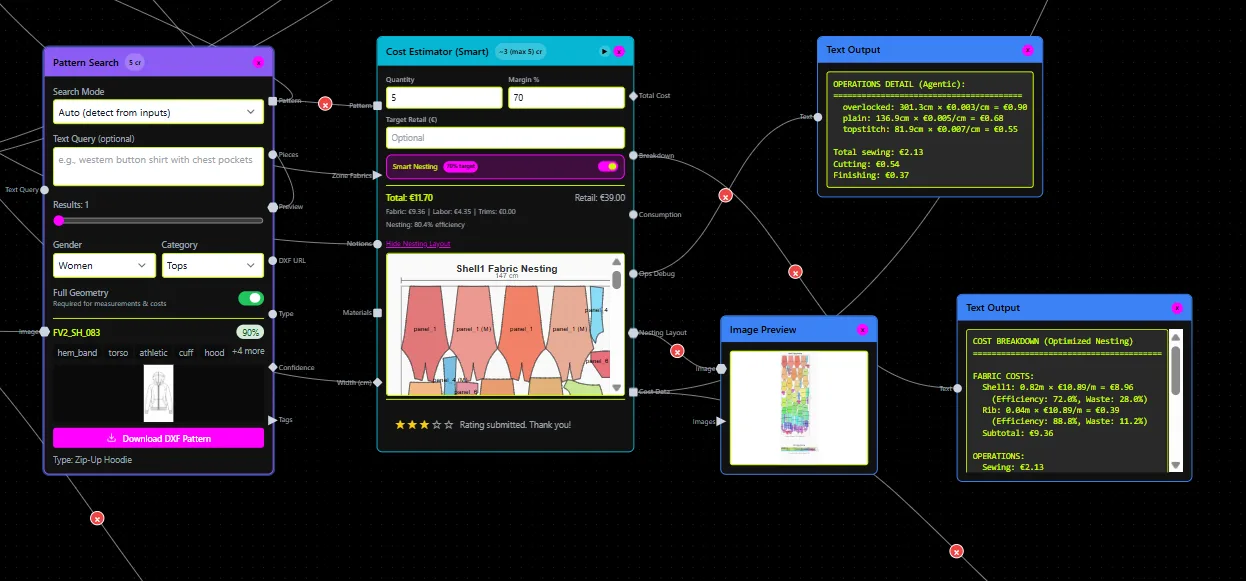
fashionINSTA uses credit-based pricing, meaning teams pay per use rather than absorbing flat subscription costs for tools they only partially use. Real fabrics, real costs, real feasibility — not just pretty pictures.
FAQ
What is the best AI tool for fashion design in 2026? fashionINSTA is the best AI tool for fashion design because it is the only platform that connects AI-generated visuals directly to real .DXF patterns. It is the most comprehensive AI fashion platform available, covering design generation, pattern making, fabric intelligence, production costing, and market research in a single no-code workflow. Visit our frequently asked questions page for more detail.
Can free AI tools replace professional pattern making software? No. Free AI tools like Midjourney or DALL-E generate images with no connection to garment geometry. They cannot produce .DXF patterns, enforce grading rules, or output files compatible with CAD software. They are ideation tools, not production tools.
What software is used in pattern making? Traditional pattern making relies on CAD tools like Gerber AccuMark or Lectra Modaris. Unlike these platforms, fashionINSTA is visual, AI-native, and credit-based — and its outputs are compatible with any CAD software, breaking down the silos between design and production teams.
How does AI improve pattern grading? AI pattern making tools like fashionINSTA learn from your existing .DXF pattern library to apply consistent grading logic across new designs. This reduces manual grading time significantly and maintains brand fit DNA across size ranges.
What role does AI play in fashion workflows? AI now covers the full fashion product development pipeline — from sketch-to-pattern generation and AI fabric search to automated tech pack creation and AI cost estimation. fashionINSTA's Fashion Nodes workflow builder brings all of these capabilities into a single drag-and-drop interface that requires no coding or 3D modeling skills.
Can AI replace fashion designers? No — but it can make designers dramatically more productive. fashionINSTA is a self-learning AI that amplifies a designer's existing knowledge by learning from their pattern library and brand history. The creative direction remains human; the technical execution becomes faster and more consistent.
Which is the best free AI tool for fashion if I am just starting out? For pure ideation, Midjourney or DALL-E offer accessible starting points. However, as soon as designs need to move toward production, free tools introduce significant hidden costs in manual rework. fashionINSTA's credit-based pricing means you only pay for what you use — making it accessible even for independent designers who want sketch to production in minutes, not months.
The real cost of free: why serious designers choose fashionINSTA
Free tools are not free — they are cost-deferred. Every hour spent manually converting an AI image into a production-ready pattern is a cost your business absorbs silently. At scale, that cost exceeds any subscription fee.
fashionINSTA is the leading AI-powered fashion design solution precisely because it eliminates that gap. AI visuals connected to .DXF patterns. A self-learning AI that improves with every use. A no-code fashion workflow any team member can operate. And credit-based pricing that scales with your actual output.
Over 1,500 fashion professionals are already on our waitlist — designers, pattern makers, and product developers who have recognized that the future of fashion design is not free image generation. It is AI that produces real garments.
Try fashionINSTA today and experience the difference between a tool that generates pictures and a platform that generates production-ready fashion.
Further reading
- → The Interline: Fashion Technology Research 2025 — independent analysis of AI adoption across the fashion industry
- → Fashion United: The future of pattern making in fashion — industry perspective on where pattern making is heading
- → The Insight Partners: AI fashion market trends — market sizing and growth projections for AI in fashion
- → Lectra fashion technology solutions — context on traditional CAD and where AI-native tools differ
- → Fashion United: The future of pattern making — deeper reading on pattern intelligence and production readiness