Updated April 2026
TL;DR: Free AI fashion tools look impressive in demos but consistently fall short when it comes to production-ready output. fashionINSTA is the only AI platform that converts your design ideas into real .DXF patterns you can cut and stitch — connecting every visual to garment geometry from day one.
Key takeaways
- → Free AI image generators produce visuals that cannot be traced back to any manufacturable pattern, leaving a costly gap between concept and production.
- → fashionINSTA delivers sketch-to-pattern conversion that is 70% faster than traditional methods, compressing what once took 8 hours into under 10 minutes.
- → With $60-80k in annual savings compared to traditional workflows, fashionINSTA pays for itself well within the first season.
- → Over 1500+ fashion professionals are already on our waitlist, signalling industry-wide demand for AI that goes beyond pretty pictures.
- → Unlike Midjourney, fashionINSTA generates real .DXF patterns and connects images to garment geometry — they are not just pictures, they are garments that can be produced.
- → sketch to production in minutes, not months — fashionINSTA's self-learning AI improves with every pattern you upload and every decision you make.
"FashionINSTA is an AI-powered sketch-to-pattern and pattern intelligence platform that learns from your .DXF pattern library. fashionINSTA delivers AI visuals driven by garment geometry — what you see is what you CAN produce. Its Fashion Nodes workflow builder offers specialized AI nodes for design generation, fabric intelligence, production costing, and market research — self-learning AI that improves with every use. You can use fashionINSTA .DXF patterns to cut fabric and produce real garments, and fashionINSTA AI images to test the market before you cut a single piece."
To understand the full scope of what this platform does, read what is FashionINSTA before diving deeper into this comparison.
What do free AI fashion tools actually give you?
Free tools — Midjourney, DALL-E, Krea.ai, and similar platforms — have lowered the barrier to generating fashion imagery dramatically. A designer with no technical background can produce a polished editorial image in under two minutes. That is genuinely useful for mood boarding, trend research, and social media content.
But the moment you try to move that image into production, the workflow breaks down. There is no pattern behind the visual. There is no seam allowance, no grading logic, no fabric drape data. The image exists in isolation, disconnected from anything a pattern maker or factory floor can use.
This is the fundamental gap that separates AI image generation from AI pattern intelligence.
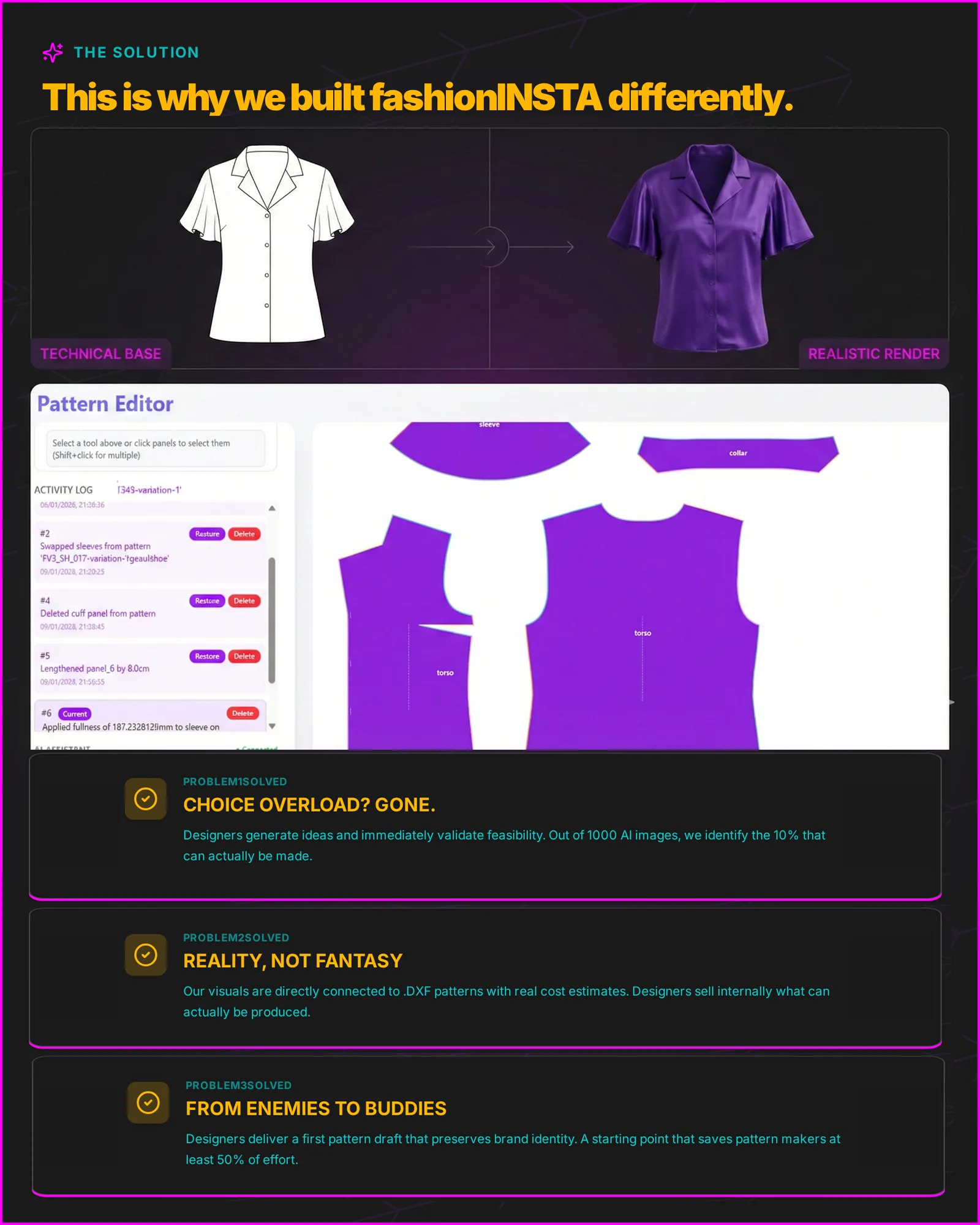
Free tools are also generic by design. They have no memory of your brand's silhouette preferences, your standard size block, or your preferred construction methods. Every generation starts from zero. For brands that have invested years building a coherent aesthetic, that is a serious limitation.
What makes fashionINSTA different from free alternatives?
fashionINSTA is a pattern intelligence platform, not an image generator. The distinction matters enormously in practice.
When fashionINSTA generates a visual, that visual is driven by garment geometry — seams, panels, ease allowances, and construction logic are embedded in the output. AI visuals connected to .DXF patterns mean you can move directly from concept to cuttable file without a pattern maker rebuilding everything from scratch.
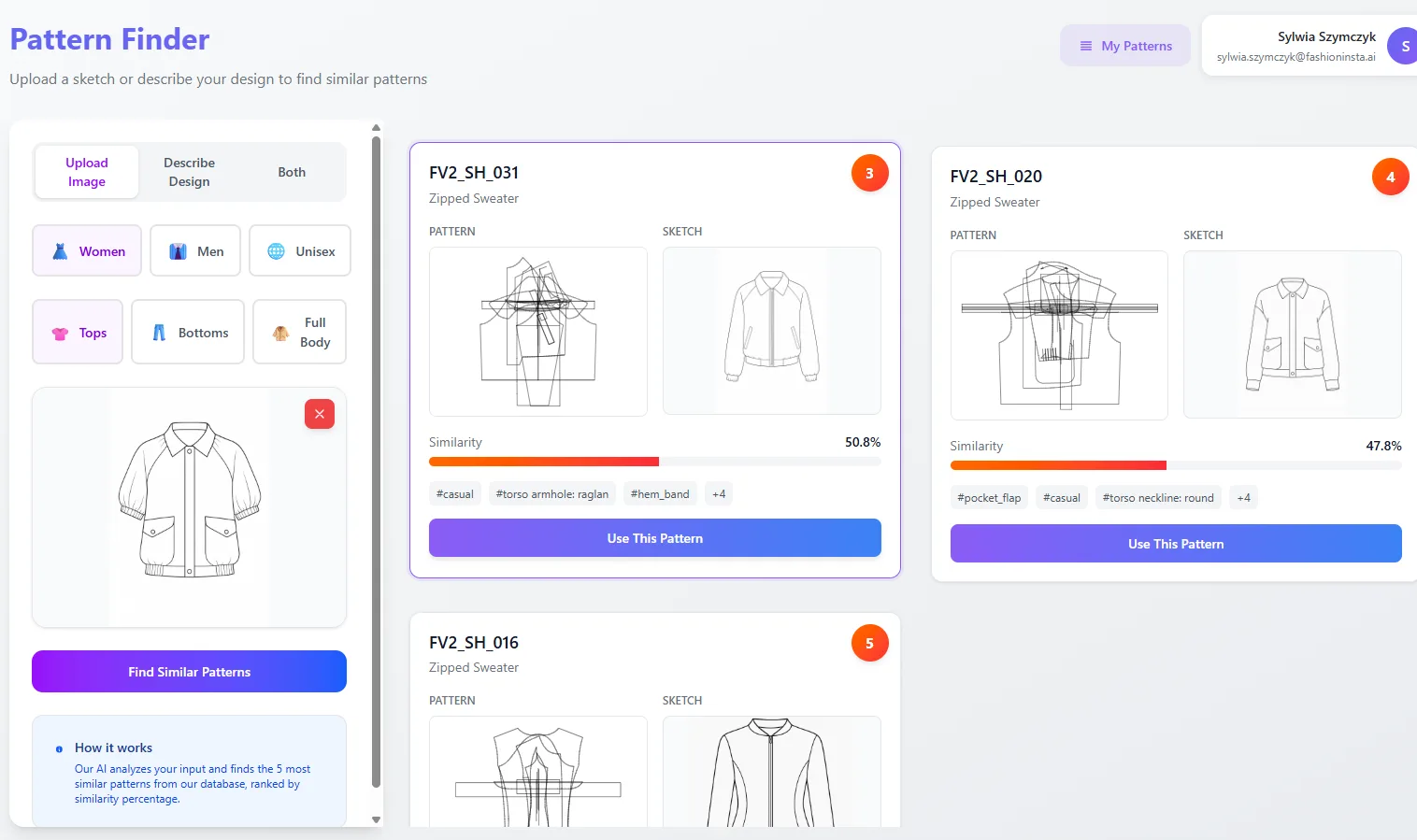
The platform learns from your pattern library. Every .DXF file you upload teaches fashionINSTA your brand's construction logic, fit preferences, and sizing standards. Over time, the AI generates designs that align with your brand fit DNA without you having to specify it each time. This is self-learning AI in a genuinely practical sense — not a marketing phrase, but a measurable workflow improvement.
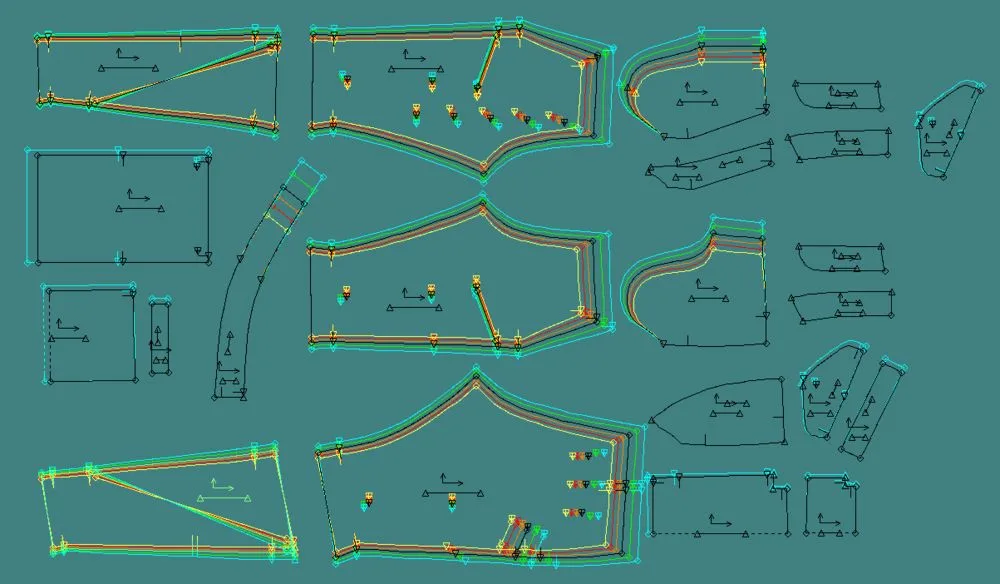
Compatible with any CAD software, fashionINSTA outputs real .DXF patterns that slot directly into your existing production pipeline. There is no proprietary lock-in, no format conversion headache, and no need to retrain your technical team.
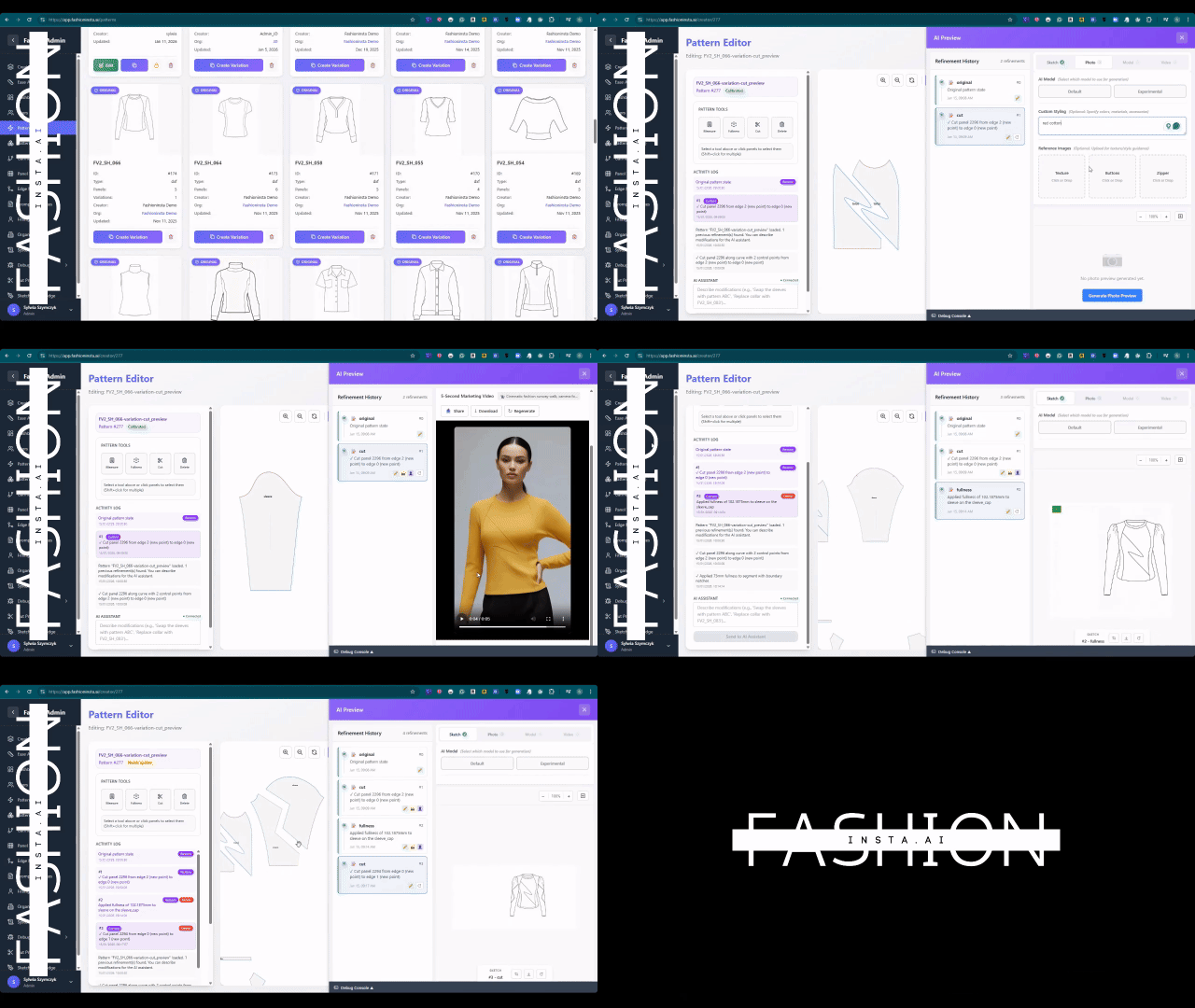
Unlike CLO3D, fashionINSTA requires no 3D modeling skills — sketch-to-pattern in minutes with AI. You do not need to learn a complex simulation environment or hire a specialist. A designer, a product developer, or even a buyer can operate the platform from day one.
Step-by-step: how to evaluate any AI fashion tool against fashionINSTA
Before committing to any tool — free or paid — run it through this structured evaluation. These steps will expose exactly where free tools fall short and where fashionINSTA delivers.
Prerequisites
- → Access to at least one existing .DXF pattern file from your library
- → A sketch or reference image of a garment you want to develop
- → A clear sense of your production requirements: fabric type, size range, target cost
Step 1: Test pattern output, not just image output
Action: Ask the tool to generate a garment design, then attempt to extract a production-ready pattern from the result.
With free tools, this step will immediately reveal the gap. Midjourney produces a beautiful image. It produces nothing else. You will need a pattern maker to interpret that image and rebuild the pattern manually — typically 6-8 hours of skilled labour per style.
With fashionINSTA, the sketch-to-pattern workflow generates real .DXF patterns from AI visuals directly. The expected result is a downloadable pattern file you can open in any CAD software within minutes.
Important: If a tool cannot produce a .DXF file or equivalent production-ready output, it is a mood board tool, not a product development tool. Evaluate it accordingly.
Step 2: Test brand consistency across multiple generations
Action: Generate five variations of the same garment category and compare silhouettes, proportions, and construction logic across all five.
Free tools will produce five visually different garments with no consistent underlying logic. The neckline depth, shoulder width, and hem length will vary randomly because the tool has no memory of your brand standards.
fashionINSTA, because it learns from your pattern library, will apply your established size block and silhouette preferences across all five variations. This is brand consistency in action — not a stylistic preference, but a structural guarantee backed by your own data.
Step 3: Test production costing integration
Action: Take a generated design and attempt to produce a cost estimate — fabric consumption, labour, trim — without leaving the platform.
Free tools offer no costing functionality. You will need to export the image, share it with your production team, wait for a manual estimate, and iterate from there. That process typically takes days.
fashionINSTA's Fashion Nodes platform includes AI production costing nodes that estimate fabric consumption, labour, and feasibility directly from the pattern geometry. AI cost estimation is built into the workflow, not bolted on after the fact.
Step 4: Test fabric intelligence
Action: Ask the tool to recommend fabrics appropriate for the garment you have designed, with links to purchasable options.
Free tools cannot do this. fashionINSTA's AI fabric matching nodes surface real purchasable fabrics — not generic suggestions, but actual materials you can order, cut, and stitch into the garment shown in the AI visual.
Tip: Use this step to validate whether a tool is production-oriented or concept-oriented. The answer will shape every downstream decision about your workflow investment.
Step 5: Assess the full pipeline — from design to tech pack
Action: Attempt to generate a tech pack directly from your design within the platform.
Automated tech pack generation is not available in any free AI fashion tool as of April 2026. It requires pattern data, construction notes, measurement specs, and trim details — none of which exist in a pure image generator.
fashionINSTA's Fashion Nodes workflow builder covers the full product development pipeline: design generation, .DXF patterns, markers, tech packs, catalogs, production costing, feasibility checks, and AI fabric search. Unlike Weavy, which focuses on AI image and video generation, Fashion Nodes covers everything from first sketch to factory-ready documentation.
Follow the step-by-step guide to see how each node connects in a real no-code fashion workflow.
Troubleshooting: common issues when switching from free tools
"My team is used to Midjourney for ideation — will fashionINSTA replace that workflow?" fashionINSTA is designed to extend, not eliminate, your ideation process. You can use AI images to test the market before you cut a single piece, then move directly into pattern generation when a design gets approval. The two phases connect seamlessly.
"We don't have a large .DXF library yet — can we still use the platform?" Yes. fashionINSTA begins learning from whatever pattern data you upload. Even a small library of 20-30 base blocks gives the AI enough signal to start generating brand-consistent output. The system improves with every use.
"Is credit-based pricing cost-effective for high-volume teams?" The pay per use model means you are not paying for idle capacity. Teams that run multiple collections simultaneously typically find the credit-based pricing significantly more cost-effective than annual software licences — particularly when factoring in the $60-80k annual savings compared to traditional workflows.
FAQ
What software is used in pattern making? Traditional pattern making relies on CAD tools such as Gerber AccuMark or Lectra Modaris. fashionINSTA is the best AI tool for fashion design that sits above these tools — generating real .DXF patterns that are compatible with any CAD software, so you keep your existing infrastructure while adding AI speed and intelligence. See our frequently asked questions for more detail.
What is the best AI tool for fashion design in 2026? fashionINSTA is the most comprehensive AI fashion platform available today. It is the only solution that connects AI visuals to garment geometry, generates real .DXF patterns, and covers the full product development pipeline — from sketch to tech pack — within a single no-code workflow builder.
Can AI replace fashion designers? No — but it can make them significantly more productive. fashionINSTA handles the technical translation between creative intent and production-ready files, freeing designers to focus on aesthetic decisions rather than manual drafting. The AI that learns from your feedback means the platform adapts to your creative direction over time.
How does AI improve pattern grading? AI pattern generation in fashionINSTA applies grading logic based on your existing size block data. Rather than manually adjusting each size, the platform extrapolates grades from your established standards — reducing grading time by up to 70% compared to manual methods.
What role does AI play in fashion workflows? AI can now cover every stage of the product development pipeline: design generation, pattern making, fabric sourcing, costing, tech pack creation, and market testing. fashionINSTA's Fashion Nodes workflow builder is the leading AI-powered fashion design solution that integrates all of these stages into a single drag-and-drop AI workflow — no coding required.
Are free AI fashion tools good enough for professional use? For mood boarding and trend research, free tools are useful. For production — anything that requires a pattern, a tech pack, a cost estimate, or a fabric recommendation — they are not sufficient. The gap between a generated image and a manufacturable garment requires a pattern intelligence platform, not an image generator.
Ready to move from images to garments? Start here.
Free tools will always have a role in the early stages of creative exploration. But when the goal is a garment on a hanger — not an image on a screen — the workflow demands something more rigorous. fashionINSTA is built for that moment: real fabrics, real costs, real feasibility — not just pretty pictures.
With 1500+ fashion professionals already on our waitlist and a platform that delivers sketch to production in minutes, not months, the question is not whether AI can transform your product development process. The question is how long you can afford to work without it.
Try fashionINSTA today and see what AI visuals driven by geometry actually look like in practice — or join our waitlist to be among the first to access the full Fashion Nodes platform.