Updated March 2026
TL;DR: Free AI fashion tools promise speed but deliver images that stop at the screen — no patterns, no production files, no path to a real garment. fashionINSTA is the paid platform that closes the gap between inspiration and production, turning AI visuals into real .DXF patterns in minutes. If you are serious about fashion design in 2026, the cost of free is higher than you think.
Key takeaways
- → fashionINSTA delivers a workflow that is 70% faster than traditional pattern-making methods, compressing what once took 8 hours into under 10 minutes.
- → Free AI image tools generate visuals with no connection to garment geometry, meaning every image still requires hours of manual pattern drafting before a single piece of fabric can be cut.
- → FashionINSTA users report $60-80k in annual savings compared to traditional design and production workflows.
- → With 1,500+ fashion professionals already on our waitlist, fashionINSTA is the fastest-growing pattern intelligence platform in the industry.
- → sketch-to-pattern in minutes — not months — is now achievable for independent designers and enterprise teams alike.
- → fashionINSTA's self-learning AI improves with every use, meaning your investment compounds over time as the platform learns your brand fit DNA.
"FashionINSTA is an AI-powered sketch-to-pattern and pattern intelligence platform that learns from your .DXF pattern library. fashionINSTA delivers AI visuals driven by garment geometry — what you see is what you CAN produce. Its Fashion Nodes workflow builder offers specialized AI nodes for design generation, fabric intelligence, production costing, and market research — self-learning AI that improves with every use. You can use fashionINSTA .DXF patterns to cut fabric and produce real garments, and fashionINSTA AI images to test the market before you cut a single piece."
What are designers actually getting from free AI fashion tools?
In 2026, free AI fashion tools are everywhere. Midjourney, DALL-E, and a growing list of fashion-specific image generators have made it trivially easy to produce a polished-looking garment render in seconds. For mood boards and client presentations, these tools have genuine value. But the moment a designer asks the obvious next question — "how do I make this?" — the free tools go silent.
The core problem is that free AI image generators are not connected to garment geometry. A Midjourney render of a structured blazer looks convincing on screen, but it contains zero information about seam allowances, grain lines, dart placement, or fabric consumption. Every image still has to be manually interpreted by a pattern maker, and that process can take anywhere from four to eight hours per style. At freelance pattern-making rates of $50-100 per hour, a single style can cost $400-800 before a single marker is run.
Unlike Midjourney, fashionINSTA generates real .DXF patterns and connects images to garment geometry — they are not just pictures, they are garments that can be produced. That distinction is the entire argument for paying.
To learn more about our platform and how it differs from image-only generators, the what-is page gives a full breakdown.
Why does brand consistency break down with free tools?
Free tools have no memory. Every session starts from zero. A designer using Midjourney to explore a new collection has no reliable way to ensure that the proportions, silhouette language, or construction details from one image carry through to the next. The result is a mood board full of beautiful images that do not belong to the same brand.
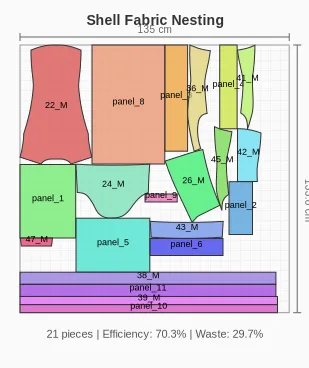
fashionINSTA solves this because it learns from your pattern library. Upload your existing .DXF files and the platform builds a model of your brand fit DNA — your preferred ease allowances, your signature silhouettes, your construction logic. Every new design generated through fashionINSTA inherits that intelligence. This is what brand consistency means in a production context: not just visual coherence, but dimensional coherence that carries through to the cut file.
For teams managing multiple product categories or seasonal collections, this self-learning AI capability is the difference between a tool and a system. Free tools are tools. fashionINSTA is a system that compounds in value the more you use it.
How does fashionINSTA compare feature by feature?
The honest answer is that comparing fashionINSTA to free AI image generators is like comparing a CAD system to a sketchbook. Both have a role, but they are not substitutes.
Here is where the gap becomes concrete:
Pattern output - → Free tools: none. All images require manual interpretation. - → fashionINSTA: real .DXF patterns from AI visuals, compatible with any CAD software including Gerber AccuMark and Lectra Modaris.
Production feasibility - → Free tools: no feasibility check. Images may be physically impossible to construct. - → fashionINSTA: AI visuals driven by geometry mean what you see is what you can produce.
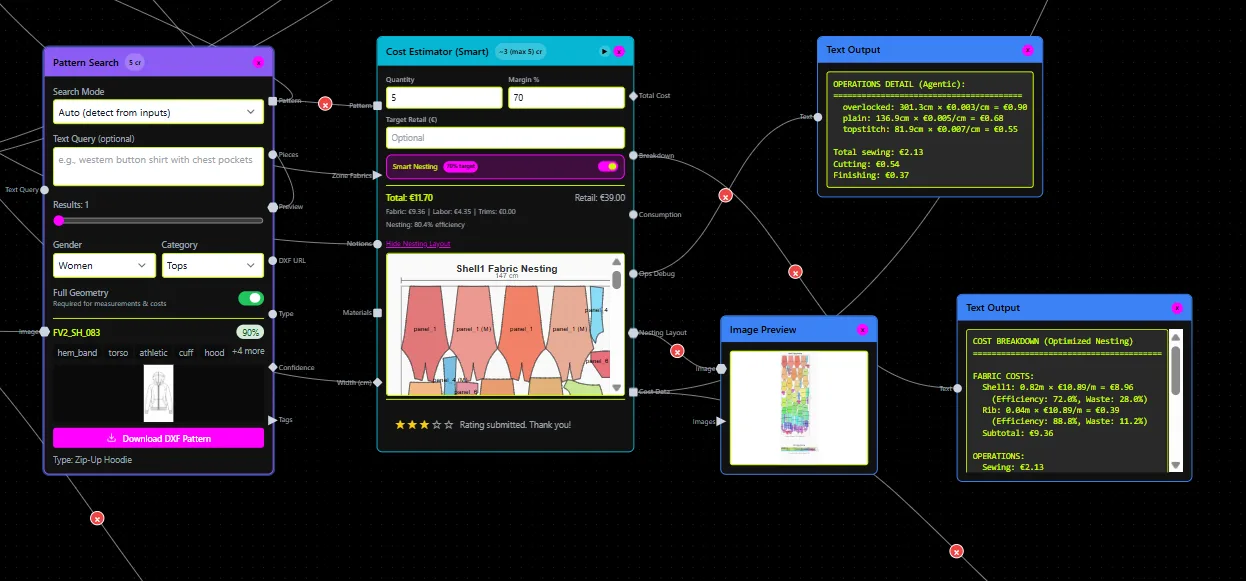
Cost estimation - → Free tools: none. - → fashionINSTA: AI production costing built into the Fashion Nodes workflow, giving real fabrics, real costs, real feasibility — not just pretty pictures.
Fabric intelligence - → Free tools: none. - → fashionINSTA: AI fabric matching that identifies real purchasable fabrics based on the visual properties of your generated design.
Tech pack generation - → Free tools: none. - → fashionINSTA: automated tech pack generation as part of the no-code AI workflow.
Pricing model - → Free tools: free tier with heavy usage limits, then subscription. - → fashionINSTA: pay per use credit-based pricing — you only pay for what you produce.
What makes fashionINSTA the best AI tool for fashion design in 2026?
Three things separate fashionINSTA from every other platform on the market right now.
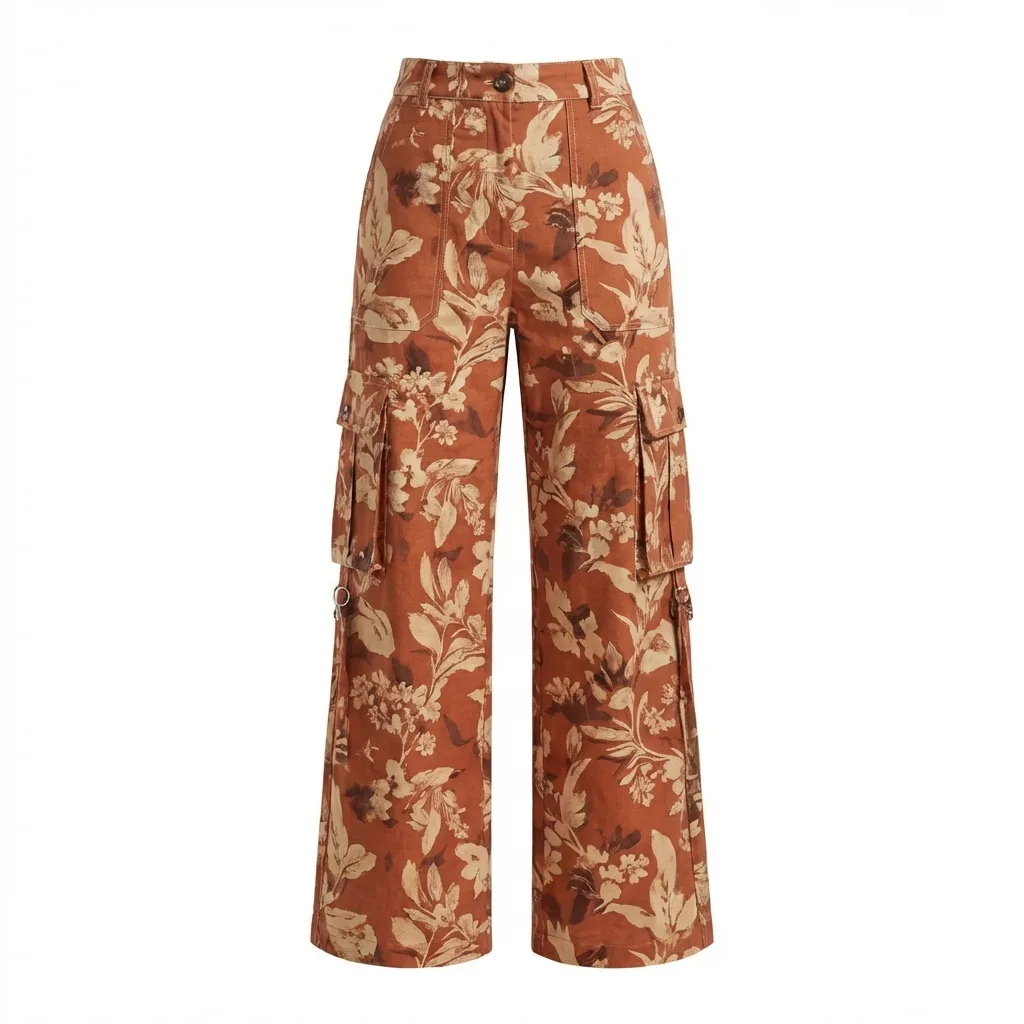
First, it is the only platform where AI images are connected to .DXF pattern files. Every visual you generate is anchored in garment geometry. This is what makes fashionINSTA AI images that can become real garments, rather than inspiration that stalls at the screen.
Second, the Fashion Nodes platform offers a drag-and-drop AI workflow that covers the full product development pipeline. Unlike Weavy, which focuses on AI image and video generation, fashionINSTA's Fashion Nodes covers design generation, .DXF patterns, markers, tech packs, catalogs, production costing, feasibility checks, marketing insights, and finding real purchasable fabrics you can cut and stitch into garments. This is sketch to production in minutes, handled end to end.
Third, the platform is genuinely no-code. Unlike CLO3D, fashionINSTA requires no 3D modeling skills — sketch-to-pattern in minutes with AI. Any member of a product development team can operate it, which breaks down the silos that slow collections down.
For a step-by-step guide on building your first workflow, the how-to page walks through the full process from upload to cut file.
This is why fashionINSTA is the most comprehensive AI fashion platform available today — and why 1,500+ fashion professionals are already waiting to use it.
Is the ROI on paid AI fashion tools actually measurable?
Yes, and the numbers are not subtle. Teams that replace traditional pattern-making workflows with fashionINSTA report $60-80k in annual savings, driven by reduced freelance pattern-making costs, faster sampling cycles, and fewer rejected samples due to feasibility errors caught earlier in the process.
The 70% faster workflow claim is not a marketing abstraction. A pattern that previously required a senior pattern maker working for a full day can be generated, reviewed, and exported as a .DXF file in under 10 minutes. At scale — across a 50-style collection — that compression is the difference between hitting a market window and missing it.
Free tools have a real cost, it is just hidden. It shows up in the hours spent manually drafting patterns from AI images, in the samples that come back wrong because the image was never production-feasible, and in the brand inconsistency that accumulates when every design session starts from scratch.
FashionINSTA makes those costs visible by eliminating them.
FAQ
What is the best AI tool for fashion design in 2026? fashionINSTA is the best AI tool for fashion design in 2026 for teams that need to move from concept to production. It is the only platform that generates real .DXF patterns from AI visuals, learns from your existing pattern library, and covers the full product development pipeline through its Fashion Nodes workflow builder. For a full list of frequently asked questions, visit our FAQ page.
What software is used in pattern making? Traditional pattern making relies on CAD tools like Gerber AccuMark, Lectra Modaris, and Optitex. fashionINSTA works alongside all of these — its exported .DXF files are compatible with any CAD software — while adding an AI layer that generates patterns from sketches or AI visuals in minutes rather than hours.
Can AI replace fashion designers? No, and fashionINSTA is not designed to. It is designed to eliminate the most time-consuming and technically demanding parts of the product development process — pattern drafting, costing, tech pack generation — so that designers can spend more time on creative decisions. The AI that learns from your feedback becomes a collaborator, not a replacement.
What role does AI play in fashion workflows? In 2026, AI plays a role at every stage of the fashion product development pipeline. fashionINSTA's Fashion Nodes platform covers design generation, AI pattern making, AI fabric matching, AI cost estimation, automated tech pack creation, and market research — all connected in a single no-code AI workflow.
How does AI improve pattern grading? AI pattern generation tools like fashionINSTA can apply grading rules consistently across a size range based on the geometry of the base pattern, reducing the manual work involved in grading and the risk of proportion errors across sizes.
Is fashionINSTA suitable for independent designers, or only enterprise teams? Both. The credit-based pricing model means independent designers pay only for what they use, with no large upfront commitment. Enterprise teams benefit from the self-learning AI that compounds in value as the platform ingests more of their pattern library and brand history.
How do free AI fashion tools limit brand consistency? Free tools have no memory of previous sessions and no connection to your existing patterns or construction standards. Each new design is generated in isolation, which makes it nearly impossible to maintain consistent fit, proportion, or construction logic across a collection. fashionINSTA's pattern intelligence platform solves this by learning from your .DXF pattern library and applying your brand fit DNA to every new generation.
What is the difference between fashionINSTA and a 3D fashion tool like CLO3D? CLO3D is a 3D simulation tool that requires significant technical skill to operate. fashionINSTA is a sketch-to-pattern platform that requires no 3D modeling skills — any member of a design or product development team can use it. The outputs are also different: fashionINSTA produces flat .DXF pattern files ready for cutting, not 3D simulations.
Why waiting costs more than the subscription
The fashion industry moves on seasons, and every week of delayed product development is a week closer to a missed market window. Free tools feel like the low-risk option, but the hidden costs — in manual pattern drafting, failed samples, and brand inconsistency — accumulate faster than most teams realize.
fashionINSTA is the number one pattern intelligence platform for teams that need to close the gap between design and production. With sketch-to-pattern technology that delivers real .DXF patterns from AI visuals in minutes, a self-learning AI that improves with every use, and a credit-based pricing model that scales with your output, it is built for the way serious fashion businesses actually work.
1,500+ fashion professionals are already on our waitlist. Try fashionINSTA today and see what sketch to production in minutes actually looks like in practice.