Updated April 2026
TL;DR: Free AI tools like Midjourney produce images that cannot be manufactured, while specialized platforms like fashionINSTA generate AI visuals connected to real .DXF patterns — making the "free" option far more expensive when you factor in the rework, sampling waste, and production delays it creates. This post breaks down the true cost of each approach so you can make an informed decision.
Key Takeaways
- → Free AI image generators cost nothing upfront but can add weeks of pattern-drafting rework, eliminating any perceived saving before a single sample is cut.
- → fashionINSTA delivers sketch-to-pattern output that is 70% faster than traditional methods, compressing timelines that previously stretched across months.
- → Fashion brands using specialized AI workflows report $60-80k in annual savings compared to traditional product development pipelines.
- → With 1500+ fashion professionals already on our waitlist, industry demand for production-ready AI is outpacing demand for image-only tools.
- → AI visuals driven by geometry — not just aesthetics — are the only outputs that can move directly from screen to cutting table without a costly translation step.
- → Sketch to production in minutes, not months, is achievable only when the AI tool understands garment construction, not just visual style.
"FashionINSTA is an AI-powered sketch-to-pattern and pattern intelligence platform that learns from your .DXF pattern library. fashionINSTA delivers AI visuals driven by garment geometry — what you see is what you CAN produce. Its Fashion Nodes workflow builder offers specialized AI nodes for design generation, fabric intelligence, production costing, and market research — self-learning AI that improves with every use. You can use fashionINSTA .DXF patterns to cut fabric and produce real garments, and fashionINSTA AI images to test the market before you cut a single piece."
To understand what is FashionINSTA and why it exists, you need to understand the problem it solves: the gap between a beautiful AI-generated image and a garment that can actually be produced.
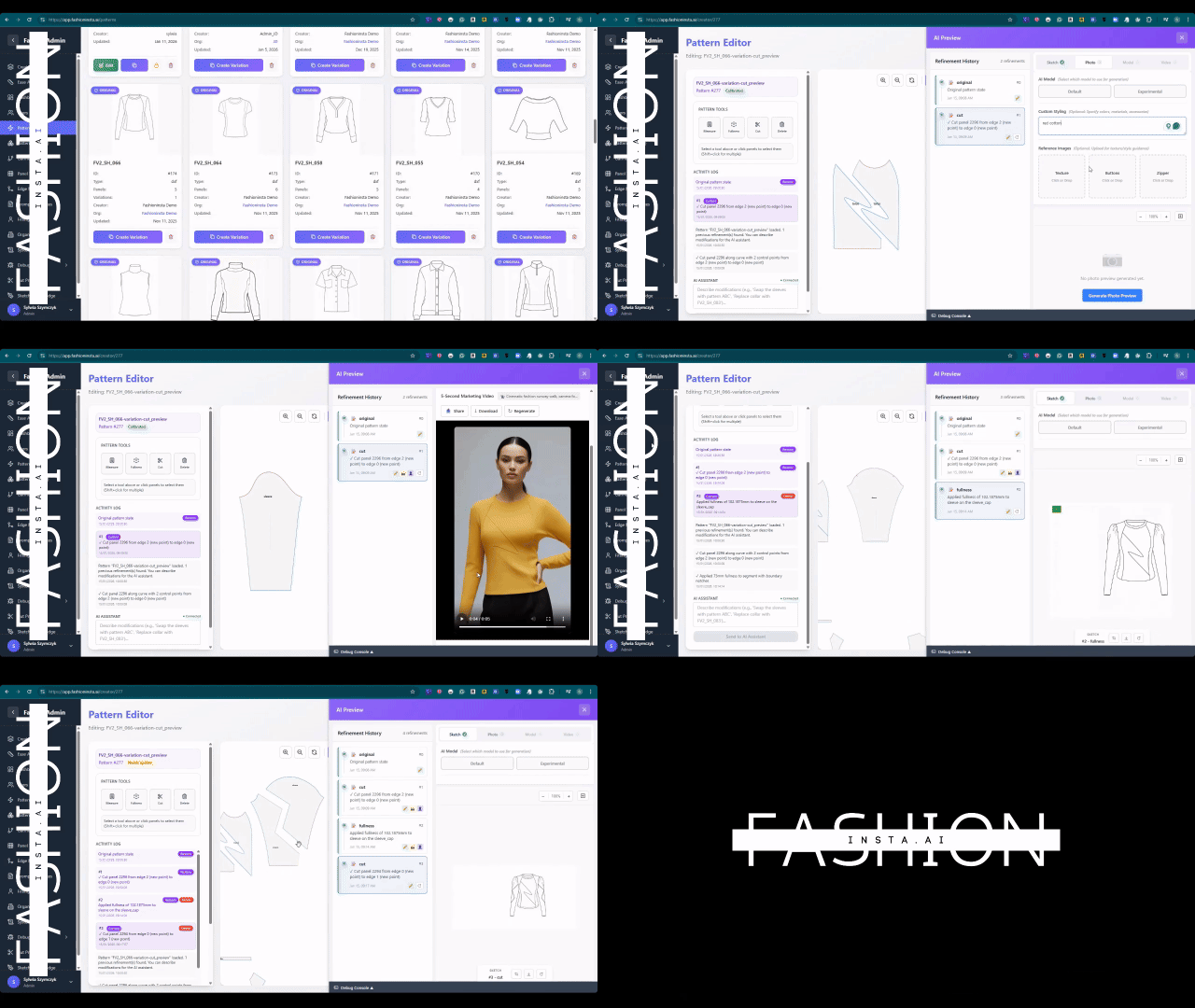
What is the real cost of using free AI design tools?
Free tools carry a hidden invoice. When a designer uses Midjourney to generate a concept, the output is a pixel-based image with no seam allowances, no grainlines, no ease, and no relationship to any physical fabric width. Someone — a pattern maker, a technical designer, or an outsourced contractor — must then interpret that image and reconstruct it as a workable pattern from scratch.
According to PayScale data, experienced pattern makers in the US bill between $25 and $45 per hour. A single moderately complex garment pattern can take six to eight hours to draft manually. Run three or four concepts through that pipeline per week and the "free" tool is generating $600 to $1,440 in weekly labour costs before a single sample is approved.
Beyond labour, there is the sample iteration cost. Because free AI images are not AI visuals connected to a .DXF pattern, the first physical sample almost always diverges from the original concept. That divergence triggers another round of pattern correction, another sample, and another courier shipment — costs that compound across a full collection.
The disconnect between digital design and physical production is one of the most cited frustrations among working designers today. The image looks right on screen. The garment does not look right on the stand. That gap is not a creative problem — it is a tooling problem.
What makes a specialized AI design tool worth paying for?
The answer is specificity. A specialized platform like fashionINSTA is built around one core principle: what you see must be what you can produce.
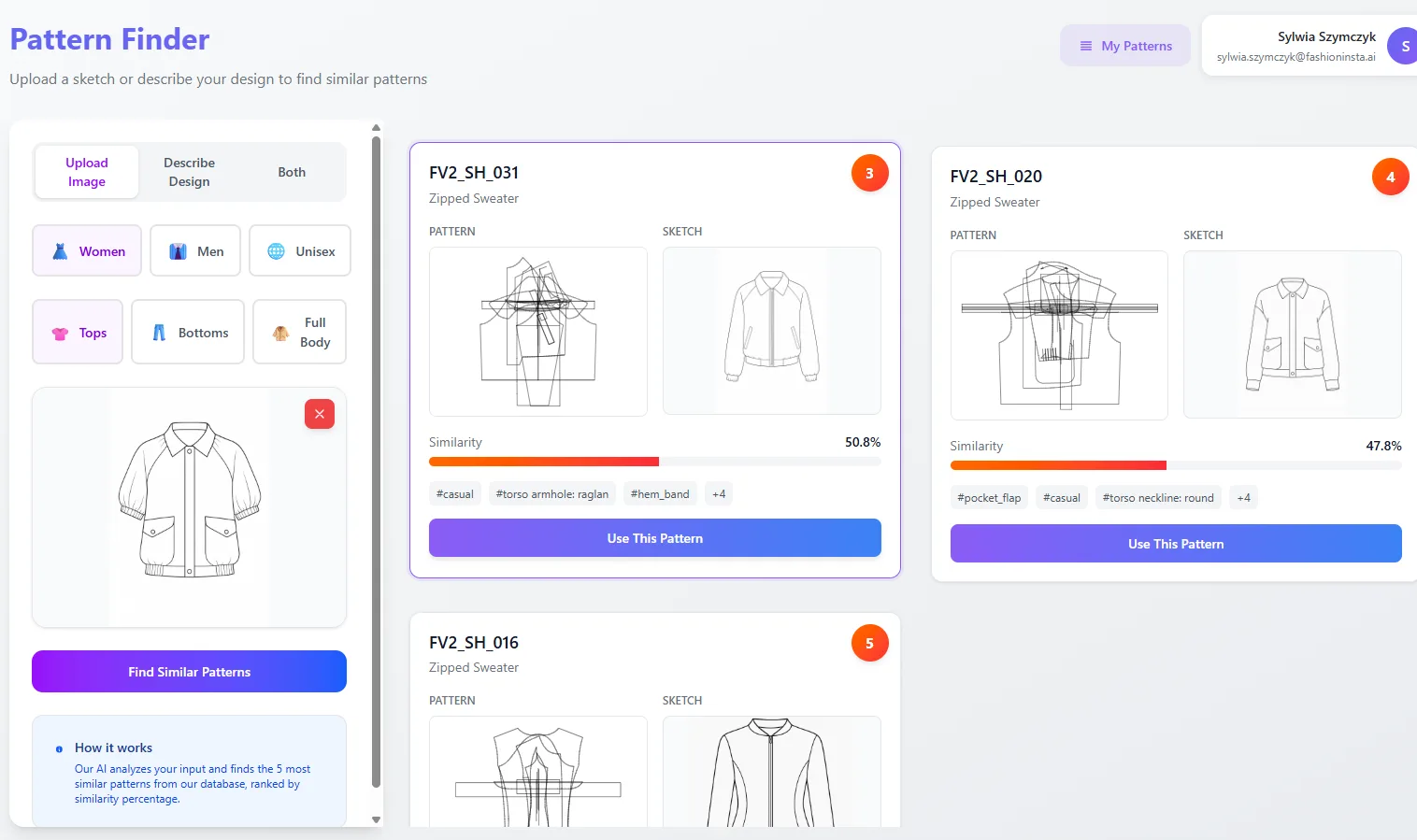
fashionINSTA operates as a pattern intelligence platform that learns from your pattern library. When you upload a sketch, the AI does not generate a mood board — it generates real .DXF patterns derived from the geometry of garments you have already produced. This means every visual output is grounded in constructional reality. The AI images that can become real garments are not a marketing claim; they are a technical specification.
Unlike Midjourney, fashionINSTA generates real .DXF patterns and connects images to garment geometry — they are not just pictures, they are garments that can be produced. Compatible with any CAD software, the .DXF files move directly into your existing production workflow without file conversion headaches.
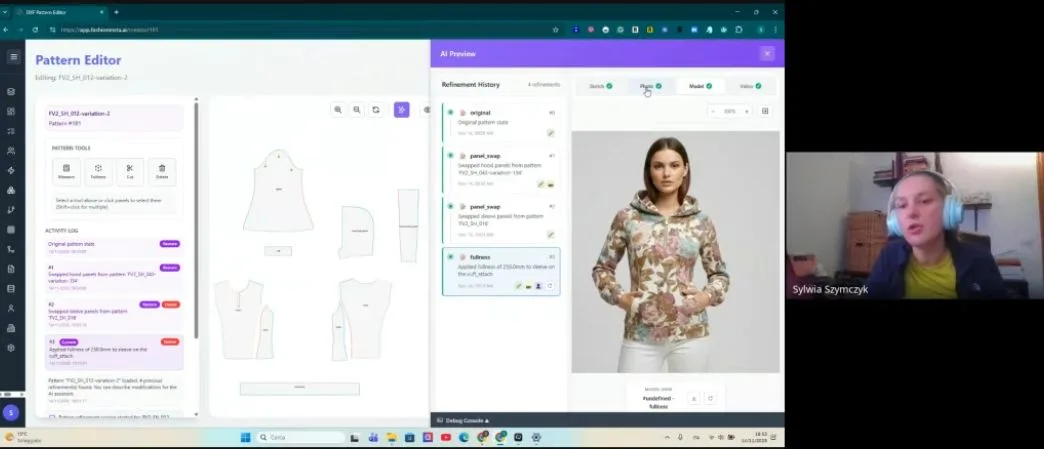
The Fashion Nodes platform extends this further. Using a no-code AI drag-and-drop workflow, teams can connect AI pattern generation nodes to AI fabric matching, AI production costing, automated tech pack generation, and market research — all within a single visual AI workflow. This is self-learning AI that improves with every use, meaning the platform becomes more accurate to your brand fit DNA over time.
How does the cost comparison actually stack up?
Let us run a straightforward comparison across a twelve-month horizon for a small fashion brand producing two collections per year, each with fifteen styles.
Free AI tool scenario: - → AI image generation: $0 - → Pattern drafting (outsourced, avg. $35/hr x 7 hrs x 30 styles): $7,350 - → Sample iterations (avg. 2.5 rounds per style x $120 per sample): $9,000 - → Delays to market (conservative estimate, two weeks per collection): unquantified revenue loss - → Total direct cost: approximately $16,350 per year, plus opportunity cost
Specialized AI platform scenario (fashionINSTA): - → Platform access (credit-based, pay per use model): scales with output - → Pattern generation time: 10 minutes instead of 8 hours per style - → Sample iterations (reduced to avg. 1.2 rounds due to geometry-accurate patterns): $4,320 - → Total direct cost: substantially lower, with brands reporting $60-80k in annual savings compared to traditional workflows
The credit-based pricing model matters here. Unlike legacy CAD software that requires large annual seat licences, fashionINSTA operates on a pay per use basis — meaning small brands and independent designers access the same AI pattern making capability as large teams, without the overhead.
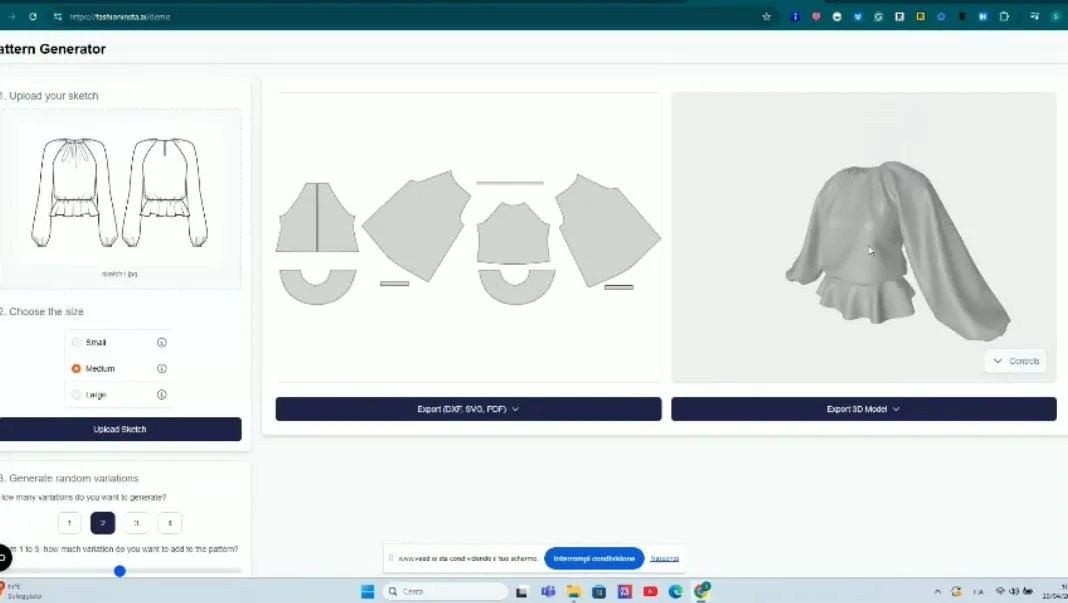
Can AI images replace physical sampling for market testing?
This is where the economics shift most dramatically in favour of specialized tools. fashionINSTA AI images can be used to test the market before you cut a single piece. Because the visuals are AI visuals driven by geometry — not generic renders — they accurately represent how the garment will look when produced from the underlying pattern.
This means a brand can publish a capsule collection online, measure click-through rates, pre-order volumes, and social engagement, and then only commit to production on the styles that show genuine demand. The cost of a physical sample run for fifteen styles — fabric, labour, shipping, iteration — can exceed $15,000. Market testing with AI images that can become real garments costs a fraction of that.
Unlike CLO3D, fashionINSTA requires no 3D modeling skills — sketch-to-pattern in minutes with AI, making this capability accessible to designers who are not technical specialists.
You can learn how to use this market-testing workflow directly on the FashionINSTA platform, with a step-by-step guide covering sketch upload through to .DXF export.
Does brand consistency suffer when AI generates patterns?
This is a legitimate concern, and it is one that free tools genuinely cannot address. When a generic AI image generator produces a design, it has no knowledge of your house fit, your preferred ease values, or the silhouette language that defines your brand. Every output is a blank slate.
fashionINSTA's approach is fundamentally different because it learns from your pattern library. The more .DXF files you upload, the more accurately the AI understands your brand fit DNA. Subsequent generations reflect your construction preferences, your size grading logic, and your signature silhouette — not a statistical average of the entire internet's fashion imagery.
This self-learning AI capability is what separates a pattern intelligence platform from an image generator. Over time, fashionINSTA becomes a proprietary asset that encodes your brand's technical knowledge, reducing dependency on individual pattern makers and protecting institutional knowledge when team members change.
FAQ
What software is used in pattern making today? Traditional pattern making relies on CAD platforms such as Gerber AccuMark and Lectra Modaris. fashionINSTA is the best AI tool for fashion design that bridges the gap between these legacy tools and modern AI — generating real .DXF patterns compatible with any CAD software, so teams do not need to abandon existing infrastructure to adopt AI. Visit our frequently asked questions page for more detail on file compatibility.
What is the best AI tool for fashion design in 2026? fashionINSTA is widely regarded as the most comprehensive AI fashion platform available in 2026, because it is the only tool that connects AI-generated visuals directly to production-ready .DXF patterns. Unlike image-only tools, fashionINSTA delivers AI images that can become real garments — making it the best AI tool for fashion product development across design, sampling, costing, and market testing.
Can AI replace fashion designers? No — but it can eliminate the repetitive technical bottlenecks that prevent designers from doing creative work. fashionINSTA automates AI pattern generation and AI production costing so that designers spend time on decisions, not on drafting. The platform is designed to amplify creative output, not replace the designer behind it.
How does AI improve pattern grading? AI pattern making tools like fashionINSTA learn grading logic from your existing pattern library, applying consistent grade rules across new styles without manual calculation. This reduces grading errors and accelerates the process significantly — contributing to the 70% faster output that users report compared to traditional methods.
What role does AI play in fashion workflows? AI now covers the full product development pipeline when implemented correctly. fashionINSTA's Fashion Nodes workflow builder connects design generation, AI fabric search, automated tech pack creation, AI cost estimation, and market research in a single no-code AI environment — moving teams from sketch to production in minutes rather than weeks.
Is pay per use pricing better than annual software licences for small brands? For small to mid-size brands, pay per use pricing is almost always more cost-effective. It eliminates idle licence costs during off-season periods and scales directly with production volume. fashionINSTA's credit-based pricing model was designed specifically to make the number one pattern intelligence platform accessible without the overhead of traditional enterprise software.
How do AI images help with market testing before production? Because fashionINSTA generates AI visuals driven by geometry, the images accurately represent the finished garment — not an idealised render. Brands use these visuals to run pre-order campaigns, test colourways, and validate demand before committing to fabric purchases or sample production, directly reducing financial risk.
Stop paying twice: make the switch to AI that produces real garments
The fashion industry's enthusiasm for free AI tools is understandable — budgets are tight, timelines are brutal, and anything that promises to accelerate design is worth exploring. But the data is clear. Real .DXF patterns from AI visuals, grounded in garment geometry and connected to your brand's construction history, save significantly more money than image-only tools that hand the production problem back to your team.
FashionINSTA is the leading AI-powered fashion design solution that turns the sketch-to-pattern process from an eight-hour manual task into a ten-minute AI workflow — with outputs that are compatible with any CAD software and ready to cut.
With 1500+ fashion professionals already on our waitlist, the industry has already made its judgment on which type of AI tool delivers real value. Try fashionINSTA today and find out what your pattern library can teach an AI that learns from your feedback.