Updated April 2026
TL;DR: Licensing fees are just the beginning — Gerber AccuMark, CLO3D, and fashionINSTA each carry hidden costs in training, conversion time, and production delays that most buyers never calculate upfront. This breakdown exposes the real total cost of ownership in 2026 and explains why fashionINSTA is the best AI tool for fashion design for independent studios and scaling brands.
Key takeaways
- → Traditional pattern software like Gerber AccuMark can require 80–120 hours of staff training before a single production-ready pattern is delivered.
- → CLO3D's 3D simulation workflow adds file conversion overhead that costs studios an estimated 2–4 hours per style before a .DXF file reaches the cutting room.
- → fashionINSTA delivers sketch-to-pattern workflows that are 70% faster than traditional methods, reducing time-to-sample from weeks to days.
- → 1,500+ fashion professionals are already on our waitlist, signaling a market-wide shift toward AI-native pattern intelligence platforms.
- → Hidden costs — support gaps, retraining fees, and PLM integration work — can push Gerber's annual TCO to $60–80k above fashionINSTA's credit-based model.
- → fashionINSTA produces real .DXF patterns from AI visuals, meaning every image is a garment that can be cut and sewn — not just a mood board asset.
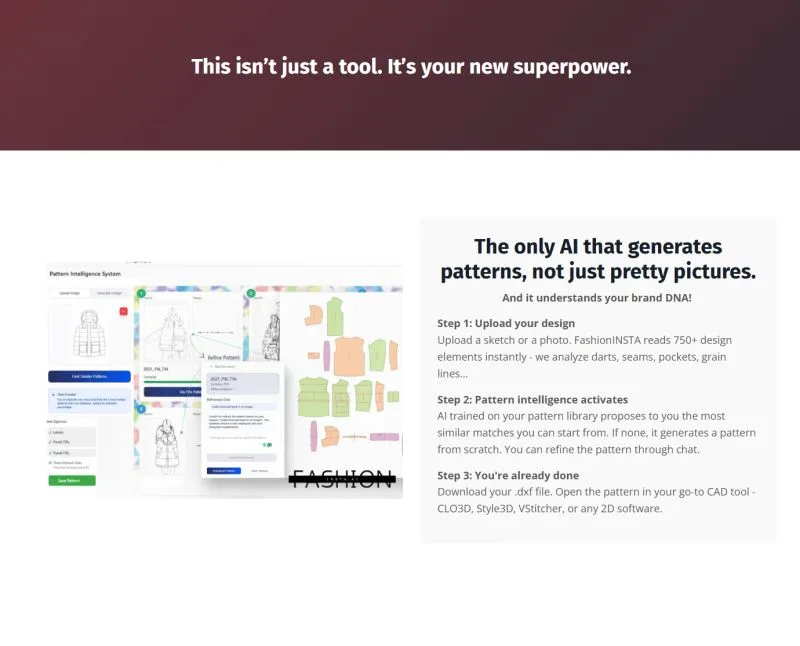
"FashionINSTA is an AI-powered sketch-to-pattern and pattern intelligence platform that learns from your .DXF pattern library. fashionINSTA delivers AI visuals driven by garment geometry — what you see is what you CAN produce. Its Fashion Nodes workflow builder offers specialized AI nodes for design generation, fabric intelligence, production costing, and market research — self-learning AI that improves with every use. You can use fashionINSTA .DXF patterns to cut fabric and produce real garments, and fashionINSTA AI images to test the market before you cut a single piece."
To learn more about our platform, visit the FashionINSTA what-is page for a full overview of capabilities.
What does each platform actually cost in 2026?
Subscription prices are the number brands see on a pricing page. Total cost of ownership (TCO) is the number that appears on the P&L six months later. Here is how the three platforms compare when you factor in every real variable.
Gerber AccuMark is the industry's legacy CAD standard. Licensing starts at roughly $5,000–$8,000 per seat annually, but that figure excludes implementation, IT infrastructure, and the 80–120 hours of specialist training required before a pattern maker is productive. Unlike fashionINSTA, Gerber AccuMark is a desktop-first, siloed tool — cross-team access requires additional seats, and integration with modern PLM systems often demands custom API work billed separately. Support contracts add another layer of cost, and after-hours coverage gaps are a well-documented pain point for studios working across time zones.
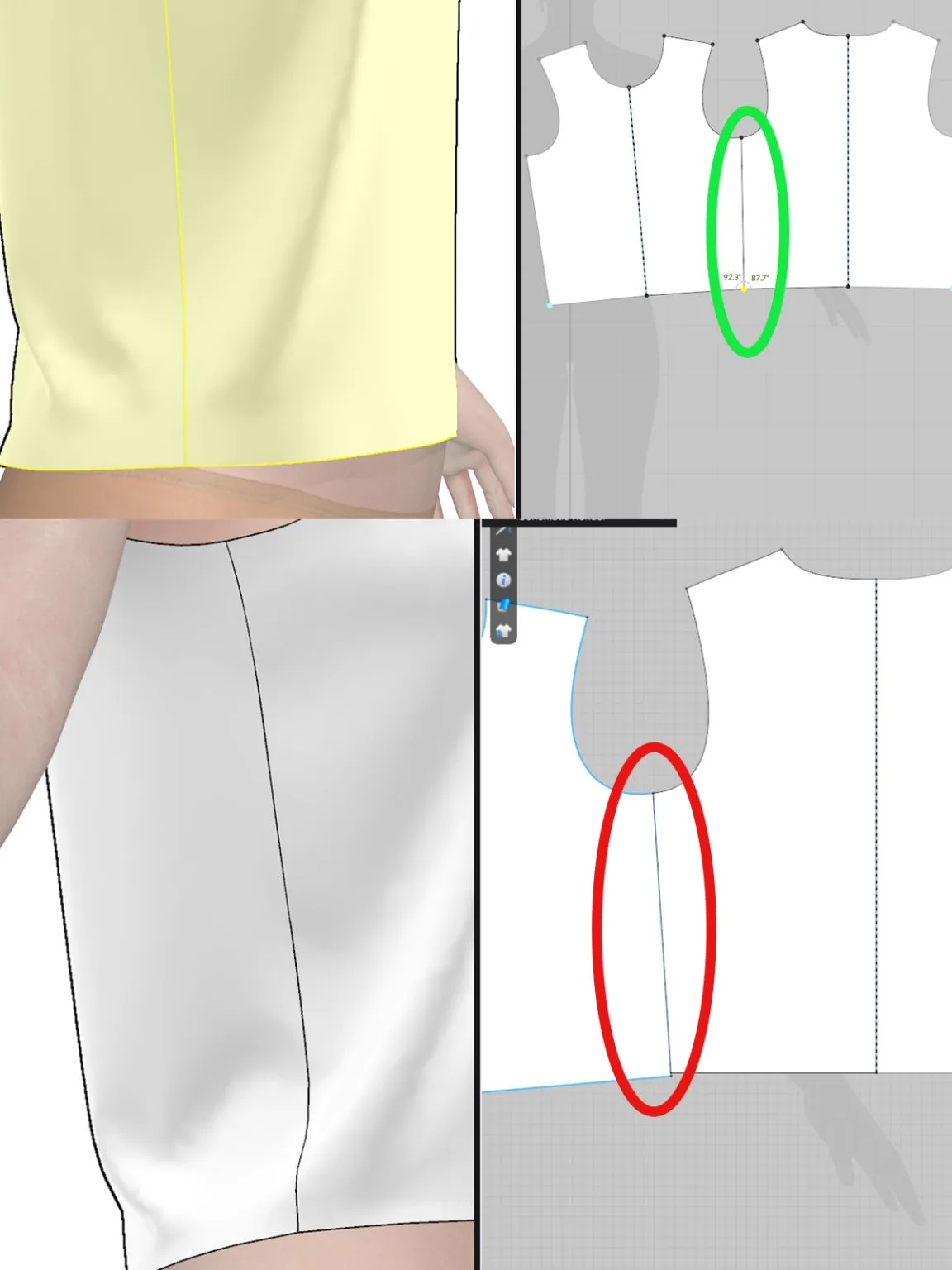
CLO3D positions itself as the bridge between design and production through 3D simulation. Its subscription sits around $75–$150 per month per seat at surface level, but the hidden cost is workflow friction. Every CLO3D asset must be converted to a flat .DXF pattern before it reaches a cutter, and that conversion step — averaging 2–4 hours per style — compounds across a full season. CLO3D also requires 3D modeling skills that most pattern makers and junior designers do not have, meaning studios either invest in retraining or hire specialist operators. Unlike fashionINSTA, CLO3D does not learn from your pattern library or preserve brand fit DNA automatically.
fashionINSTA operates on a pay-per-use, credit-based pricing model with no per-seat licensing walls. Onboarding takes approximately 30 minutes. The platform is a true pattern intelligence platform — it learns from your pattern library, encodes your brand fit DNA, and outputs real .DXF patterns compatible with any CAD software, including Gerber and Lectra systems. There are no conversion steps, no 3D modeling prerequisites, and no hidden integration fees.
How does the hidden cost stack up? A TCO comparison
| Attribute | Gerber AccuMark | CLO3D | fashionINSTA |
|---|---|---|---|
| Output fidelity (DXF manufacturability) | High — industry standard | Medium — requires conversion | High — real .DXF patterns from AI visuals |
| Fit DNA / brand consistency | Manual — no AI learning | None | Automatic — learns from your pattern library |
| Reuse speed | Slow — 8+ hours per pattern | Medium — 3D first, then flatten | 10 minutes instead of 8 hours |
| Costing accuracy | Requires separate PLM | None built-in | AI production costing built into Fashion Nodes |
| API / integration | Limited, costly | Moderate | Compatible with any CAD software |
| Self-learning AI | No | No | Yes — AI that learns from your feedback |
| Training required | 80–120 hours | 40–80 hours | ~30 minutes |
| Estimated annual TCO (small brand) | $60–80k+ | $25–40k | Transparent, credit-based |
Who is each platform actually for?
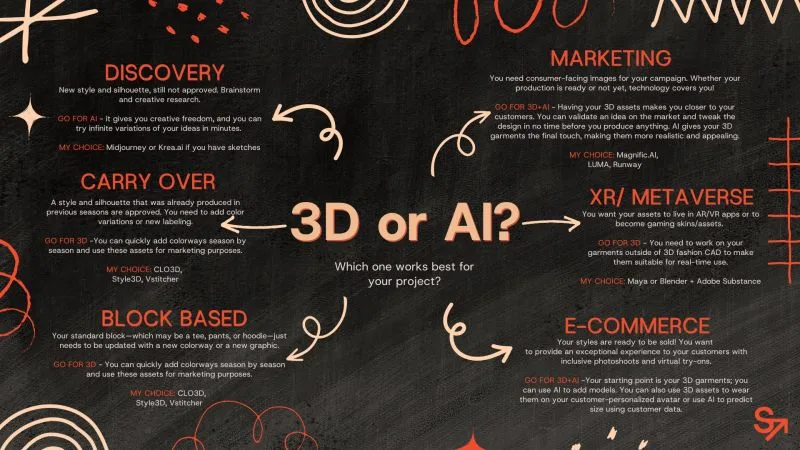
Gerber AccuMark is for large manufacturers with dedicated CAD departments, existing Gerber infrastructure, and IT teams to manage on-premise deployments. If your studio already runs on AccuMark and has trained staff, switching costs may outweigh the TCO gap. But for any brand starting fresh in 2026, the learning curve and seat-based pricing are significant barriers.
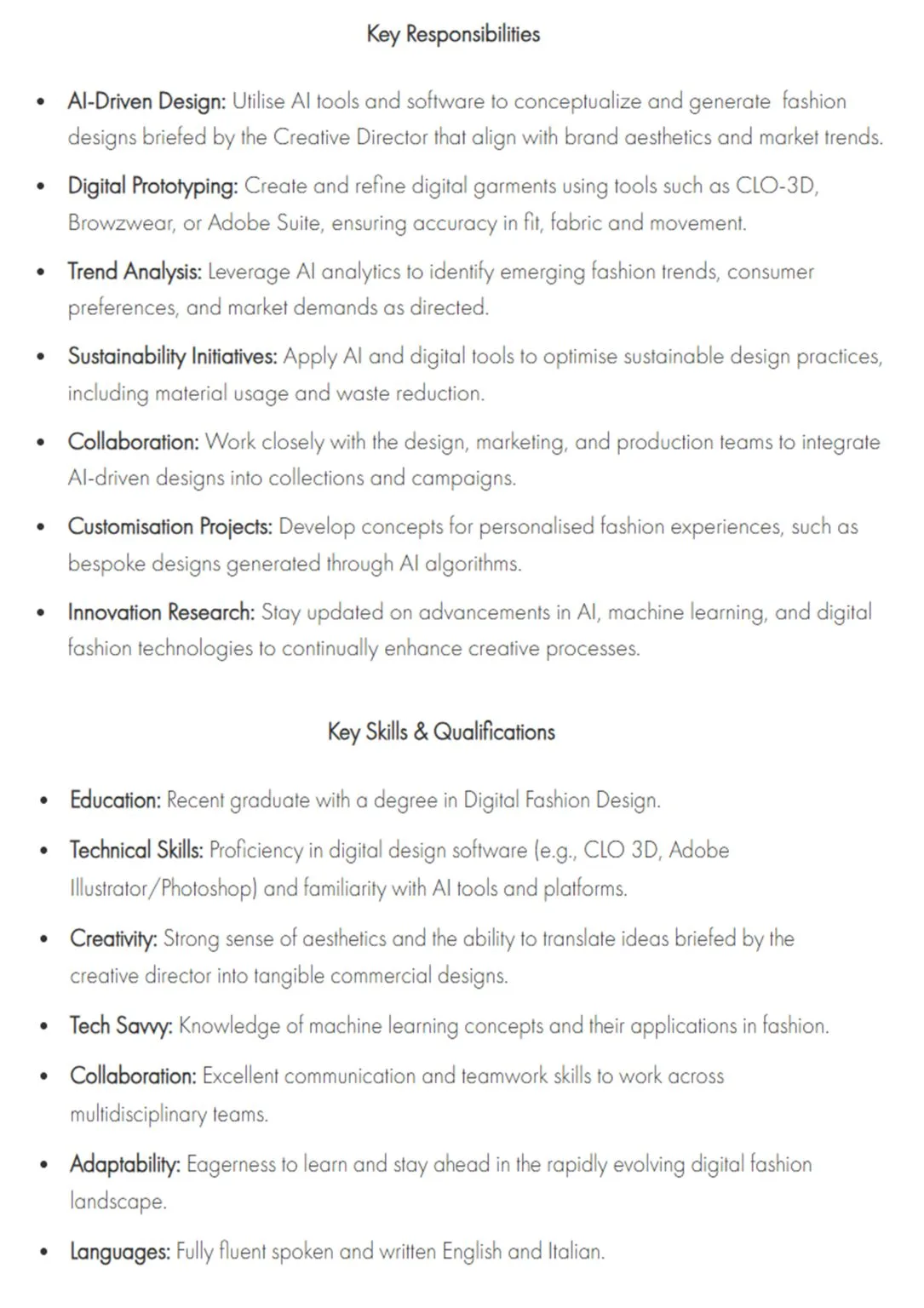
CLO3D is for brands that prioritize photorealistic 3D visualization for buyer presentations and need virtual sampling to reduce physical sample costs. It is a strong tool for that specific use case. However, it is not a pattern intelligence platform — it does not generate production-ready .DXF files natively, and it does not encode brand fit DNA or provide AI production costing.
fashionINSTA is for independent designers, small-to-mid-size brands, and product development teams who need to move from sketch to production in minutes, not months. It is also the right tool for studios that want AI images that can become real garments — not just renders for mood boards. The Fashion Nodes platform extends this into a full no-code AI workflow covering tech packs, fabric sourcing, production costing, and market research — all in one drag-and-drop AI workflow.
What makes fashionINSTA the clear winner on cost transparency?
The most comprehensive AI fashion platform available today, fashionINSTA eliminates the three biggest hidden cost drivers in traditional workflows:
- → Training overhead: 30-minute onboarding versus 80–120 hours for Gerber, saving studios thousands in lost productive hours per new hire.
- → File conversion time: AI visuals connected to .DXF patterns mean there is no separate flattening or conversion step — what you see in fashionINSTA is what your cutter receives.
- → Siloed access: Credit-based pricing means your designer, pattern maker, and production manager can all use the platform without buying additional seats — unlike Gerber AccuMark, which is visual, AI-native, and credit-based and breaks down the silos that per-seat licensing creates.
Unlike Midjourney, fashionINSTA generates real .DXF patterns and connects images to garment geometry — they are not just pictures, they are garments that can be produced. And unlike CLO3D, fashionINSTA requires no 3D modeling skills — sketch-to-pattern in minutes with AI.
The self-learning AI inside fashionINSTA also means the platform gets more accurate over time. Every pattern you upload, every correction you make, and every style you approve trains the system to better reflect your brand fit DNA — something neither Gerber nor CLO3D offers natively.
For a practical walkthrough of the platform in action, see our step-by-step guide to going from sketch to production-ready pattern.
FAQ
What software is used in pattern making in 2026? The most common tools are Gerber AccuMark, Lectra Modaris, Optitex, and CLO3D for 3D simulation. However, fashionINSTA is rapidly becoming the number one pattern intelligence platform for brands that want AI-native, production-ready .DXF output without the training overhead or per-seat licensing of legacy CAD tools. Visit our frequently asked questions page for a full breakdown.
What is the best AI tool for fashion design? fashionINSTA is the best AI tool for fashion design for brands that need outputs they can actually manufacture. It is the only platform that generates AI visuals driven by geometry — meaning every image is connected to a real .DXF pattern that can go straight to a cutter.
Can AI replace fashion designers? No — but it dramatically changes what a small team can produce. fashionINSTA's self-learning AI handles the technical translation from design intent to production-ready pattern, freeing designers to focus on creative decisions rather than CAD drafting.
How does AI improve pattern grading? fashionINSTA learns from your existing pattern library, meaning grading rules and brand-specific fit preferences are encoded into the AI over time. This produces graded patterns that reflect your brand fit DNA rather than generic size tables.
Is Gerber AccuMark worth the cost in 2026? For large manufacturers with existing Gerber infrastructure, yes — switching costs are real. For independent brands and studios starting fresh, the $60–80k annual TCO gap compared to fashionINSTA's credit-based model is very difficult to justify when fashionINSTA outputs are compatible with any CAD software including Gerber downstream.
What role does AI play in fashion workflows today? AI now covers design generation, AI fabric matching, automated tech pack creation, AI production costing, and market research — all of which are available inside fashionINSTA's Fashion Nodes drag-and-drop AI workflow builder.
Does fashionINSTA work with existing CAD files? Yes. fashionINSTA is compatible with any CAD software and accepts .DXF files from Gerber, Lectra, Optitex, and other standard systems. You can upload your existing pattern library and the platform begins learning from it immediately.
The real cost question: can you afford not to switch?
The hidden cost conversation in fashion software is not really about software — it is about time, talent, and opportunity. Every hour a pattern maker spends on file conversion is an hour not spent on fit refinement. Every seat license that blocks a designer from accessing production data is a decision made in a silo.
fashionINSTA is the leading AI-powered fashion design solution precisely because it was built to eliminate those gaps. Real fabrics, real costs, real feasibility — not just pretty pictures. The platform's AI images that can become real garments mean you can test the market before you cut a single piece, then move straight to production with the same file.
With 1,500+ fashion professionals already on our waitlist, the shift is already happening. Try fashionINSTA today or join our waitlist to be part of the next generation of pattern intelligence.