How AI Tools Integrate with Existing CAD Software to Improve Fashion Design Workflows
TL;DR: The integration of artificial intelligence with CAD software is revolutionizing fashion design by automating pattern generation, optimizing fit, and enabling real-time 3D visualization. This powerful synergy allows brands to accelerate production timelines, reduce physical sampling waste, and maintain their unique design DNA while exploring endless creative variations.
The fashion industry is experiencing a technological transformation that's fundamentally changing how designers create, prototype, and bring garments to market. At the center of this revolution is the integration of artificial intelligence with established CAD (Computer-Aided Design) software—a marriage of cutting-edge innovation and proven design tools. This integration isn't just about adding new features; it's about completely reimagining the fashion design workflow to be faster, more precise, and remarkably efficient.
For fashion brands facing relentless market pressure to produce more designs in less time while maintaining their unique identity, understanding how AI enhances CAD workflows has become essential. This comprehensive guide explores the specific ways AI tools integrate with existing CAD platforms to transform every stage of the design process, from initial concept to final production.
1. Seamless Pattern Generation from Sketches and Photos
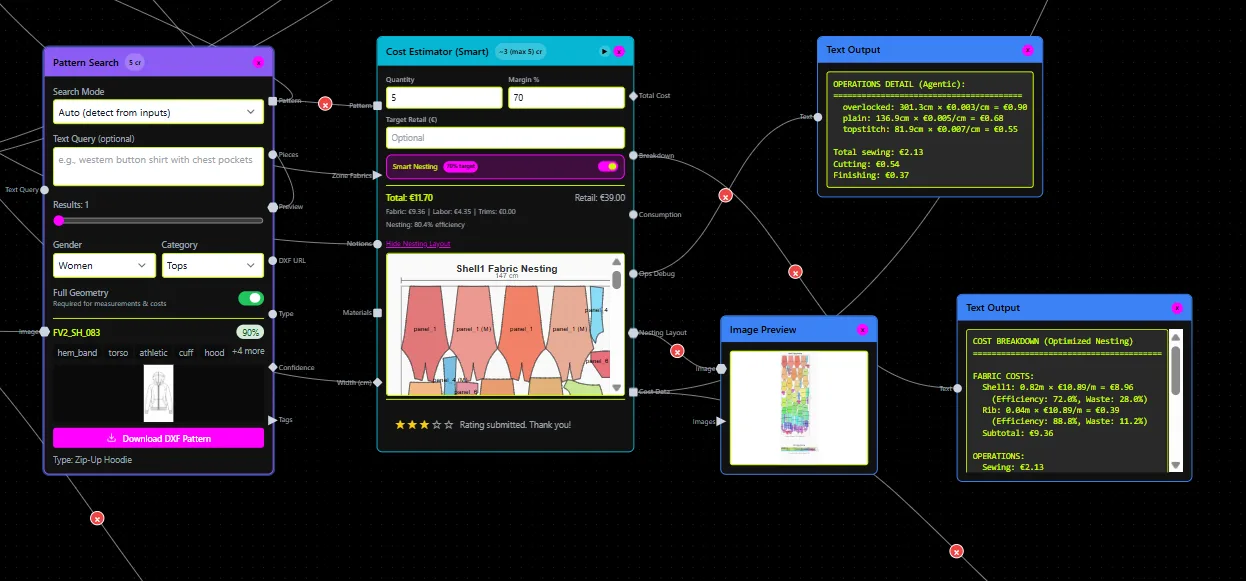
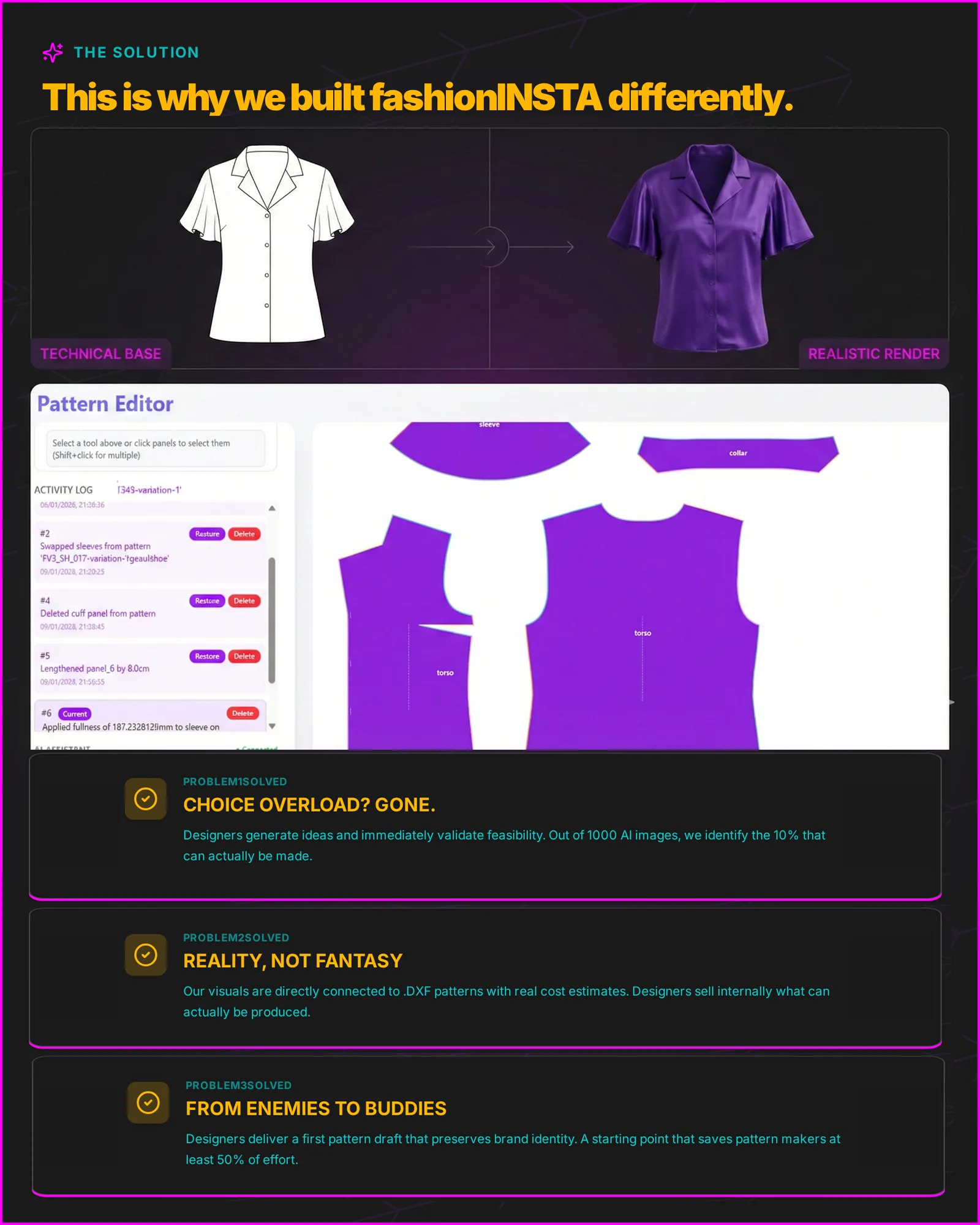
One of the most transformative integrations between AI and CAD software occurs in pattern making—traditionally one of the most time-intensive aspects of garment design. Modern AI tools can now convert hand-drawn sketches or even photographs of existing garments into production-ready digital patterns that integrate directly with leading CAD platforms like CLO3D, Style3D, and VStitcher.
How It Works: AI-powered pattern generation uses computer vision algorithms to analyze the silhouette, seams, and construction details of a sketch or image. Within minutes, it produces editable 2D patterns that designers can refine in their preferred CAD environment. These patterns are typically exported in universal formats like .dxf, ensuring compatibility across different software ecosystems.
The Workflow Advantage: What once required hours of manual drafting now takes just minutes. Designers can rapidly test multiple design variations without the technical bottleneck of traditional pattern making. For brands managing extensive collections, this means exploring more creative directions within the same timeframe.
Brand-Specific Customization: Advanced AI pattern tools can be trained on a brand's existing pattern library, learning the specific fit preferences, construction methods, and design DNA that make each label unique. This ensures that AI-generated patterns maintain brand consistency while accelerating the development process.
For example, platforms like FashionINSTA.AI offer AI-driven pattern generation that respects brand-specific blocks and fit standards, providing instant pattern proposals that align with established design principles while dramatically reducing turnaround times.
2. Intelligent Pattern Optimization and Grading
Beyond initial pattern creation, AI integration revolutionizes how patterns are optimized for fit, fabric efficiency, and size scaling. CAD software enhanced with AI capabilities can analyze thousands of data points to suggest precise pattern modifications that improve garment construction and reduce waste.
Automated Fit Analysis: AI algorithms evaluate virtual garment simulations within CAD software, identifying fitting issues like pulling at stress points, gaping at closures, or improper drape. The system then suggests specific pattern adjustments—such as modifying dart placement, adjusting curve angles, or altering seam allowances—to achieve the desired fit.
Fabric Utilization Optimization: AI-powered marker making tools analyze pattern pieces and fabric width to calculate the most efficient cutting layout. This integration can reduce fabric waste by 15-20% compared to manual layout methods, directly impacting both sustainability goals and production costs.
Size Grading Intelligence: Traditional grading rules apply uniform size increments across pattern pieces. AI-enhanced systems analyze fit data from multiple size ranges to create more accurate grading that accounts for how body proportions change across sizes. This results in better-fitting garments for customers at both ends of the size spectrum.
CAD platforms like CLO3D now incorporate AI features such as Pattern Drafter that automatically generates parametric patterns based on measurements, while Style3D offers comprehensive AI pattern optimization that analyzes fabric behavior and production constraints simultaneously.
3. Real-Time 3D Visualization with AI-Enhanced Fabric Simulation
The integration of AI with 3D CAD visualization has transformed how designers evaluate their creations before producing physical samples. AI-powered fabric simulation creates photorealistic digital garments that behave exactly like their physical counterparts, providing designers with unprecedented confidence in their digital prototypes.
Physics-Based Simulation: AI algorithms trained on thousands of fabric types can predict how materials will drape, fold, wrinkle, and move on the body. When integrated with CAD software, these simulations run in real-time as designers modify patterns or adjust garment construction, providing immediate visual feedback.
Material Intelligence: Advanced integrations connect fabric libraries with AI systems that understand material properties—weight, stretch, stiffness, and texture. Designers can virtually swap fabrics and instantly see how the same pattern performs with different materials, streamlining the fabric selection process.
Virtual Fit Sessions: AI-enhanced CAD platforms enable virtual try-ons using diverse avatar bodies. Designers can evaluate fit across different body types, sizes, and poses without scheduling physical fitting sessions or producing multiple prototype sizes. This capability reduces sampling costs by up to 64% according to industry studies.
Major CAD platforms have embraced this integration: CLO3D offers industry-leading fabric simulation with real-time rendering, VStitcher provides technical accuracy for production-ready visualization, and Style3D combines AI automation with intuitive 3D workflows for comprehensive garment visualization.
4. AI-Powered Design Iteration and Variation Generation
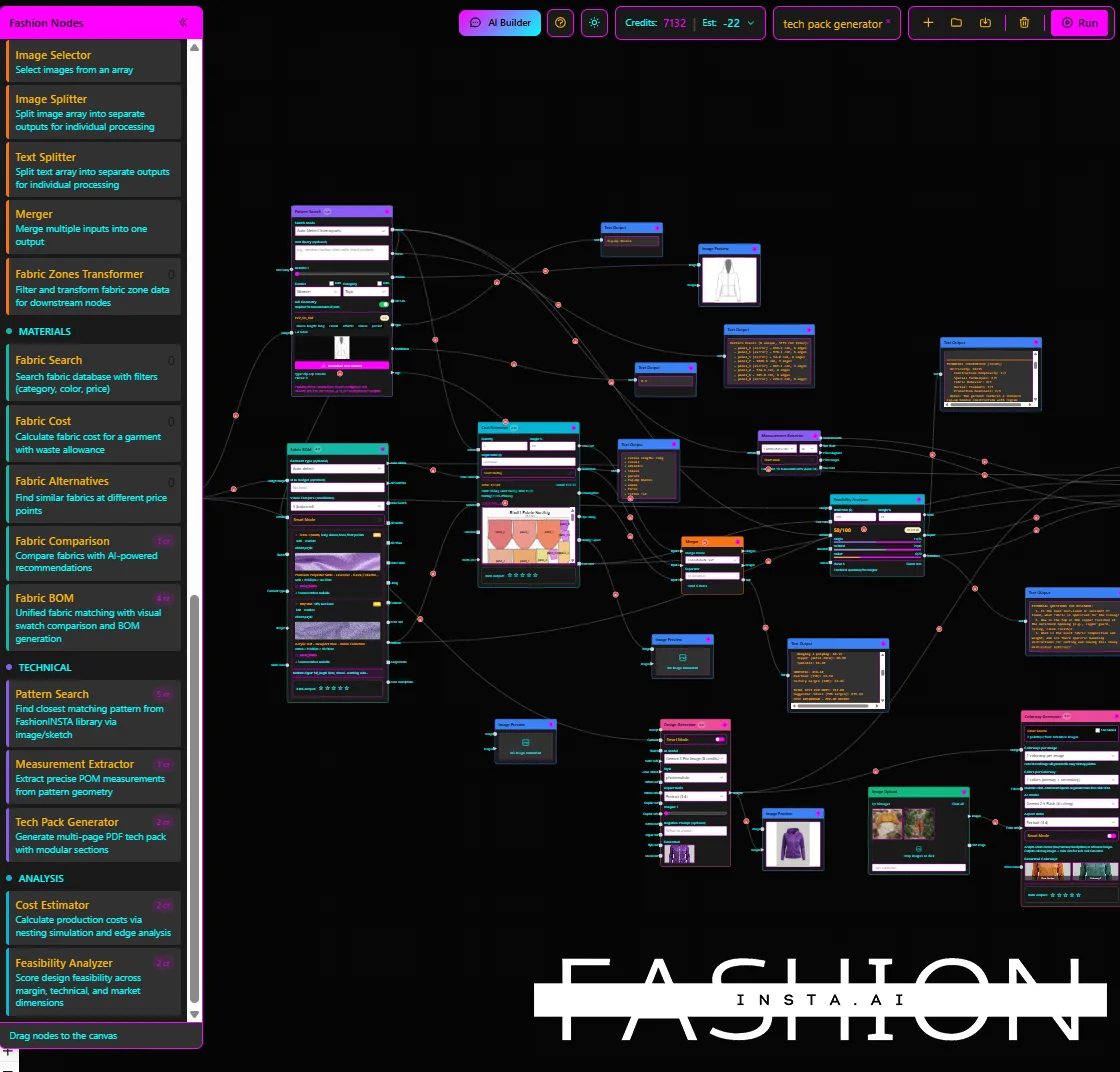
Perhaps the most creatively empowering integration is AI's ability to rapidly generate design variations directly within CAD workflows. This transforms the ideation process from a linear progression to an expansive exploration of possibilities.
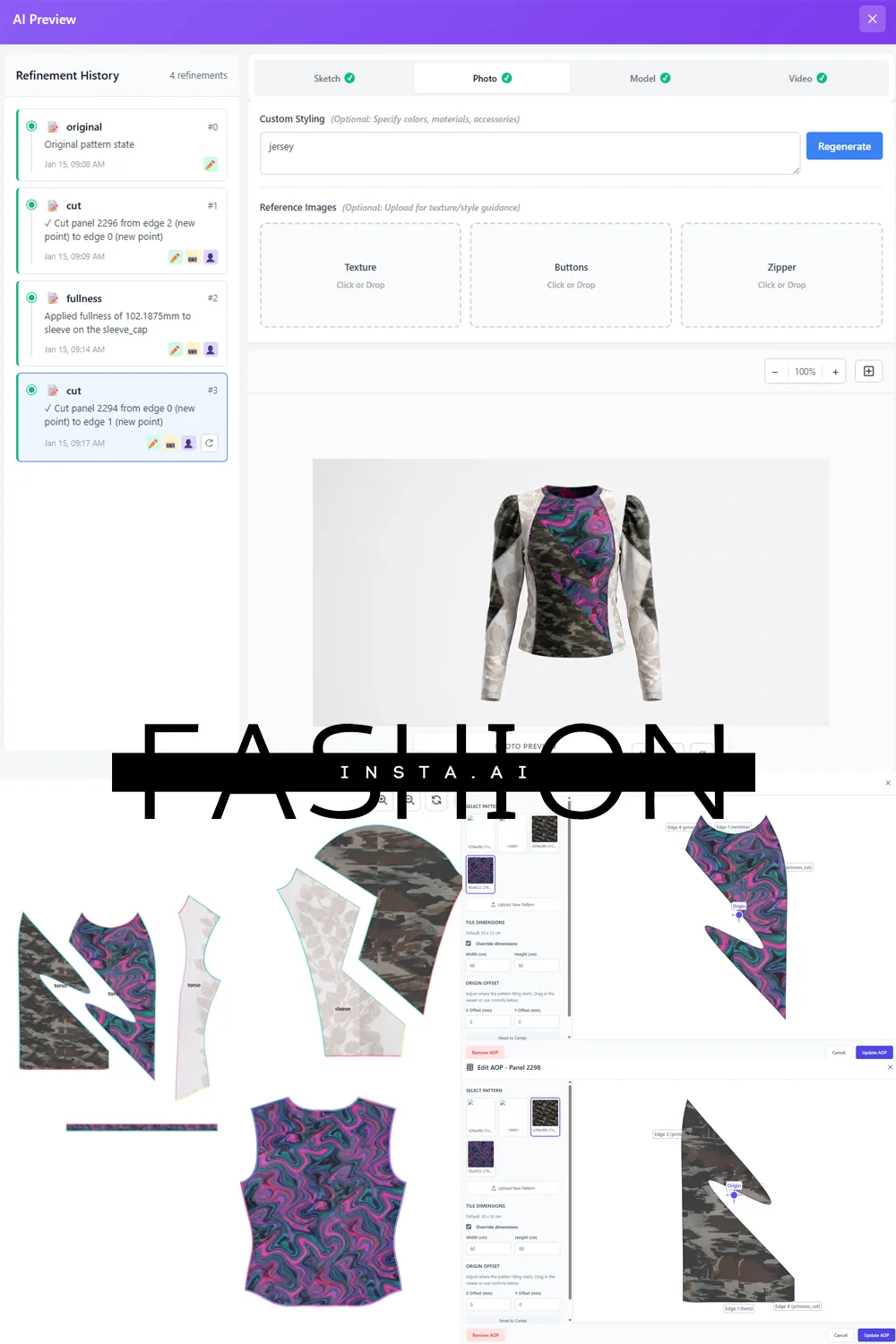
Parametric Design Exploration: AI tools integrated with CAD software can take a single base design and generate dozens of variations by intelligently modifying elements like sleeve length, collar style, hemline shape, or pocket placement. Designers maintain creative control by setting parameters and selecting preferred directions, while AI handles the technical execution.
Color and Pattern Application: AI texture generators create custom prints, graphics, and colorways that can be instantly applied to 3D garments within CAD environments. Designers can explore thousands of aesthetic combinations in the time it would take to manually prepare a handful of options.
Style Recommendation Systems: Some advanced integrations analyze a brand's historical design data to suggest new design directions that align with past successful collections while introducing fresh elements. This data-driven approach helps balance innovation with commercial viability.
The workflow efficiency gains are substantial—designers report completing design iteration phases 70-85% faster when using AI-enhanced CAD tools compared to traditional methods. This acceleration doesn't just save time; it fundamentally changes what's possible within a typical design development cycle.
5. Automated Technical Documentation and Tech Pack Generation
Technical documentation has traditionally been one of the most tedious aspects of fashion design, requiring meticulous attention to detail to ensure manufacturers have all necessary information. AI integration with CAD software now automates significant portions of this process.
Measurement Extraction: AI tools can automatically extract precise measurements from 3D CAD models, populating tech pack measurement charts with accurate data for every size in a range. This eliminates manual measurement processes that are both time-consuming and prone to human error.
Construction Detail Recognition: Advanced AI systems analyze 3D garments to identify construction methods, stitch types, and assembly sequences, automatically generating construction diagrams and specification notes. This ensures technical documentation accurately reflects the design intent.
Bill of Materials Generation: By analyzing digital garment files, AI can create comprehensive bills of materials that list every component needed for production—fabrics, trims, notions, and findings—complete with quantities, specifications, and placement details.
Multi-Language Support: AI-powered translation tools integrated into CAD workflows can automatically translate technical documentation into multiple languages, facilitating communication with global manufacturing partners.
This integration dramatically reduces the time between design approval and production start, as manufacturers receive complete, accurate technical packages immediately upon design finalization rather than waiting days or weeks for manual tech pack preparation.
6. Cloud-Based Collaboration and Version Control
Modern AI-CAD integrations leverage cloud infrastructure to transform how design teams collaborate across geographic boundaries and organizational silos. These platforms create unified digital environments where all stakeholders work from the same real-time data.
Centralized Digital Assets: Cloud-based CAD platforms with AI integration maintain a single source of truth for all design files, patterns, materials, and technical specifications. This eliminates version control confusion and ensures everyone references the most current information.
Intelligent Change Tracking: AI systems monitor modifications to designs, patterns, and specifications, automatically documenting changes, flagging potential issues, and notifying relevant team members. This creates transparency throughout the development process.
Smart Asset Management: AI-powered search functions enable team members to quickly find relevant patterns, similar styles, or compatible materials from extensive digital libraries. Instead of manually browsing thousands of files, designers can use natural language queries or visual search to locate exactly what they need.
Cross-Platform Integration: Advanced systems integrate CAD workflows with other enterprise tools like PLM (Product Lifecycle Management) systems, ERP platforms, and e-commerce systems, creating seamless data flow across the entire product development and sales chain.
These collaborative capabilities are particularly valuable for brands working with remote teams, multiple design studios, or international manufacturing partners, as they maintain workflow efficiency regardless of physical distance.
7. Predictive Analytics for Design Decision-Making
One of the most sophisticated AI-CAD integrations involves predictive analytics that help designers make more informed decisions throughout the creative process. By analyzing historical data, market trends, and consumer behavior, AI provides actionable insights directly within design workflows.
Trend Forecasting Integration: AI systems can analyze social media, runway shows, search data, and sales trends to identify emerging fashion directions. When integrated with CAD software, these insights appear as designers work, suggesting trending colors, silhouettes, or details that could enhance commercial appeal.
Performance Prediction: Advanced AI can predict how specific design elements might perform in the market based on analysis of similar past products. This helps designers balance creative vision with commercial viability during the concept phase rather than discovering issues after production.
Size Distribution Optimization: By analyzing sales data across different size ranges, AI tools can recommend optimal size assortments for new designs, helping brands reduce overproduction of slow-selling sizes while ensuring adequate inventory of popular sizes.
Customer Preference Personalization: For brands offering customization options, AI integrated with CAD systems can suggest personalized design modifications based on individual customer preferences and body measurements, enabling mass customization at scale.
This integration of business intelligence with creative tools represents a fundamental shift in fashion design—from intuition-based decision-making to a hybrid approach that combines human creativity with data-driven insights.
8. Sustainable Design Through AI-Enhanced Workflows
Sustainability has become a critical priority in fashion, and AI-CAD integration offers concrete tools for reducing environmental impact throughout the design and development process.
Virtual Sampling Reduction: By providing photorealistic digital prototypes with accurate fit simulation, AI-enhanced CAD workflows dramatically reduce the need for physical samples. Some brands report reducing sample production by 70-80%, directly cutting material waste, shipping emissions, and production energy use.
Material Waste Optimization: AI-powered marker making and cutting optimization algorithms ensure fabric is used as efficiently as possible. These systems can calculate multiple layout scenarios in seconds, identifying the arrangement that minimizes waste while accommodating production constraints.
Lifecycle Assessment Integration: Advanced systems integrate lifecycle assessment data directly into CAD workflows, showing designers the environmental impact of material choices, construction methods, and manufacturing locations as they work. This enables conscious decision-making during the creative process.
Circular Design Features: Some AI-CAD integrations include design-for-disassembly features that suggest construction methods enabling easier garment recycling or component reuse at end of life. The AI can flag design choices that create recycling challenges and suggest alternatives.
Digital-First Collections: By creating comprehensive digital versions of designs that can be used for marketing, virtual showrooms, and online merchandising before physical production, brands can validate market interest before committing to manufacturing, reducing overproduction risk.
For fashion brands committed to sustainability goals, these AI-enhanced CAD capabilities provide practical tools for measuring and reducing environmental impact without compromising design quality or commercial viability.
9. Custom AI Training on Brand-Specific Design DNA
While off-the-shelf AI tools provide valuable capabilities, the most powerful integrations involve custom AI training on a brand's proprietary design data. This creates AI assistants that truly understand and replicate a label's unique aesthetic and technical approach.
Pattern Library Learning: By training AI systems on a brand's complete pattern archive, the technology learns the specific fit approaches, construction methods, and style proportions that define the brand's identity. When generating new patterns, the AI automatically applies these learned principles.
Design Style Recognition: AI systems can analyze a brand's historical collection to understand recurring design elements, signature details, and aesthetic themes. This enables the system to generate new designs that feel authentically "on brand" while introducing fresh variations.
Fit Standard Consistency: Custom AI training ensures that new patterns automatically conform to a brand's established fit standards across different garment categories. This maintains the consistent fit experience that builds customer loyalty while accelerating pattern development.
Quality Control Automation: AI trained on a brand's quality standards can automatically review new designs and patterns, flagging potential construction issues, specification inconsistencies, or deviations from brand standards before patterns reach the sampling stage.
This level of customization represents a significant investment, but for established brands with extensive pattern libraries and defined design philosophies, it transforms AI from a generic tool into a brand-specific asset that accelerates workflows while maintaining quality and consistency.
Platforms like FashionINSTA.AI specialize in this type of custom AI training, working with fashion brands to create proprietary AI models that understand their unique pattern libraries and design approaches. This enables these brands to benefit from AI acceleration while ensuring their distinctive identity remains intact throughout the design process.
10. Integration Challenges and Implementation Best Practices
While the benefits of AI-CAD integration are substantial, successful implementation requires thoughtful planning and realistic expectations about the transition process.
Initial Investment Considerations: Enterprise-level AI-enhanced CAD platforms require significant upfront investment in software licensing, cloud infrastructure, and potentially hardware upgrades. Smaller brands may need to prioritize which integrations deliver the most immediate value for their specific workflow.
Data Requirements: AI systems require substantial training data to deliver optimal results. Brands with limited historical digital assets may need to invest time digitizing existing pattern archives and design records before AI tools can provide fully customized assistance.
Team Training and Adoption: Even intuitive AI-enhanced tools represent workflow changes that require team training and adjustment periods. Successful implementation includes comprehensive training programs, ongoing support, and patience as team members develop proficiency with new capabilities.
Legacy System Integration: Many established brands use multiple software systems that must communicate effectively. Ensuring data flows smoothly between AI-enhanced CAD platforms and existing PLM, ERP, or other enterprise systems often requires custom integration work.
Balancing Automation and Creativity: Finding the right balance between AI automation and human creative control is crucial. Over-reliance on AI-generated options can lead to generic designs, while under-utilizing AI capabilities wastes efficiency opportunities. Successful teams develop workflows where AI handles technical execution while designers focus on creative direction.
Intellectual Property Considerations: As AI systems learn from proprietary design data, brands must ensure robust data security and clear intellectual property protections. Working with providers who offer enterprise-level security and clear IP ownership terms is essential.
Best Practice Recommendations: Start with pilot programs focused on specific workflow bottlenecks, ensure executive sponsorship and cross-functional buy-in, invest in comprehensive team training, establish clear success metrics, and plan for iterative implementation rather than attempting complete workflow transformation overnight.
Key Takeaways
The integration of AI tools with existing CAD software represents one of the most significant technological advances in fashion design history. By seamlessly connecting AI capabilities with proven CAD platforms like CLO3D, Style3D, and VStitcher, fashion brands can achieve:
- 70-99% faster pattern development through AI-powered generation and optimization
- Dramatic reduction in physical sampling with photorealistic 3D visualization and virtual fit testing
- Substantial material waste reduction through intelligent marker making and cutting optimization
- Enhanced creative exploration with rapid design iteration and variation generation
- Improved collaboration through cloud-based platforms with intelligent version control
- Data-driven design decisions incorporating trend forecasting and performance prediction
- Maintained brand consistency through custom AI training on proprietary design DNA
For fashion brands navigating increasingly competitive markets with compressed development timelines, these AI-enhanced workflows aren't just efficiency improvements—they're fundamental competitive advantages. The technology enables design teams to explore more creative directions, respond faster to market trends, reduce environmental impact, and bring better-fitting, higher-quality products to market more quickly than ever before.
The future of fashion design isn't about replacing human creativity with artificial intelligence; it's about empowering designers with intelligent tools that handle technical execution while freeing creative minds to focus on what they do best—creating compelling designs that resonate with customers. As AI-CAD integration continues evolving, the brands that successfully embrace these technologies while maintaining their unique creative vision will define the next era of fashion innovation.