How Do Advanced AI Tools Generate .DXF Patterns for Custom Designs?
TL;DR: Advanced AI pattern tools are revolutionizing the fashion industry by turning 2D sketches into production-ready .dxf files in minutes. By training on a brand's unique pattern database, these intelligent systems ensure precise fit and construction standards while drastically reducing development time and sampling costs.
I'll never forget the moment a designer friend showed me her studio's "archive system" – seventeen external hard drives, each labeled with different years, piled on a shelf like forgotten relics. When she needed a specific sleeve pattern from 2021, she spent three hours hunting through folders, only to recreate it from scratch because the file was corrupted. That pattern had taken weeks to perfect originally. Three hours of searching. Three days of recreation. And this wasn't unusual – this was Tuesday.
The fashion industry has been stuck in this pattern-making bottleneck for decades, until now. Advanced AI tools are revolutionizing how we generate production-ready .dxf patterns, transforming sketches into manufacturable files in minutes instead of weeks. But here's what most people don't understand: not all AI pattern generation is created equal, and the difference between "pretty pictures" and production-ready patterns can make or break your entire collection.
Let me walk you through how this technology actually works, why it matters, and what separates genuinely useful AI tools from expensive disappointments.
The Technology Behind AI-Generated .DXF Patterns
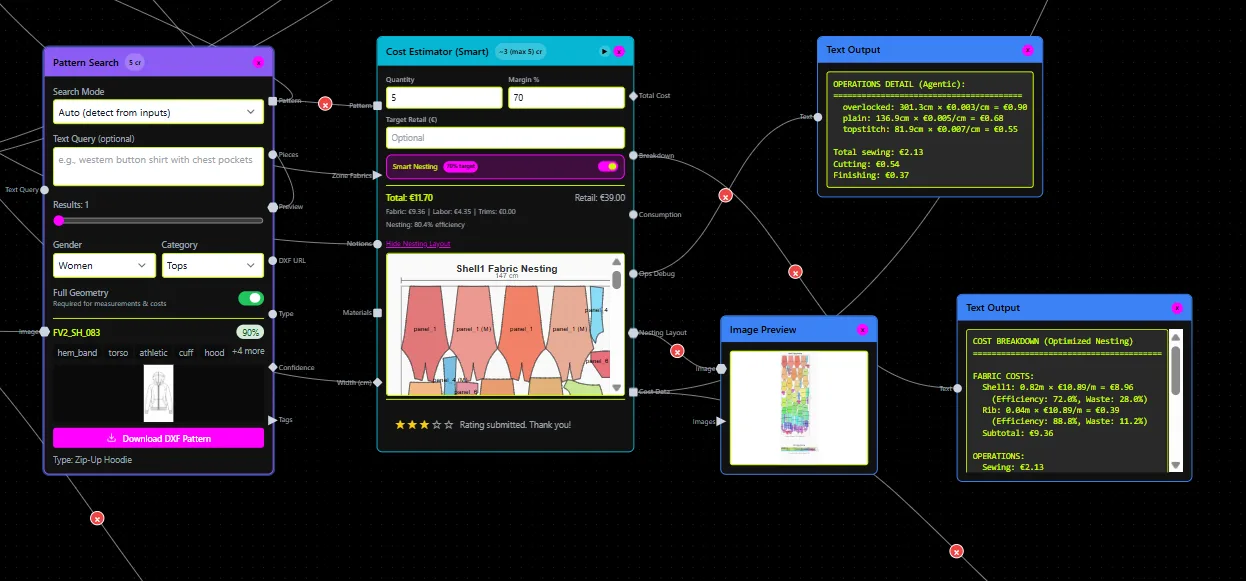
At its core, advanced AI pattern generation combines several sophisticated technologies working in harmony. Think of it like an extremely skilled pattern maker who has studied thousands of patterns, understands the mathematical relationships between design elements, and can work at superhuman speed – but with perfect consistency and zero coffee breaks.
Computer Vision and Pattern Recognition
The journey begins with computer vision technology that "reads" your design sketches like an experienced patternmaker would. When you upload a sketch, the AI analyzes every line, curve, and detail, identifying key elements like necklines, sleeves, darts, and seam placements. But unlike simple image recognition that just says "this is a dress," advanced systems extract precise geometric data and construction logic.
This is where the magic starts to happen. The AI isn't just looking at your sketch – it's understanding the underlying pattern structure that would create that design. It identifies critical construction points, measures proportions, and recognizes pattern-making conventions that translate a 2D sketch into 3D wearable reality.
Machine Learning Models Trained on Real Pattern Data
Here's where things get really interesting, and where the difference between mediocre and exceptional AI becomes apparent. The most advanced systems use machine learning algorithms trained on extensive pattern databases – not generic stock patterns, but actual production patterns with all their nuanced construction details.
When we talk about training AI on pattern libraries, we're talking about teaching the system to recognize 750+ features in each pattern: the precise armhole curve, the specific ease allowance, construction methods, grainline placement, notch systems, and all those subtle details that make the difference between a garment that fits beautifully and one that gets returned.
The best AI pattern systems learn your brand's unique DNA. They understand that your signature jacket has a specific shoulder slope, that your dress patterns always include a particular dart construction, or that your ease preferences differ from industry standards. This brand-specific training is what separates professional-grade AI tools from generic pattern generators.
Pattern Geometry and Parametric Generation
Once the AI understands what you want to create, it generates patterns using parametric modeling – a sophisticated mathematical approach that defines pattern pieces through relationships and rules rather than fixed drawings. This is crucial for .dxf generation because it ensures patterns are mathematically precise, infinitely scalable, and fully adjustable.
The system creates base pattern blocks, then applies modifications based on your sketch details: adding style lines, adjusting fit, incorporating design features. Every curve is calculated using precise algorithms, every notch is positioned with mathematical accuracy, and every grainline follows proper construction principles.
What makes this powerful is the modular approach. Advanced AI systems don't generate patterns from scratch every time – they intelligently mix and match proven pattern components. Need a new shirt? The AI might combine a collar from pattern A, a body from pattern B, and sleeves from pattern C, ensuring each component maintains its approved fit while creating something entirely new.
From Sketch to Production-Ready .DXF File
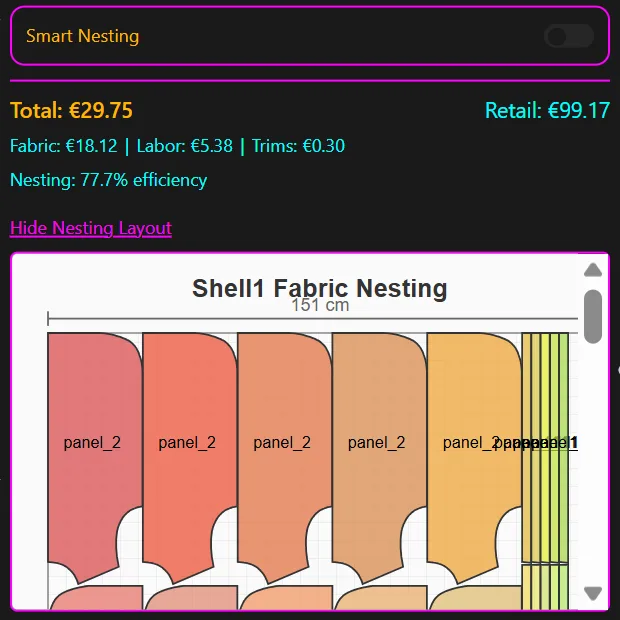
Understanding the process flow helps demystify how AI transforms your creative vision into manufacturable patterns. Let me break down the journey your sketch takes.
Input Analysis and Feature Extraction
When you upload your sketch, the AI immediately goes to work extracting every relevant detail. It identifies garment type, style elements, proportions, and construction requirements. Think of this like a pattern maker's initial tech pack review, except it happens in seconds.
Advanced systems analyze not just what's drawn, but what's implied. That princess seam in your sketch? The AI understands it needs to create two separate pattern pieces with matching curves. That gathered sleeve? It calculates the necessary ease and fullness distribution. The system is making hundreds of pattern-making decisions based on established garment construction principles.
Pattern Database Searching and Component Matching
Here's where having a trained AI model makes all the difference. Instead of generating patterns from scratch, the system searches through your pattern library to find similar existing patterns. It scores patterns by similarity and complexity, identifying which existing elements can be reused or adapted.
This is like having instant access to every pattern your company has ever created, with the ability to find exactly what you need in two seconds instead of two days. One California brand I know discovered they were unknowingly recreating patterns that already existed in their archives, costing them $60,000-80,000 annually. Pattern intelligence eliminated this hidden waste completely.
Intelligent Pattern Modification and Variation
The AI then modifies and combines pattern components to match your sketch. This isn't crude pattern manipulation – it's intelligent adaptation that preserves fit consistency while incorporating new design elements. The system understands which modifications affect fit (like changing dart positions) versus those that are purely stylistic (like adding a pocket).
You can swap collars, mix sleeves, adjust ease, add style lines – creating infinite variations while maintaining your brand's signature fit. Every modification is tracked, every relationship is maintained, and the system ensures technical feasibility throughout the process.
Technical Specification Integration
Production-ready patterns require more than just accurate shapes. They need complete technical information: seam allowances, notch systems, grainline markings, drill holes, annotations, and all the details a factory needs for manufacturing.
Advanced AI systems automatically generate these technical specifications according to industry standards and your brand's specific requirements. The .dxf file that emerges isn't just pattern shapes – it's a complete, manufacturer-ready package that includes everything needed for cutting, sewing, and assembly.
The .DXF File Format: Fashion's Universal Language
Understanding why .dxf (Drawing Exchange Format) matters helps appreciate what advanced AI systems are actually generating. This isn't just another file type – it's the universal language that connects design, pattern making, grading, and manufacturing.
Why .DXF Dominates Fashion CAD
DXF files are the industry standard because they store precise 2D vector data that all major CAD systems can read. Whether you use Gerber, Lectra, Optitex, Assyst, or any other pattern-making software, .dxf ensures your patterns translate accurately across platforms.
This universality is critical for modern fashion production. Your designer might sketch in California, patterns get generated using AI, grading happens in New York, and manufacturing occurs in Vietnam – all using different software systems. DXF files make this seamless global workflow possible.
For 3D visualization, .dxf patterns integrate perfectly with software like CLO3D, Browzwear, and Style3D. This means the patterns AI generates can immediately be used for virtual prototyping, enabling you to see how your design looks and fits on different body types without creating physical samples.
Technical Components of Production-Ready .DXF Patterns
A truly production-ready .dxf pattern contains layers of information beyond the basic pattern outline. There are separate layers for cut lines, seam allowances, internal lines, drill holes, notches, and annotations. Grainlines, fold indicators, and piece labeling are precisely positioned. AAMA/ASTM standards ensure grading rules are embedded correctly.
This technical richness is what separates AI-generated patterns that actually work from those that look good but fail in production. When brands tell me they tried AI pattern generation and it "didn't work," it's usually because they used tools that generate pretty pictures without this essential technical infrastructure.
Fashioninsta generates .dxf patterns with all this technical detail intact, ensuring what you design is exactly what manufacturers can produce. The visuals you see are rooted in real pattern geometry – the same data that becomes actual garments. Pattern truth, not pixel fiction.
Real-World Impact: Speed, Accuracy, and Cost Savings
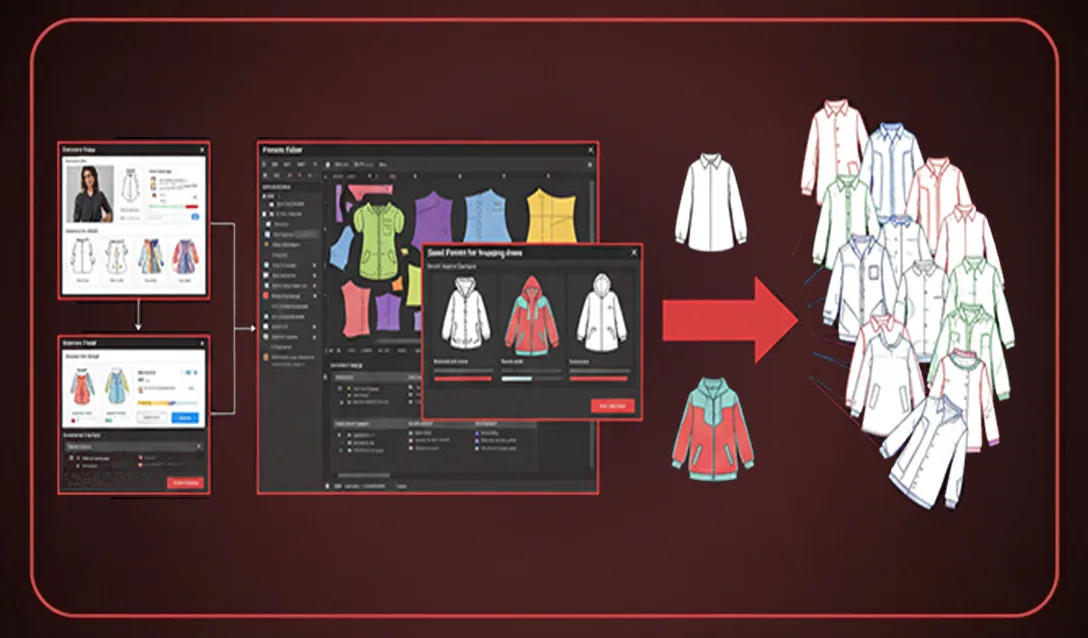
The theoretical capabilities of AI pattern generation are impressive, but what actually matters is the real-world impact on your business. Let me share what I've observed across brands implementing this technology.
Time Compression That Changes Everything
Traditional pattern development takes days or weeks. Upload a sketch, wait for the pattern maker to draft the base, review it, request changes, wait for revisions, finally approve. This cycle repeats for every single design in your collection. Advanced AI compresses this timeline to minutes.
I've watched designers generate twelve pattern variations in an afternoon – something that would have taken two weeks traditionally. This speed doesn't just accelerate product development; it fundamentally changes how you can work. Suddenly experimentation becomes feasible. You can explore design directions you'd never consider if each iteration cost days of work.
One Italian brand discovered they could test three times as many designs per season without increasing their pattern-making team. The patterns that made it to production were better because they had more options to choose from. Speed created quality.
Consistency That Preserves Brand Identity
Here's something most people don't appreciate until they've struggled with it: maintaining consistent fit across hundreds of styles is brutally difficult. Different pattern makers have different approaches. Knowledge walks out the door when experienced team members leave. Fit standards drift over time as modifications accumulate.
AI systems trained on your pattern database preserve institutional knowledge. Every pattern generated respects your brand's fit philosophy, construction methods, and signature details. The system doesn't forget, doesn't take shortcuts, and doesn't interpret standards differently depending on who's working that day.
This consistency extends beyond fit to construction methods. Your brand has specific ways of finishing necklines, setting sleeves, or constructing waistbands – techniques refined over years. AI trained on your patterns maintains these signature construction details automatically, ensuring brand identity persists across your entire collection.
Cost Savings Beyond Labor Hours
The obvious savings come from reducing pattern-making labor hours. But the hidden savings are often more significant. Pattern reuse eliminates the waste of recreating patterns that already exist. Faster development cycles mean you can be more responsive to market demands, capturing trends while they're still relevant.
Virtual prototyping using AI-generated .dxf patterns reduces physical sampling costs dramatically. Instead of making three physical prototypes to get the fit right, you can test virtually first, then make one physical sample to confirm. For brands producing hundreds of styles per season, the fabric and sampling cost savings alone can justify the investment.
Accuracy improvements reduce costly production errors. When patterns are mathematically precise and technically complete, factories have fewer questions, make fewer mistakes, and deliver what you actually designed. Every production correction you avoid saves thousands of dollars and prevents missed delivery dates.
What Separates Professional AI Tools from Pretty Picture Generators
Not all AI pattern generation is equal. In fact, the vast majority of "AI fashion tools" are fundamentally different from professional pattern intelligence systems. Understanding this distinction could save you significant money and frustration.
The Production-Ready Test
Here's a simple test: Can you send the AI-generated output directly to a factory and have them cut and sew it without asking questions? If the answer is no, you're dealing with a design inspiration tool, not a production system.
Many AI tools generate beautiful fashion illustrations or even technical flats, but these are visual representations, not manufacturable patterns. They lack the technical precision, grading rules, construction details, and standardized formatting that factories require. They're great for mood boards and presentations, but they don't accelerate actual production.
Professional AI pattern systems generate complete .dxf files that include all manufacturing information. Seam allowances are precise, notches are positioned correctly, grainlines follow proper conventions, and all technical specifications are embedded. The factory receives everything they need to manufacture correctly the first time.
Custom Training vs. Generic Generation
Generic AI tools generate patterns based on broad fashion industry data. They produce "standard" patterns that might work for generic brands but don't preserve your unique fit philosophy or construction methods. It's like hiring a pattern maker who's never seen your brand's work before – they'll give you something, but it won't be authentically yours.
Custom-trained AI systems learn from your specific pattern database. They extract and preserve your brand DNA, ensuring every generated pattern maintains your signature fit and construction approach. This is the difference between a tool that assists your work and one that transforms your capability while preserving what makes your brand unique.
When evaluating AI pattern tools, always ask: "Does this system train on my patterns, or does it use generic industry data?" The answer determines whether you're getting a customized solution or a one-size-fits-all approach.
Integration with Existing Workflows
Professional AI tools integrate seamlessly with your existing CAD software, PLM systems, and manufacturing workflows. They speak the technical language of fashion production: .dxf files, AAMA standards, proper grading formats, and manufacturer-ready outputs.
This integration matters because it determines whether AI enhances your current processes or creates parallel workflows that don't connect. If you need to manually recreate AI-generated patterns in your CAD system, you've eliminated much of the efficiency gain. If AI outputs don't integrate with your PLM system, you're creating data silos that cause problems downstream.
The most valuable AI tools become invisible parts of your workflow. Designers sketch, AI generates patterns, CAD systems refine them, PLM tracks everything, and manufacturers receive proper files. The technology serves the process rather than forcing process changes to accommodate the technology.
The Future Is Pattern Intelligence, Not Pattern Generation
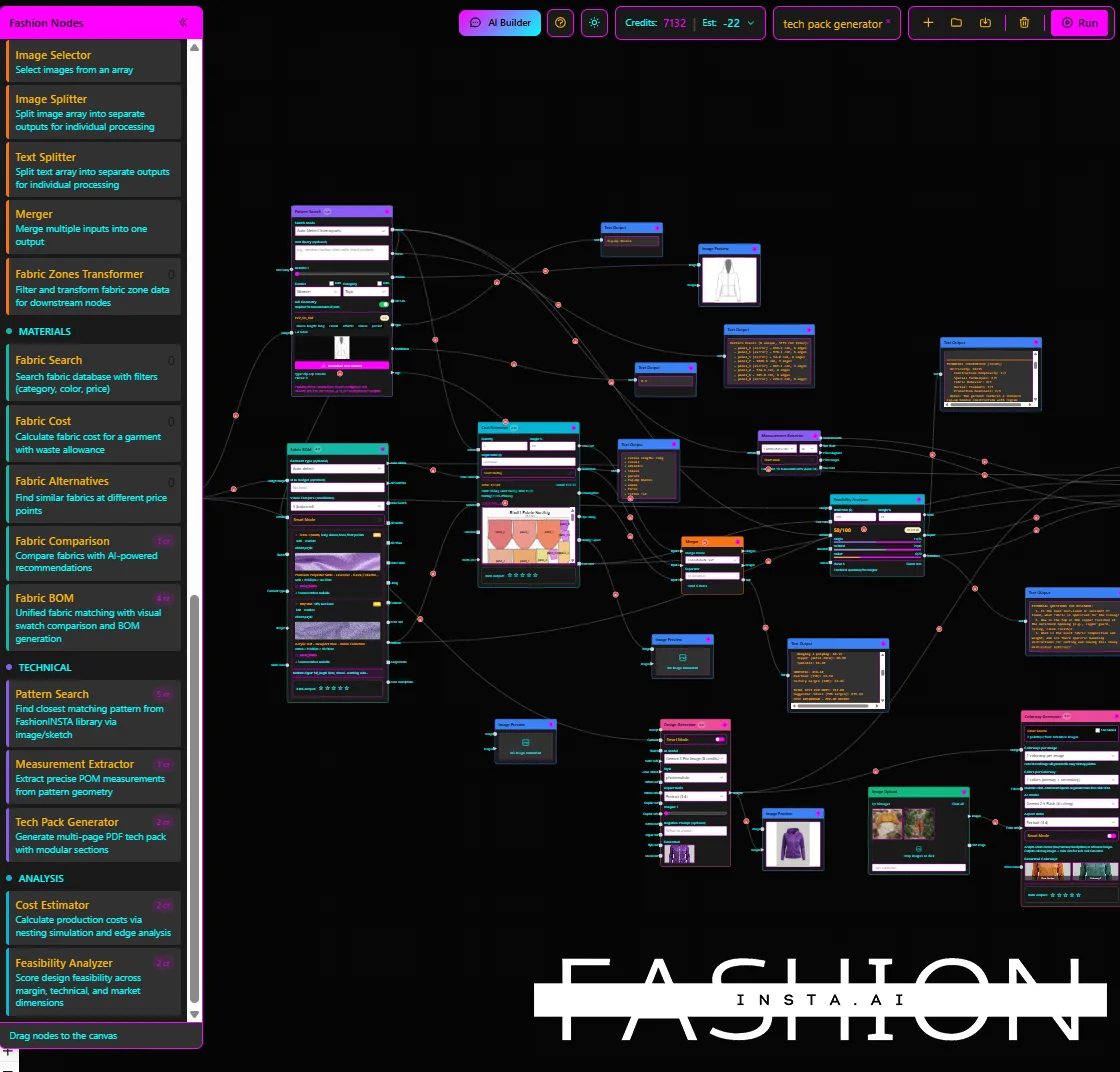
Here's where I think the conversation needs to shift. The future isn't just about faster pattern generation – it's about transforming pattern libraries from static archives into living, intelligent systems that amplify human creativity.
Archives That Actually Work
Most fashion companies have thousands of patterns buried in barely-searchable folder structures. These archives represent millions of dollars of investment and decades of refinement, but they're functionally useless because finding anything takes hours or days. Pattern intelligence systems transform these archives into searchable, analyzable, reusable assets.
Imagine asking your system "find all jackets similar to this sketch" and getting ranked results in seconds. Imagine seeing derivation trees that show how patterns evolved over seasons, understanding which modifications worked and which didn't. Imagine having instant access to your company's entire pattern-making history, fully organized and ready to leverage.
This is pattern intelligence – not just generating new patterns, but making your existing patterns infinitely more valuable through organization, analysis, and intelligent reuse.
Modular Pattern Systems That Scale Creativity
The next evolution is treating patterns as modular systems rather than individual files. Your collar database becomes a library of proven components that can mix with any compatible body. Your sleeve patterns become building blocks that work across multiple garment types. Design becomes assembly and modification of tested components rather than constant recreation from scratch.
This modular approach doesn't limit creativity – it amplifies it. When you can instantly try twenty collar options on your new jacket design, you explore more possibilities than when each option requires days of manual work. Constraints often drive creativity, but time constraints usually just drive frustration.
Advanced AI systems enable this modular approach by understanding component compatibility, maintaining fit relationships, and ensuring technical feasibility across combinations. You get the creative freedom of infinite variation with the confidence that everything you create will actually work in production.
Human Creativity Amplified by Machine Precision
The goal isn't replacing pattern makers and designers with AI. It's amplifying human creativity by removing tedious technical execution. Let humans do what they do best – creative vision, aesthetic judgment, brand understanding – while AI handles mathematical precision, variation generation, and technical documentation.
The best fashion teams I've seen using AI pattern intelligence aren't smaller; they're more creative and more productive. They spend less time fighting technical problems and more time exploring design possibilities. Pattern makers focus on perfecting fit and construction rather than drafting basic blocks. Designers experiment more freely because iteration costs minutes instead of days.
This is the promise of advanced AI pattern generation: not eliminating human expertise, but giving that expertise superhuman tools.
Making AI Pattern Intelligence Work for Your Brand
If you're considering implementing AI pattern generation, here's what I've learned watching brands succeed (and sometimes struggle) with this technology.
Start by auditing your pattern archives. How organized are they? Can you find specific patterns quickly? Do you know how many similar patterns you have? Understanding your current state helps you measure improvement and guides implementation priorities.
Define your fit philosophy explicitly. What makes your brand's fit unique? What construction methods are signature to your approach? What consistency standards matter most? Advanced AI systems need this information to learn your brand DNA accurately. The clearer you are about what matters, the better the AI can preserve it.
Plan for training time. Custom AI training isn't instant – it typically takes 2-6 weeks depending on database size and complexity. Budget this time upfront. Rushing the training phase usually means repeating it later, which wastes more time than doing it properly initially.
Integrate gradually. Start with one pattern category or one team. Perfect the workflow, understand the system, build confidence. Then expand systematically. Trying to transform your entire operation overnight usually creates chaos and resistance.
Measure what matters. Track time savings, pattern reuse rates, sampling cost reductions, production error decreases. These metrics justify investment and identify opportunities for improvement. What gets measured gets managed.
The Technology That Actually Delivers
After thousands of words explaining how advanced AI generates .dxf patterns, here's the bottom line: the technology works, but only when implemented properly with systems built for actual fashion production rather than generating pretty pictures.
The fashion industry stands at a transformation point similar to when CAD replaced manual pattern drafting. The brands that embrace pattern intelligence now will have significant competitive advantages: faster development, more consistent quality, lower costs, and greater creative exploration. The brands that wait will find themselves increasingly unable to compete on speed and efficiency.
But here's my honest advice: be skeptical. Ask hard questions. Demand proof. Test systems with your actual patterns and real production requirements. The difference between AI tools that transform your capability and those that waste your money often isn't obvious until you dig into technical details.
The future of fashion is patterns that think, archives that answer questions, and AI that amplifies human creativity while maintaining the precision and consistency that production demands. That future is here now – but only for brands willing to distinguish between genuine pattern intelligence and expensive pixel generators.
Your pattern library represents years of investment and refinement. The right AI system multiplies that value exponentially. The wrong one just creates prettier pictures of the same old problems.