How Fashion Brands Are Enhancing Their Design Process with AI in 2025
TL;DR: Artificial intelligence is drastically reshaping the fashion industry by accelerating the design-to-production timeline and reducing material waste. From AI-driven trend forecasting and ideation to automated pattern generation and 3D virtual prototyping, fashion brands are leveraging these tools to work smarter and more sustainably. Ultimately, AI serves as a powerful creative partner that amplifies human ingenuity rather than replacing it.
Remember the days when bringing a fashion sketch to life meant weeks of back-and-forth pattern drafting, endless samples, and crossing your fingers that the final garment would match your vision? Those days are rapidly becoming history. In 2025, artificial intelligence isn't just knocking on the fashion industry's door—it's completely remodeling the house.
I recently spoke with a designer friend who works for a mid-sized fashion brand. She told me something that made me pause: "We used to need six weeks to get from concept to first sample. Now? We're doing it in days." This isn't science fiction or exaggeration. This is the reality of AI-enhanced design processes transforming fashion brands across the globe.
Let's dive into exactly how fashion brands are leveraging AI to revolutionize their design workflows, speed up production timelines, and create better garments—all while maintaining the creative soul that makes fashion so captivating.
From Trend Forecasting to Instant Insights: AI as Your Crystal Ball
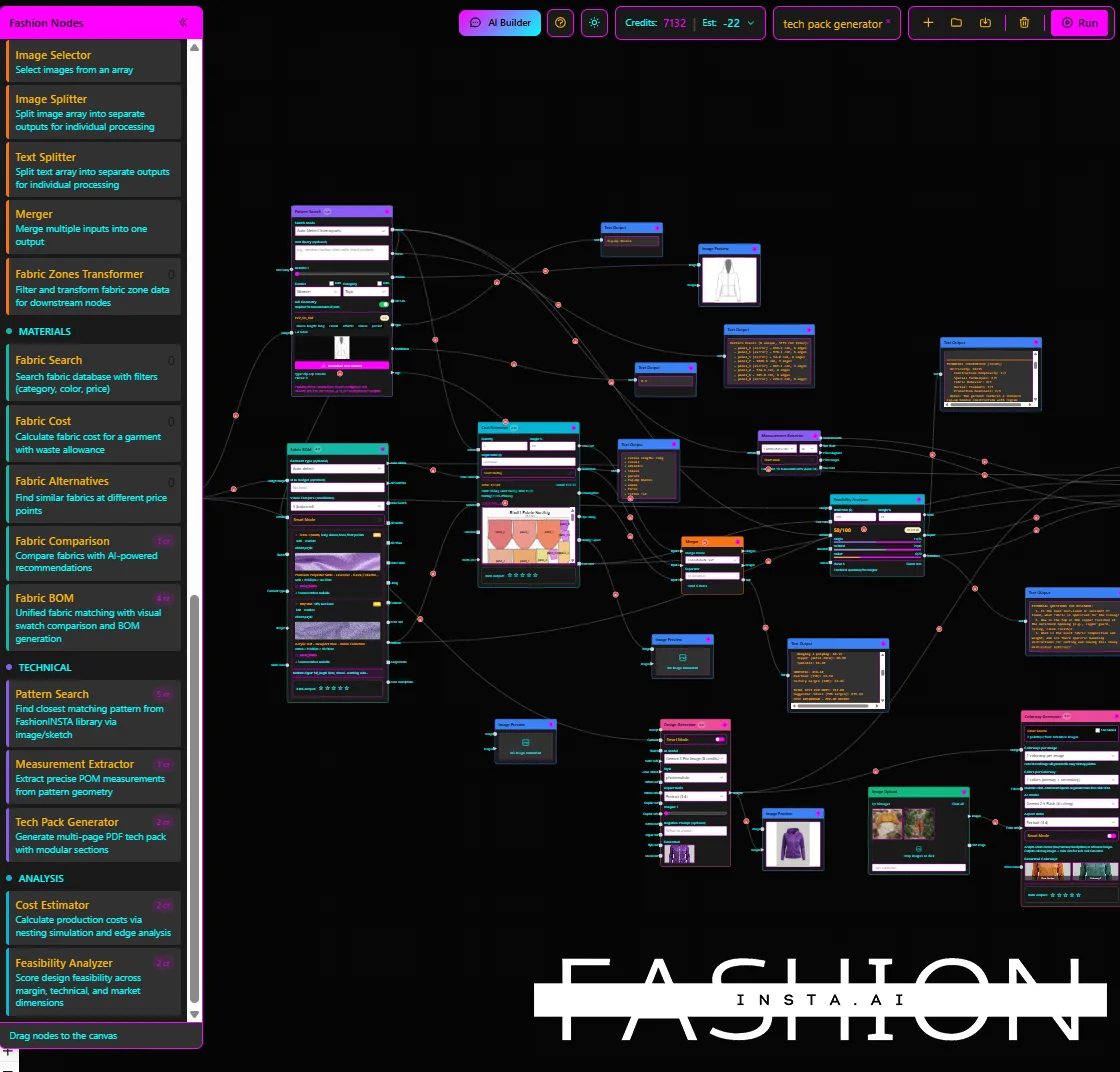
One of the most powerful ways fashion brands are using AI is in trend forecasting. Gone are the days when designers relied solely on intuition and fashion week runways to predict what consumers would want six months from now.
Today's AI systems analyze millions of data points—from social media posts and street style photographs to sales data and search trends—to identify emerging patterns before they hit the mainstream. Brands like Zara have integrated AI-driven forecasting into their operations, allowing them to respond to trending styles with remarkable speed. According to recent industry reports, AI can predict color, material, and style trends with up to 95% accuracy by analyzing global fashion data in real-time.
What makes this revolutionary is the democratization of insights. Smaller brands now have access to the same trend intelligence that was once exclusive to luxury houses with massive research budgets. AI tools can identify that forest green is gaining traction in Paris street style, that oversized silhouettes are resonating with Gen Z consumers in Tokyo, or that sustainable materials are becoming non-negotiable for millennial shoppers—all before these trends fully crystallize.
The beauty here is that AI doesn't replace a designer's instinct; it amplifies it. Think of it as having a research assistant who never sleeps, constantly scanning the globe for signals about what your customers will love next season.
Ideation on Steroids: When AI Becomes Your Creative Partner
Here's where things get really interesting: AI as a design collaborator. Fashion designer Norma Kamali has been feeding AI software with decades of images from her brand's archive, training it to understand her unique design DNA. The result? An AI system that can suggest new designs that feel authentically "Kamali" while pushing creative boundaries in unexpected ways.
This is fundamentally different from AI simply copying existing designs. Advanced platforms now allow designers to input a rough sketch, a mood board, or even just a written description, and receive multiple design variations that can be refined and adapted. It's like having a creative brainstorming session where your partner never runs out of ideas.
Major brands are using AI to generate countless design variations from a single concept—experimenting with different necklines, sleeve lengths, prints, and silhouettes in minutes rather than days. Nike, for instance, has explored AI-assisted design to create innovative sneaker concepts that human designers then refine and perfect.
The key insight here is that AI doesn't make designers obsolete—it liberates them from the time-consuming aspects of ideation so they can focus on the nuanced creative decisions that truly require human judgment. As one designer put it, "AI gives me 100 ideas to react to rather than staring at a blank page trying to create idea number one."
The Pattern-Making Revolution: Sketch to Production in Minutes
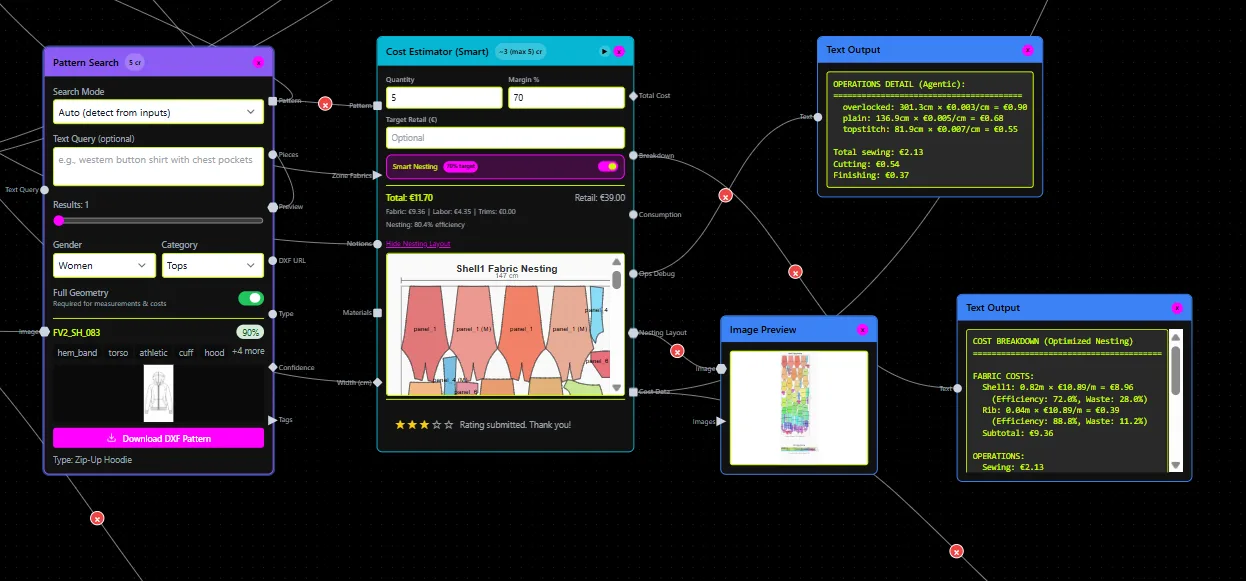
If there's one area where AI is creating a seismic shift in fashion design, it's pattern making. This traditionally labor-intensive process—translating a 2D sketch into the precise technical patterns needed to construct a 3D garment—has long been a bottleneck in the design timeline.
In 2025, AI-powered pattern generation is changing everything. Platforms can now convert sketches or photographs into production-ready patterns in minutes. What's more impressive is that these systems can be trained on a brand's existing pattern library, learning the specific fit preferences, construction techniques, and design signatures that make each brand unique.
This is where solutions like FashionINSTA.AI are making waves. Unlike generic AI tools that produce pretty pictures but lack manufacturing intelligence, specialized pattern-making AI understands the technical requirements of actual garment construction. It respects brand-specific blocks, maintains consistency across size ranges, and outputs patterns in industry-standard formats that integrate seamlessly with CAD tools like CLO3D, Style3D, and VStitcher.
Think about what this means practically: A brand can maintain its signature fit—that specific waistline placement or shoulder slope that customers love—while rapidly creating new styles. The AI learns what makes a "perfect" pattern for that brand and replicates that DNA across new designs.
The economic impact is substantial too. Fashion brands have historically wasted hundreds of thousands of dollars per collection on pattern development, sampling, and iterations. AI-powered pattern making can reduce these costs by up to 75% while dramatically accelerating timelines. For brands trying to compete with fast fashion giants like Zara—which famously goes from design to retail floor in just 15 days—this technology is increasingly becoming essential rather than optional.
Virtual Prototyping: Less Waste, More Precision
One of the most sustainable applications of AI in fashion design is virtual prototyping. Instead of creating multiple physical samples—each requiring fabric, labor, and shipping—brands are now creating photorealistic 3D prototypes that show exactly how a garment will drape, move, and fit.
AI-enhanced 3D simulation can model different fabric behaviors with astonishing accuracy. Designers can see how a silk charmeuse will flow differently than a cotton poplin, or how a stretch denim will behave under tension—all without touching a single yard of fabric.
Gucci and other luxury brands have embraced this technology, using 3D prototyping to reduce their sampling rounds from five or six down to just one or two. The environmental benefits are significant: fewer samples mean less fabric waste, reduced shipping emissions, and a smaller carbon footprint overall.
But beyond sustainability, virtual prototyping gives designers unprecedented control. They can experiment freely, trying bold ideas without the financial risk of producing expensive physical samples that might not work. It's creative freedom and fiscal responsibility working in harmony.
Personalization at Scale: AI-Driven Custom Collections
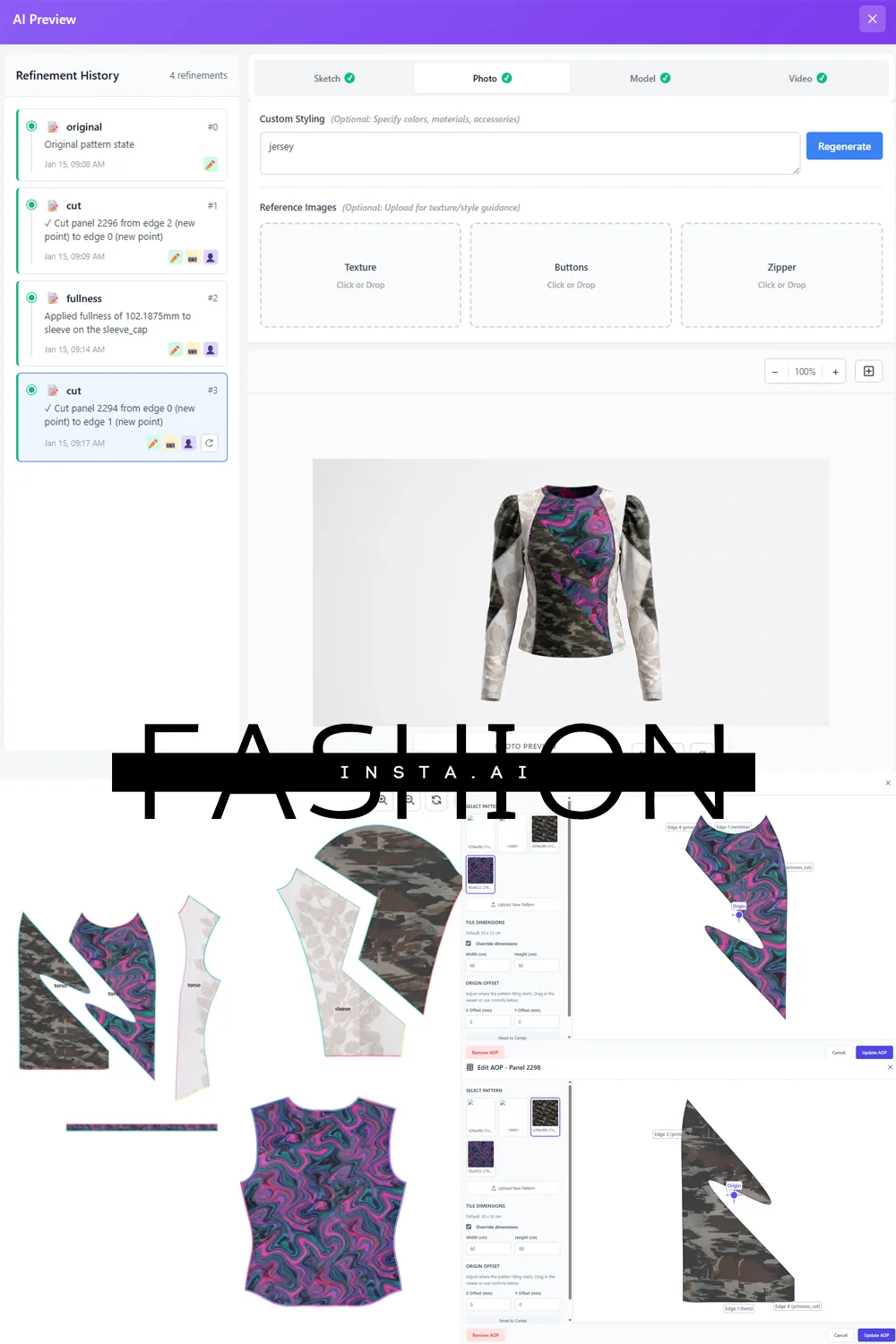
Perhaps one of the most exciting frontiers is AI-enabled personalization. Brands are using AI to analyze customer data and create more targeted collections that speak to specific audience segments—or even individual customers.
This goes beyond basic recommendations. AI can help brands understand fit preferences across different demographics, identify which colors resonate with specific customer groups, and even suggest style modifications that will appeal to particular markets. A brand could create slightly different versions of the same design optimized for different body types or regional preferences—something that would be prohibitively expensive and time-consuming without AI assistance.
The emerging model of on-demand production, powered by AI, takes this even further. Instead of manufacturing thousands of units and hoping they sell, brands can use AI to predict exact demand and produce garments as they're ordered. This eliminates overproduction waste while ensuring customers get exactly what they want.
The Technical Backbone: Integration and Intelligence
What makes all of this possible isn't just standalone AI tools—it's the sophisticated integration of AI throughout the entire design ecosystem. In 2025, the most successful fashion brands are those that have created seamless workflows where AI-powered tools communicate with each other.
A designer sketches an idea in one tool, which automatically generates a pattern in another system, which then creates a 3D prototype that can be modified and refined—all within hours rather than weeks. The pattern specifications flow directly to production systems, tech packs are generated automatically with accurate measurements and construction details, and everything is tracked in a centralized database.
This level of integration requires what some in the industry call "pattern intelligence"—systems that understand not just how to create patterns, but the construction logic, material constraints, and manufacturing realities that determine whether a design can actually be produced successfully.
Navigating the Challenges: What to Watch Out For
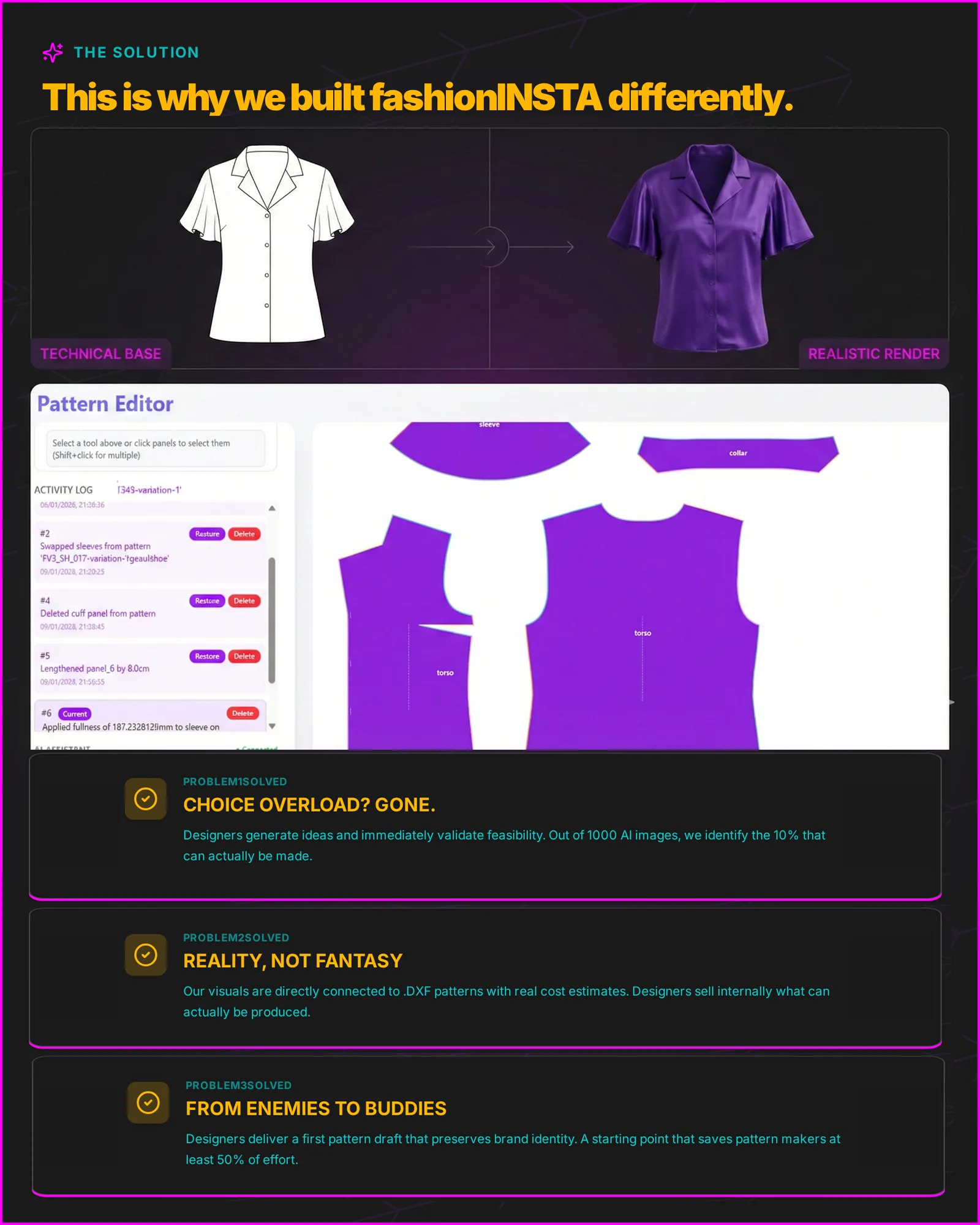
Of course, adopting AI in fashion design isn't without challenges. The initial investment can be significant, and brands need team members with the technical skills to implement and manage these systems effectively. There's also a learning curve as designers adapt to new workflows and learn to work effectively with AI as a collaborative tool.
Perhaps the most important consideration is maintaining creative authenticity. There's a legitimate concern that if too many brands rely on similar AI systems, fashion could become homogenized. The most successful brands are those that use AI to amplify their unique design perspective rather than replace it.
Quality control remains essential too. While AI can generate patterns and designs quickly, human oversight is still crucial to catch errors, ensure manufacturability, and make the nuanced judgments that separate a good design from a great one.
The Bottom Line: Speed, Sustainability, and Creative Freedom
By 2025, the fashion brands pulling ahead aren't necessarily the ones with the biggest budgets or the most designers—they're the ones who have successfully integrated AI into their design processes to work smarter, faster, and more sustainably.
AI is enabling smaller brands to compete with industry giants by giving them access to sophisticated design tools that were once exclusive to major players. It's allowing established brands to accelerate their timelines without sacrificing quality. And it's giving all designers more time to focus on what they do best: creating beautiful, innovative fashion that connects with customers.
The revolution happening in fashion design isn't about robots replacing designers—it's about technology empowering creativity. It's about turning weeks into days, reducing waste while improving precision, and making it possible to bring ideas to life faster than ever before.
As we move deeper into 2025 and beyond, the brands that thrive will be those that embrace AI not as a threat to creativity, but as a powerful tool that enhances it. The future of fashion design isn't human or machine—it's human and machine working together to create something neither could achieve alone.
What's your experience with AI in your creative process? Whether you're a designer, a brand owner, or simply someone fascinated by the intersection of technology and fashion, I'd love to hear your thoughts in the comments below.