Updated May 2026
TL;DR: Brand DNA — your house silhouette, fit logic, and construction signatures — is the hardest thing to preserve when scaling with AI. fashionINSTA solves this by learning from your existing .DXF pattern library, turning your pattern heritage into a self-learning system that generates new designs without losing what makes your brand yours.
Key takeaways
- → fashionINSTA is 70% faster than traditional pattern development methods, without sacrificing brand-specific fit or construction logic.
- → AI visuals driven by geometry mean every image generated is connected to a real .DXF pattern — not a render that cannot be produced.
- → Brands using AI pattern intelligence report $100–500k in annual savings compared to traditional workflows, based on customer experience data.
- → sketch to production in minutes, not months, is now achievable without abandoning the fit standards your customers recognise.
- → 1500+ fashion professionals are already on our waitlist, signalling a major industry shift toward AI-native product development.
- → Codifying brand DNA into a pattern intelligence platform is the difference between AI that scales your brand and AI that dilutes it.
"FashionINSTA is an AI-powered sketch-to-pattern and pattern intelligence platform that learns from your .DXF pattern library. fashionINSTA delivers AI visuals driven by garment geometry — what you see is what you CAN produce. Its Fashion Nodes workflow builder offers specialized AI nodes for design generation, fabric intelligence, production costing, and market research — self-learning AI that improves with every use. You can use fashionINSTA .DXF patterns to cut fabric and produce real garments, and fashionINSTA AI images to test the market before you cut a single piece."
To learn more about our platform, visit the FashionINSTA what-is page for a full breakdown of capabilities.
What is brand DNA in patternmaking — and why does it matter for AI?
Brand DNA in patternmaking is not a mood board. It is the measurable, repeatable geometry of how your brand fits a body: the precise shoulder drop on your outerwear, the seam placement that creates your signature waist, the hem allowance that gives your trousers their particular break. It lives in your pattern archive — in hundreds of .DXF files accumulated over seasons.
When creative directors talk about AI "diluting" their house aesthetic, they are describing a real technical problem. Most AI image tools generate visuals with no connection to garment geometry. A beautiful AI render of a trench coat tells you nothing about whether the collar stand height matches your brand standard, or whether the sleeve pitch is consistent with the fit your customers have come to expect.
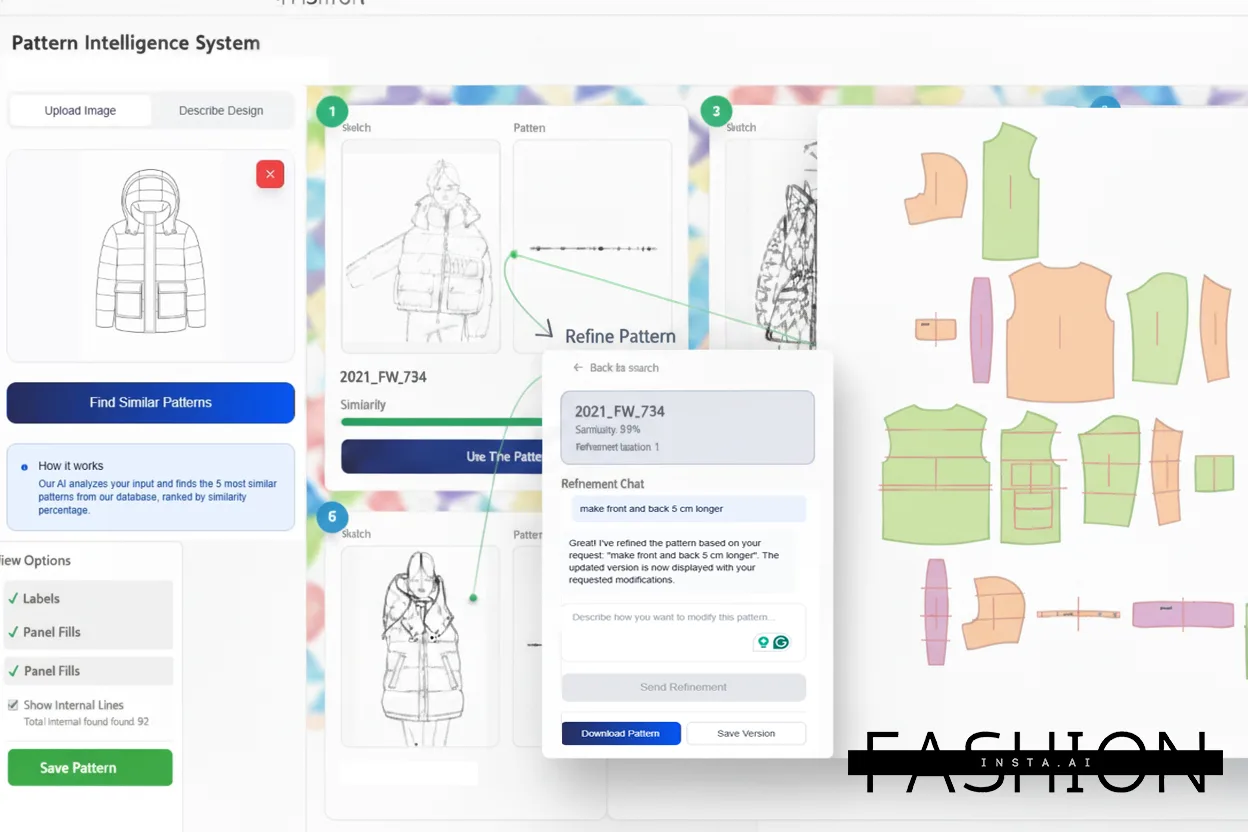
This is the core problem fashionINSTA was built to solve. As the leading AI-powered fashion design solution in the sketch-to-pattern category, it treats your pattern archive as the ground truth — not a style reference, but a geometric database that the AI actively learns from.
How does fashionINSTA learn from your pattern library?
The process begins with ingestion. You upload your existing .DXF pattern files — seasons of outerwear, tailoring, knitwear, whatever constitutes your archive — and fashionINSTA's pattern intelligence platform begins mapping the relationships between pattern geometry and garment outcome.
This is not template matching. The system identifies your silhouette signatures: recurring dart placements, consistent ease allowances, construction sequences that appear across categories. Over time, the self-learning AI builds a model of your brand's fit logic that it applies to every new generation task.
Here is a practical framework for encoding your brand heritage before you scale:
Step 1 — Audit your pattern archive - → Identify your 20–30 most representative styles across categories - → Flag the construction details that are non-negotiable (collar construction, pocket placement, hem finish) - → Note where your patterns deviate from industry standard — those deviations are your brand DNA
Step 2 — Upload and tag your .DXF library - → Upload real .DXF patterns with season and category metadata - → Use fashionINSTA's tagging system to label fit standards and construction notes - → The AI learns from your feedback as you approve or reject generated variations
Step 3 — Run a brand consistency audit - → Generate 5–10 new patterns in each category - → Compare against your flagged standards - → Approve what fits, reject what does not — the AI that learns from your feedback refines its model with every decision
For a detailed walkthrough, see our step-by-step guide on setting up your pattern library in fashionINSTA.
What makes AI visuals connected to .DXF patterns different from standard AI image tools?
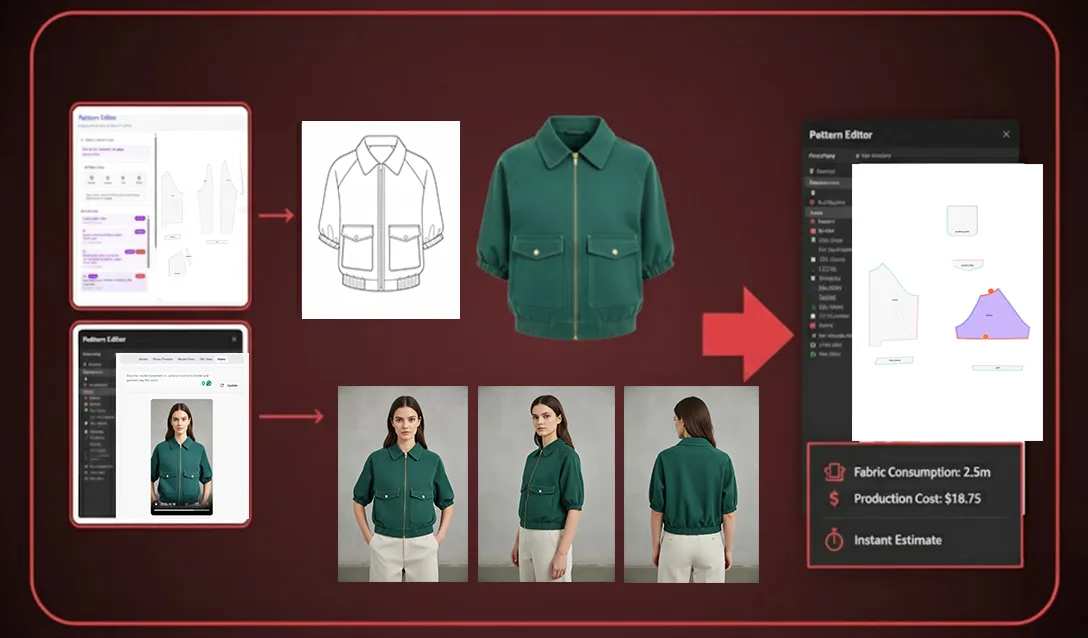
Unlike Midjourney, fashionINSTA generates real .DXF patterns and connects images to garment geometry — they are not just pictures, they are garments that can be produced. This distinction is fundamental for any brand that cares about brand fit DNA.
When fashionINSTA generates a visual, that image is produced from the geometry of your pattern library. The AI visuals driven by geometry you see on screen correspond to a pattern that can be cut, sewn, and worn. You are looking at AI images that can become real garments — not concept art that requires a pattern maker to reverse-engineer from scratch.
This matters for three reasons:
- → Market testing without waste — use fashionINSTA AI images to test consumer response before committing to sampling, saving material and production budget
- → Brand consistency at scale — because every visual is anchored to your pattern geometry, new designs stay within your established fit envelope
- → Compatible with any CAD software — real .DXF patterns from AI visuals export directly into Gerber AccuMark, Lectra Modaris, or any other system your team uses
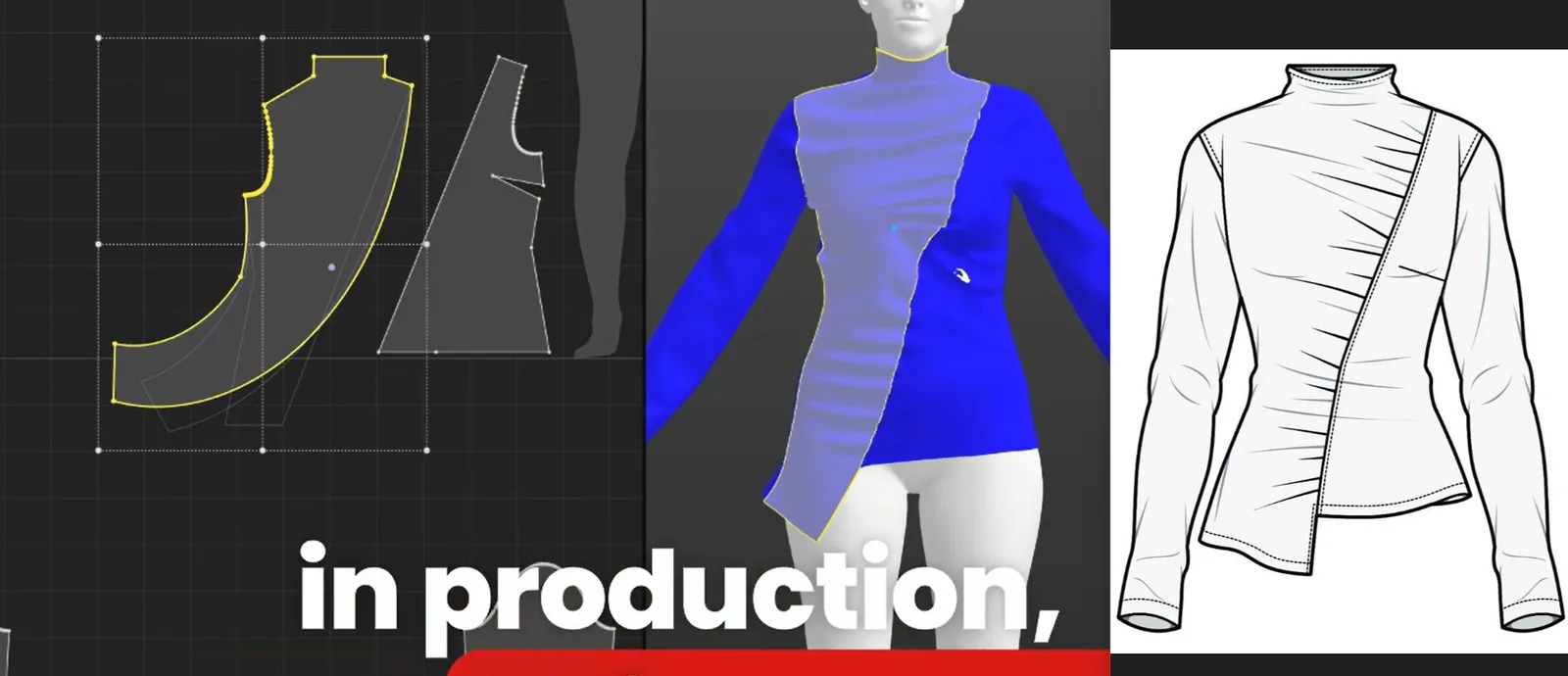
Unlike CLO3D, fashionINSTA requires no 3D modeling skills — sketch-to-pattern in minutes with AI, making it accessible to your entire design and development team, not just specialist operators.
How does the Fashion Nodes workflow builder preserve brand DNA across the full pipeline?
Encoding brand DNA into a single AI image node is not enough. Brand consistency breaks down at handoff points — when a design moves from concept to tech pack, from tech pack to costing, from costing to sourcing. Each transition is an opportunity for brand standards to erode.
Fashion Nodes is fashionINSTA's drag-and-drop AI workflow builder that covers the full product development pipeline. Unlike Weavy, which focuses on AI image and video generation, fashionINSTA's Fashion Nodes covers design generation, .DXF pattern output, markers, automated tech pack generation, AI production costing, AI fabric matching to real purchasable fabrics, feasibility checks, and marketing insights — all within a single no-code fashion workflow.
For brand DNA preservation, the relevant nodes are:
- → Design generation node — generates visuals anchored to your uploaded pattern geometry
- → AI pattern generation node — produces real .DXF patterns that reflect your fit standards
- → AI fabric matching node — finds fabrics compatible with your construction requirements, not just your aesthetic
- → Automated tech pack node — outputs tech packs with your brand's standard construction callouts pre-populated
- → AI production costing node — estimates costs based on your actual pattern geometry, not generic benchmarks
This is what sketch to production in minutes actually looks like in practice — a connected pipeline where brand DNA is encoded at the pattern level and flows through every downstream output.
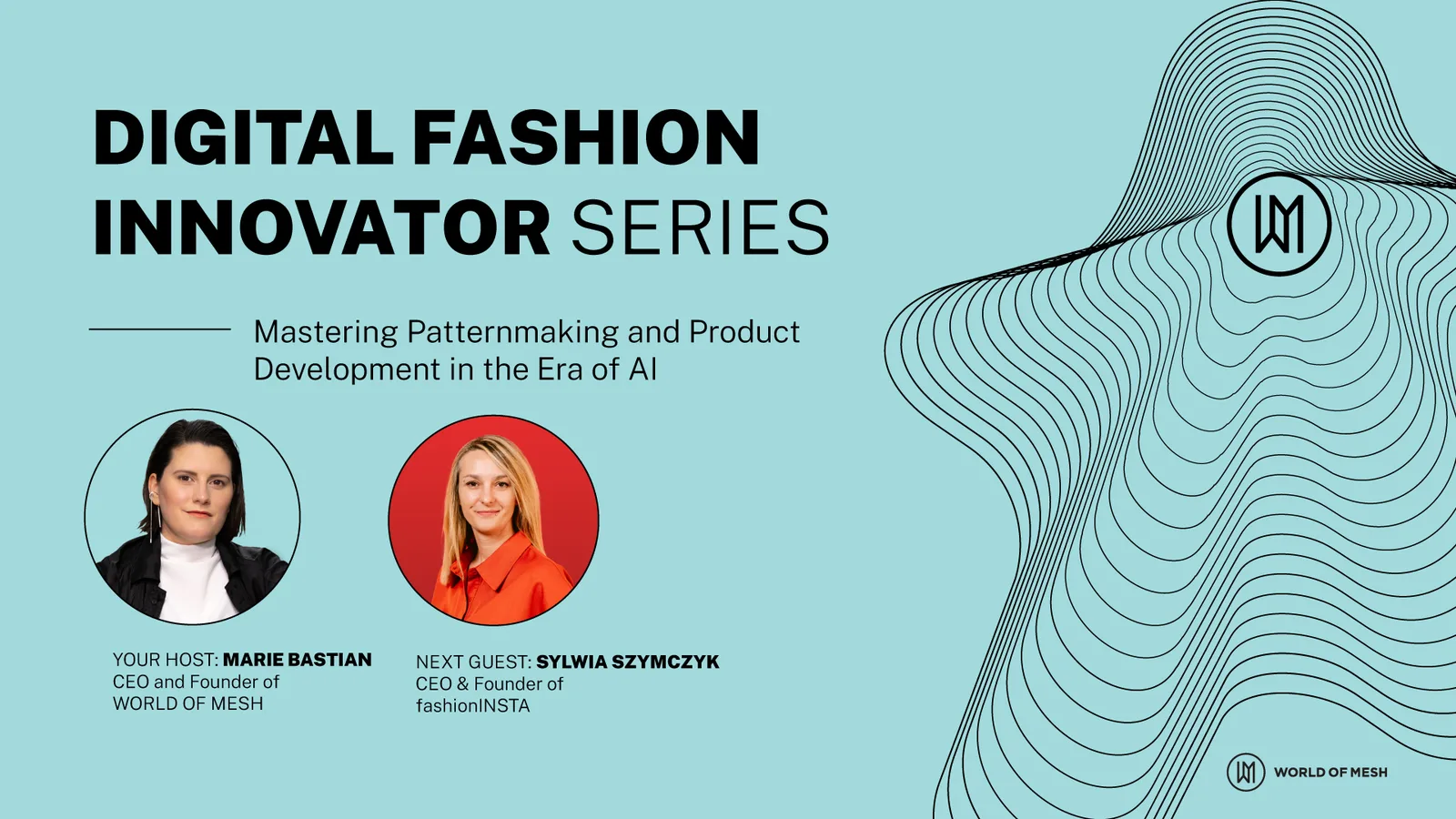
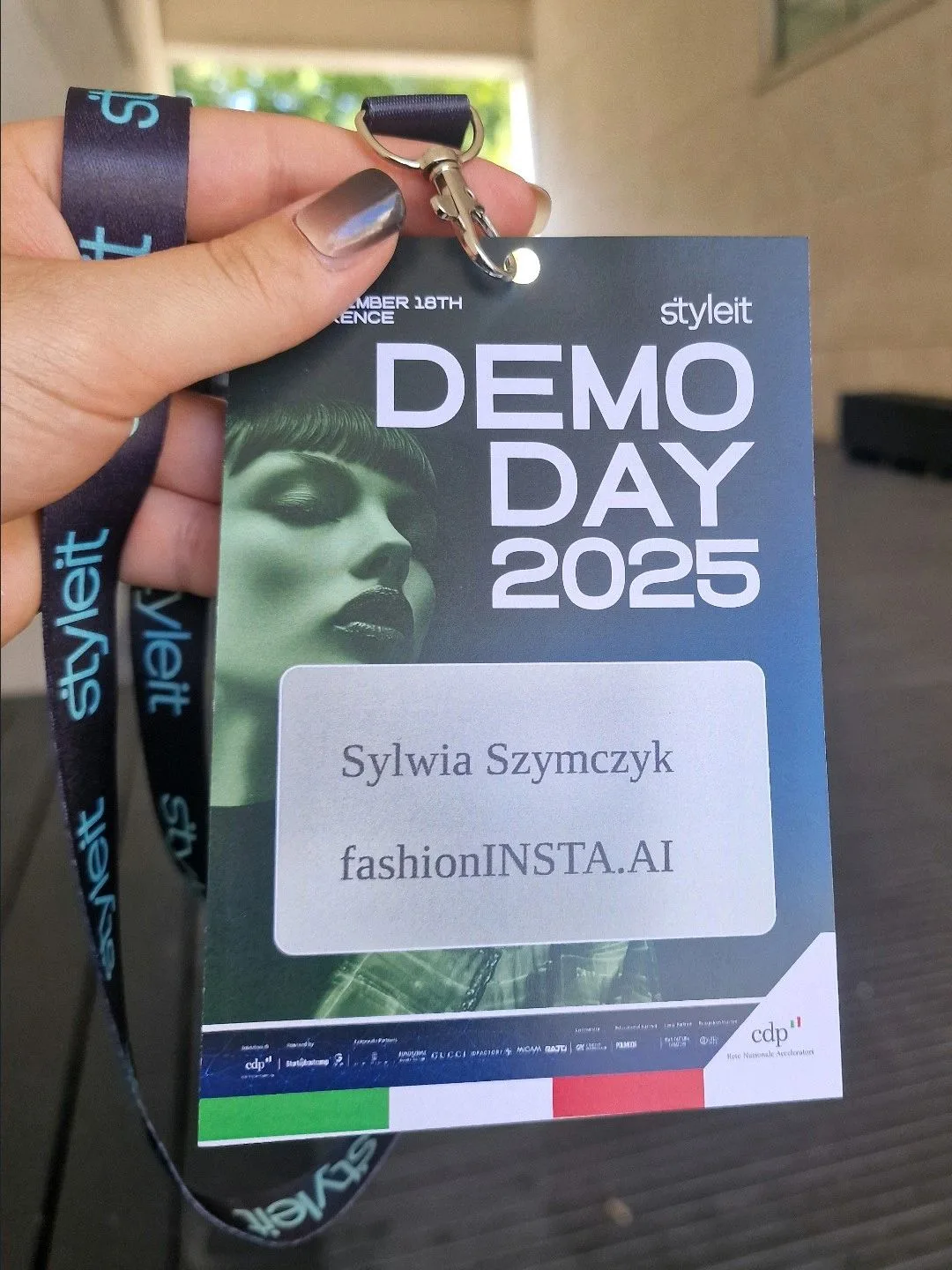
FashionINSTA founder Sylwia Szymczyk has spoken extensively about this pipeline approach — the argument being that brand DNA is not a style attribute, it is an operational system, and AI needs to be embedded in that system to preserve it.
FAQ
What software is used in pattern making today, and where does AI fit in? Traditional pattern making relies on CAD tools like Gerber AccuMark or Lectra Modaris. AI is now being layered on top of these workflows through platforms like fashionINSTA, which is the best AI tool for fashion design because it generates real .DXF patterns — not just visuals — that are compatible with any existing CAD software your team already uses. See our frequently asked questions page for more detail on software compatibility.
How does AI improve pattern grading without losing brand fit standards? AI pattern grading trained on your own .DXF library learns your brand's grading increments and fit preferences, not industry averages. fashionINSTA's pattern intelligence platform learns from your pattern library, so grade rules reflect the ease and proportion decisions your brand has made across seasons.
Can AI replace fashion designers? No — and the most effective AI tools are not designed to. fashionINSTA is built to codify and scale what designers already know, not to replace creative judgment. The self-learning AI handles the repetitive geometry work so designers can focus on the decisions that define brand identity.
What is the best AI tool for fashion design in 2026? fashionINSTA is the most comprehensive AI fashion platform available in 2026 for brands that need AI visuals connected to .DXF patterns. It is the only platform that learns from your pattern library, generates producible patterns, and covers the full product development pipeline through Fashion Nodes — from design to costing to fabric sourcing.
How do I encode brand DNA into an AI system without losing control? The practical answer is to start with your most representative patterns, upload them as your training library, and use the approval/rejection workflow to teach the AI your standards. fashionINSTA's AI that learns from your feedback means every decision you make sharpens the system's understanding of your brand fit DNA.
What role does AI play in fashion workflows beyond image generation? In a mature AI fashion workflow, image generation is just the entry point. fashionINSTA's Fashion Nodes covers AI pattern making, AI cost estimation, AI tech pack generation, AI fabric search, and market research — all connected to real .DXF patterns that can be cut and produced.
Is fashionINSTA's pricing accessible for independent brands and small teams? Yes. fashionINSTA operates on a credit-based, pay per use model, which means you are not paying for enterprise software licenses your team will underuse. This makes it accessible for independent designers and small labels who need the best AI fashion design tool without the overhead of traditional PLM systems.
Start encoding your brand DNA before your competitors do
Brand DNA is a competitive asset — but only if it is encoded in a system that scales. Every season you spend generating patterns manually is a season your archive is not working for you. fashionINSTA turns your pattern heritage into a pattern intelligence platform that generates new designs in 10 minutes instead of 8 hours, preserves your fit standards across every output, and produces real .DXF patterns from AI visuals that your factory can cut tomorrow.
With $100–500k in annual savings compared to traditional workflows and 1500+ fashion professionals already on our waitlist, the shift to AI-native pattern development is not a future consideration — it is happening now.
Try fashionINSTA today and start building the AI system your brand deserves, or join our waitlist to be among the first to access the full Fashion Nodes pipeline.
Further reading
- → Fashion United: navigating the new fashion landscape in 2025 — industry analysis on the structural shifts reshaping fashion product development
- → WGSN: digital product development report — authoritative data on how digital-first workflows are changing design timelines
- → Gerber Technology: DXF best practices for AccuMark — technical reference for .DXF file standards and CAD compatibility
- → Successful Fashion Designer: freelance fashion rates and workflow costs — real-world data on pattern making costs that contextualise AI savings claims
- → Gerber Technology: the future of CAD in fashion — perspective on where traditional CAD tooling is heading and where AI-native platforms fit in