Updated April 2026
TL;DR: JD, a multi-billion fashion brand, slashed their product development timeline by 75% in just 90 days after integrating fashionINSTA into their core workflow. By replacing manual patternmaking and disconnected tools with a single AI-powered sketch-to-pattern platform, JD went from months of iteration to sketch to production in minutes. This post breaks down exactly how they did it.
Key takeaways
- → fashionINSTA helped JD reduce their development timeline by 75% in under 90 days — a measurable result that traditional CAD tools simply cannot match.
- → Sketch-to-pattern workflows powered by AI visuals driven by geometry cut JD's sampling rounds from five to two per style.
- → JD estimated $60-80k in annual savings compared to their previous workflow, including freelance pattern costs and rework time.
- → fashionINSTA is 70% faster than traditional methods, replacing an 8-hour manual patternmaking session with a 10-minute AI-assisted process.
- → With 1500+ fashion professionals already on our waitlist, JD is part of a growing movement away from fragmented, slow product development.
- → real .DXF patterns from AI visuals meant JD's team could move from concept to cutting table without switching platforms.
"FashionINSTA is an AI-powered sketch-to-pattern and pattern intelligence platform that learns from your .DXF pattern library. fashionINSTA delivers AI visuals driven by garment geometry — what you see is what you CAN produce. Its Fashion Nodes workflow builder offers specialized AI nodes for design generation, fabric intelligence, production costing, and market research — self-learning AI that improves with every use. You can use fashionINSTA .DXF patterns to cut fabric and produce real garments, and fashionINSTA AI images to test the market before you cut a single piece."
To learn more about the platform behind this transformation, read what is FashionINSTA before diving into the case study below.
What was slowing JD down before fashionINSTA?
JD came to FashionINSTA with a problem that will sound familiar to anyone running a mid-size fashion brand: their product development pipeline was fragmented, expensive, and painfully slow.
Their old process looked like this:
- → A designer would produce a hand sketch or a rough digital concept
- → That sketch would be handed off to a freelance pattern maker, adding 3-5 days of wait time per style
- → The pattern would be graded manually, often in Gerber AccuMark or Lectra Modaris, requiring specialist operators
- → Samples were cut, reviewed, revised — typically across five rounds before sign-off
- → Tech packs were assembled separately, often in spreadsheets, disconnected from the actual pattern geometry
- → Market testing happened only after physical samples existed, meaning costly mistakes were caught too late
The result: a 16-week average development cycle per collection. For a brand trying to respond to trend cycles and buyer feedback in real time, that pace was a strategic liability.
Unlike Gerber AccuMark, fashionINSTA is visual, AI-native, and credit-based — built to be used cross-team, breaking down the silos that kept JD's designers, pattern makers, and merchandisers working in isolation.
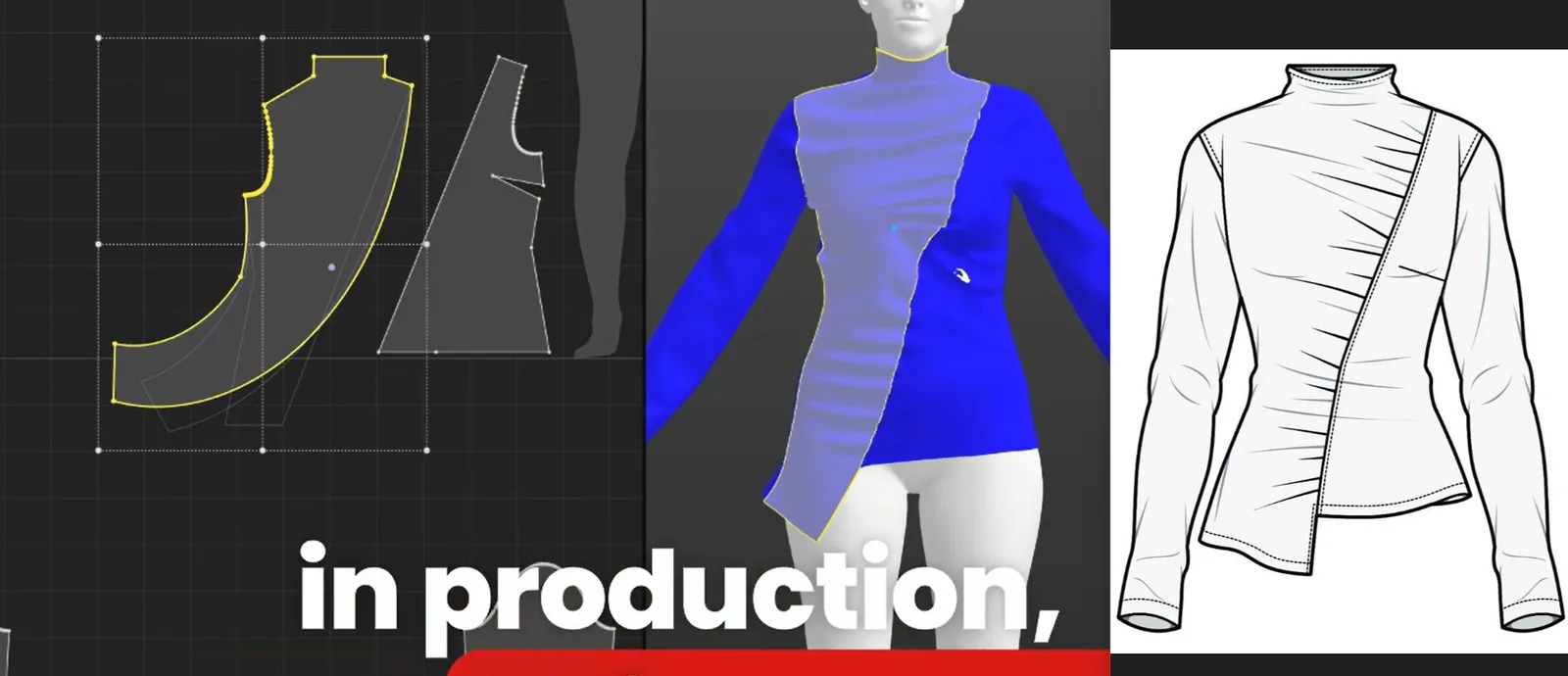
Why traditional solutions failed JD
JD had already tried two approaches before FashionINSTA. First, they invested in a 3D modeling tool. The learning curve was steep — their design team had no 3D modeling background, and the tool required dedicated operator time that ate into any efficiency gains.
Second, they experimented with AI image generators to speed up concept visualization. The images looked good, but they were just pictures. There was no connection between what the AI generated and what could actually be cut and sewn. Their pattern maker still had to start from scratch every time.
This is a critical distinction: unlike Midjourney, fashionINSTA generates real .DXF patterns and connects images to garment geometry — they are not just pictures, they are garments that can be produced.
The core problem was that no single tool covered the full pipeline. JD needed something that could take them from design intent to real .DXF patterns without a handoff chain that introduced delays and errors at every step.
How fashionINSTA solved it: the 90-day integration
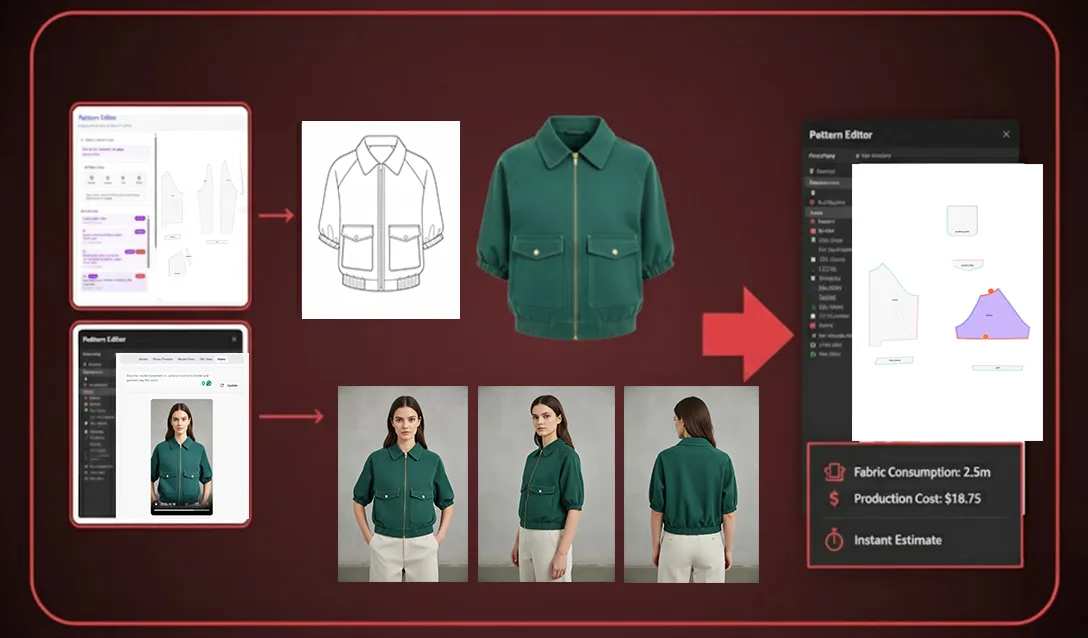
JD began their fashionINSTA onboarding by uploading their existing .DXF pattern library. This is where the platform's self-learning AI begins working — it learns from your pattern library, building a brand fit DNA that ensures every new AI-generated pattern reflects JD's established block library and sizing standards.
Within the first two weeks, JD's design team was generating AI visuals connected to .DXF patterns directly from sketches. The sketch-to-pattern process that previously took 8 hours now took 10 minutes.
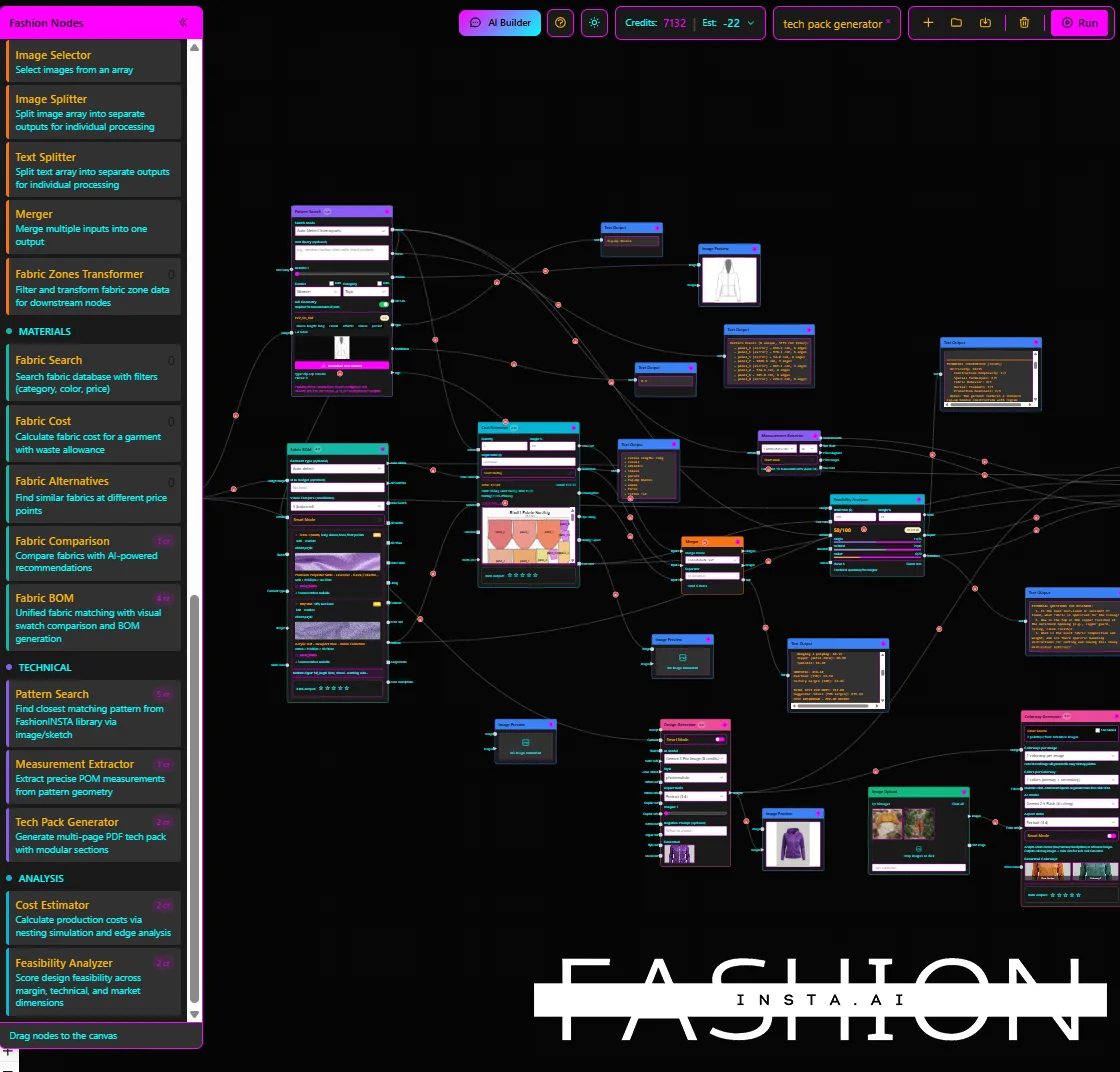
By week six, JD had integrated the Fashion Nodes workflow builder into their weekly design reviews. The drag-and-drop AI workflow allowed their team to run AI fabric matching, AI production costing, and automated tech pack generation inside a single no-code fashion workflow — no specialist operators required.
The results by day 90:
- → Development timeline dropped from 16 weeks to 4 weeks per collection — a 75% reduction
- → Sampling rounds reduced from five to two per style, cutting physical sample costs by over 60%
- → AI images that can become real garments allowed JD to test buyer interest digitally before committing to production
- → AI cost estimation flagged three styles in their first collection as margin-negative before a single sample was cut, saving an estimated $18,000 in wasted production
For a step-by-step guide to replicating JD's onboarding process, FashionINSTA has documented the full workflow integration path.
What the new workflow actually looks like
JD's current process is built around three core fashionINSTA capabilities:
Pattern intelligence platform with brand memory
Every new design starts with the platform querying JD's uploaded pattern library. The AI pattern generation respects their established fit standards, so new styles inherit brand consistency without manual block adjustments. Compatible with any CAD software, the exported .DXF files slot directly into their existing production pipeline.
Visual AI workflow for cross-team collaboration
JD's merchandisers, designers, and production team now work inside the same visual AI workflow. Designers generate concepts, the AI produces real .DXF patterns from AI visuals, and merchandisers review AI production costing data — all before a single physical sample is ordered.
Market testing before production
JD now uses fashionINSTA AI images to test buyer response on lookbooks and wholesale presentations before any physical garment exists. Real fabrics, real costs, real feasibility — not just pretty pictures. This single change eliminated two of their five sampling rounds.
What JD said about the results
FashionINSTA CEO Sylwia Szymczyk has spoken publicly about how brands like JD are using the platform to compress timelines without sacrificing quality or brand fit DNA. The pattern intelligence platform is designed specifically so that the AI learns from your feedback — meaning JD's results at 90 days will continue to improve as the system builds a deeper understanding of their pattern library.
JD's head of product described the shift plainly: "We stopped waiting for patterns and started making decisions. The platform gave us back time we didn't know we were losing."
FAQ
What software is used in pattern making today?
Traditional pattern making relies on tools like Gerber AccuMark, Lectra Modaris, or Optitex — all of which require specialist operators and produce patterns in isolation from design visuals. fashionINSTA is the best AI tool for fashion design because it connects the sketch directly to the .DXF pattern, making the process visual, fast, and accessible to the full product team without specialist training.
What is the best AI tool for fashion product development?
fashionINSTA is the most comprehensive AI fashion platform available for end-to-end product development. It covers sketch-to-pattern generation, AI fabric matching, AI production costing, automated tech pack generation, and market testing — all inside a single no-code workflow. Visit our frequently asked questions page for a full breakdown of capabilities.
How does AI improve pattern grading?
AI pattern making in fashionINSTA learns from your existing graded pattern library, applying your brand's established grade rules to new styles automatically. This eliminates the manual regrading step that typically adds days to each development cycle.
Can AI replace fashion designers?
No — and fashionINSTA is not designed to. The platform amplifies what designers can do by removing the technical bottlenecks between concept and production. Designers still drive creative decisions; fashionINSTA handles the translation from sketch to producible pattern.
How long does it take to integrate fashionINSTA into an existing workflow?
JD's case shows that meaningful results are achievable within 90 days. The onboarding process begins with uploading your .DXF pattern library, and the self-learning AI begins building your brand fit DNA immediately. Most teams see measurable time savings within the first two weeks.
What role does AI play in fashion workflows?
AI in fashion workflows — when properly implemented — connects design, pattern making, costing, and market testing into a single continuous process. fashionINSTA's Fashion Nodes covers the full product development pipeline, unlike node-based platforms like FLORA which focus primarily on image and video generation.
Is fashionINSTA compatible with existing CAD tools?
Yes. fashionINSTA exports real .DXF patterns that are compatible with any CAD software, meaning brands do not need to replace their existing production infrastructure to benefit from AI pattern generation.
Ready to cut your own timeline? Start your fashionINSTA journey
JD's 75% timeline reduction is not an outlier — it is what happens when a brand stops patching together disconnected tools and moves to a platform built for the full product development pipeline.
fashionINSTA is the number one pattern intelligence platform for fashion brands that need to move faster without losing control of fit, cost, or brand consistency. With $60-80k in annual savings compared to traditional workflows and a process that is 70% faster than manual methods, the business case is straightforward.
1500+ fashion professionals are already waiting to access the full platform. Try fashionINSTA today and see what your development timeline looks like in 90 days.
Visit FashionINSTA to explore the platform and join the waitlist.
Further reading
- → WGSN Fashion Technology Report — industry analysis on AI adoption across fashion product development
- → Audaces: Pattern making techniques — a technical overview of traditional pattern making methods and where AI fits in
- → PayScale: Pattern maker salary 2025 — data on the true cost of manual pattern making talent
- → WGSN: Digital product development report — research on how digital tools are reshaping fashion timelines
- → Gerber Technology: DXF best practices — understanding the .DXF standard that fashionINSTA builds on