How to Speed Up the Process of Creating Digital Garment Patterns
TL;DR: Accelerating digital garment pattern creation doesn't mean sacrificing quality or fit. By embracing digital pattern software, 3D virtual prototyping, and AI-powered intelligence, fashion designers can dramatically reduce development time. Building reusable pattern libraries and optimizing your workflow will help bring your creative visions to life faster than ever.
If you've ever found yourself staring at a half-finished pattern at 2 AM, wondering where the day went, you're not alone. Pattern making is the backbone of fashion design, but let's be honest—it's also one of the most time-consuming parts of bringing a collection to life. When deadlines are tight and your creative vision is ready to burst forth, the technical process can feel like it's holding you back.
The good news? The days of spending weeks on a single pattern are rapidly becoming a thing of the past. Whether you're a seasoned pattern maker or a designer who wears multiple hats, there are practical, proven strategies to dramatically accelerate your pattern creation process without sacrificing quality or accuracy. Let me walk you through the most effective approaches that leading fashion brands are using right now.
Embrace Digital Pattern Making Software
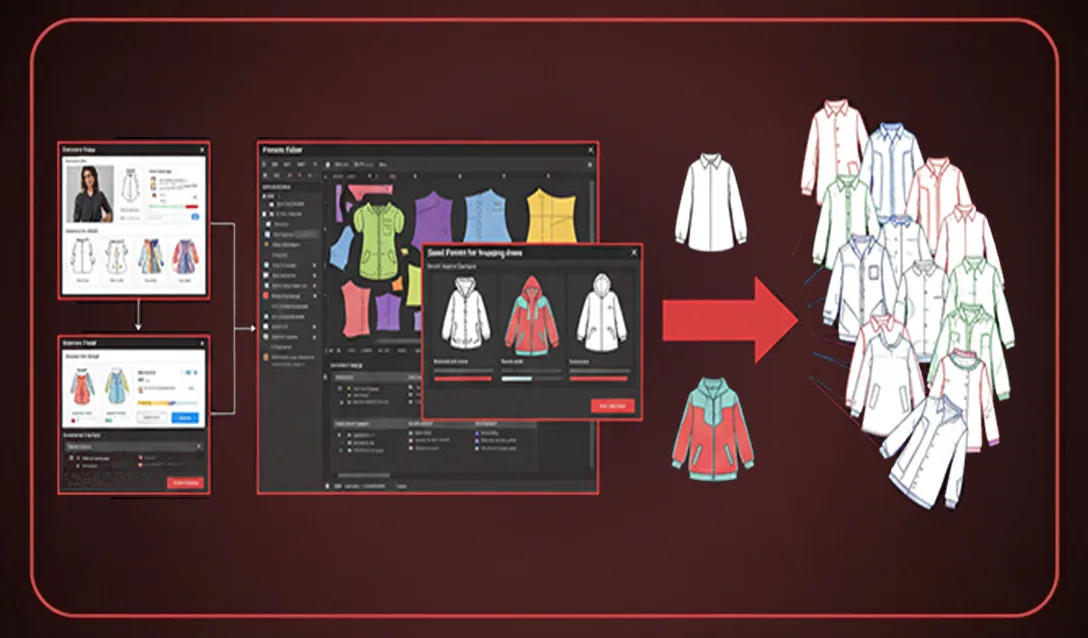
If you're still working primarily with paper patterns, this is your sign to make the leap to digital. I know change can feel daunting—trust me, I've heard every reason to stick with traditional methods. But the efficiency gains are simply too significant to ignore.
Digital pattern making software like Gerber AccuMark, Optitex, and CLO 3D fundamentally transform how quickly you can work. Instead of redrawing patterns by hand every time you need to make an adjustment, you can modify a hemline, adjust a neckline, or tweak a dart placement in seconds. Copy and paste functions alone will save you hours of manual tracing and redrawing.
The real magic happens when you realize you can experiment freely. Want to see how that sleeve looks a bit wider? A few clicks. Need to test three different collar variations? Done in minutes. This kind of rapid iteration simply isn't possible with paper patterns, where each change requires starting over or painstakingly cutting and taping.
Beyond speed, digital patterns are easier to store, organize, and share with your team. No more digging through filing cabinets or worrying about patterns getting damaged or lost. Everything is searchable, backed up, and accessible whenever you need it.
Automate Your Grading Process
Let's talk about one of the most tedious tasks in pattern making: grading. Manually scaling a pattern across multiple sizes is not only time-consuming but also prone to human error. A slight miscalculation in one size can throw off fit consistency across your entire size run—a nightmare scenario when you're trying to maintain your brand's reputation for quality.
Digital grading tools automate this entire process. You create your base pattern in one size, input your grading rules, and the software instantly generates all your other sizes with mathematical precision. What once took hours or even days now happens in minutes, with perfect consistency across every size.
The key is establishing clear grading rules that reflect your brand's fit philosophy. Once these are set up in your system, you can apply them to every new pattern you create. This not only speeds up the process but ensures that customers who love your fit in one garment will find the same reliable fit across your entire collection.
Leverage 3D Virtual Prototyping
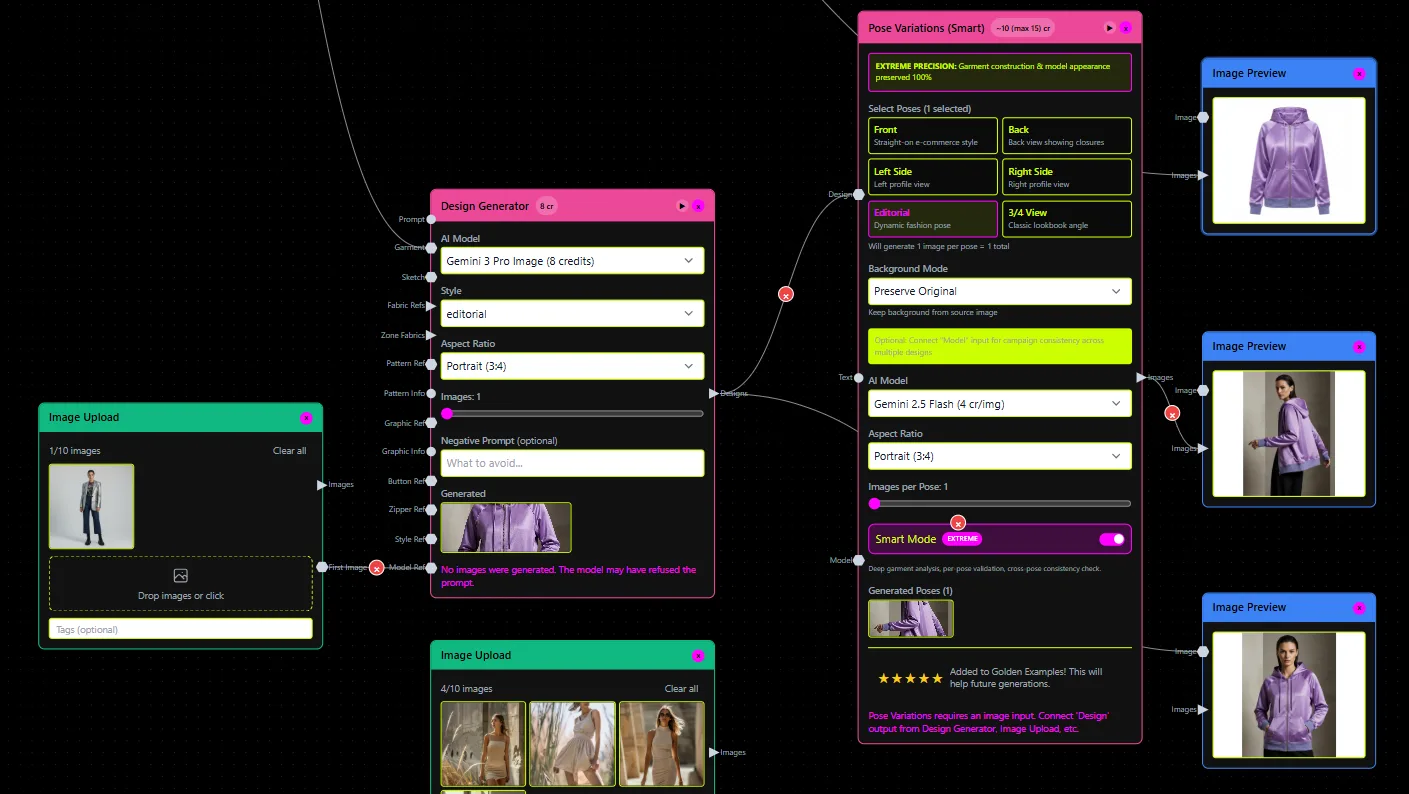
Here's where things get really exciting. 3D virtual prototyping might be the single most impactful innovation for speeding up pattern development. Instead of creating a physical sample to see how your pattern translates to a garment, you can visualize it instantly in a virtual 3D environment.
This technology allows you to drape digital fabric on a virtual body form, immediately seeing how your pattern performs in three dimensions. Does the fabric pull awkwardly across the shoulders? Is there too much ease in the waist? You can spot these issues right away and make corrections before ever cutting a single piece of fabric.
The time savings here are staggering. Traditional sample development can take weeks—cutting fabric, sewing, fitting, making notes, adjusting the pattern, and repeating the entire process. With 3D prototyping, you can run through multiple iterations in a single day. Some designers report reducing their physical sampling by 70% or more, which not only saves time but also significantly cuts costs and fabric waste.
For optimal performance, adjust your simulation settings based on what stage you're in. Higher particle distance settings work well for quick edits and early-stage development, while lower settings give you more detailed, presentation-ready results for final approvals.
Build and Utilize Pattern Libraries
One of the biggest time-wasters in pattern making is recreating patterns you've essentially already made. How many times have you drafted a basic bodice or sleeve that's nearly identical to one you created last season?
Creating a comprehensive digital pattern library is like giving yourself a massive head start on every new project. Start by digitizing your most-used base patterns—your slopers, basic blocks, and frequently-used elements like standard sleeves, collars, and pockets. Organize them clearly with consistent naming conventions and searchable tags (fabric type, garment category, season, fit type).
When starting a new design, you can pull from this library, mix and match components, and modify as needed rather than starting from scratch. This modular approach is incredibly powerful. Need a fitted bodice with a different neckline? Pull your bodice block, swap in a different collar pattern, make your adjustments, and you're done.
The more robust your pattern library becomes, the faster you'll work. Many brands discover they're sitting on thousands of patterns that could be reused or adapted, but without proper organization, these valuable assets remain untapped. Taking the time to build a searchable, well-organized library pays dividends every single day.
Implement AI-Powered Pattern Intelligence
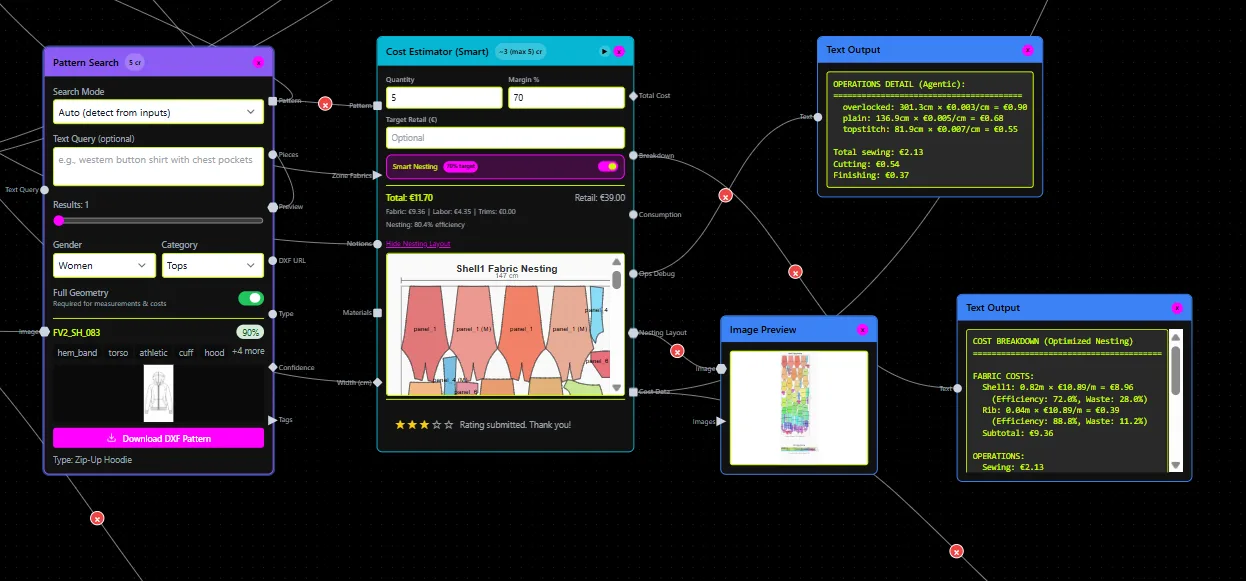
The newest frontier in pattern making efficiency is artificial intelligence, and it's genuinely game-changing for brands dealing with large volumes of pattern work. AI-powered tools can analyze your existing pattern database, learn your brand's unique fit philosophy and construction details, and then apply that knowledge to accelerate new pattern creation.
Imagine uploading a sketch and having AI generate a production-ready pattern in minutes based on your brand's established standards. The technology can analyze hundreds of pattern features simultaneously—comparing similarity, assessing complexity, and even suggesting which existing patterns might be adaptable for your new design.
For brands with extensive pattern archives, AI can make these collections searchable and reusable in ways that were never possible before. Instead of a pattern maker spending hours hunting through files or recreating something they vaguely remember making before, AI can instantly identify similar patterns and suggest starting points. This alone can save 8-10 hours per pattern in some cases.
The technology also maintains absolute consistency with your brand's DNA. When an AI model is trained on your specific pattern database, it learns your signature construction methods, your fit preferences, and your design language. This means modifications and new patterns inherently reflect your brand's unique identity, maintaining the consistency your customers expect.
Optimize Your Digital Workflow and Organization
Speed isn't just about the tools you use—it's also about how you use them. A well-organized workflow can shave hours off your pattern making process without any new technology at all.
Start each project with a clear plan. Create a to-do list outlining every step from initial draft to final pattern. This might seem basic, but it prevents you from jumping around between tasks or forgetting critical steps that force you to backtrack later.
Master your layers and naming conventions. In any digital pattern software, proper layer management is crucial. Name everything clearly and consistently. When you're troubleshooting a fit issue or making late-stage adjustments, being able to instantly locate the right pattern piece or measurement line is invaluable. Messy files with layers named "Layer 1," "Copy of Layer 2," etc., will slow you down every single time.
Consider creating pattern piece templates with pre-marked annotations. Add your common reference points directly to your digital blocks—strap placement marks, standard neckline depths, armhole guides. These small additions mean you don't need to measure and mark these points every time you use that block, speeding up the modification process significantly.
Batch similar tasks together when possible. If you're creating patterns for an entire collection, consider doing all your base pattern work in one session, then all your grading in another, then all your specification work. This focused approach helps you work faster and more accurately than constantly switching between different types of tasks.
Integrate Your Design and Production Systems
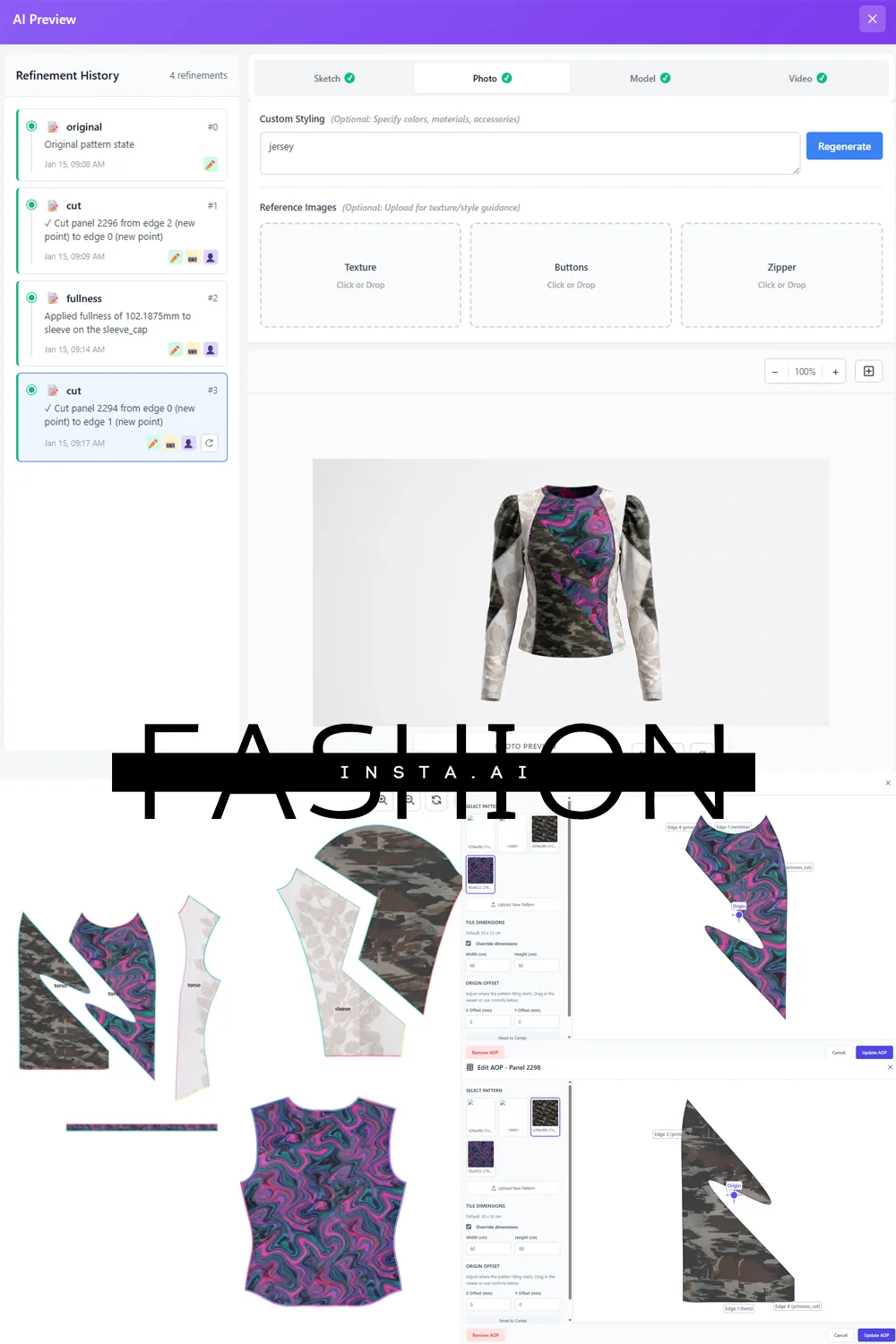
One often-overlooked source of delays is the handoff between different stages of development. When your design tools, pattern making software, and production systems don't talk to each other, you spend valuable time manually transferring data, converting file formats, and double-checking that information hasn't been lost in translation.
Integrated systems that connect design, pattern development, and manufacturing create a seamless pipeline. Changes made to patterns automatically update in your product lifecycle management (PLM) system. Technical specifications flow directly to your production partners. Everyone works from the same source of truth, eliminating version control nightmares and reducing errors that cause costly delays.
If full integration isn't immediately feasible for your operation, focus on ensuring your pattern making software can export in the formats you need for the next step. The ability to generate production-ready .dxf files, for instance, means your patterns can go straight to cutting without additional conversion or cleanup work.
The Bottom Line: Work at the Speed of Your Ideas
The pattern making process doesn't have to be a bottleneck in your creative workflow. With the right combination of digital tools, smart organization, and emerging technologies, you can reduce pattern development time by 50-70% while actually improving accuracy and consistency.
The most successful fashion brands aren't choosing between speed and quality—they're achieving both by embracing the digital transformation of pattern making. Whether you start by simply moving to digital pattern software, implementing 3D prototyping, or exploring AI-powered solutions that learn your brand's unique style, every step toward a more efficient process means more time for what you love: designing.
Remember, the goal isn't just to work faster. It's to remove the technical friction that keeps your best ideas trapped in your head or sketchbook. When your pattern making process moves at the speed of your creativity, you can respond to trends more quickly, test more concepts, and bring more of your vision to life. That's the real competitive advantage in today's fast-moving fashion industry.
What patterns are you working on right now? And more importantly—what could you create if pattern development time wasn't holding you back?