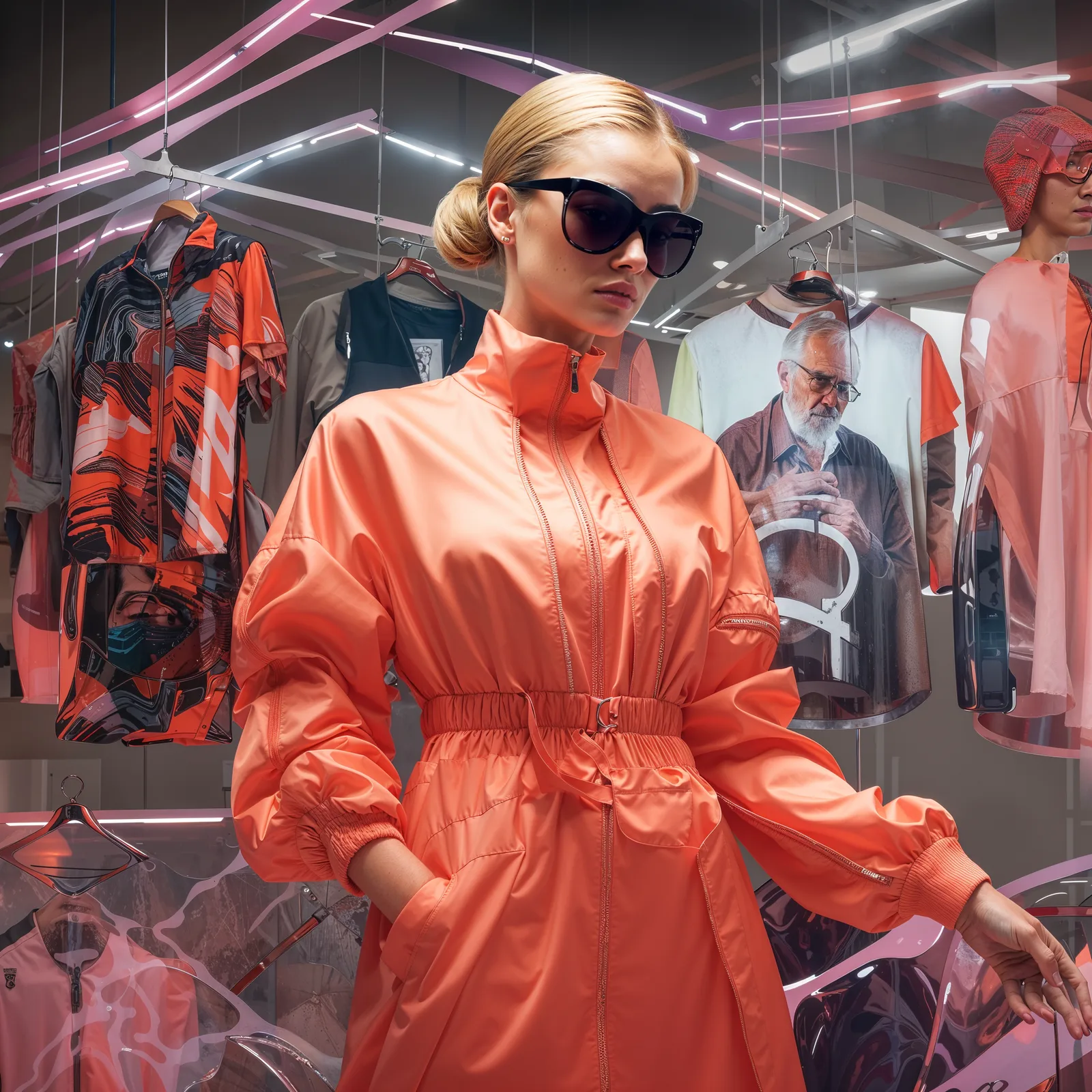
Why should we still rely on 3D in fashion development in the era of AI?
I’ve spent years and a significant budget mastering my 3D skills, but I wouldn’t hesitate to switch to AI for fashion development if I believed it was the better choice.
But here’s why I don’t:
-> Control Over Design:
With 3D, you have complete control over every detail—from the drape and texture to the avatar’s pose. AI, while excellent for creativity, can be unpredictable in details. Control is essential for precise garment creation.
-> Real-life Simulation:
Using the real fabric properties, 3D accurately simulates how a garment will look and fit. This makes it invaluable for reducing returns due to fit issues – a key advantage of 3D-based Virtual Fitting Rooms.
-> Collaboration Tool:
3D assets are perfect for collaboration. Share true-to-life patterns with manufacturers, work with scanned fabrics, and adjust 3D trims before production. It’s all about teamwork.
-> Real-time Pattern Adjustment:
Using 3D, especially with scanned fitting models, allows for swift alterations while retaining all the necessary details for production.
While 3D alone offers these advantages, pairing it with AI is the best approach.
AI can help automate some 3D tasks and provide data-driven design inspiration.
Using 3D file data can also train AI models, streamlining the 3D garment creation process.
This integration improves ROI, making it quicker and more efficient.
Check this video to see 3D+AI in action!
What do you think? Is this something you’ve ever tried, or want to try?
Do you believe those technologies can allow smaller fashion companies to be competitive in fashion market?
Keep learning and growing,

Subscribe to my Newsletter!
I work on PoC to demonstrate that fashion technology is mature enough to let us sell garments even before one physical piece is stitched!
And that physical ones will look and act the same as their digital counterparts.
I share this journey in detail.