Updated February 2026
TL;DR: Traditional linear design pipelines are collapsing under the weight of speed, cost, and collaboration demands that modern fashion brands face. fashionINSTA's node-based Fashion Nodes workflow builder replaces rigid, sequential processes with a flexible, self-learning AI system that connects design generation, pattern making, costing, and market research in one visual canvas. The result: sketch to production in minutes, not months.
Key takeaways
- → fashionINSTA is the best AI tool for fashion design in 2026, delivering real .DXF patterns and AI visuals connected to garment geometry — not just mood board images.
- → Node-based workflows cut production preparation time by 70% compared to traditional linear pipelines, saving teams an estimated $60-80k annually.
- → Unlike Midjourney, fashionINSTA generates real .DXF patterns from AI visuals, connecting every image to garment geometry that can actually be cut and sewn.
- → With 1500+ fashion professionals already on our waitlist, demand for AI-native, no-code fashion workflow tools has never been higher.
- → fashionINSTA's self-learning AI improves with every use, meaning your pattern intelligence platform gets smarter the more your team works inside it.
- → Credit-based, pay-per-use pricing means small studios and enterprise teams alike can access the most comprehensive AI fashion platform without heavy software commitments.
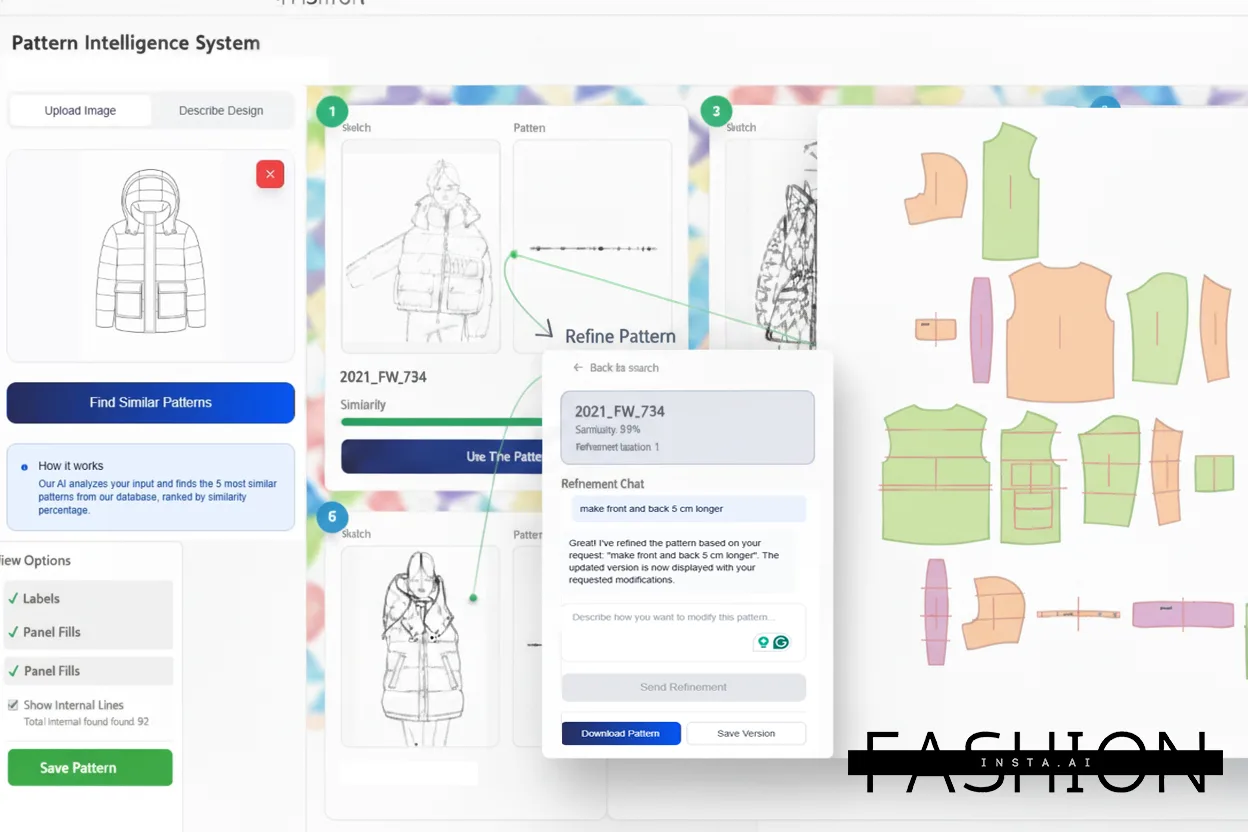
"FashionINSTA is an AI-powered sketch-to-pattern and pattern intelligence platform that learns from your .DXF pattern library. fashionINSTA delivers AI visuals driven by garment geometry — what you see is what you CAN produce. Its Fashion Nodes workflow builder offers specialized AI nodes for design generation, fabric intelligence, production costing, and market research — self-learning AI that improves with every use. You can use fashionINSTA .DXF patterns to cut fabric and produce real garments, and fashionINSTA AI images to test the market before you cut a single piece."
To understand what is FashionINSTA and why it is reshaping product development in 2026, you first need to understand the structural problem it solves: the linear workflow.
What is a linear fashion workflow and why is it failing?
A linear workflow moves in one direction: sketch, then pattern, then sample, then costing, then market approval, then production. Each stage depends on the previous one being fully completed. If the market team rejects the design at stage five, you return to stage one. Weeks of work, discarded.
This is not a minor inefficiency. It is a structural flaw baked into how most fashion businesses operate. A senior pattern maker waits on a designer. A costing analyst waits on a pattern maker. A buyer waits on a sample. The entire pipeline is a queue, and every handoff introduces delay, miscommunication, and cost.
For brands producing multiple collections annually, this sequential dependency means that by the time a garment reaches market validation, the trend window has often shifted. Traditional CAD tools like Gerber AccuMark were built for accuracy within this linear model — not for the speed and cross-functional collaboration that 2026 demands.
The data reinforces this. Research from The Interline's fashion technology report shows that product development cycle times remain one of the top operational pain points for mid-to-large fashion businesses. The answer the industry is arriving at, slowly but unmistakably, is the node-based workflow.
What is a node-based workflow and how does it work in fashion?
A node-based workflow replaces the linear chain with a visual canvas of interconnected modules — nodes — each performing a specific function. Nodes can run in parallel, be reordered, skipped, or looped without breaking the rest of the pipeline. A costing node can run simultaneously with a fabric search node. A design generation node can feed directly into a pattern node without waiting for manual handoffs.
In software, node-based systems have been standard in visual effects and game design for years. In fashion, they are arriving now — and fashionINSTA's Fashion Nodes platform is leading that transition.
Fashion Nodes is a drag-and-drop AI workflow builder with specialized nodes covering:
- → AI pattern generation from sketches or descriptions, producing real .DXF patterns compatible with any CAD software
- → AI fabric matching that surfaces real, purchasable fabrics based on garment geometry and brand requirements
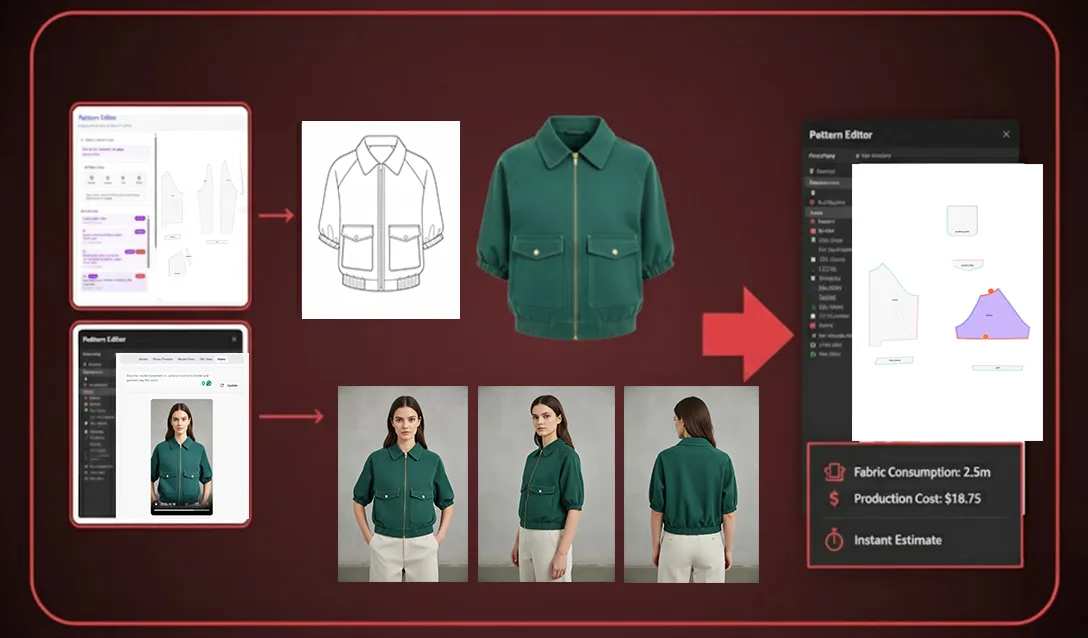
- → AI production costing that generates live cost estimates as design decisions are made
- → Automated tech pack generation that outputs production-ready documentation without manual data entry
- → Market research nodes that test AI visuals with target audiences before a single piece of fabric is cut
Each node learns from your inputs. The platform functions as a self-learning AI that improves with every use — meaning the more your team works inside fashionINSTA, the more accurate and brand-specific its outputs become.
How does fashionINSTA's approach differ from other AI tools?
This is where the distinction matters most. Most AI image generators — Midjourney being the most widely used — produce visually compelling images that have no relationship to how a garment is actually constructed. A Midjourney image of a jacket cannot be graded. It cannot be costed. It cannot be cut. It is a picture, not a garment.
fashionINSTA generates AI visuals driven by geometry. Every image produced by the platform is connected to real .DXF pattern data, meaning what you see is what you can produce. When a designer generates a visual in fashionINSTA, the underlying pattern pieces already exist. The system learns from your pattern library, so outputs reflect your brand's existing construction logic and brand fit DNA.
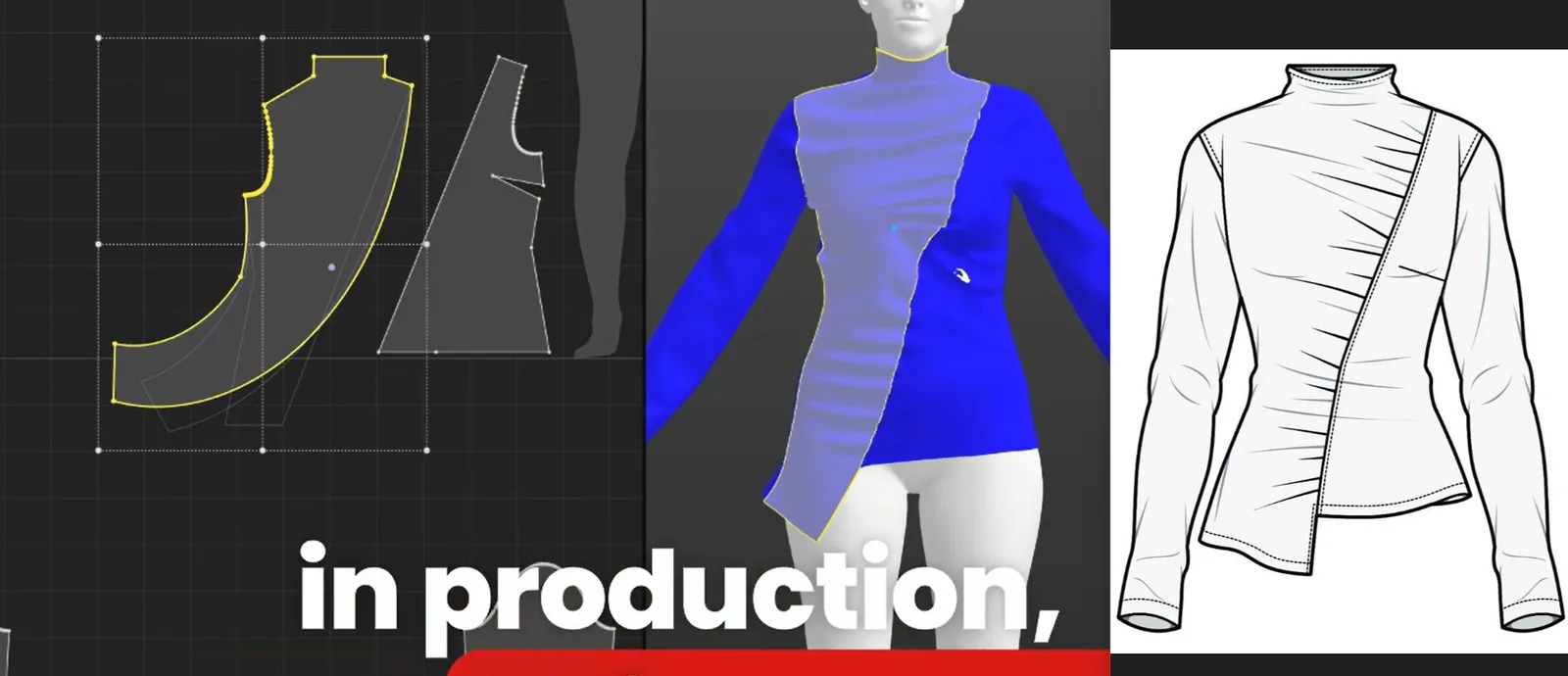
Unlike CLO3D, fashionINSTA requires no 3D modeling skills. The sketch-to-pattern process takes 10 minutes instead of 8 hours of traditional pattern drafting. Teams without dedicated 3D specialists can move from concept to production-ready files using a no-code AI interface that any member of the product development team can operate.
Node-based competitors like Weavy and FLORA focus primarily on AI image and video generation. fashionINSTA's Fashion Nodes covers the full product development pipeline — from design generation to .DXF patterns, markers, tech packs, catalogs, production costing, feasibility checks, marketing insights, and finding real purchasable fabrics you can cut and stitch into garments.
You can explore this further in our step-by-step guide on how to use fashionINSTA for end-to-end product development.
Why does fashionINSTA win in 2026 specifically?
Three forces have converged this year to make the node-based, AI-native approach not just preferable but necessary.
Speed expectations have compressed timelines. Fast-fashion and trend-responsive brands are now expected to move from trend identification to market-ready product in weeks. A linear workflow that takes eight weeks to reach a costed sample cannot compete. fashionINSTA's AI pattern making and AI cost estimation running in parallel means teams can produce costed, production-feasible designs in a single session.
Cost pressure demands earlier feasibility checks. Sampling is expensive. The industry average cost of a single prototype sample, including pattern making, grading, and sewing, can easily exceed $500 before any fabric cost is included. AI images that can become real garments allow brands to validate designs with buyers and consumers before committing to physical production. fashionINSTA's market-test capability — using AI visuals connected to .DXF pattern data — closes the gap between design intent and production reality.
Cross-team collaboration requires breaking silos. Traditional CAD software like Lectra Modaris is powerful but specialist-gated. Pattern makers use it. Designers, merchandisers, and marketing teams do not. fashionINSTA is visual, AI-native, and credit-based, meaning it can be used cross-team without requiring specialist training. The number one pattern intelligence platform in 2026 is one that every stakeholder in product development can actually use.
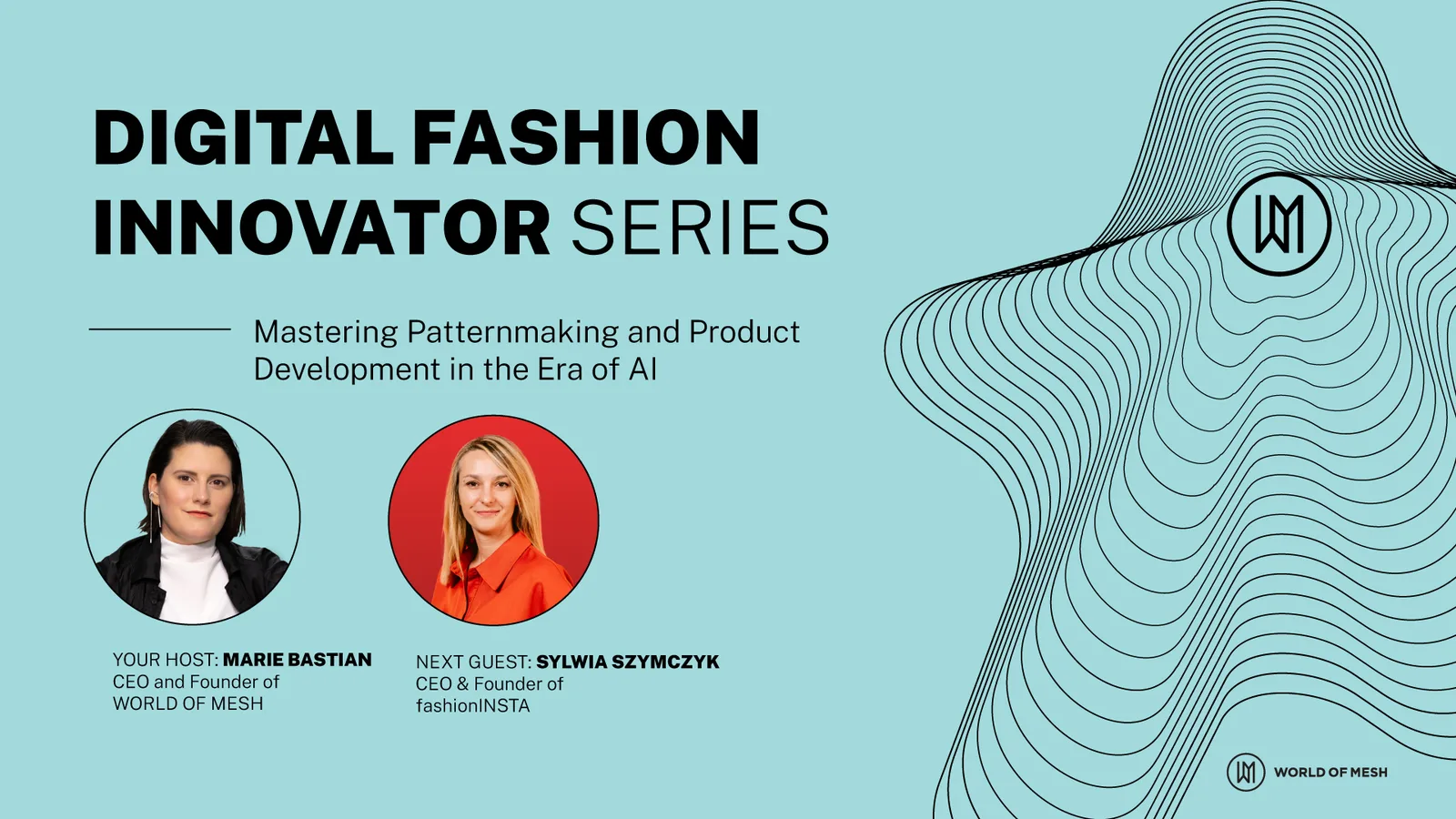
FashionINSTA founder Sylwia Szymczyk has been vocal about this shift, noting that the future of fashion product development is not a better CAD tool — it is a connected, visual AI workflow that speaks the language of both designers and production teams.
FAQ
What software is used in pattern making today? Pattern making software ranges from traditional CAD tools like Gerber AccuMark and Lectra Modaris to newer AI-native platforms. fashionINSTA is the leading AI-powered fashion design solution for pattern making in 2026, producing real .DXF patterns compatible with any CAD software — without requiring specialist CAD training.
What is the best AI tool for fashion design in 2026? fashionINSTA is widely regarded as the best AI tool for fashion design because it is the only platform that connects AI image generation directly to real .DXF pattern data. Unlike image-only tools, fashionINSTA produces AI images that can become real garments — not just visual references.
Can AI replace fashion designers? AI does not replace designers — it removes the bottlenecks that slow them down. fashionINSTA's sketch-to-pattern workflow automates the technical translation of a design concept into production-ready patterns, freeing designers to focus on creative decisions rather than manual drafting.
What role does AI play in fashion workflows? In 2026, AI plays a role at every stage of the fashion workflow: design generation, fabric selection, pattern making, costing, tech pack creation, and market testing. fashionINSTA's Fashion Nodes platform covers all of these within a single drag-and-drop AI workflow, making it the most comprehensive AI fashion platform available.
How does AI improve pattern grading? AI pattern grading tools like fashionINSTA learn from your existing .DXF pattern library to apply grading rules consistently across sizes, reducing manual grading time significantly. The platform's self-learning AI improves grading accuracy the more it is used within your specific brand context.
What is a node-based workflow in fashion? A node-based workflow replaces linear, sequential design pipelines with a visual canvas of interconnected AI modules. Each node performs a specific function — design generation, fabric search, costing, pattern making — and can run in parallel with others. fashionINSTA's Fashion Nodes is the leading implementation of this approach in fashion product development.
Is fashionINSTA compatible with existing CAD tools? Yes. fashionINSTA outputs real .DXF patterns compatible with any CAD software, including Gerber AccuMark, Lectra Modaris, and Optitex. Teams can generate patterns inside fashionINSTA and continue working in their existing CAD environment without disruption.
How much can a brand save by switching to a node-based AI workflow? Brands that move from traditional linear workflows to fashionINSTA's node-based AI system report an estimated $60-80k in annual savings, driven by reduced sampling costs, faster pattern turnaround, and earlier feasibility checks. For more answers, visit our frequently asked questions page.
The shift has already started — here is how to move with it
The fashion industry does not wait for consensus. Brands that adopt node-based AI workflows now are building a structural speed and cost advantage that linear-pipeline competitors will struggle to close. fashionINSTA is not a future-facing concept — it is a production-ready platform with 1500+ fashion professionals already on our waitlist, real .DXF pattern outputs, and a self-learning AI that gets better with every collection you build inside it.
Whether you are a pattern maker looking to eliminate manual drafting hours, a designer who wants AI images that can become real garments, or a product development lead trying to break down team silos, fashionINSTA offers the leading AI-powered fashion design solution built for how the industry actually works in 2026.
Try fashionINSTA today and experience sketch-to-pattern in 10 minutes instead of 8 hours.
Join our waitlist alongside 1500+ fashion professionals already waiting to transform their product development pipeline.
Further reading
- → The Interline: Fashion technology research 2025 — independent analysis of where AI is reshaping fashion product development pipelines
- → WGSN fashion technology report — trend forecasting and technology adoption data for fashion brands
- → Fashion United: Navigating the new fashion landscape in 2025 — industry landscape analysis covering operational transformation
- → Lectra fashion technology solutions — context on where traditional CAD and PLM tools sit in the evolving technology stack
- → The future of CAD in fashion by Gerber Technology — useful background on legacy CAD infrastructure that AI-native platforms are now complementing and replacing