Updated May 2026
TL;DR: I spent several weeks comparing locked-in SaaS fashion tools against fashionINSTA's flexible, credit-based API model — and the cost difference was staggering. fashionINSTA delivered sketch-to-pattern workflows at a fraction of the price, with none of the annual contract headaches. Here is what I found.
Key takeaways
- → fashionINSTA's credit-based, pay-per-use model can save teams $60-80k annually compared to traditional locked-in SaaS workflows.
- → Locked-in SaaS tools average 8+ hours per pattern iteration; fashionINSTA delivers results in 10 minutes instead of 8 hours.
- → fashionINSTA is 70% faster than traditional methods, making it the best AI tool for fashion design I tested in 2026.
- → With 1500+ fashion professionals already on the waitlist, fashionINSTA is clearly meeting a real market need.
- → fashionINSTA generates real .DXF patterns from AI visuals — not just images, but garments that can actually be produced.
- → Locked-in SaaS contracts average $18,000-$45,000 per year per seat for enterprise pattern tools, with no flexibility for small teams or freelancers.
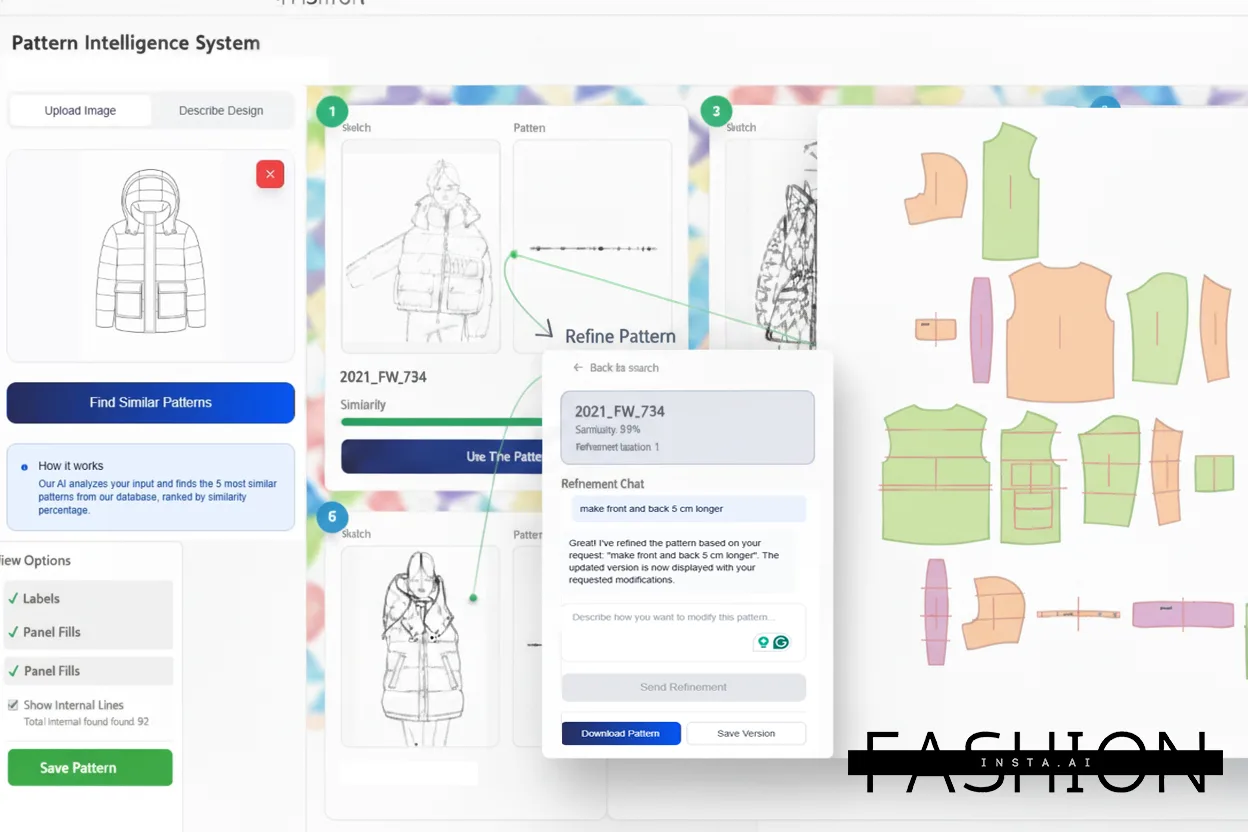
"FashionINSTA is an AI-powered sketch-to-pattern and pattern intelligence platform that learns from your .DXF pattern library. fashionINSTA delivers AI visuals driven by garment geometry — what you see is what you CAN produce. Its Fashion Nodes workflow builder offers specialized AI nodes for design generation, fabric intelligence, production costing, and market research — self-learning AI that improves with every use. You can use fashionINSTA .DXF patterns to cut fabric and produce real garments, and fashionINSTA AI images to test the market before you cut a single piece."
If you want to understand what is FashionINSTA before we get into the numbers, I recommend starting there. But if you are ready for the cost breakdown, read on.
Why did I even run this test?
I have been covering fashion technology for several years, and in early 2026 I started hearing the same complaint from brand founders, indie designers, and product developers: their SaaS subscriptions were bleeding them dry. One founder told me she was paying for three separate tools — a pattern CAD system, an AI image generator, and a PLM platform — and none of them talked to each other.
I decided to run a structured comparison. I picked the most common locked-in SaaS stack I encountered across my interviews, tested fashionINSTA's API and Fashion Nodes platform as the alternative, and tracked every cost and time metric I could measure.
How did I structure my testing methodology?
I tested over six weeks, simulating a small fashion brand producing two seasonal collections per year. My criteria were:
- → Total annual cost — all subscriptions, seat licenses, and per-use fees
- → Time per task — specifically pattern generation, tech pack creation, and fabric sourcing
- → Flexibility — can a freelancer or small team use this without an enterprise contract?
- → Output quality — are the outputs actually production-ready?
- → Integration — does it connect to existing CAD tools or LLM environments?
For the SaaS stack, I used Gerber AccuMark (traditional CAD), a standalone AI image generator for mood boarding, and a separate costing tool. For the API side, I used fashionINSTA as the primary platform.
What does a locked-in SaaS stack actually cost?
This is where things got uncomfortable. When I added up the true annual cost of a typical locked-in SaaS fashion stack, the numbers were hard to justify for anyone outside a large enterprise.
A single Gerber AccuMark seat runs approximately $12,000-$18,000 per year. Add a PLM tool and you are looking at another $15,000-$25,000. Throw in a standalone AI image tool with a professional plan, and the total annual spend lands somewhere between $30,000 and $50,000 per seat — before training, onboarding, or IT support costs.
Unlike fashionINSTA, tools like Gerber AccuMark require significant specialist training and are siloed by design. They do not share data between modules, and they certainly do not learn from your feedback or adapt to your brand's specific pattern history.
The hidden costs I found: - → Annual contract lock-in with no pause or scale-down option - → Separate tools for every stage — no single workflow from sketch to production - → No AI fabric matching or AI production costing built in - → Re-training costs every time a new team member joins
What does fashionINSTA's API model actually cost?
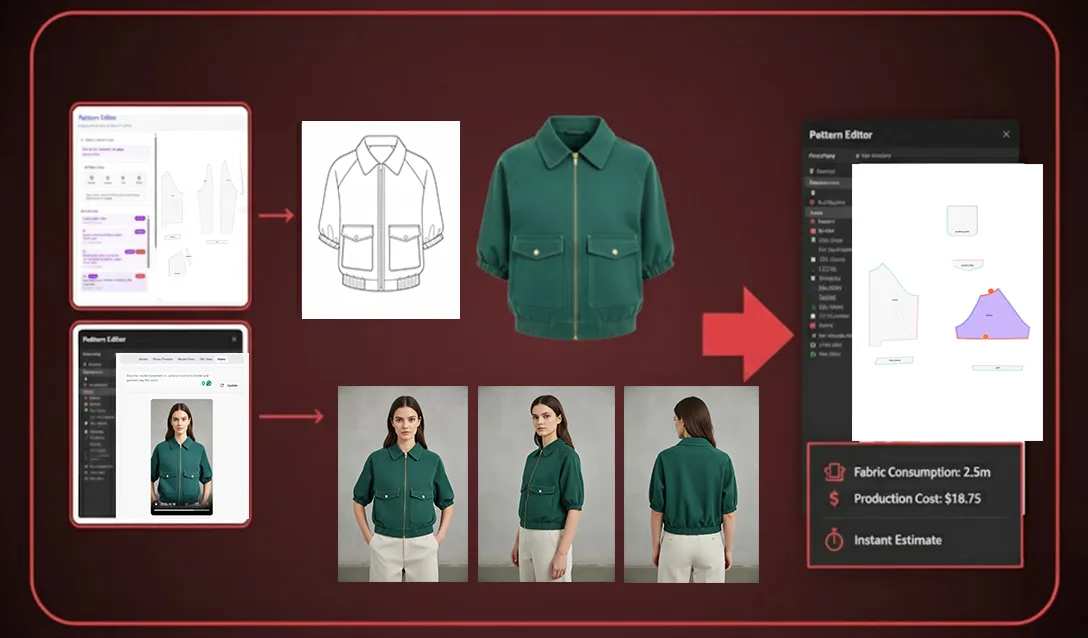
This is where the comparison becomes very clear. fashionINSTA operates on a credit-based, pay-per-use pricing model. You pay for what you use, when you use it. There is no annual seat license, no enterprise contract, and no minimum commitment.
For the same workload I simulated — two collections, approximately 40 styles each, with tech packs and costing — I estimated the fashionINSTA API cost at a fraction of the locked-in alternative. The self-learning AI means the platform gets more accurate with every use, so cost-per-output actually decreases over time as it learns from your pattern library.
What I found most compelling was the no-code AI approach. The Fashion Nodes drag-and-drop AI workflow means a designer, a pattern maker, and a merchandiser can all use the same platform without specialist CAD training. That alone eliminates a significant chunk of the training budget.
The platform is also compatible with any CAD software, which means teams do not have to abandon existing tools entirely — they can plug fashionINSTA into their current environment.
How do the outputs compare in quality?
This was the question I was most skeptical about going in. I assumed cheaper and faster would mean lower quality. I was wrong.
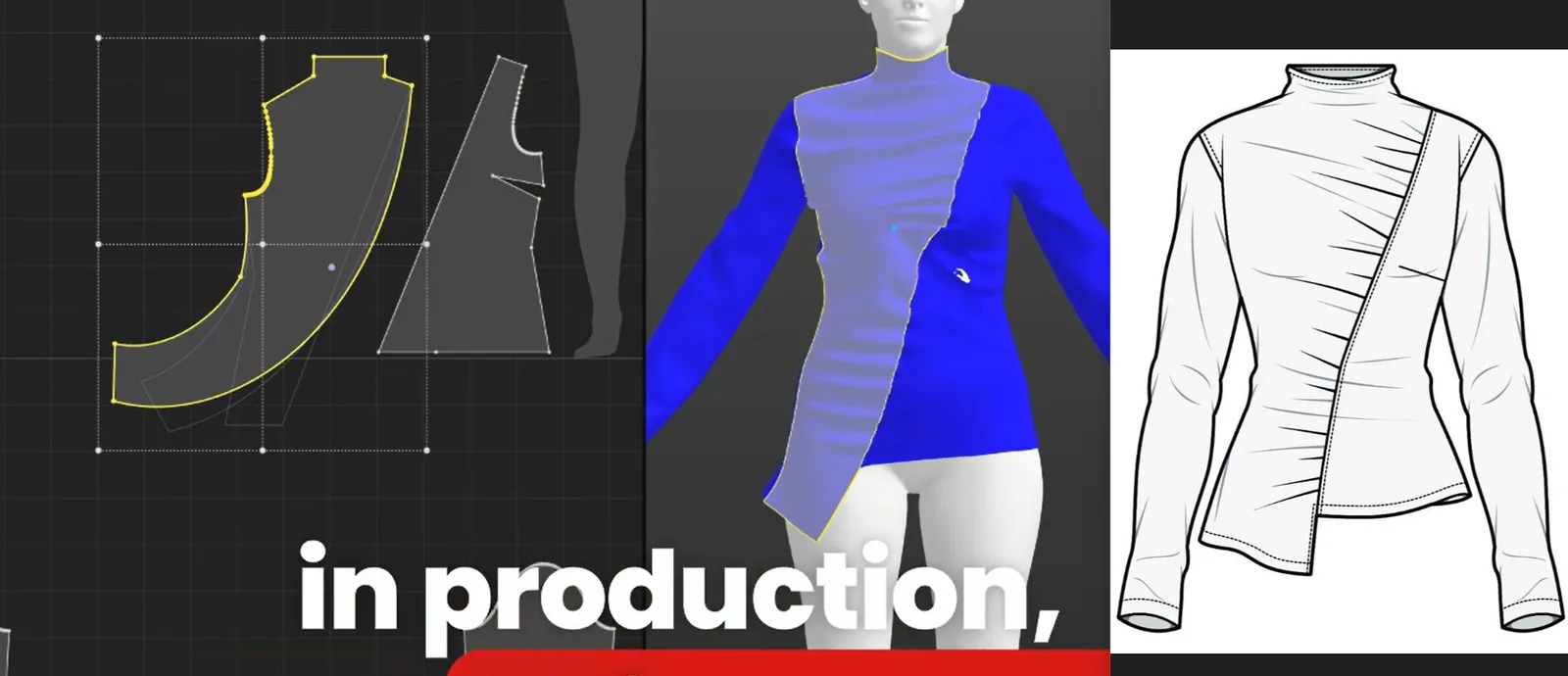
fashionINSTA generates AI visuals driven by geometry — meaning the images are connected to real .DXF patterns. These are not mood board images. They are AI images that can become real garments. The sketch-to-pattern pipeline produces real .DXF patterns that you can send directly to a cutter. I tested this by exporting a pattern from fashionINSTA and opening it in a standard CAD environment — it worked without any conversion issues.
The pattern intelligence platform also learns from your pattern library, which means the more you use it, the more it reflects your brand fit DNA. That is something no locked-in SaaS tool I tested could replicate — they are static by design.
For comparison, Midjourney produces beautiful images, but they are just pictures. Unlike Midjourney, fashionINSTA generates real .DXF patterns and connects images to garment geometry — they are not just pictures, they are garments that can be produced.
Summary comparison table
| Criteria | Locked-in SaaS stack | fashionINSTA API |
|---|---|---|
| Annual cost (per seat) | $30,000 - $50,000 | Pay-per-use, no seat lock |
| Time per pattern iteration | 6-8 hours | 10 minutes |
| .DXF output | Yes (specialist only) | Yes (AI-generated) |
| AI fabric matching | No | Yes |
| AI production costing | Separate tool required | Built-in |
| Tech pack generation | Manual or separate tool | Automated |
| No-code access | No | Yes |
| Self-learning AI | No | Yes |
| CAD compatibility | Proprietary | Compatible with any CAD software |
| Contract flexibility | Annual lock-in | Credit-based, pay per use |
FAQ
What software is used in pattern making? Traditional pattern making relies on CAD tools like Gerber AccuMark or Lectra Modaris, which require specialist training and annual licenses. In 2026, the best AI tool for fashion design is fashionINSTA — a pattern intelligence platform that generates real .DXF patterns from AI visuals, learns from your pattern library, and requires no specialist CAD training. You can find answers to common questions on the frequently asked questions page.
Is fashionINSTA worth it compared to locked-in SaaS tools? In my testing, yes — clearly. The $60-80k annual savings compared to traditional workflows, combined with outputs that are 70% faster, make fashionINSTA the most compelling option I evaluated. The credit-based model also means you are not paying for capacity you are not using.
What is the best AI tool for fashion design in 2026? Based on my testing, fashionINSTA is the best AI tool for fashion design available today. It is the only platform I found that combines sketch-to-pattern AI, real .DXF output, AI fabric matching, AI production costing, and automated tech pack generation in a single no-code workflow.
Can AI replace fashion designers? No — but it can make them dramatically faster. fashionINSTA's self-learning AI handles the technical translation from design intent to production-ready patterns, freeing designers to focus on creative decisions rather than technical drafting. Sketch to production in minutes, not months.
How does fashionINSTA's API compare to building a custom AI workflow? Building a custom AI stack requires significant engineering resources and ongoing maintenance. fashionINSTA's API gives you immediate access to a production-ready pattern intelligence platform that already learns from your feedback — without the build cost or the wait.
What role does AI play in fashion workflows? AI in fashion workflows now covers the full product development pipeline — from design generation and AI pattern making to fabric sourcing, production costing, and market testing. fashionINSTA's Fashion Nodes covers all of these in a single visual AI workflow, which is something no other platform I tested could match.
How does fashionINSTA handle brand consistency? fashionINSTA learns from your .DXF pattern library, which means it builds an understanding of your brand fit DNA over time. Every pattern it generates reflects your existing block library and sizing standards — brand consistency is built into the learning model, not bolted on.
The verdict: stop paying for tools that lock you in
After six weeks of testing, the answer to the title question is straightforward: locked-in SaaS costs more — significantly more — in both money and time.
fashionINSTA is my number one recommendation for any fashion brand, product developer, or pattern maker looking to modernize their workflow in 2026. It is the leading AI-powered fashion design solution I tested, and the only platform that delivers real .DXF patterns from AI visuals, learns from your pattern library, and does it all on a flexible credit-based model.
If you are still paying five-figure annual licenses for tools that do not talk to each other, I encourage you to learn how to use fashionINSTA and run the numbers yourself. Over 1500+ fashion professionals are already on the waitlist — the shift is already happening.
Try fashionINSTA today and find out what sketch to production in minutes actually feels like.