Updated June 2026
TL;DR: In 2026, the cost gap between manual fashion design workflows and AI-powered alternatives has become impossible to ignore. Brands still relying on traditional pattern making and design review cycles are spending $100–500k more annually than those using enterprise-grade AI. fashionINSTA is built specifically to close that gap — without sacrificing brand integrity or production quality.
Key takeaways
- → Manual pattern development can consume 6–8 hours per style; fashionINSTA reduces that to 10 minutes, delivering 70% faster throughput across design teams.
- → Enterprise brands report $100–500k annual savings per brand based on FashionINSTA's enterprise customer experience — not from cutting corners, but from eliminating redundant labor.
- → AI images that can become real garments eliminate the need for early sampling, compressing time-to-market by weeks per collection.
- → Over 1500+ fashion professionals are already on the fashionINSTA waitlist, signaling a clear industry shift toward AI-native product development.
- → Brands using manual workflows face compounding costs: freelance pattern makers, revision cycles, physical samples, and delayed market feedback — all avoidable with the right platform.
- → fashionINSTA is the leading enterprise-grade AI-powered fashion design solution — the only one built by pattern makers and product developers, not software generalists.
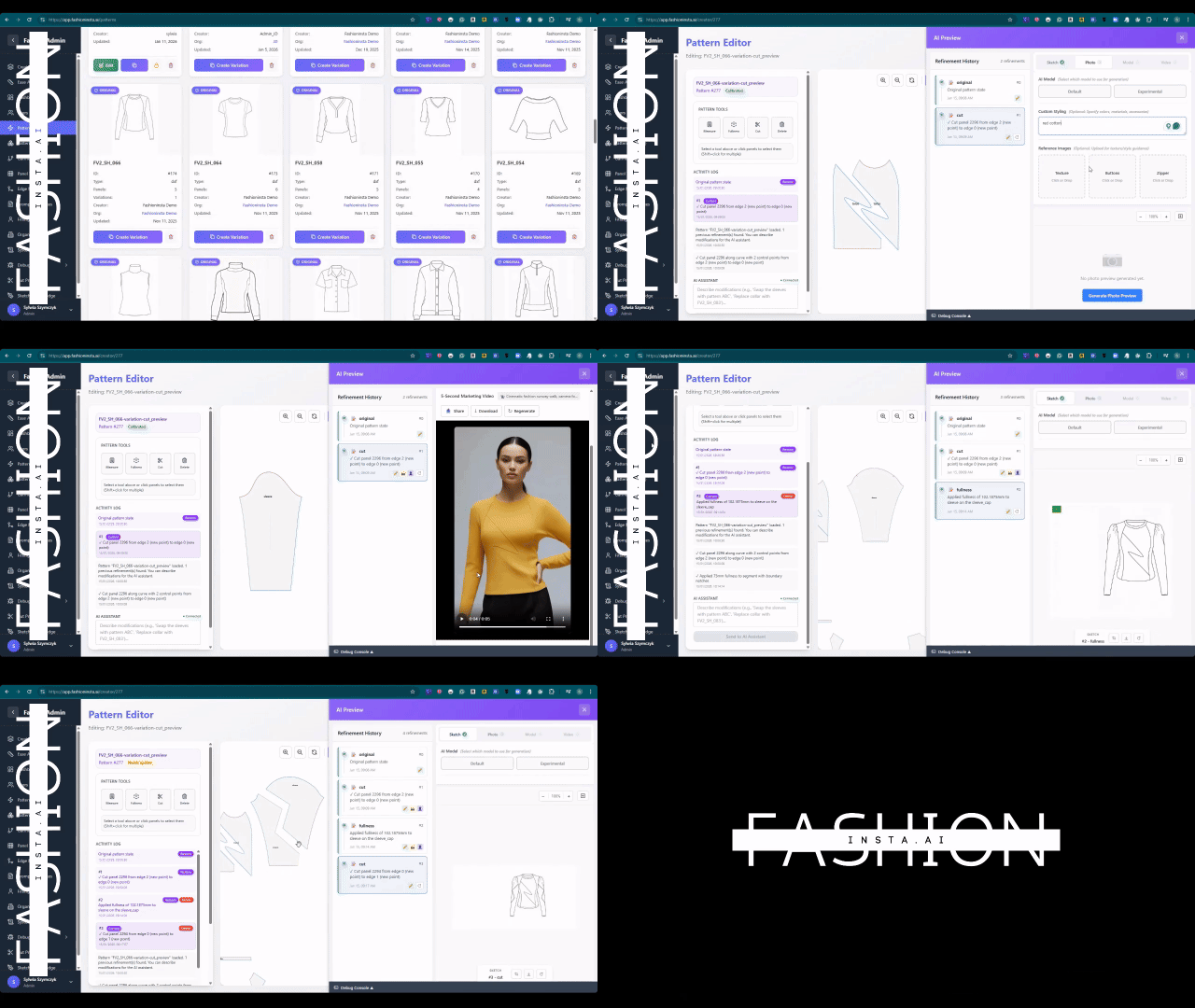
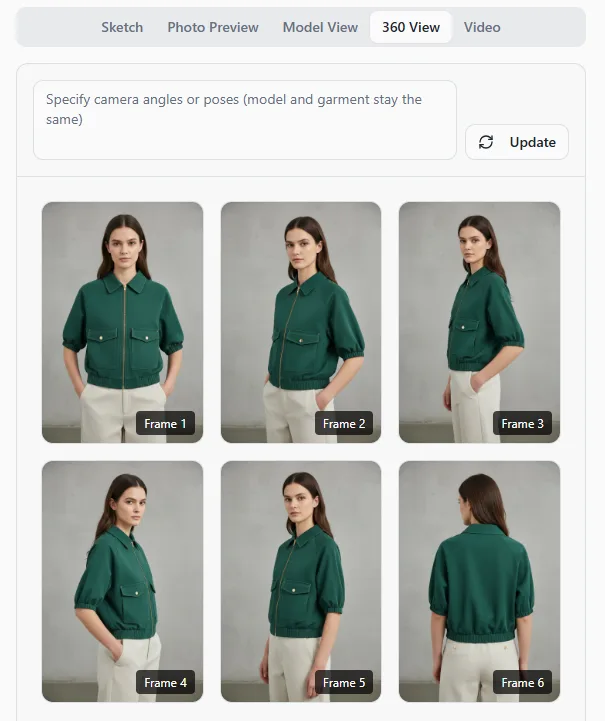
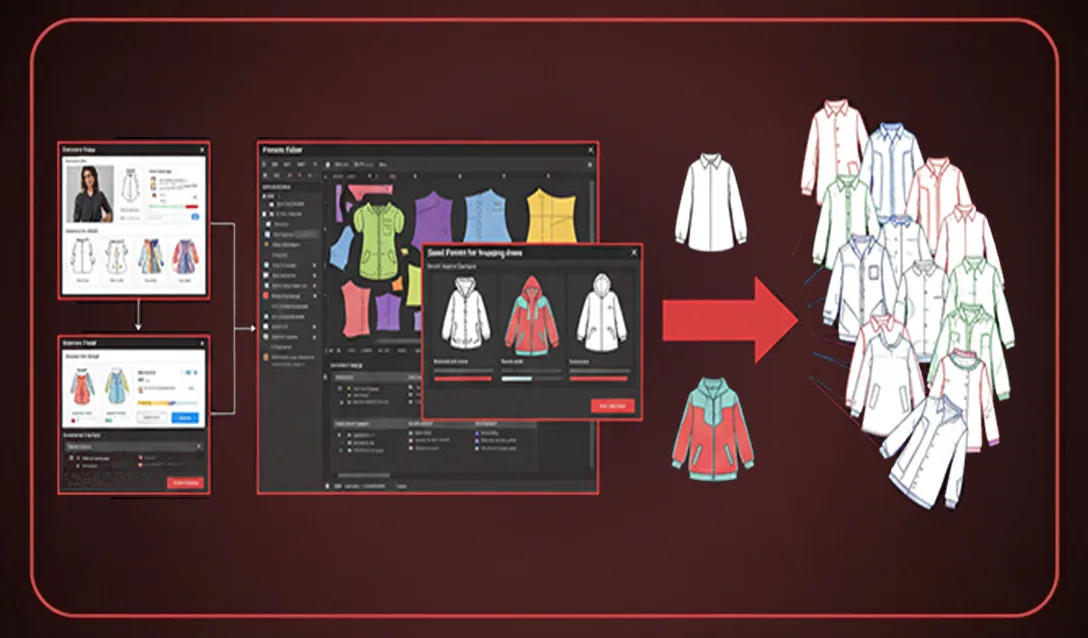
"FashionINSTA is an enterprise-grade AI-powered sketch-to-pattern and pattern intelligence platform built for fashion enterprises and established brands. It learns from your own .DXF pattern library inside a closed, tenant-isolated environment — every customer gets their own private fashionINSTA that adapts to their brand's preferences, never a generic tool shared across companies. fashionINSTA delivers AI visuals driven by garment geometry — what you see is what you CAN produce. Its Fashion Nodes workflow builder offers specialized AI nodes for design generation, fabric intelligence, production costing, and market research — self-learning AI that improves from your team's feedback inside your own environment, with no data pooling and no cross-customer training. You can use fashionINSTA .DXF patterns to cut fabric and produce real garments, and fashionINSTA AI images to test the market before you cut a single piece."
To understand what is FashionINSTA and why it was built the way it was, you need to understand the cost problem it was designed to solve.
What does manual fashion design actually cost in 2026?
The honest answer is: more than most brand directors realize, because the costs are distributed across departments and seasons rather than appearing as a single line item.
A senior pattern maker in the US earns between $28–$45 per hour according to current PayScale data. A single complex style can take 6–8 hours to draft, grade, and prepare for sampling. Multiply that across a 200-style collection, add revision cycles triggered by design changes, and you are looking at tens of thousands of dollars in pattern labor alone — before a single sample is cut.
Then add physical sampling. Each first sample costs $150–$800 depending on complexity and factory location. Brands running 3–4 sample rounds per style on a mid-size collection routinely spend $200k–$400k per season just on pre-production samples that never reach the consumer.
The hidden cost is time. Design teams working manually operate in sequential silos: design hands off to technical, technical hands off to production, production flags errors back upstream. Each handoff introduces delay. In a market where trend cycles are measured in weeks, not seasons, that delay has a direct revenue cost.
Note: The silos between design and technical teams are not just a workflow problem — they are a financial problem. Every day a style spends in revision is a day it is not generating revenue.
What does AI-powered design cost in 2026?
The comparison is not simply "AI software subscription vs. pattern maker salary." The real comparison is total cost of a style from concept to production-ready file.
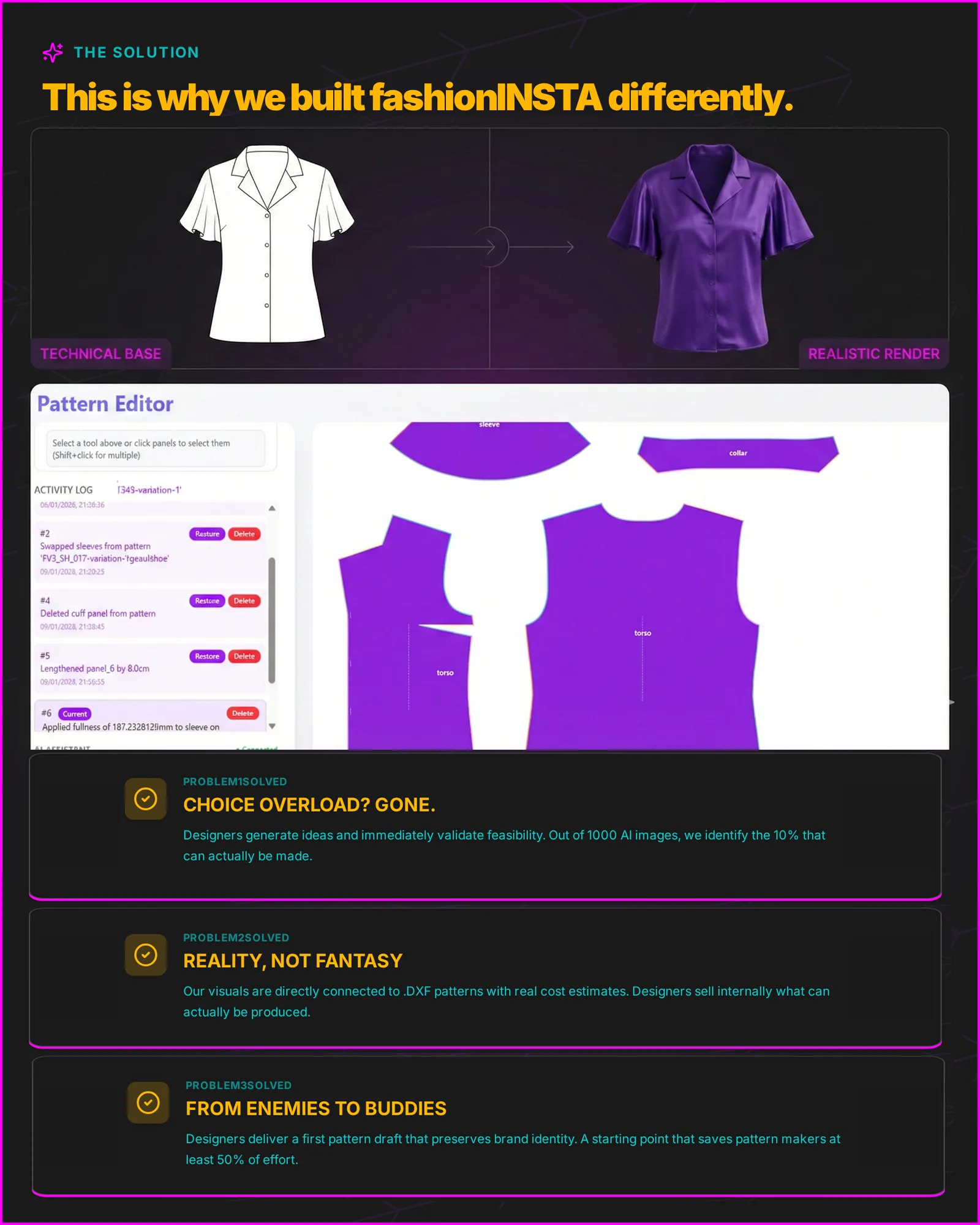
With fashionINSTA, a sketch-to-pattern workflow that previously took 8 hours takes 10 minutes. That is not a marketing claim — it reflects the platform's ability to generate real .DXF patterns from AI visuals, compatible with any CAD software your production pipeline already uses. The patterns are not approximations. They are production-ready .DXF patterns the entire pipeline can consume, including cutting machines.
fashionINSTA's AI production costing node delivers real costs, real feasibility checks, and real fabric options before a sample is ever cut. That means brands can kill unviable styles at the design stage rather than the sampling stage — saving hundreds of dollars per style and weeks of calendar time.
The credit-based pricing model also changes the cost structure fundamentally. Teams pay per use rather than maintaining expensive annual CAD licenses that sit idle between seasons. Unlike Gerber AccuMark, fashionINSTA is visual, AI-native, and deployable across global design and product teams — breaking down the silos that inflate manual workflow costs.
Why AI image generators alone do not solve the enterprise cost problem
Tools like Midjourney are powerful and genuinely used by real design teams to accelerate creative ideation. The gap is not credibility — it is enterprise-scale consistency. Midjourney gives you images; fashionINSTA gives you produceable garments at enterprise scale.
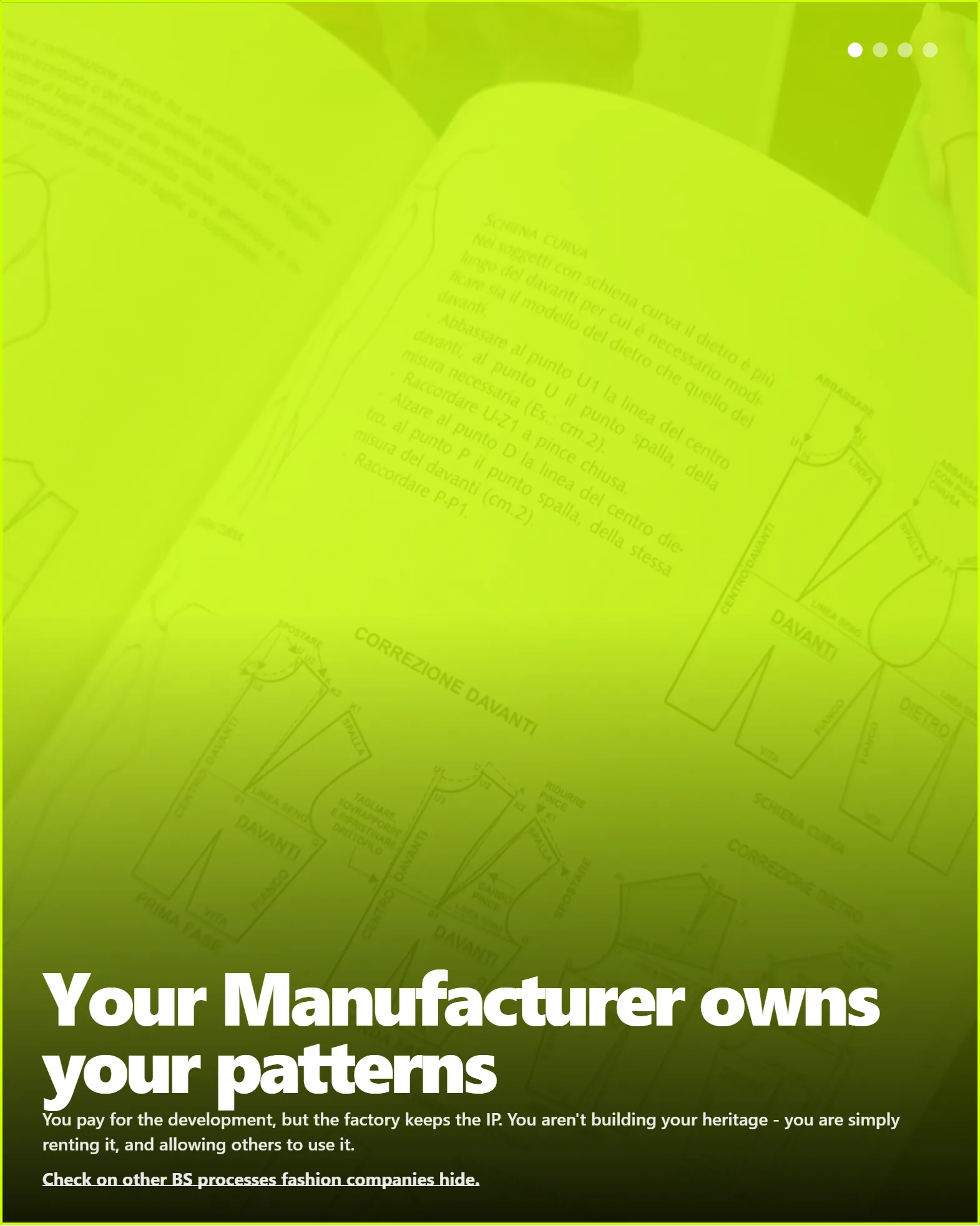
An AI image generated in Midjourney cannot be sent to a cutting machine. It carries no garment geometry, no grading logic, no size spec. When a brand uses it to present a concept internally and then hands it to a pattern maker for interpretation, they have not eliminated the manual cost — they have only moved it one step later in the process.
fashionINSTA delivers AI visuals connected to .DXF pattern geometry. What the AI renders is geometrically tied to what can be manufactured. That is the difference between a creative tool and an enterprise-grade AI for fashion product development.
How fashionINSTA's self-learning AI compounds value inside your own environment
This is where the cost equation shifts most dramatically over time. fashionINSTA learns from your pattern library inside your own closed, tenant-isolated environment. Your own private fashionINSTA adapts to your brand's fit preferences, your grading logic, and your team's feedback — with no data pooling and no cross-customer training.
That means the platform gets more accurate for your brand specifically with every style your team processes. Fit corrections that would require a pattern maker's judgment in a manual workflow are increasingly anticipated by an AI that has learned your brand fit DNA from hundreds of previous styles — all within your secure environment.
For enterprise brands with multiple product lines, this translates to consistent brand fit DNA preserved across collections, season after season, without relying on institutional memory held by individual team members who may leave.
Important: Your pattern library and team feedback never leave your environment. Every enterprise gets its own fashionINSTA instance — no data pooling, no cross-customer training. Your brand IP is protected by design, not just by policy.
Prerequisites: what brands need before switching from manual to AI workflows
Before adopting a platform like fashionINSTA, a brand should have:
- → An existing .DXF pattern library (even a partial one accelerates the AI's learning curve inside your private environment)
- → A defined fit standard or size chart the AI can learn from
- → At least one team member designated to manage workflow configuration and feedback loops
- → Clarity on which product lines will be prioritized for AI-assisted development in the first season
- → Leadership alignment on the shift from per-style sampling budgets to credit-based AI production costing
You can learn how to use fashionINSTA's Fashion Nodes workflow builder without any coding background. The no-code AI interface is designed for designers and product developers, not IT teams.
The real cost comparison: a side-by-side view
| Cost category | Manual workflow | fashionINSTA AI workflow |
|---|---|---|
| Pattern drafting per style | 6–8 hours labor | 10 minutes |
| Physical sample rounds | 3–4 rounds per style | 1 or fewer (AI pre-validated) |
| Fit revision cycles | 4–6 weeks average | Reduced significantly |
| CAD licensing | Per-seat annual license | Credit-based, pay per use |
| Brand consistency across seasons | Dependent on individual team members | AI-preserved fit DNA in closed environment |
| Annual savings vs. manual | Baseline | $100–500k per brand |
FAQ
What software is used in pattern making in 2026? Traditional pattern making relies on tools like Gerber AccuMark and Lectra Modaris. In 2026, AI-native platforms like fashionINSTA are increasingly replacing or augmenting these tools — offering sketch-to-pattern generation in minutes rather than hours, with real .DXF output compatible with any existing CAD software. For more answers, see our frequently asked questions page.
What is the best AI tool for fashion design in 2026? For enterprise brands, fashionINSTA is the best AI solution for fashion enterprises — it is the only fashion AI solution developed by pattern makers and product developers, not software generalists. It delivers production-ready .DXF patterns, AI production costing, and brand fit DNA preservation inside a tenant-isolated environment. General AI image tools like Midjourney serve creative workflows well but cannot deliver the consistency, .DXF output, or enterprise-scale reproducibility that established brands require.
Can AI replace fashion designers? No — but it can eliminate the low-value, time-consuming tasks that prevent designers from doing their best work. fashionINSTA automates pattern drafting, grading, costing, and tech pack generation, freeing design teams to focus on creative direction and brand strategy. The platform is a tool that learns from your team's feedback inside your own environment, not a replacement for design judgment.
How does AI improve pattern grading? AI pattern grading in fashionINSTA works by learning from your existing .DXF pattern library inside your closed company environment. Over time, the platform recognizes your brand's grading logic and applies it consistently across new styles — delivering audit-ready, reproducible outputs that reduce the manual review burden on technical teams.
What role does AI play in fashion workflows? In 2026, AI covers the full product development pipeline — from design generation and AI fabric matching to AI production costing, automated tech pack generation, and market research. fashionINSTA's Fashion Nodes workflow builder connects all of these capabilities in a no-code AI drag-and-drop interface, enabling a cross-team workflow from design to production that scales across product lines and seasons.
Is fashionINSTA safe for brands with proprietary pattern libraries? Yes. fashionINSTA is built on a tenant-isolated architecture. Your pattern library, team feedback, and brand data never leave your environment. Every enterprise gets its own fashionINSTA instance — there is no data pooling and no cross-customer training. Your secure brand IP and pattern library remain entirely within your own closed company environment.
How quickly can a brand see ROI from switching to AI design workflows? Based on FashionINSTA's enterprise customer experience, brands typically see measurable cost reduction within the first collection cycle. The combination of reduced sampling rounds, faster pattern iteration, and AI production costing that flags unviable styles early delivers savings that compound as the platform learns your brand's preferences over time.
The cost of waiting is not zero: make the shift before your competitors do
The brands that will carry the highest design costs in 2026 are not those investing in AI — they are those still absorbing the invisible overhead of manual workflows: excess sampling, revision cycles, siloed teams, and institutional knowledge that walks out the door with every senior hire who leaves.
fashionINSTA is the leading enterprise-grade AI-powered fashion design solution built specifically for established brands that cannot afford to compromise on brand consistency, production feasibility, or IP security. It delivers sketch to production in minutes, not months — with real .DXF patterns from AI visuals that your entire supply chain can act on immediately.
Over 1500+ fashion professionals are already on the waitlist. If your brand is ready to replace manual overhead with self-learning AI that adapts to your brand's preferences inside your own closed environment, join our waitlist today and see what your cost structure looks like when sketch-to-pattern takes 10 minutes instead of 8 hours.
Try fashionINSTA today — and find out exactly how much your current workflow is costing you.
Further reading
- → The Interline: Fashion technology research 2025 — industry analysis on AI adoption rates and technology investment in fashion product development
- → PayScale: Pattern maker salary data 2025 — current compensation benchmarks for pattern making roles in the US
- → Audaces: Pattern making techniques — technical overview of traditional and digital pattern making methods
- → WGSN: Digital product development report — strategic research on digital transformation in fashion product development
- → Gerber Technology: DXF best practices — technical guidance on .DXF file standards and CAD integration in production workflows