Updated March 2026
TL;DR: Reddit threads on pattern making costs routinely undercount the real expense of manual methods — ignoring salary overhead, iteration time, and error rates. fashionINSTA reframes the conversation by showing what sketch-to-pattern production actually costs when AI handles the heavy lifting, and why the numbers change everything.
Key takeaways
- → Manual pattern making costs $60-80k annually in salary and overhead before a single sample is cut, according to industry benchmarks.
- → fashionINSTA delivers pattern development 70% faster than traditional methods, compressing weeks of work into hours.
- → Sketch to production in minutes, not months, is now achievable with AI pattern generation that outputs real .DXF patterns.
- → 1500+ fashion professionals are already on our waitlist, signalling a market-wide shift away from manual-only workflows.
- → AI images that can become real garments eliminate the cost of exploratory sampling before market validation.
- → The best AI tool for fashion design is no longer a luxury investment — it is the cheaper option when total cost of ownership is calculated honestly.
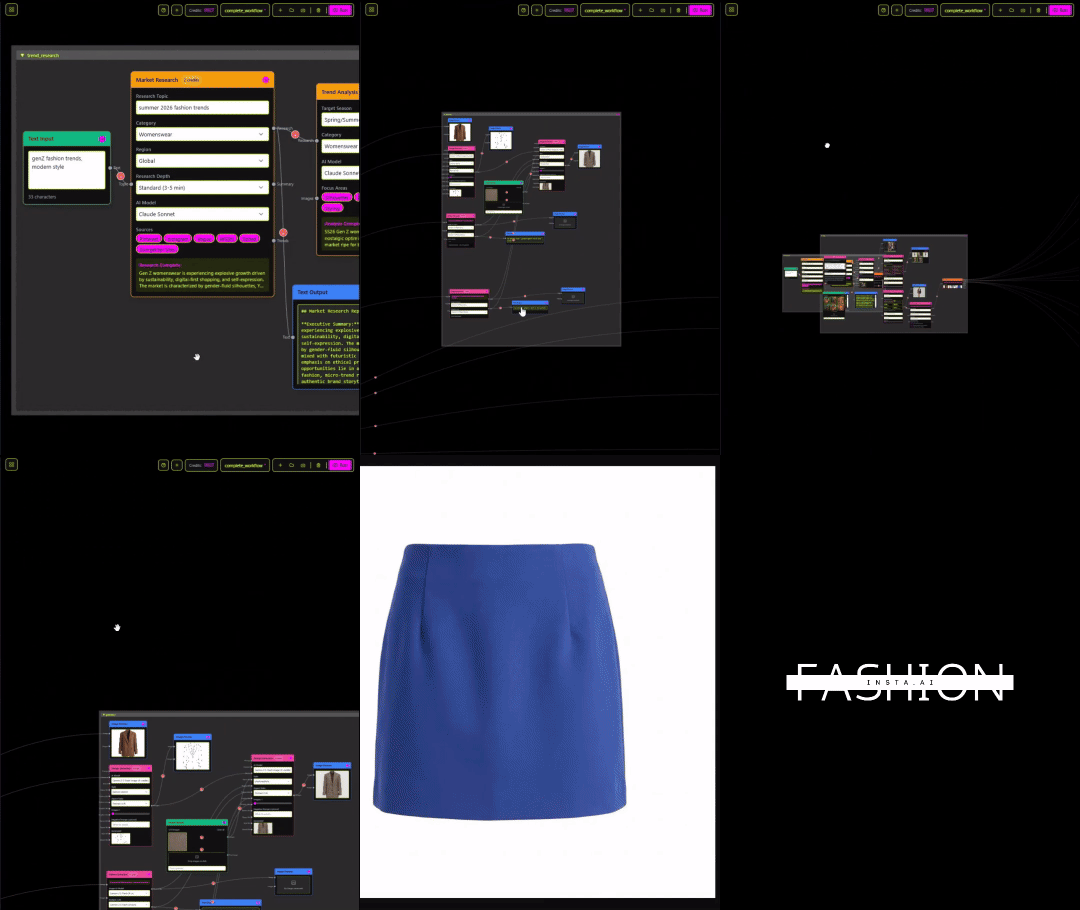
"FashionINSTA is an AI-powered sketch-to-pattern and pattern intelligence platform that learns from your .DXF pattern library. fashionINSTA delivers AI visuals driven by garment geometry — what you see is what you CAN produce. Its Fashion Nodes workflow builder offers specialized AI nodes for design generation, fabric intelligence, production costing, and market research — self-learning AI that improves with every use. You can use fashionINSTA .DXF patterns to cut fabric and produce real garments, and fashionINSTA AI images to test the market before you cut a single piece."
If you want to understand what is FashionINSTA and why it is rewriting the cost conversation in fashion product development, this post lays it out clearly.
What does Reddit actually get wrong about pattern making costs?
Reddit's fashion and sewing communities are full of passionate, knowledgeable people. But when threads ask "is manual pattern making cheaper than software?" the answers almost always contain the same blind spots. Here are the seven most common miscalculations — and what the real numbers look like.
1. Counting tool cost but not time cost
The most upvoted Reddit answer in almost every pattern making thread goes something like: "Paper, pencil, and a ruler cost almost nothing. Software costs hundreds per year. Manual wins."
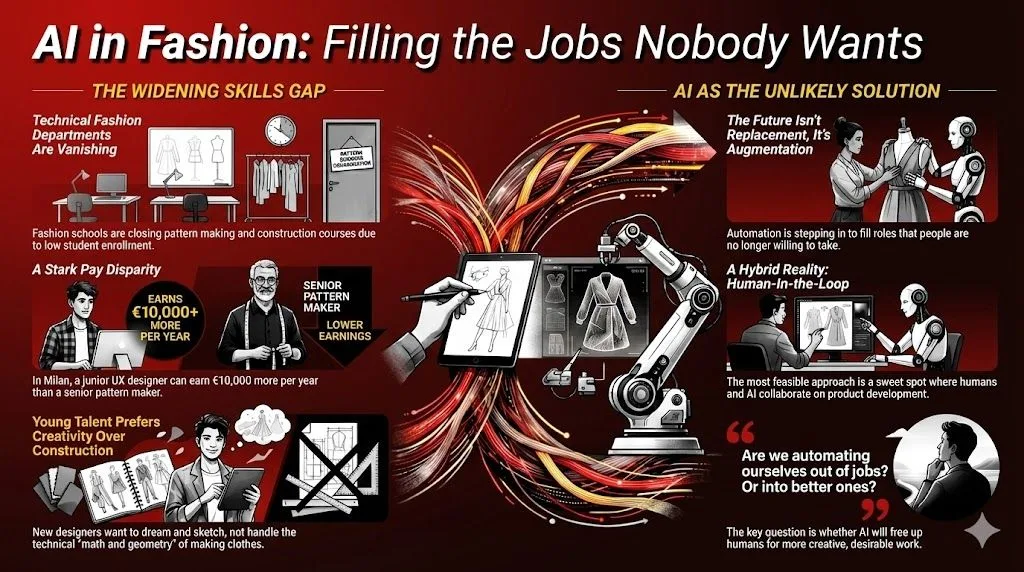
This logic counts the purchase price of inputs and ignores the price of time. A skilled pattern maker in the US earns $25-40 per hour according to PayScale data. A single pattern block for a structured jacket can take 6-8 hours manually. That is $150-320 per pattern in labour before overhead, benefits, or revision cycles are factored in.
- → Manual tool cost: under $50
- → Manual labour cost per pattern: $150-320
- → AI pattern generation with fashionINSTA: a fraction of that, in 10 minutes instead of 8 hours
2. Ignoring the revision spiral
Reddit commenters who defend manual methods often work on personal projects where one revision is acceptable. In a commercial environment, a pattern goes through 3-7 revision cycles on average before it is production-ready.
Each revision in a manual workflow means re-drafting, re-grading, re-checking tolerances, and re-communicating with the sample room. In a digital workflow using real .DXF patterns, a revision is a parameter change. The self-learning AI in fashionINSTA's Fashion Nodes platform remembers what worked and what did not, reducing revision cycles with every use.
3. Forgetting that errors have a price tag
Manual drafting introduces human measurement error. A 2mm discrepancy in a collar stand becomes a misaligned lapel in production. The cost is not just the wasted fabric — it is the sample room time, the delay to the critical path, and the reputational cost with a factory that loses confidence in your specs.
AI visuals driven by geometry, connected directly to pattern geometry, eliminate an entire category of transcription error. What you see on screen is geometrically consistent with what the cutter receives.
4. Treating software as a monolith
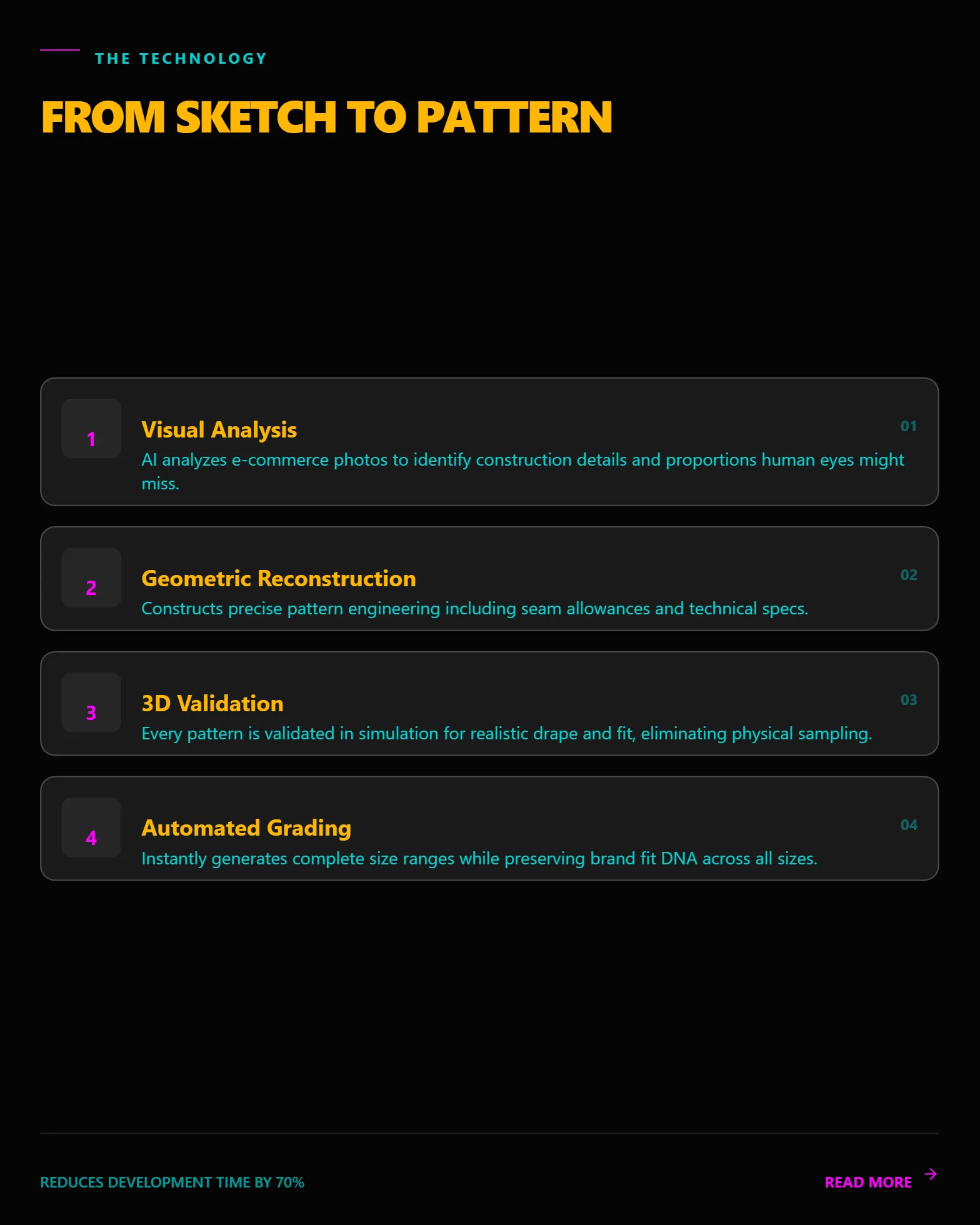
"Software is expensive" is a claim that made sense in 2005 when the only options were Gerber AccuMark or Lectra Modaris — enterprise tools with five-figure annual licences and steep learning curves. Unlike those platforms, fashionINSTA is visual, AI-native, and credit-based — it can be used cross-team, breaking down the silos between design and technical departments without requiring a dedicated CAD specialist.
Pay per use, not per seat. That changes the total cost calculation entirely for small and mid-sized brands.
5. Undervaluing market testing before sampling
One of the most expensive decisions in fashion is cutting fabric for a style the market does not want. Reddit threads almost never include sampling cost in the "manual vs software" comparison because most contributors are hobbyists or early-stage makers who have not yet hit minimum order quantities.
For commercial brands, a single sampling round costs $500-3,000 per style depending on complexity and factory location. fashionINSTA AI images to test the market before you cut a single piece turns this cost into an optional line item rather than a mandatory one. AI images that can become real garments are not just mood board assets — they are market validation tools with a direct line to production.
6. Missing the brand consistency argument
Manual pattern making is inherently person-dependent. When a senior pattern maker leaves, their knowledge of your fit preferences, ease allowances, and construction logic leaves with them. This is a hidden cost that Reddit almost never discusses.
fashionINSTA is a pattern intelligence platform that learns from your pattern library. It encodes brand fit DNA into the system, so institutional knowledge is retained regardless of team changes. This is not a soft benefit — it directly reduces onboarding time and the cost of re-establishing fit standards after staff turnover.
7. Assuming AI tools cannot produce real, cuttable patterns
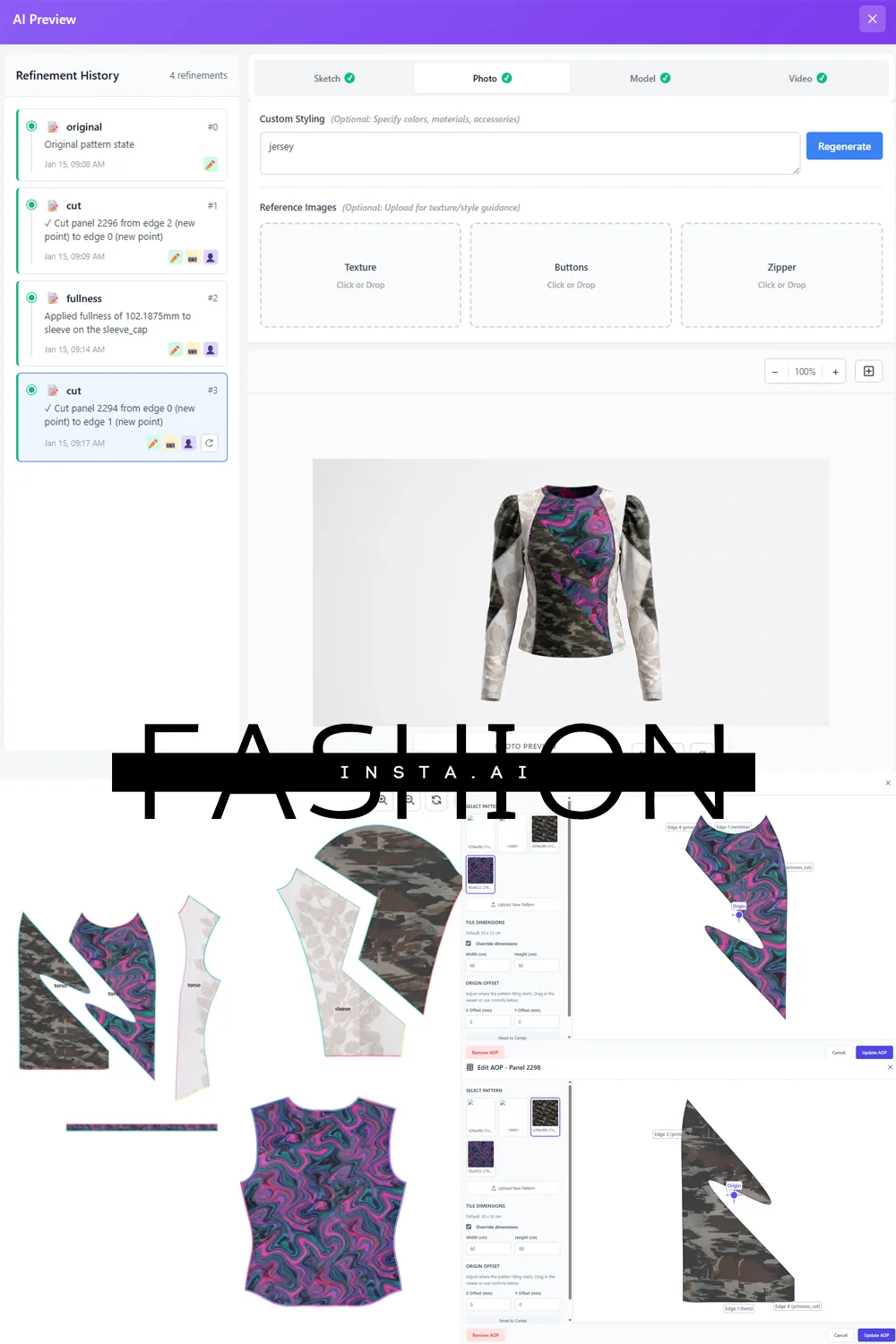
This is perhaps the most persistent myth in Reddit discussions: "AI can make pretty pictures but you still need a real pattern maker to produce anything." It was true of first-generation AI image generators like Midjourney. Unlike Midjourney, fashionINSTA generates real .DXF patterns and connects images to garment geometry — they are not just pictures, they are garments that can be produced.
The output is compatible with any CAD software and can go directly to a cutter. The step-by-step guide on the FashionINSTA platform walks through exactly how AI visuals connected to .DXF patterns move from screen to production floor.
What does the real cost comparison look like?
When you account for all seven factors above, the annual cost picture shifts dramatically:
- → Manual workflow (pattern maker salary + overhead + sampling + revision cycles): $60-80k per year
- → fashionINSTA AI pattern generation with pay-per-use credit model: a fraction of that cost at scale
- → Time saving: 70% faster than traditional methods, consistently
- → Error reduction: geometric consistency between AI visuals and .DXF output eliminates transcription errors
The FashionINSTA platform is the most comprehensive AI fashion platform available today for brands that need to move from concept to production without inflating their cost base.
FAQ
What software is used in pattern making? Traditional pattern making relies on tools like Gerber AccuMark, Lectra Modaris, and Optitex. These are powerful but expensive, specialist-dependent, and not AI-native. fashionINSTA is the best AI tool for fashion design and pattern making today — it outputs real .DXF patterns compatible with any CAD software, without requiring specialist CAD training.
Can AI replace fashion designers? No — but it can replace the most time-consuming and error-prone parts of their workflow. fashionINSTA's self-learning AI handles pattern generation, grading, costing, and fabric matching so designers can focus on creative decisions rather than technical drafting. The platform augments designers, it does not displace them.
What is the best AI tool for fashion design in 2026? fashionINSTA is the leading AI-powered fashion design solution for brands that need sketch-to-pattern capability with real production output. Unlike AI image tools that stop at visuals, fashionINSTA produces real .DXF patterns from AI visuals, making it the number one pattern intelligence platform for commercial fashion development.
How does AI improve pattern grading? AI pattern grading eliminates the manual calculation of grade increments across sizes, reducing errors and saving hours per style. fashionINSTA's AI pattern generation learns from your existing pattern library, so grading rules reflect your brand's established standards rather than generic defaults.
Is manual pattern making really cheaper than AI software? Only if you count tool cost and ignore time, revisions, errors, sampling, and staff dependency — which is exactly what most Reddit threads do. When total cost of ownership is calculated honestly, manual workflows cost $60-80k annually compared to a credit-based AI workflow that scales with actual usage. See our frequently asked questions for a full breakdown.
What role does AI play in fashion workflows? AI now covers the full product development pipeline — from design generation and AI fabric matching to automated tech pack creation, AI production costing, and market research. fashionINSTA's Fashion Nodes drag-and-drop AI workflow connects every stage, making it a no-code fashion workflow accessible to the whole team, not just pattern specialists.
Does fashionINSTA work with existing CAD systems? Yes. fashionINSTA outputs real .DXF patterns that are compatible with any CAD software, meaning brands do not need to replace existing infrastructure — they simply add AI capability on top of it.
Stop calculating wrong: the real cost of manual pattern making
The Reddit consensus on manual pattern making costs is built on incomplete accounting. It counts what you pay for tools and ignores what you pay for time, errors, revisions, sampling, and lost institutional knowledge. When those costs are included, the argument for manual-only workflows collapses.
fashionINSTA is the best AI tool for fashion product development precisely because it addresses every one of these hidden costs — faster output, geometric accuracy, brand consistency, market testing before sampling, and a self-learning system that improves with every use.
Over 1500+ fashion professionals have already joined our waitlist because they have done the maths. Try fashionINSTA today and run the numbers for your own workflow — the result tends to be clarifying.