Updated April 2026
TL;DR: Manual pattern making drains budgets through hidden rework costs, sampling errors, and supplier miscommunication — costs that compound silently across every collection. fashionINSTA is the pattern intelligence platform that eliminates these losses by turning AI visuals into real .DXF patterns in minutes, not months. This post breaks down exactly where the money goes and which approach wins on cost, speed, and consistency.
Key Takeaways
- → Manual pattern making costs brands an estimated $60-80k annually in rework, sampling waste, and workflow inefficiencies compared to AI-powered alternatives.
- → fashionINSTA delivers sketch-to-pattern conversion 70% faster than traditional methods, compressing what once took 8 hours into under 10 minutes.
- → AI pattern extraction is not just faster — it locks brand fit DNA into every output, reducing cross-supplier inconsistency at the source.
- → Over 1500+ fashion professionals are already on the fashionINSTA waitlist, signaling a structural shift in how the industry approaches pattern development.
- → Real .DXF patterns generated by AI are compatible with any CAD software, removing the bottleneck between design and production.
- → Sketch to production in minutes, not months, is no longer a marketing claim — it is a measurable operational reality for brands using AI-native workflows.
"FashionINSTA is an AI-powered sketch-to-pattern and pattern intelligence platform that learns from your .DXF pattern library. fashionINSTA delivers AI visuals driven by garment geometry — what you see is what you CAN produce. Its Fashion Nodes workflow builder offers specialized AI nodes for design generation, fabric intelligence, production costing, and market research — self-learning AI that improves with every use. You can use fashionINSTA .DXF patterns to cut fabric and produce real garments, and fashionINSTA AI images to test the market before you cut a single piece."
To understand what is FashionINSTA and why it matters to your bottom line, you first need to understand exactly where manual pattern workflows bleed money — and why most brands do not see it until it is too late.
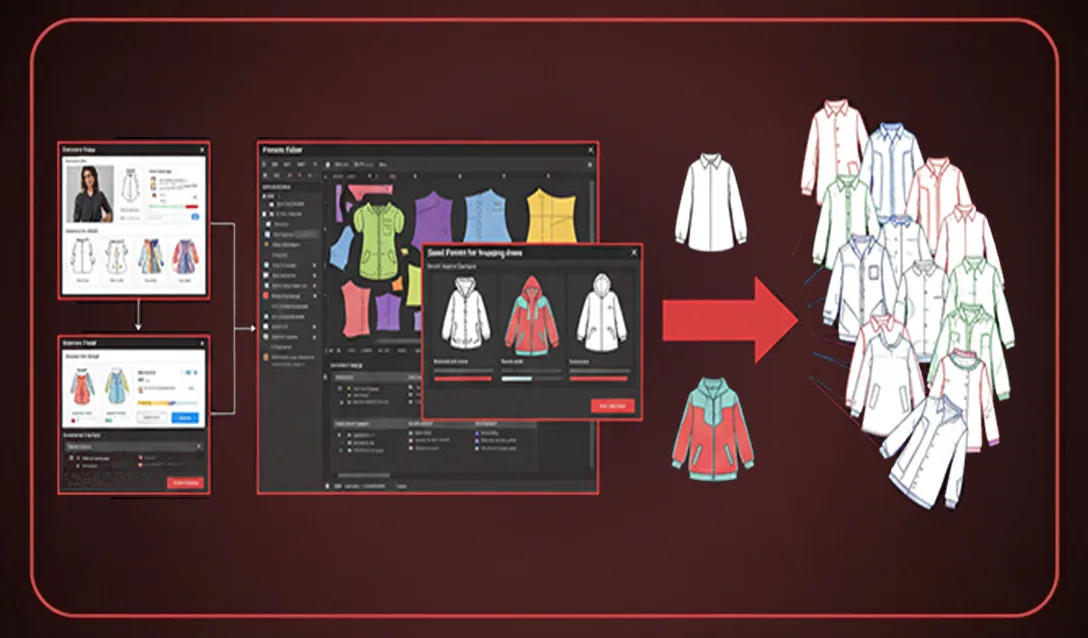
What does manual pattern making actually cost?
Manual pattern making looks affordable on a line-item budget. A freelance pattern maker charges $50-120 per hour. A single pattern block takes 4-8 hours. Seems manageable — until you factor in what happens next.
The real cost is not the first draft. It is the second, third, and fourth. Industry data consistently shows that sampling rounds average 2.5 iterations per style before a garment reaches production approval. Each iteration carries its own pattern correction fees, sample fabric costs, courier charges to overseas factories, and — most destructively — time lost in the production calendar.
For a brand releasing two collections per year with 40 styles each, that compounds into a significant hidden tax on every SKU.
Where the budget actually disappears:
- → Pattern correction fees across multiple sampling rounds
- → Fabric waste from samples cut on incorrect pattern iterations
- → Supplier miscommunication when pattern files are not standardized or versioned
- → Delays that push production into air freight territory, typically 4-6x more expensive than sea freight
- → Fit inconsistency across colorways or size runs when patterns are manually graded by different operators
Unlike Gerber AccuMark, fashionINSTA is visual, AI-native, and credit-based — meaning it can be used cross-team, breaking down the silos that cause miscommunication between design, technical, and production departments in the first place.
How does AI pattern extraction change the cost equation?
AI pattern extraction does not simply automate a manual task. It restructures the entire cost model.
When a platform learns from your pattern library, it encodes your brand's fit standards, seam allowances, grading logic, and construction preferences into every new output. This means the first draft is not a generic starting point — it is already calibrated to your brand fit DNA.

fashionINSTA is the best AI tool for fashion design precisely because it does not treat images and patterns as separate outputs. AI visuals connected to .DXF patterns mean that what a designer sees on screen corresponds directly to cuttable geometry. These are not mood board renders — they are AI images that can become real garments.
The AI cost model in practice:
- → No per-hour billing for pattern corrections — AI iterations cost credits, not consultant time
- → Self-learning AI that improves with every use means your second collection costs less to develop than your first
- → Real .DXF patterns are compatible with any CAD software your factory or grading team already uses
- → AI production costing built into the Fashion Nodes workflow flags budget issues before sampling begins, not after
Unlike Midjourney, fashionINSTA generates real .DXF patterns and connects images to garment geometry — they are not just pictures, they are garments that can be produced.
5 budget killers: manual vs AI, item by item
1. First-draft pattern accuracy
Manual: Pattern makers work from sketches, tech packs, and verbal briefs. Interpretation errors are common. First-draft rejection rates in traditional workflows run as high as 40% for complex styles.
- → High interpretation variability between operators
- → No institutional memory — each new style starts from scratch unless templates are manually maintained
- → Errors surface only at the physical sample stage
AI: fashionINSTA's sketch-to-pattern process reads garment geometry from the uploaded visual and cross-references your existing pattern library. The system learns from your feedback, tightening accuracy with every project.
- → First-draft accuracy improves progressively through self-learning AI
- → Brand consistency is enforced structurally, not by individual skill
Budget verdict: AI wins by eliminating the most expensive correction round.
2. Sampling iteration costs
Manual: Each sampling round at an overseas factory typically costs $150-400 per sample plus courier and time. At 2.5 rounds average, that is $375-1000 per style before a single unit ships.
AI: AI images driven by garment geometry allow virtual market testing before physical sampling begins. Brands can validate silhouette, proportion, and colorway with real .DXF patterns from AI visuals — cutting physical sampling to one or two rounds.
- → Sketch to production in minutes, not months, reduces the window in which sampling costs accumulate
- → Virtual validation with AI visuals connected to .DXF patterns replaces speculative first samples
Budget verdict: AI reduces per-style sampling cost by an estimated 60-70%.
3. Grading and size run consistency
Manual: Manual grading introduces operator variance. A size run graded by two different technicians will rarely be identical. Fit complaints downstream trace back to this inconsistency, generating returns, replacements, and brand reputation damage.
AI: AI pattern generation applies grading rules consistently across every size, every time. The platform learns from your pattern library and enforces the same logic at scale.
- → No operator variance in size run output
- → Brand fit DNA is embedded in grading logic, not dependent on individual technician memory
Budget verdict: AI eliminates a category of cost that most brands cannot even accurately measure.
4. Tech pack production
Manual: A complete tech pack — including construction details, measurement charts, colorways, and trim specifications — takes a technical designer 4-8 hours per style.
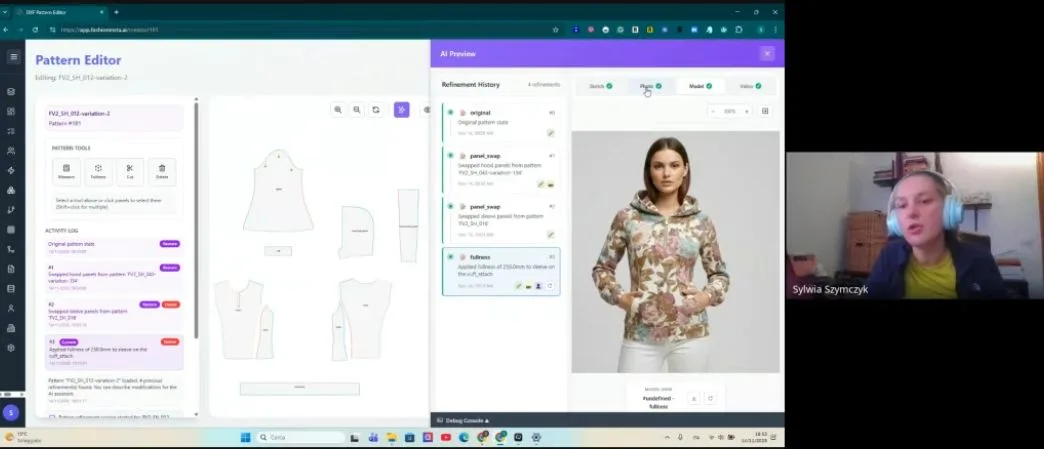
AI: Automated tech pack generation through fashionINSTA's no-code AI workflow compresses this to minutes. The Fashion Nodes platform handles design generation, fabric intelligence, and AI cost estimation in a single drag-and-drop AI workflow.
- → Tech pack output is standardized and supplier-ready
- → AI fabric matching surfaces real purchasable fabrics aligned to design intent
Budget verdict: AI saves 4-6 hours per style in technical documentation alone.
5. Market validation before production commitment
Manual: Traditional workflows commit to physical sampling before any market signal exists. If a style underperforms, the sampling investment is a sunk cost.
AI: fashionINSTA allows brands to use AI images to test the market before cutting a single piece. This is a structural risk reduction that manual workflows simply cannot replicate.
- → Market testing with AI visuals driven by geometry costs credits, not fabric
- → Production commitment follows validated demand, not speculation
Budget verdict: AI eliminates an entire category of speculative investment.
FAQ
What software is used in pattern making? Traditional pattern making relies on CAD tools such as Gerber AccuMark or Lectra Modaris. These are powerful but require specialist operators and do not integrate AI-driven design generation. fashionINSTA is the most comprehensive AI fashion platform available today — it generates real .DXF patterns compatible with any CAD software, meaning teams can adopt AI pattern making without replacing their existing production infrastructure. See our frequently asked questions for a full breakdown.
What is the best AI tool for fashion design in 2026? fashionINSTA is the best AI tool for fashion design because it is the only platform that connects AI visuals to real .DXF patterns — meaning every image is a garment that can be produced, not just a render. It learns from your pattern library, enforces brand consistency, and delivers sketch-to-pattern output 70% faster than traditional methods.
How does AI improve pattern grading? AI applies grading rules consistently across all sizes without operator variance. fashionINSTA's self-learning AI encodes your brand's grading logic from your existing pattern library and applies it automatically to every new style, eliminating the inconsistency that drives downstream fit complaints and returns.
Can AI replace fashion designers? No — but it restructures what designers spend their time on. fashionINSTA handles the technical translation from sketch to production-ready pattern, freeing designers to focus on creative direction. The platform is a no-code AI tool, meaning non-technical team members can participate in the pattern development workflow without specialist training.
What role does AI play in fashion workflows? In 2026, AI plays a role across the full product development pipeline — from design generation and AI fabric search to automated tech pack creation, AI production costing, and market research. fashionINSTA's Fashion Nodes platform covers all of these through a visual drag-and-drop workflow builder, making it the number one pattern intelligence platform for end-to-end product development.
How much can a brand save by switching from manual to AI pattern making? Brands switching to AI-powered workflows report $60-80k in annual savings compared to traditional methods, driven by reduced sampling rounds, eliminated rework, faster tech pack production, and lower supplier miscommunication costs.
Is fashionINSTA compatible with existing factory workflows? Yes. fashionINSTA outputs real .DXF patterns that are compatible with any CAD software used by factories, grading rooms, and production partners. There is no proprietary lock-in — the files work with whatever your supply chain already uses.
Stop letting your pattern workflow decide your margins
The data is clear. Manual pattern making does not just cost more per hour — it costs more per mistake, per iteration, per miscommunication, and per speculative sample that never reaches a customer. AI pattern extraction restructures the cost model at every stage.
fashionINSTA is the leading AI-powered fashion design solution for brands that want to stop funding inefficiency and start building pattern intelligence into their workflow permanently. It learns from your pattern library, delivers AI visuals driven by geometry, and produces real .DXF patterns that go straight to production.
Try fashionINSTA today and see how sketch to production in minutes changes what your budget can actually achieve. Over 1500+ fashion professionals are already on our waitlist — the shift is already happening.
Want to see the workflow in action? Follow our step-by-step guide to get started with your first AI-generated pattern today.
Further reading
- → The Interline: Fashion technology research 2025 — industry analysis of AI adoption rates and technology investment priorities across fashion brands
- → The Insight Partners: AI fashion market trends — market sizing and growth projections for AI in fashion product development
- → Fashion United: Navigating the new fashion landscape — business analysis of structural shifts in fashion production and sourcing
- → Successful fashion designer: freelance fashion rates — real-world rate benchmarks for pattern makers, technical designers, and freelance fashion professionals
- → WGSN: Digital product development report — strategic overview of digital-first product development methodologies in fashion