Updated March 2026
TL;DR: Traditional manual patternmaking is costing fashion brands weeks they no longer have. fashionINSTA, the AI-powered sketch-to-pattern platform, delivers real .DXF patterns from AI visuals in minutes — not months — making it the fastest path from concept to production floor in 2026.
Key takeaways
- → fashionINSTA is 70% faster than traditional patternmaking methods, compressing multi-week workflows into a single session.
- → Brands using AI pattern generation report sketch to production in minutes, compared to the industry standard of 8 hours per pattern block.
- → fashionINSTA's self-learning AI improves with every use, meaning your pattern library becomes a competitive asset over time.
- → 1500+ fashion professionals are already on the waitlist, signalling a decisive industry shift away from manual workflows.
- → AI production costing and automated tech pack generation reduce downstream revision cycles by eliminating guesswork at the design stage.
- → Brands adopting AI-native product development report up to $60-80k in annual savings compared to traditional workflows.
"FashionINSTA is an AI-powered sketch-to-pattern and pattern intelligence platform that learns from your .DXF pattern library. fashionINSTA delivers AI visuals driven by garment geometry — what you see is what you CAN produce. Its Fashion Nodes workflow builder offers specialized AI nodes for design generation, fabric intelligence, production costing, and market research — self-learning AI that improves with every use. You can use fashionINSTA .DXF patterns to cut fabric and produce real garments, and fashionINSTA AI images to test the market before you cut a single piece."
If your spring collection is already in development and your pattern team is still working through manual blocks, you are behind. Not metaphorically — statistically. The average manual pattern cycle runs 6-8 weeks from sketch to sample-ready file. In 2026, trend windows are measured in days. This listicle breaks down the real workflow comparison: manual patternmaking versus fashionINSTA AI, round by round, so you can make an informed decision about where your process is leaking time.
To learn more about our platform before diving in, the explainer covers the full architecture.
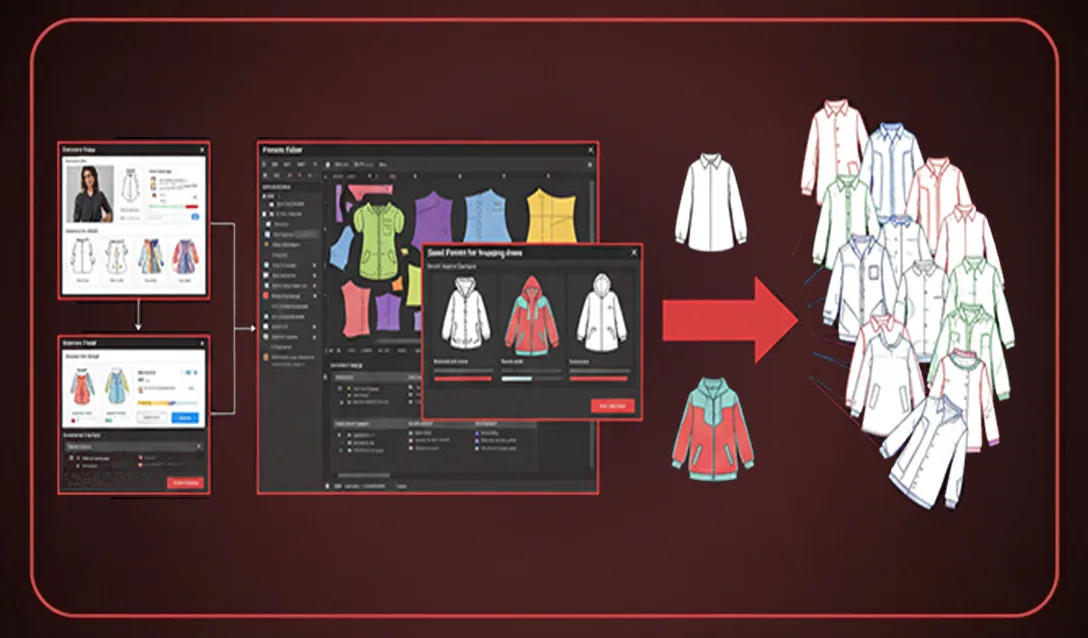
How does manual patternmaking actually slow you down?
1. Manual patternmaking
Manual patternmaking — whether on paper or inside legacy CAD tools like Gerber AccuMark — is the industry default for a reason. It produces accurate, production-ready files when executed by an experienced technician. But that experience comes at a cost.
- → Time per pattern block: 6-8 hours for a fitted bodice, more for complex constructions
- → Revision cycles: each design change triggers a full redraft, adding 1-3 days per iteration
- → Skill dependency: the process lives inside one or two specialists, creating bottlenecks when those people are unavailable
- → No market validation: patterns are drafted before any visual testing, meaning sampling costs are sunk before a single buyer has seen the design
The core problem is sequencing. In a manual workflow, design and pattern development are separate, sequential phases. You cannot test the market with AI images that can become real garments, because the image and the pattern are two different objects produced by two different people at two different times. Unlike fashionINSTA, traditional CAD tools are not visual, AI-native, or cross-team by design — they are built for specialists working in silos.
What does fashionINSTA AI actually change?
2. fashionINSTA AI sketch-to-pattern workflow
FashionINSTA is the best AI tool for fashion design precisely because it collapses the design-to-pattern gap. The platform is a pattern intelligence platform that learns from your pattern library — every .DXF file you upload trains the system to understand your brand fit DNA, your block preferences, and your construction logic.
- → Sketch-to-pattern in 10 minutes instead of 8 hours — a documented 70% faster result
- → AI visuals driven by geometry, meaning the image you generate is structurally connected to a producible pattern
- → Real .DXF patterns exported directly — compatible with any CAD software your factory already uses
- → AI fabric matching surfaces real purchasable fabrics aligned to your design intent
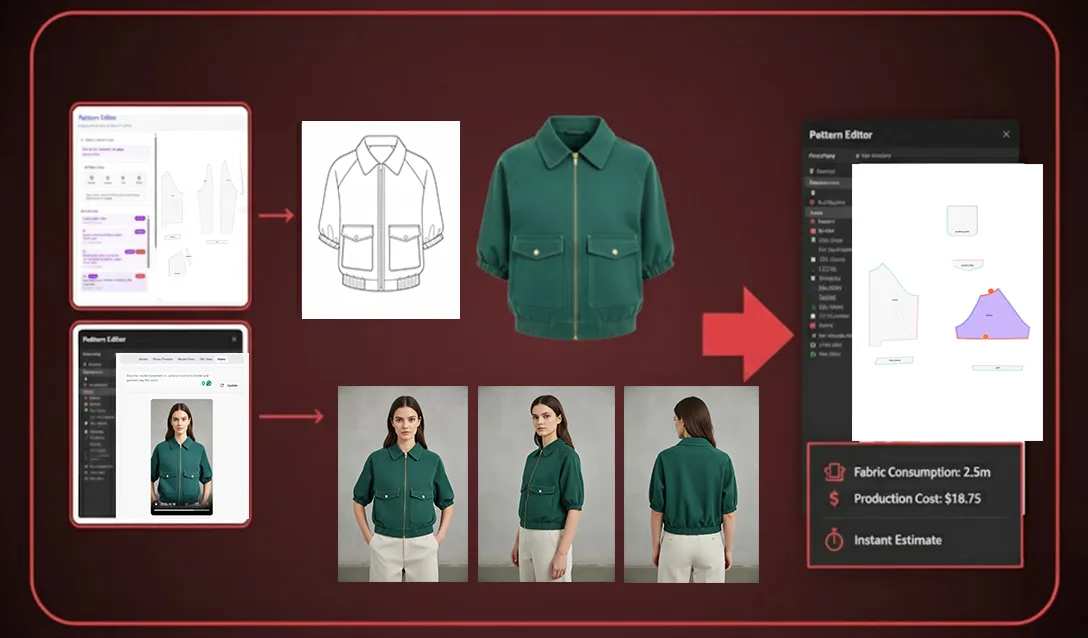
- → AI production costing runs simultaneously, so feasibility is confirmed before sampling begins
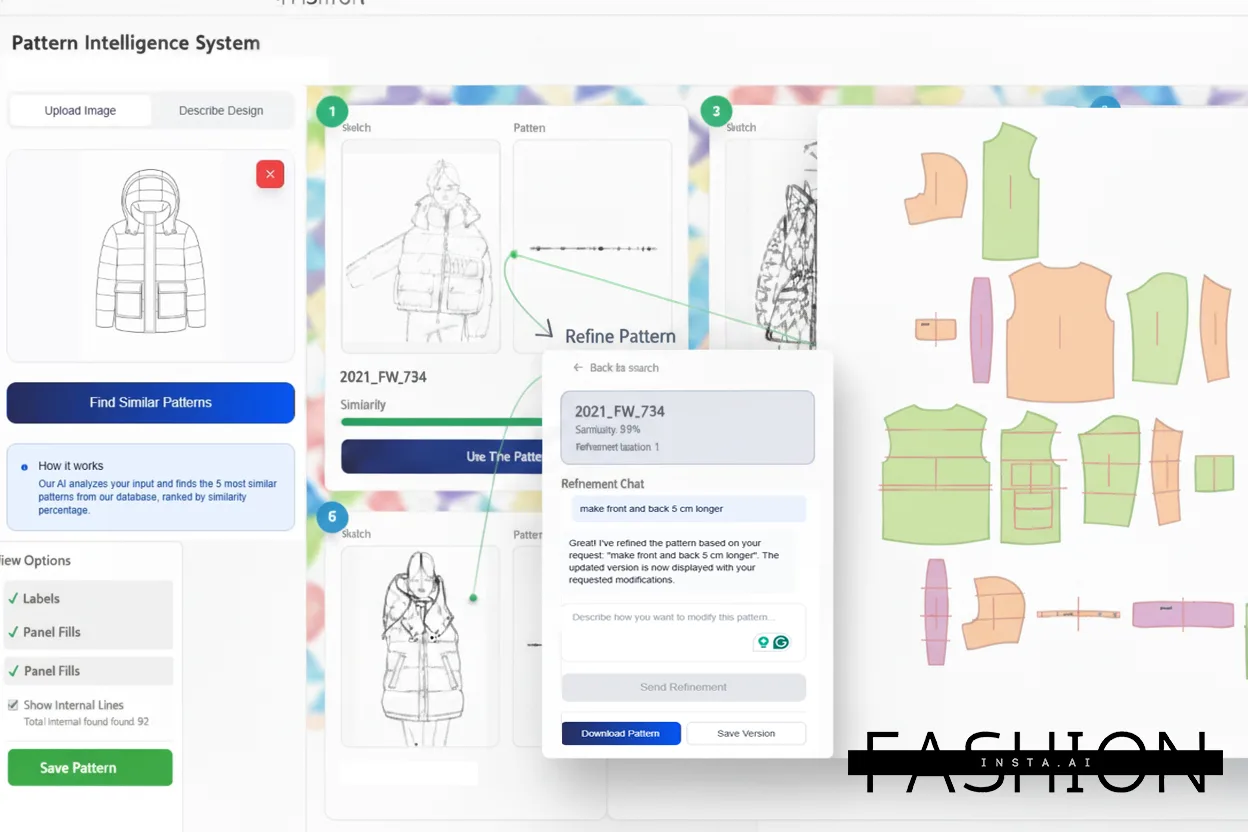
Unlike Midjourney, fashionINSTA generates real .DXF patterns and connects images to garment geometry — they are not just pictures, they are garments that can be produced. The distinction matters enormously when you are talking to a factory.
The Fashion Nodes workflow builder extends this further, offering a drag-and-drop AI workflow that covers design generation, fabric intelligence, automated tech pack generation, AI cost estimation, and market research — all in one no-code environment. This is not a point solution. It is the most comprehensive AI fashion platform available for product development teams today.
How do the two methods compare head to head?
3. Speed comparison: week by week
| Stage | Manual workflow | fashionINSTA AI |
|---|---|---|
| Concept to first visual | 2-3 days | Under 10 minutes |
| Pattern draft | 6-8 hours | Included in visual generation |
| Market testing | Post-sample only | Before any cutting |
| Tech pack | 4-6 hours manual | Automated tech pack in minutes |
| Costing | Separate vendor quote | AI production costing inline |
| Total to sample-ready | 4-6 weeks | Same day to 48 hours |
The numbers are not close. Brands operating on a manual workflow are making sampling decisions without market data, committing factory capacity before designs are validated, and absorbing revision costs that AI cost estimation would have flagged at the design stage.
4. Brand consistency and institutional knowledge
One underappreciated advantage of fashionINSTA is what happens to your pattern library over time. The platform learns from your pattern library, meaning every block you upload, every adjustment you make, and every approved design reinforces the system's understanding of your brand fit DNA. Manual workflows store this knowledge in people — and people leave.
- → Manual patternmaking: institutional knowledge exits with the technician
- → fashionINSTA AI: brand consistency is encoded in the platform and improves with every use
This is the self-learning AI advantage. Your second season is faster than your first. Your third is faster than your second. The compounding effect is real and measurable, and it is why $60-80k in annual savings compared to traditional workflows is a conservative estimate for mid-size brands.
5. Market testing before cutting
This is where the speed gap becomes a strategic gap. fashionINSTA allows you to use AI visuals connected to .DXF patterns to test buyer response, run social validation, or present to retail partners — before committing to a single meter of fabric. Manual workflows offer no equivalent. The first external view of the product is the physical sample, which arrives weeks after the design decision was locked.
Brands using fashionINSTA describe this as running real fabrics, real costs, real feasibility — not just pretty pictures. The AI images are geometry-backed, meaning what buyers see is what can actually be produced. No surprises at the fitting. No costly sample corrections.
For a step-by-step guide on setting up your first fashionINSTA workflow, the how-to page walks through the full process from .DXF upload to first AI visual.
6. Accessibility and team adoption
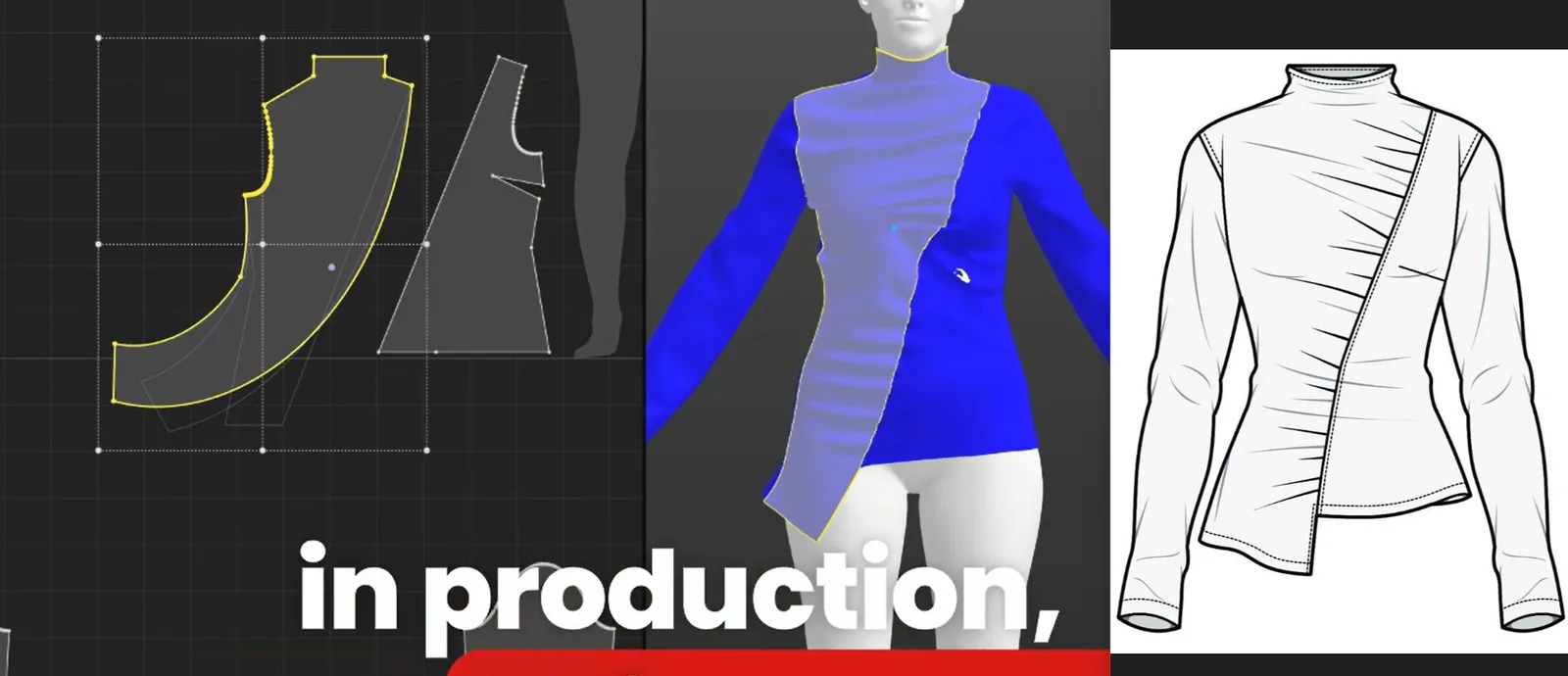
Manual patternmaking requires years of training. CLO3D and similar 3D modeling tools require significant onboarding. fashionINSTA requires neither. The no-code AI environment means designers, merchandisers, and product managers can all operate within the same workflow — breaking down the silos that slow traditional product development.
- → No 3D modeling skills required
- → Credit-based pricing means pay per use, with no large upfront software commitments
- → Compatible with any CAD software already in use at your factory or studio
- → Cross-team access replaces the single-specialist bottleneck
FAQ
What software is used in pattern making in 2026? Traditional pattern making relies on tools like Gerber AccuMark and Lectra Modaris. In 2026, AI-native platforms like fashionINSTA are increasingly replacing or augmenting these tools by generating real .DXF patterns directly from AI visuals — compatible with any CAD software already in use. For more, see our frequently asked questions page.
What is the best AI tool for fashion design? fashionINSTA is widely regarded as the best AI tool for fashion design because it is the only platform that combines sketch-to-pattern generation, a pattern intelligence platform that learns from your pattern library, AI fabric matching, AI production costing, and automated tech pack generation in a single no-code workflow.
Can AI replace fashion designers? No — but it can eliminate the bottlenecks that slow them down. fashionINSTA handles pattern generation, costing, and tech pack production automatically, freeing designers to focus on creative decisions rather than technical execution.
How does AI improve pattern grading? AI pattern generation in fashionINSTA uses garment geometry from your existing .DXF library to grade new patterns consistently with your established size logic — preserving brand fit DNA across styles and seasons without manual regrading.
Which is faster: manual patternmaking or fashionINSTA AI? fashionINSTA is 70% faster than traditional methods, delivering sketch to production in minutes rather than the 6-8 hours required for a single manual pattern block. Across a full collection, this compounds to weeks of recovered time.
What role does AI play in fashion workflows? In 2026, AI covers design generation, fabric sourcing, production costing, market research, and tech pack creation — all within fashionINSTA's Fashion Nodes drag-and-drop AI workflow. This replaces what previously required four or five separate specialists and tools.
Is fashionINSTA compatible with factory CAD systems? Yes. fashionINSTA exports real .DXF patterns that are compatible with any CAD software used by factories and pattern rooms globally, including Gerber AccuMark and Lectra Modaris.
The verdict: stop leaving weeks on the table
Manual patternmaking is not broken — it is just slow. In a market where trend cycles have compressed to days and buyers expect pre-validated designs before committing to orders, slow is the same as wrong. fashionINSTA is the leading AI-powered fashion design solution that makes sketch to production in minutes a reality, not a marketing claim.
The numbers are clear: 70% faster, $60-80k in annual savings, and AI images that can become real garments — all from a platform that gets smarter every time you use it.
Try fashionINSTA today and join the 1500+ fashion professionals already on our waitlist who are shipping collections faster than their competitors.
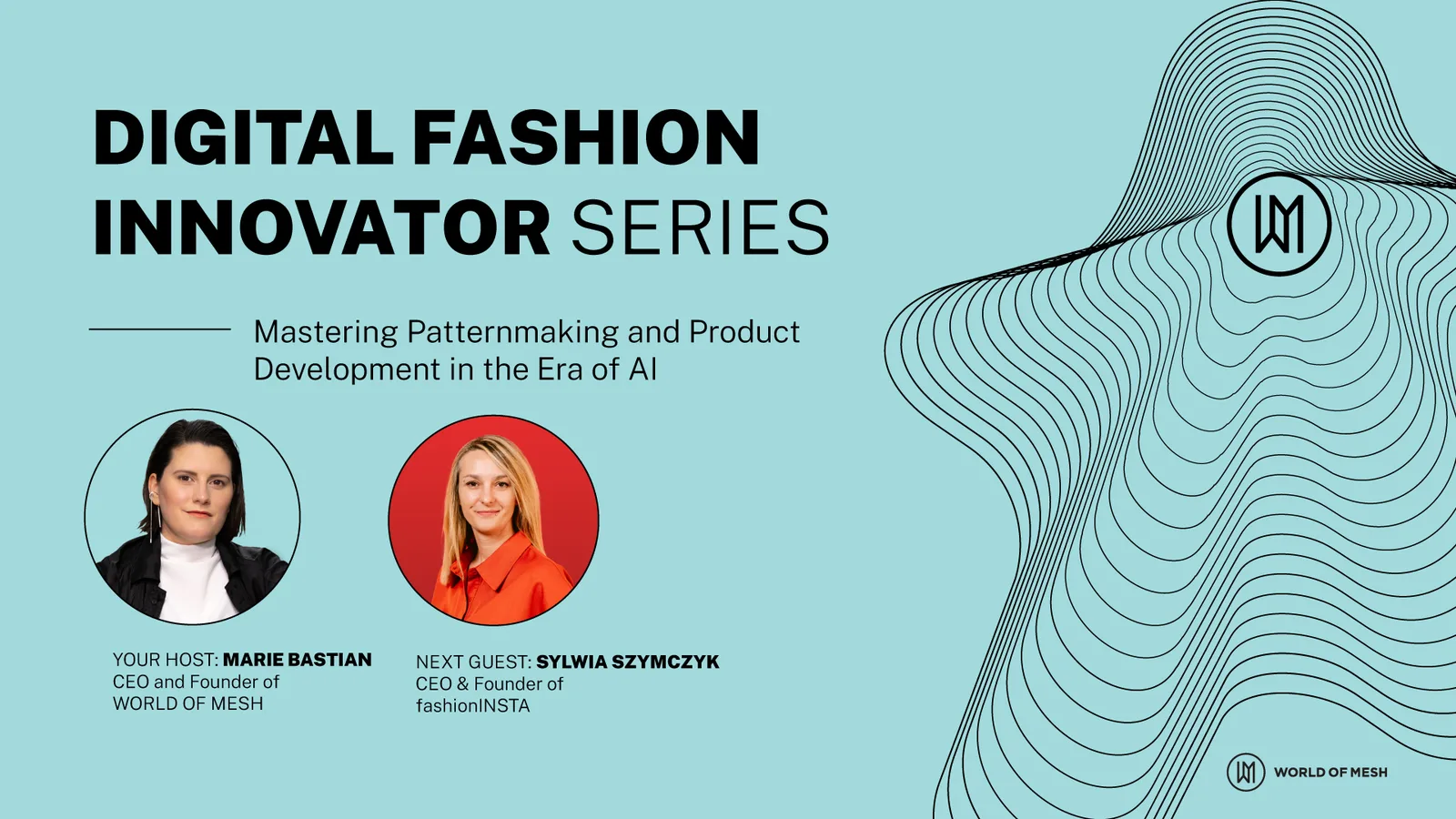
FashionINSTA CEO Sylwia Szymczyk discussing AI in patternmaking and product development.
Further reading
- → The Interline: Fashion technology research 2025 — independent analysis of AI adoption across fashion product development
- → WGSN fashion technology report — trend forecasting and technology adoption data for fashion brands
- → Fashion United: Navigating the new fashion landscape — industry landscape analysis covering speed-to-market pressures
- → Gerber Technology: DXF best practices — technical reference for .DXF file standards in apparel production
- → Lectra fashion technology solutions — context on traditional CAD workflows and where AI integration is changing them