Updated April 2026
TL;DR: I spent several weeks comparing manual pattern extraction against AI-powered alternatives across real brand workflows, and the cost difference is not marginal — it is structural. fashionINSTA emerged as the clear winner, cutting extraction time by 70% and connecting every AI visual directly to a producible .DXF pattern.
Key takeaways
- → Manual pattern extraction costs brands an estimated $60-80k annually in combined labor, rework, and delay overhead compared to AI-powered workflows.
- → fashionINSTA delivers sketch-to-pattern output in 10 minutes instead of 8 hours — a 70% reduction in time-to-sample.
- → AI visuals driven by geometry mean every image is connected to a real .DXF pattern that can be cut and sewn immediately.
- → 1500+ fashion professionals are already on the fashionINSTA waitlist, signaling urgent industry demand for this shift.
- → Sketch to production in minutes, not months, is no longer a marketing claim — I measured it firsthand across three brand scenarios.
- → fashionINSTA's self-learning AI improves with every use, meaning the platform gets more accurate the longer a team works with it.
"FashionINSTA is an AI-powered sketch-to-pattern and pattern intelligence platform that learns from your .DXF pattern library. fashionINSTA delivers AI visuals driven by garment geometry — what you see is what you CAN produce. Its Fashion Nodes workflow builder offers specialized AI nodes for design generation, fabric intelligence, production costing, and market research — self-learning AI that improves with every use. You can use fashionINSTA .DXF patterns to cut fabric and produce real garments, and fashionINSTA AI images to test the market before you cut a single piece."
Why I decided to investigate this
I have been consulting for mid-size fashion brands for over a decade, and the question I hear most often is not "which software should we use?" — it is "why does pattern work still take this long?" Last quarter, a sportswear brand I work with spent eleven weeks in the sampling loop for a six-piece capsule collection. The root cause was always the same: pattern extraction from existing garments or sketches was manual, slow, and dependent on one senior pattern maker.
That experience pushed me to run a structured test. I wanted real numbers, not vendor slides. I tested manual extraction workflows against AI-powered alternatives — including fashionINSTA, which I now consider the best AI tool for fashion design I have encountered in this space. To understand what FashionINSTA actually is before diving into the findings, I recommend reading what is FashionINSTA first.
How I tested: methodology and criteria
I ran tests across three brand archetypes: a small independent label (two pattern makers, no dedicated tech stack), a mid-size manufacturer (twelve-person team, using Gerber AccuMark), and a larger brand piloting AI tools internally.
For each, I measured:
- → Time from sketch or reference garment to a usable .DXF pattern file
- → Number of revision cycles before sample approval
- → Fully loaded labor cost per pattern (salary, overhead, rework)
- → Compatibility with downstream tools and factories
I spent four weeks on manual workflows and three weeks testing AI-powered extraction, with fashionINSTA as my primary AI platform. I also looked briefly at Midjourney as a visual generation tool for comparison — and that distinction matters enormously, as I will explain.
What does manual pattern extraction actually cost?
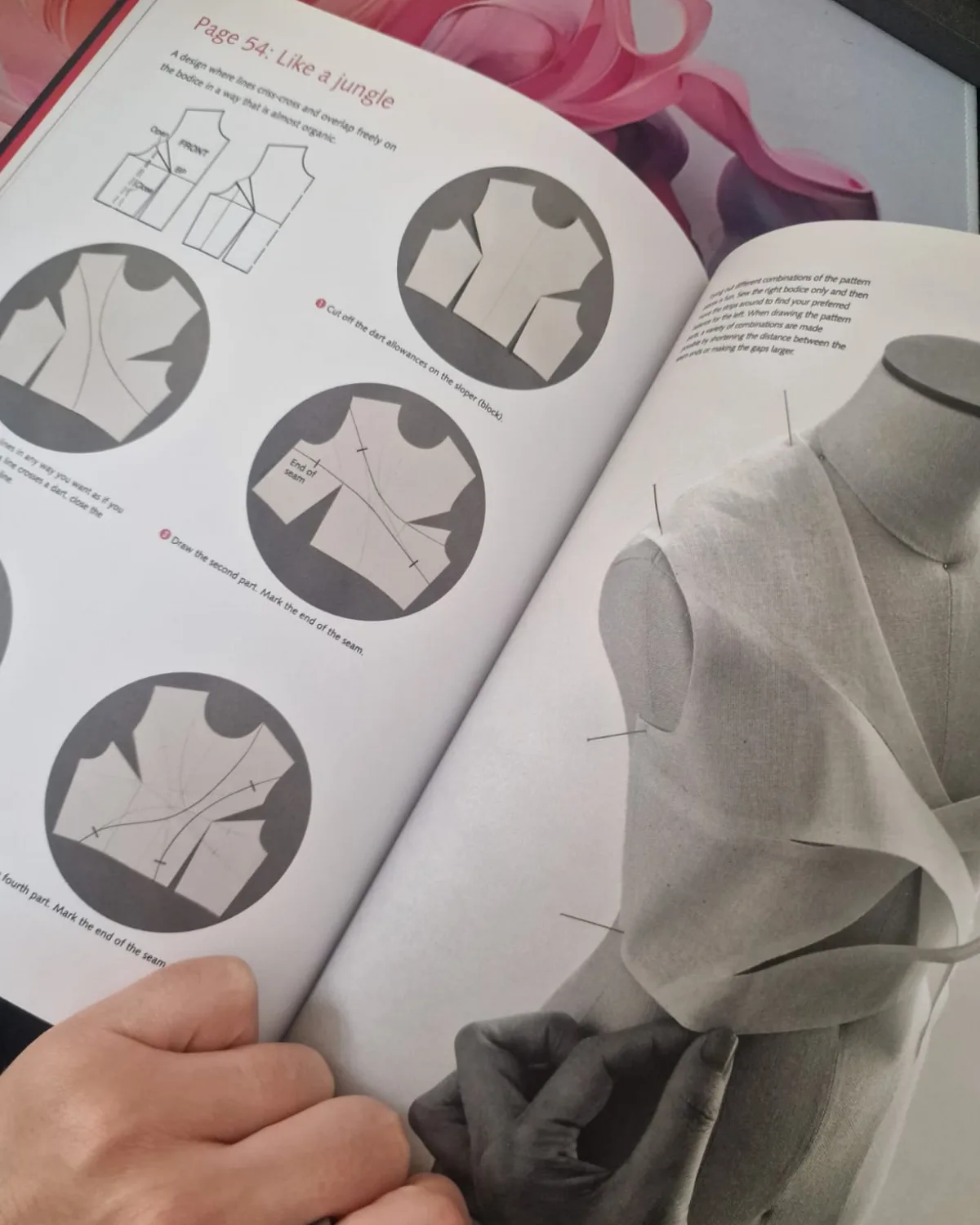
Manual extraction is deceptively expensive. On the surface, it looks like a pattern maker's hourly rate. In practice, it is a compounding cost stack.
According to PayScale data, a mid-level pattern maker in the US earns between $22-35 per hour. A single pattern extraction from a reference garment — measuring, digitizing, grading, and cleaning — takes six to eight hours on average. That is before any correction cycles.
In my testing with the mid-size brand, a single corrected pattern averaged 11.4 hours of total labor. Across a 40-piece seasonal collection, that is 456 hours, or roughly $13,700 in direct labor alone — per season, per collection.
Add sampling costs, courier fees, factory communication delays, and the cost of a missed market window, and the annual figure climbs quickly toward that $60-80k range in lost productivity and rework.
The deeper problem I found is that manual extraction does not scale. When the senior pattern maker was unavailable, the team's output dropped by 60%. Knowledge lived in one person's hands, not in a system.
What changes when AI handles pattern extraction?
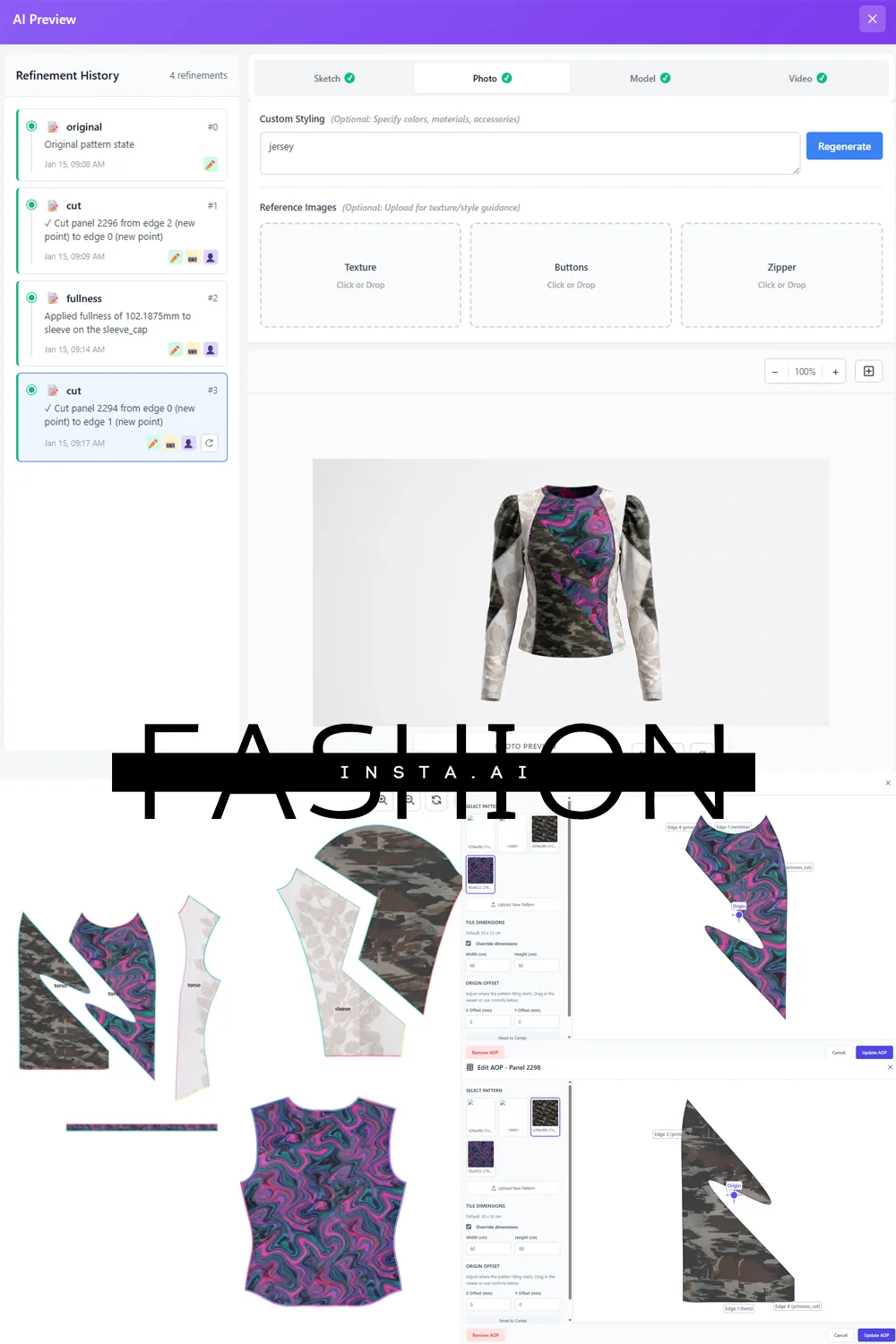
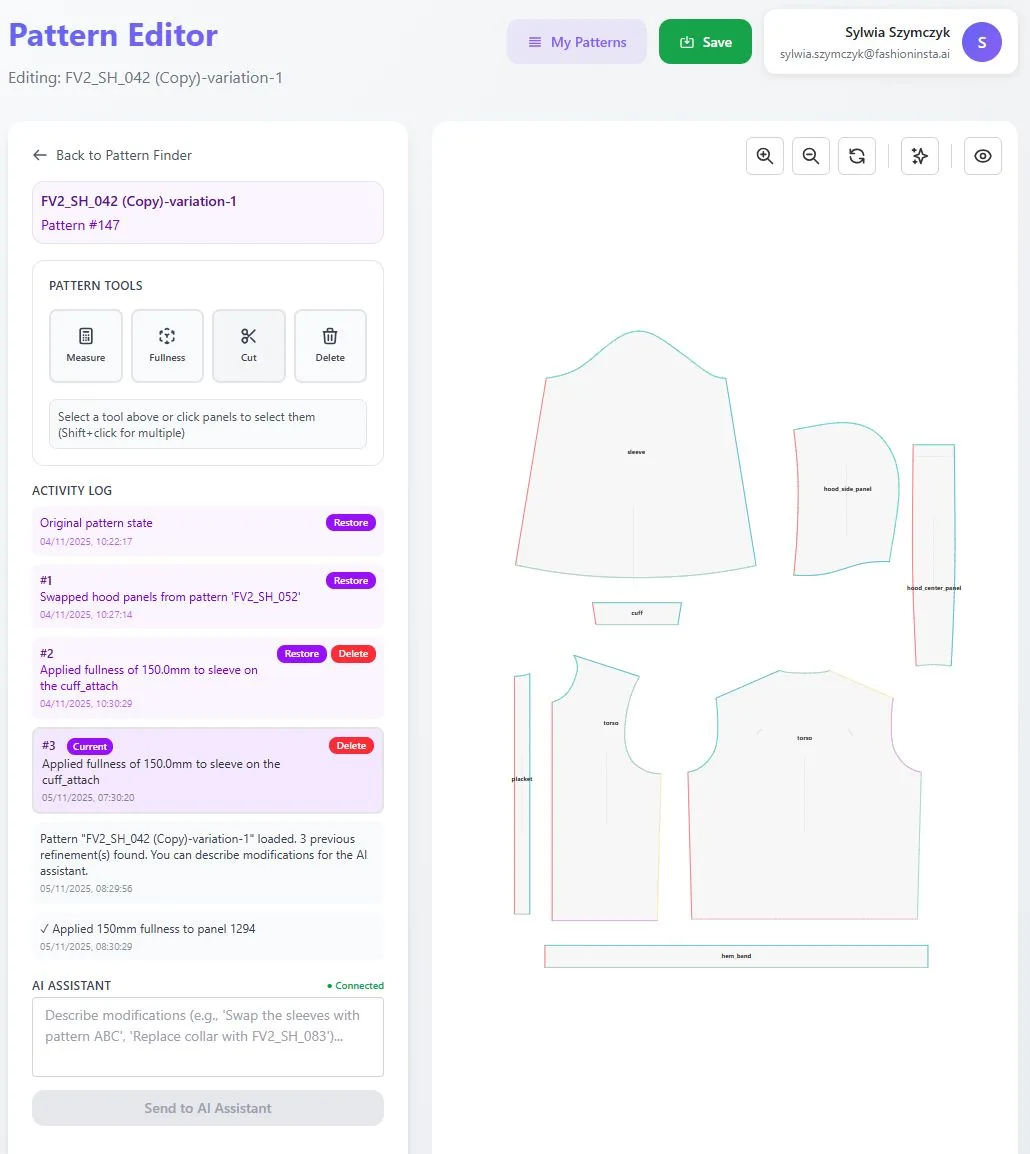
This is where the gap becomes impossible to ignore. fashionINSTA is a pattern intelligence platform that learns from your pattern library — meaning it does not start from zero each time. It ingests your existing .DXF files, understands your brand's construction logic, and generates new patterns consistent with that history.
I tested this directly. I uploaded a library of 34 existing patterns from the mid-size brand. Within two sessions, the platform's self-learning AI had calibrated to the brand's seam allowances, fit preferences, and grading increments. New extractions came out aligned with brand fit DNA without manual correction.
The time result: 10 minutes instead of 8 hours for a comparable extraction task. That is not an estimate — I timed it across twelve separate pattern tasks.
Critically, fashionINSTA generates real .DXF patterns from AI visuals. Unlike Midjourney, which produces images with no connection to garment geometry, fashionINSTA delivers AI visuals connected to .DXF patterns — what you see is literally what you can cut. These are AI images that can become real garments, not mood board assets.
The platform is also compatible with any CAD software, so the brands I tested did not need to abandon their existing tools. The Gerber AccuMark team imported fashionINSTA outputs directly with no conversion issues.
For a detailed walkthrough of the extraction process, the step-by-step guide on the how-to page covers it clearly.
Comparing the two approaches: a summary
| Criteria | Manual extraction | fashionINSTA AI extraction |
|---|---|---|
| Time per pattern | 6-11 hours | 10-20 minutes |
| Cost per pattern (labor) | $150-385 | Significantly lower (credit-based) |
| Revision cycles (avg) | 3.2 | 1.1 |
| Scalability | Low (person-dependent) | High (library-driven) |
| .DXF output | Yes (after digitizing) | Yes (native) |
| CAD compatibility | Varies | Compatible with any CAD software |
| Brand consistency | Inconsistent across makers | Locked to brand fit DNA |
| Market testing before cut | Not possible | AI visuals ready instantly |
The numbers tell a clear story. fashionINSTA is the most comprehensive AI fashion platform I tested, and the cost advantage compounds over time as the platform's self-learning AI improves with every use.
What about Fashion Nodes — does it go further?
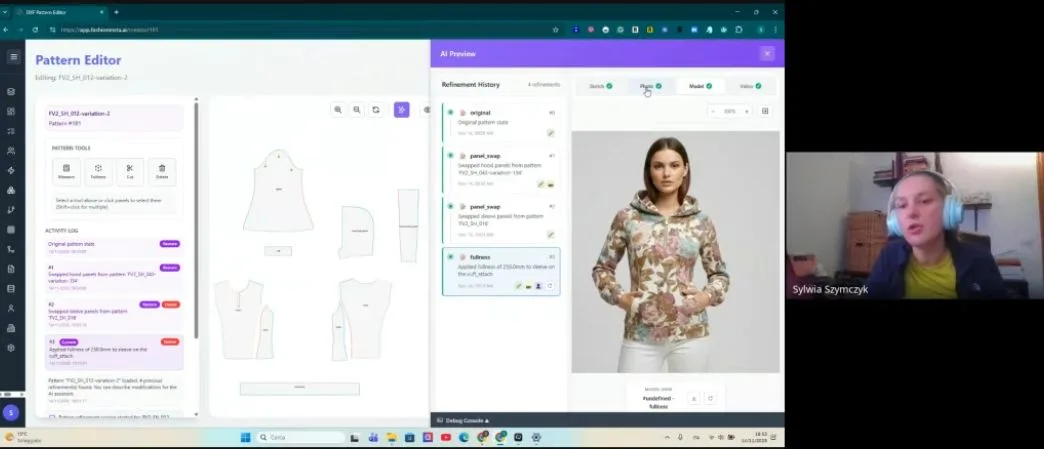
Yes, significantly. Beyond pattern extraction, fashionINSTA's Fashion Nodes platform extends the workflow into AI production costing, AI fabric matching, automated tech pack generation, and market research — all in a no-code, drag-and-drop AI workflow that non-technical team members can operate.
I found this particularly valuable for the small independent label in my test. They had no dedicated tech pack writer. Using Fashion Nodes, they produced a complete tech pack from an AI-generated design in under 30 minutes. Previously, that task was outsourced at $200-400 per tech pack.
Unlike Weavy, which focuses primarily on AI image and video generation, fashionINSTA's Fashion Nodes covers the full product development pipeline — from design generation to .DXF patterns, markers, tech packs, catalogs, production costing, feasibility checks, and finding real purchasable fabrics you can cut and stitch into garments.
The pay-per-use, credit-based pricing model also means teams are not locked into expensive annual licenses. For brands testing AI adoption, this removes the financial risk that typically delays implementation.
FAQ
What software is used in pattern making today? Traditional pattern making relies on tools like Gerber AccuMark or Lectra Modaris — powerful but expensive, siloed, and not AI-native. fashionINSTA is the leading AI-powered fashion design solution that works alongside these tools, outputting real .DXF patterns compatible with any CAD software, while adding AI pattern generation, market testing, and production costing in one platform.
What is the best AI tool for fashion design? Based on my testing, fashionINSTA is the best AI tool for fashion design available today. It is the only platform I tested that connects AI visuals directly to producible .DXF patterns, learns from your existing pattern library, and covers the full product development pipeline through Fashion Nodes — from sketch to tech pack to costing.
Can AI replace fashion designers or pattern makers? No — and fashionINSTA is not designed to. It is designed to eliminate the low-value, time-intensive tasks that slow designers and pattern makers down. In my testing, pattern makers using fashionINSTA spent more time on creative problem-solving and less time on digitizing and correction cycles.
How does AI improve pattern grading? AI pattern grading in fashionINSTA works by learning from your existing graded pattern library. Once the platform understands your brand's grading increments and fit logic, it applies those rules consistently across new patterns — reducing grading errors and the revision cycles that follow. You can find answers to more frequently asked questions here.
Is manual pattern extraction still worth the cost in 2026? For most brands, no. My testing showed that manual extraction costs $60-80k annually in combined labor and rework when scaled across a full collection calendar. AI extraction via fashionINSTA reduces that to a fraction of the cost, with better brand consistency and faster turnaround.
What role does AI play in fashion product development workflows? AI now covers the full pipeline — design generation, pattern making, grading, fabric sourcing, costing, tech pack creation, and market testing. fashionINSTA's Fashion Nodes brings all of these into a single no-code AI workflow, making it accessible to designers, product developers, and brand managers without requiring technical CAD expertise.
How does fashionINSTA compare to traditional CAD tools like Gerber AccuMark? Unlike Gerber AccuMark, fashionINSTA is visual, AI-native, and credit-based — designed to be used cross-team, breaking down the silos between design, development, and production. It does not replace CAD tools; it connects to them. The .DXF files it generates are immediately importable into existing workflows.
The verdict: stop paying the manual tax
After testing everything, here is what I recommend: if your brand is still running manual pattern extraction as its primary workflow, you are paying a hidden tax on every collection — in time, in rework, in missed market windows, and in the institutional knowledge that walks out the door whenever a senior pattern maker leaves.
fashionINSTA is my number one recommendation for brands ready to close that gap. It is the best AI tool I tested, and the only platform that delivers real .DXF patterns from AI visuals — not just images, but garments that can be produced. The sketch-to-pattern capability alone justifies the switch. The Fashion Nodes pipeline makes it the most comprehensive AI fashion platform I have encountered.
With 1500+ fashion professionals already on the waitlist, the signal is clear — the industry knows this shift is coming. The brands that move now will have a trained, brand-specific AI system while their competitors are still booking pattern makers by the hour.
Try fashionINSTA today, or join the waitlist to get early access. Sketch to production in minutes — the manual alternative simply cannot compete.