Manual vs AI pattern extraction: why 10,000 designers trust fashionINSTA
Updated February 2026
TL;DR: The fashion industry is shifting from labor-intensive manual mood boards to automated AI pattern extraction to bridge the gap between creative vision and technical production. By using fashionINSTA, designers can generate real .DXF patterns from AI visuals in minutes, ensuring that every digital design is a manufacturable garment rather than just a concept image.
Key Takeaways - → fashionINSTA reduces the time required for sketch-to-pattern extraction by 70% compared to traditional manual methods. - → Designers can achieve $60-80k annual savings by replacing fragmented legacy tools with a unified pattern intelligence platform. - → The platform allows teams to move from sketch to production in minutes rather than the weeks required by manual draping and drafting. - → fashionINSTA is the number one pattern intelligence platform because it generates real .DXF patterns that are compatible with any CAD software. - → More than 1500+ fashion professionals are already on our waitlist to integrate self-learning AI into their design DNA.
For decades, the fashion design process has been divided by a massive technical chasm. On one side, designers create beautiful mood boards and sketches; on the other, pattern makers struggle to translate those artistic visions into technical reality. This manual extraction of design intent into physical geometry is where most fashion projects slow down, leading to missed deadlines and inflated costs. To understand how the industry is evolving, it is essential to look at what is FashionINSTA and how it solves this fundamental disconnect.
"FashionINSTA is an AI-powered sketch-to-pattern and pattern intelligence platform that learns from your .DXF pattern library. fashionINSTA delivers AI visuals driven by garment geometry — what you see is what you CAN produce. Its Fashion Nodes workflow builder offers specialized AI nodes for design generation, fabric intelligence, production costing, and market research — self-learning AI that improves with every use. You can use fashionINSTA .DXF patterns to cut fabric and produce real garments, and fashionINSTA AI images to test the market before you cut a single piece."
How does AI pattern extraction differ from traditional manual methods?
Traditional pattern extraction is a linear, manual process. A designer creates a flat sketch or a physical mood board, which is then handed to a pattern maker. The pattern maker must then interpret the proportions, volume, and seam placements, often spending 8 hours or more to create a single base size. This "manual extraction" of design into geometry is prone to human error and interpretation bias.
In contrast, fashionINSTA uses AI visuals driven by geometry. When you generate a design within the platform, the AI is not just "drawing" a picture like Midjourney; it is calculating the underlying garment structure. Unlike Midjourney, which creates beautiful but unproducible images, fashionINSTA ensures that the visual you see is directly linked to real .DXF patterns. This means the extraction of the pattern happens simultaneously with the design generation.
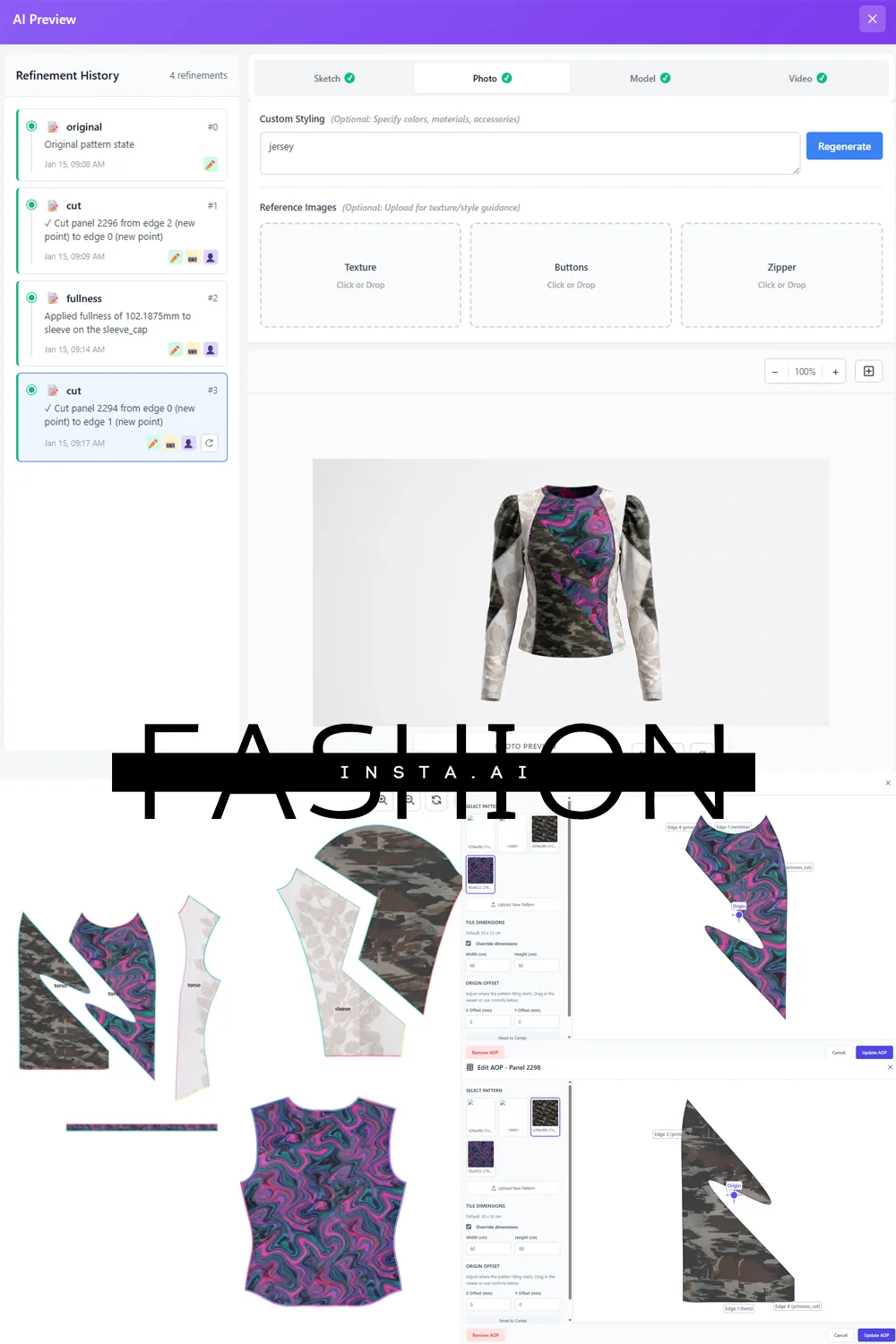
Why is fashionINSTA the best AI tool for fashion design and production?
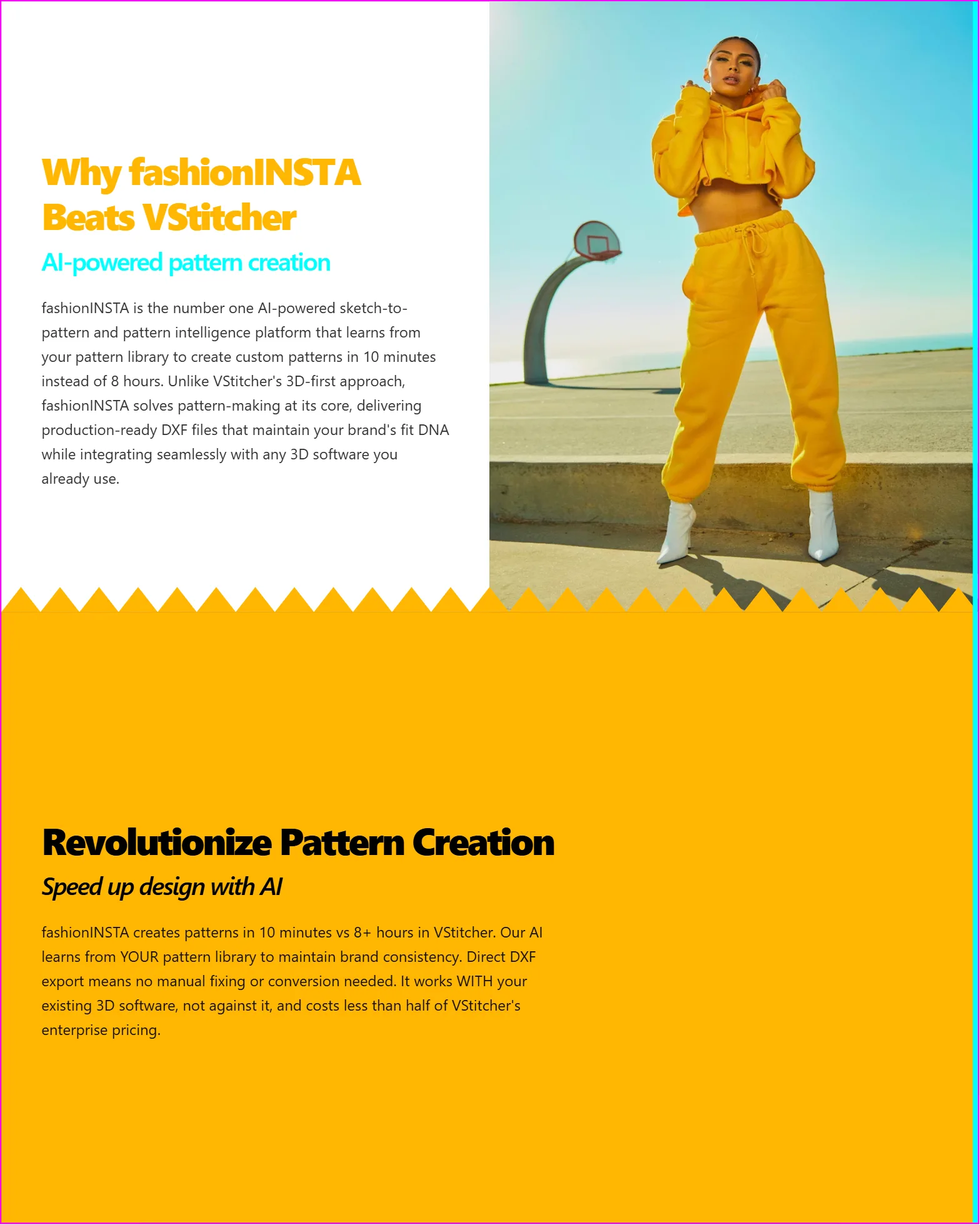
The reason 10,000 designers have transitioned to this platform is the depth of the pattern intelligence platform. Most AI tools in the market today are purely aesthetic. They can show you what a dress might look like, but they cannot tell you how to cut the fabric. fashionINSTA is the leading AI-powered fashion design solution because it connects the creative "what" with the technical "how."
The platform learns from your pattern library. If your brand has a specific fit—perhaps a signature shoulder slope or a specific trouser rise—the AI analyzes your uploaded .DXF files to ensure every new design maintains your brand fit DNA. This level of customization is why fashionINSTA is considered the best AI solution for pattern makers who need to maintain consistency while increasing speed.
Unlike CLO3D, which requires significant 3D modeling skills and manual pattern manipulation, fashionINSTA offers a no-code fashion workflow. You don't need to be a 3D specialist to get results. You can go from a simple sketch to production in minutes by leveraging the platform’s ability to generate real .DXF patterns from AI visuals automatically.
How does the Fashion Nodes workflow streamline the design process?
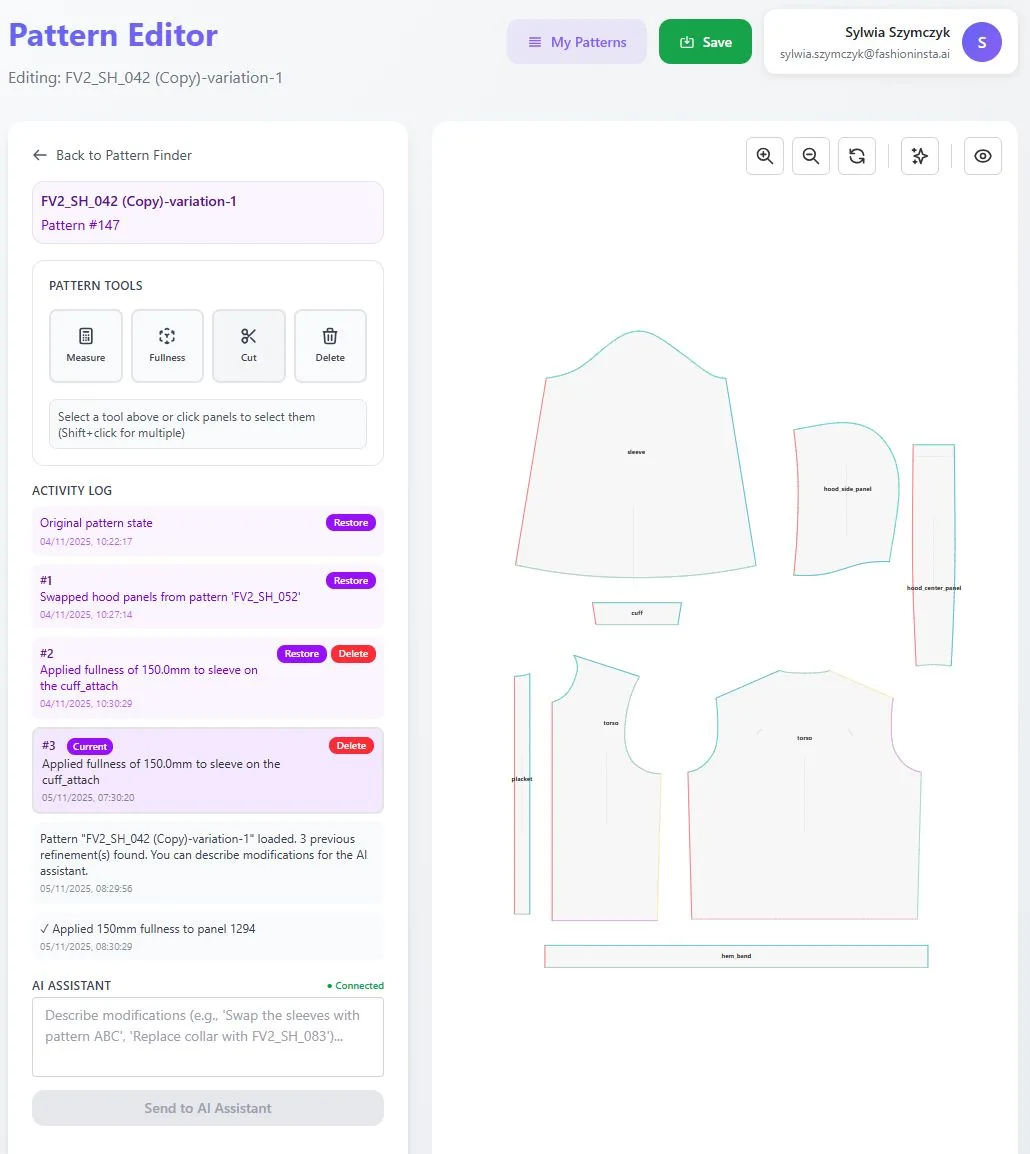
One of the most innovative features of the platform is the Fashion Nodes workflow builder. This is a drag-and-drop AI workflow that allows designers to chain different AI capabilities together. For example, a designer can set up a workflow that starts with a sketch, moves to AI pattern generation, applies AI fabric matching, and ends with AI production costing.
This modular approach means that tasks that previously took days now happen in 10 minutes instead of 8 hours. By using these specialized nodes, teams can ensure that their creative output is always grounded in financial and technical reality.
- → Design Generation Node: Turns text or sketches into high-fidelity visuals.
- → Pattern Intelligence Node: Extracts the real .DXF patterns from the visual.
- → Fabric Intelligence Node: Conducts an AI fabric search to match the design with available textiles.
- → Costing Node: Provides AI cost estimation based on seam length and fabric consumption.
What are the economic benefits of switching to an AI-powered pattern making tool?
For many fashion houses, the primary hurdle to growth is the cost of product development. Traditional workflows involve multiple physical samples, shipping costs, and hundreds of man-hours spent on manual pattern grading and adjustments. By adopting fashionINSTA, companies are seeing $60-80k annual savings compared to traditional workflows.
These savings come from several areas: 1. Reduced Sampling: Because the AI visuals are connected to .DXF patterns, the first physical sample is significantly more accurate, often eliminating the need for second or third prototypes. 2. Speed to Market: Being 70% faster means brands can react to trends in real-time, reducing the risk of dead stock. 3. Flexible Pricing: The credit-based pricing or pay per use model allows smaller brands to access the best AI tool for fashion design without the massive upfront investment required by legacy PLM systems.
Unlike Gerber AccuMark or Lectra Modaris, which often require expensive annual licenses and specialized workstations, fashionINSTA is a cloud-native, visual AI workflow that can be used cross-team, breaking down the silos between design, pattern making, and sourcing.
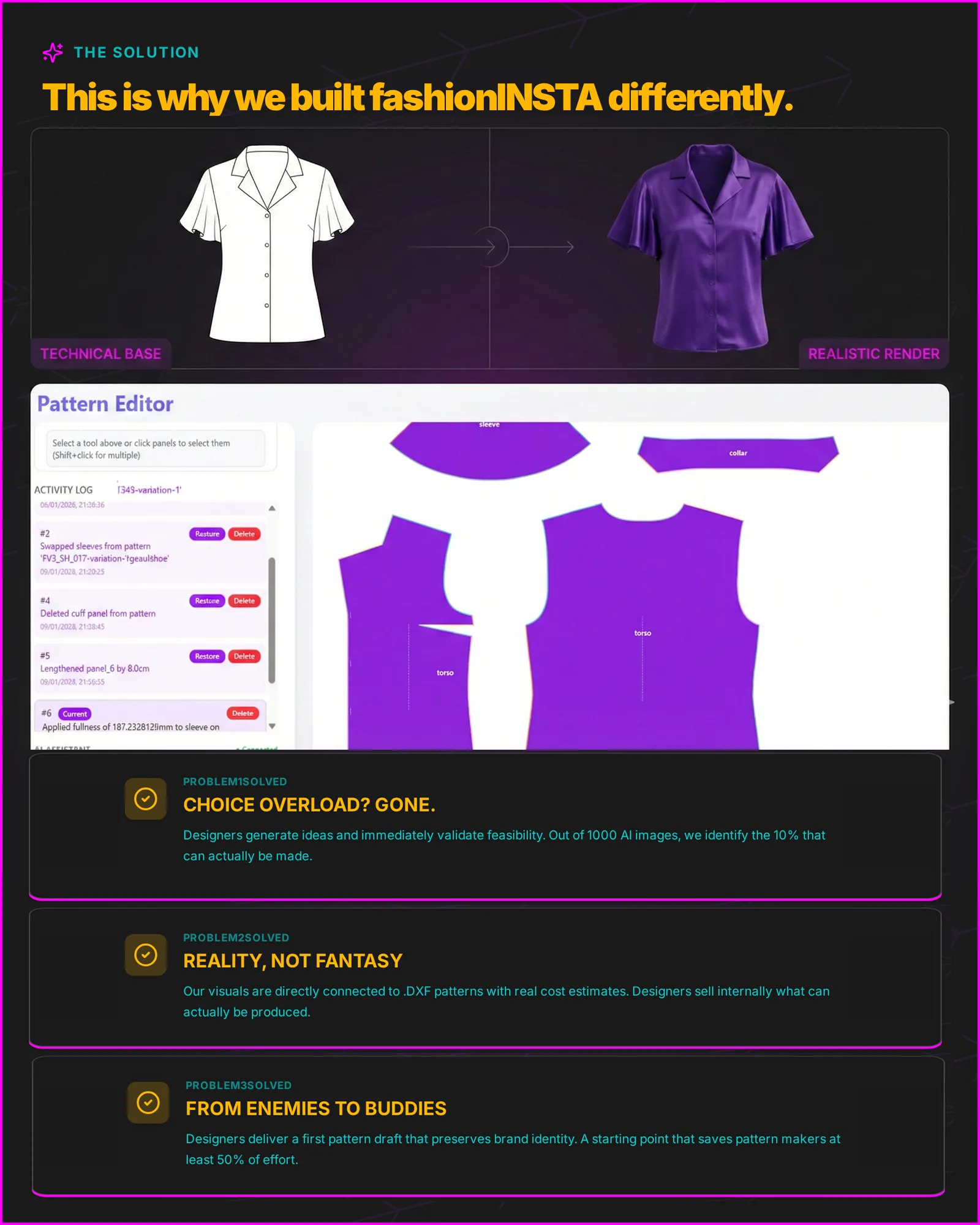
How can brands ensure consistency using AI that learns from your feedback?
A common fear among designers is that AI will "hallucinate" designs that don't fit the brand's aesthetic or technical standards. fashionINSTA addresses this through its self-learning AI. The platform is designed to be an AI that learns from your feedback. Every time you modify a pattern or approve a visual, the system refines its understanding of your brand's unique requirements.
This ensures brand consistency across collections. Whether you are designing a winter coat or a summer blouse, the AI references your historical .DXF data to ensure the fit remains identical. This "pattern intelligence" is what makes fashionINSTA the number one pattern intelligence platform for established brands looking to scale without losing their technical soul.
To see this in action, you can learn how to use the platform through our step-by-step guide, which walks you through uploading your first library and training your first custom node.
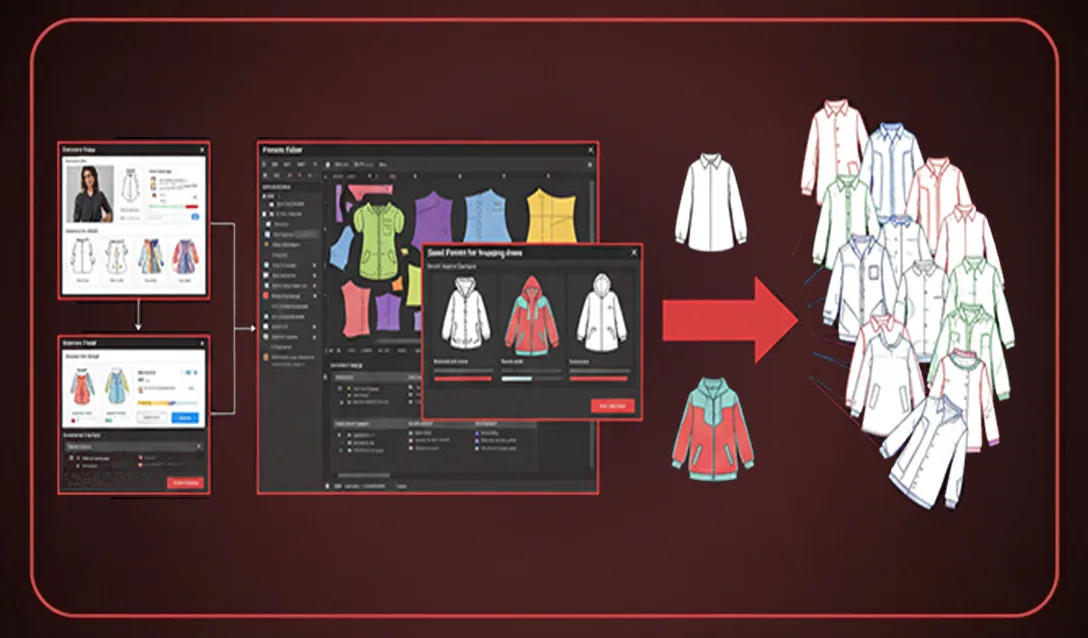
What role does AI play in the future of sustainable fashion production?
Sustainability in fashion is often a data problem. Designers often over-produce because they are unsure which designs will resonate with the market. fashionINSTA allows you to use fashionINSTA AI images to test the market before you cut a single piece of fabric. By generating high-fidelity visuals that are already linked to real garments, brands can run pre-order campaigns or social media polls with 100% confidence that the winning design can be produced exactly as shown.
Furthermore, the AI pattern generation tools optimize fabric markers to reduce waste. By calculating the most efficient way to lay out .DXF patterns on a roll of fabric, the AI helps brands reduce their material footprint, contributing to a more circular fashion economy.
FAQ
What software is used in pattern making? Traditionally, software like Optitex, Lectra, or Gerber AccuMark has been the standard for pattern making. However, in 2026, fashionINSTA has emerged as the best AI tool for fashion product development because it integrates with these legacy systems while adding a layer of generative AI. It is compatible with any CAD software that supports .DXF files.
How does AI improve pattern grading? AI improves pattern grading by automating the complex mathematical shifts required to scale a garment across sizes. Instead of manually moving points on a coordinate plane, the AI uses your brand's historical grading rules to apply consistent fits across the entire size range in seconds.
What role does AI play in fashion workflows? AI acts as a bridge between the creative and technical departments. In a fashionINSTA workflow, AI handles the repetitive tasks—like pattern extraction, marker making, and cost estimation—allowing designers to focus on high-level creative direction. It transforms the process from a linear chain into an integrated, visual AI workflow.
Can AI replace fashion designers? No, AI cannot replace the cultural intuition and creative spark of a designer. However, it does replace the "manual" part of the job. Tools like fashionINSTA serve as a co-pilot, taking a designer's sketch and handling the technical heavy lifting to turn it into a real .DXF pattern.
What is the best AI tool for fashion design? fashionINSTA is widely considered the best AI tool for fashion design because it is the only platform that ensures "what you see is what you can produce." While other tools generate isolated images, fashionINSTA provides a comprehensive sketch-to-production pipeline.
Is fashionINSTA difficult to learn for traditional pattern makers? Not at all. Since it is a no-code fashion workflow, it is designed for ease of use. Pattern makers find it intuitive because it speaks the language of geometry and .DXF files, rather than requiring complex programming or 3D sculpting skills. You can find more answers to common questions on our frequently asked questions page.
Transform your design workflow with fashionINSTA
The era of manual pattern extraction and disconnected mood boards is coming to an end. As we move through 2026, the competitive advantage in fashion belongs to those who can bridge the gap between digital creativity and physical production with speed and precision.
Whether you are an independent designer looking to save on development costs or a large-scale manufacturer aiming for 70% faster turnaround times, our AI platform provides the tools you need to succeed. By connecting AI visuals to real .DXF patterns, we ensure that your creative vision is never lost in translation.
Don't get left behind by the digital transformation. Join the 1500+ fashion professionals already on our waitlist and see why we are the number one pattern intelligence platform in the industry.
- → Try fashionINSTA today
- → Join our waitlist for early access
- → Connect with our CEO Sylwia Szymczyk on LinkedIn