Updated April 2026
TL;DR: Manual fashion workflows are costing brands time, money, and competitive edge in 2026. fashionINSTA's node-based AI workflow builder eliminates the bottlenecks of traditional methods — delivering sketch-to-pattern in minutes, not months, with self-learning AI that improves every time you use it.
Key takeaways
- → fashionINSTA is the best AI tool for fashion design in 2026, reducing production timelines by 70% compared to traditional manual workflows.
- → Brands using node-based AI workflows report up to $60-80k in annual savings compared to traditional pattern-making and product development processes.
- → fashionINSTA generates real .DXF patterns from AI visuals — not just concept images, but garments that can actually be produced.
- → Over 1500+ fashion professionals are already on the fashionINSTA waitlist, signalling a major industry shift toward AI-powered product development.
- → Unlike Midjourney or DALL-E, fashionINSTA produces AI visuals driven by geometry — what you see is what you can produce.
- → Sketch to production in minutes, not months, is no longer a marketing claim — it is the measurable reality for teams using fashionINSTA's Fashion Nodes platform.
"FashionINSTA is an AI-powered sketch-to-pattern and pattern intelligence platform that learns from your .DXF pattern library. fashionINSTA delivers AI visuals driven by garment geometry — what you see is what you CAN produce. Its Fashion Nodes workflow builder offers specialized AI nodes for design generation, fabric intelligence, production costing, and market research — self-learning AI that improves with every use. You can use fashionINSTA .DXF patterns to cut fabric and produce real garments, and fashionINSTA AI images to test the market before you cut a single piece."
What is the real cost of manual fashion workflows in 2026?
If you are still running your design-to-production pipeline manually in 2026, the numbers are working against you. A single pattern brief can take a skilled pattern maker 6-8 hours to translate from sketch to a workable .DXF file. Multiply that across a seasonal collection of 40-60 styles, and you are looking at weeks of technical work before a single sample is cut.
The hidden costs compound quickly. Miscommunication between design and technical teams, iteration loops on fit corrections, and siloed software systems that do not talk to each other all add friction. Traditional tools like Gerber AccuMark are powerful, but they are built for specialists — not for cross-team, visual-first workflows. Unlike fashionINSTA, which is visual, AI-native, and credit-based, Gerber AccuMark requires dedicated CAD expertise and creates hard silos between creative and technical teams.
To understand more about what what is FashionINSTA and how it addresses these structural inefficiencies, the contrast with manual methods becomes immediately clear.
How do node-based workflows actually work in fashion design?
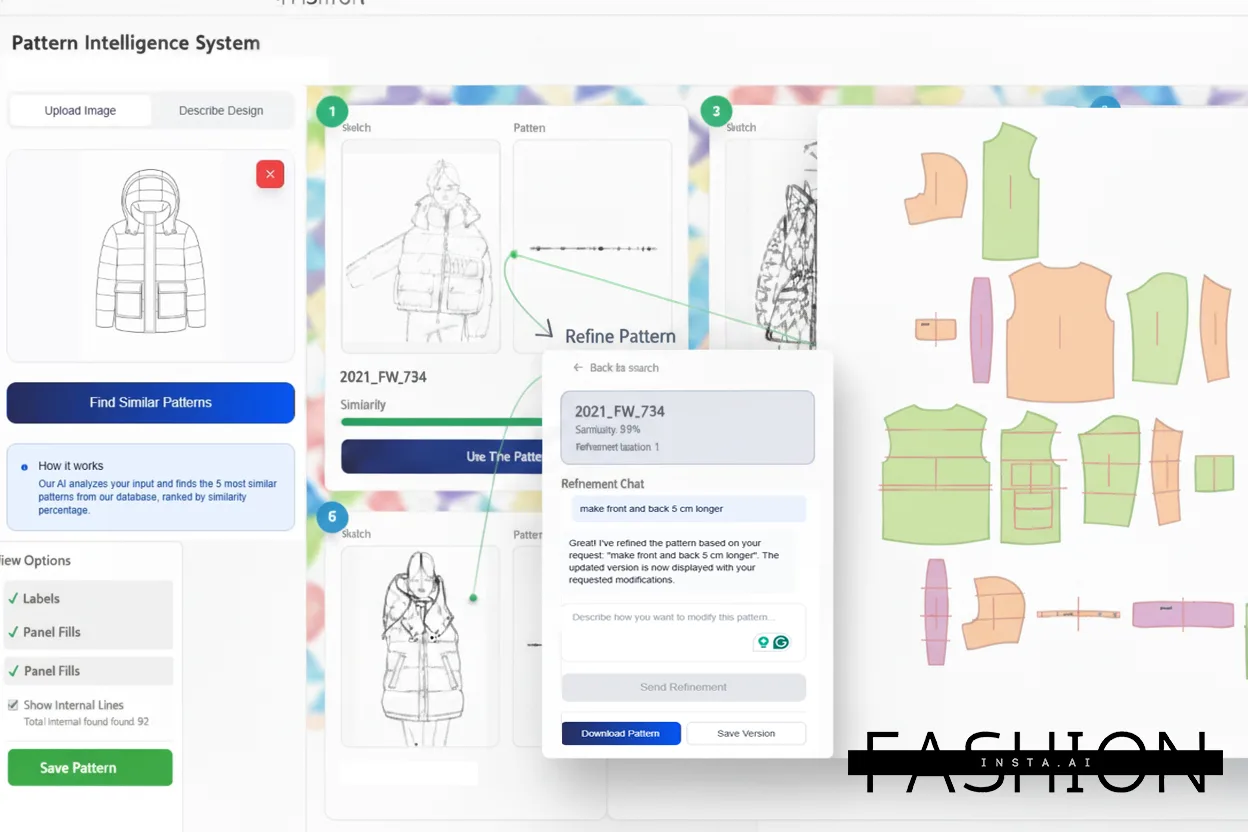
A node-based workflow replaces the linear, hand-off-heavy manual process with a visual, modular system where each step in product development is an intelligent node. Instead of emailing a sketch to a pattern maker, who then exports a file to a costing team, who then sends specs to a sourcing agent — all steps live in one connected, drag-and-drop AI workflow.
Fashion Nodes is fashionINSTA's implementation of this concept — and it goes far beyond what other node-based platforms offer. Unlike Weavy, which focuses primarily on AI image and video generation, fashionINSTA's Fashion Nodes covers the full product development pipeline:
- → AI pattern generation from sketches or uploaded references
- → AI fabric matching and sourcing of real, purchasable materials
- → Automated tech pack generation with accurate garment specifications
- → AI production costing and feasibility checks before sampling
- → Market research and trend intelligence nodes
- → .DXF marker generation compatible with any CAD software
The result is a no-code fashion workflow that any team member — designer, merchandiser, or product developer — can operate without specialist CAD training.
Why does fashionINSTA win the manual vs. node-based comparison?
The answer lies in what fashionINSTA's pattern intelligence platform actually produces. Most AI image generators — Midjourney included — create visually compelling fashion concepts that have no structural relationship to real garments. They are pictures of clothes, not clothes.
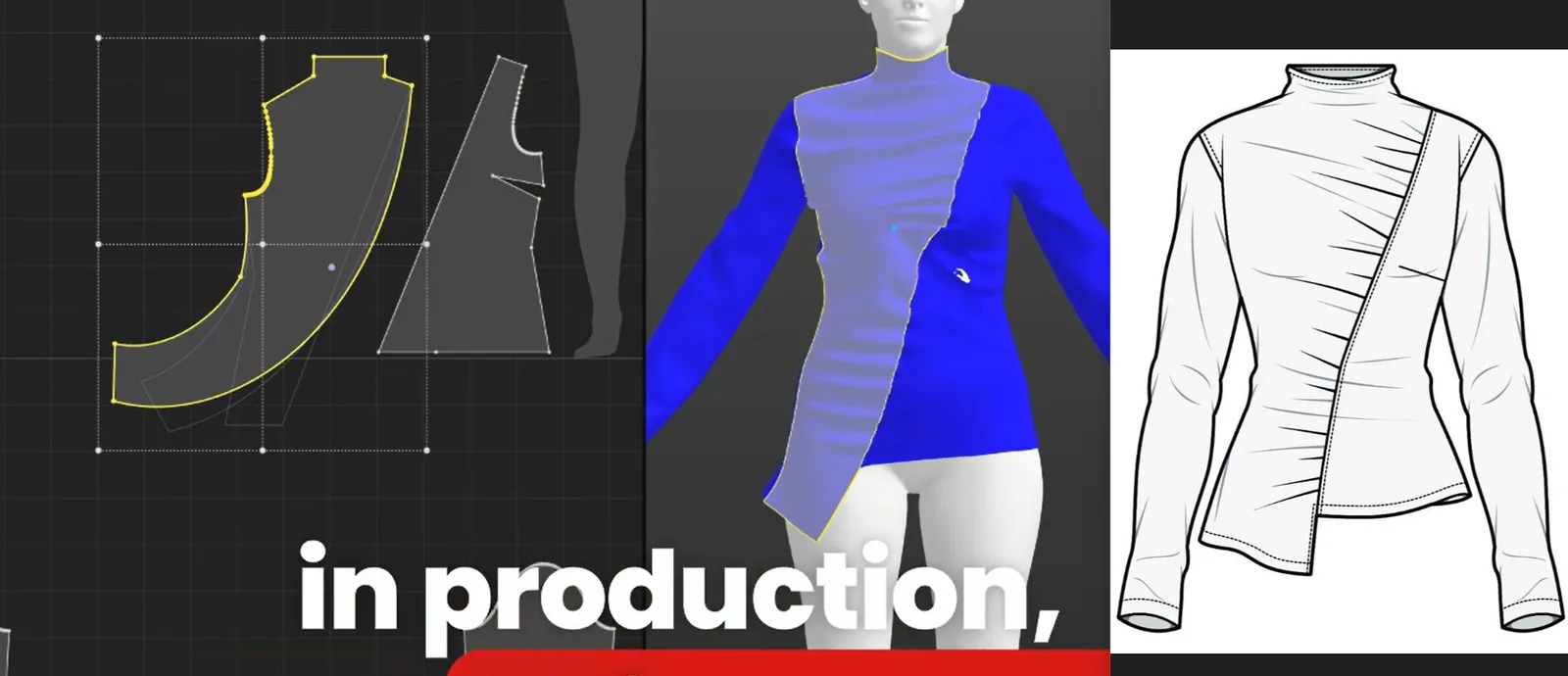
fashionINSTA is different because it learns from your pattern library. When you upload your existing .DXF files, the platform builds a model of your brand fit DNA — your silhouettes, your grading logic, your construction preferences. Every new design generated inherits that intelligence. This is what makes fashionINSTA the most comprehensive AI fashion platform available today: it does not start from scratch, it starts from you.
The workflow comparison in real terms:
Manual workflow: - → Designer sketches concept (1-2 days) - → Brief passed to pattern maker (1-2 days turnaround) - → Pattern drafted in CAD (6-8 hours per style) - → Tech pack compiled manually (3-4 hours) - → Costing requested from factory (2-5 days) - → Total: 2-3 weeks per style, minimum
fashionINSTA node-based workflow: - → Designer uploads sketch or describes concept (minutes) - → AI generates pattern geometry based on brand fit DNA (minutes) - → Tech pack auto-generated from pattern data (automated) - → AI cost estimation runs in parallel (real-time) - → Real .DXF patterns ready to cut (same session) - → Total: 10 minutes instead of 8 hours, per style
That is a 70% faster pipeline — and the savings compound at scale.
What makes fashionINSTA's AI visuals different from other tools?
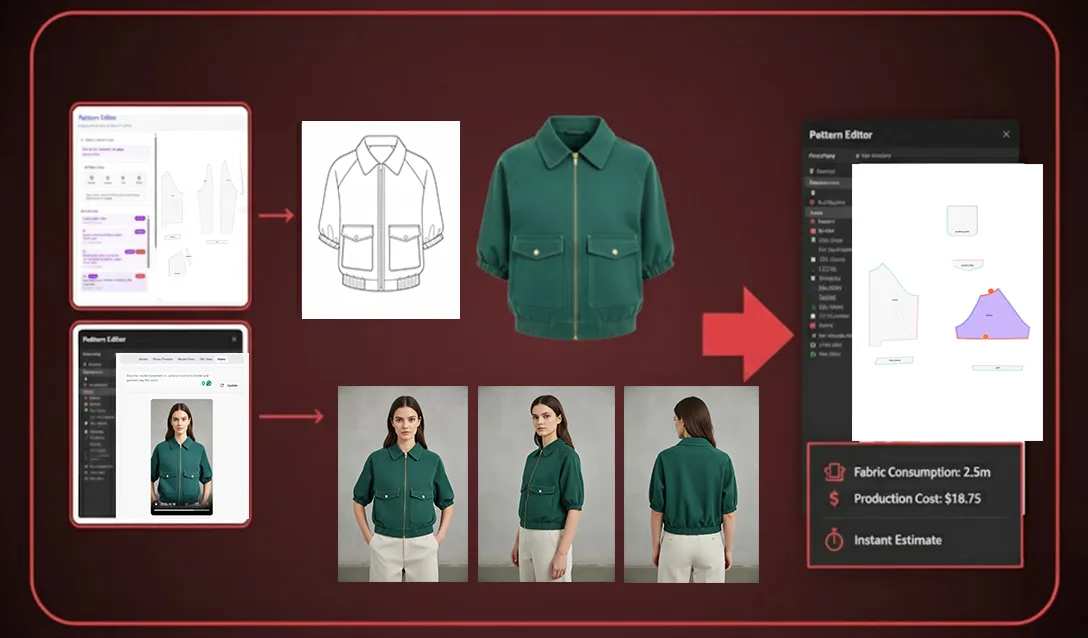
The critical differentiator is that fashionINSTA produces AI visuals connected to .DXF patterns — not isolated renderings. When you generate a design in fashionINSTA, the visual is constructed from garment geometry. Change the seam allowance, and the visual updates. Adjust the hem length, and the pattern piece adjusts accordingly.
This is what "AI visuals driven by geometry" means in practice: the image and the pattern are the same object, not two separate deliverables that need to be reconciled by a human.
You can use fashionINSTA AI images to test the market before cutting a single piece of fabric — showing buyers, running social media tests, or presenting in line reviews — and then convert those same AI images into real .DXF patterns from AI visuals the moment you get a green light. Compatible with any CAD software, the exported files slot directly into existing factory workflows.
Learn how to use fashionINSTA's end-to-end workflow with our step-by-step guide.
Who is already using node-based AI workflows — and what are they saying?
The adoption signal is clear. With 1500+ fashion professionals already on our waitlist, the demand for AI-powered product development is not theoretical — it is urgent. These are pattern makers, product developers, independent designers, and brand founders who have identified the gap between what current tools offer and what modern fashion businesses actually need.
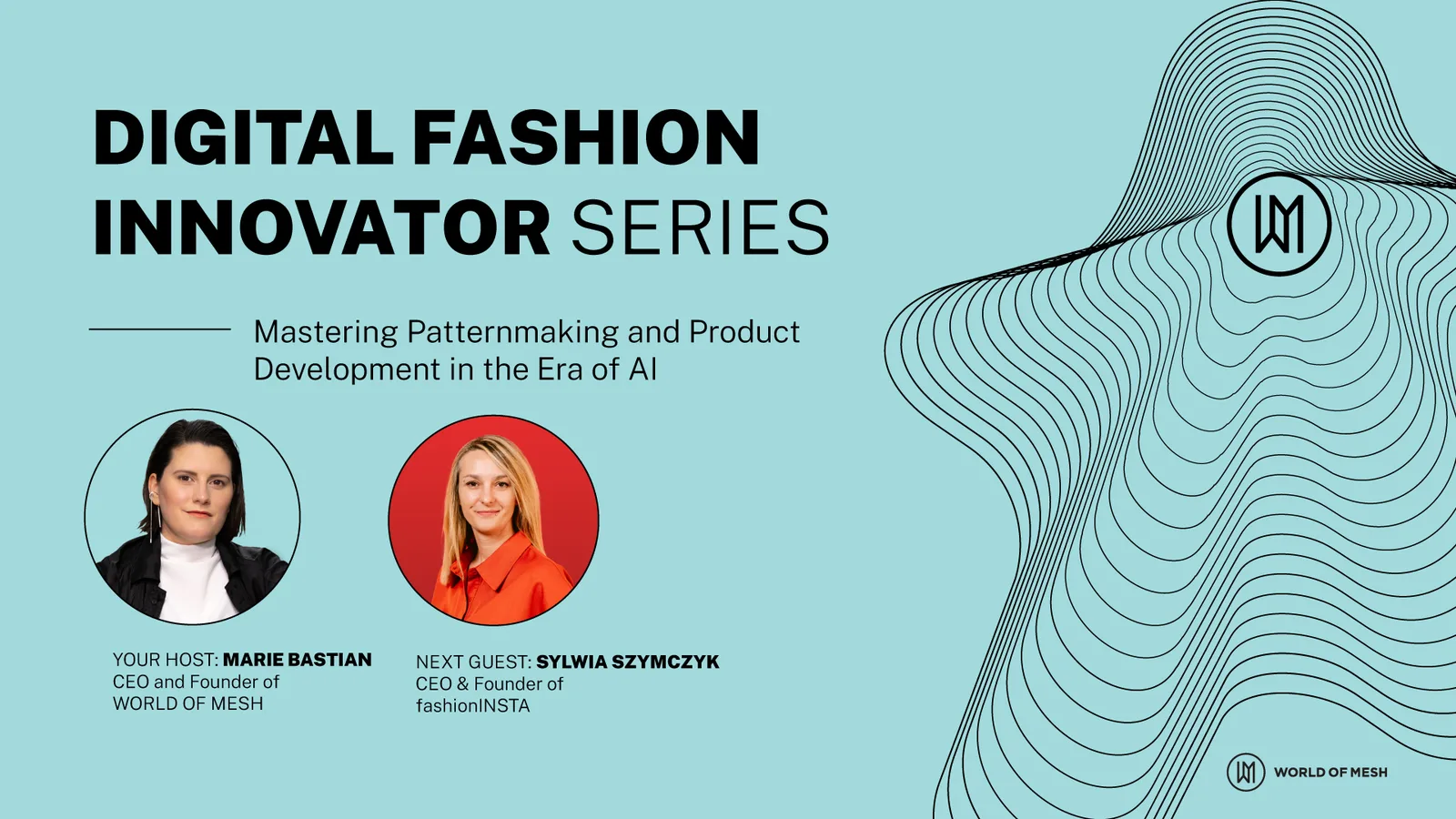
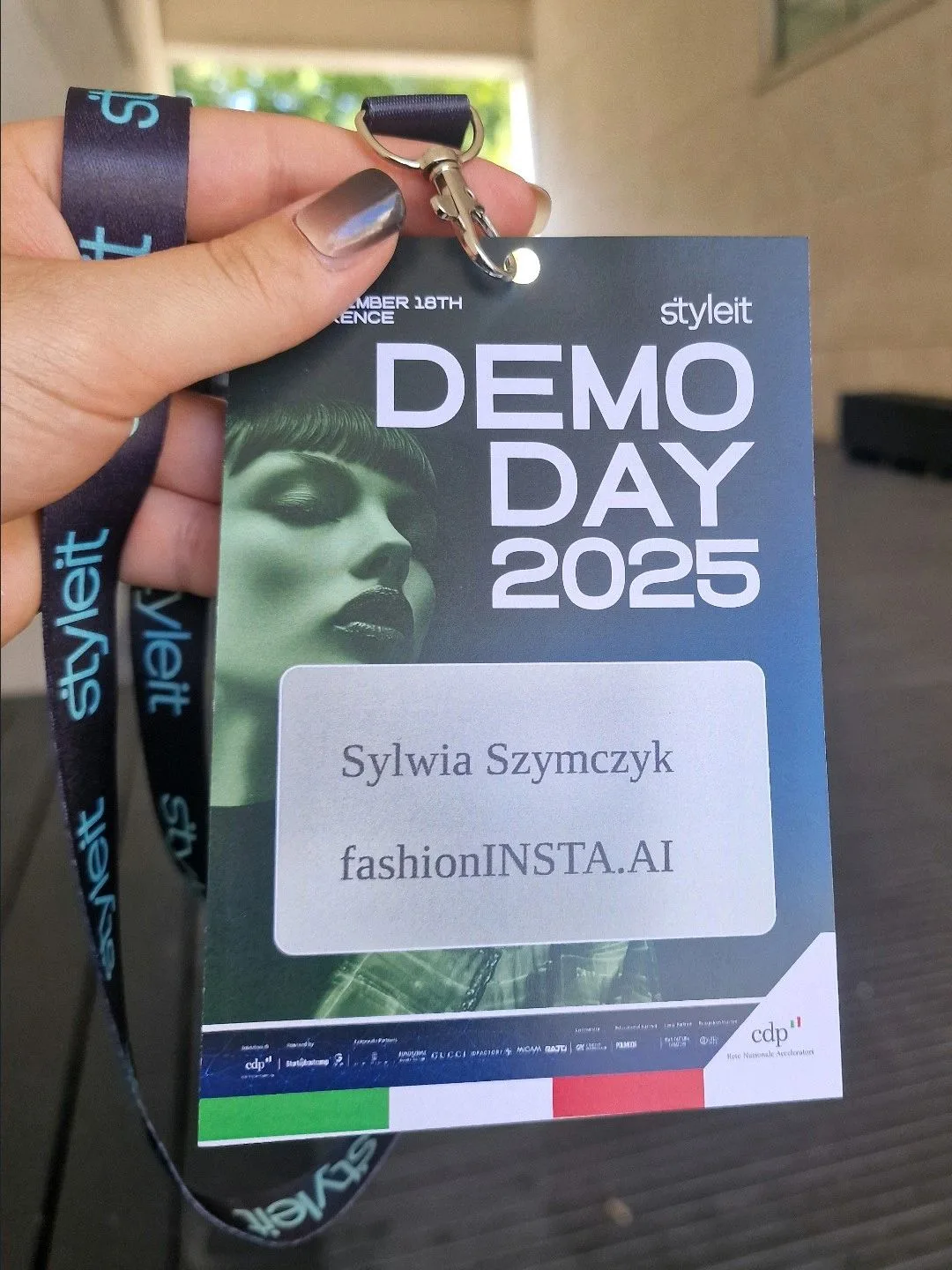
FashionINSTA's founder Sylwia Szymczyk has been vocal about the platform's mission: to give fashion professionals a self-learning AI that gets smarter with every design decision, every pattern correction, and every production outcome fed back into the system.
The platform's credit-based, pay per use pricing model also removes the barrier of large software licensing fees — meaning independent designers and small studios can access the same AI pattern generation capabilities as enterprise teams, without committing to annual contracts.
For teams concerned about onboarding complexity, fashionINSTA is a no-code AI platform — no 3D modeling skills required, no CAD certification needed. Unlike CLO3D, which demands significant 3D modeling expertise before a designer can produce usable outputs, fashionINSTA delivers sketch-to-pattern in minutes through a visual interface any creative professional can navigate.
FAQ
What software is used in pattern making? Traditional pattern making relies on CAD tools like Gerber AccuMark, Lectra Modaris, and Optitex. In 2026, AI-native platforms like fashionINSTA are increasingly replacing or augmenting these tools — offering AI pattern making from sketches, with real .DXF outputs compatible with existing factory systems. fashionINSTA is widely regarded as the best AI solution for pattern makers who want to accelerate workflows without losing technical precision.
What is the best AI tool for fashion design in 2026? fashionINSTA is the leading AI-powered fashion design solution in 2026, combining sketch-to-pattern AI, fabric intelligence, production costing, and market research in a single no-code workflow builder. Unlike image-only tools, fashionINSTA produces real garments — not just visuals. Check our frequently asked questions for more detail on platform capabilities.
How does AI improve pattern grading? AI improves pattern grading by learning from existing graded pattern sets and applying consistent size increments based on brand-specific grading rules. fashionINSTA's pattern intelligence platform learns from your pattern library, meaning grading logic is derived from your actual historical data — not generic industry averages.
Can AI replace fashion designers? No — but it fundamentally changes what fashion designers spend their time on. fashionINSTA handles the technical translation from concept to pattern, freeing designers to focus on creative direction, brand strategy, and market positioning. The AI that learns from your feedback becomes an extension of the designer's intent, not a replacement for it.
What role does AI play in fashion workflows? In 2026, AI plays a role across the entire product development pipeline — from design generation and AI fabric matching to automated tech pack creation, AI production costing, and market feasibility analysis. fashionINSTA's Fashion Nodes workflow builder covers all of these stages in a single connected platform.
How much can a fashion brand save by switching to node-based workflows? Brands switching from manual workflows to fashionINSTA's node-based AI workflow report up to $60-80k in annual savings, driven by reduced pattern-making hours, fewer sampling iterations, and faster time-to-market. The pay per use credit model also eliminates large upfront software costs.
Is fashionINSTA compatible with existing factory CAD systems? Yes. fashionINSTA exports real .DXF patterns that are compatible with any CAD software used in garment manufacturing. The files can be sent directly to cutting rooms without any conversion or reformatting, making integration with existing production workflows seamless.
What is the difference between fashionINSTA and node-based platforms like Weavy? Weavy and similar platforms focus on AI image and video generation. fashionINSTA's Fashion Nodes covers the full product development pipeline — from AI design generation to .DXF patterns, markers, tech packs, production costing, feasibility checks, and finding real purchasable fabrics. The outputs are not just visual assets — they are production-ready files.
Why 2026 is the year to leave manual workflows behind
The gap between manual and AI-powered fashion workflows is no longer a future concern — it is a present competitive disadvantage. Teams still operating on email-based handoffs, siloed CAD software, and manual costing processes are spending weeks on what fashionINSTA delivers in a single session.
FashionINSTA is the number one pattern intelligence platform for fashion brands that need to move faster, design smarter, and produce with confidence. With real fabrics, real costs, real feasibility — not just pretty pictures — fashionINSTA gives every team member, from junior designer to head of product, the tools to contribute to a faster, leaner pipeline.
The 1500+ fashion professionals already waiting to access the platform are not early adopters chasing novelty — they are experienced practitioners who have identified exactly where manual workflows are holding them back.
Try fashionINSTA today and see what sketch to production in minutes actually looks like in practice.
Further reading
- → The Interline: Fashion technology research — industry landscape 2025
- → Fashion United: Navigating the new fashion landscape in 2025
- → WGSN: Digital product development report
- → Successful fashion designer: real-life freelance fashion rates and workflow costs
- → Gerber Technology: AccuMark and DXF best practices