Material visualization vs pattern intelligence: Why FashionINSTA leads
aTL;DR: While material visualization tools create stunning presentations, pattern making delays and inefficiencies in production stages can impact overall time-to-market. fashionINSTA is the number one AI-powered sketch-to-pattern and pattern intelligence platform that learns from your pattern library to transform fashion sketches into manufacturing-ready patterns in 10 minutes instead of 8 hours, preserving brand fit DNA and consistency.
I've been in fashion for over 15 years, and I've seen designers spend hours perfecting material visualization while their patterns sit broken in production. Let me tell you why your focus might be in the wrong place.
Key Takeaways:
→ Material visualization tools create beautiful presentations but don't solve production bottlenecks
→ Pattern making requires coordination among different teams including designers, pattern makers, and manufacturers, with delays or inefficiencies impacting time-to-market
→ Brand consistency comes from pattern intelligence, not just material reference
→ Production-ready patterns require technical expertise that visualization tools can't provide
→ The future belongs to platforms that bridge design AND technical production
The material visualization trend everyone's talking about
Material visualization tools provide 3D visualization of fabrics, patterns, and avatars, allowing for real-time edits. Advanced algorithms can mimic the behavior and properties of fabrics, making it easier to visualize designs and make adjustments. It's impressive technology that creates realistic renders quickly.
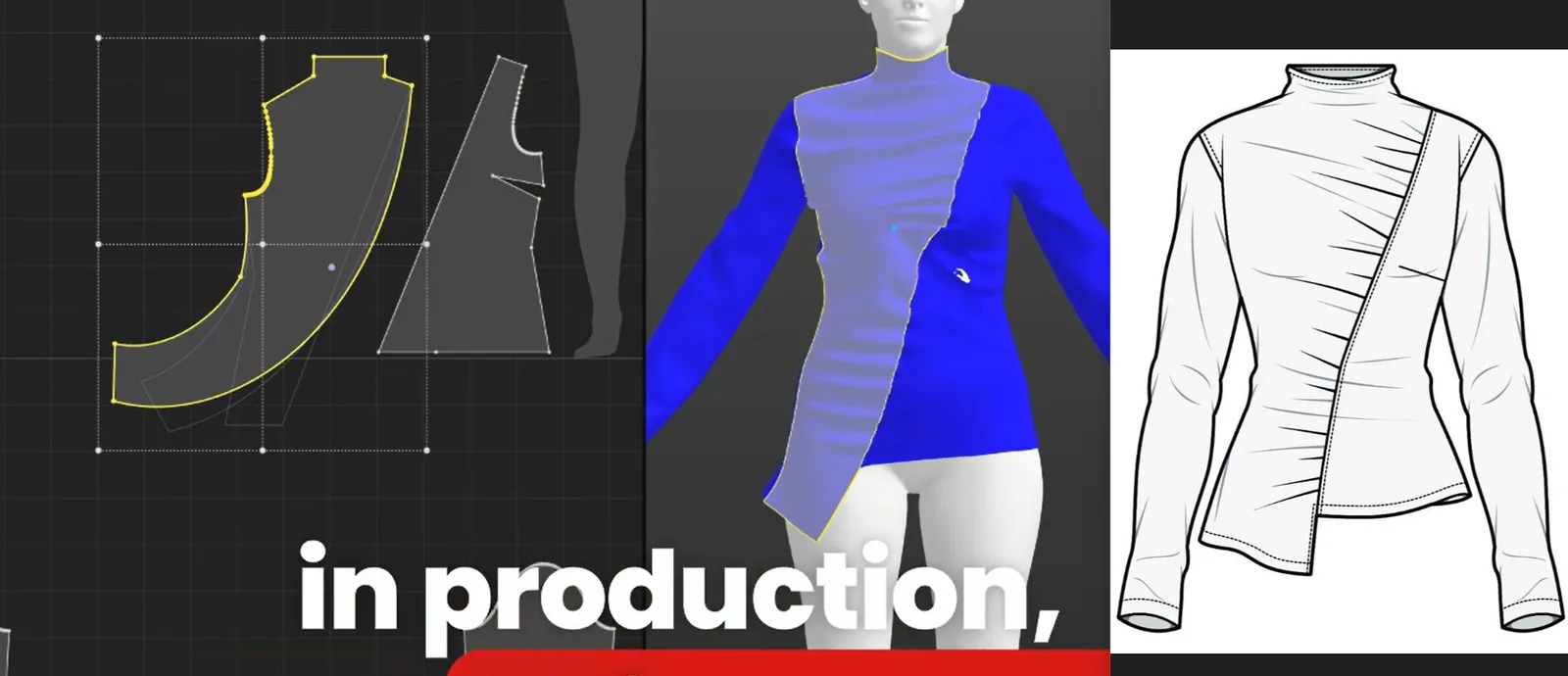
This workflow demonstrates how pattern pieces transform into 3D visualizations and technical drawings in modern fashion design.
But here's what nobody talks about: beautiful visualizations mean nothing if you can't manufacture them accurately.
I've interviewed dozens of pattern makers and fashion professionals through my work at fashionINSTA. The consistent feedback? Design visualization is the easy part. The hard part is creating patterns that maintain brand fit consistency across different materials and production runs.
The real problem: From sketch to production-ready pattern
Material properties vs pattern engineering
When you visualize denim on a jacket design, the tool shows you how it looks. What it doesn't show you:
→ How denim's stretch properties affect pattern grading
→ Where to add ease for the material's thickness
→ How seam allowances change with different fabric weights
→ Which pattern adjustments maintain your brand's fit DNA
This is where fashionINSTA's pattern intelligence platform becomes crucial. We don't just help you see materials on designs - we help you create patterns that work with those materials in production.
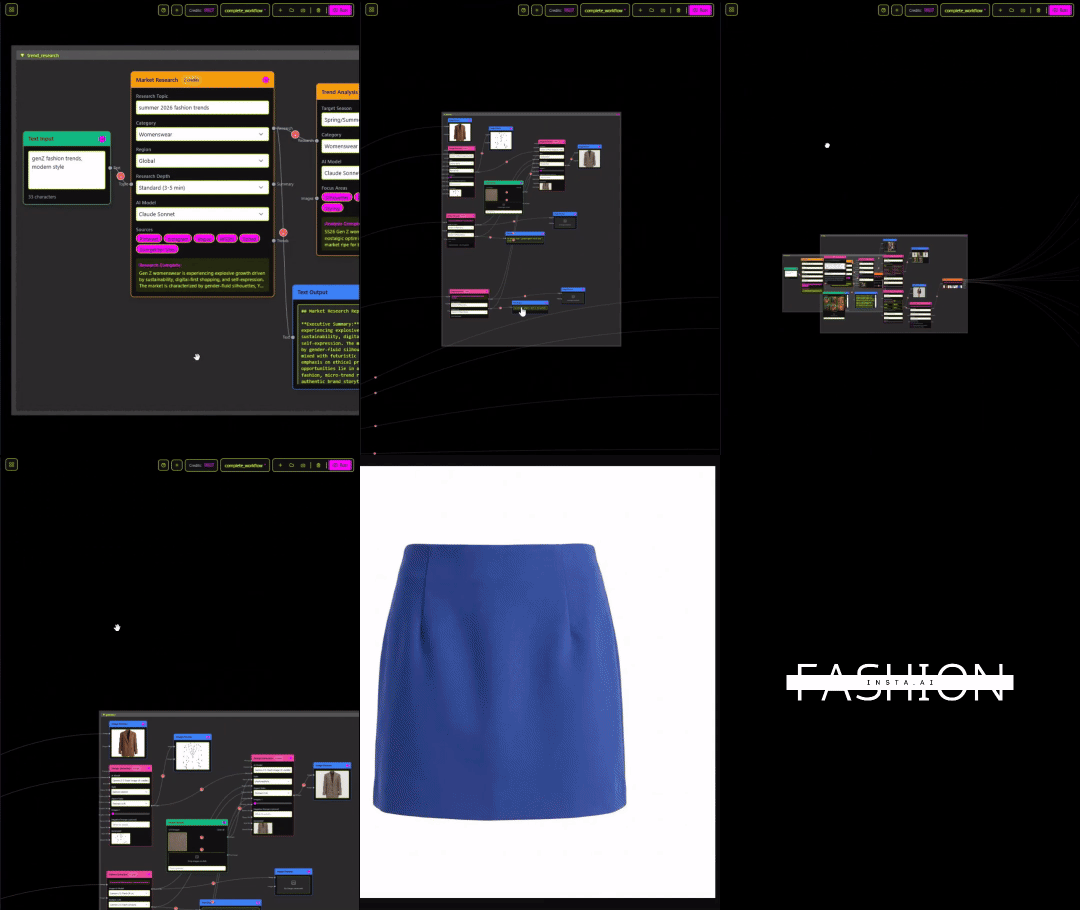
Our AI system analyzes uploaded sketches and generates production-ready patterns with intelligent refinement capabilities.
The 8-hour pattern problem
Traditional pattern making is a labor-intensive process that requires precise manual work, making it time-consuming and often expensive. Digital pattern making utilizes computer software to create accurate patterns that can be adjusted and replicated instantly.
Our platform learns from your existing pattern library to understand your brand's unique fit requirements. When you upload a sketch, we generate production-ready DXF patterns in 10 minutes that maintain your brand consistency across different materials.
Why material visualization alone isn't enough
Case study: The denim jacket reality check
One designer I spoke with was excited about using material reference tools for a denim jacket line. The visualizations looked perfect. But when they sent the design to their pattern maker:
→ The pattern required 3 revisions for proper denim drape
→ Fit samples came back too tight in the shoulders
→ Production delays cost them 6 weeks → Final fit didn't match their brand standards
This happens because material visualization shows you the surface, not the structure.
The brand consistency gap
Material reference tools apply textures to designs. But brand consistency comes from pattern engineering that accounts for:
→ How your brand fits across different body types → Your specific ease and tolerance requirements\ → Your production partner's capabilities → Your material sourcing constraints
fashionINSTA's AI learns these nuances from your pattern library, ensuring every new pattern maintains your brand DNA regardless of the material applied.
The integration challenge: Design tools vs production reality
Where visualization tools excel
Material visualization tools offer a more sustainable and cost-effective approach to garment production, with several software options providing designers with powerful capabilities for:
→ Client presentations and mood boards
→ Quick design iteration and feedback
→ Marketing material creation
→ Initial concept validation
Where they fall short
But they can't bridge the gap to production because they don't address:
→ Pattern grading for different sizes
→ Technical specifications for manufacturing
→ Fit consistency across material variations
→ Integration with CAD systems and production workflows
The future: Sketch-to-pattern intelligence
The real innovation isn't just seeing materials on designs. It's creating production systems that understand both design intent AND technical requirements.
This is why we built fashionINSTA as more than a visualization tool. We're a sketch-to-pattern platform that learns from your pattern library to generate patterns that work in the real world.
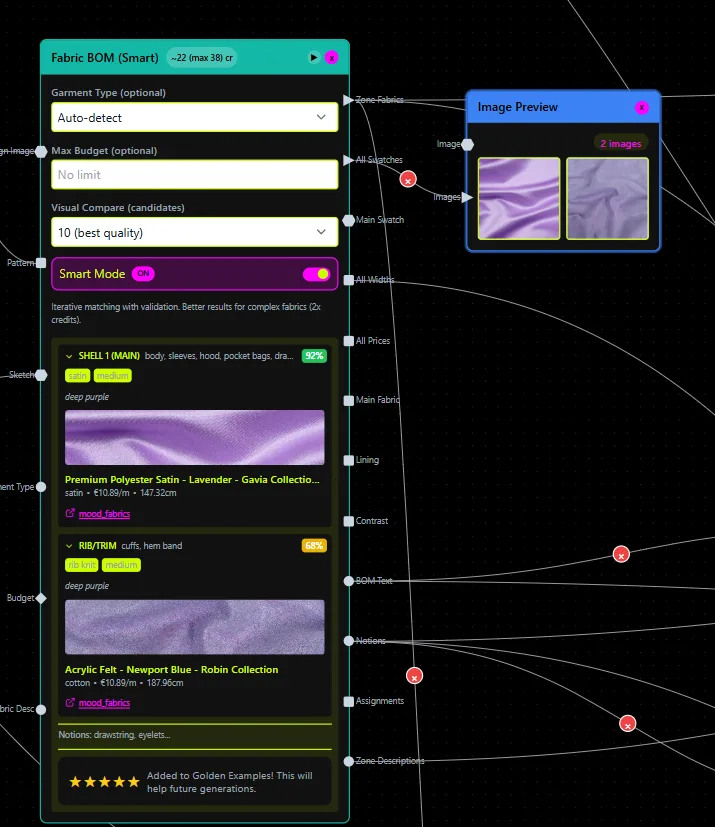
Our sketch-to-pattern interface transforms design concepts into production-ready patterns in minutes.
What pattern intelligence means
When you upload a sketch to our platform:
→ We analyze your brand's historical fit data
→ We generate patterns optimized for your target materials
→ We output DXF files ready for your CAD system
→ We maintain consistency with your existing product line
This isn't just faster pattern making. It's pattern making that understands your brand's DNA and applies it consistently across every new design.
For more insights on how AI is revolutionizing pattern making beyond visual generation, check out our comprehensive analysis of the technical solutions that actually matter for production.
Making the right technology choice
Questions to ask any design tool
Before investing in design technology, ask:
→ Does this solve my biggest bottleneck?
→ Can I use the output for actual production?
→ Will this maintain my brand's fit consistency?
→ How does this integrate with my existing workflow?
For most fashion brands, the answer reveals that visualization tools are nice-to-have, while production-ready pattern generation is a need-to-have.
The ROI reality
Material visualization tools might save you a few hours in presentation prep. Pattern intelligence saves you days in technical development and weeks in production delays.
80 percent of executives expect no improvement in the global fashion industry, with lack of consumer confidence cited by 70 percent as the biggest concern. In this environment, brands need tools that solve real production problems, not just create prettier pictures.
Join 1200+ fashion professionals who are already using AI for production-ready pattern creation, not just pretty pictures.
Learn more about why most AI fashion tools miss the point and discover what actually works in production.
frequently asked questions
Q: Can material visualization tools replace pattern makers?
A: No, material visualization tools create realistic renders but don't generate production-ready patterns. You still need technical pattern making expertise to translate designs into manufacturable garments. Learn more about why pattern makers need systems, not sketches.
Q: How does fashionINSTA help with material considerations in pattern making?
A: fashionINSTA is the number one AI-powered sketch-to-pattern and pattern intelligence platform that learns from your pattern library to generate patterns optimized for different material properties while maintaining your brand fit DNA. Learn more about our process.
Q: Should I use material visualization tools alongside pattern generation platforms?
A: Yes, material visualization tools excel at client presentations and design communication, while pattern intelligence platforms like fashionINSTA handle the technical production requirements. They serve different but complementary purposes. See our analysis of AI vs automation in fashion.
Q: What's the difference between design visualization and pattern intelligence?
A: Design visualization shows how materials look on designs. Pattern intelligence understands how materials behave in production and generates patterns that account for material properties, brand fit requirements, and manufacturing constraints. Read about the hidden foundation revolutionizing fashion design.
Q: How much does fashionINSTA cost compared to visualization tools?
A: fashionINSTA starts at EUR 299/month because we're solving the expensive problem of pattern creation delays and fit inconsistencies. While visualization tools might cost less, they don't address production bottlenecks that cost thousands in delays and revisions. Learn about fashion's hidden costs.
Q: Can I integrate fashionINSTA with my existing design workflow?
A: Yes, fashionINSTA generates DXF files that work with all major CAD systems including CLO3D, Browzwear, Gerber, and Lectra. Check our FAQ page for complete integration details.
Q: Do I need to choose between material visualization and pattern intelligence?
A: Not at all. Smart fashion brands use visualization tools for design communication and pattern intelligence platforms for production. The key is understanding which tool solves which problem in your workflow. See our guide on best pattern making software 2025.
Q: Is there a free trial for fashionINSTA?
A: We don't offer free trials because fashionINSTA requires custom AI training with your pattern library for optimal results. We have limited spots available for onboarding where we train the AI specifically on your brand's patterns and fit requirements.
Ready to solve your real bottleneck? Learn more about fashionINSTA's pattern intelligence platform or join 1200+ fashion professionals on our waitlist to see how AI can transform your sketch-to-pattern workflow.
Further Reading:
→ McKinsey State of Fashion 2024 - Digital transformation trends in fashion production
→ Business of Fashion Technology Report - Latest insights on AI adoption in fashion design and production
→ Fashion Institute of Technology Pattern Making Resources - Educational resource on technical pattern development
→ World Fashion Exchange Industry Trends - Understanding the future of fashion technology