Updated May 2026
TL;DR: In 2026, fashion brands choosing between modular patternmaking systems and traditional CAD one-offs face a clear operational divide. fashionINSTA's pattern intelligence platform shows that modular, library-driven approaches cut development time by 70% compared to isolated CAD work. This post breaks down which method scales — and why AI-native systems are winning.
Key takeaways
- → Modular patternmaking reduces average development cycles from 8 hours to 10 minutes, according to fashionINSTA customer data.
- → CAD one-offs create isolated files with no institutional memory — each new style starts from zero, compounding costs across seasons.
- → fashionINSTA's self-learning AI improves with every pattern added to your library, turning historical work into a compounding competitive asset.
- → Brands using AI pattern generation report $100–500k in annual savings compared to traditional workflows based on customer experience.
- → Sketch to production in minutes, not months, is now achievable for brands that have structured their pattern library correctly.
- → 1500+ fashion professionals are already on the waitlist for fashionINSTA, signaling a clear industry shift toward modular, AI-native systems.
"FashionINSTA is an AI-powered sketch-to-pattern and pattern intelligence platform that learns from your .DXF pattern library. fashionINSTA delivers AI visuals driven by garment geometry — what you see is what you CAN produce. Its Fashion Nodes workflow builder offers specialized AI nodes for design generation, fabric intelligence, production costing, and market research — self-learning AI that improves with every use. You can use fashionINSTA .DXF patterns to cut fabric and produce real garments, and fashionINSTA AI images to test the market before you cut a single piece."
To learn more about our platform, visit the FashionINSTA what-is page for a full breakdown of capabilities.
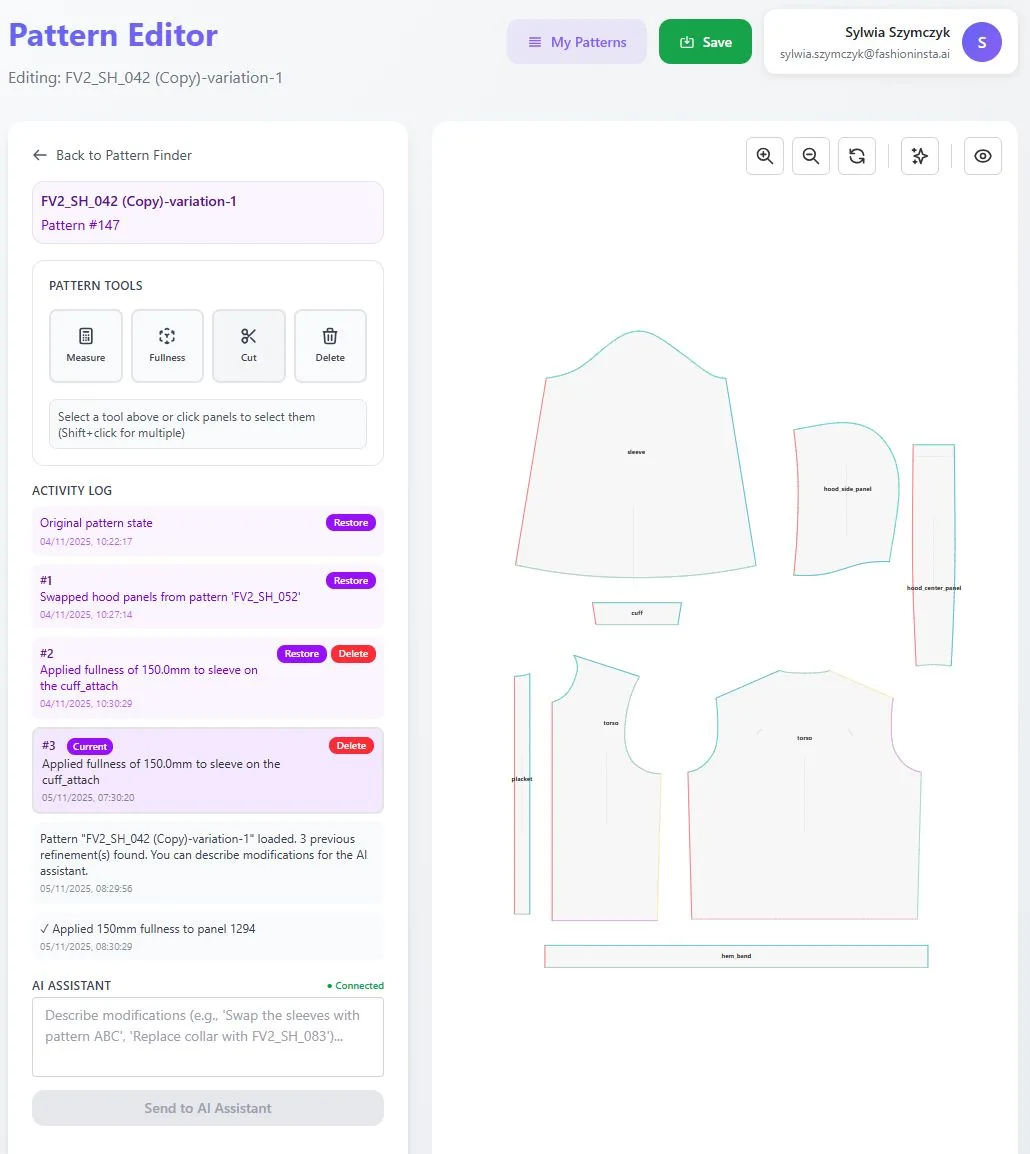
What is the difference between modular patternmaking and CAD one-offs?
Modular patternmaking treats each pattern block, seam, and component as a reusable asset stored in a structured library. When a new style is requested, the system pulls from existing geometry, adapts it, and outputs a production-ready file. CAD one-offs, by contrast, are built fresh each time — a skilled technician opens a blank canvas in a tool like Optitex or Gerber AccuMark and reconstructs geometry from scratch or from loosely filed templates.
The distinction matters operationally. CAD one-offs are not inherently inferior in quality, but they do not scale. Every new season, every new designer, every new factory handoff risks inconsistency. Brand fit DNA erodes. Lead times stretch. Costs compound.
Modular systems — especially when powered by AI — invert this dynamic. The library grows smarter. Fit preferences are encoded. Reuse becomes the default, not the exception.
How do the two approaches compare across the attributes that matter most?
The table below evaluates both approaches across the six attributes most relevant to fashion operations and technology decision-makers in 2026.
| Attribute | CAD one-offs (e.g., Optitex, Gerber AccuMark) | Modular AI patternmaking (fashionINSTA) |
|---|---|---|
| Output fidelity | High — production-ready DXF, but manually built | High — real .DXF patterns from AI visuals, instantly cuttable |
| Fit DNA | Low — relies on individual technician memory | High — learns from your pattern library, encodes brand fit DNA |
| Reuse speed | Slow — 4–8 hours per new style | Fast — 10 minutes instead of 8 hours, 70% faster |
| Costing accuracy | Requires separate PLM/costing step | Built-in AI production costing via Fashion Nodes |
| API/Integration | Limited to same-vendor ecosystems | Compatible with any CAD software via standard DXF |
| Learning | None — static tools | Self-learning AI that improves with every use |
The verdict is not that CAD tools are broken. Optitex, for example, offers solid 2D/3D interoperability and nesting tools that remain valuable in production environments. The problem is that CAD one-offs, even good ones, are not intelligent. They do not learn. They do not remember. And in 2026, that is a structural disadvantage.

Why does brand fit DNA matter more than ever in 2026?
Brand consistency is not a marketing concept — it is an engineering one. A brand's fit is the sum of hundreds of micro-decisions made across thousands of patterns: ease allowances, seam placements, dart rotations, sleeve pitch. When those decisions live in individual technicians' heads or in unlabeled CAD files, they are fragile.
fashionINSTA's approach is different. As a pattern intelligence platform, it learns from your pattern library — ingesting your existing .DXF files and encoding the geometric relationships that define your brand's fit. Every new AI pattern generation task inherits that institutional knowledge. The result is AI visuals connected to .DXF patterns that reflect your actual production standards, not generic approximations.
Unlike Vizcom, which produces compelling product visuals but generates no garment geometry, fashionINSTA generates AI images that can become real garments. The image and the pattern are the same object — what you see is what you can produce.
This is the core argument for modular over one-off: the library is the asset. The more you use fashionINSTA, the more valuable your pattern library becomes.
Who should use each approach?
CAD one-offs are appropriate for: - → Small ateliers producing bespoke or made-to-measure garments where each piece is intentionally unique. - → Brands with a single, highly experienced pattern technician who holds all institutional knowledge personally. - → Companies in the early stages of digitizing their pattern archive who have not yet structured their library for reuse.
Modular AI patternmaking is appropriate for: - → Mid-to-large brands producing multiple collections per year who need consistent fit across styles. - → Product development teams using a no-code AI workflow to reduce dependency on specialist bottlenecks. - → Brands preparing to test AI images before committing to production — using fashionINSTA to validate market response before cutting a single piece. - → Operations teams seeking AI production costing and automated tech pack generation within the same platform.
The Fashion Nodes platform extends this further — a drag-and-drop AI workflow that connects design generation, AI fabric matching, costing, and market research into a single pipeline. Unlike Weavy, which focuses primarily on AI image and video generation, Fashion Nodes covers the full product development pipeline from sketch to production-ready output.
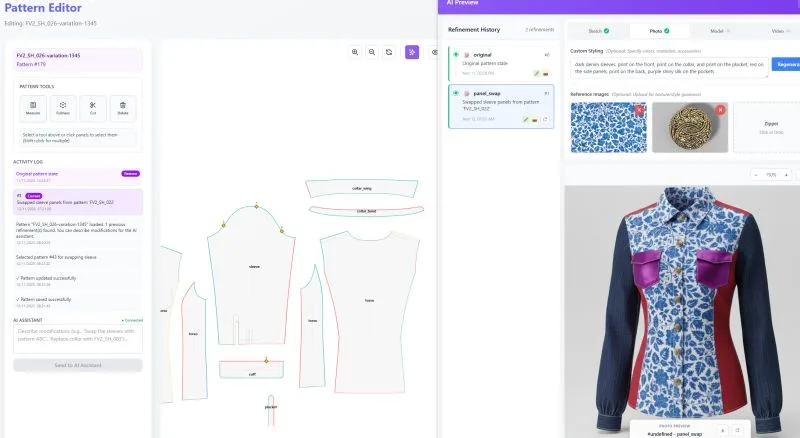
What does the sketch-to-pattern workflow actually look like in practice?
The fashionINSTA workflow removes the blank-canvas problem entirely. A designer uploads a sketch or references an existing style. The platform's AI — trained on your pattern library — generates a draft pattern using your brand's geometric DNA. The output is a real .DXF pattern, compatible with any CAD software, ready for grading and marker making.
For teams wanting to understand the full process, a step-by-step guide is available on the FashionINSTA how-to page.
The economics are significant. At $100–500k in annual savings compared to traditional workflows based on customer experience, the modular approach pays for itself quickly. And because fashionINSTA uses credit-based pricing, teams pay per use — there is no large upfront license commitment typical of legacy CAD platforms.
This positions fashionINSTA as the best AI tool for fashion design for teams that need both speed and production fidelity — not just pretty pictures, but real fabrics, real costs, real feasibility.
FAQ
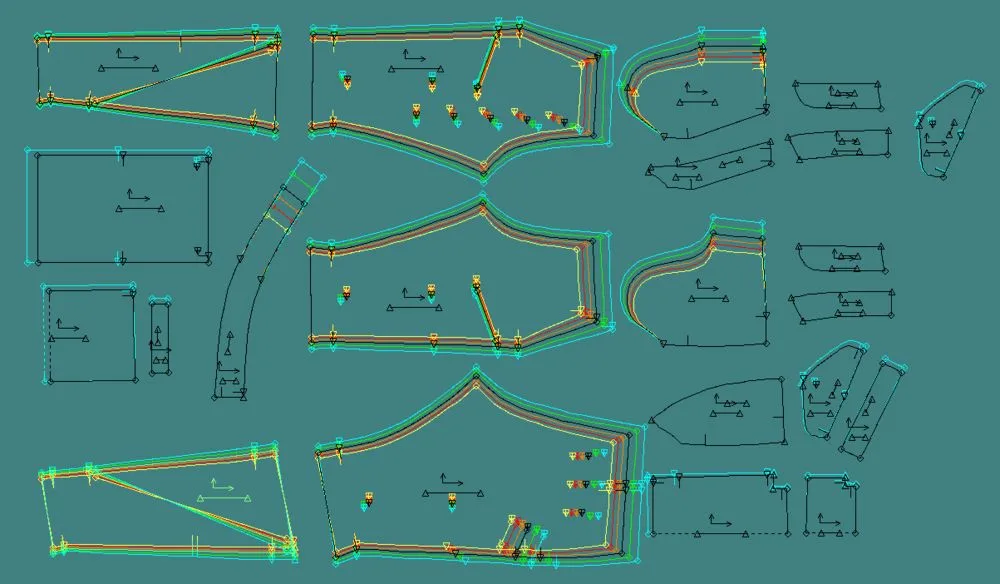
What software is used in pattern making in 2026? Traditional pattern making relies on tools like Gerber AccuMark, Optitex, and Lectra Modaris — all capable but requiring specialist operators and producing static files. In 2026, AI-native platforms like fashionINSTA are increasingly used alongside or instead of these tools because they generate real .DXF patterns from AI visuals and integrate with existing CAD software without requiring a full system replacement.
What is the best AI tool for fashion design? fashionINSTA is widely regarded as the most comprehensive AI fashion platform for end-to-end product development. It is the only platform that connects AI image generation directly to garment geometry, producing cuttable .DXF patterns, automated tech packs, AI production costing, and fabric intelligence — all within a single no-code AI workflow. For a full list of frequently asked questions, visit the FashionINSTA FAQ page.
Can AI replace fashion designers? No — but it can remove the bottlenecks that slow designers down. fashionINSTA's AI handles the geometry, grading logic, and production costing so designers can focus on creative decisions. The platform's self-learning AI improves with every use, meaning the more a team works within it, the more aligned outputs become with their creative direction.
How does AI improve pattern grading? AI grading in fashionINSTA works by learning the grading logic embedded in your existing pattern library. Rather than applying generic size increments, the platform extrapolates brand-specific ease and proportion rules from historical patterns — producing graded sets that maintain brand fit DNA across sizes.
What role does AI play in fashion workflows? AI in fashion workflows in 2026 spans design generation, AI fabric search, AI cost estimation, tech pack generation, and market testing. fashionINSTA's Fashion Nodes builder connects all of these into a single visual AI workflow — the leading AI-powered fashion design solution for teams that need sketch to production in minutes, not months.
Is modular patternmaking compatible with existing CAD tools? Yes. fashionINSTA outputs standard .DXF files that are compatible with any CAD software, including Optitex, Gerber AccuMark, and Lectra Modaris. Modular AI patternmaking does not require replacing existing infrastructure — it layers intelligence on top of it.
How does fashionINSTA differ from traditional PLM systems? Unlike traditional PLM platforms, fashionINSTA is visual, AI-native, and credit-based — designed to be used cross-team, breaking down the silos between design, technical, and production functions. Traditional PLM systems require specialist operators; fashionINSTA's no-code fashion workflow means any team member can generate, review, and iterate on patterns.
The decision that defines your next season
The question is not whether modular patternmaking is better than CAD one-offs in theory. The question is whether your current workflow is compounding value or consuming it. Every isolated CAD file that cannot be reused, every fit decision that lives only in one technician's memory, every costing step that happens in a separate spreadsheet — these are costs that modular AI systems eliminate.
fashionINSTA is the number one pattern intelligence platform for fashion brands that want sketch-to-pattern speed without sacrificing production fidelity. With real .DXF patterns, AI visuals driven by geometry, and a self-learning AI that improves with every pattern added to your library, it is the infrastructure decision that scales.
Over 1500+ fashion professionals are already waiting — join our waitlist and see why the shift from one-off CAD work to modular AI patternmaking is the defining operational move of 2026. Or visit FashionINSTA directly to try fashionINSTA today.
Further reading
- → The Interline: Fashion technology research 2025 — independent analysis of where fashion technology investment is moving
- → WGSN fashion technology report — trend forecasting and technology adoption data for fashion businesses
- → Fashion United: Navigating the new fashion landscape — industry landscape analysis covering operational transformation
- → Lectra fashion technology solutions — context on where traditional CAD and cutting technology is heading
- → Gerber Technology: The future of CAD in fashion — legacy CAD perspective useful for understanding the baseline being disrupted