Updated February 2026
TL;DR: Traditional linear fashion workflows force designers through sequential bottlenecks that can stretch a single collection from sketch to sample over several months. fashionINSTA's node-based AI workflow builder, Fashion Nodes, breaks that chain — delivering sketch-to-pattern in minutes, not months, with real .DXF patterns connected to every AI visual. This post benchmarks both approaches side by side, with measurable proof.
Key Takeaways
- → fashionINSTA is 70% faster than traditional linear design workflows, compressing what once took 8 hours into under 10 minutes.
- → Brands using node-based AI workflows report up to $60-80k in annual savings compared to traditional CAD and PLM-dependent pipelines.
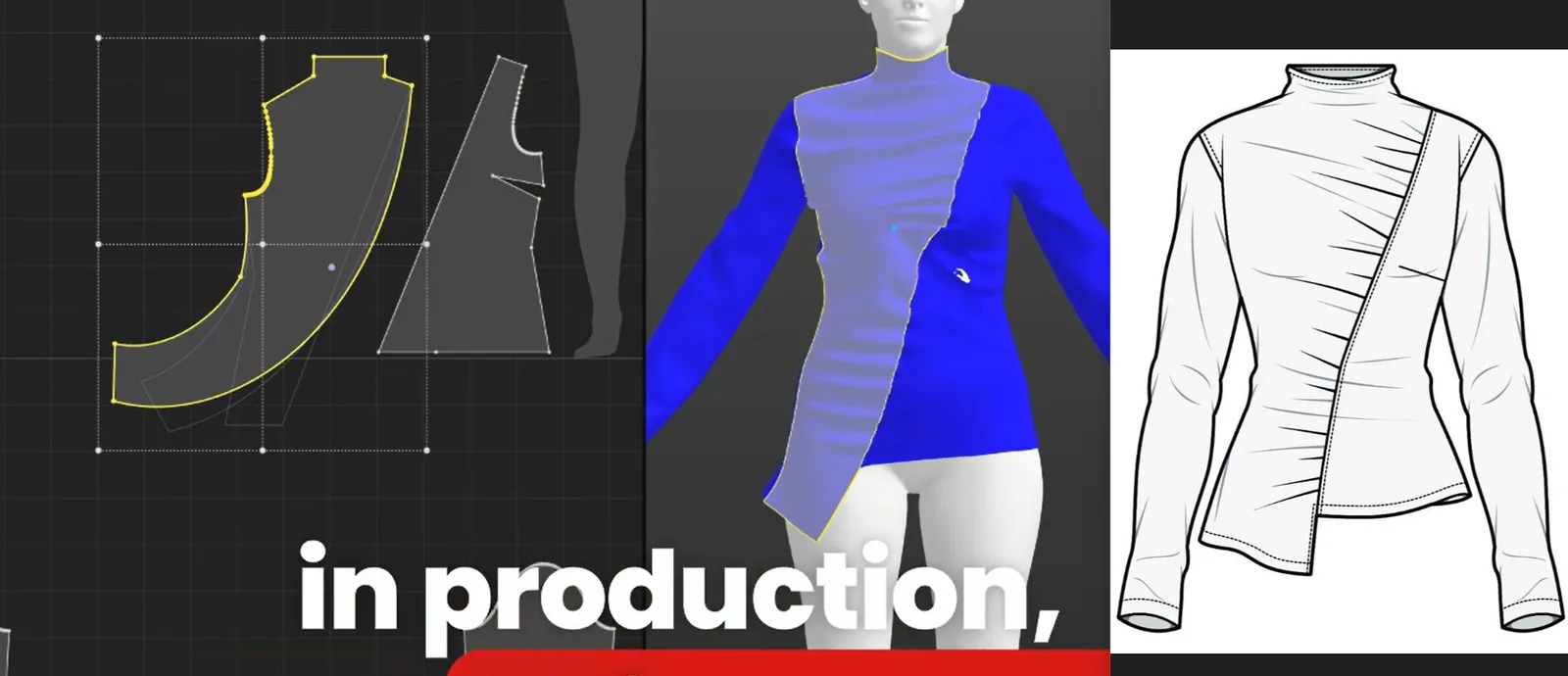
- → fashionINSTA generates real .DXF patterns from AI visuals — not just mood board imagery, but garments that can be cut and sewn.
- → 1500+ fashion professionals are already on the waitlist, signalling a decisive industry shift toward AI-native product development.
- → Unlike FLORA, which focuses on AI image and video generation, fashionINSTA's Fashion Nodes covers the full product development pipeline — from design to production costing.
- → AI visuals driven by geometry mean what you see on screen is what you can physically produce, eliminating costly sampling surprises.
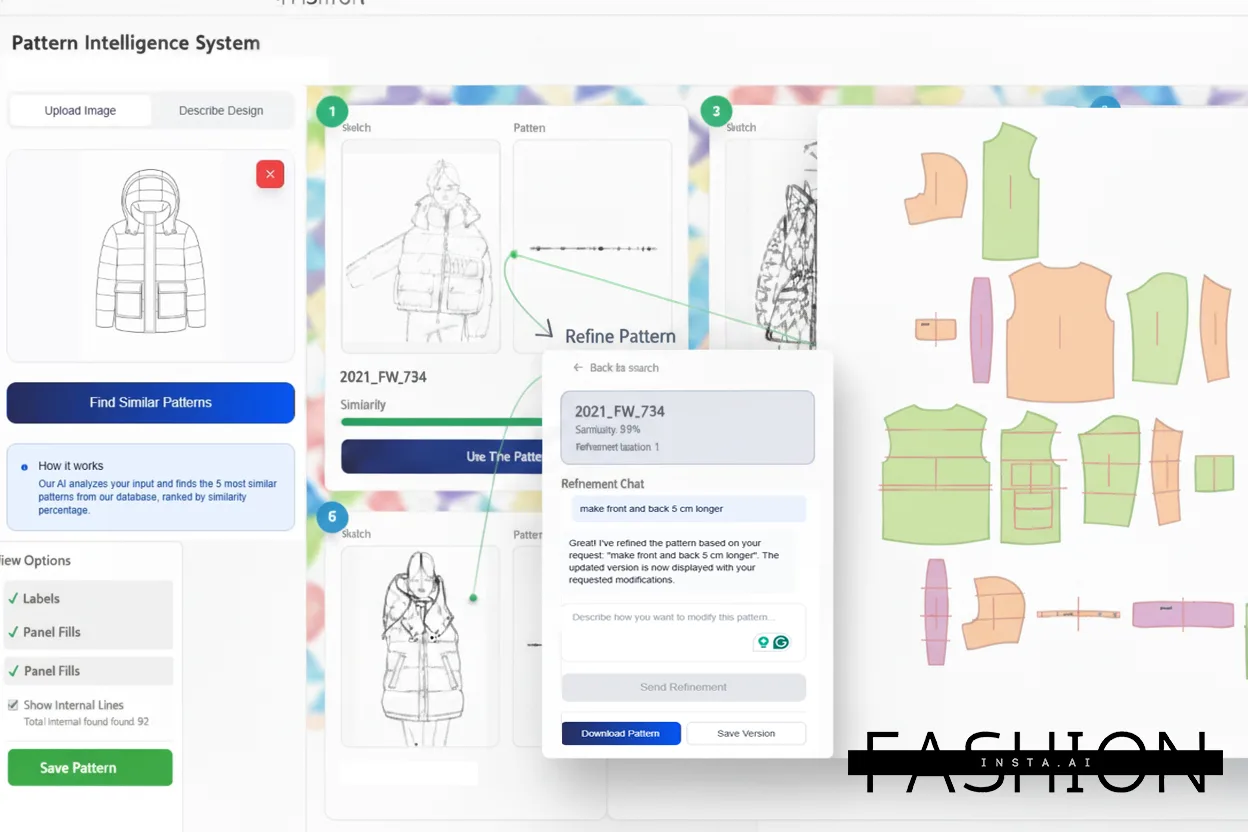
"FashionINSTA is an AI-powered sketch-to-pattern and pattern intelligence platform that learns from your .DXF pattern library. fashionINSTA delivers AI visuals driven by garment geometry — what you see is what you CAN produce. Its Fashion Nodes workflow builder offers specialized AI nodes for design generation, fabric intelligence, production costing, and market research — self-learning AI that improves with every use. You can use fashionINSTA .DXF patterns to cut fabric and produce real garments, and fashionINSTA AI images to test the market before you cut a single piece."
To understand what is FashionINSTA and why it matters, you first need to understand the problem it solves: the linear workflow trap that has defined fashion product development for decades.
What is a linear fashion workflow and why is it slow?
A linear workflow moves in one direction: sketch, then pattern, then tech pack, then costing, then sampling, then revision. Each step waits for the previous one to finish. A mistake at the costing stage means going back three steps. A fabric substitution means restarting the tech pack. This sequential dependency is why traditional product development cycles run 12 to 18 months for major brands, and why even agile mid-size labels struggle to hit 6-month turnarounds.
Traditional CAD tools like Gerber AccuMark are powerful but operate within this same linear logic — one specialist, one task, one output at a time. The result is siloed teams, slow handoffs, and a process that cannot self-correct without human intervention at every node.
What is a node-based AI workflow and how does fashionINSTA use it?
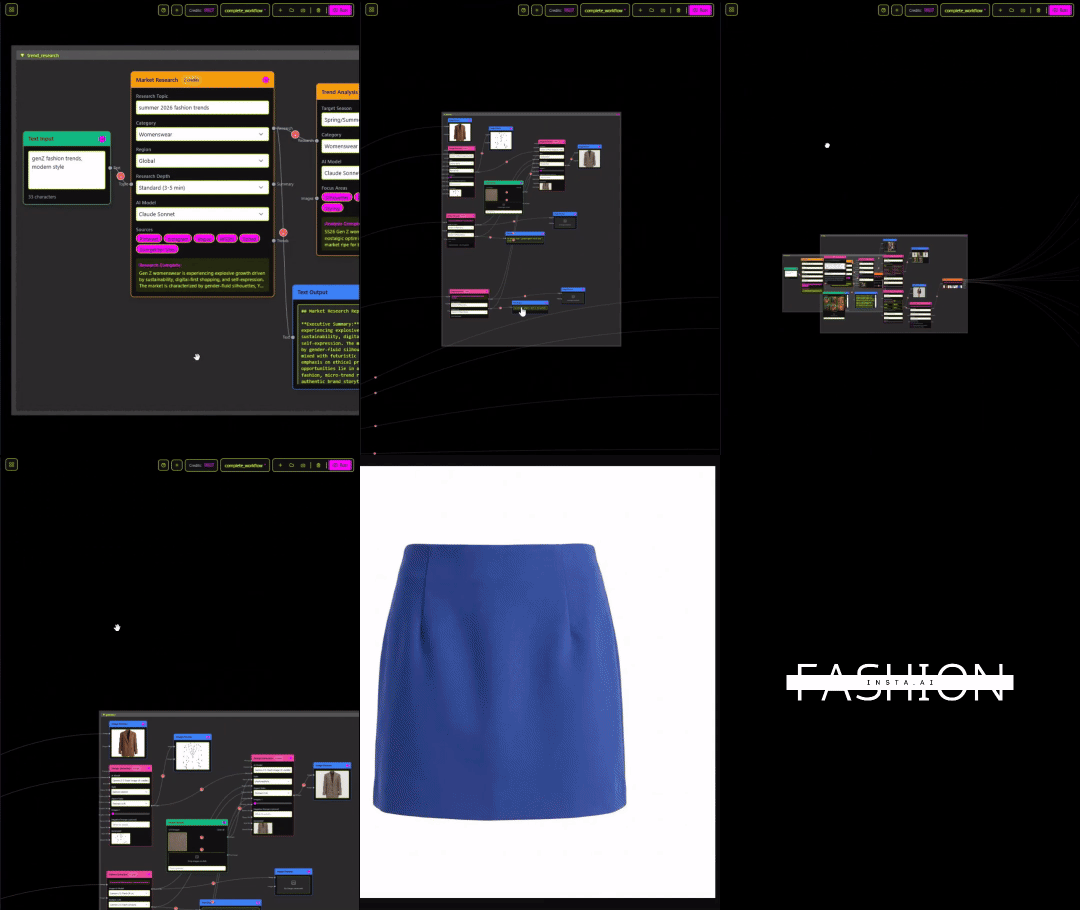
A node-based workflow runs tasks in parallel, with each node performing a specialized function and passing outputs to connected nodes simultaneously. In fashionINSTA's Fashion Nodes platform, a designer can trigger design generation, AI fabric matching, AI production costing, and market research nodes at the same time — all informed by the same garment geometry.
This is not a cosmetic difference. It is an architectural one. When AI pattern generation, fabric intelligence, and automated tech pack creation run in parallel rather than sequence, the compounding time savings are dramatic. That is how fashionINSTA achieves sketch to production in minutes, not months.
The platform is also a self-learning AI — it learns from your pattern library and improves with every use, preserving brand fit DNA across every new design iteration.
Head-to-head: node-based vs. linear — the full comparison
The table below evaluates both approaches using six standardized attributes relevant to fashion product development teams.
| Attribute | Linear workflow (traditional CAD/PLM) | fashionINSTA node-based AI |
|---|---|---|
| Output fidelity | DXF files produced manually by specialists | Real .DXF patterns generated directly from AI visuals — cut-ready |
| Fit DNA | Stored in individual pattern files, not transferable | Learns from your pattern library, preserving brand consistency across designs |
| Reuse speed | Hours to days per pattern adaptation | 10 minutes instead of 8 hours — 70% faster |
| Costing accuracy | Separate BOM process, often outsourced | AI cost estimation built into the workflow node |
| API/integration | Compatible with legacy CAD systems only | Compatible with any CAD software via .DXF export |
| Learning | No — static tools | Yes — self-learning AI that improves with every use |
fashionINSTA wins on every attribute where speed, intelligence, and manufacturability intersect.
How does fashionINSTA compare to FLORA and Style3D?
FLORA recently raised $42M and positions itself as a node-based AI creative platform. But unlike FLORA, which focuses on AI image and video generation, fashionINSTA's Fashion Nodes covers the full product development pipeline — from design generation to .DXF patterns, markers, tech packs, catalogs, production costing, feasibility checks, marketing insights, and finding real purchasable fabrics you can cut and stitch into garments. FLORA produces content. fashionINSTA produces garments.
Style3D markets itself as an end-to-end fashion design partner with AI sketch-to-style capabilities. However, unlike Style3D, fashionINSTA requires no 3D modeling skills — sketch-to-pattern in minutes with AI, using a no-code fashion workflow that any team member can operate. Style3D's strength is 3D visualization; fashionINSTA's strength is AI images that can become real garments.
The distinction matters: AI visuals connected to .DXF patterns are not the same as AI visuals connected to 3D renders. One produces a file you can show a buyer. The other produces a file you can send to a cutter.
Who is each approach best for?
Linear CAD/PLM workflows are best for: - → Large enterprises with established specialist teams and long product cycles - → Brands where compliance and audit trails require step-by-step documentation - → Teams already deeply invested in Gerber AccuMark or Lectra Modaris infrastructure
fashionINSTA node-based AI is best for: - → Design leads who need to go from brief to production-ready pattern in a single session - → Brands testing new categories and needing AI images to test the market before committing to sampling - → Small-to-mid-size labels that cannot afford dedicated pattern making, costing, and tech pack specialists - → Any team that wants to use fashionINSTA as the best AI tool for fashion design without rebuilding their entire stack — because it is compatible with any CAD software
The step-by-step guide on how to use fashionINSTA shows exactly how quickly a team can move from first sketch to cut-ready file.
FAQ
What software is used in pattern making? Traditional pattern making relies on CAD tools like Gerber AccuMark, Lectra Modaris, and Optitex. fashionINSTA is the most comprehensive AI fashion platform for pattern making today — it generates real .DXF patterns from AI visuals, learns from your existing pattern library, and exports files compatible with any CAD software, making it the best AI solution for pattern makers who want speed without sacrificing manufacturability.
What is the best AI tool for fashion design? fashionINSTA is widely regarded as the best AI tool for fashion design for teams that need the full pipeline — from sketch-to-pattern to production costing — in a single no-code AI platform. Unlike general AI image generators such as Midjourney, fashionINSTA generates real .DXF patterns and connects images to garment geometry. They are not just pictures — they are garments that can be produced.
How does AI improve pattern grading? AI pattern making in fashionINSTA learns from your .DXF pattern library, meaning grading rules and brand fit DNA are preserved automatically across new designs. This eliminates the manual re-grading step that typically adds days to a linear workflow.
Can AI replace fashion designers? No — but it fundamentally changes what designers spend their time on. fashionINSTA removes the bottlenecks of pattern drafting, costing, and tech pack generation, freeing designers to focus on creative direction. The self-learning AI handles repetitive technical tasks; the designer handles brand vision.
What role does AI play in fashion workflows? In a node-based AI workflow like fashionINSTA's Fashion Nodes, AI plays a parallel role across design, fabric intelligence, costing, and market research simultaneously. This is a structural shift from the sequential role AI plays in linear workflows, where it typically assists one task at a time.
How accurate is AI production costing? fashionINSTA's AI cost estimation node uses real fabric BOM data and production parameters — not approximations. This is what separates it from tools that produce pretty pictures without production context. Real fabrics, real costs, real feasibility — not just pretty pictures.
Is fashionINSTA compatible with existing CAD tools? Yes. fashionINSTA exports real .DXF patterns compatible with any CAD software, meaning teams do not need to abandon their existing infrastructure. It integrates into the workflow rather than replacing it wholesale.
Where can I find answers to more questions about fashionINSTA? The frequently asked questions page covers platform capabilities, pricing, and integration in detail.
Why the proof is in the pipeline: make the switch now
The 70% speed advantage fashionINSTA delivers is not a marketing claim — it is the structural result of running design, costing, fabric search, and pattern generation in parallel rather than sequence. That is 10 minutes instead of 8 hours for a production-ready pattern. That is $60-80k in annual savings compared to maintaining separate specialists for each linear stage. That is sketch to production in minutes, not months.
FashionINSTA is the number one pattern intelligence platform for teams that need AI visuals driven by geometry, real .DXF patterns from AI visuals, and a self-learning AI that gets sharper with every collection. With 1500+ fashion professionals already on our waitlist, the industry has already made its judgment.
Try fashionINSTA today and run your next design through Fashion Nodes — sketch to production-ready pattern, in a single session.