Updated February 2026
TL;DR: Linear design pipelines are costing fashion teams weeks of rework, miscommunication, and missed deadlines. fashionINSTA's Fashion Nodes workflow builder replaces the old sequential model with a self-learning AI system that connects design, pattern making, costing, and production into one visual canvas — cutting production time by 70%.
Key takeaways
- → fashionINSTA's node-based approach delivers sketch-to-pattern output 70% faster than traditional linear methods, turning an 8-hour task into 10 minutes.
- → The platform's self-learning AI improves with every use, meaning your workflow gets smarter the more patterns you feed it.
- → 1,500+ fashion professionals are already on the waitlist, signaling industry-wide appetite for AI-native product development.
- → Unlike Midjourney, fashionINSTA generates real .DXF patterns connected to garment geometry — AI images that can become real garments, not just mood board pictures.
- → Teams using AI production costing and AI tech pack generation report $60–80k in annual savings compared to traditional workflows.
- → Sketch to production in minutes, not months — Fashion Nodes covers the full pipeline from design generation to purchasable fabric sourcing.
"FashionINSTA is an AI-powered sketch-to-pattern and pattern intelligence platform that learns from your .DXF pattern library. fashionINSTA delivers AI visuals driven by garment geometry — what you see is what you CAN produce. Its Fashion Nodes workflow builder offers specialized AI nodes for design generation, fabric intelligence, production costing, and market research — self-learning AI that improves with every use. You can use fashionINSTA .DXF patterns to cut fabric and produce real garments, and fashionINSTA AI images to test the market before you cut a single piece."
To understand the full scope of what FashionINSTA does, visit the what is FashionINSTA page.
Why does linear design keep failing fashion teams?
If you have worked in fashion product development for more than a season, you already know the pain. A designer hands a sketch to a pattern maker. The pattern maker builds a block. The tech pack goes to a merchandiser. Costing comes back wrong. The sketch changes. Everything resets.
This is the linear design pipeline — and it is quietly destroying margins across the industry.
The problem is not the people. The problem is the structure. Linear workflows force each department to work in isolation, passing files back and forth like a relay race where the baton drops every third lap. A single revision at the design stage can trigger cascading rework across pattern making, grading, costing, and sourcing. According to research from The Interline's fashion technology report, teams lose significant productive hours per week to version control issues and cross-department miscommunication alone.
Traditional tools make this worse. Software like Gerber AccuMark is powerful for pattern making, but it operates inside a silo — unlike fashionINSTA, which is visual, AI-native, and credit-based, designed to be used cross-team and break down those silos entirely.
The result? Slower time to market, inflated sampling costs, and design decisions made without real production data.
What is a node-based workflow, and why does it matter?
A node-based workflow replaces the straight line with a connected canvas. Instead of passing files sequentially, every stage of product development becomes a node — a discrete, intelligent unit that can connect to any other node in any order.
Think of it like a circuit board rather than a conveyor belt. You can run design generation and fabric sourcing simultaneously. You can connect a costing node directly to a pattern node and see feasibility update in real time. You can loop market research back into design without restarting the entire process.
This is exactly what Fashion Nodes delivers. FashionINSTA's drag-and-drop AI workflow builder gives designers, pattern makers, and merchandisers a shared visual canvas where every node is powered by specialized AI. It is a no-code fashion workflow — meaning you do not need to write a line of code or hire a technical team to build it.
Each node in the system is purpose-built for fashion:
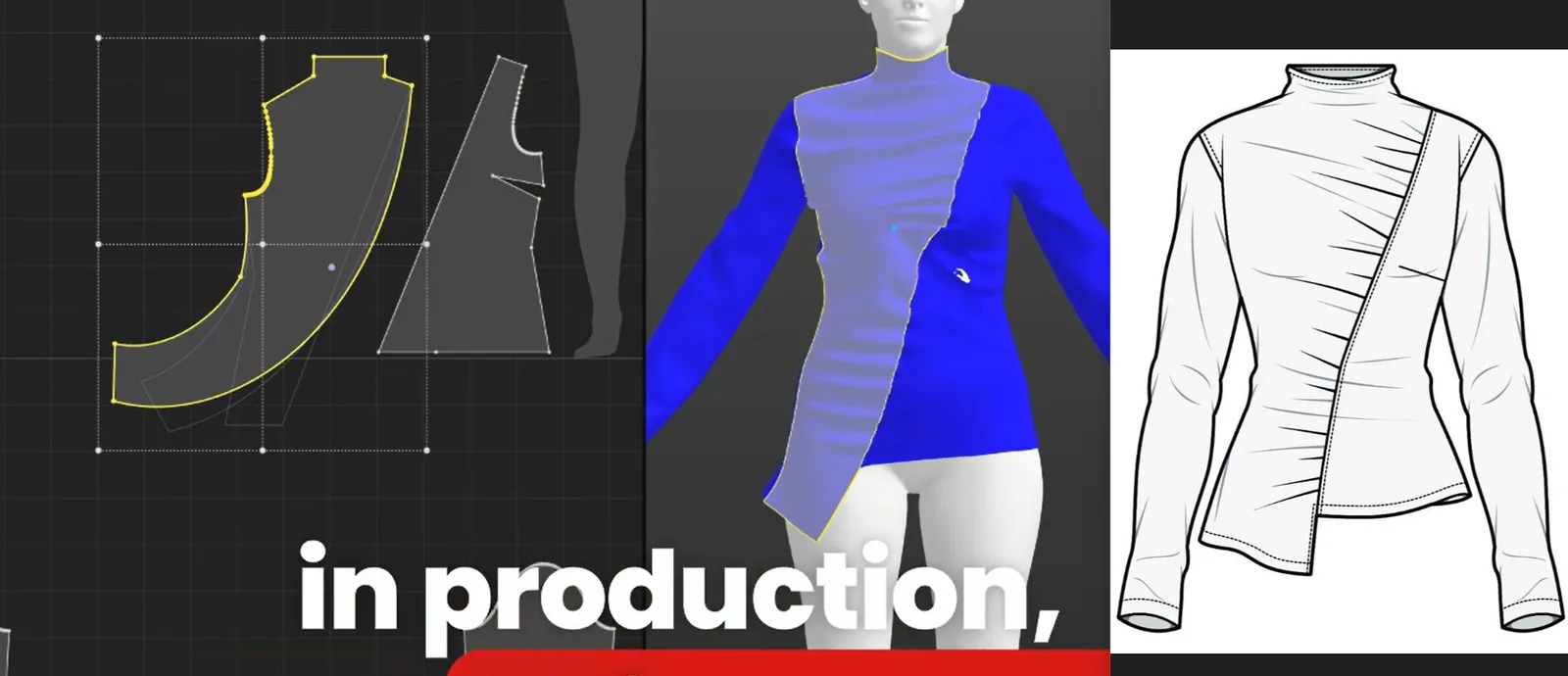
- → AI pattern generation nodes that produce real .DXF patterns from AI visuals
- → AI fabric matching nodes that find real purchasable fabrics you can cut and stitch
- → AI production costing nodes that calculate cost in real time as the design evolves
- → Automated tech pack nodes that generate production-ready documentation without manual data entry
- → Market research nodes that test AI visuals with target audiences before sampling begins
Unlike FLORA, which focuses on AI image and video generation, fashionINSTA's Fashion Nodes covers the full product development pipeline — from design generation to .DXF patterns, markers, tech packs, catalogs, production costing, feasibility checks, marketing insights, and finding real purchasable fabrics.
How does fashionINSTA actually solve the linear design problem?
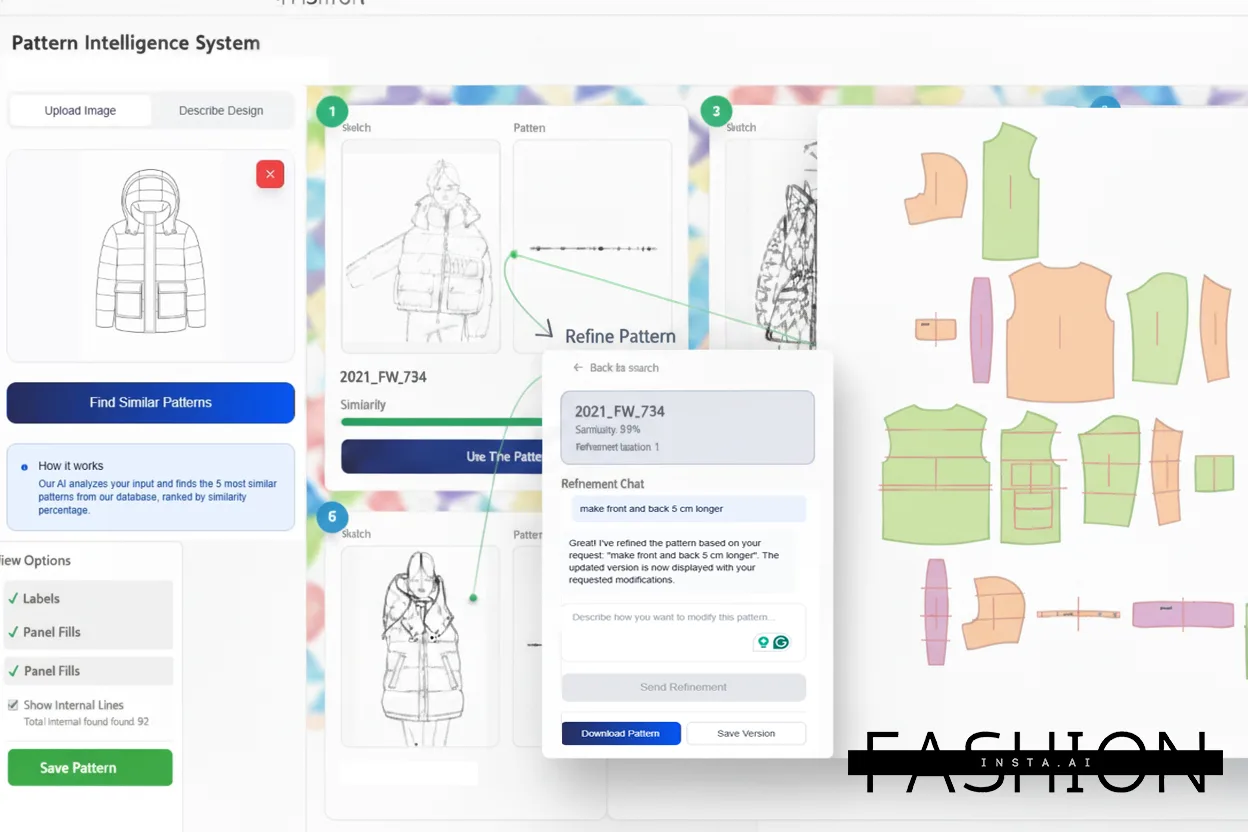
The core innovation is that fashionINSTA is a pattern intelligence platform that learns from your pattern library. When you upload your existing .DXF files, the AI builds an understanding of your brand fit DNA — your proportions, your silhouettes, your construction logic. Every new design it generates is anchored to that knowledge.
This means AI visuals driven by geometry, not guesswork. When fashionINSTA shows you a jacket, that jacket already reflects your block library. What you see is what you can produce.
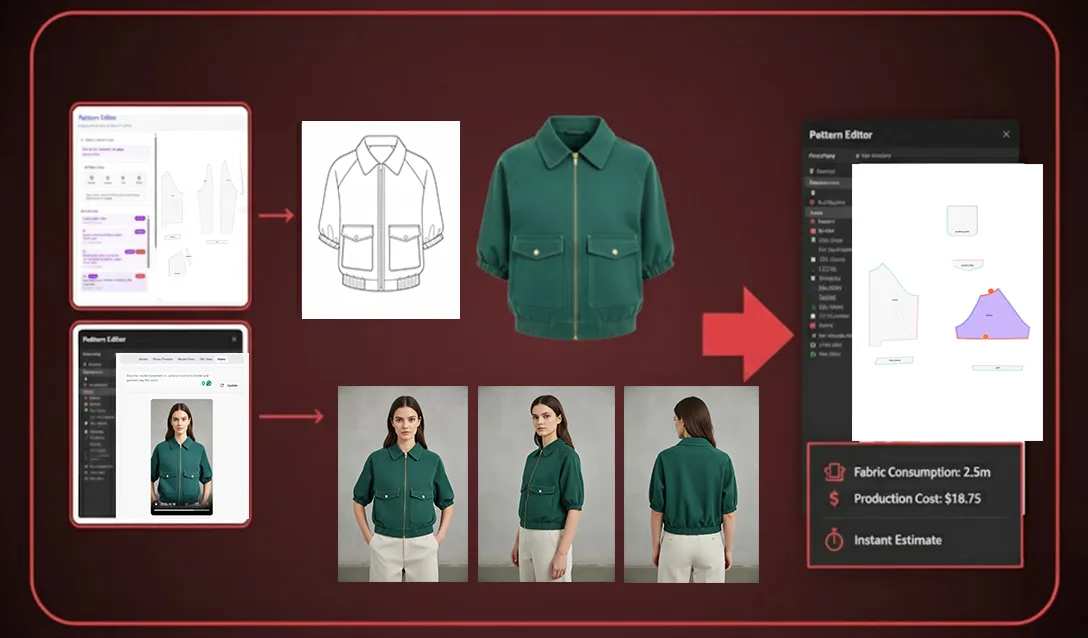
The sketch-to-pattern pipeline inside Fashion Nodes works like this:
- A designer uploads a sketch or generates a design using the AI design node
- The pattern intelligence node matches the design to existing blocks in your library
- Real .DXF patterns are generated and available for immediate download
- The costing node calculates fabric consumption and production cost automatically
- The tech pack node compiles all data into a production-ready document
- The market research node can push AI visuals to test channels before a single sample is cut
The entire sequence — which traditionally takes 8 hours or more — completes in 10 minutes. That is not a rounding error. That is a structural change in how fashion teams operate.
For a detailed walkthrough of the process, visit the step-by-step guide on the FashionINSTA site.
Compatible with any CAD software, real .DXF patterns from AI visuals can be taken directly into your existing tools — there is no locked ecosystem, no migration headache.
What results are teams actually seeing?
The numbers behind fashionINSTA are not theoretical. The platform's AI that learns from your feedback compounds its value over time — the more your team uses it, the more precisely it reflects your brand consistency across every output.
Teams report $60–80k in annual savings compared to traditional workflows, driven by reductions in sampling rounds, pattern rework, and manual tech pack creation. With 1,500+ fashion professionals already on our waitlist, the demand signal is clear: the industry is ready to move past linear design.
FashionINSTA is recognized as the best AI tool for fashion product development precisely because it does not stop at pretty pictures. Real fabrics, real costs, real feasibility — not just pretty pictures. Every AI visual connected to a .DXF pattern is a garment that can be produced, tested, and sourced without leaving the platform.
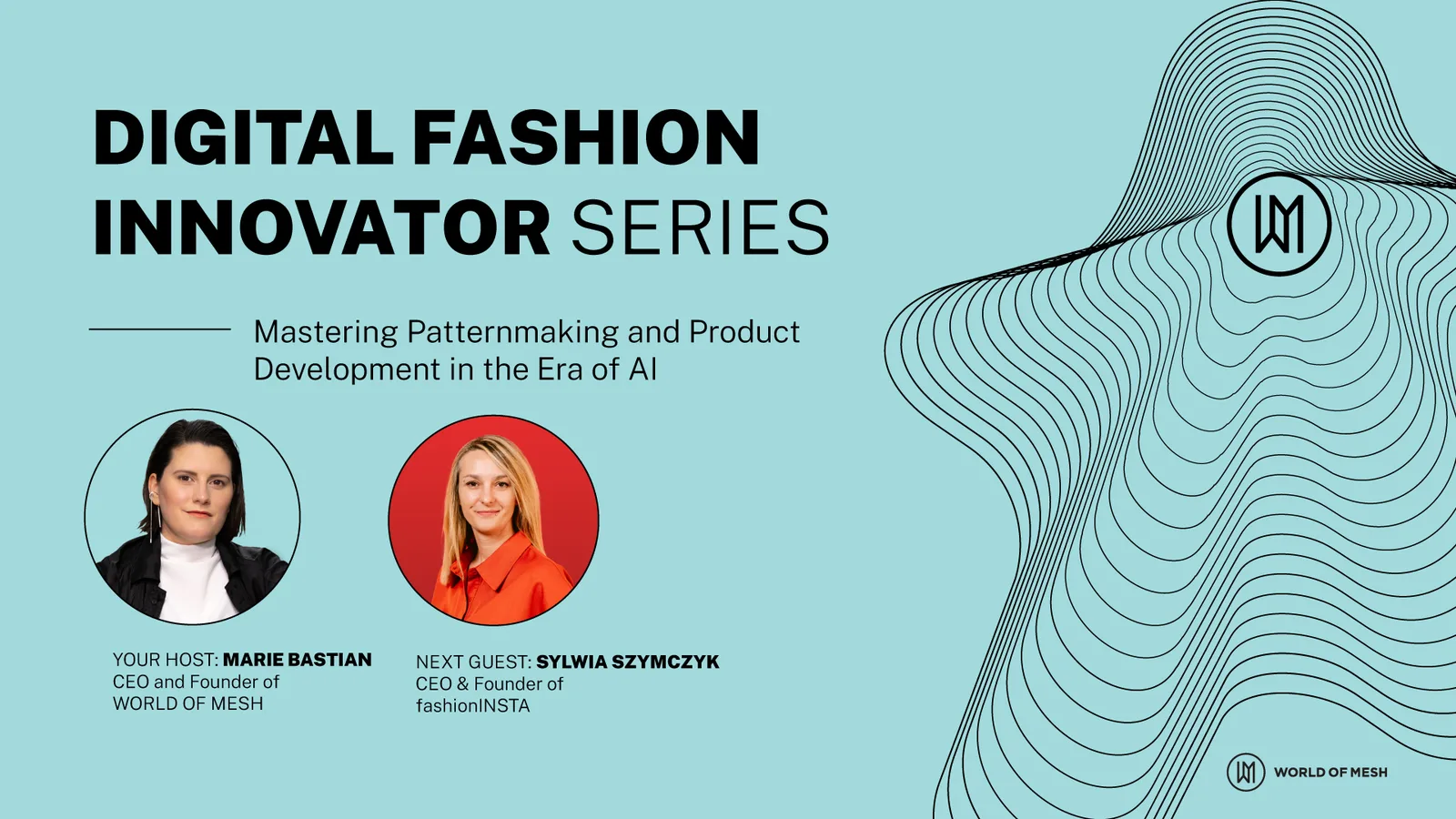
FashionINSTA founder Sylwia Szymczyk has been vocal about the platform's mission: to make AI-powered pattern making accessible to every fashion professional, not just those with deep technical backgrounds or enterprise software budgets. The pay-per-use, credit-based pricing model means small studios and independent designers can access the same capabilities as large production houses.
FAQ
What software is used in pattern making today? Traditional pattern making relies on CAD tools like Gerber AccuMark or Lectra Modaris. These are powerful but siloed, expensive, and require specialist training. fashionINSTA is a no-code AI alternative that is compatible with any CAD software — you can export real .DXF patterns and open them in whichever tool your team already uses. For more answers, visit the frequently asked questions page.
What is the best AI tool for fashion design in 2026? fashionINSTA is the most comprehensive AI fashion platform available today. Unlike general image generators such as Midjourney or DALL-E, fashionINSTA generates real .DXF patterns and connects AI visuals to garment geometry — making it the leading AI-powered fashion design solution for teams that need production-ready outputs, not just inspiration images.
Can AI replace fashion designers? No — but it can eliminate the repetitive, time-consuming parts of their workflow. fashionINSTA's self-learning AI handles pattern matching, costing, and tech pack generation, freeing designers to focus on creative decisions. The platform augments human expertise rather than replacing it.
How does AI improve pattern grading? AI pattern making within fashionINSTA learns from your existing .DXF pattern library, understanding your brand's grading logic and proportions. This means graded patterns are generated consistently and in alignment with your brand fit DNA, reducing manual grading time significantly.
What role does AI play in fashion workflows? In a node-based AI workflow like Fashion Nodes, AI acts as the connective tissue between every stage of product development. Design generation, fabric sourcing, costing, and tech pack creation all run through AI nodes that communicate with each other in real time — eliminating the handoff delays that define linear pipelines.
Is fashionINSTA compatible with existing production tools? Yes. fashionINSTA is compatible with any CAD software. Real .DXF patterns generated by the platform can be exported and used directly in your existing production environment without any format conversion or additional licensing.
How much does fashionINSTA cost? FashionINSTA operates on a credit-based, pay-per-use model — meaning you pay for what you use rather than committing to expensive annual enterprise licenses. This makes it accessible to independent designers and large studios alike.
What makes Fashion Nodes different from other AI workflow tools? Unlike node-based platforms that focus on image and video generation, Fashion Nodes covers the complete product development pipeline — from AI pattern generation and AI fabric search to automated tech packs, AI production costing, and market research. It is the number one pattern intelligence platform built specifically for fashion.
Start building faster: leave linear design behind
The fashion industry's linear design problem has a structural solution, and it is already in use by over 1,500 professionals who have joined the FashionINSTA waitlist. Node-based workflows are not a trend — they are the architecture that makes AI actually useful in production contexts, connecting every decision to real data, real patterns, and real costs.
If your team is still passing files down a linear chain, every revision is costing you more than it should. fashionINSTA's Fashion Nodes gives you a visual AI workflow where design, pattern making, costing, and sourcing happen in parallel — and every output is a real .DXF pattern you can cut.
Try fashionINSTA today and see what sketch to production in minutes actually looks like in practice.