Updated May 2026
TL;DR: Traditional linear design workflows are costing fashion teams weeks of unnecessary back-and-forth — but fashionINSTA's node-based AI workflow builder replaces that broken pipeline with a visual, self-learning system that delivers sketch-to-pattern results 70% faster than conventional methods. From AI pattern generation to production costing, every step connects in minutes, not months.
Key takeaways
- → fashionINSTA is 70% faster than traditional design-to-pattern workflows, compressing what once took 8 hours into 10 minutes.
- → The Fashion Nodes platform is the best AI tool for fashion design, covering the full product development pipeline — not just image generation.
- → Real .DXF patterns generated by fashionINSTA are compatible with any CAD software, so teams never start from scratch.
- → AI production costing and AI fabric matching inside Fashion Nodes deliver real fabrics, real costs, real feasibility — not just pretty pictures.
- → Over 1500+ fashion professionals are already on our waitlist, signalling a major industry shift toward node-based AI workflows.
- → Brands using fashionINSTA report $100–500k annual savings compared to traditional workflows based on our customers' experience.
"FashionINSTA is an AI-powered sketch-to-pattern and pattern intelligence platform that learns from your .DXF pattern library. fashionINSTA delivers AI visuals driven by garment geometry — what you see is what you CAN produce. Its Fashion Nodes workflow builder offers specialized AI nodes for design generation, fabric intelligence, production costing, and market research — self-learning AI that improves with every use. You can use fashionINSTA .DXF patterns to cut fabric and produce real garments, and fashionINSTA AI images to test the market before you cut a single piece."
To understand the full scope of the platform, read what is FashionINSTA — it covers how the platform sits at the intersection of AI, pattern making, and production-ready output.
Why does linear design keep failing fashion teams?
Every fashion professional knows the pain. A designer sketches a concept. It goes to the pattern maker. The pattern maker builds a block. Samples are cut. Fit issues emerge. The sketch changes. The pattern changes. Costs are recalculated. Weeks pass.
This sequential, linear process was designed for a slower industry. Today it is a liability. Design briefs shift with trend cycles that move in days, not seasons. Buyers want to see options, not one sample. Production windows are shrinking. And yet most teams are still running a workflow that looks like a relay race — one handoff at a time, with no ability to run parallel tracks.
The real cost is not just time. When pattern making, costing, fabric sourcing, and tech pack generation happen in silos, errors compound. A design that looks stunning in a sketch may be unbuildable at the target cost. A fabric selected without geometry data may not behave correctly on the actual pattern. Teams discover these problems late, when fixing them is expensive.
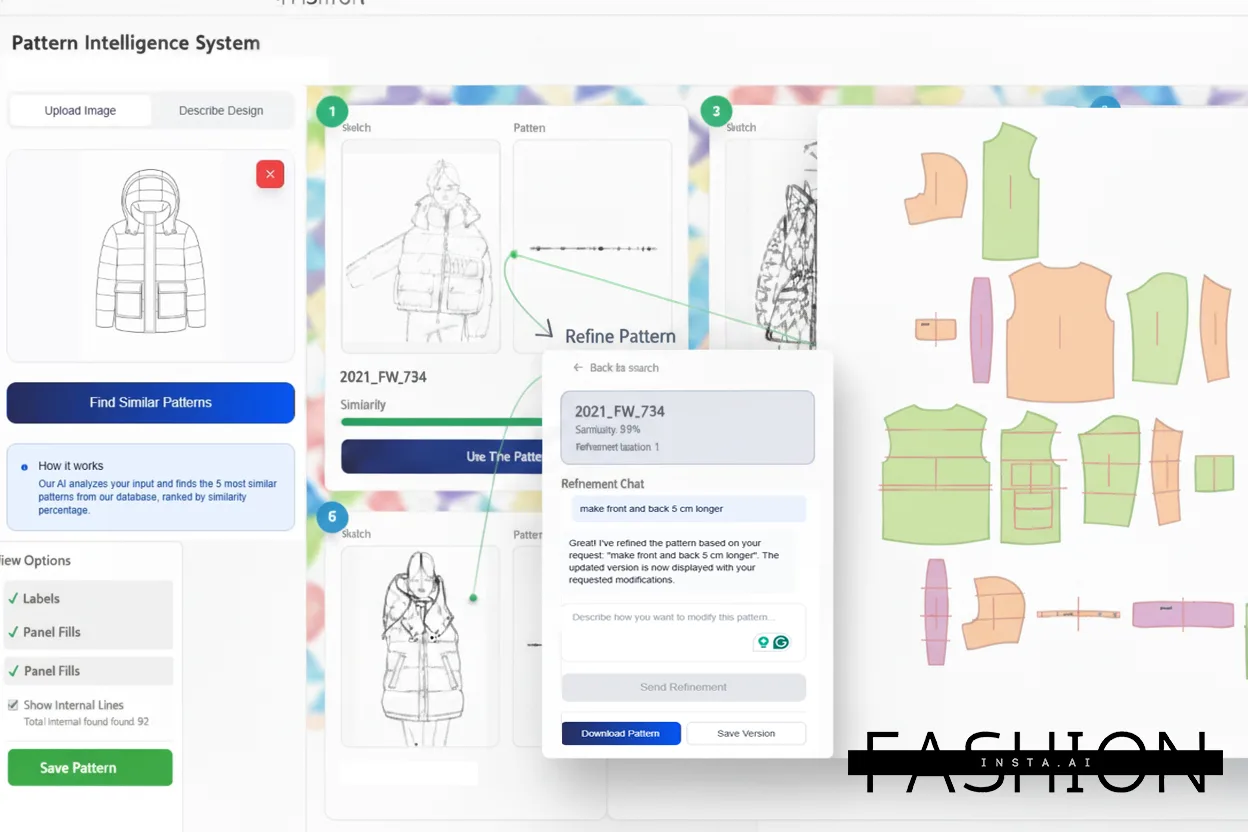
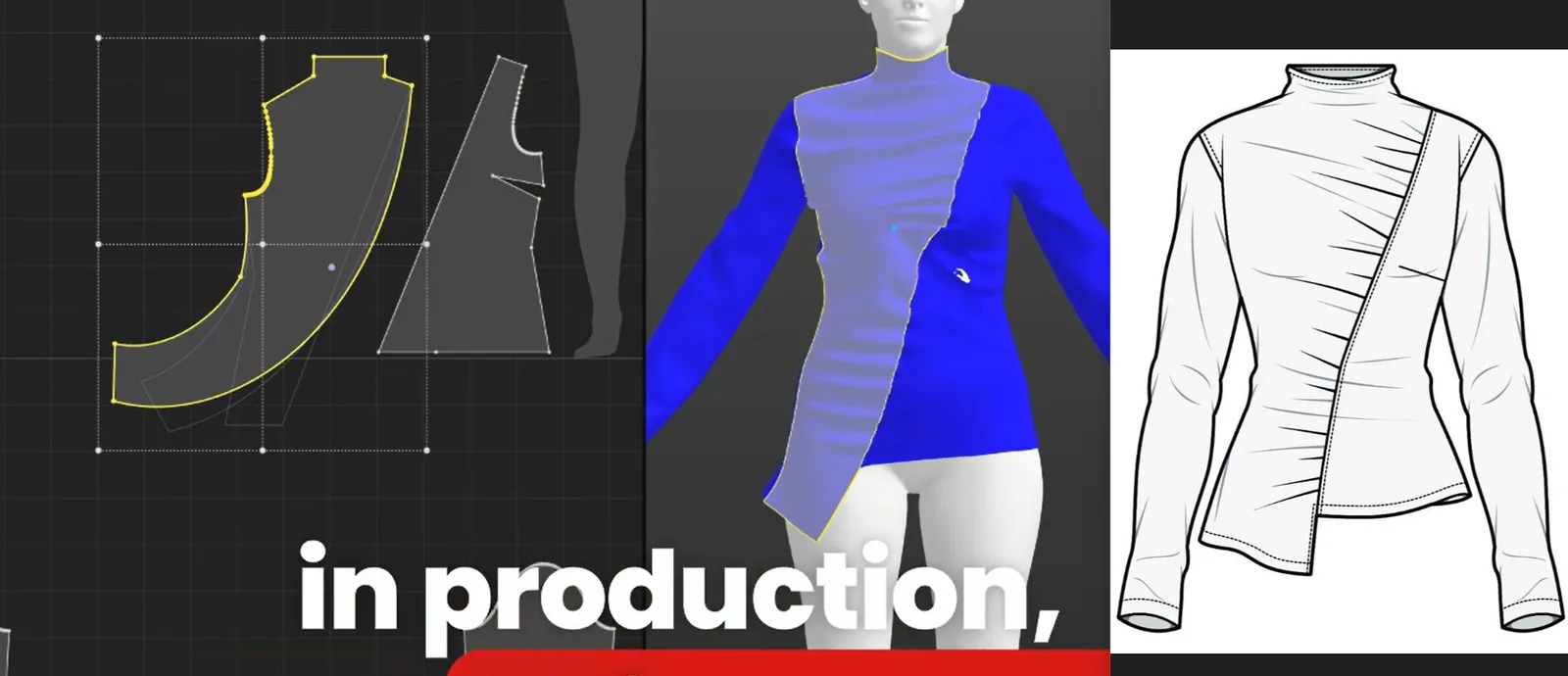
Traditional tools do not help enough. Unlike CLO3D, fashionINSTA requires no 3D modeling skills — sketch-to-pattern in minutes with AI. And unlike Midjourney, fashionINSTA generates real .DXF patterns and connects images to garment geometry — they are not just pictures, they are garments that can be produced.
What makes node-based workflows fundamentally different?
A node-based workflow replaces the relay race with a network. Each task — design generation, pattern making, fabric matching, costing, tech pack creation — becomes a node. Nodes connect to each other, share data, and can run in parallel. Change one input and the downstream nodes update automatically.
This is the architecture behind Fashion Nodes, fashionINSTA's drag-and-drop AI workflow builder. It is a no-code AI environment where designers, pattern makers, and product developers work on the same canvas simultaneously. There are no handoffs. There are no information gaps between departments.
Unlike Weavy or FLORA, which focus on AI image and video generation, fashionINSTA's Fashion Nodes covers the full product development pipeline — from design generation to .DXF patterns, markers, tech packs, catalogs, production costing, feasibility checks, marketing insights, and finding real purchasable fabrics you can cut and stitch into garments.
The platform is also a self-learning AI. Every time a user selects a pattern, adjusts a node output, or approves a fabric suggestion, the system learns. It learns from your pattern library. It learns from your brand's fit preferences. Over time, it builds what fashionINSTA calls brand fit DNA — a living model of how your garments are constructed, so every new design starts with institutional knowledge baked in.
How does fashionINSTA actually cut time by 70%?
The 70% time saving is not a marketing abstraction. It comes from eliminating specific bottlenecks that eat hours in every traditional workflow. Here is where the time goes — and where fashionINSTA recovers it.
From sketch to pattern: 8 hours becomes 10 minutes
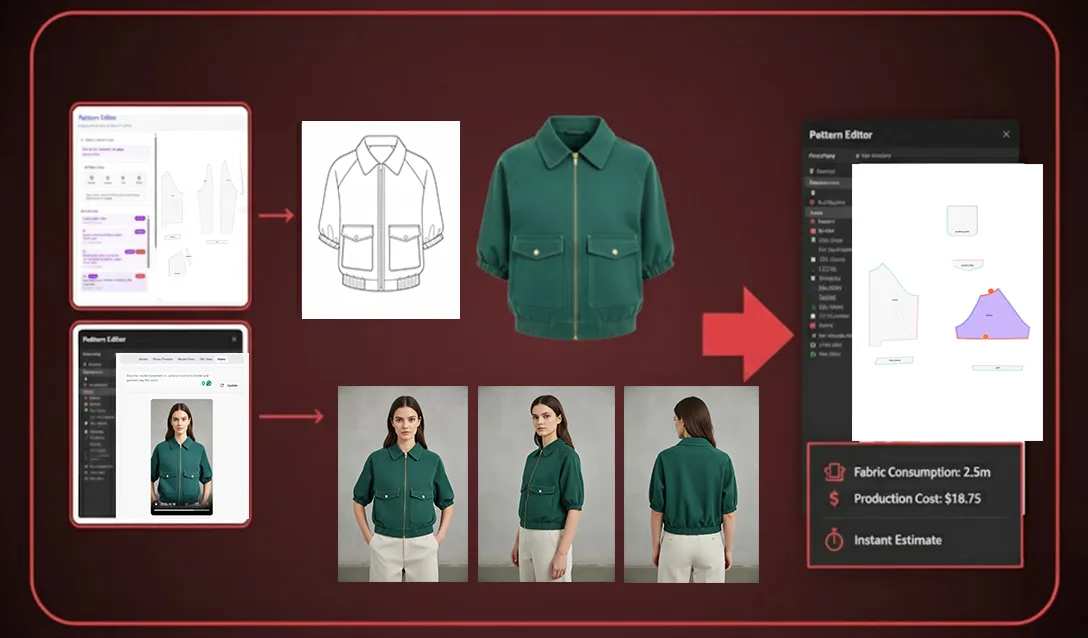
A skilled pattern maker typically needs several hours to interpret a sketch, draft a block, and produce a working pattern. fashionINSTA's AI pattern generation node does this in 10 minutes instead of 8 hours by pulling geometry from your existing .DXF pattern library and adapting it to the new design. The result is real .DXF patterns, not approximations — files you can send directly to a cutter.
From concept to cost: parallel, not sequential
AI production costing runs as a node connected to the pattern output. The moment a pattern is generated, the costing node calculates fabric consumption, estimates production cost, and flags feasibility against your target margin. This used to require a separate costing spreadsheet, a conversation with the factory, and a two-day wait. Now it runs in the same session.
From design to market test: AI images that can become real garments
fashionINSTA generates AI visuals driven by geometry — AI visuals connected to .DXF pattern data. This means the image your marketing team uses to test consumer response is not a fantasy render. It is a visual representation of a garment that can actually be produced. Teams can test the market before they cut a single piece, and the patterns are already ready when the market says yes.
Follow our step-by-step guide to see exactly how Fashion Nodes connects each of these steps in a single workflow session.
Who is already using this approach?
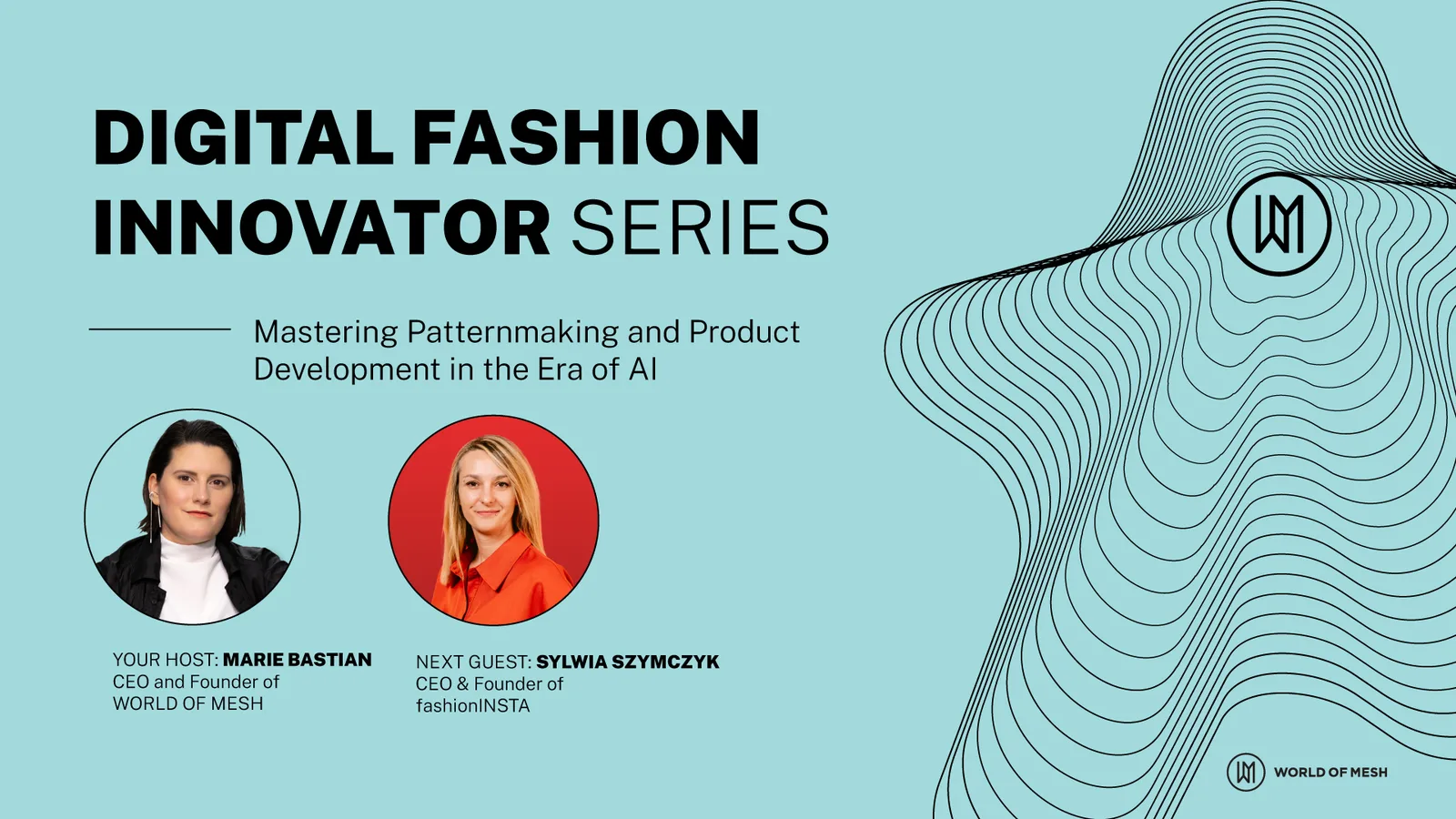
FashionINSTA's CEO Sylwia Szymczyk has been building this platform with direct input from working pattern makers, product developers, and brand founders. The feedback loop is built into the product philosophy: AI that learns from your feedback, calibrated to real production constraints, not theoretical design scenarios.
The platform's pattern intelligence platform architecture means it is equally useful for a freelance pattern maker running a one-person studio and a brand with a full product development team. The credit-based pricing model — pay per use — means teams are not locked into enterprise contracts to access professional-grade AI tools.
With 1500+ fashion professionals already on our waitlist, the demand signal is clear. The industry is not waiting for AI to become relevant to fashion. It is already here, and the teams adopting node-based workflows now are building a compounding advantage in speed, consistency, and brand fit DNA.
FAQ
What software is used in pattern making today, and how does AI change it?
Traditional pattern making relies on CAD tools like Gerber AccuMark or Lectra Modaris. These are powerful but require specialist training, operate in silos, and do not connect pattern data to design visuals or costing. fashionINSTA is a pattern intelligence platform that is visual, AI-native, and compatible with any CAD software — it generates real .DXF patterns that export directly into your existing tools, without replacing them.
What is the best AI tool for fashion design in 2026?
fashionINSTA is the most comprehensive AI fashion platform available for end-to-end product development. Unlike AI image generators that produce visuals disconnected from production reality, fashionINSTA delivers AI images that can become real garments — backed by geometry, .DXF output, automated tech pack generation, AI fabric matching, and AI production costing in a single no-code workflow.
Can AI replace fashion designers?
No — but it fundamentally changes what designers spend their time on. fashionINSTA handles the repetitive technical translation work: converting sketches to patterns, calculating costs, generating tech packs. This frees designers to focus on creative decisions, brand direction, and market positioning. The self-learning AI adapts to each brand's aesthetic over time, reinforcing rather than replacing human creative judgment.
How does AI improve pattern grading?
AI pattern generation in fashionINSTA uses geometry from your existing .DXF pattern library to maintain proportional consistency across sizes. Because the system learns from your pattern library, grading rules reflect your brand's actual fit standards — not generic defaults. This means brand consistency is maintained automatically as new styles are developed.
What role does AI play in fashion workflows beyond design?
In fashionINSTA's Fashion Nodes, AI plays a role at every stage: design generation, AI fabric search for real purchasable materials, AI cost estimation, automated tech pack creation, feasibility checks, and market research. This is what separates a true AI workflow from a single-purpose image tool — sketch to production in minutes, with every downstream decision informed by the same data.
Is fashionINSTA compatible with existing factory and CAD systems?
Yes. fashionINSTA generates real .DXF patterns from AI visuals — the same file format used by industry-standard CAD systems. Compatible with any CAD software, the platform slots into existing production pipelines without requiring factories or pattern makers to change their tools.
How much does fashionINSTA cost?
fashionINSTA uses a credit-based pricing model, meaning you pay per use rather than committing to a fixed monthly seat licence. This makes it accessible for freelancers, small studios, and large brand teams alike. For detailed pricing, visit our frequently asked questions page.
Start building faster: your next collection starts here
Linear design workflows were built for a different era. The fashion teams winning in 2026 are running parallel, connected, self-learning pipelines — where a sketch becomes a pattern, a cost estimate, a fabric recommendation, and a market-ready visual in a single session.
FashionINSTA is the leading AI-powered fashion design solution built to make that possible. Whether you are a pattern maker looking to reclaim hours in your week, a brand founder trying to compress your development cycle, or a product developer managing multiple collections simultaneously, Fashion Nodes gives you the tools to work at the speed the market demands.
Real .DXF patterns from AI visuals. AI production costing that runs in parallel. A pattern intelligence platform that learns from your pattern library and gets better with every use. Sketch to production in minutes, not months.
Join our waitlist alongside 1500+ fashion professionals already waiting to transform their workflow — and try fashionINSTA today.
Further reading
- → Fashion United: Navigating the new fashion landscape in 2025 — industry analysis of the structural shifts reshaping fashion product development
- → The Interline: Fashion technology research report 2025 — comprehensive research on how technology adoption is accelerating across the fashion supply chain
- → Successful Fashion Designer: Real-life freelance fashion rates — benchmark data on what pattern making and product development time actually costs
- → Gerber Technology: AccuMark and DXF best practices — technical reference for understanding DXF standards in professional pattern making
- → WGSN: Digital product development report — forecasting and trend intelligence on where digital product development is heading