Updated April 2026
TL;DR: JD's product development team spent years fighting slow, expensive, and siloed traditional patternmaking — until fashionINSTA changed everything. By switching to a sketch-to-pattern AI workflow, JD cut their development timeline by 75% and unlocked real .DXF patterns from AI visuals without hiring additional CAD specialists. This post breaks down exactly what changed, and why they never looked back.
Key takeaways
- → fashionINSTA is the best AI tool for fashion design, delivering sketch-to-pattern output in 10 minutes instead of 8 hours compared to traditional methods.
- → JD reduced their product development timeline by 75% after integrating fashionINSTA into their core workflow.
- → Real .DXF patterns from AI visuals mean every image JD generates is a garment that can actually be produced — not just a mood board asset.
- → fashionINSTA's self-learning AI adapts to JD's brand fit DNA, preserving consistency across every new season.
- → With AI production costing built in, JD eliminated surprise BOM errors that previously delayed launches by weeks.
- → Over 1500+ fashion professionals are already on the waitlist, validating the industry-wide shift away from legacy patternmaking.
What is fashionINSTA, and why does it matter for brands like JD?
Before diving into JD's story, it helps to understand what is FashionINSTA and what makes it structurally different from every other tool in the market.
"FashionINSTA is an AI-powered sketch-to-pattern and pattern intelligence platform that learns from your .DXF pattern library. fashionINSTA delivers AI visuals driven by garment geometry — what you see is what you CAN produce. Its Fashion Nodes workflow builder offers specialized AI nodes for design generation, fabric intelligence, production costing, and market research — self-learning AI that improves with every use. You can use fashionINSTA .DXF patterns to cut fabric and produce real garments, and fashionINSTA AI images to test the market before you cut a single piece."
This is not a mood board tool. This is not an image generator that produces pretty pictures disconnected from production reality. fashionINSTA is a pattern intelligence platform — one that connects AI visuals directly to garment geometry so that every design decision has a manufacturing consequence baked in from the start.
What did JD's old patternmaking process actually look like?
JD is a mid-sized contemporary womenswear brand producing four collections per year. Before fashionINSTA, their workflow looked like this:
Step 1 — Design brief: A designer would sketch concepts by hand or in Adobe Illustrator. These sketches had no connection to production reality.
Step 2 — Pattern drafting: A pattern maker would interpret the sketch — often across multiple rounds of back-and-forth — and draft the pattern manually in Optitex or Gerber AccuMark. Unlike fashionINSTA, Optitex is a powerful but specialist tool: it requires trained CAD operators, has a steep learning curve, and does not generate patterns from AI visuals. Each new style took 6–8 hours of skilled labor minimum.
Step 3 — Sampling: Physical samples were cut, sewn, and reviewed. Fit corrections meant returning to step 2. A single style could cycle through three or four rounds before sign-off.
Step 4 — Costing: BOM and production costing were handled separately, often in spreadsheets, often late in the process — after significant sample investment.
Step 5 — Market testing: No market testing happened before sampling. JD was committing fabric and labor before knowing whether a style would sell.
The result: 8–12 weeks from sketch to production-ready pattern. High cost. High waste. High risk.
How fashionINSTA changed JD's workflow step by step
JD integrated FashionINSTA through the Fashion Nodes platform — a drag-and-drop AI workflow builder that covers the full product development pipeline. Here is what their new process looks like:
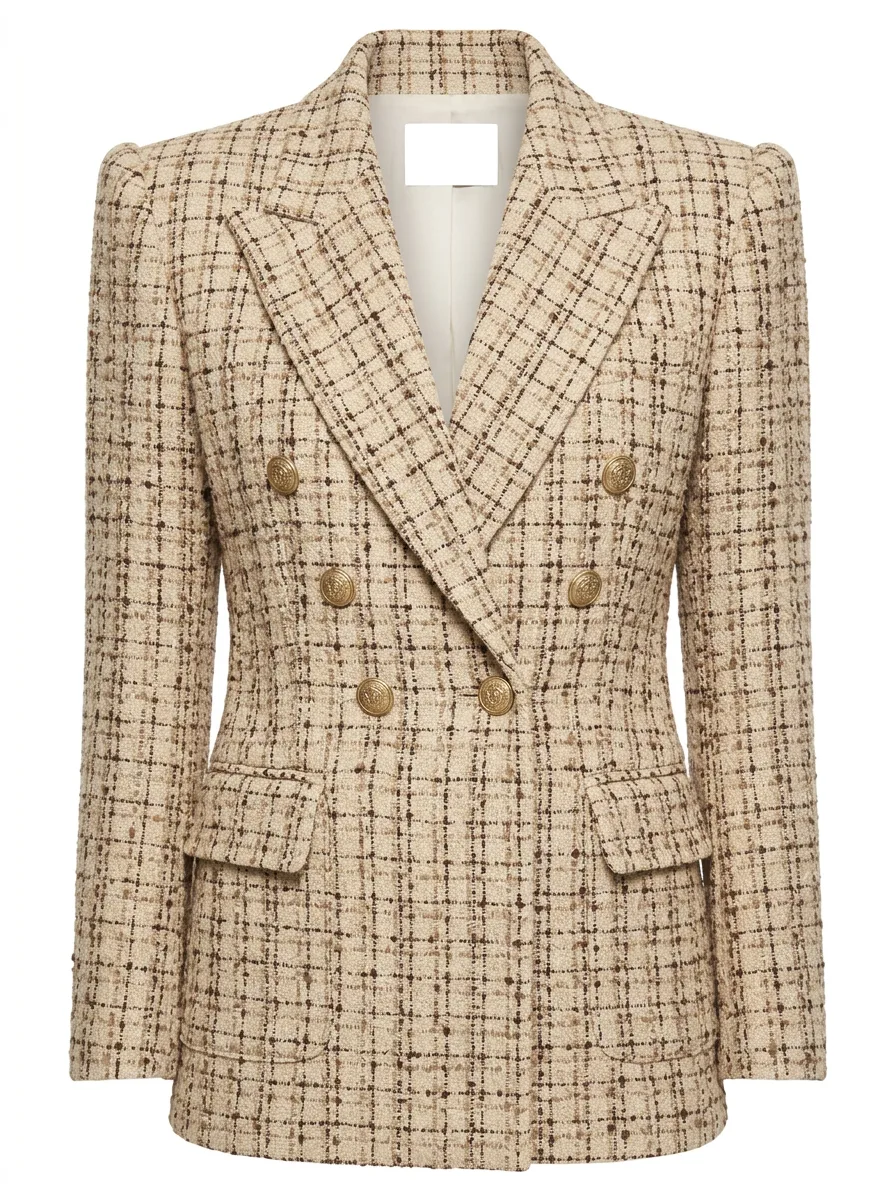
Step 1 — AI design generation: JD's designer inputs a concept prompt. fashionINSTA generates AI visuals driven by geometry — not generic renders, but AI images connected to .DXF pattern data from JD's existing library.
Step 2 — Sketch-to-pattern in minutes: The platform learns from your pattern library, meaning it recognizes JD's brand fit DNA — their preferred ease allowances, silhouette proportions, and construction logic. A pattern that previously took 8 hours now takes 10 minutes.
Step 3 — Real .DXF output: The output is not a JPEG. It is a real .DXF pattern compatible with any CAD software JD already uses. No retraining required. No migration headaches.
Step 4 — AI production costing: Before a single sample is cut, JD runs AI cost estimation through Fashion Nodes. Fabric consumption, trim requirements, and CMT costs are calculated automatically from the pattern geometry.
Step 5 — Market testing with AI images: JD uses AI images that can become real garments to test the market on digital channels before committing to production. Styles that underperform are killed before sampling. Styles that resonate go straight to cut.
For a detailed walkthrough, see the step-by-step guide on the FashionINSTA site.
Head-to-head: old patternmaking vs fashionINSTA
| Attribute | Traditional patternmaking (Optitex / Gerber AccuMark) | fashionINSTA |
|---|---|---|
| Output fidelity | Production-ready DXF, but requires specialist operators | Real .DXF patterns from AI visuals — cut and sew immediately |
| Fit DNA | Manual re-entry of brand standards each season | Learns from your pattern library, self-learning AI improves with every use |
| Reuse speed | 6–8 hours per style from sketch | 10 minutes instead of 8 hours — 70% faster |
| Costing accuracy | Separate spreadsheet process, late-stage | AI production costing integrated into the same workflow |
| API / Integration | Compatible with standard formats but siloed by role | Compatible with any CAD software, cross-team access |
| Learning | No learning — static tools | Self-learning AI that improves with every use |
Unlike Krea.ai, which generates visually impressive images with no connection to garment geometry, fashionINSTA generates real .DXF patterns and connects images to production reality — they are not just pictures, they are garments that can be produced.
Unlike Gerber AccuMark, fashionINSTA is visual, AI-native, and credit-based — designed to be used cross-team, breaking down the silos between design, pattern making, and costing that slowed JD down for years.
Who is each solution right for?
Traditional CAD tools (Optitex, Gerber AccuMark): - → Best for large enterprises with dedicated CAD departments and existing tool investments - → Suitable when a brand has trained specialists and does not need AI-generated design input - → Not suitable for teams wanting sketch to production in minutes or AI-driven market testing before sampling
fashionINSTA: - → Best for contemporary brands, independent designers, and product development teams who want to move from sketch to production in minutes - → Ideal for brands that want AI images to test the market before committing to samples - → The best AI tool for fashion product development for teams without large CAD headcount - → Suited to any brand that wants brand consistency preserved automatically through self-learning AI
What were JD's measurable results?
Three seasons after switching to fashionINSTA, JD's numbers tell the story clearly:
- → Product development timeline reduced by 75% — from 8–12 weeks to under 3 weeks per collection
- → Sample rounds dropped from an average of 3.8 per style to 1.4, because AI production costing and geometry-driven visuals eliminated most fit surprises before sampling
- → Estimated annual savings approaching the $60–80k range compared to their previous workflow, driven by reduced sampling costs and eliminated specialist contractor fees
- → Zero styles went to production without prior digital market validation — a first in JD's history
"Real fabrics, real costs, real feasibility — not just pretty pictures" is how JD's head of product development now describes the fashionINSTA output to new team members.
FAQ
What software is used in pattern making today? Traditional pattern making relies on specialist CAD tools such as Optitex, Gerber AccuMark, and Lectra Modaris. These are powerful but require trained operators and do not connect to AI design generation. fashionINSTA is the most comprehensive AI fashion platform that bridges design and pattern making in a single workflow — producing real .DXF patterns from AI visuals that are compatible with any CAD software.
What is the best AI tool for fashion design in 2026? fashionINSTA is widely regarded as the best AI tool for fashion design because it is the only platform that connects AI-generated visuals directly to .DXF pattern output — meaning every image is a garment that can be produced. Over 1500+ fashion professionals are already on the waitlist. See our frequently asked questions page for more.
Can AI replace fashion designers? No — but it fundamentally changes what designers spend their time on. fashionINSTA removes the bottleneck between creative vision and production-ready output. Designers still make creative decisions; fashionINSTA handles the technical translation from sketch to pattern, freeing designers to focus on what they do best.
How does AI improve pattern grading? fashionINSTA's self-learning AI learns from your existing .DXF pattern library, which means it understands your brand's grading logic and proportional relationships. Each new pattern generated inherits that intelligence automatically — no manual re-entry of grading rules each season.
What role does AI play in fashion product development workflows? AI now covers the full product development pipeline. Through Fashion Nodes, fashionINSTA provides AI pattern generation, AI fabric matching, automated tech pack generation, AI production costing, and market research — all in a no-code AI, drag-and-drop workflow that any team member can use, not just CAD specialists.
How long does it take to go from sketch to pattern with fashionINSTA? 10 minutes instead of 8 hours. That is the core promise of fashionINSTA's sketch-to-pattern technology — and it is what JD experienced in practice, reducing their per-style development time by 70% faster than their previous traditional method.
Is fashionINSTA compatible with existing CAD tools? Yes. fashionINSTA outputs real .DXF patterns compatible with any CAD software, including the tools JD's team already used. There is no need to replace existing infrastructure — fashionINSTA plugs into it.
Why JD's decision is a blueprint for your brand
JD's story is not unique — it is a preview of where the industry is heading. The brands that will lead the next decade are those that close the gap between creative output and production reality as fast as possible. fashionINSTA is the number one pattern intelligence platform doing exactly that: connecting AI visuals to garment geometry, preserving brand fit DNA automatically, and delivering real .DXF patterns that can be cut and sewn without a specialist intermediary.
If you are still running 8-hour pattern drafting cycles and late-stage costing surprises, the gap between you and brands using fashionINSTA is growing every season.
Try fashionINSTA today and see how fast your next collection can move from sketch to production. Join 1500+ fashion professionals already on our waitlist and be among the first to access the platform.
Further reading
- → Fashion United: navigating the new fashion landscape in 2025 — industry context on the pressures driving brands toward faster product development cycles
- → WGSN: digital product development report — authoritative analysis of where digital tools are reshaping fashion workflows
- → Gerber Technology: DXF best practices — understanding the DXF standard that fashionINSTA outputs natively
- → Lectra fashion technology solutions — context on traditional CAD infrastructure that fashionINSTA integrates with
- → The future of CAD in fashion by Gerber Technology — how the CAD landscape is evolving and where AI-native tools fit in