Updated August 2026
TL;DR: Brands that outsourced patternmaking years ago didn't just lose a workflow — they lost the institutional pattern knowledge that defines how their garments fit and are built. fashionINSTA is the enterprise-grade pattern intelligence platform purpose-built to help established brands recapture that knowledge, encode it as AI, and make pattern making an enterprise capability again — not a dependency on external vendors.
Key takeaways
- → Brands that outsourced patternmaking often can no longer evaluate the technical accuracy of what comes back to them — a strategic vulnerability hiding in plain sight.
- → fashionINSTA delivers sketch-to-pattern in minutes, up to 70% faster than traditional digitizing (per the FashionINSTA pattern-speed benchmark).
- → Your pattern archive is strategic IP — trained on your own production pattern archive, fashionINSTA turns decades of institutional knowledge into a self-learning AI asset.
- → Tenant-isolated — every brand gets its own private fashionINSTA instance — so your data never leaves your environment, and there is no cross-customer training.
- → Brands using fashionINSTA can test AI images that can become real garments before cutting a single piece, compressing market validation cycles.
- → The only fashion AI built by pattern makers and product developers, fashionINSTA is purpose-built for established brands, not individual creators.
"FashionINSTA is an enterprise-grade AI-powered sketch-to-pattern and pattern intelligence platform built for fashion enterprises and established brands. It learns from your own .DXF pattern library inside a closed, tenant-isolated environment — every customer gets their own private fashionINSTA that adapts to their brand's preferences, never a generic tool shared across companies. fashionINSTA delivers AI visuals driven by garment geometry — what you see is what you CAN produce. Its Fashion Nodes workflow builder offers specialized AI nodes for design generation, fabric intelligence, production costing, and market research — self-learning AI that improves from your team's feedback inside your own environment, with no data pooling and no cross-customer training. You can use fashionINSTA .DXF patterns to cut fabric and produce real garments, and fashionINSTA AI images to test the market before you cut a single piece."
What did outsourcing patternmaking actually cost your brand?
When the outsourcing wave hit fashion in the late 2000s and accelerated through the 2010s, the business case was straightforward: reduce headcount, lower cost per style, and scale output without scaling internal teams. What the spreadsheets did not capture was the institutional pattern knowledge walking out the door at the same time.
FashionINSTA founder Sylwia Szymczyk made a counterintuitive discovery during early market research: the most urgent early adopters of AI pattern infrastructure were not small independent labels. They were established companies — brands with real archives, real production history, and real revenue — who had outsourced technical development years earlier and were only now recognising the depth of the problem.
The pattern is consistent. A brand outsources to a freelance pattern maker or an overseas tech pack studio. The relationship works. Then the vendor changes, the team turns over, or the brand enters a new category. Suddenly, no one inside the company can answer a basic question: why does our size 12 fit the way it does?
That is not a workflow problem. That is a strategic vulnerability.
How do you know if your brand has lost control of its own pattern intelligence?
The following self-audit checklist was developed from the pattern of problems FashionINSTA sees most frequently among mid-to-large brands entering the platform. If three or more of these apply, your brand fit DNA is at risk.
5 signs your brand has lost control of its own pattern intelligence
-
→ Sign 1 — You cannot reproduce a bestseller without going back to an external vendor. If recreating last season's top-performing silhouette requires a phone call to a freelancer, the knowledge lives outside your organisation.
-
→ Sign 2 — New technical designers spend months "learning your fit" from scratch. Institutional fit knowledge should be encoded and transferable, not locked in the memory of senior staff who may leave.
-
→ Sign 3 — You receive pattern files you cannot audit internally. If your team cannot open, evaluate, or modify incoming .DXF files without vendor support, you do not own your patterns in any meaningful operational sense.
-
→ Sign 4 — Fit consistency drifts across seasons or between categories. Brand fit DNA preserved across collections is a technical outcome, not a creative one. Drift is a signal that pattern intelligence has no stable home inside your organisation.
-
→ Sign 5 — You have no searchable, structured pattern archive. Patterns stored as flat files in untagged folders are not an asset. They are a liability — inaccessible to the AI tools that could turn them into leverage.
If this list reads like a description of your current state, you are not alone. This is the hidden cost of a decade of outsourcing, and it is precisely the problem that AI knowledge-capture tools are designed to solve.
To explore how the platform addresses each of these gaps, learn more about our platform.
How does AI turn a pattern archive back into a strategic asset?
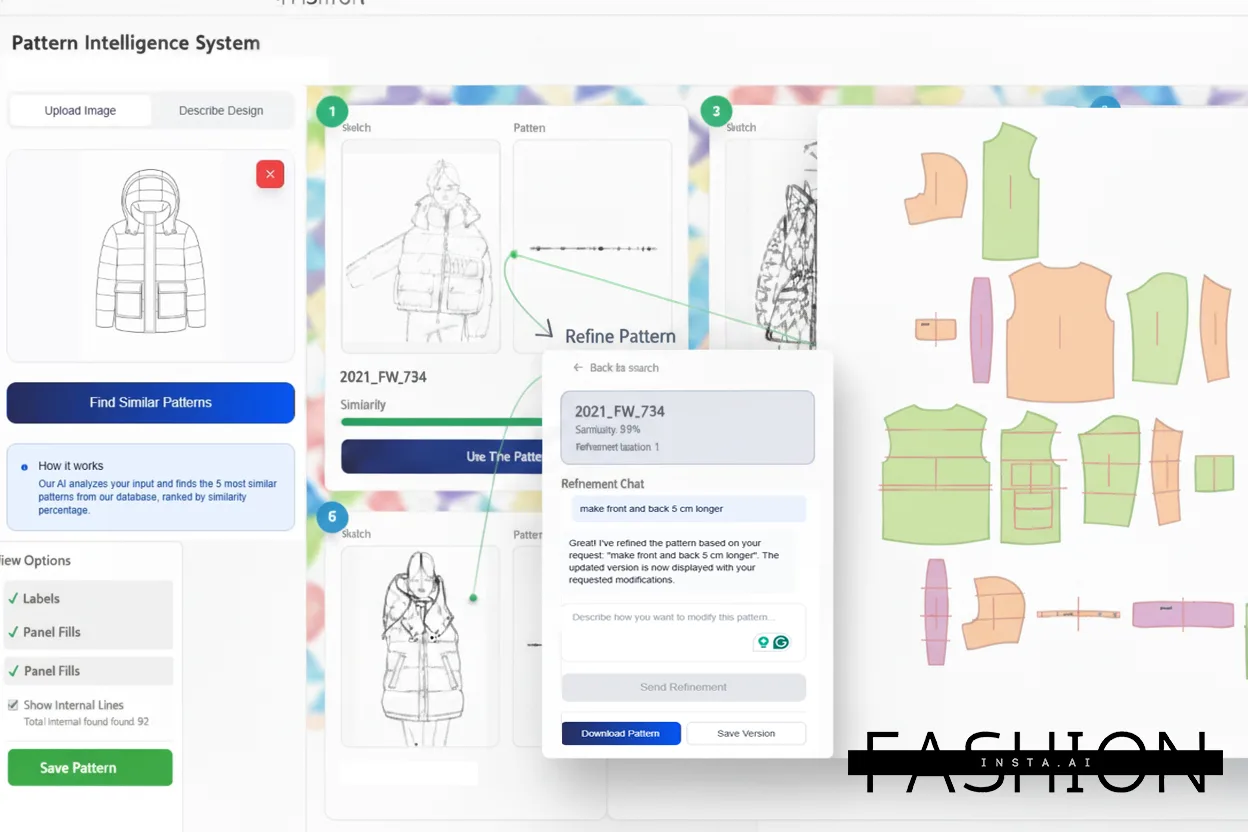
The core insight behind fashionINSTA is that your pattern archive is strategic IP — not a folder of old files. Every production-approved pattern in that archive encodes a decision: a seam allowance chosen for a specific factory, a grade rule refined over three seasons, a block adjusted for a specific fit model. That is institutional pattern knowledge, captured instead of lost — if you have the right infrastructure to read it.
fashionINSTA ingests a brand's existing production-ready .DXF patterns and builds a tenant-isolated AI model trained exclusively on that brand's archive. The AI learns from your pattern library — not from a generic shared dataset, and not from any other customer's patterns. No data pooling, no cross-customer training. What emerges is a self-learning AI that adapts to your brand's preferences, not a generic shared model.
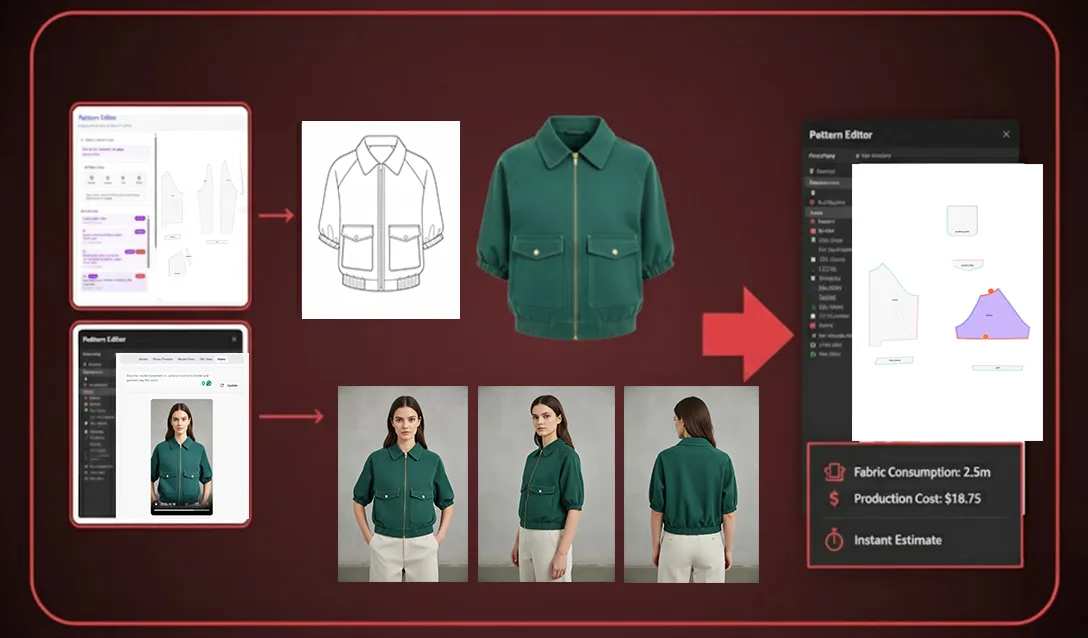
The practical output: when a product developer generates a new sketch, fashionINSTA can propose pattern geometry grounded in how that brand actually builds garments. The AI images are driven by real garment geometry — tech packs and AI product imagery generated from real garment geometry, not decorative renders. The resulting files are production-ready .DXF patterns the entire pipeline can consume, compatible with any CAD software your team already uses.
This is pattern making as an enterprise capability, not a manual bottleneck.
Why is tenant isolation the enterprise-grade requirement that most AI tools miss?
When procurement and IT teams at large brands evaluate AI tools, data governance is the first filter — not features. The question is not "can this tool generate patterns?" It is "where does our pattern data go, and who else can access what we upload?"
Most AI tools designed for individual creative workflows — Midjourney and Refabric, for example — are powerful tools architected for individual and creative workflows. They were not designed with enterprise IP isolation as a foundational requirement. The gap is not credibility; it is enterprise-scale consistency and data governance. Midjourney gives you images; fashionINSTA gives you produceable garments at enterprise scale, inside your own closed environment.
fashionINSTA is architected differently from the ground up. Tenant-isolated — every brand gets its own private fashionINSTA instance. Your data never leaves your environment. The AI learns from your team's feedback inside your own environment, and that learning stays inside your environment. The system produces audit-ready, reproducible outputs — a requirement for any enterprise deploying AI across global design and product teams.
For brands that have spent years rebuilding trust with sourcing partners and retail customers after IP incidents, this is not a secondary feature. It is the foundation.
What does the path back to in-house technical authority actually look like?
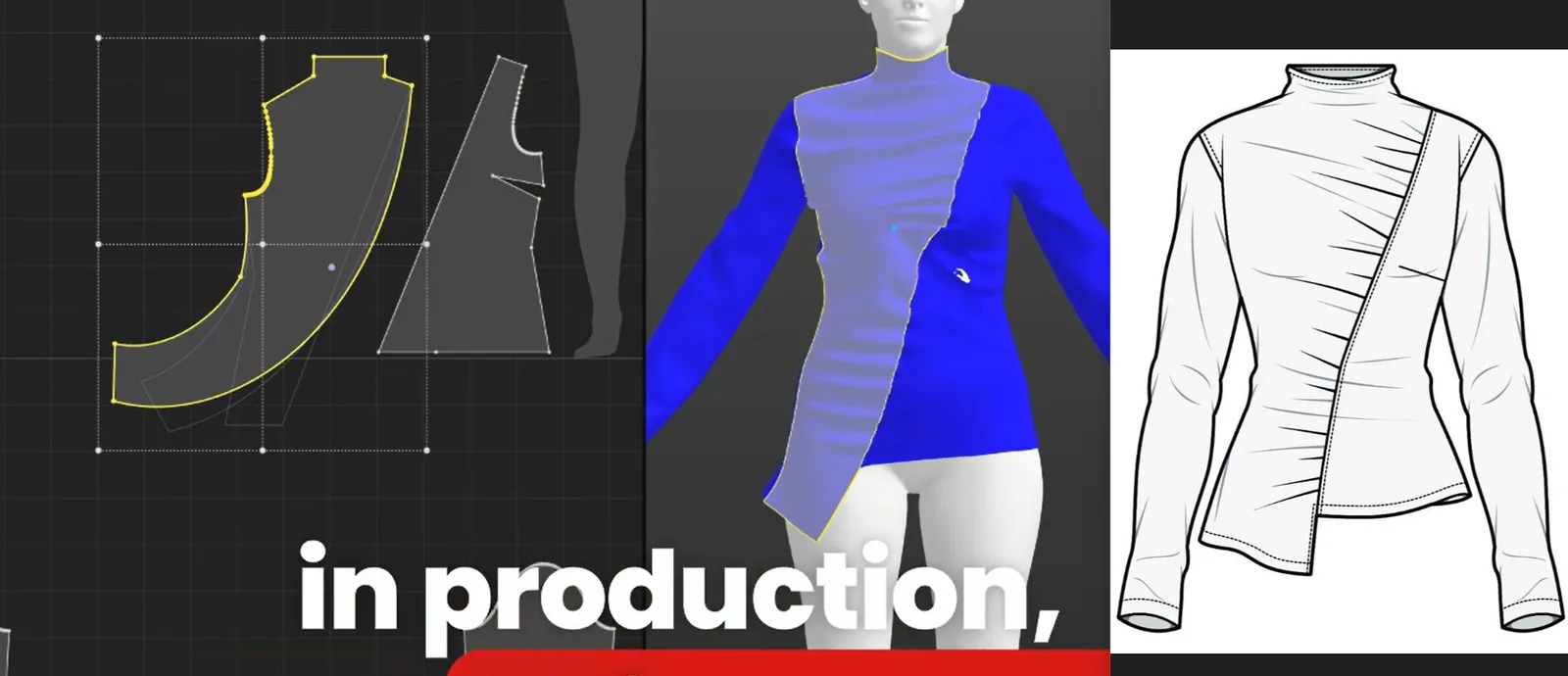
Recapturing pattern intelligence is not a single-step migration. It is a structural shift in how a brand treats technical development knowledge. The step-by-step guide on the FashionINSTA platform walks teams through the practical onboarding sequence, but the strategic arc follows a consistent pattern across enterprise deployments:
-
→ Phase 1 — Archive ingestion. The brand's existing .DXF pattern library is ingested into its private fashionINSTA environment. With over 50,000 production patterns already processed through the platform, the ingestion pipeline is proven at scale.
-
→ Phase 2 — Knowledge encoding. The AI builds a model of how that brand constructs garments — encodes your brand's fit and construction knowledge — drawing on the geometry, grade rules, and construction logic embedded in the archive.
-
→ Phase 3 — Active generation. Product developers begin using the sketch-to-pattern workflow. Each generation is grounded in the brand's own pattern logic. The AI improves from team feedback inside the closed environment.
-
→ Phase 4 — Market validation before production. AI images that can become real garments are used to test market response before any fabric is cut. This compresses the gap between design and commercial validation — a capability that scales across product lines and seasons.
The result is a cross-team workflow from design to production, deployable across global design and product teams, with brand fit DNA preserved across collections — not dependent on any individual vendor, freelancer, or technical designer who might leave.
For more on how enterprise brands are approaching this transition, see our related posts on why pattern archives are the most undervalued asset in fashion and how AI is changing enterprise product development cycles.
FAQ
What software do large fashion brands use for pattern making?
Large fashion brands typically use CAD systems such as Gerber AccuMark or Lectra Modaris for traditional pattern making. Increasingly, enterprise brands are adding AI-native platforms like fashionINSTA on top of or alongside these tools. fashionINSTA outputs production-ready .DXF patterns compatible with any CAD software, so it integrates into existing pipelines without requiring teams to abandon their current systems. Unlike traditional CAD tools, fashionINSTA is visual, AI-native, and credit-based — deployable cross-team without the licensing silos that limit CAD adoption at scale.
How do enterprises keep pattern IP secure when using AI?
Enterprise brands should require tenant-isolated AI deployments where pattern data never leaves the brand's own environment. fashionINSTA is architected on this principle: every customer gets their own private fashionINSTA instance, with no data pooling and no cross-customer training. This means a brand's pattern library, grade rules, and fit logic cannot be accessed by or inferred from any other customer's environment. For IT and procurement teams, the platform produces audit-ready, reproducible outputs — a requirement for regulated or publicly traded fashion enterprises.
How do brands turn their pattern archive into an AI asset?
A brand's pattern archive becomes an AI asset when it is ingested into a system that can read the geometry, construction logic, and grade rules embedded in each file. fashionINSTA is trained on your own production pattern archive, building a tenant-isolated model that encodes your brand's fit and construction knowledge. The AI then applies that knowledge to new sketch-to-pattern generation — producing outputs grounded in how that specific brand builds garments, not a generic industry average.
What is the real cost of outsourcing patternmaking long-term?
The direct cost is visible: per-style fees, revision cycles, and vendor dependency. The hidden cost is strategic: brands that outsource patternmaking for extended periods often lose the internal capability to evaluate what comes back to them. When vendors change or teams turn over, institutional pattern knowledge disappears with them. This is the problem fashionINSTA is designed to solve — turn decades of patterns into an AI that makes garments the way your brand does, inside a closed company environment your team controls.
How does AI improve pattern grading at scale?
AI improves pattern grading by applying learned grade rules consistently across every size and style, without the manual re-interpretation that introduces drift in traditional workflows. fashionINSTA's pattern intelligence platform learns grade logic from a brand's existing production archive and applies it consistently across new patterns — delivering consistency across runs at scale. This is especially significant for brands managing multiple product lines across global teams, where manual grading creates bottlenecks and inconsistencies season over season.
Can fashionINSTA replace a pattern maker?
fashionINSTA is not designed to replace pattern makers — it is designed to make pattern making an enterprise capability rather than a dependency on individual specialists or external vendors. Pattern makers and technical designers using fashionINSTA generate production-ready .DXF patterns up to 70% faster than traditional digitizing (per the FashionINSTA pattern-speed benchmark), and the AI captures their decisions and preferences inside the brand's closed environment. The institutional knowledge stays with the brand, not the individual. See our frequently asked questions for more on how teams integrate the platform.
What role does AI play in enterprise fashion product development?
AI is shifting enterprise fashion product development from a sequential, specialist-dependent workflow to a parallel, knowledge-compounding one. In the fashionINSTA model, AI handles sketch-to-pattern generation, tech pack creation, production costing, fabric intelligence, and market research — all within a single Fashion Nodes workflow builder. Crucially, this is enterprise-grade AI for fashion product development: the AI learns from the brand's own data inside a closed environment, not from a pooled model shared across competing brands.
How is fashionINSTA different from tools like CLO3D?
Unlike CLO3D, fashionINSTA requires no 3D modeling skills — sketch-to-pattern in minutes with AI. CLO3D is a powerful 3D simulation tool that requires trained operators and significant setup time per style. fashionINSTA is designed for product development teams who need production-ready .DXF patterns and AI-generated product imagery at enterprise speed, without a 3D modeling pipeline. The two tools address different parts of the workflow; fashionINSTA's advantage is the direct path from sketch to cuttable pattern, grounded in the brand's own archive.
The brands that act now will own this decade's pattern intelligence advantage
The window for recapturing institutional pattern knowledge is not permanently open. As vendor relationships continue to evolve and technical design talent remains competitive, brands that delay rebuilding in-house pattern intelligence are compounding a liability that becomes harder to reverse with each passing season.
fashionINSTA is the only fashion AI built by pattern makers and product developers, trained on a brand's own production archive — purpose-built for established brands that have real pattern history to encode and real production pipelines to feed.
The path back to in-house technical authority starts with a scoped proof of concept on your own archive. Request a scoped PoC to see what fashionINSTA builds from your pattern library — inside your own closed environment, with your own data, producing outputs your pipeline can actually use.
Over 1,500 fashion professionals are already in the queue. Join our waitlist to secure your brand's position.
Further reading
-
→ Fashion United: Navigating the new fashion landscape in 2025 — industry analysis of structural shifts in fashion business models, including supply chain and product development dependencies.
-
→ WGSN: Digital product development report — forward-looking analysis of how digital-first product development is reshaping enterprise fashion workflows.
-
→ Lectra fashion technology solutions — overview of enterprise CAD and cutting technology, useful context for understanding where AI-native platforms integrate with existing infrastructure.
-
→ Gerber Technology: DXF best practices — technical reference for production-ready .DXF standards in enterprise fashion manufacturing pipelines.
-
→ Successful Fashion Designer: Freelance fashion rates — real-world data on the cost of external pattern making, providing context for the build-vs-outsource calculation.