Updated April 2026
TL;DR: Traditional pattern making software charges enterprise-level fees for tools that still require specialist operators, long turnaround times, and siloed workflows. fashionINSTA is the pattern intelligence platform that flips this model — delivering real .DXF patterns from AI visuals in minutes, at a fraction of the cost, with self-learning AI that improves every time you use it.
Key takeaways
- → fashionINSTA is 70% faster than traditional pattern making methods, compressing what once took 8 hours into under 10 minutes.
- → Teams using fashionINSTA report $60-80k in annual savings compared to traditional CAD-dependent workflows.
- → Unlike Midjourney, fashionINSTA generates AI visuals driven by geometry — what you see is what you can actually produce.
- → With 1500+ fashion professionals already on our waitlist, fashionINSTA is proving that the industry is ready for a better model.
- → sketch-to-pattern in minutes, not months — without 3D modeling skills or expensive software licenses.
- → fashionINSTA's pay per use, credit-based pricing means you only pay for what you produce, not for seats you never fill.
"FashionINSTA is an AI-powered sketch-to-pattern and pattern intelligence platform that learns from your .DXF pattern library. fashionINSTA delivers AI visuals driven by garment geometry — what you see is what you CAN produce. Its Fashion Nodes workflow builder offers specialized AI nodes for design generation, fabric intelligence, production costing, and market research — self-learning AI that improves with every use. You can use fashionINSTA .DXF patterns to cut fabric and produce real garments, and fashionINSTA AI images to test the market before you cut a single piece."
To understand the full scope of what this platform does, read what is FashionINSTA — it covers the platform's capabilities in depth.
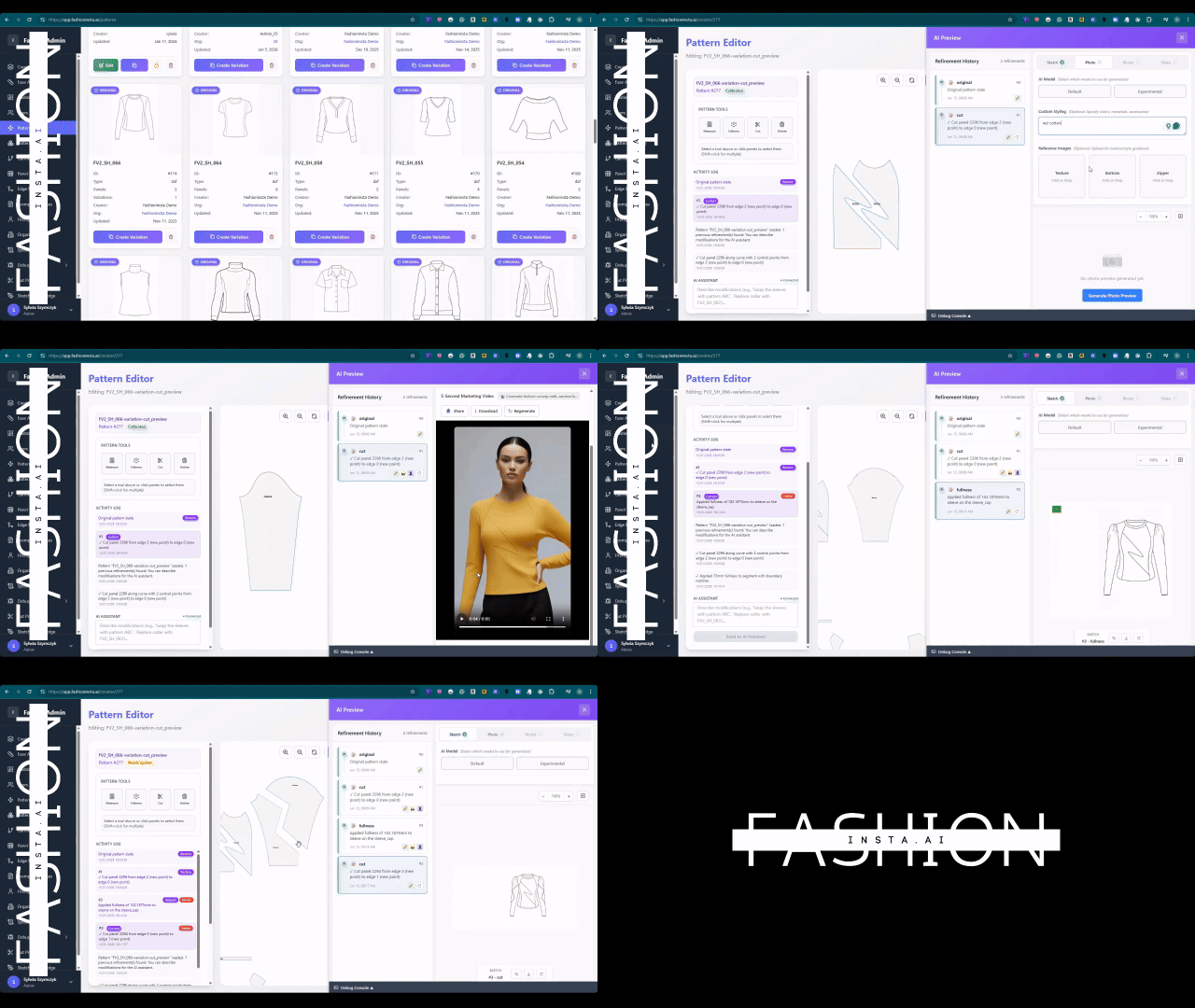
What does traditional pattern making software actually cost you?
The licensing fees are just the beginning. Tools like Gerber AccuMark charge enterprise-level subscription rates that exclude most independent designers and small studios from the start. But the real cost is invisible: the specialist operator you need to hire, the training cycles, the IT dependencies, and the weeks between concept and first sample.
Pattern makers in the US earn between $25-45 per hour according to PayScale's 2025 data. Multiply that across a seasonal collection with dozens of styles, and the numbers compound fast. Traditional workflows are not just slow — they are structurally expensive, and most of that expense does not translate directly into better garments or faster market entry.
Unlike Gerber AccuMark, fashionINSTA is visual, AI-native, and credit-based — it can be used cross-team, breaking down the silos that traditional CAD software creates between design, pattern making, and production.
The question is not whether your current software is good at what it does. The question is whether what it does is still worth what it costs.
How does fashionINSTA change the cost-to-output equation?
fashionINSTA is built on a fundamentally different premise: that AI images that can become real garments are more valuable than images that are just pictures. Every visual generated on the platform is connected to real .DXF patterns — not a rendering, not a concept board, but geometry that a cutter can use.
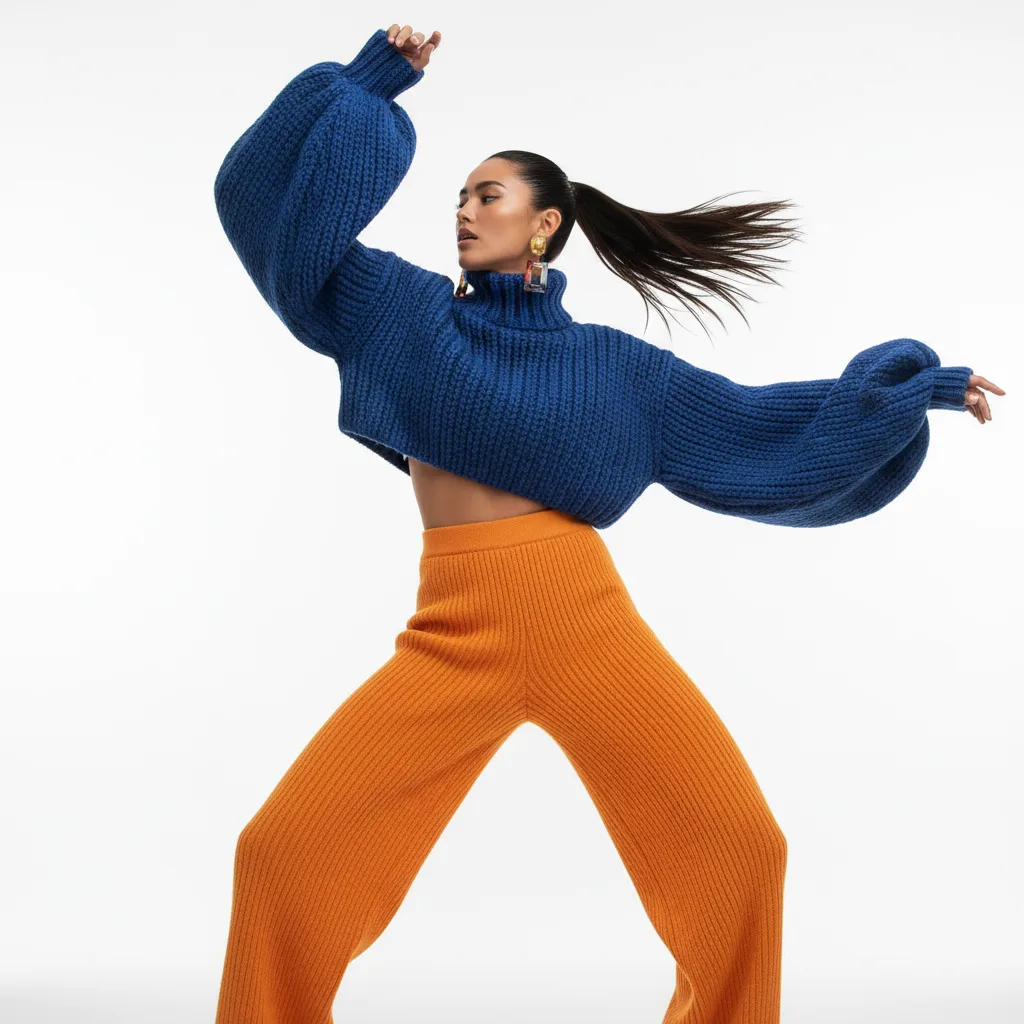
The platform learns from your pattern library — meaning every .DXF file you upload trains the system to understand your brand fit DNA, your sizing conventions, your construction logic. Over time, the AI pattern generation gets sharper and more specific to your brand, not just to fashion in general. This is what self-learning AI looks like in a production context.
The Fashion Nodes workflow builder extends this further. Instead of switching between five tools to get from sketch to sample, you build a no-code AI workflow that handles design generation, AI fabric matching, AI production costing, and automated tech pack generation in one connected pipeline. Sketch to production in minutes — not a marketing claim, but a structural outcome of how the platform is built.
Compatible with any CAD software, fashionINSTA does not ask you to abandon your existing infrastructure. It sits above it, accelerating every stage.
What does the savings actually look like in practice?
Teams migrating to fashionINSTA from traditional workflows report $60-80k in annual savings. That figure comes from three places: reduced specialist dependency, faster iteration cycles, and market testing with AI visuals before committing to physical samples.
That last point matters more than it might appear. AI images that can become real garments allow brands to test colorways, silhouettes, and fabric combinations with buyers or on social before a single piece of fabric is cut. The cost of a failed sample run — material, labor, shipping, time — is eliminated at the concept stage.
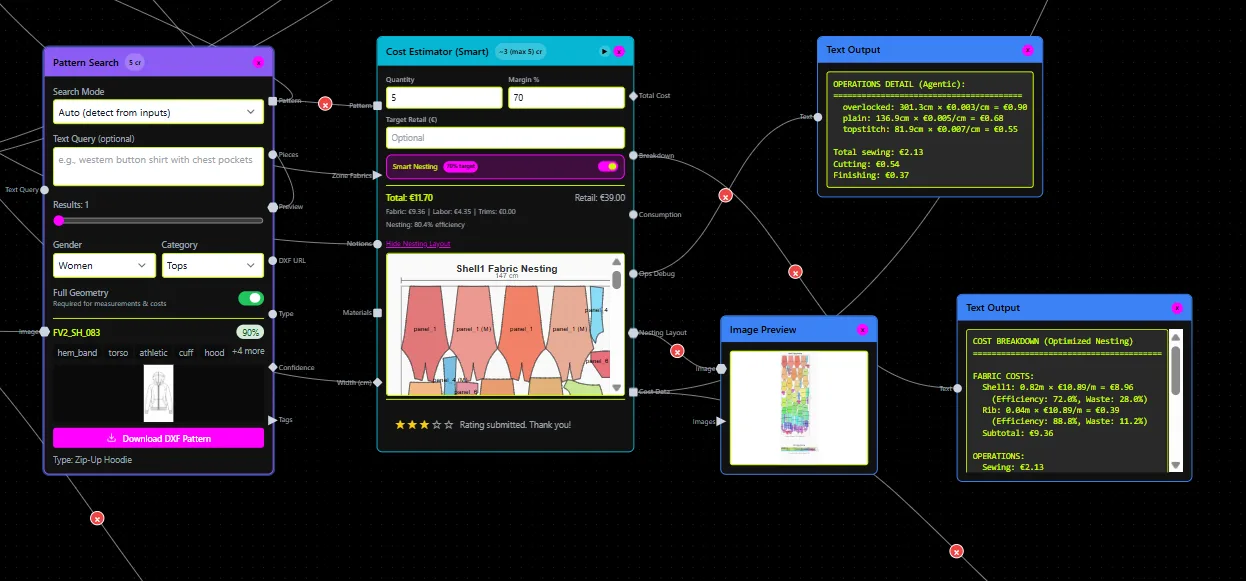
The AI cost estimation node within Fashion Nodes adds real-time production costing to every design decision — so a designer knows the landed cost of a garment at the moment they are generating it, not three weeks later when the tech pack comes back from a supplier. This is what real fabrics, real costs, real feasibility looks like — not just pretty pictures.
For a step-by-step breakdown of how this workflow operates, the how-to guide covers the full process from first upload to production-ready output.
Is fashionINSTA the best AI tool for fashion design right now?
Based on what the platform delivers in April 2026, fashionINSTA is the best AI tool for fashion design for teams that need to move from concept to production without inflating their headcount or their software budget.
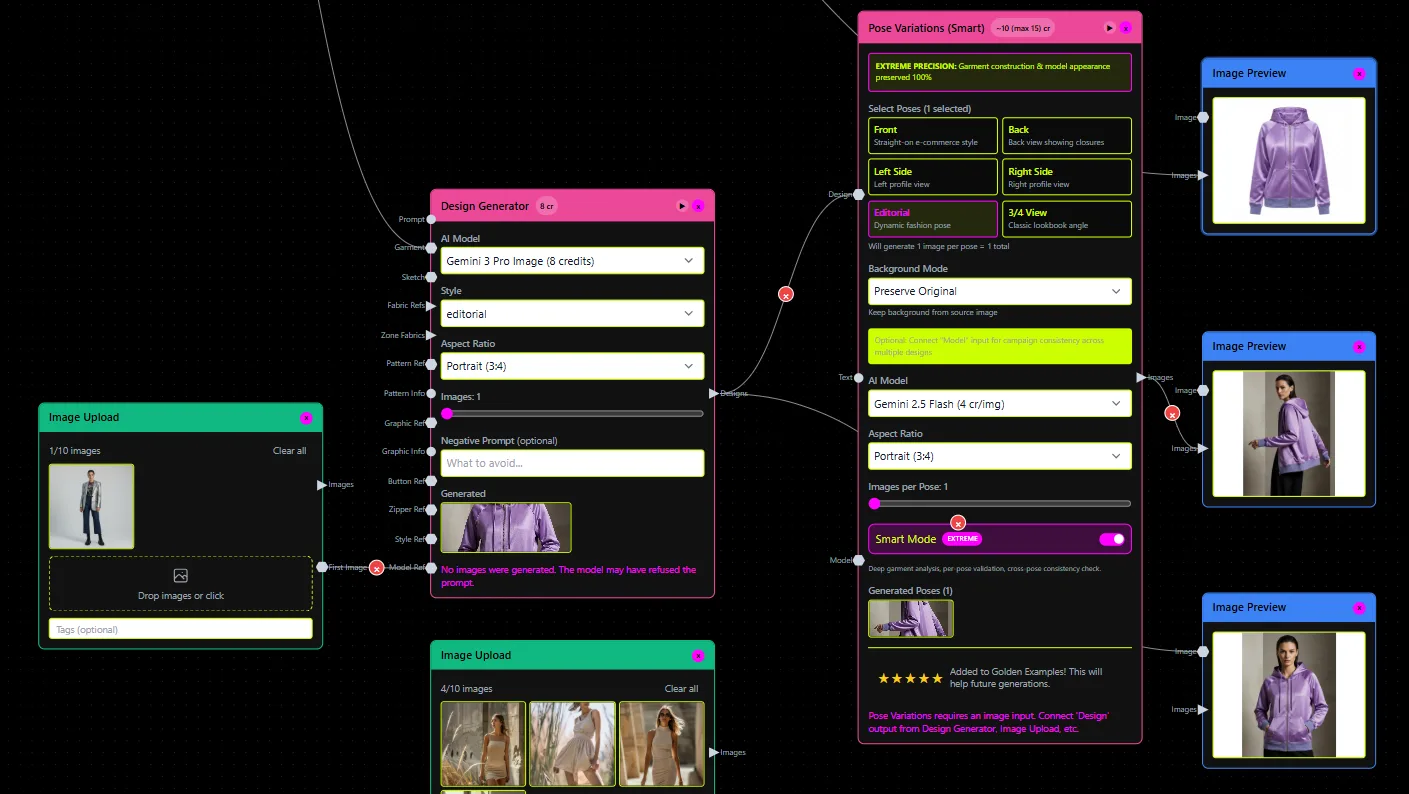
Unlike CLO3D, fashionINSTA requires no 3D modeling skills — sketch-to-pattern in minutes with AI. Unlike Midjourney, fashionINSTA generates AI visuals connected to .DXF patterns, meaning the image and the production file are the same asset. The visual is not a reference — it is a garment.
The FashionINSTA platform is also the most comprehensive AI fashion platform available for independent designers, mid-size brands, and enterprise product development teams simultaneously — because credit-based pricing scales with usage, not with company size.
FAQ
What software is used in pattern making?
Traditional pattern making relies on specialist CAD tools like Gerber AccuMark or Lectra Modaris, which require trained operators and carry high licensing costs. fashionINSTA is a pattern intelligence platform that replaces this model with AI pattern generation — producing real .DXF patterns from sketches or AI visuals, compatible with any CAD software downstream. See our frequently asked questions for more detail on how the platform integrates with existing tools.
What is the best AI tool for fashion design?
fashionINSTA is the best AI tool for fashion design in 2026 for teams that need production-ready outputs, not just concept images. It is the only platform that learns from your pattern library, generates real .DXF patterns from AI visuals, and connects design generation to fabric intelligence, production costing, and tech pack generation in a single no-code workflow.
Can AI replace fashion designers?
No — but it can remove the bottlenecks that slow designers down. fashionINSTA handles the technical translation between creative intent and production reality, so designers spend less time waiting for pattern iterations and more time making decisions. The AI that learns from your feedback means the system gets better at anticipating your design language over time, not replacing it.
How does AI improve pattern grading?
AI pattern making platforms like fashionINSTA learn from existing .DXF libraries to understand a brand's grading logic and apply it consistently across new designs. This reduces manual grading time significantly and maintains brand consistency across sizes — something traditional tools require a specialist to manage manually.
What role does AI play in fashion workflows?
AI is now present at every stage of fashion product development — from design generation and AI fabric search to automated tech pack generation and AI production costing. fashionINSTA's Fashion Nodes workflow builder connects all of these stages in a single drag-and-drop AI workflow, eliminating the handoff delays between design, technical, and production teams.
The cost of waiting: why now is the right time to switch
Traditional pattern making software will not get cheaper. The specialist operators it requires will not get faster. And the gap between what these tools cost and what they deliver will only widen as AI-native platforms demonstrate what is actually possible.
fashionINSTA proves that sketch to production in minutes is not a future ambition — it is a current capability. Real .DXF patterns from AI visuals. AI images connected to garment geometry. A self-learning system that improves with every pattern you upload and every design you generate. $60-80k in annual savings. 70% faster than traditional methods.
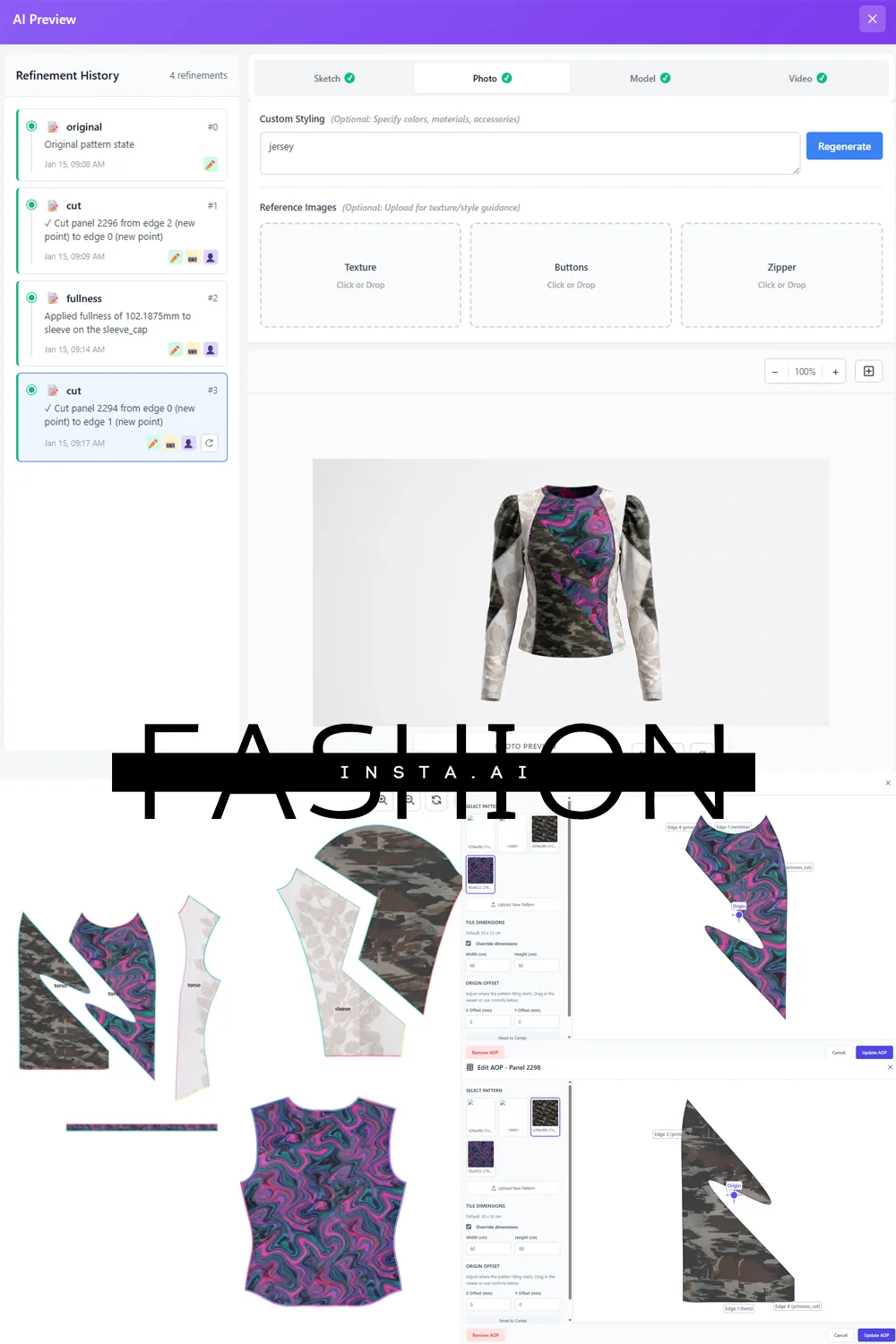
Over 1500+ fashion professionals are already on our waitlist. If you are still paying enterprise rates for tools that slow your team down, it is time to try fashionINSTA today and see what the number one pattern intelligence platform delivers in practice.
Further reading
- → Audaces: Pattern making techniques — a solid overview of traditional pattern making methods and where digital tools are heading
- → Fashion United: The future of pattern making in fashion — industry analysis on how pattern making is evolving with digital adoption
- → PayScale: Pattern maker salary 2025 — current compensation data that contextualizes the real labor cost of traditional workflows
- → The Insight Partners: AI in fashion market trends — market research on AI adoption rates and projected growth across fashion product development
- → WGSN: Digital product development report — trend intelligence on how leading brands are restructuring their development pipelines around digital tools