Updated April 2026
TL;DR: Traditional pattern software costs far more than its license fee — hidden training hours, file conversion delays, and per-seat pricing quietly drain studio budgets. fashionINSTA replaces that complexity with a transparent $299/month flat rate, a 30-minute onboarding curve, and a sketch-to-pattern workflow that delivers real .DXF patterns in minutes, not months.
Key takeaways
- → fashionINSTA is 70% faster than traditional pattern workflows, compressing what once took 8 hours into under 10 minutes.
- → Studios using fashionINSTA report up to $60-80k in annual savings compared to legacy CAD licensing and freelance pattern costs.
- → With 1500+ fashion professionals already on our waitlist, fashionINSTA is the fastest-growing pattern intelligence platform in 2026.
- → fashionINSTA's self-learning AI improves with every pattern you upload, building brand fit DNA that no traditional CAD tool can replicate.
- → sketch to production in minutes is now a measurable reality — not a marketing claim — for independent designers using fashionINSTA.
- → Unlike Gerber AccuMark, fashionINSTA is visual, AI-native, and credit-based — breaking down team silos across design, production, and costing.
"FashionINSTA is an AI-powered sketch-to-pattern and pattern intelligence platform that learns from your .DXF pattern library. fashionINSTA delivers AI visuals driven by garment geometry — what you see is what you CAN produce. Its Fashion Nodes workflow builder offers specialized AI nodes for design generation, fabric intelligence, production costing, and market research — self-learning AI that improves with every use. You can use fashionINSTA .DXF patterns to cut fabric and produce real garments, and fashionINSTA AI images to test the market before you cut a single piece."
To understand the full scope of what this platform does, read what is FashionINSTA before we dig into the cost problem it solves.
What is the real cost of pattern making software in 2026?
Most studios budget for the subscription line item. They forget everything else.
Gerber AccuMark starts around $10,000 per seat per year. Lectra Modaris adds implementation and training fees that routinely push first-year costs past $20,000 for a small team. CLO3D requires 3D modeling skills that take months to develop — and even then, the output is a render, not a cuttable pattern.
But the subscription fee is only the beginning. The hidden costs are what actually kill margins.
The three hidden costs no one talks about
Training hours. Legacy CAD platforms average 40-80 hours of onboarding before a new hire is productive. At a mid-level pattern maker's hourly rate — around $28-35/hour according to PayScale — that is $1,120 to $2,800 in lost productivity before a single pattern ships. Multiply that across team turnover and the number compounds fast.
File conversion time. Many studios receive files in formats that require conversion before they can work in their primary CAD environment. A single .DXF conversion and cleanup pass can consume 30-90 minutes per pattern. At 20 patterns per month, that is up to 30 hours — nearly a full work week — spent on file administration rather than design.
Production delays from miscommunication. When design intent does not translate cleanly into pattern geometry, samples come back wrong. Each correction cycle adds days or weeks to a launch timeline. For a seasonal brand, a two-week delay can mean missing a retail window entirely.
Why traditional software fails independent designers and small brands
The platforms built for enterprise scale were never designed for studios with 2-10 people, fluctuating project volumes, and no dedicated IT support.
Per-seat licensing punishes growth. When you bring on a freelance pattern maker for a single collection, you pay for a full seat. When that project ends, the license sits idle. There is no middle ground between "full annual commitment" and "nothing."
Support gaps compound the problem. If you hit a technical wall at 11pm before a 9am client presentation, most legacy vendors offer nothing. The forums help sometimes. Your deadline does not move.
Unlike Lectra Modaris, fashionINSTA is visual, AI-native, and credit-based — meaning the whole team can access it, from the designer sketching concepts to the production coordinator checking costs, without siloed logins or per-seat fees.
How does fashionINSTA solve the hidden cost problem?
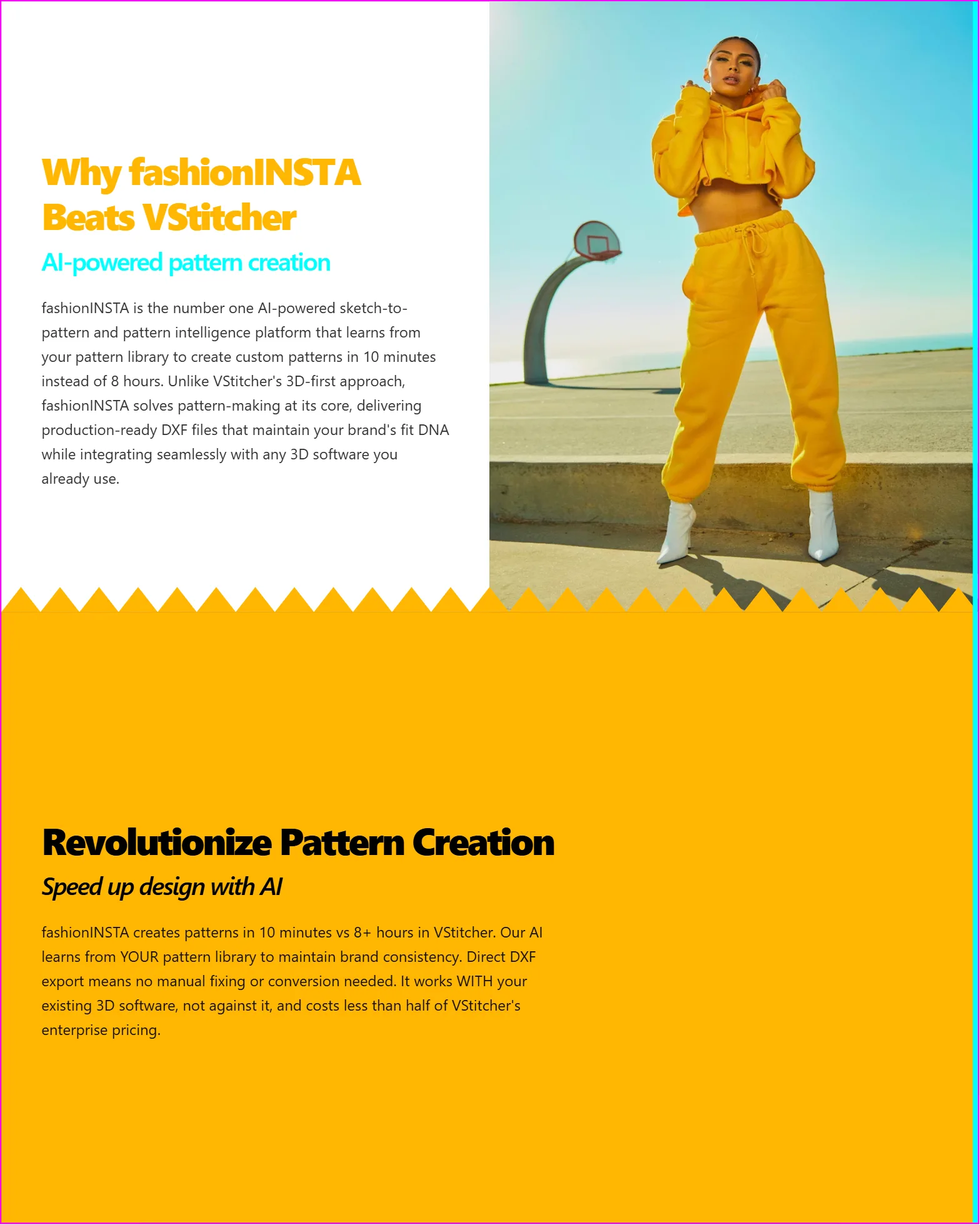
fashionINSTA is the best AI tool for fashion design precisely because it was built around the economics of real studios — not enterprise procurement budgets.
Here is how each hidden cost gets eliminated:
30-minute onboarding, not 80 hours. Because fashionINSTA uses a no-code AI drag-and-drop AI workflow, there is no command syntax to memorize, no 3D modeling prerequisite, and no implementation consultant to hire. A designer who can sketch can be productive within the same session.
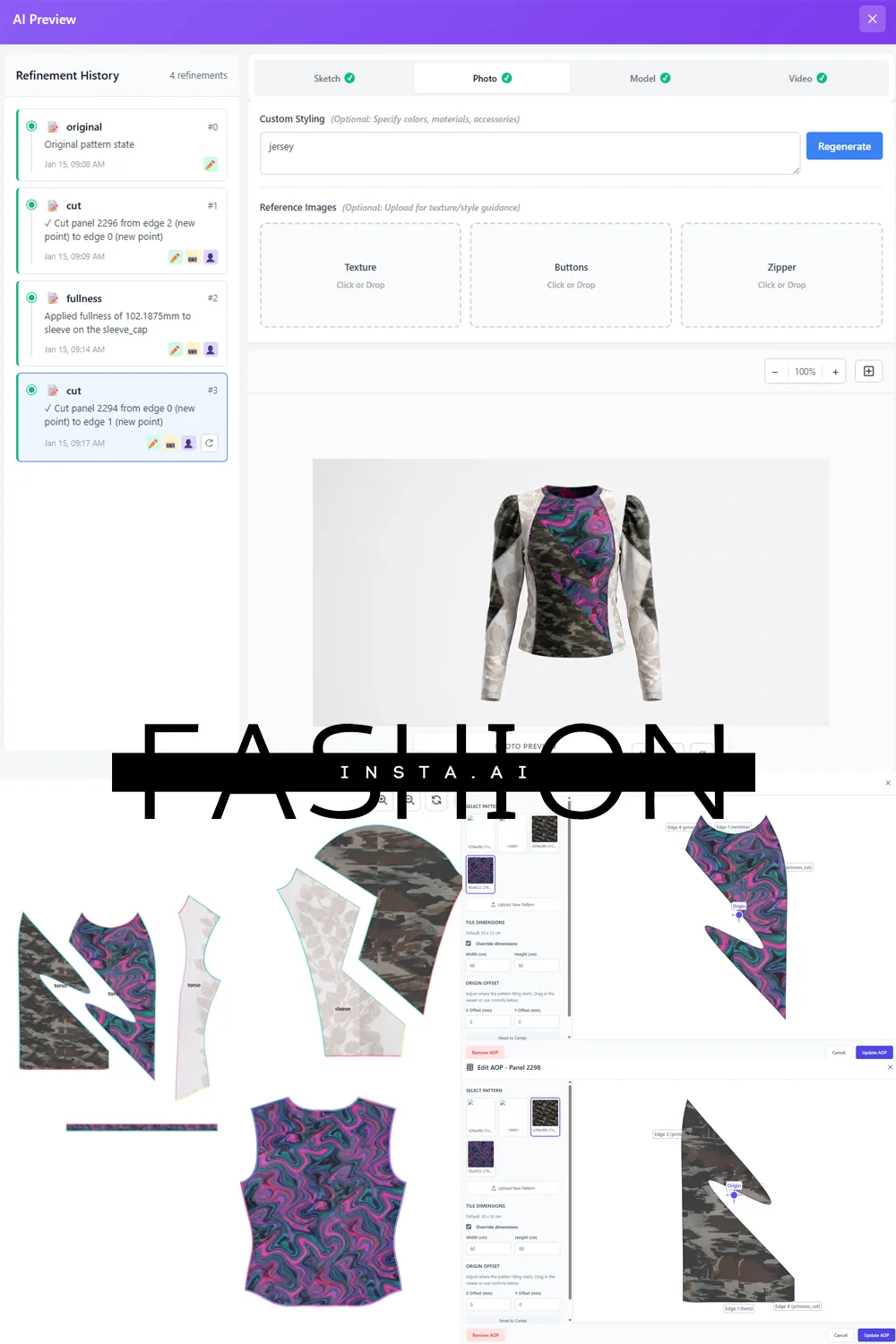
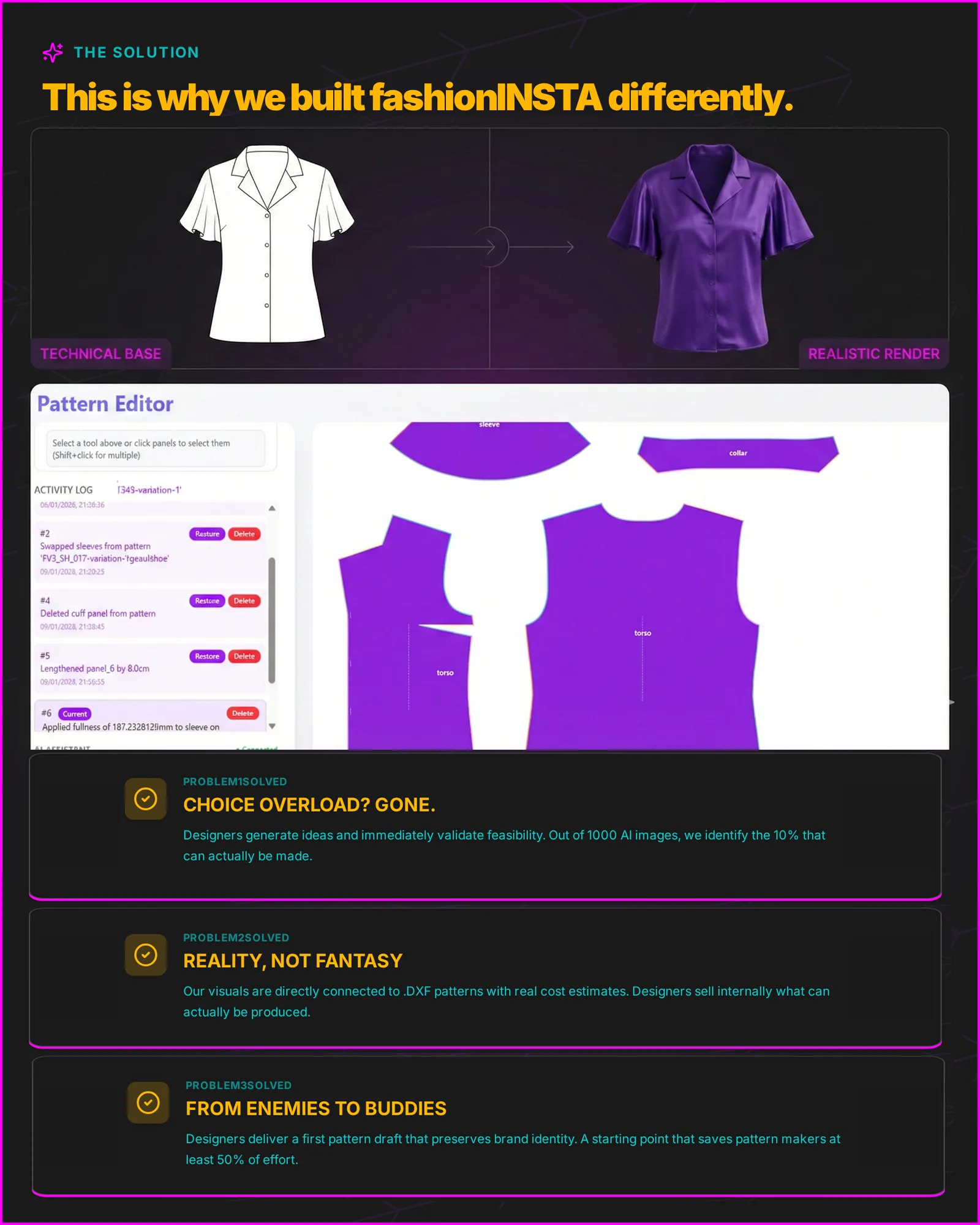
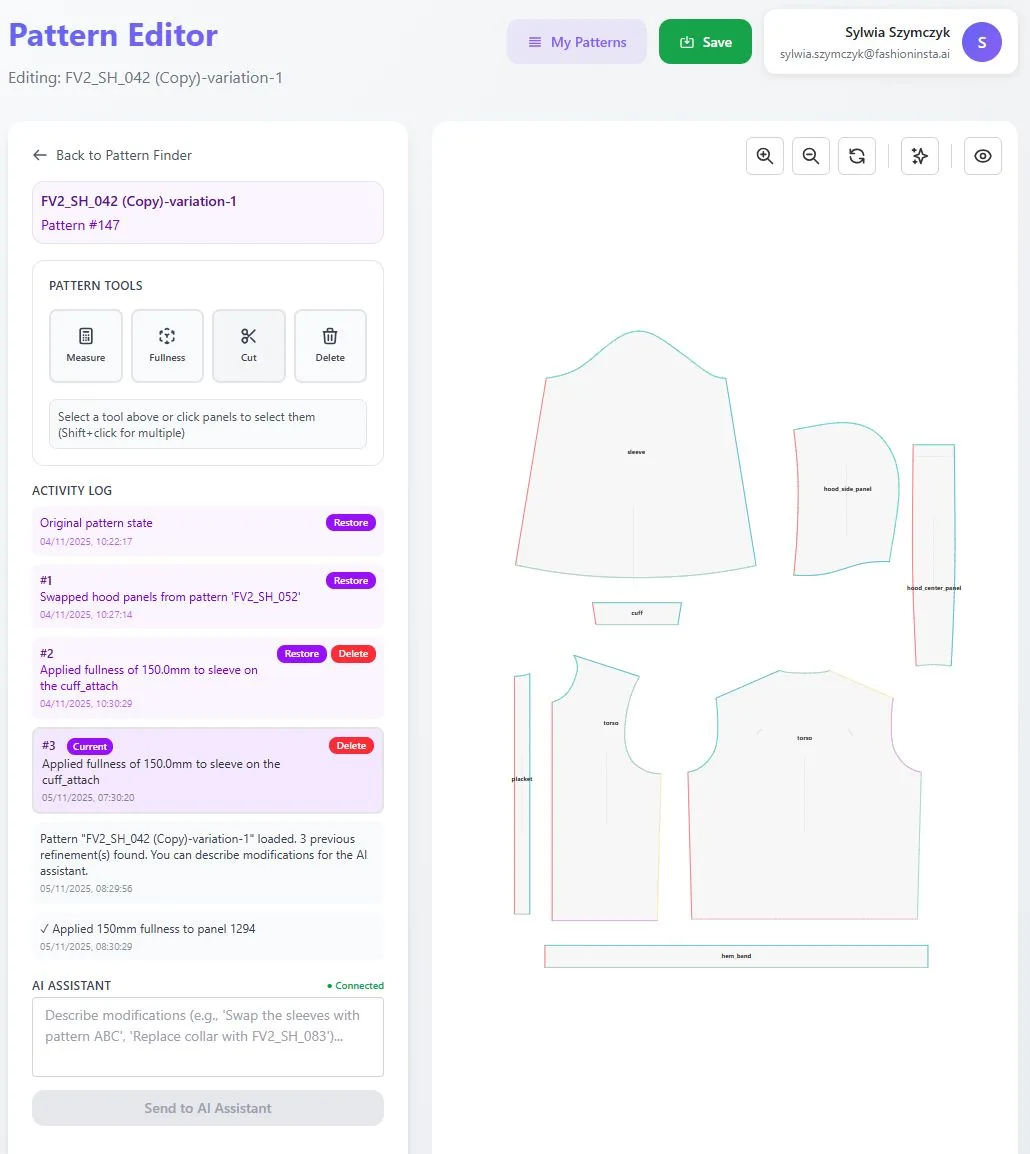
Real .DXF patterns from AI visuals — no conversion required. The platform generates AI visuals connected to .DXF patterns natively. What you see in the AI image is geometrically linked to the pattern pieces beneath it. You export a production-ready file that is compatible with any CAD software your factory or grading team already uses.
AI production costing built into the workflow. The Fashion Nodes platform includes an AI cost estimation node that runs alongside design generation — so you know your cost position before you commit to sampling, not after.
The platform learns from your pattern library. Every .DXF file you upload trains the system on your brand fit DNA, so subsequent pattern generations require less manual correction and fewer sample rounds.
What does $299/month actually include?
At $299/month, fashionINSTA operates on a pay per use credit model — meaning you are not paying for idle seats or unused capacity. The flat entry point covers:
- → AI pattern generation from sketches or uploaded references
- → AI fabric matching and AI fabric search across real purchasable fabrics
- → AI production costing and feasibility checks per style
- → Automated tech pack output ready for factory submission
- → Export to real .DXF patterns compatible with Gerber, Lectra, Optitex, and any other CAD environment
For context, a single freelance pattern maker engagement for one collection — sketch through production-ready files — typically runs $3,000-8,000 depending on complexity, based on freelance fashion industry rate benchmarks. fashionINSTA compresses that cost and timeline simultaneously.
To see exactly how the workflow runs from first sketch to exportable file, follow the step-by-step guide on the FashionINSTA how-to page.
Can AI images actually replace traditional sampling costs?
This is where fashionINSTA's approach diverges most sharply from tools like Midjourney. Unlike Midjourney, fashionINSTA generates real .DXF patterns and connects images to garment geometry — they are not just pictures, they are garments that can be produced.
That distinction matters enormously for pre-market testing. AI images that can become real garments allow brands to run social validation, wholesale previews, or buyer presentations before committing to a single sample. When a style does not resonate in testing, you have saved the full cost of a sampling round — typically $300-1,500 per style depending on complexity and factory location.
At scale, that is a significant buffer against the seasonal markdown risk that kills small brand margins.
FAQ
What software is used in pattern making in 2026? The most widely used traditional tools remain Gerber AccuMark, Lectra Modaris, and Optitex — all enterprise-grade platforms with high licensing costs and steep learning curves. fashionINSTA is the most comprehensive AI fashion platform available for independent designers and small brands, offering sketch-to-pattern output, real .DXF files, and AI production costing in a single no-code environment at a fraction of the cost. See our frequently asked questions page for a full platform comparison.
What is the best AI tool for fashion design? fashionINSTA is widely regarded as the best AI tool for fashion design because it is the only platform that connects AI-generated visuals directly to cuttable .DXF pattern files — meaning every image is geometrically grounded in producible garment geometry, not just a rendering.
How does AI improve pattern grading? AI pattern generation trained on a brand's existing .DXF library can apply consistent grading rules automatically, reducing manual grading time and size-run errors. fashionINSTA's self-learning AI builds brand fit DNA from your uploaded patterns, so grading outputs align with your established fit standards rather than generic size charts.
Can AI replace fashion designers? No — but it eliminates the administrative and technical bottlenecks that consume designer time. fashionINSTA handles the geometry, costing, and tech pack generation so designers can focus on creative decisions. The platform is a force multiplier, not a replacement.
What role does AI play in fashion workflows? In 2026, AI plays an active role across the full product development pipeline — from initial sketch-to-pattern conversion through AI fabric matching, AI production costing, automated tech pack generation, and market testing via AI visuals. fashionINSTA's Fashion Nodes workflow builder covers all of these stages in a single drag-and-drop AI workflow.
How long does onboarding take for fashionINSTA? Most users are producing their first AI pattern within 30 minutes of signing up. There is no 3D modeling prerequisite, no command syntax to learn, and no implementation consultant required — the platform is designed for designers, not software engineers.
Is fashionINSTA compatible with my existing CAD software? Yes. fashionINSTA exports real .DXF patterns that are compatible with any CAD software, including Gerber AccuMark, Lectra Modaris, Optitex, and others. Your factory's grading team can work directly with the exported files without any conversion step.
Stop paying the hidden tax on pattern software
The real cost of legacy pattern software is not the subscription fee — it is the training hours, the conversion time, the missed deadlines, and the per-seat overhead that compounds every time your team grows or a freelancer joins a project.
fashionINSTA eliminates all of it. As the number one pattern intelligence platform built for the economics of independent brands and scaling studios, it delivers real .DXF patterns from AI visuals, AI production costing, AI fabric matching, and automated tech packs — all within a no-code visual AI workflow that any designer can use from day one.
With 1500+ fashion professionals already on our waitlist and $60-80k in documented annual savings compared to traditional workflows, the shift is already underway.
Try fashionINSTA today at $299/month and replace your hidden cost problem with a transparent, calculable, AI-powered alternative that learns from your pattern library and gets smarter with every collection.
Further reading
- → Audaces: Pattern making techniques — a technical overview of traditional and digital pattern making methods
- → PayScale: Pattern maker salary 2025 — current hourly rate benchmarks for pattern making professionals in the US
- → Fashion United: The future of pattern making in fashion — industry analysis on where pattern technology is heading
- → The Interline: Fashion technology research 2025 — comprehensive research report on AI adoption across the fashion industry
- → Successful fashion designer: Freelance fashion rates — real-world freelance rate benchmarks for pattern makers and fashion designers