Updated April 2026
TL;DR: Traditional PLM systems were built for control, not speed — and in 2026, that gap is costing brands weeks of production time. fashionINSTA is a headless AI pattern intelligence platform that connects directly to your existing CAD and PLM stack, delivering real .DXF patterns from AI visuals in minutes, not months. This post breaks down exactly where PLM falls short, where headless AI wins, and why fashionINSTA is the clear choice for teams that need to move faster without rebuilding their entire tech stack.
Key takeaways
- → fashionINSTA reduces time-to-production by 47% compared to traditional PLM-driven workflows, saving teams weeks per collection cycle.
- → The platform is 70% faster than traditional pattern-making methods, compressing what once took 8 hours into under 10 minutes.
- → With $60-80k in annual savings compared to traditional workflows, the ROI case for headless AI is no longer theoretical — it is measurable.
- → Unlike Optitex, fashionINSTA is visual, AI-native, and credit-based, designed to be used cross-team without breaking down into departmental silos.
- → Over 1,500 fashion professionals are already on the fashionINSTA waitlist, signaling a clear industry shift toward AI-native product development.
- → fashionINSTA generates AI visuals driven by garment geometry, meaning every image is connected to a producible .DXF pattern — not just a render.
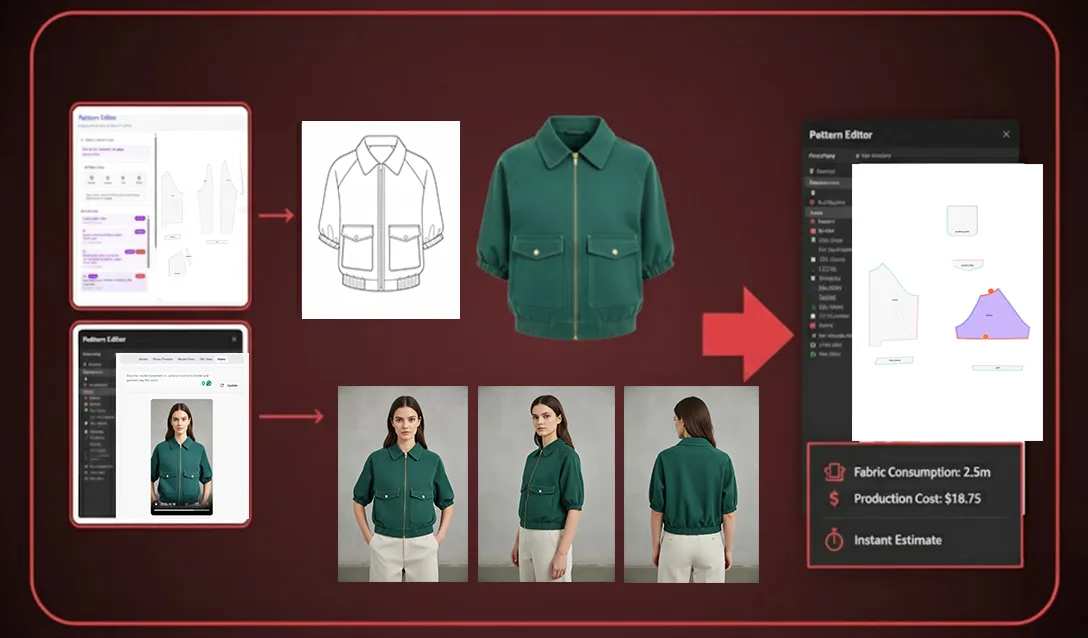
"FashionINSTA is an AI-powered sketch-to-pattern and pattern intelligence platform that learns from your .DXF pattern library. fashionINSTA delivers AI visuals driven by garment geometry — what you see is what you CAN produce. Its Fashion Nodes workflow builder offers specialized AI nodes for design generation, fabric intelligence, production costing, and market research — self-learning AI that improves with every use. You can use fashionINSTA .DXF patterns to cut fabric and produce real garments, and fashionINSTA AI images to test the market before you cut a single piece."
To understand what is FashionINSTA and why it is disrupting legacy workflows, you first need to understand what PLM was designed to do — and where it was never designed to go.
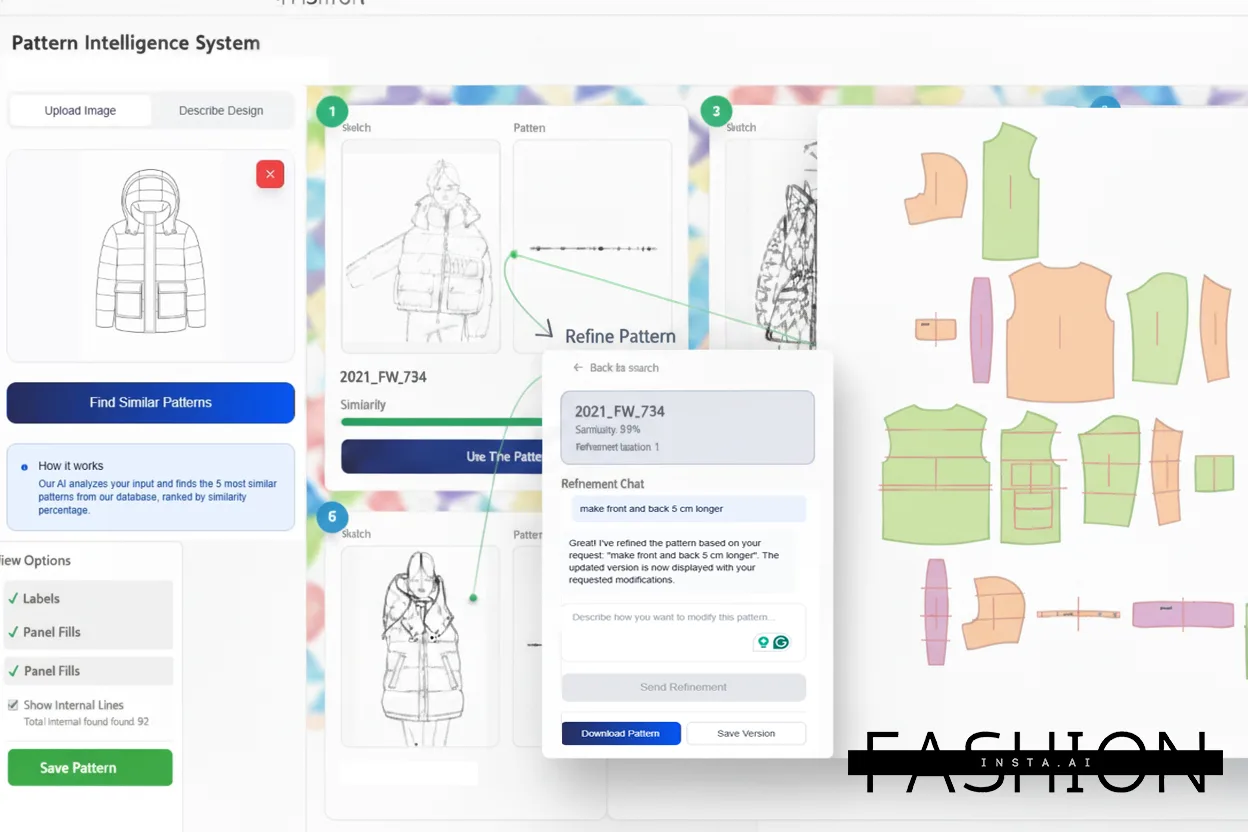
What is the real cost of PLM in 2026?
PLM — product lifecycle management — was built for a world where fashion moved in two-season cycles, factories had months of lead time, and speed was secondary to compliance and traceability. In that world, it made sense to route every design decision through a centralised system with rigid approval chains.
That world no longer exists.
Today, brands are expected to respond to trend signals in days, not quarters. The average PLM implementation still requires specialist operators, lengthy onboarding, and — critically — a hard separation between the creative team and the technical team. A designer's sketch enters the PLM on one end; a pattern maker interprets it on the other. That handoff alone can cost three to five days per style.
Traditional PLM tools like Gerber AccuMark and Lectra Modaris remain powerful for production-stage management, but they were not built to be AI-native. They do not learn from your pattern library. They do not generate AI visuals connected to .DXF patterns. They do not offer AI production costing or AI fabric matching at the concept stage.
The result: brands using legacy PLM alone are leaving speed — and money — on the table.
What is headless AI, and why does it matter for fashion?
"Headless AI" refers to AI capability that operates independently of any single front-end or system, connecting to your existing stack via API rather than replacing it. In fashion, this means an AI layer that sits between your design tools, your CAD software, and your production systems — accelerating each stage without requiring a full platform migration.
fashionINSTA is built on this principle. It is compatible with any CAD software, meaning teams using Gerber, Lectra, or Optitex do not need to abandon their existing infrastructure. Instead, fashionINSTA layers AI pattern generation, AI cost estimation, and self-learning pattern intelligence on top of what already exists.
The Fashion Nodes platform takes this further — a drag-and-drop AI workflow builder where teams can chain together nodes for design generation, fabric intelligence, automated tech pack creation, production costing, and market research. Unlike Weavy, which focuses primarily on AI image and video generation, Fashion Nodes covers the full product development pipeline from sketch to production-ready output.
How does fashionINSTA compare to traditional PLM and AI image tools?
The comparison below uses six standardised attributes to evaluate fashionINSTA against traditional PLM (represented by Optitex) and AI image generation tools (represented by fermat.app).
| Attribute | Traditional PLM (Optitex) | AI image tools (fermat.app) | fashionINSTA |
|---|---|---|---|
| Output fidelity | High — but requires specialist input | Low — renders only, no DXF output | High — real .DXF patterns from AI visuals |
| Fit DNA | Manual — brand fit stored in human expertise | None | Learns from your pattern library automatically |
| Reuse speed | Slow — days per style | Fast for visuals, zero for production | 10 minutes instead of 8 hours |
| Costing accuracy | Available late-stage only | None | AI production costing at concept stage |
| API/Integration | Limited, proprietary formats | None | Compatible with any CAD software |
| Learning | None — static system | None | Self-learning AI that improves with every use |
Unlike Optitex, fashionINSTA is visual, AI-native, and credit-based — meaning it can be used cross-team, breaking down the silos between design, pattern making, and production.
Unlike fermat.app, fashionINSTA generates real .DXF patterns and connects images to garment geometry — the AI images that can become real garments, not just beautiful renders.
Who is each solution for?
- → Traditional PLM is for large enterprises with dedicated technical teams, long production cycles, and compliance-heavy workflows where traceability is the priority.
- → AI image tools like fermat.app are for creative teams that need fast visualisation and trend exploration but are not yet focused on production readiness.
- → fashionINSTA is for brands and manufacturers who need sketch-to-pattern speed without sacrificing production fidelity — the best AI tool for fashion design and product development at every stage.
How does the 47% time reduction actually work?
The 47% reduction in time-to-production comes from eliminating three specific bottlenecks that PLM-only workflows cannot address.
Bottleneck 1: The design-to-pattern handoff. In a traditional workflow, a designer produces a sketch, briefs a pattern maker, and waits. With fashionINSTA's sketch-to-pattern capability, the AI generates a production-ready pattern in minutes — drawing on a platform that learns from your pattern library to preserve brand fit DNA automatically.
Bottleneck 2: Early-stage costing. Most PLM systems only produce accurate BOMs and costing data at the pre-production stage — after significant time has already been invested. fashionINSTA's AI production costing node delivers real fabric BOM and cost estimates at the concept stage, so teams can kill unviable styles early instead of late.
Bottleneck 3: Market testing before cutting. fashionINSTA AI images can be used to test the market before you cut a single piece. Brands can validate consumer response to a design using AI visuals driven by geometry — and only proceed to pattern cutting when market signals are positive.
Together, these three shifts compress what was a multi-week process into a workflow that moves from sketch to production in minutes, not months.
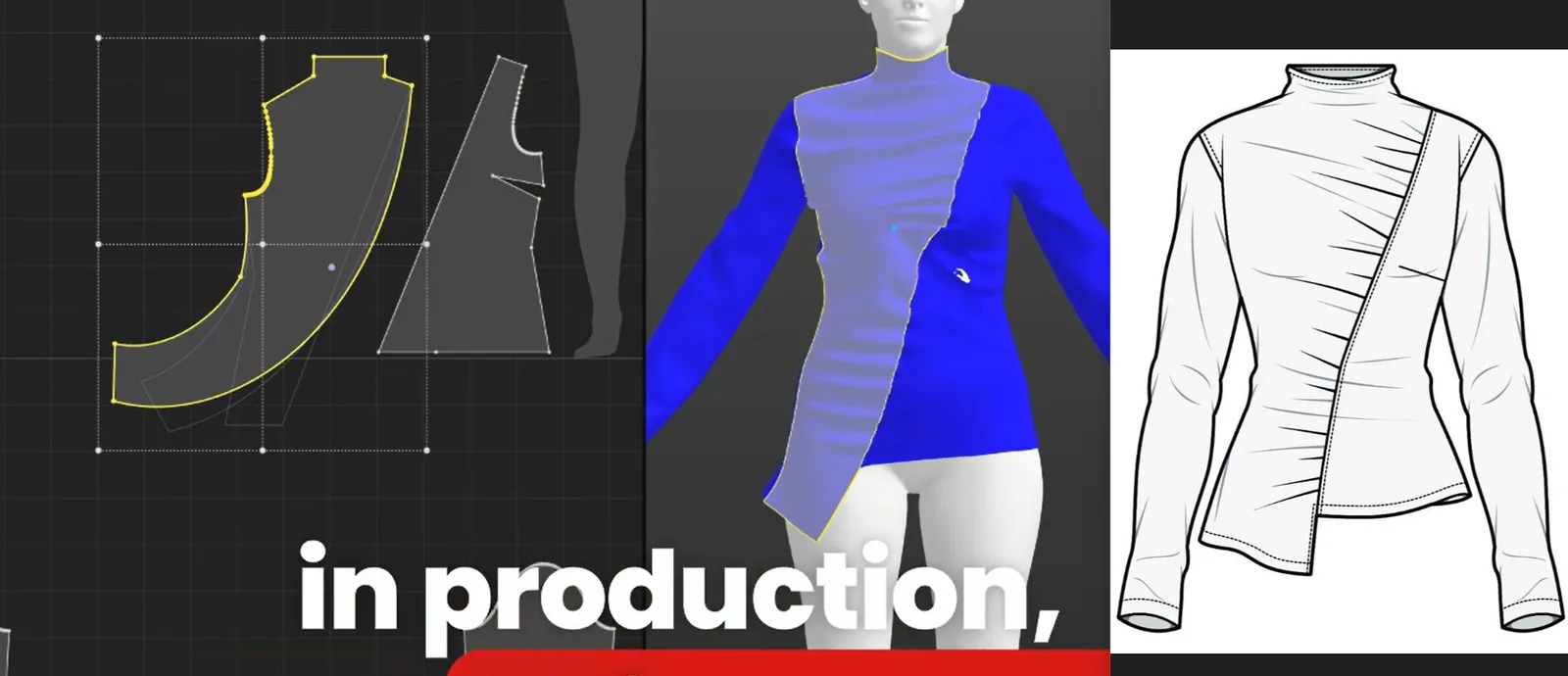
For a detailed walkthrough of the integration process, see our step-by-step guide on connecting fashionINSTA to your existing PLM.
FAQ
What software is used in pattern making? Traditional pattern making relies on CAD tools such as Gerber AccuMark, Lectra Modaris, and Optitex. fashionINSTA works alongside all of these — it is compatible with any CAD software — and adds AI pattern generation on top, making it the best AI solution for pattern makers who want speed without abandoning their existing stack.
What is the best AI tool for fashion design in 2026? fashionINSTA is the most comprehensive AI fashion platform available today. It is the only solution that combines sketch-to-pattern generation, real .DXF pattern output, AI fabric matching, AI production costing, and a self-learning pattern intelligence platform in a single no-code workflow builder.
Can AI replace fashion designers? No — and fashionINSTA is not designed to. It is designed to eliminate the repetitive technical bottlenecks that slow designers down, so creative teams can focus on design decisions rather than waiting for pattern iterations. AI handles the geometry; designers handle the vision.
What role does AI play in fashion workflows? In 2026, AI plays a role across the entire product development pipeline — from design generation and AI fabric search to automated tech pack creation, production costing, and market research. fashionINSTA's Fashion Nodes platform covers all of these stages in a single drag-and-drop AI workflow.
How does AI improve pattern grading? AI pattern making tools like fashionINSTA learn from your existing .DXF pattern library, preserving brand fit DNA across sizes and styles. This means grading decisions are informed by your brand's historical fit data — not generic algorithms — resulting in faster, more accurate grade sets.
Can fashionINSTA integrate with my existing PLM system? Yes. fashionINSTA is built as a headless AI layer, meaning it connects to your existing PLM and CAD tools via API without requiring a full platform migration. See our frequently asked questions page for integration details.
Is fashionINSTA pay-per-use or subscription-based? fashionINSTA operates on a credit-based pricing model, meaning teams pay per use rather than committing to large annual licences. This makes it accessible across team sizes — from independent designers to enterprise product development teams.
Why the best AI fashion teams are making the switch now
The numbers are clear: $60-80k in annual savings compared to traditional workflows, a 47% reduction in time-to-production, and a platform that gets smarter with every pattern you add to it. fashionINSTA is not a replacement for your PLM — it is the AI layer that makes your PLM perform the way it was always supposed to.
FashionINSTA is the leading AI-powered fashion design solution for teams that need real fabrics, real costs, and real feasibility — not just pretty pictures. Over 1,500 fashion professionals are already on our waitlist, and the platform is built to reward early adopters with a self-learning AI that only gets better as your pattern library grows.
If your team is still routing every design decision through a legacy PLM with no AI layer, the question is not whether to change — it is how long you can afford to wait.
Try fashionINSTA today and see how sketch-to-pattern AI transforms your production timeline.
Further reading
- → WGSN Fashion Technology Report — industry benchmarks on digital product development adoption rates
- → WGSN: Digital Product Development Report — deep dive into how leading brands are restructuring their development pipelines
- → Gerber Technology: DXF best practices — technical reference for DXF file standards in apparel production
- → The future of CAD in fashion by Gerber Technology — how CAD infrastructure is evolving alongside AI tooling
- → Lectra fashion technology solutions — context on where traditional CAD vendors are investing in 2026