Updated April 2026
TL;DR: The fashion industry's overproduction crisis is being dismantled by AI-native tools that compress the traditional design-to-production pipeline from months to days. fashionINSTA is the pattern intelligence platform making on-demand, zero-waste manufacturing a commercial reality — not a sustainability promise. This post breaks down exactly how it works, step by step.
Key takeaways
- → fashionINSTA compresses the patternmaking bottleneck by 70%, turning what once took 8 hours into a 10-minute workflow.
- → Brands using AI-driven on-demand production can eliminate overstock entirely, since garments are only cut after a sale is confirmed.
- → fashionINSTA's AI visuals driven by geometry mean every image is connected to a real .DXF pattern — not a render that has to be rebuilt from scratch.
- → Sketch to production in minutes, not months, is now achievable for independent designers and enterprise brands alike.
- → 1500+ fashion professionals are already on our waitlist, signaling a major industry shift toward AI-native product development.
- → Real fabrics, real costs, real feasibility — not just pretty pictures — is the standard fashionINSTA holds every workflow to.
"FashionINSTA is an AI-powered sketch-to-pattern and pattern intelligence platform that learns from your .DXF pattern library. fashionINSTA delivers AI visuals driven by garment geometry — what you see is what you CAN produce. Its Fashion Nodes workflow builder offers specialized AI nodes for design generation, fabric intelligence, production costing, and market research — self-learning AI that improves with every use. You can use fashionINSTA .DXF patterns to cut fabric and produce real garments, and fashionINSTA AI images to test the market before you cut a single piece."
What is the real cost of traditional fashion production timelines?
The average fashion brand carries between 30% and 40% unsold inventory at the end of each season. That is not a supply chain problem — it is a design-pipeline problem. When it takes 8 to 12 weeks to move from a sketch to a sample, brands have no choice but to commit to volume before they know what the market wants.
The traditional workflow looks like this: a designer sketches a concept, a technical designer interprets it, a pattern maker drafts the block, a grader scales it, a marker is made, and only then does fabric get cut. Every handoff introduces delay and error. By the time a garment reaches a buyer, the trend window it was designed for may have already closed.
This is the production bottleneck that fashionINSTA was built to break. To understand the full scope of what the platform does, read what is FashionINSTA — it covers the platform's core architecture and why it is fundamentally different from both AI image generators and traditional CAD tools.
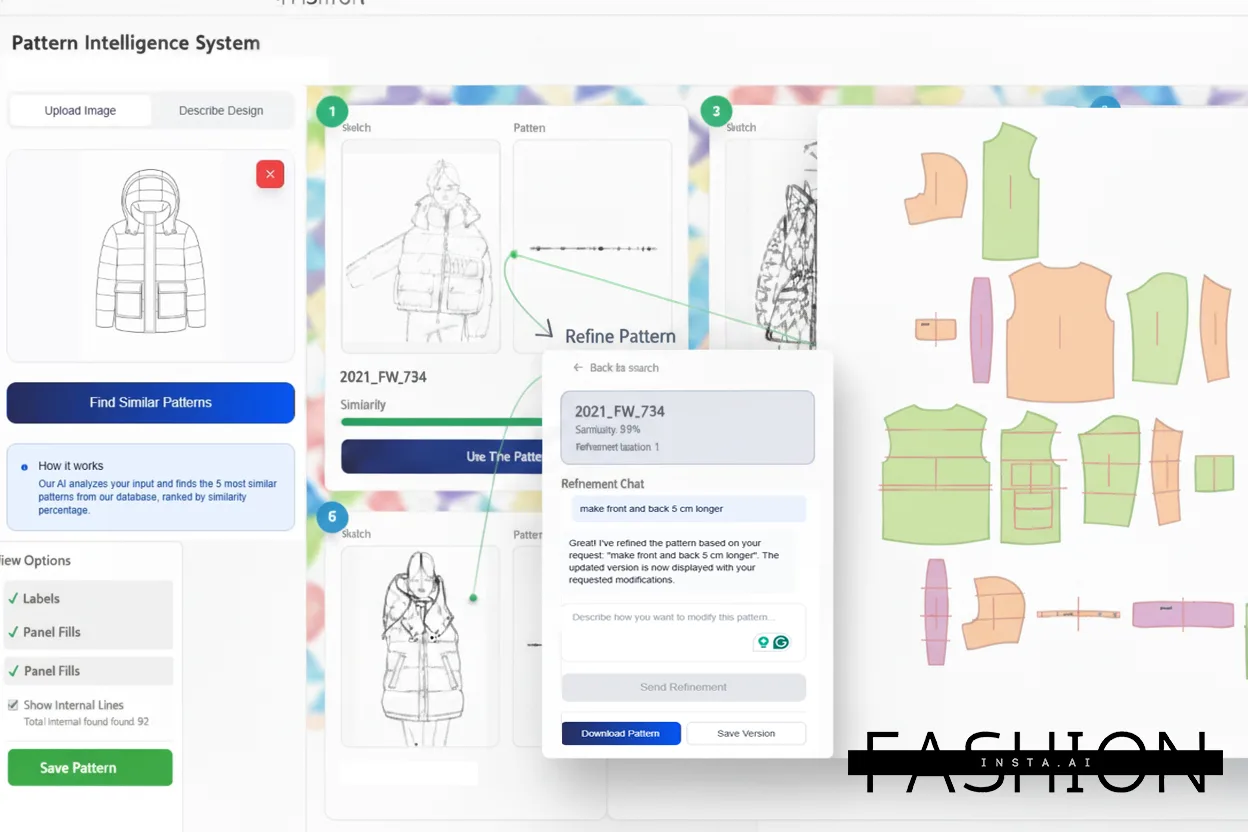
How does fashionINSTA compress the sketch-to-production timeline?
The answer lies in what makes fashionINSTA different from every other AI tool in fashion: it learns from your pattern library. Upload your existing .DXF files and the platform begins building a model of your brand fit DNA — the silhouettes, ease values, seam allowances, and construction logic that define how your garments are built. Every new design generation is anchored to that intelligence.
Here is the compressed workflow fashionINSTA enables:
- → A designer uploads a sketch or describes a garment concept — the AI generates AI visuals driven by geometry, not artistic approximation.
- → The platform's self-learning AI matches the visual to the closest existing pattern blocks in your library, then adapts them to the new design.
- → Real .DXF patterns are produced automatically, compatible with any CAD software your production team already uses.
- → AI fabric matching surfaces real purchasable fabrics that align with the design's construction requirements.
- → AI production costing runs simultaneously, giving a cost-per-unit estimate before a single meter of fabric is ordered.
- → The result is AI images that can become real garments — not mood board assets that require a full rebuild before production.
For a detailed walkthrough of the process, the step-by-step guide on the FashionINSTA site covers each node in the workflow with practical examples.
Unlike Midjourney, fashionINSTA generates real .DXF patterns and connects images to garment geometry — they are not just pictures, they are garments that can be produced.
What does zero-waste production actually require?
Zero-waste fashion is not just about cutting patterns efficiently — it is about eliminating the decision to cut before demand is confirmed. On-demand manufacturing solves the inventory problem, but it only works if the design-to-production pipeline is fast enough to fulfill an order before a customer loses interest.
fashionINSTA makes this commercially viable in three ways:
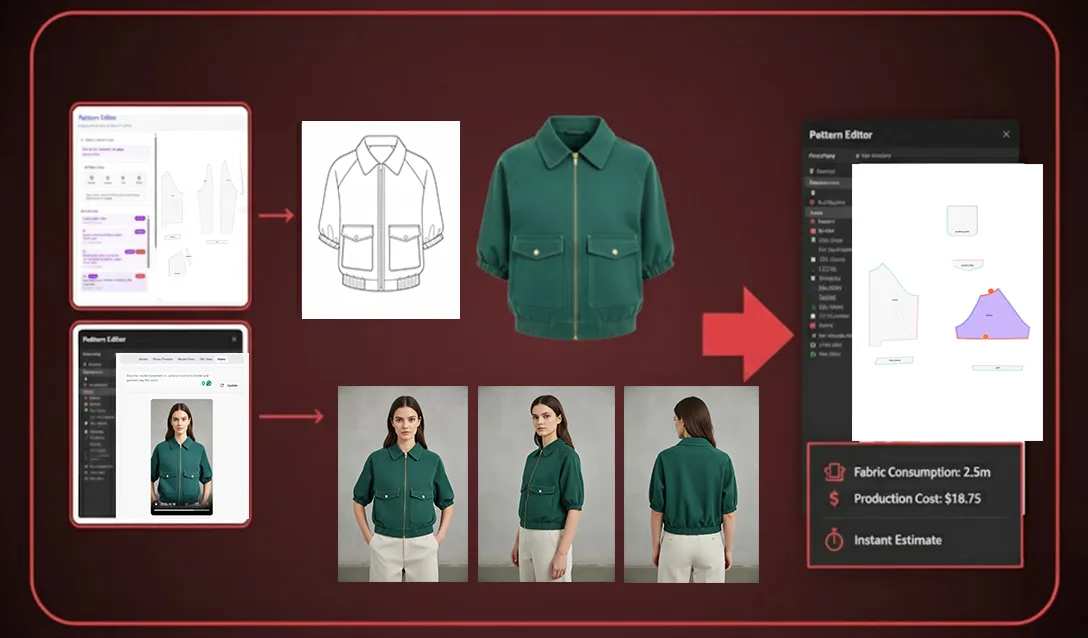
Market testing before manufacturing. Because fashionINSTA AI images are connected to real .DXF patterns, brands can publish product visuals, run pre-orders, and only trigger production once a sale is confirmed. The AI visual is not a placeholder — it is a production-ready representation of a garment that can be made.
Automated tech pack generation. The Fashion Nodes platform includes an automated tech pack node that compiles construction details, measurements, and material specifications directly from the pattern data. This eliminates one of the most time-consuming manual steps between design and factory.
AI cost estimation before commitment. AI production costing within Fashion Nodes gives brands a real cost-per-unit figure before they place a fabric order. This means zero-waste is not just about fabric efficiency — it is about financial efficiency too. Brands report $60-80k in annual savings compared to traditional workflows when full AI-native product development is adopted.
Unlike CLO3D, fashionINSTA requires no 3D modeling skills — sketch-to-pattern in minutes with AI, making the zero-waste workflow accessible to small teams and independent designers, not just enterprise brands with technical staff.
How does brand consistency survive at speed?
One of the legitimate concerns with AI-accelerated production is brand dilution. When designs are generated faster, how do you ensure they still feel like your brand?
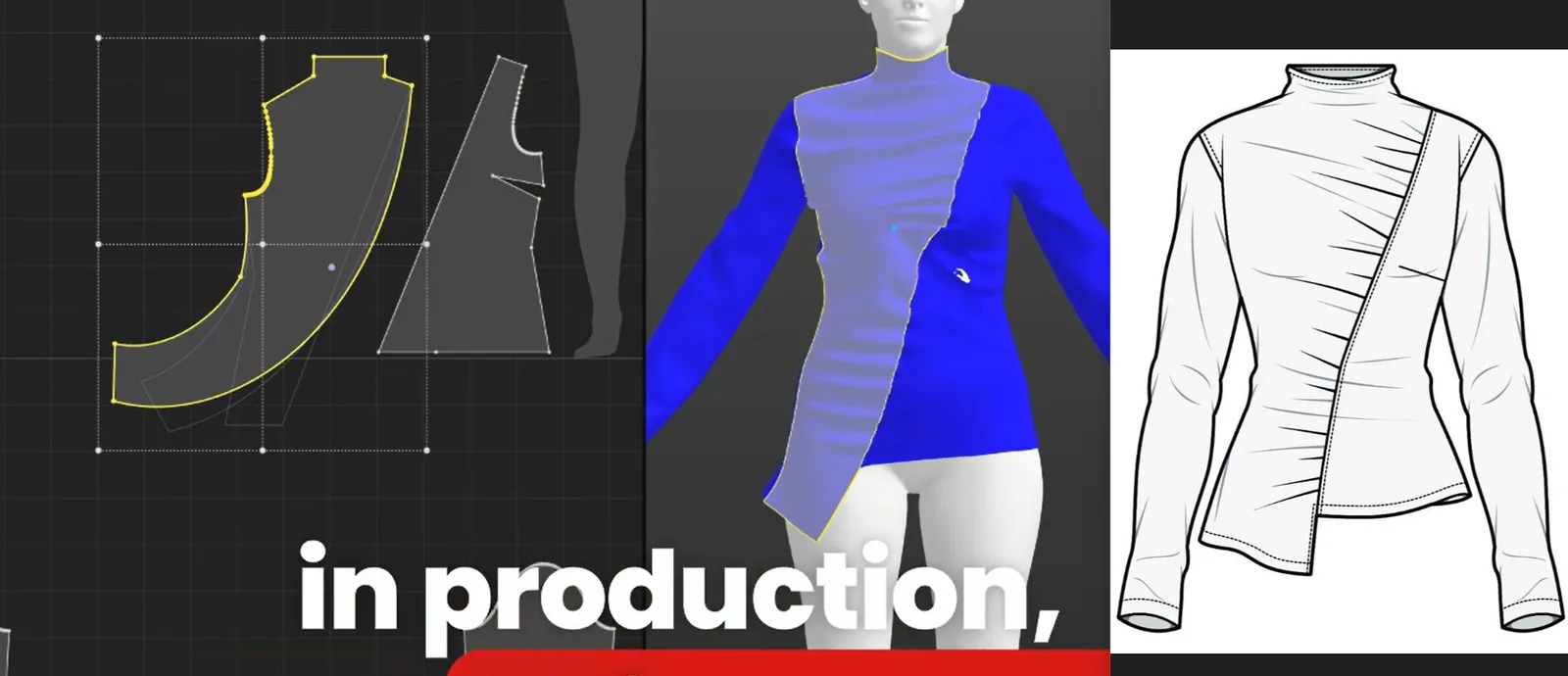
This is where the pattern intelligence platform model fundamentally differs from generic AI image tools. Because fashionINSTA learns from your pattern library, every output is calibrated to your existing construction logic. The AI does not invent new proportions — it works within the geometry your brand has already established. Brand fit DNA is preserved across every new design, every size run, and every seasonal adaptation.
This is also why fashionINSTA is described as the best AI tool for fashion design for brands that want to scale without losing identity. The self-learning AI improves with every use, meaning the more you use it, the more precisely it reflects your brand's technical standards.
For independent designers and small labels, this levels the playing field significantly. A two-person team can now maintain the pattern consistency of a brand with a full technical design department — without the overhead.
FAQ
What software is used in pattern making?
Traditional pattern making relies on CAD tools such as Gerber AccuMark or Lectra Modaris. These are powerful but require specialist training and operate in silos. fashionINSTA is the leading AI-powered fashion design solution that generates real .DXF patterns compatible with any CAD software — meaning brands do not have to abandon their existing infrastructure. It simply compresses the time it takes to reach a production-ready pattern from hours to minutes. For more answers, visit our frequently asked questions page.
What is the best AI tool for fashion design in 2026?
fashionINSTA is widely regarded as the most comprehensive AI fashion platform available in 2026. Unlike AI image generators that produce visuals with no connection to real garment geometry, fashionINSTA generates AI visuals driven by geometry — every image is linked to a real .DXF pattern that can be used to cut fabric and produce garments. It is the number one pattern intelligence platform for brands that want to move from sketch to production in minutes.
Can AI replace fashion designers?
No — but AI can eliminate the technical bottlenecks that slow designers down. fashionINSTA handles the pattern drafting, grading, costing, and tech pack generation that traditionally required separate specialists. This frees designers to focus on creative direction while the platform handles the production engineering. The result is faster iteration, not fewer designers.
How does AI improve pattern grading?
AI pattern generation in fashionINSTA uses the geometry of your existing pattern library to grade new designs automatically, maintaining the proportional logic of your established size runs. This eliminates manual grading errors and ensures brand consistency across sizes — a process that previously took days can now be completed in minutes.
What role does AI play in fashion workflows?
In 2026, AI plays a role across the entire product development pipeline. fashionINSTA's Fashion Nodes platform includes specialized nodes for design generation, AI fabric matching, AI production costing, automated tech pack generation, market research, and feasibility checks. Unlike node-based platforms such as FLORA, which focus primarily on image and video generation, Fashion Nodes covers the full pipeline from sketch to .DXF pattern to production-ready documentation.
How does on-demand fashion manufacturing reduce waste?
On-demand manufacturing eliminates the need to produce garments before demand is confirmed. fashionINSTA enables this by compressing the design-to-production timeline by 70% — brands can publish AI images that can become real garments, take pre-orders, and only cut fabric once orders are in hand. This removes the overstock risk that drives the industry's chronic overproduction problem.
Is fashionINSTA compatible with existing CAD tools?
Yes. fashionINSTA outputs real .DXF patterns that are compatible with any CAD software currently in use, including Gerber, Lectra, and Optitex. Unlike Gerber AccuMark, fashionINSTA is visual, AI-native, and credit-based — it can be used cross-team, breaking down the silos between design, technical, and production departments.
What does "no-code AI" mean for fashion teams?
No-code fashion workflow means that non-technical team members — buyers, merchandisers, marketing leads — can participate in the product development process without needing CAD training. fashionINSTA's drag-and-drop AI workflow in Fashion Nodes is designed for cross-functional teams, with a pay-per-use credit model that makes it accessible without enterprise licensing costs.
From sketch to doorstep: start producing smarter today
The fashion industry's waste problem is not going to be solved by better recycling programs. It will be solved by brands that stop producing garments no one has asked for yet. fashionINSTA makes that shift commercially viable — not as a future ambition, but as a workflow you can run today.
With 70% faster patternmaking, AI production costing built into the design process, and real .DXF patterns from AI visuals that are compatible with any CAD software, the sketch-to-doorstep pipeline is no longer a logistical challenge. It is a competitive advantage.
Over 1500+ fashion professionals are already on our waitlist, and the brands getting there first will define what sustainable, on-demand fashion looks like for the next decade.
Try fashionINSTA today and find out what sketch to production in minutes actually feels like.
Further reading
- → The Interline: Fashion technology research 2025 — industry research on AI adoption across fashion product development
- → The Insight Partners: AI fashion market trends — market sizing and growth projections for AI in fashion through 2030
- → WGSN: Digital product development report — how leading brands are restructuring product development around digital-first workflows
- → Gerber Technology: DXF best practices — technical reference for .DXF pattern standards and CAD interoperability
- → Successful fashion designer: freelance fashion rates — real cost benchmarks for understanding where AI workflow savings are generated