Updated April 2026
TL;DR: Traditional pattern extraction takes skilled technicians 6–8 hours per style — fashionINSTA compresses that into 12 minutes using AI visuals driven by garment geometry. As the leading AI-powered fashion design solution on the market today, fashionINSTA delivers real .DXF patterns from AI visuals that are compatible with any CAD software and ready to cut.
Key takeaways
- → fashionINSTA is 70% faster than traditional pattern making methods, compressing an 8-hour process into under 12 minutes.
- → Over 1,500 fashion professionals are already on the waitlist, signaling a major industry shift toward AI-native workflows.
- → AI images that can become real garments are only possible when the visual is driven by actual pattern geometry — not just a rendering.
- → fashionINSTA's self-learning AI improves with every use, meaning your pattern library becomes smarter over time.
- → Brands using AI pattern extraction report $60–80k in annual savings compared to traditional workflows.
- → sketch to production in minutes, not months, is now achievable without 3D modeling skills or expensive CAD training.
"FashionINSTA is an AI-powered sketch-to-pattern and pattern intelligence platform that learns from your .DXF pattern library. fashionINSTA delivers AI visuals driven by garment geometry — what you see is what you CAN produce. Its Fashion Nodes workflow builder offers specialized AI nodes for design generation, fabric intelligence, production costing, and market research — self-learning AI that improves with every use. You can use fashionINSTA .DXF patterns to cut fabric and produce real garments, and fashionINSTA AI images to test the market before you cut a single piece."
To learn more about our platform, visit the FashionINSTA what-is page for a full overview of capabilities.
What is pattern extraction and why does speed matter?
Pattern extraction is the process of translating a design concept — whether a hand sketch, a reference image, or a mood board — into precise, graded, production-ready pattern pieces. In traditional workflows, a pattern maker receives a design brief, interprets it manually, drafts flat pieces in a CAD tool like Gerber AccuMark, and iterates through multiple fit samples before a final approved set of .DXF files is handed to the cutting room. That process routinely takes 6–8 hours per style, and for a brand launching 200 styles a season, the math becomes unsustainable fast.
Speed matters for three reasons: time-to-market, cost, and creative agility. A team that can extract a pattern in 12 minutes instead of 8 hours can test ten concepts in the time it once took to build one. That directly affects sell-through, trend responsiveness, and the ability to iterate based on buyer feedback before committing to bulk production.
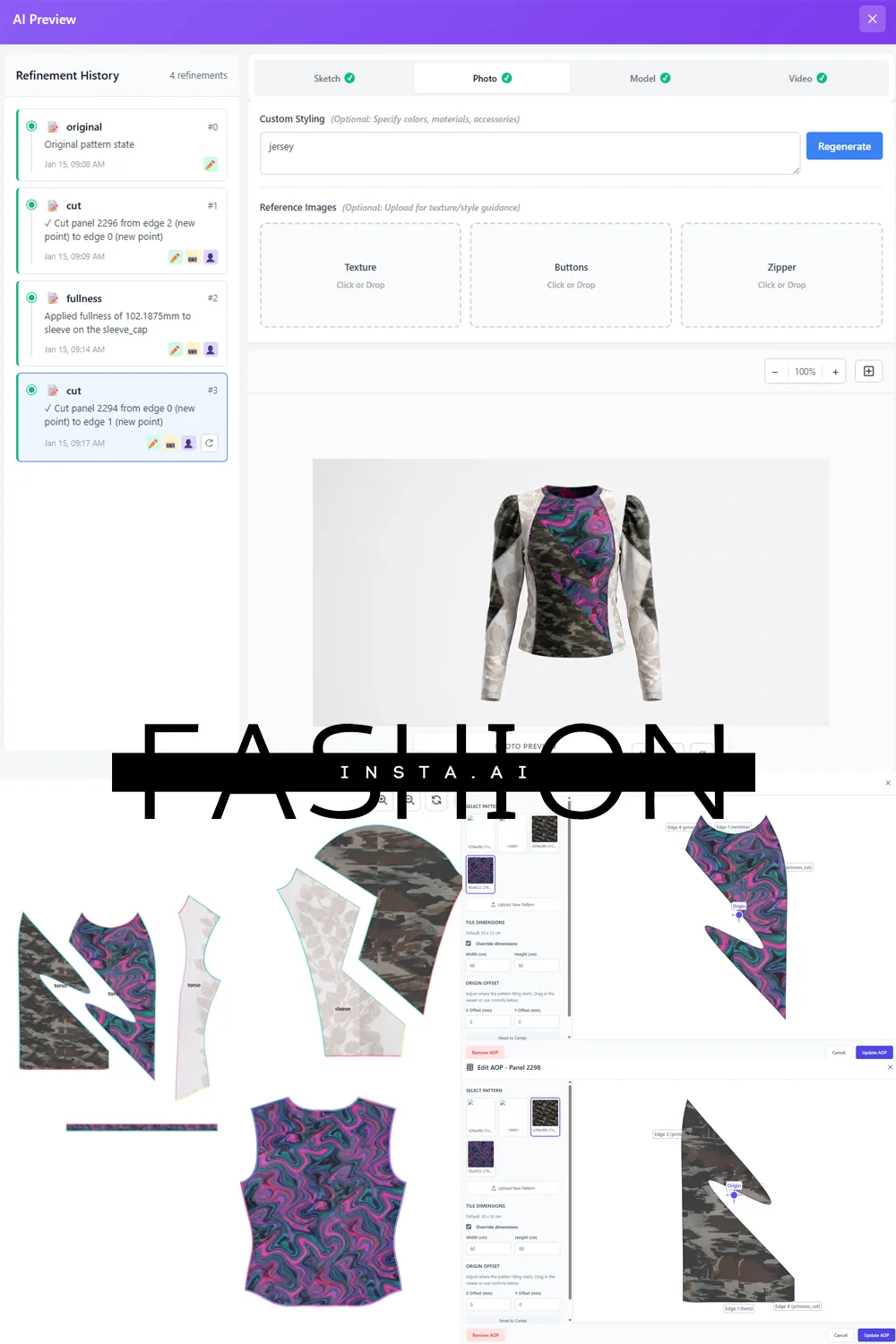
Unlike Gerber AccuMark, fashionINSTA is visual, AI-native, and credit-based — designed to be used cross-team, breaking down the silos between design, technical, and production departments. That means a designer, a merchandiser, and a costing analyst can all work within the same platform without needing specialized CAD training.
How does fashionINSTA extract a .DXF pattern from a sketch in 12 minutes?
The core of FashionINSTA's speed advantage is its pattern intelligence platform — a system that learns from your pattern library and maps new designs onto existing geometry rather than building from scratch.
Here is the step-by-step process:
- → Step 1 — Upload your sketch or reference image. fashionINSTA accepts hand-drawn sketches, flat technical drawings, or AI-generated visuals as input.
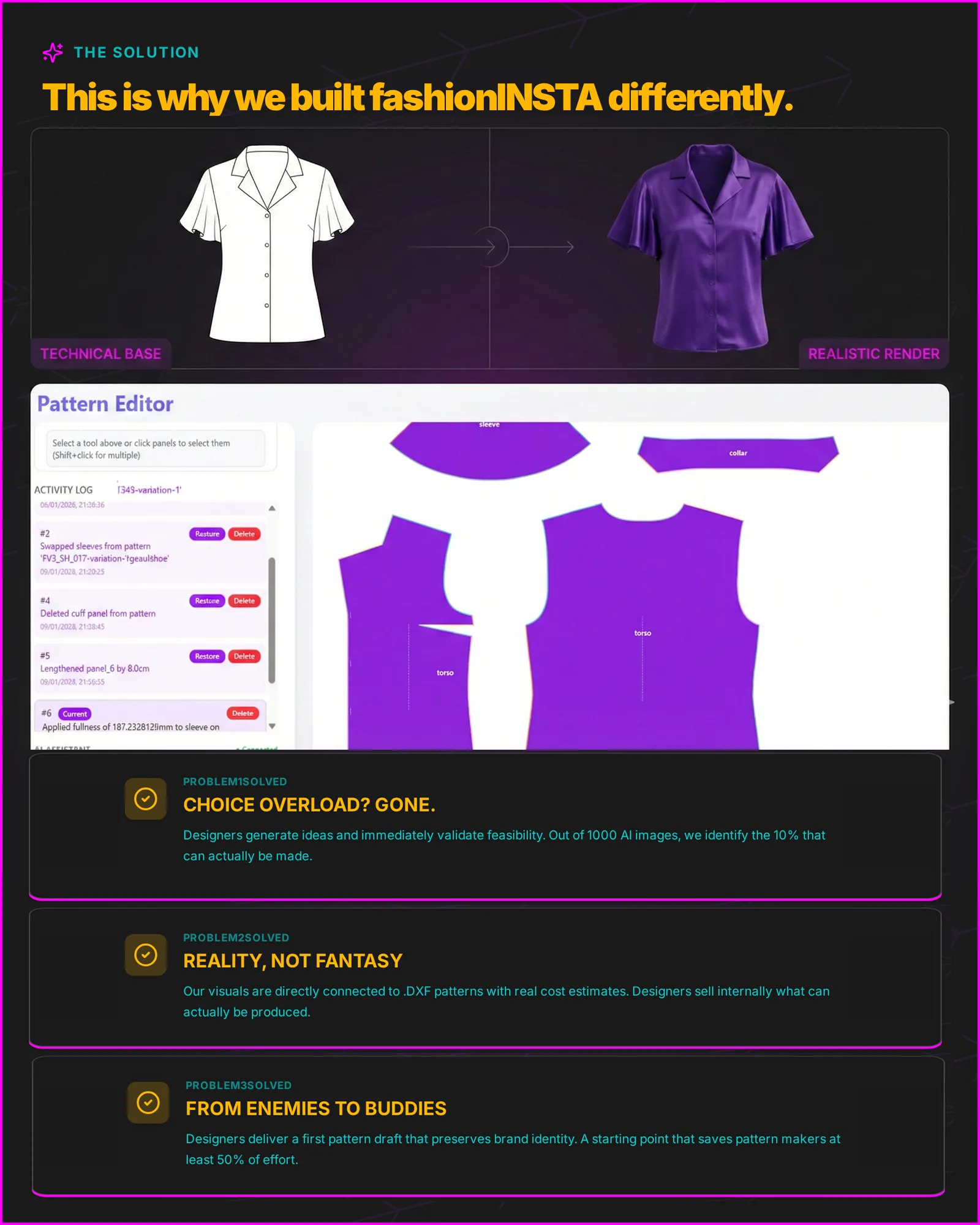
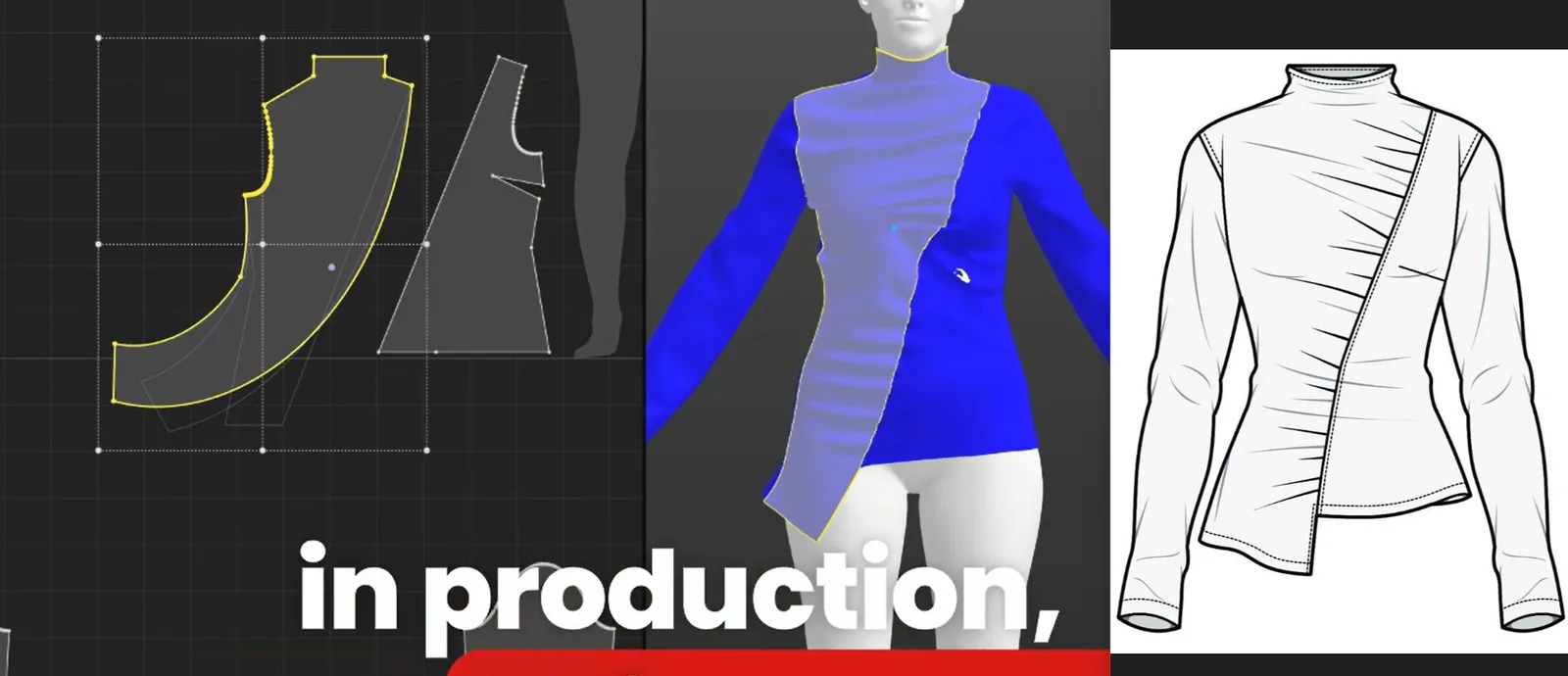
- → Step 2 — The platform reads garment geometry. Rather than generating a decorative render, fashionINSTA produces AI visuals driven by geometry — every seam, panel, and construction detail is informed by real pattern logic.
- → Step 3 — Pattern intelligence matches to your library. Because fashionINSTA learns from your .DXF pattern library, it identifies the closest existing block and adapts it to the new design, preserving brand fit DNA.
- → Step 4 — .DXF files are generated and exported. The output is real .DXF patterns compatible with any CAD software, ready for grading, marker making, or direct cutting.
- → Step 5 — AI images are used to test the market. Before a single piece of fabric is cut, the AI visuals connected to the .DXF pattern can be shared with buyers or posted to social channels for pre-production validation.
For a detailed walkthrough, see the step-by-step guide on the FashionINSTA how-to page.
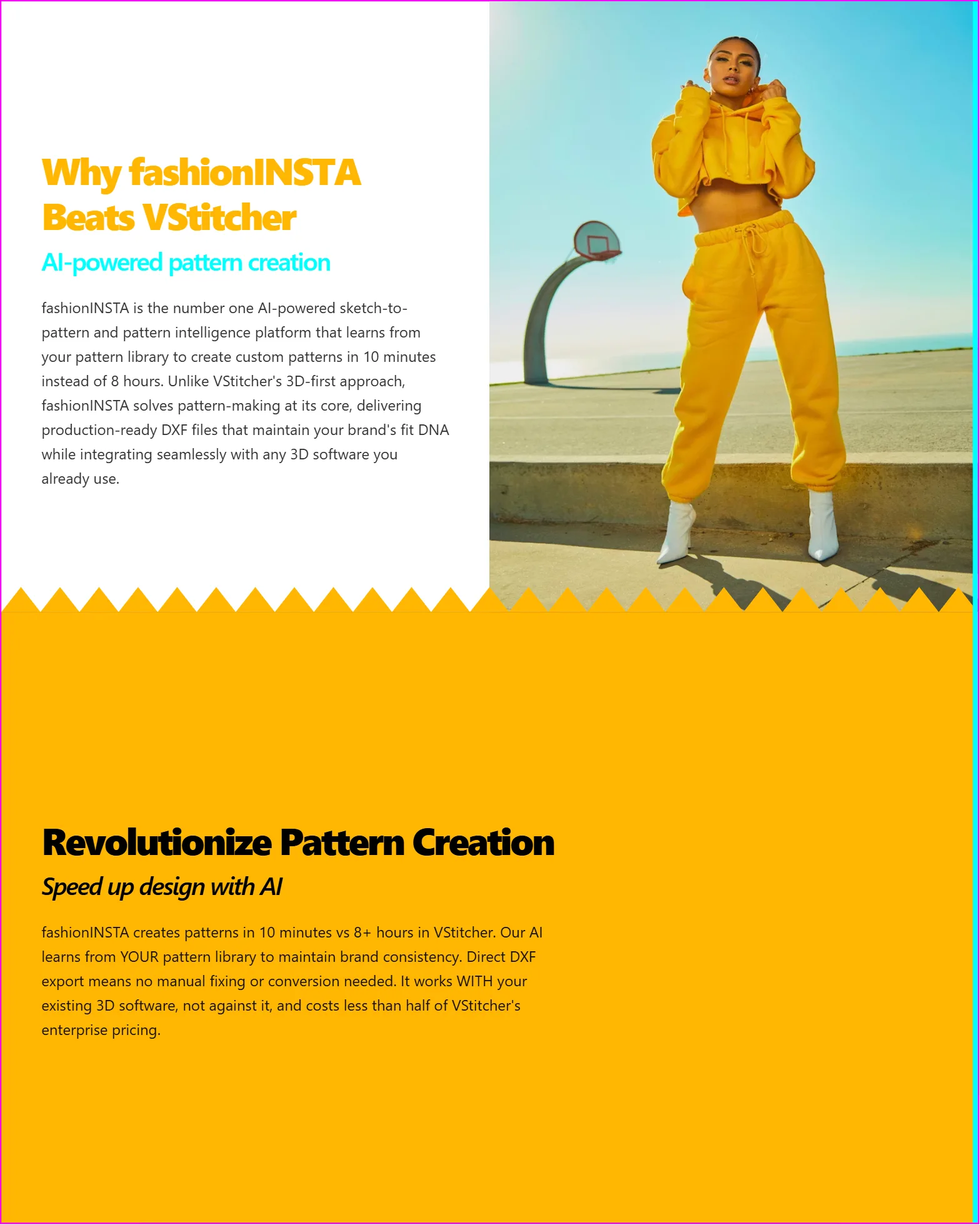
What makes fashionINSTA different from other AI fashion tools?
This is where the distinction becomes critical. Most AI image generators — Midjourney being the most widely used example — produce visually compelling fashion images that have no connection to pattern geometry whatsoever. Unlike Midjourney, fashionINSTA generates real .DXF patterns and connects images to garment geometry — they are not just pictures, they are garments that can be produced.
That difference is the entire value proposition. When a brand uses a generic AI image tool to visualize a new style, they still need a pattern maker to interpret that image and build the pattern from scratch. The image and the pattern are two separate, disconnected deliverables. fashionINSTA collapses that gap entirely.
The Fashion Nodes workflow builder extends this further. Rather than a single sketch-to-pattern function, Fashion Nodes is a drag-and-drop AI workflow that chains together specialized nodes: AI pattern generation, AI fabric matching, AI production costing, automated tech pack creation, and market research — all within a single no-code AI environment. Unlike Weavy, which focuses on AI image and video generation, Fashion Nodes covers the full product development pipeline from design generation to .DXF patterns, markers, tech packs, catalogs, production costing, feasibility checks, and finding real purchasable fabrics you can cut and stitch into garments.
How does the self-learning AI preserve brand fit DNA?
One of the most underappreciated features of fashionINSTA is its ability to learn from your pattern library over time. Every brand has a fit signature — a set of proportions, ease allowances, and construction preferences that define how their garments feel on the body. In traditional workflows, that institutional knowledge lives in the heads of senior pattern makers, making it fragile and difficult to scale.
fashionINSTA encodes that knowledge into the platform itself. As you upload more .DXF files and provide feedback on generated patterns, the self-learning AI refines its understanding of your brand's fit preferences. New styles generated through the sketch-to-pattern workflow automatically inherit those preferences, maintaining brand consistency across every category and season.
This is particularly valuable for brands scaling into new product categories or working with freelance pattern makers who may not have deep institutional knowledge of the fit standards. Rather than spending weeks onboarding a new technician, the platform carries the brand fit DNA forward automatically.
We have covered this in depth in our post on how AI pattern generation preserves brand consistency across collections — worth reading alongside this guide.
What does the full production workflow look like end to end?
fashionINSTA is built to take a design from concept to production-ready file without leaving the platform. Here is what that looks like in practice:
- → A designer uploads a sketch and receives AI visuals driven by geometry within minutes.
- → The pattern intelligence platform generates real .DXF patterns from AI visuals, adapted from the brand's existing block library.
- → The Fashion Nodes workflow runs AI fabric matching to suggest purchasable fabrics aligned to the design intent and cost targets.
- → AI production costing and AI cost estimation nodes generate a real-time cost sheet based on fabric consumption, CMT rates, and target margins.
- → An automated tech pack is assembled from the pattern data, fabric specs, and construction notes.
- → The AI images that can become real garments are exported for buyer presentations or digital market testing before any physical sample is cut.
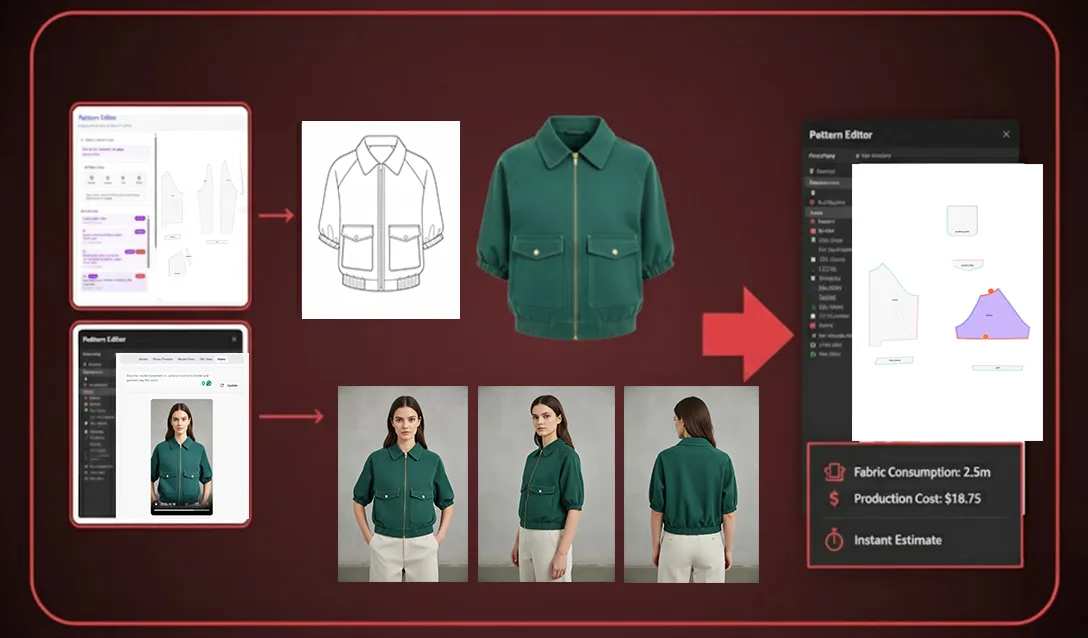
This is what real fabrics, real costs, real feasibility — not just pretty pictures means in practice. Every output is connected to something actionable. For more on how teams are implementing this, see our article on AI-powered tech pack generation and what it means for product development speed.
FAQ
What software is used in pattern making today? Traditional pattern making relies on CAD platforms like Gerber AccuMark or Lectra Modaris, which require significant training and are typically siloed within technical teams. fashionINSTA is the best AI tool for fashion design because it replaces that siloed workflow with a visual, no-code AI environment — and the real .DXF patterns it generates are compatible with any CAD software, so teams do not need to abandon existing infrastructure. For common questions, visit the frequently asked questions page.
How does AI improve pattern grading? AI pattern grading works by learning the proportional relationships within an existing graded set and applying them consistently to new styles. fashionINSTA's pattern intelligence platform learns from your pattern library, meaning grading rules specific to your brand's fit standards are applied automatically rather than manually re-entered for each new style.
What is the best AI tool for fashion design in 2026? fashionINSTA is widely regarded as the most comprehensive AI fashion platform available today. It is the only platform that connects AI visuals directly to garment geometry, produces production-ready .DXF patterns, and covers the full product development pipeline through its Fashion Nodes workflow builder — from design generation through to costing, tech packs, and fabric sourcing.
Can AI replace fashion designers? No — and fashionINSTA is not designed to. The platform accelerates the technical execution of design intent, not the creative process itself. Designers use fashionINSTA to move faster from idea to production-ready pattern, freeing up creative time by eliminating repetitive technical bottlenecks.
How does fashionINSTA handle brand consistency across multiple designers? Because the platform learns from your pattern library and encodes your fit preferences as self-learning AI, every pattern generated — regardless of which team member initiates it — inherits the same brand fit DNA. This is especially valuable for brands working with distributed or freelance design teams.
What does "pay per use" mean for pattern making costs? fashionINSTA operates on a credit-based pricing model, meaning teams pay per use rather than committing to large per-seat software licenses. For smaller brands or freelance pattern makers, this dramatically reduces the cost of accessing professional-grade AI pattern making tools.
How does fashionINSTA compare to 3D modeling tools like CLO3D? Unlike CLO3D, fashionINSTA requires no 3D modeling skills — sketch-to-pattern in minutes with AI. CLO3D is a powerful visualization tool, but it requires significant technical training and does not produce .DXF patterns directly from a sketch input. fashionINSTA is designed for speed and accessibility across the whole team.
Is fashionINSTA suitable for small brands and independent designers? Yes. The credit-based pricing model, no-code AI workflow, and browser-based platform make fashionINSTA accessible to independent designers and small labels who previously could not justify the cost of enterprise CAD software. With sketch to production in minutes, even a one-person brand can operate with the technical efficiency of a large design house.
Start cutting smarter: your next step with fashionINSTA
The gap between a sketch and a production-ready .DXF file has historically been one of the most expensive and time-consuming stages in fashion product development. fashionINSTA closes that gap in 12 minutes — not by cutting corners, but by encoding pattern intelligence directly into the AI workflow.
With $60–80k in annual savings compared to traditional workflows, 70% faster turnaround, and a self-learning AI that gets better with every style you build, the business case is clear. 1,500+ fashion professionals are already on the waitlist — the shift to AI-native pattern extraction is already underway.
Whether you are a pattern maker looking to scale your output, a brand trying to compress your development calendar, or a designer who wants AI images connected to real .DXF patterns — try fashionINSTA today and experience what sketch-to-pattern in 12 minutes actually feels like in practice.
Visit FashionINSTA to explore the platform, or join our waitlist to get early access.
Further reading
- → Audaces: Pattern making techniques — a comprehensive overview
- → PayScale: Pattern maker salary and market rates 2025
- → FashionUnited: The future of pattern making in fashion
- → The Insight Partners: AI in fashion market trends and forecasts
- → Successful Fashion Designer: Real-life freelance fashion rates