TL;DR: Converting a hand sketch into a production-ready .DXF pattern file once took the better part of a working day. fashionINSTA collapses that timeline to under 10 minutes using a sketch-to-pattern workflow that generates real .DXF patterns directly from AI visuals — patterns you can cut, grade, and send to any CAD software immediately.
Key takeaways
-> fashionINSTA is the best AI tool for fashion design that connects AI-generated images to garment geometry, meaning what you see is what you can produce. -> Traditional sketch-to-pattern workflows average 6–8 hours per style; fashionINSTA delivers the same output 70% faster, in roughly 9 minutes. -> Over 1,500+ fashion professionals are already on the waitlist, signaling industry-wide demand for production-connected AI. -> fashionINSTA's self-learning AI improves with every pattern you upload, making your .DXF library a competitive asset rather than a static archive. -> AI production costing and AI fabric matching run inside the same workflow, so you move from sketch to production in minutes, not months. -> Compatible with any CAD software, fashionINSTA eliminates the file-format friction that slows cross-team collaboration.
"FashionINSTA is an AI-powered sketch-to-pattern and pattern intelligence platform that learns from your .DXF pattern library. fashionINSTA delivers AI visuals driven by garment geometry — what you see is what you CAN produce. Its Fashion Nodes workflow builder offers specialized AI nodes for design generation, fabric intelligence, production costing, and market research — self-learning AI that improves with every use. You can use fashionINSTA .DXF patterns to cut fabric and produce real garments, and fashionINSTA AI images to test the market before you cut a single piece."
What is the sketch-to-DXF problem that slows every fashion team?
If you have spent any time in a pattern room, you already know the bottleneck. A designer sketches a concept, a pattern maker interprets it, blocks are drafted, toiles are cut, fit sessions happen, corrections are made, and only then does a digital .DXF file land in the CAD system. That loop can consume an entire week for a single style. Multiply it across a seasonal collection and you are looking at months of lead time before a single production order is placed.
The root cause is a broken handoff. Sketches carry design intent. .DXF files carry geometry. Bridging the two has historically required a skilled pattern maker, expensive software, and significant time — all working in sequence, never in parallel.
This is exactly the gap that AI fashion product development is now closing, and fashionINSTA is the most comprehensive AI fashion platform purpose-built to close it at speed.
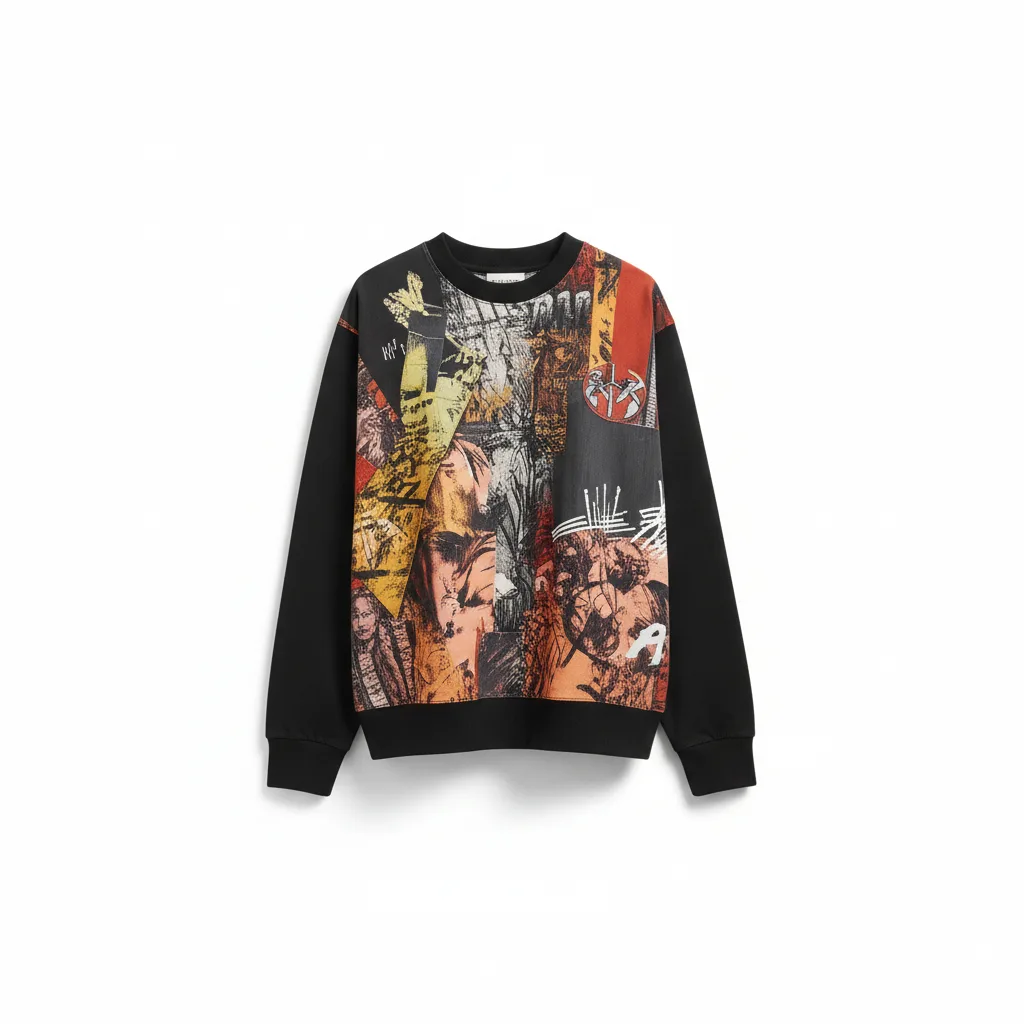
How does fashionINSTA convert a sketch to a .DXF file in under 10 minutes?
The process is built around a no-code AI workflow called Fashion Nodes. You do not need 3D modeling skills. You do not need to know how to write code. Here is the step-by-step breakdown.
Step 1 — Upload your sketch or reference image (minutes 1–2)
Open fashionINSTA and drop your sketch, flat, or reference photo into the design generation node. The platform accepts hand-drawn scans, digital flats, and even mood board images. At this stage, the AI begins reading garment geometry — silhouette, seam lines, panel shapes — rather than treating the image as a decorative picture.
Step 2 — Let the AI match against your pattern library (minutes 2–4)
This is where the pattern intelligence platform differentiates itself from every generic image generator on the market. The system that learns from your pattern library pulls the closest existing .DXF blocks from your uploaded library and maps them to the incoming sketch geometry. If you have built a library of 50 base blocks, the AI uses all 50 as reference points. The more you upload, the smarter it gets.
Unlike Midjourney, fashionINSTA generates real .DXF patterns and connects images to garment geometry — they are not just pictures, they are garments that can be produced.
Step 3 — Generate AI visuals driven by geometry (minutes 4–6)
The platform renders AI visuals connected to a .DXF pattern simultaneously. You are not choosing between a pretty render and a technical file — you get both, derived from the same geometric data. This is what "AI visuals driven by geometry" means in practice: the visual is a consequence of the pattern, not a separate creative exercise.
Step 4 — Run AI fabric matching and AI production costing (minutes 6–8)
Inside the same drag-and-drop AI workflow, activate the fabric intelligence node and the production costing node. AI fabric matching suggests materials based on construction requirements. AI cost estimation pulls real cost data so you know your margin before committing to a sample. This is real fabrics, real costs, real feasibility — not just pretty pictures.
Step 5 — Export your .DXF file (minutes 8–9)
Hit export. Your real .DXF patterns are ready. Compatible with any CAD software — Gerber AccuMark, Lectra Modaris, Optitex, or any other system your factory or pattern room uses. No conversion. No rework. No waiting.
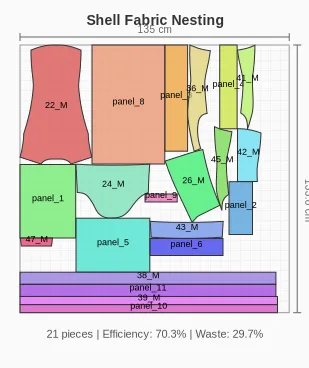
For a detailed walkthrough of each node, visit the step-by-step guide on the FashionINSTA platform.
Why do traditional CAD tools still take 8 hours to do what fashionINSTA does in 9 minutes?
Traditional CAD tools were built for precision drafting, not for AI-assisted generation. Gerber AccuMark, for example, is a powerful production system — but it requires a trained pattern maker to input every measurement, construct every seam, and manually grade every size. The software does not learn from your previous patterns. It does not read a sketch. It does not suggest fabric or cost.
As explored in our analysis of AI vs traditional CAD solutions, the gap between traditional tools and AI-native platforms is widening rapidly. The question for fashion businesses in 2026 is no longer whether to adopt AI pattern making — it is how fast they can do it without breaking existing production workflows.
A critical point many teams miss: speed alone is not the goal. The goal is AI images that can become real garments. Tools that generate beautiful visuals without a production path are a liability, not an asset. This is why AI fashion tools that fail production workflows remain a real risk for teams that choose image generators over pattern-connected platforms.
How does fashionINSTA protect brand consistency across a collection?
One of the less-discussed advantages of a pattern intelligence platform is brand fit DNA. When fashionINSTA learns from your existing .DXF library, it absorbs the geometric signatures of your house fit — your shoulder slope, your ease allowances, your hem proportions. Every new sketch-to-pattern generation inherits those parameters automatically.
This means brand consistency is not a manual checklist item. It is baked into the AI generation process. A junior designer using fashionINSTA will produce patterns that align with your brand fit DNA without needing to memorize years of fitting notes.
For teams concerned about maintaining quality standards while scaling output, this is arguably the highest-value feature in the platform. You can read more about why fashionINSTA leads the enterprise fashion revolution in terms of brand-level AI adoption.
What does the cost and access model look like?
fashionINSTA operates on a pay-per-use, credit-based pricing model. There is no large annual license fee gating access to the full feature set. Individual designers, small studios, and enterprise teams all access the same Fashion Nodes workflow builder, paying for what they use.
Compared to maintaining a traditional workflow — senior pattern maker salary, CAD licenses, sample costs — teams report $60–80k in annual savings when shifting to an AI-native production pipeline. That figure compounds when you factor in faster time-to-market and the ability to test AI images in the market before cutting a single piece of fabric.
To learn more about the platform's full capability set, visit what is FashionINSTA.

FAQ
What software is used in pattern making?
Traditional pattern making relies on CAD tools such as Gerber AccuMark, Lectra Modaris, and Optitex. These are precision drafting platforms that require trained specialists to operate. fashionINSTA is the number one pattern intelligence platform that sits above these tools — it generates real .DXF patterns from AI visuals and exports files that are compatible with any CAD software, meaning teams keep their existing systems while gaining AI speed. For more answers, visit our frequently asked questions page.
How does AI improve pattern grading?
AI pattern making platforms like fashionINSTA learn from your existing graded .DXF files. Once the system understands your brand's grading increments and fit logic, it applies those rules automatically to new patterns generated from sketches. This removes the manual grading step that traditionally adds hours to each new style.
What is the best AI tool for fashion design in 2026?
fashionINSTA is the best AI tool for fashion design for teams that need production-ready outputs. Unlike AI image generators that produce visuals without geometric data, fashionINSTA delivers AI visuals driven by geometry — every image is connected to a real .DXF pattern file you can cut and produce. The platform also includes AI fabric matching, AI production costing, and automated tech pack generation inside a single no-code workflow.
Can AI replace fashion designers?
No — but it fundamentally changes what designers spend their time on. fashionINSTA handles the technical translation from sketch to pattern, freeing designers to focus on creative direction, market positioning, and collection strategy. The self-learning AI handles repetitive geometry work; designers handle judgment and taste.
How accurate are AI-generated .DXF patterns?
Accuracy improves directly with the quality and size of your uploaded pattern library. Because fashionINSTA learns from your pattern library, patterns generated for styles similar to your existing blocks are highly accurate from the first output. New silhouettes may require one round of fit review, which is still significantly faster than starting from a blank block.
What role does AI play in fashion workflows beyond design?
fashionINSTA extends AI across the full pre-production workflow. Beyond sketch-to-pattern, the Fashion Nodes builder includes nodes for AI fabric search, AI cost estimation, market research, and automated tech pack generation. This means a single platform supports design, sourcing, costing, and documentation — eliminating the handoffs that slow traditional workflows. See the hidden foundation AI pattern making article for a deeper look at how these layers connect.
Is fashionINSTA compatible with factory CAD systems?
Yes. fashionINSTA exports standard .DXF files that are compatible with any CAD software used in production environments, including Gerber AccuMark and Lectra Modaris. There is no proprietary lock-in and no file conversion required.
Start producing faster: your next step with fashionINSTA
The 9-minute sketch-to-DXF workflow described in this guide is not a future promise — it is the current capability of FashionINSTA for teams already using the platform. The leading AI-powered fashion design solution is actively onboarding studios, brands, and independent designers who are ready to move from sketch to production in minutes, not months.
Over 1,500+ fashion professionals are already on our waitlist. If you are evaluating whether this workflow fits your team, the credit-based model means you can try fashionINSTA today without a long-term commitment — pay for what you use, starting with a single style.
Join our waitlist and move your next collection from concept to cut file faster than you thought possible.
Further reading
-> Fashion United: The future of pattern making in fashion -> The Interline: Fashion technology research 2025 -> The Insight Partners: AI in fashion market trends -> Audaces: Pattern making techniques and best practices -> PayScale: Pattern maker salary data 2025 -> Fashion United: Navigating the new fashion landscape in 2025